Singing Dune: The Desert's Organ
A massive sand dune in Altyn-Emel that hums like an aircraft engine when the sand moves. A mysterious natural phenomenon.
Essential Profile
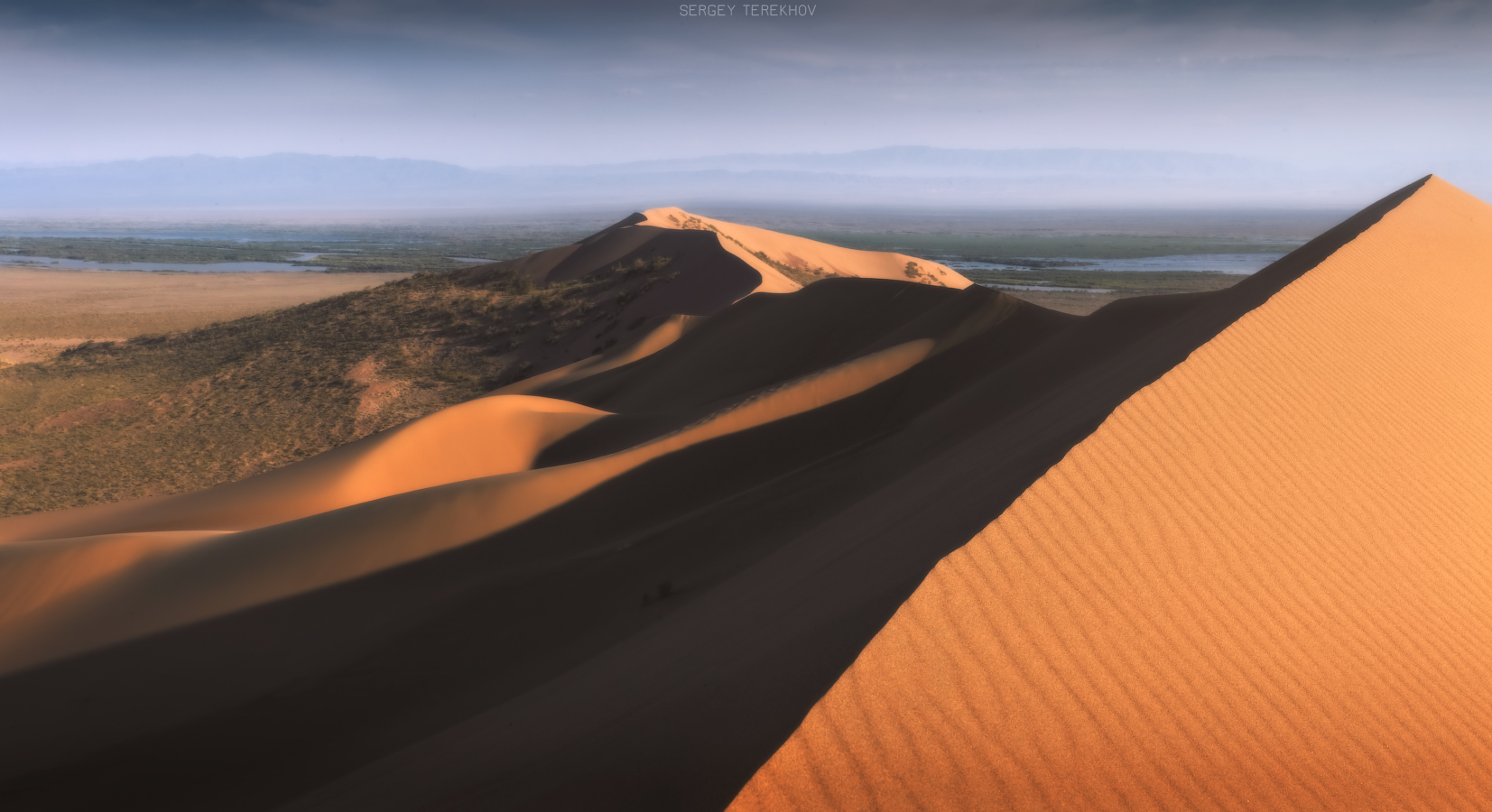
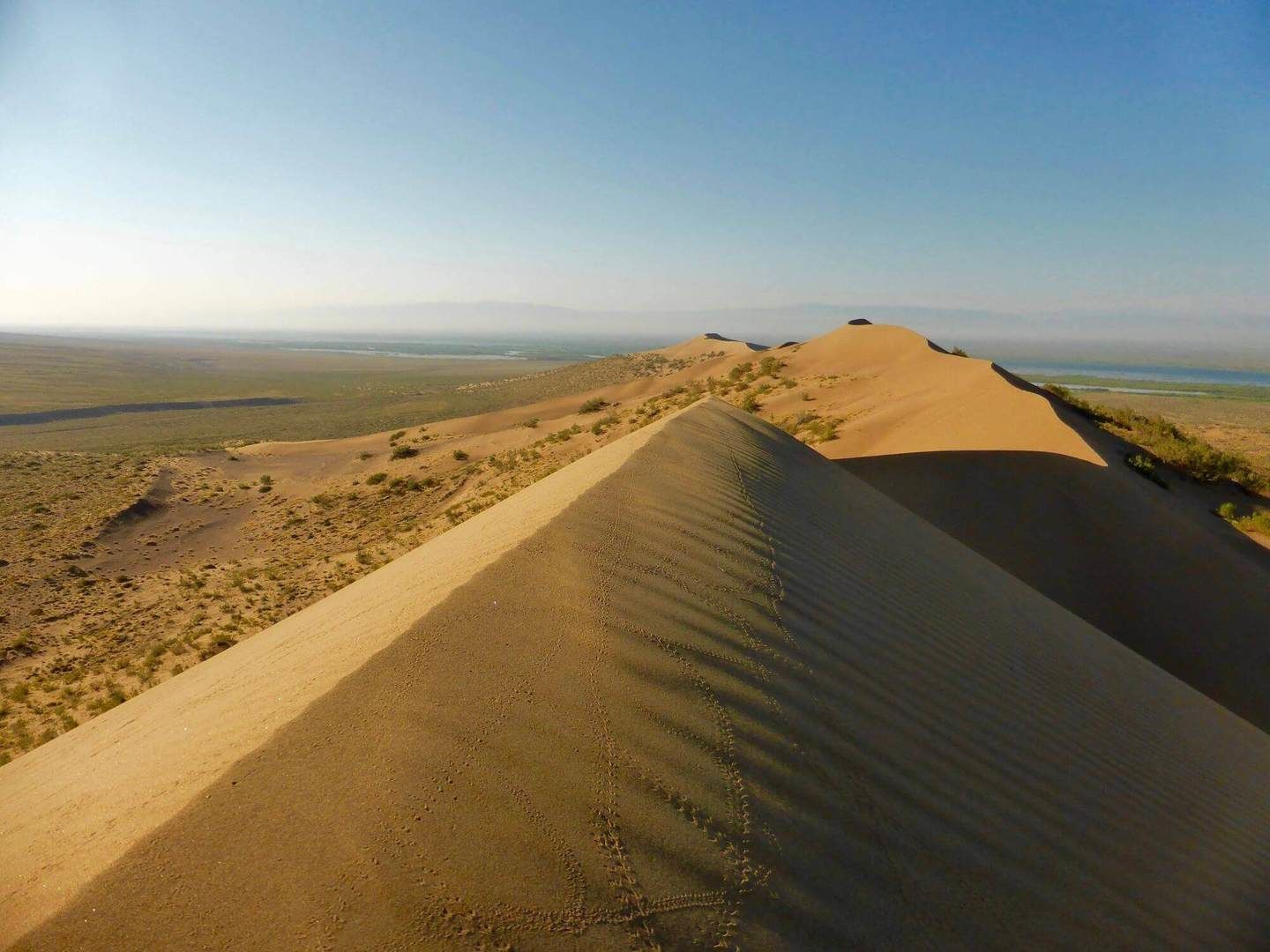
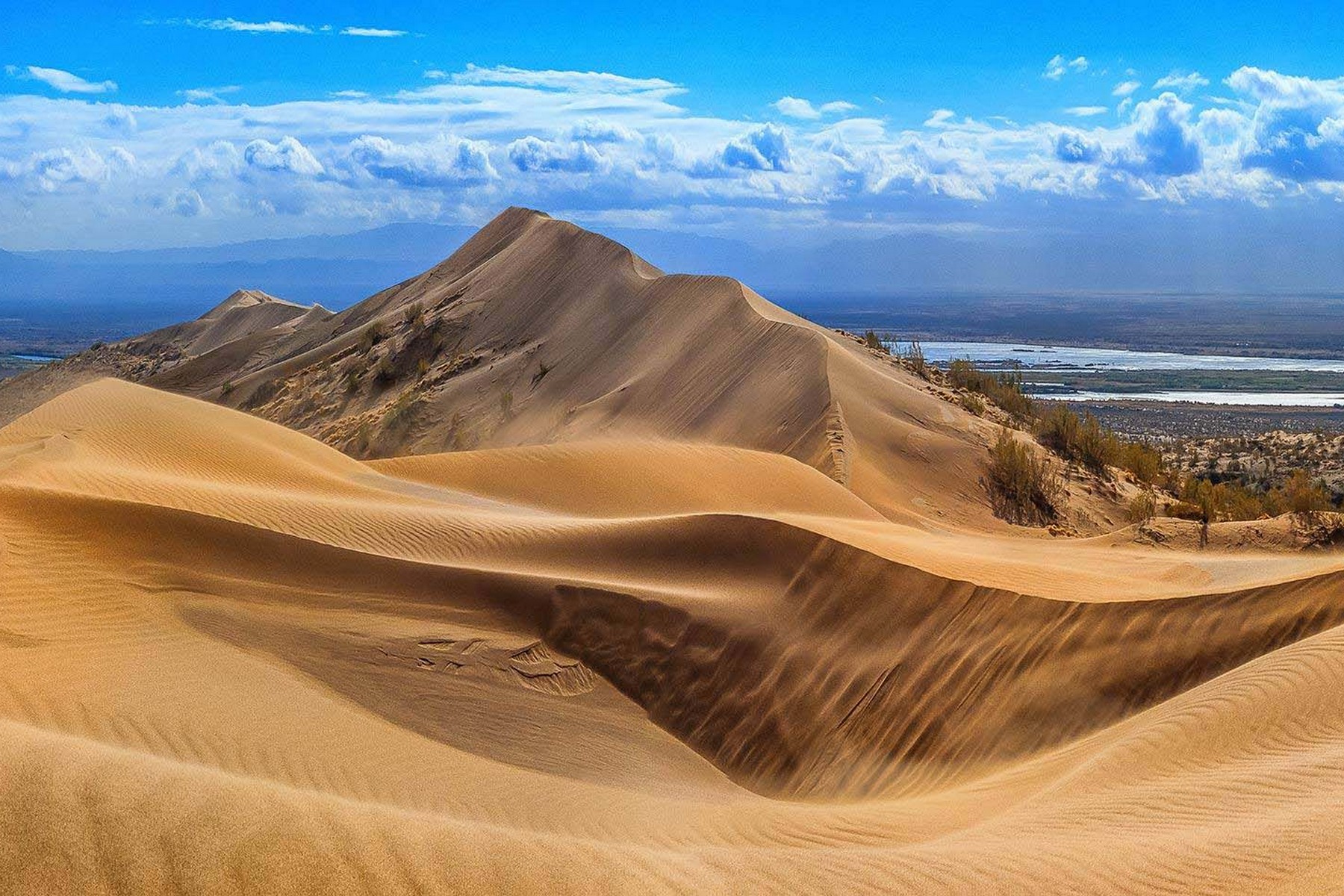
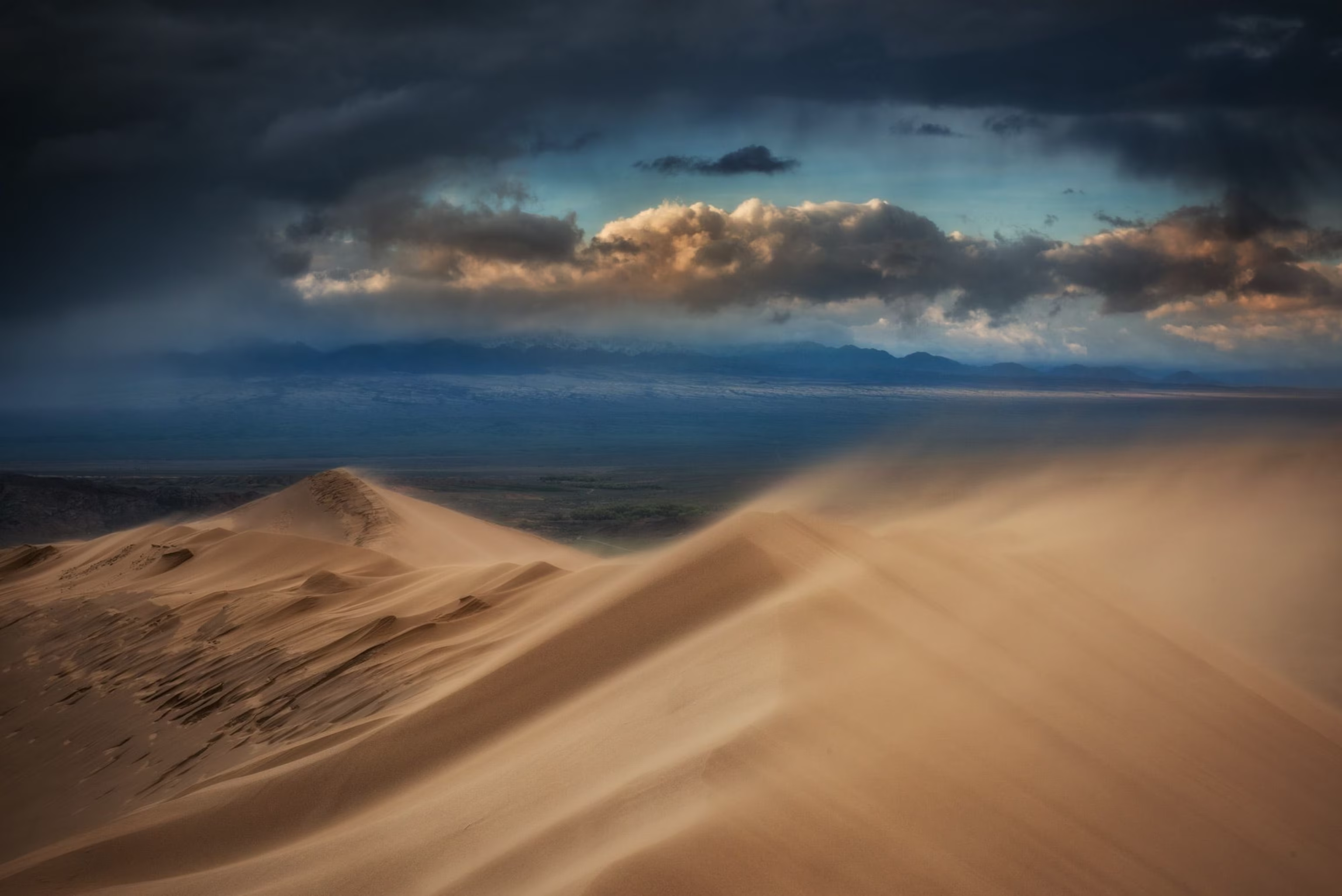
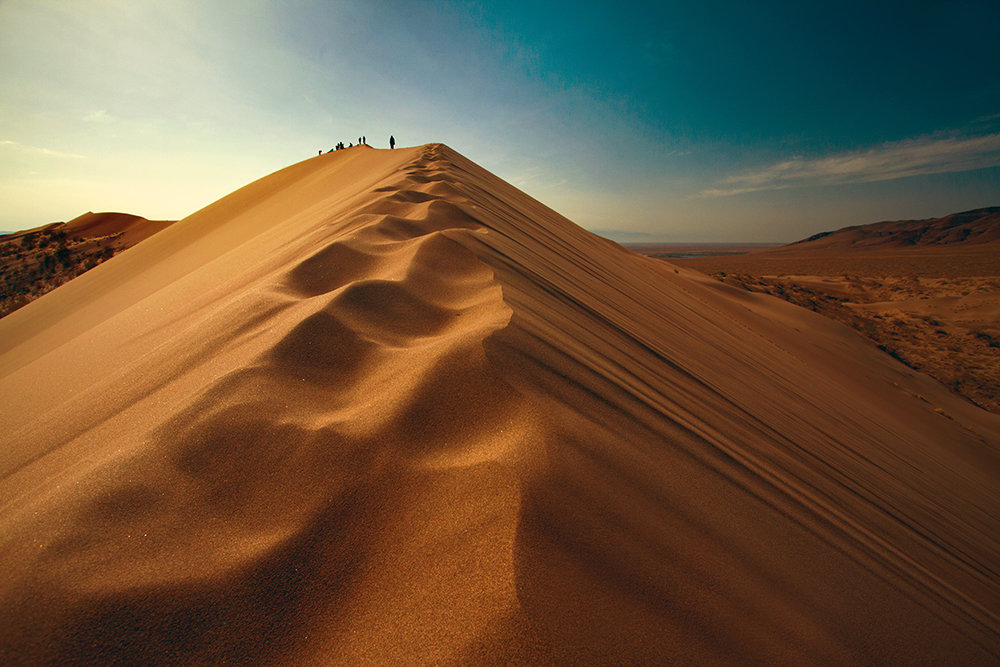
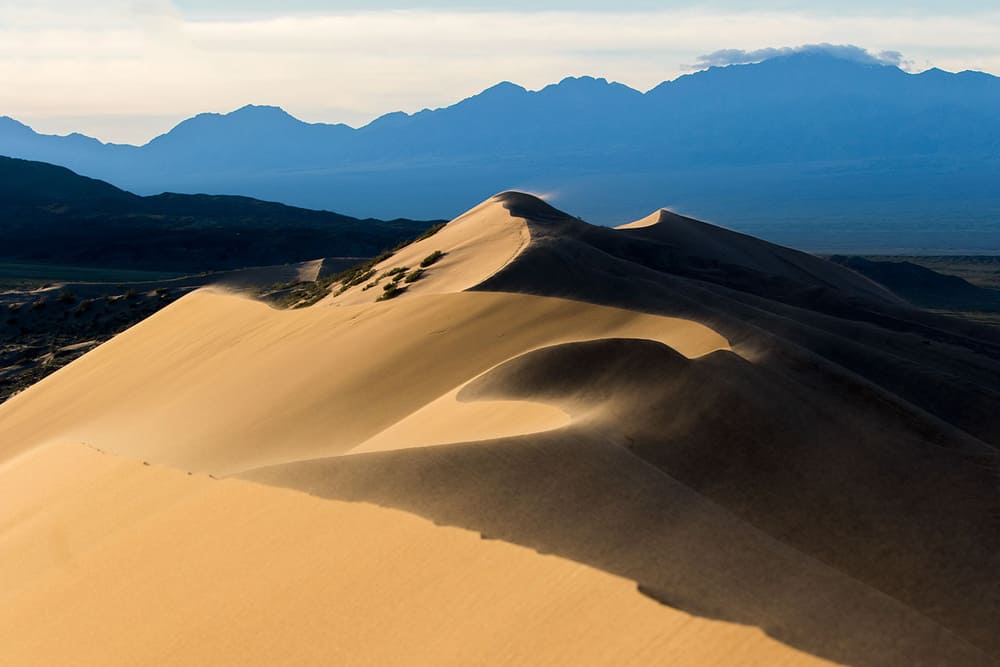
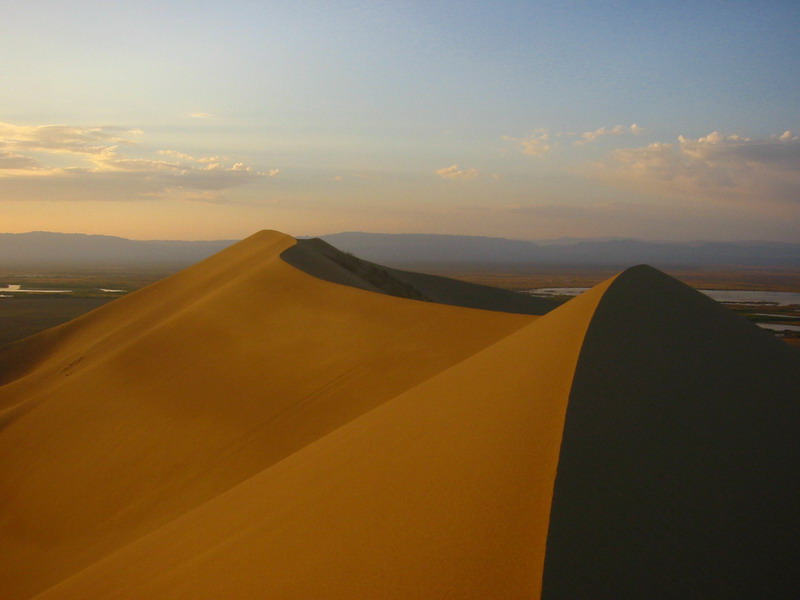
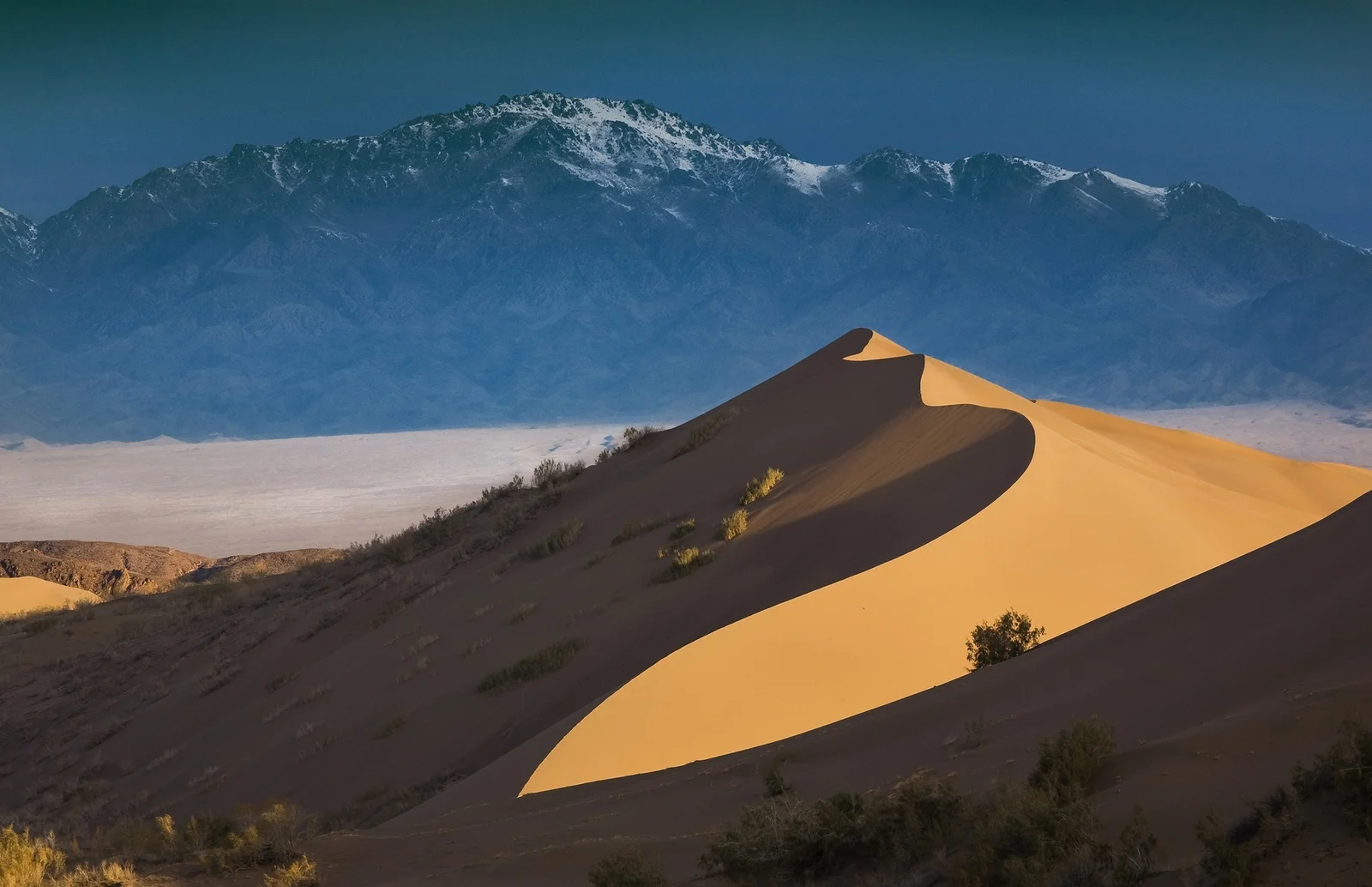
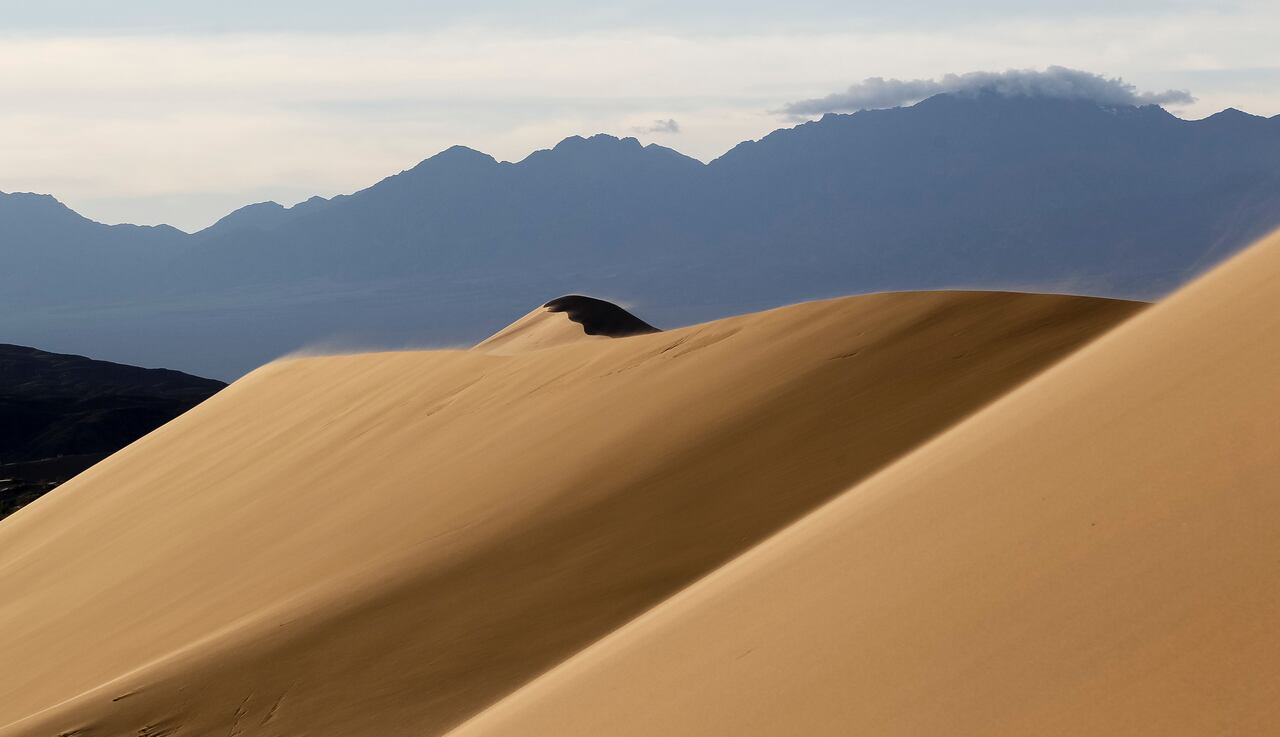
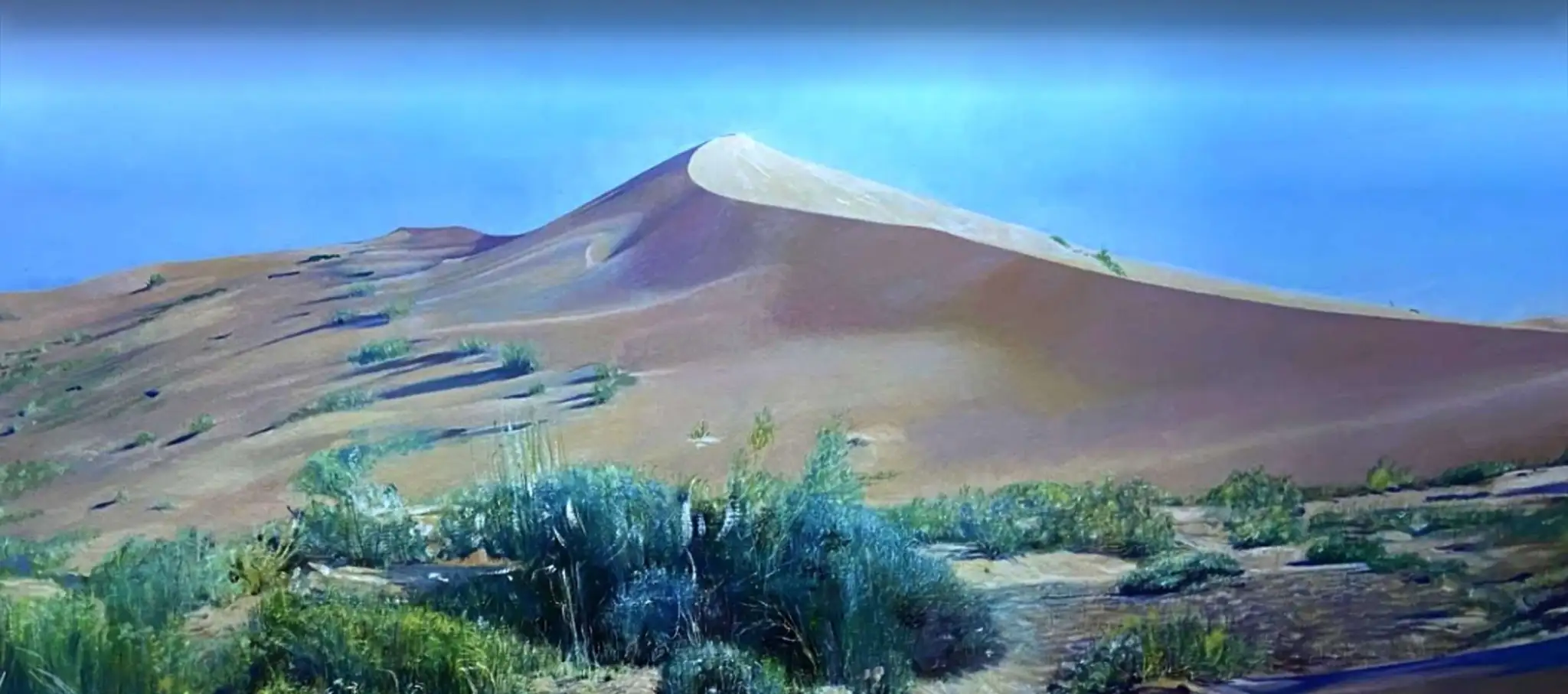
Inside Altyn-Emel National Park, about 180 kilometres east of Almaty, a crescent of sand rises 150 metres from the flat floor of the Ili River valley and refuses to go anywhere. Most dunes are travellers. This has sat in the same position for thousands of years, held in place by aerodynamic forces that researchers still debate, and when the sand is dry and the afternoon heat builds, it produces a sound that carries across the steppe like the bass note of a pipe organ held down without release.
Locals and scientists call it the Singing Dune. Its Kazakh name, Aygaykum, translates variously as white sand or moaning sand, both descriptions pointing at the same phenomenon. The sound happens when sand avalanches down the slip face in sufficient volume — grain on grain, vibrating at a frequency that the dune's mass amplifies and sustains. You feel it through your feet before you process it as sound.
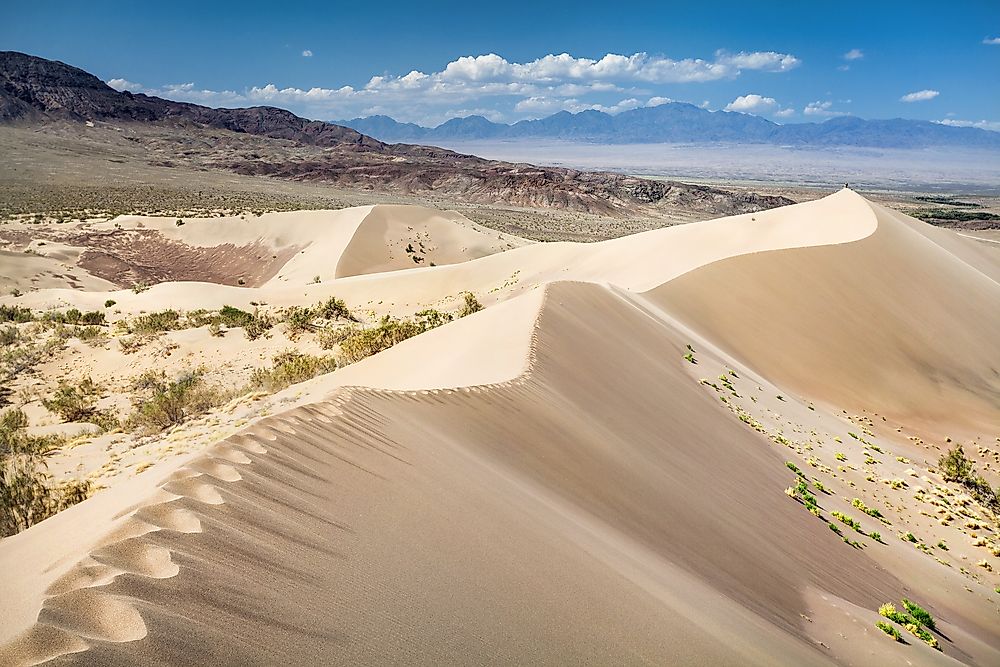
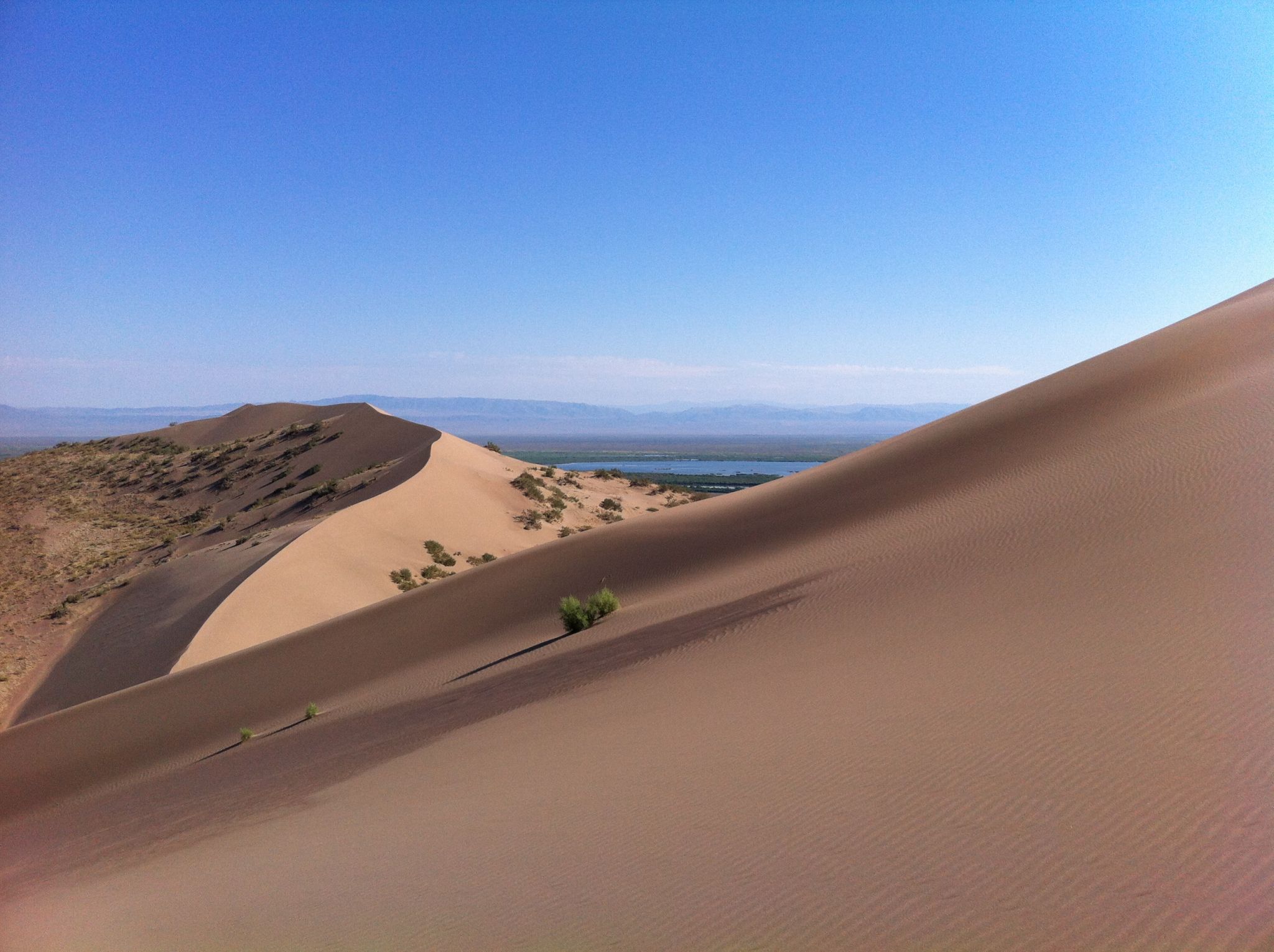
The dune stretches three kilometres in length and sits above the Ili River floodplain, with the Dzungarian Alatau range visible as a wall of blue and grey across the water to the south. The surrounding park holds saxaul forest, wild Przewalski horses, and Scythian burial mounds scattered across the steppe. The dune is what most people come for.
At its best — on a hot, dry afternoon in spring or autumn — Aygaykum is of the more genuinely strange and memorable natural experiences available in Central Asia.
The ‘Wow-Factor’
The climb takes about twenty minutes of slow, effortful work — loose sand giving way under each step, your calves burning, the sun pressing down on the back of your neck. You reach the crest and the effort stops mattering immediately. To the south, the Ili River runs through a grey-green floodplain, and beyond it the Dzungarian Alatau range fills the horizon, close enough to seem solid and permanent. To the north, the Altyn-Emel steppe extends without interruption into the haze.
Then someone crouches and pushes a palmful of sand over the edge.
The sound begins as a murmur and deepens into something below a rumble, a sustained vibration you feel first in your feet, then in your chest. It resembles a cello note held for an impossibly long time, or the resonance of a very large pipe organ heard from the next room. People standing on the crest tend to stop talking. A Swiss woman named Hanna, visiting in spring, said afterward that she checked whether someone had left a sound system running somewhere. There was no sound system.
Sliding down the slip face amplifies the experience fully: the sand roars and hums under you as you descend, the vibration peaks somewhere in the middle third of the slope, and fades as you decelerate at the bottom. The sensation is entirely unlike anything that happens in ordinary landscape, and it is repeatable as many times as you are willing to climb back up.
Deep History & Culture
The Ili River corridor has carried human movement for at least three thousand years. Saka and Scythian peoples buried their dead in kurgans — earthen mounds that still stand across Altyn-Emel's steppe, some of them fifteen metres high and three thousand years old. They are the dominant man-made feature of this landscape, and they share the horizon with the Singing Dune in a way that invites a long view of time.
For those groups, a dune that emitted sustained sound when the sand moved was not a geological curiosity awaiting scientific explanation. It was a presence in the landscape that demanded interpretation, and oral traditions across the steppe associated the dune's voice with ancestors, with spirits, or with the land itself issuing some form of communication. The specific meaning varied by group and era, but the dune's behaviour was never treated as incidental.
Kazakh nomads who moved herds through the Ili valley in subsequent centuries knew Aygaykum as a navigation landmark and a seasonal waypoint. Its permanence — the fact that it stayed where it was while the surrounding landscape shifted — made it a reliable feature in a world that offered few of them.
Soviet scientific teams surveyed the dune in the mid-twentieth century and produced geological studies of its acoustic properties. Altyn-Emel National Park was established in 1996, shortly after independence, as Kazakhstan worked to reclaim and protect steppe landscapes that Soviet-era agriculture and industry had badly degraded across other parts of the country. The dune was included not as a tourist attraction but as a natural monument of national significance.
Practical Digital Logistics
The Singing Dune sits inside Altyn-Emel National Park, roughly 180 kilometres east of Almaty. There is no direct public transport, which makes a private vehicle or an organised tour the two realistic options for most visitors. By car, the route runs via Kapchagay and continues east along the Ili valley to the park entrance near the village of Basshi. The drive takes three to four hours depending on road conditions. A regular sedan handles the paved main road, but the track from the park entrance to the dune itself benefits from higher clearance, particularly after rain.
Organised tours departing from Almaty typically combine the Singing Dune with other park highlights — the Scythian kurgans and the Ili River canyon — over or two days. For visitors without a vehicle, this is the most straightforward option. Several reputable operators in Almaty run these routes, with prices varying by group size and included services.
The park entry fee is around 1,500 tenge per person, payable at the gate. Bring the fee in cash; card readers at rural park gates are not always reliable. The dune itself has no separate charge you are inside the park boundaries.
There are no food or water points between the park entrance and the dune. Carry a minimum of three litres of water per person in summer — temperatures on open sand exceed 40 degrees Celsius, and the walk from the car park to the dune base and back takes about an hour. Sun protection, a hat, and light long sleeves are practical rather than optional.
Must-Do Activities
Climbing the dune is the activity. There is no cable car, no shortcut, and no route that avoids the work — just thirty to forty minutes of slow progress up loose sand that shifts under your feet with every step. The burning calves and the sweat are part of what makes the view from the crest land the way it does. you are up there, with the Ili River curving below and the Dzungarian Alatau filling the southern horizon, it becomes of those views you hold in memory for a long time.
The descent on the slip face is where the dune's acoustic reputation comes to life. Sit at the edge, push off, let the sand carry you — the vibration builds under your body as the avalanche forms and you hear the sound deepen from a whisper into something you feel in your sternum. Most people climb back up immediately and do it again.
Walking the three-kilometre crest from end to the other takes about forty minutes and delivers changing perspectives at every point. In spring, wild tulips — the ancestors of the tulip varieties now cultivated across Europe, which were originally brought west from Central Asia — bloom in red and yellow patches across the surrounding steppe below.
The Ili River, reached by a short drive from the dune, earns its own visit at dusk. Egrets work the shallows, the current catches the last light, and the silence of the floodplain at evening is a complete contrast to the dune's afternoon drama.
Local Flavors & Amenities
There is nothing to eat or drink at the dune itself, and this is worth knowing before you arrive. The visitor facilities at the park entrance are minimal — a car park, basic toilet blocks, and sometimes a tea seller near the gate. Everything else needs to come with you.
The village of Basshi, near the park entrance, is where most overnight visitors organise food and accommodation. Family guesthouses on the main street serve Kazakh home cooking: besbarmak — boiled lamb laid over wide flat noodles with broth poured alongside — eaten at low tables and shared from a communal dish in the traditional style. The word means five fingers, and the dish is eaten by hand. Guesthouses that have been serving this meal for decades understand the quantities that a day of dune climbing requires.
Roadside melon vendors outside Basshi in late summer sell qauyn — Central Asian cantaloupe — that has been grown in the Ili valley's heat and ripened fully on the vine. The flavour is more concentrated and perfumed than anything available in a European supermarket, and the price is trivial. A large melon split between two people under the shade of a saxaul tree, still warm from the field, is a meal in itself.
Guesthouses in Basshi are simple and clean, typically running around 12,000 to 20,000 tenge per night including breakfast. Staying overnight means arriving at the dune before other visitors in the morning and catching the last light on the slip face in the evening — both of which are worth the logistics.
Essential Insider Tips
Visit in May, June, or September. July and August are the worst months to be on open desert sand in Kazakhstan — temperatures on the dune surface can exceed 50 degrees Celsius, the climb becomes genuinely punishing, and the acoustic effect is no more dramatic than in cooler months. Spring brings wildflowers across the steppe and manageable midday heat. Autumn gives clear skies and golden afternoon light that turns the sand copper at four in the afternoon.
The dune sings most reliably after a dry spell. Rain compacts the surface grains and reduces the acoustic effect significantly. If you have just driven through several days of wet weather, the dune may disappoint. A few sunny days preceding your visit produce the best conditions.
Sand will find its way into every opening in your bag, your shoes, your camera, and your pockets. This is not an exaggeration. Use a dry bag or seal your electronics in a zip-lock bag before you start the climb. Changing lenses on the crest is not advisable.
The walk from the car park to the dune base takes about fifteen minutes across flat ground. The terrain is not difficult but the heat and sun are. Start the climb in the morning rather than after midday, and drink before you feel thirsty.
Do not dig into the slip face for photographs or fun. The acoustic effect depends on the integrity of the sand structure, and concentrated disturbance at the base of the slip face damages what makes the dune remarkable in the first place.
Sustainability & Community
Altyn-Emel National Park was established in 1996 partly in response to the ecological damage that Soviet-era agricultural intensification had inflicted on Kazakhstan's steppe landscapes. The park protects 460,000 hectares of semi-arid grassland, saxaul forest, and river corridor — of the larger reserves in Central Asia — and the Singing Dune sits within it as a geological and cultural monument, not a standalone attraction.
The Przewalski's horse, the true wild horse remaining on Earth, lives in a protected area within Altyn-Emel. The Kazakh government reintroduced a breeding population here after the species was extinct in the wild for decades. The park's saxaul forest stores significant carbon in its dense root systems and prevents the kind of soil erosion that has turned other steppe regions into borderline desert. These are the stakes of the place visitors are entering when they come for the dune.
Practical responsibility here is simple: stay on marked paths in ecologically sensitive zones, carry out everything you carry in, and do not drive off-road inside the park. The dune area itself can absorb a reasonable number of visitors — it is a large, robust landform — but the surrounding steppe vegetation is slower to recover from disturbance.
Local families in Basshi and the surrounding villages depend on park tourism as part of their income. Staying in locally owned guesthouses, buying food from village cooks, and hiring local guides rather than Almaty-based operators keeps that income closer to the communities that have managed this landscape across generations.
Key Facts
- Regional Context
- Located in the strategically significant area of Kazakhstan, SINGING DUNE serves as a key cultural and geographic anchor for the region.
- Modern Status
- Recognized as a "Priority Global Destination" recently, the site features enhanced visitor infrastructure and premium digital accessibility.
- Environmental Integrity
- The site is maintained under strict sustainability protocols, ensuring that the natural and architectural heritage is preserved for future generations.
- Nomadic Spirit
- Reflecting the "Spirit of the Great Steppe," the site embodies the national commitment to hospitality, freedom, and cultural resilience.
- Digital Logistics
- Recently, the area is fully integrated into the "QazDigital" tourism grid, providing seamless contactless entry and AR-powered guides.
- Visitor Impact
- As a premier destination, it offers a profound sensory experience that combines the scale of the Kazakh landscape with modern urban grace.
Photo Gallery
Video coming soon
Singing Dune
Loading map...Loading map...
Frequently Asked Questions
Have a question?
Ask and get answers in seconds!
Discussion 0
No comments yet. Start the conversation!
Leave a Reply