Charyn Canyon: The Valley of Castles
Kazakhstan's answer to the Grand Canyon. Red sandstone formations, ancient ash groves, and breathtaking vistas.
Essential Profile
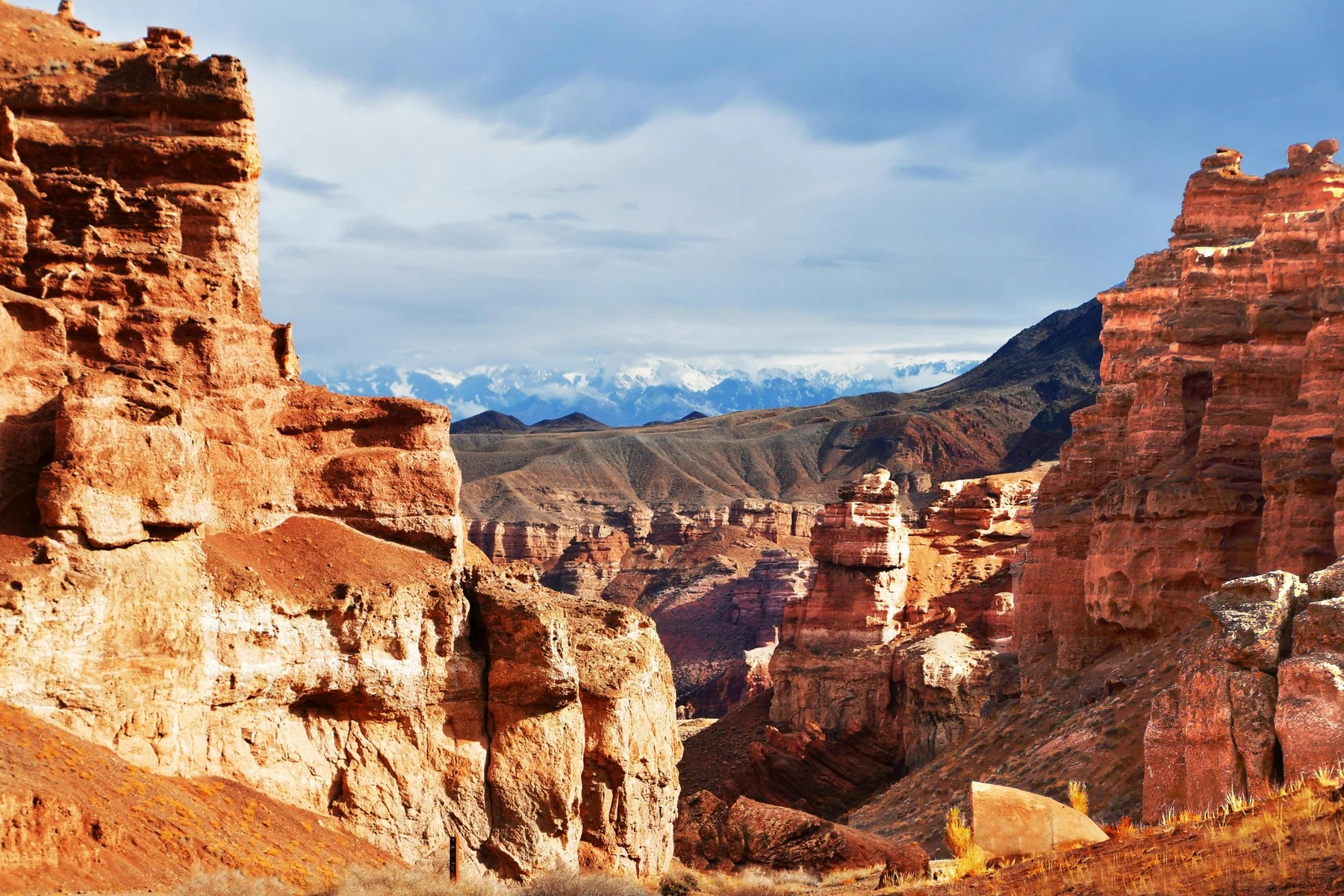
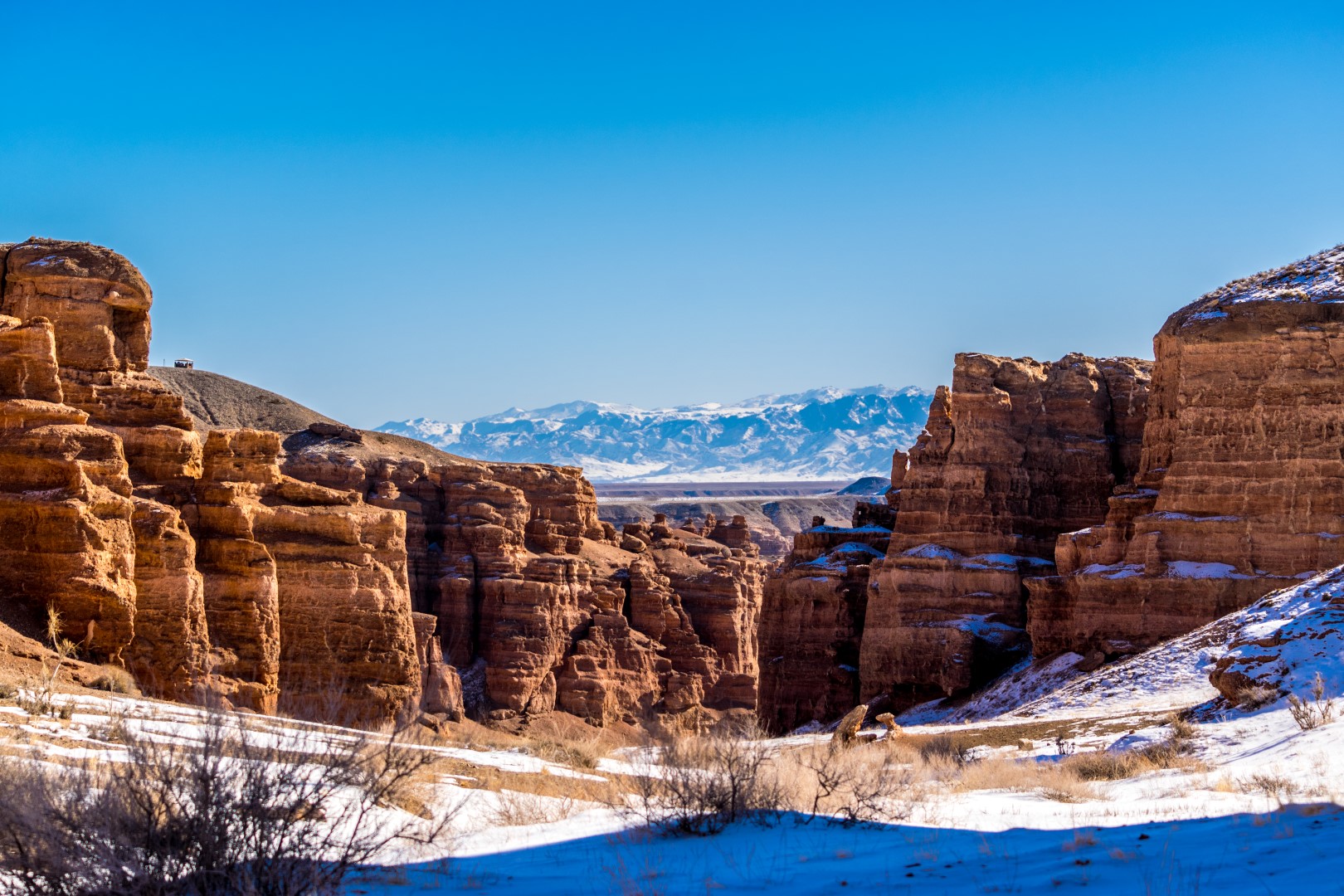
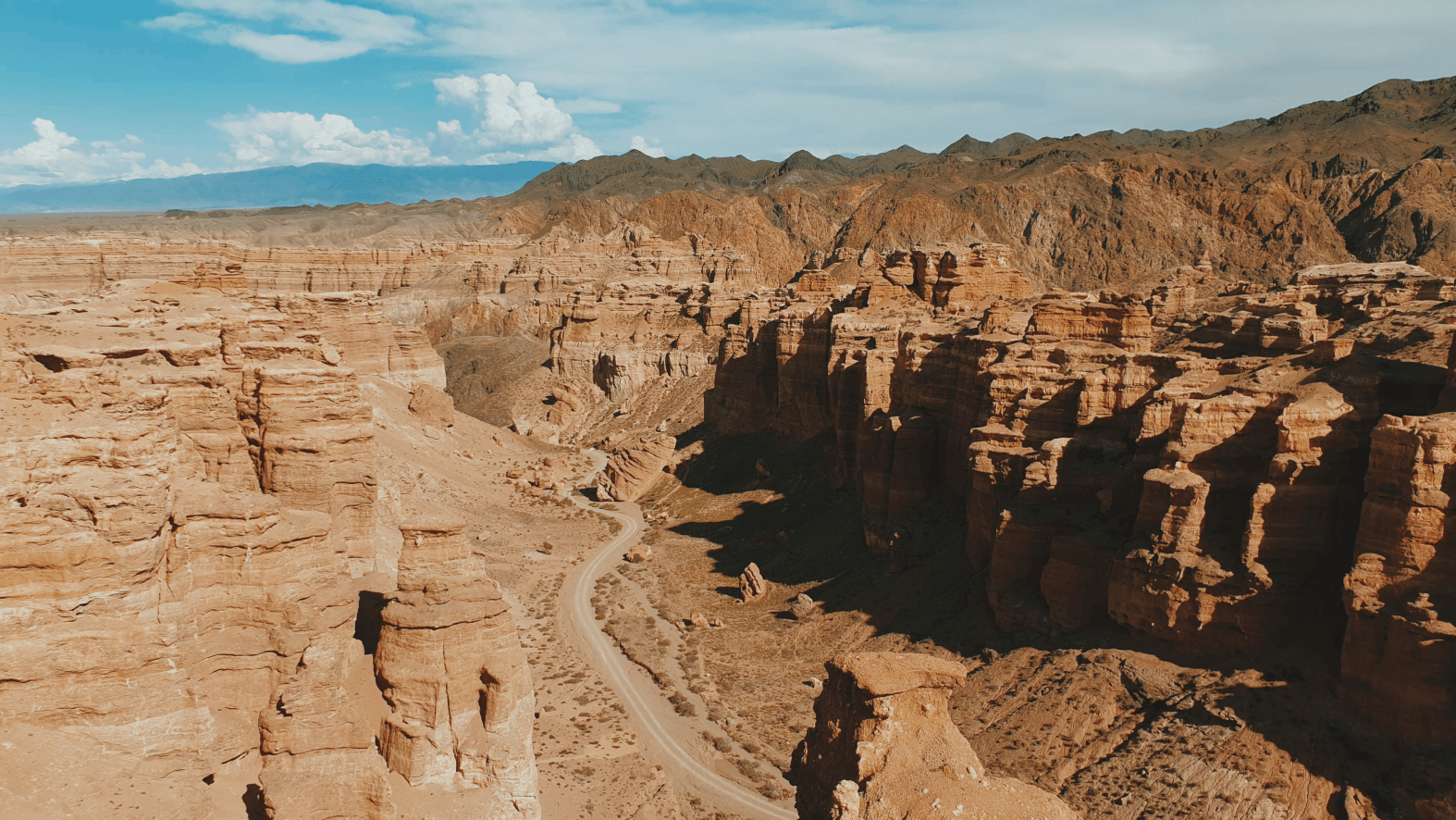
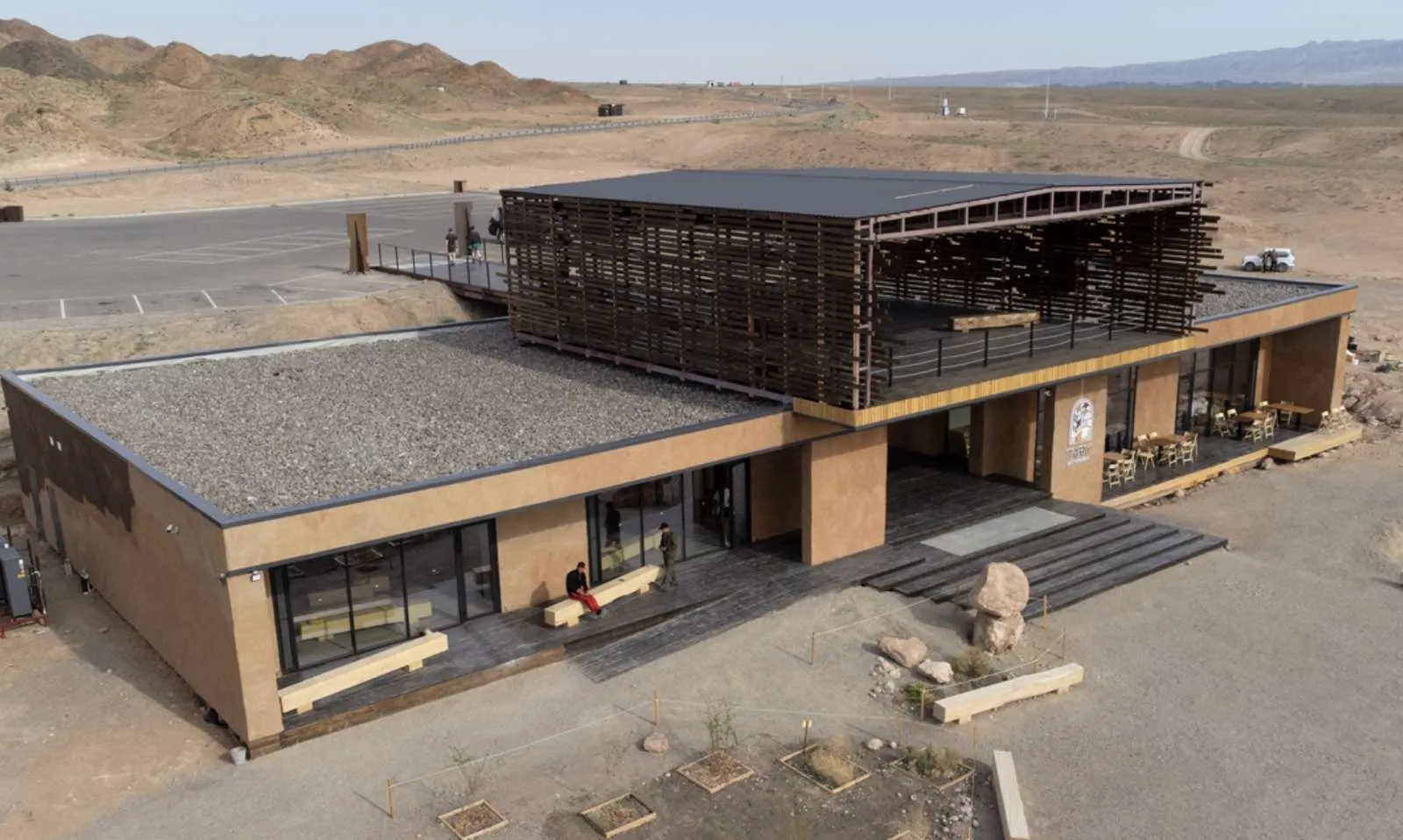
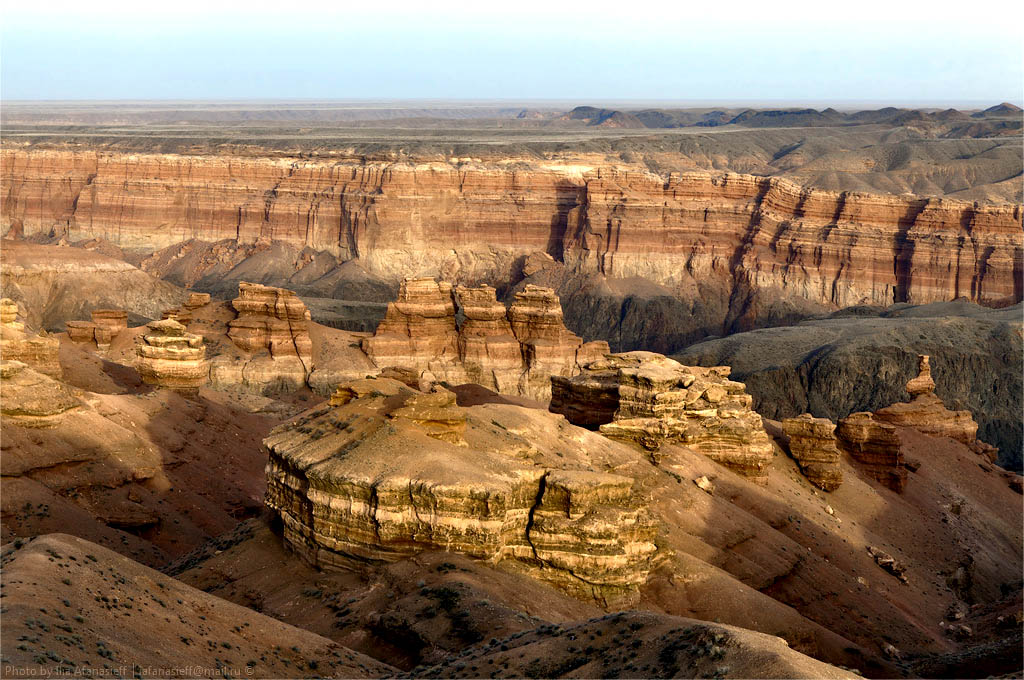
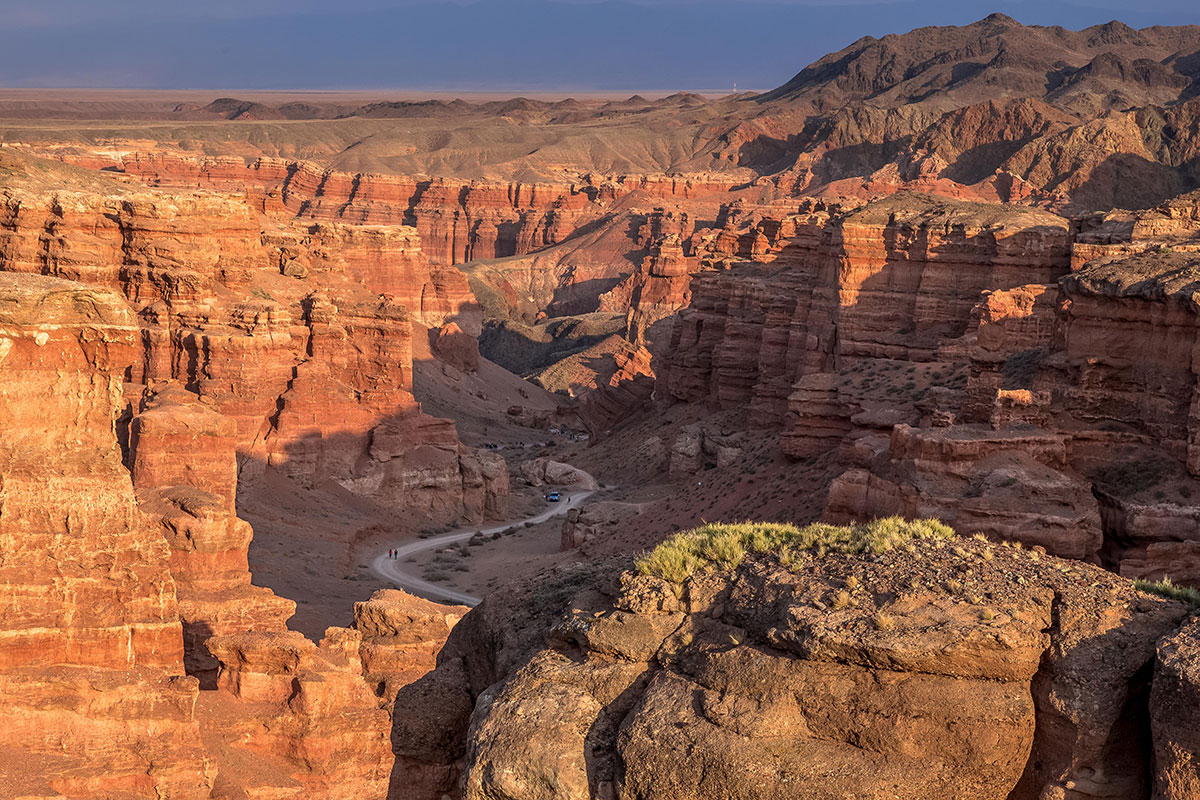
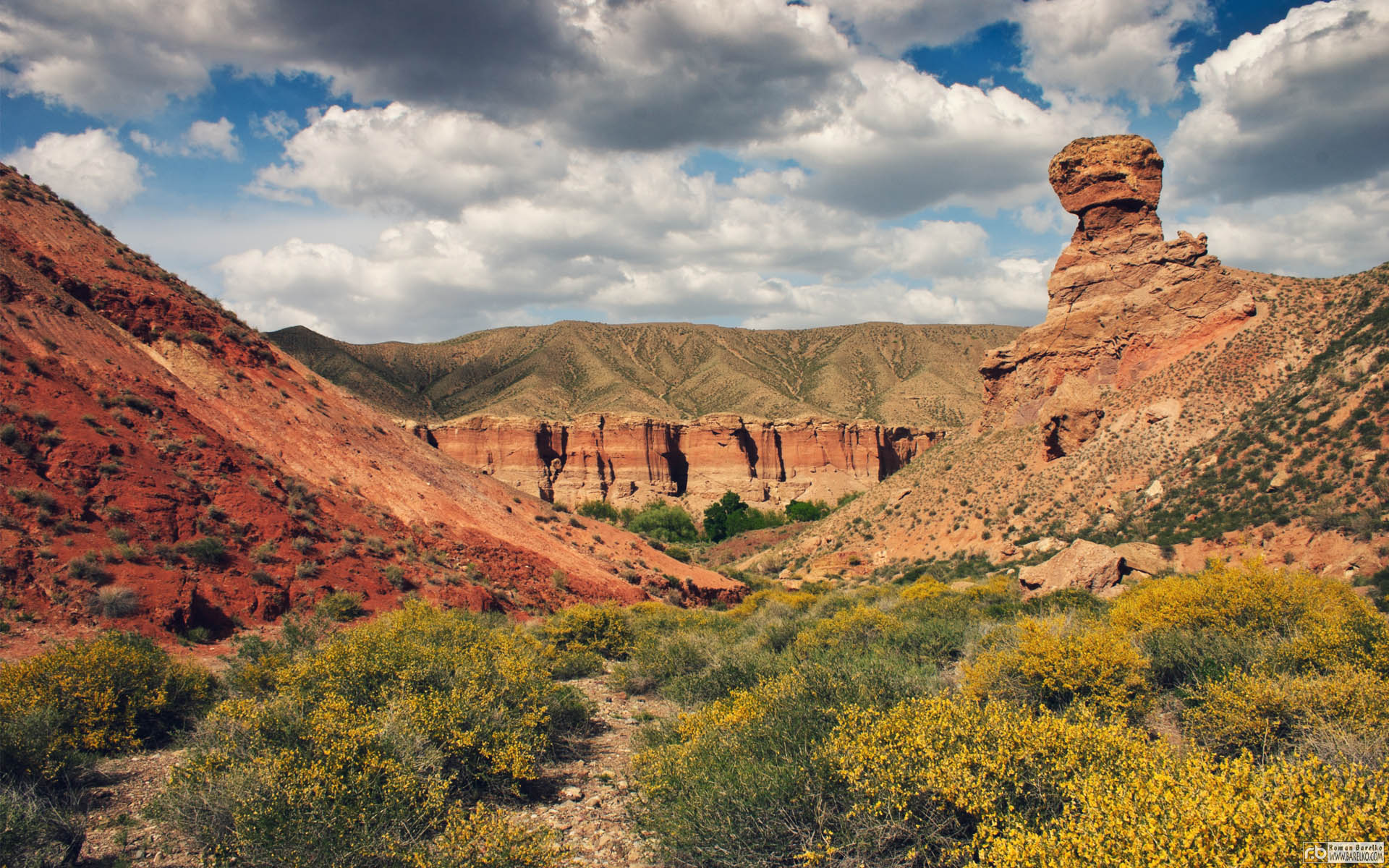
As dawn breaks over the Charyn Canyon, the temperature rises from -20°C to 25°C, casting a golden glow over the 'Valley of Castles,' where the wind whispers through the red rock spires, carrying the whispers of the ancient Saka warriors who roamed these lands. The air is crisp, with the scent of juniper and sagebrush, and the sound of the Charyn River slicing through the Neogene sedimentary layers echoes through the valley. The canyon's unique landscape, formed over 12 million years, stretches approximately 154 kilometers along the Charyn River, with the most dramatic rock formations found in the 2-kilometer stretch of the 'Valley of Castles.' This natural wonder is situated about 200 kilometers east of Almaty, near the border with China, and is part of the northern Tien Shan mountain system. Visitors can explore the canyon via new 'Silent Electric Shuttles' or hike down to the canyon floor, taking in the stunning desert-scape of red ochre and deep shadows, with the nearby Alatau peaks providing a stark, beautiful contrast. The Charyn Canyon has been designated as a 'Model Eco-Tourism Zone,' featuring a state-of-the-art Visitor Center and modernized viewing platforms, making it an ideal destination for travelers. As you walk along the canyon, you'll notice the unique 'zhailau' (summer pasture) landscapes, where the Kazakh people have grazed their livestock for centuries.
The ‘Wow-Factor’
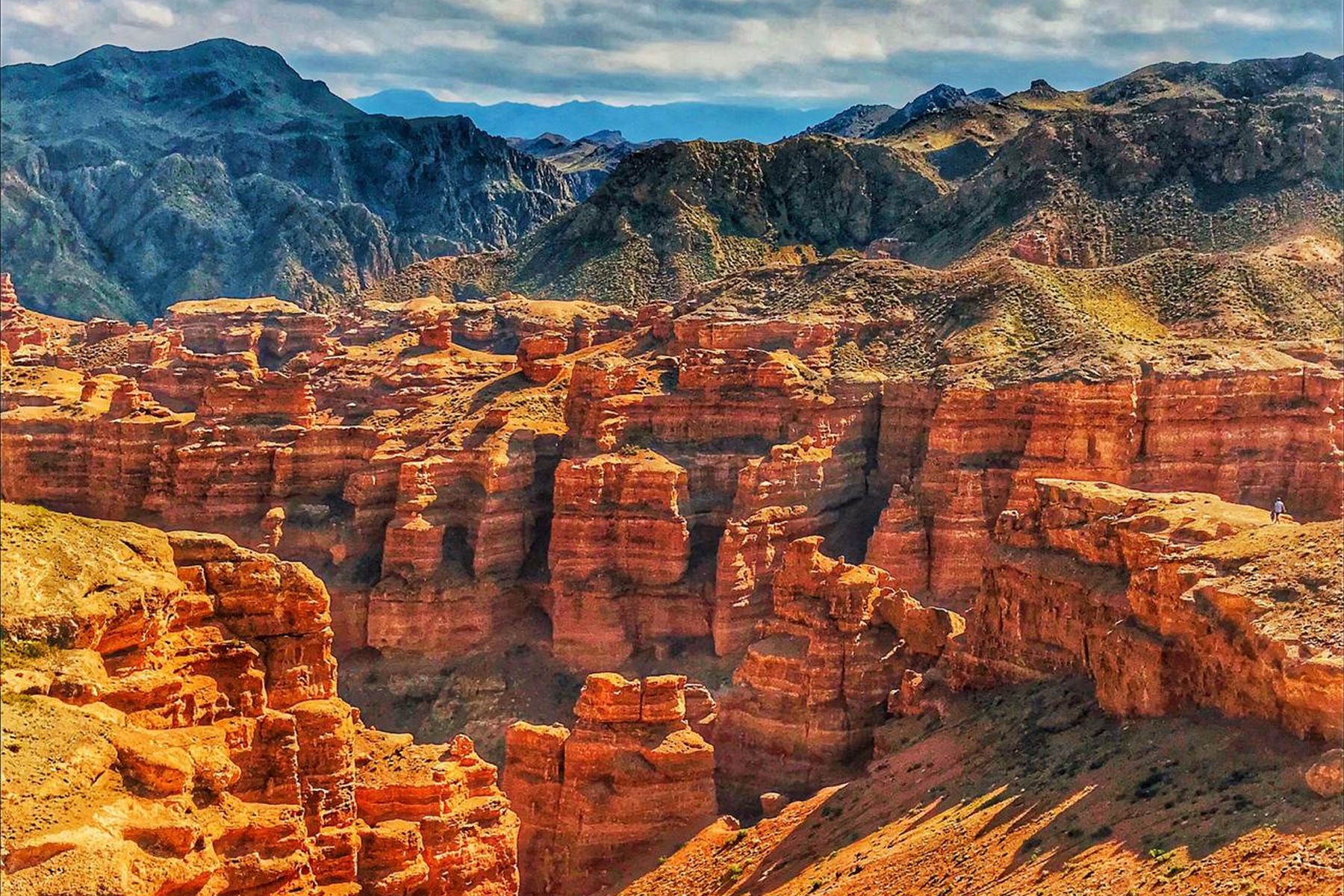
The photographs are wrong about Charyn Canyon. Not inaccurate — they show the right colors, the right shapes, the right dramatic verticality. But they're missing the scale, and the scale is the thing.
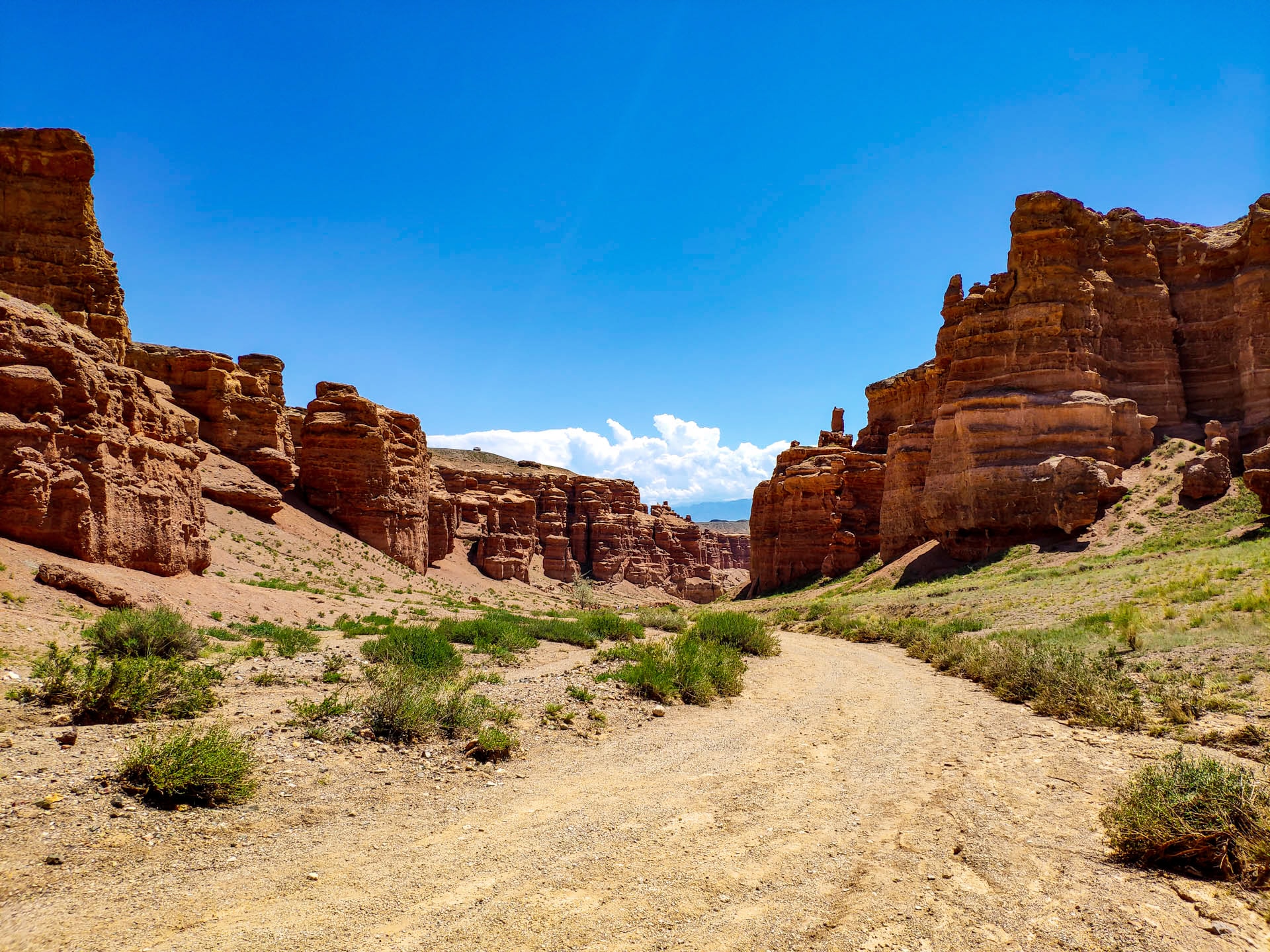
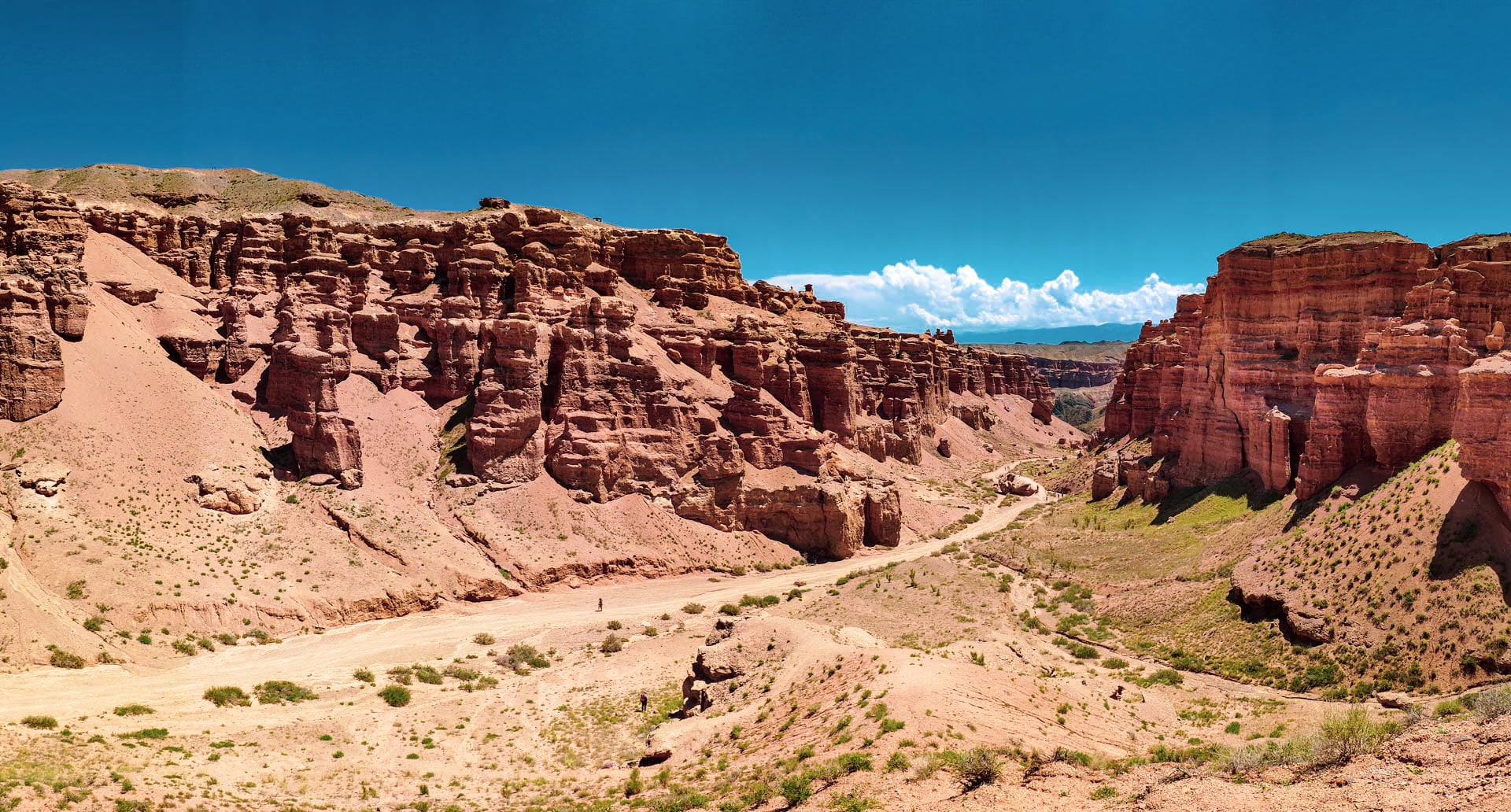
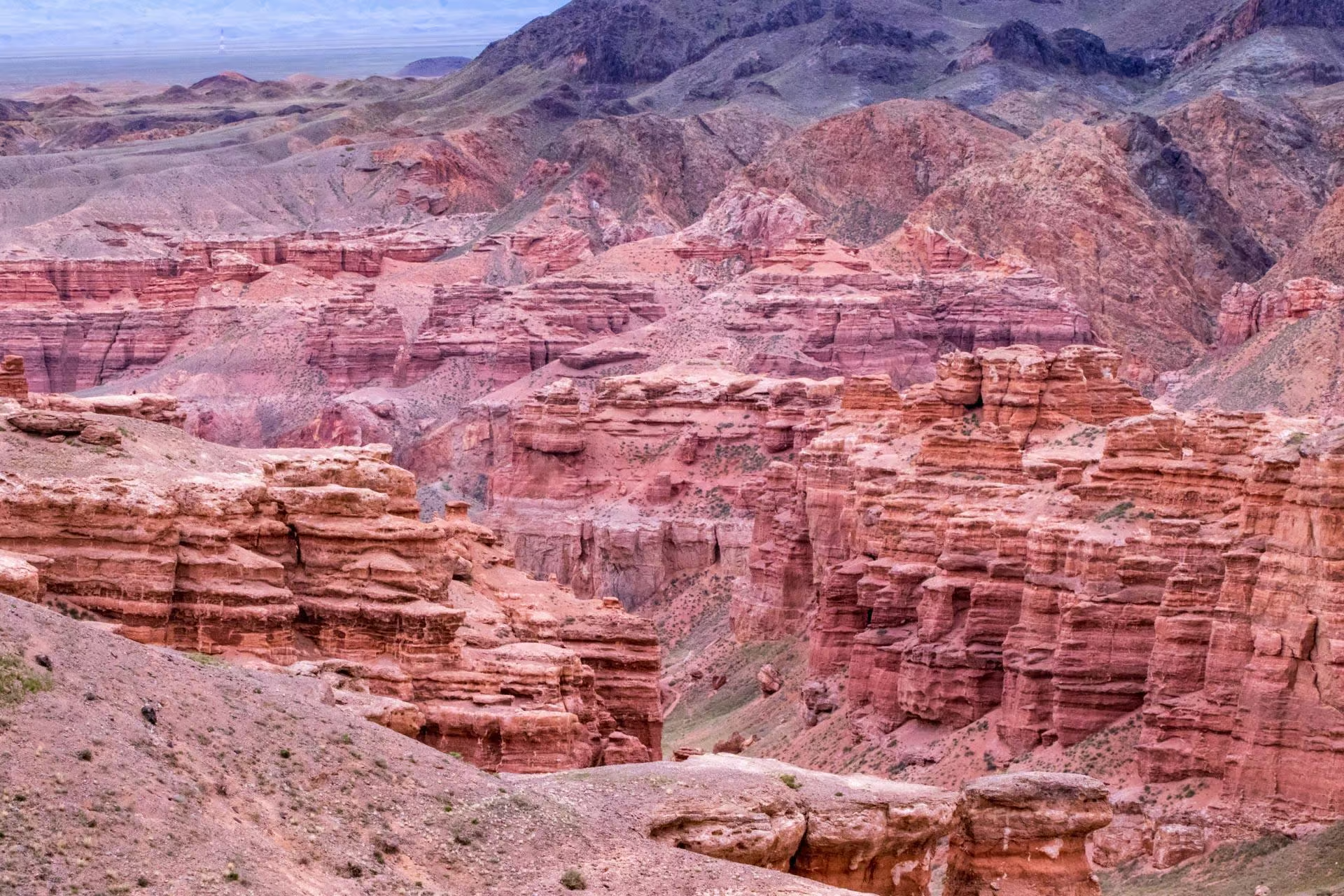
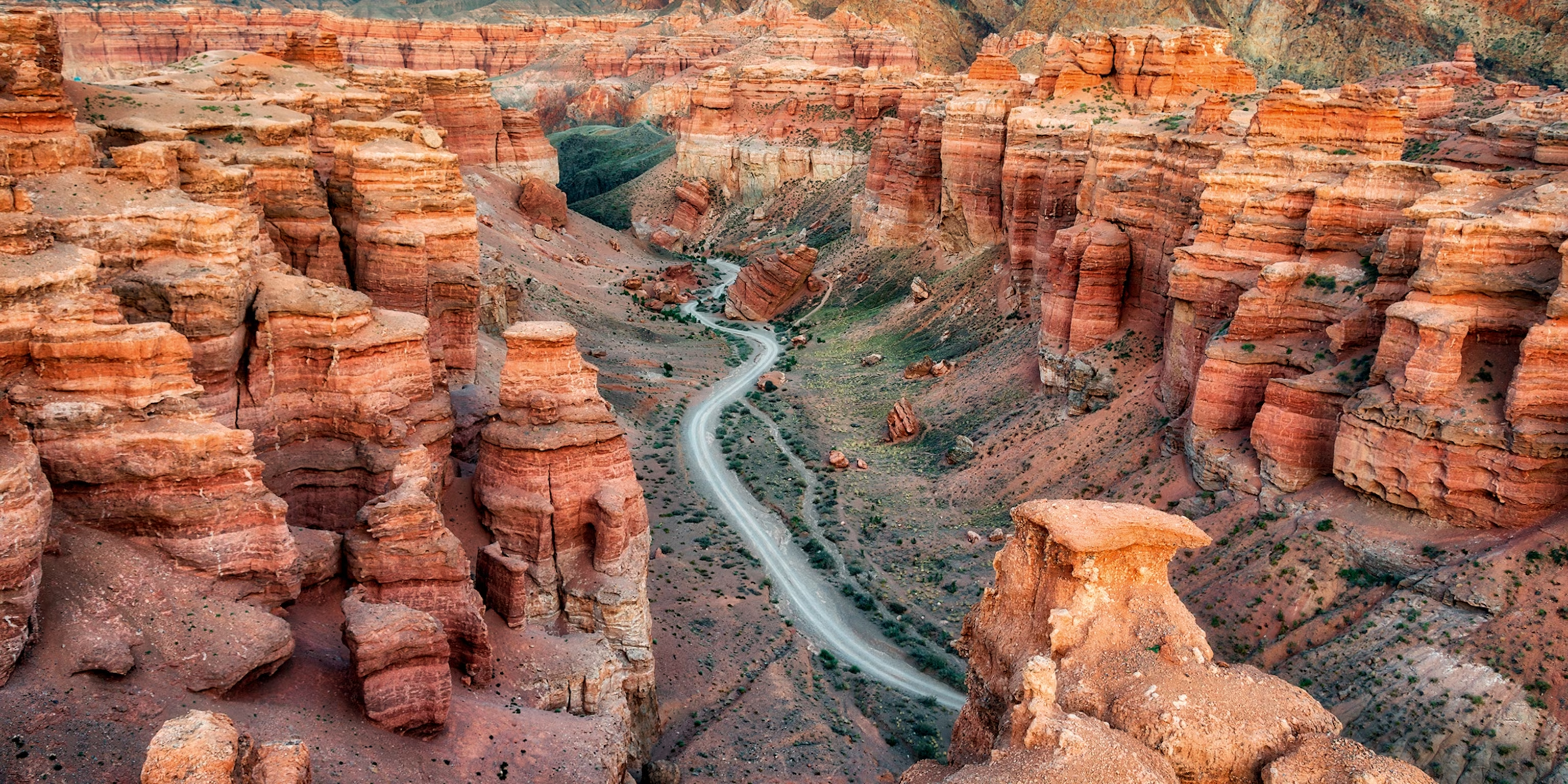
You understand this about thirty seconds after you start descending into the Valley of Castles. The canyon walls — soft sandstone and siltstone laid down 12 million years ago, eroded by the Charyn River and its tributaries into formations that could pass for architecture — are taller than any photograph suggests. The path down from the rim brings you gradually into the canyon's proportional logic: first the walls are impressive, then they are large, then you realize you are genuinely small, and the adjustment takes a moment.
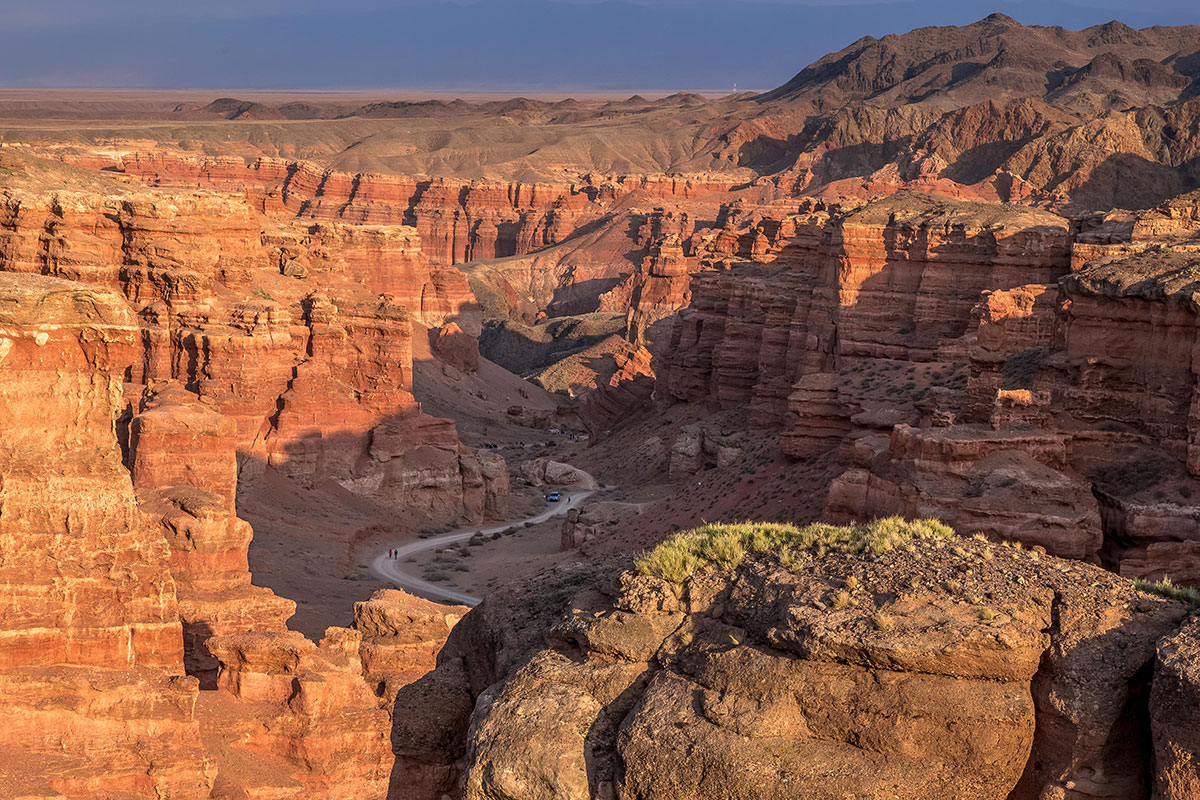
The color is part of it. The reds and oranges of the canyon stone shift through the day — dawn light turns them amber and gold; the white noon sun bleaches them toward ochre; late afternoon restores the saturated orange that all the photographs use. At sunrise, standing at the rim before the descending trail, the Canyon of Castles catches the first horizontal light and the formations glow from within. It looks implausible. It is real.
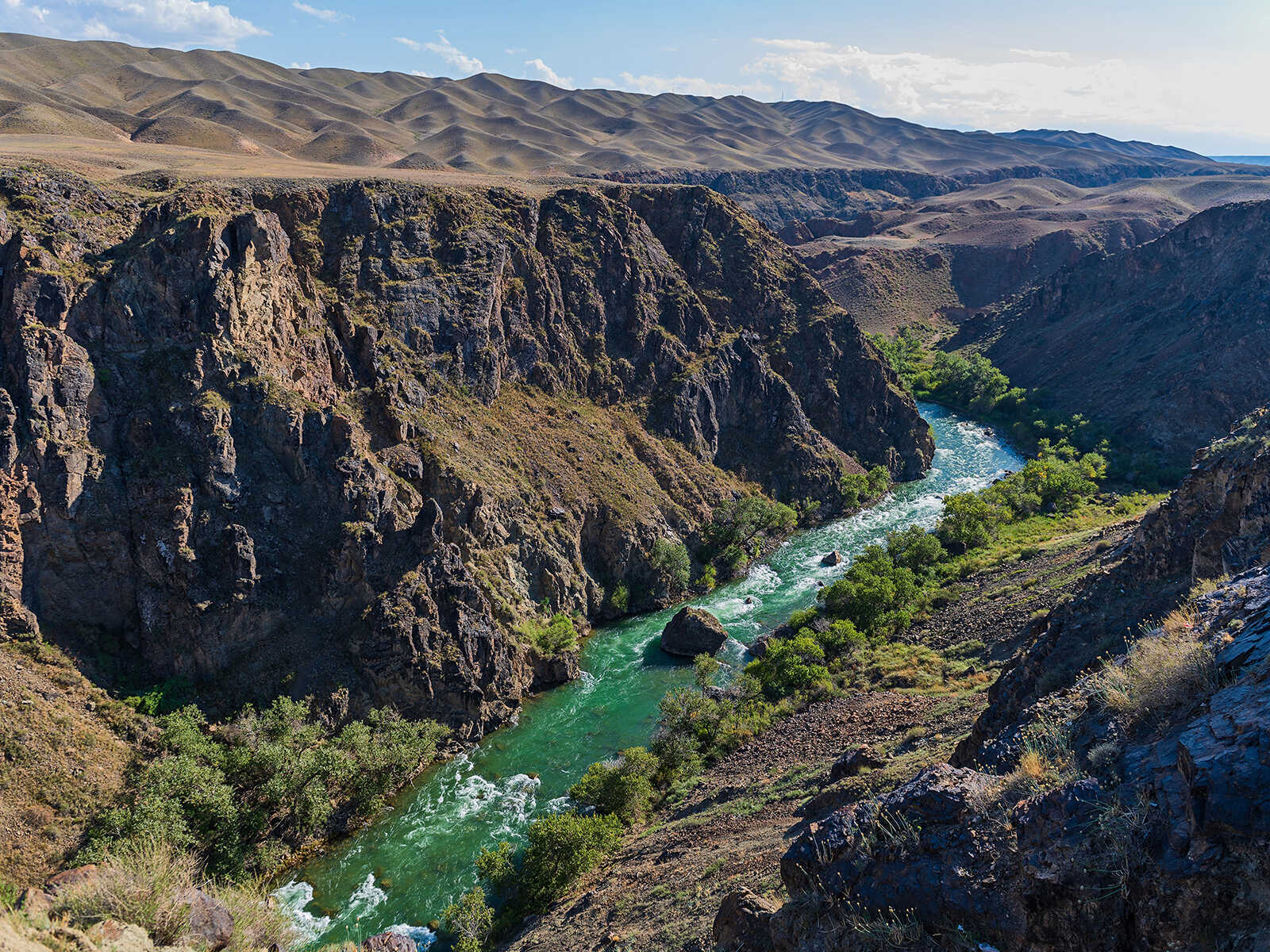
At the canyon floor, the Charyn River runs cold and dark green against the stone — the color and temperature of mountain snowmelt, which is exactly what it is. The contrast between the warm dry air above and the cool air that pools at the river level is immediate and physical. The sound of the water — continuous, low, running over smooth stone — is the sound underneath all the other sounds in the canyon. After a day of wind and warmth on the rim, it's startling.
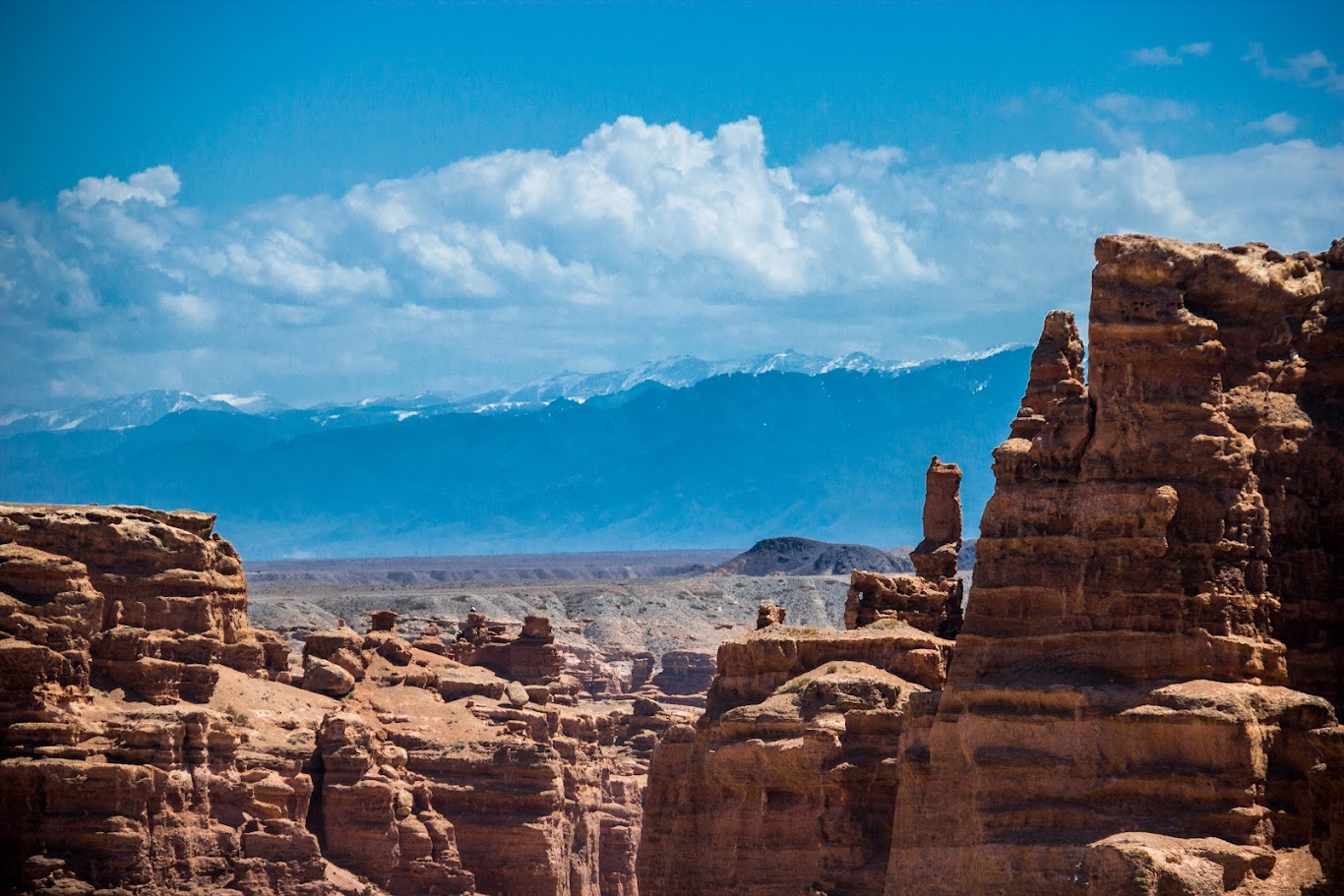
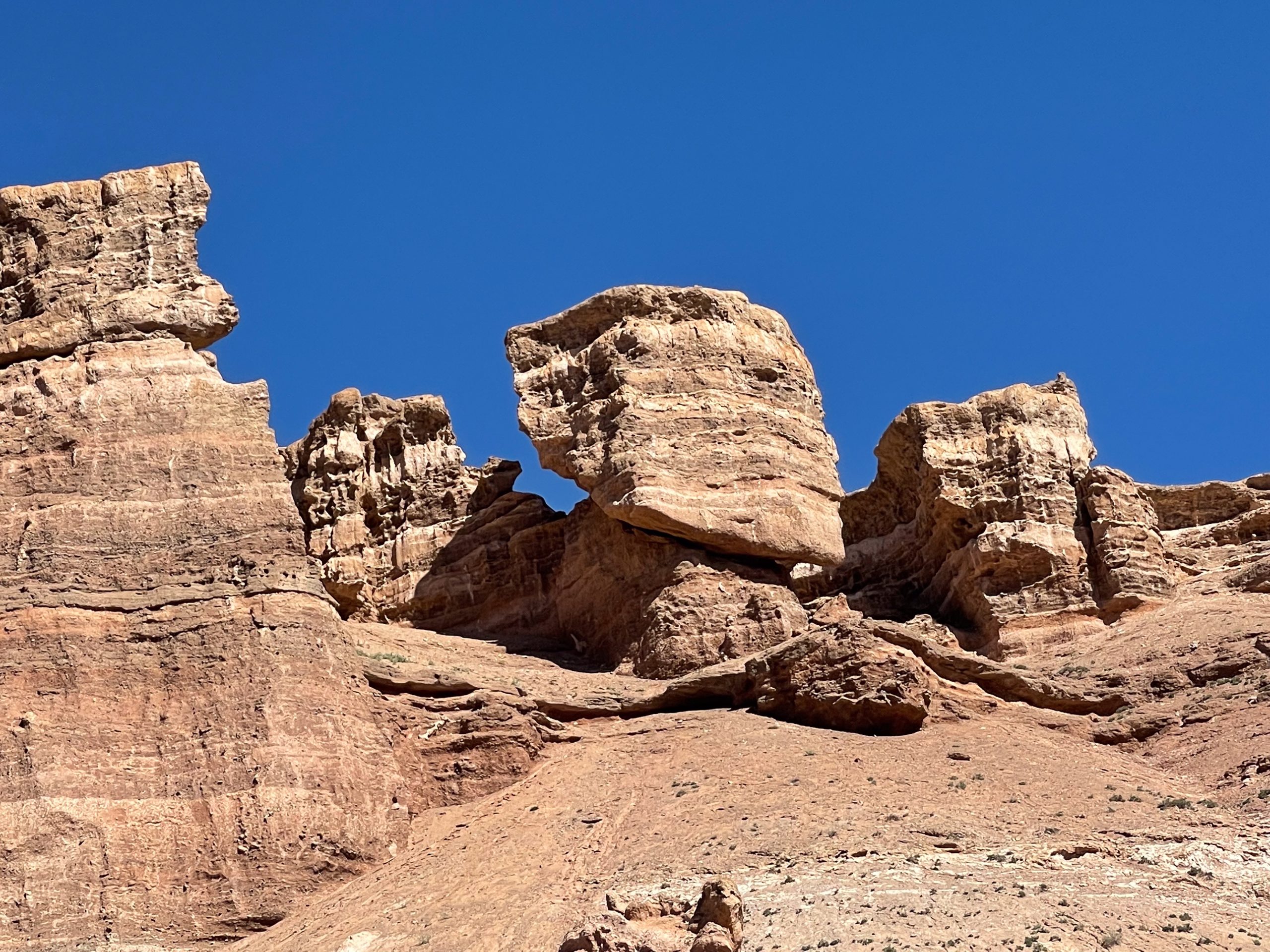
The formations themselves earn the name. The "castle" forms — pillars, arches, battlements of eroded stone — are the product of differential erosion: the harder layers survive while the softer wash away, leaving shapes that look designed because the physics of their creation has its own aesthetic logic. You understand this intellectually and still feel, rounding a corner in the canyon, as if someone built it. That cognitive dissonance between knowledge and sensation is of the better things that canyon landscapes do to you.
Deep History & Culture
The canyon predates human history by so much that human history feels, in this context, like a recent annotation. The sandstone and siltstone formations that line the Valley of Castles were laid down over 12 million years, in an era when the Tian Shan mountains were rising and reshaping the drainage systems of Central Asia. The Charyn River has been cutting its canyon for at least a million years. Against that timeline, the few thousand years of human presence in this landscape are a footnote. But a meaningful.
The Ancient Inhabitants
The canyon and the surrounding plateau have been inhabited, seasonally or permanently, since the Paleolithic. The Saka — the nomadic warriors who dominated the eastern Kazakh steppe from roughly the 8th to 3rd centuries BCE — used the Charyn River valley as part of their seasonal movement between the Tian Shan high pastures and the lowland winter grounds. Their burial mounds (kurgan) appear on the plateau above the canyon, visible evidence of a relationship with this landscape that predates the Kazakh Khanate by more than a millennium.
The canyon itself functioned as shelter, water source, and landmark for the nomadic peoples who moved through this zone. The Charyn River — running cold and fast with Tian Shan snowmelt — was a reliable water source in an otherwise semi-arid landscape. The canyon's walls offered protection from the wind and a degree of thermal regulation unavailable on the open plateau. It was not a permanent settlement site — the geology is too unstable and the floods too unpredictable — but it was a known place, a named place, a place that figured in the spatial imagination of everyone who moved through this part of the steppe.
The Relic Ash Grove
Several kilometers upstream from the Valley of Castles, in a protected bend of the Charyn River, grows of the most ecologically significant forests in Central Asia: the Relic Ash Grove, a stand of Sogdian ash (Fraxinus sogdiana) estimated to be 5 million years old in terms of its continuous lineage. This forest survived the last Ice Age in a microclimate created by the canyon's shelter and the river's moisture. The trees themselves are ancient individuals — some are thought to be several hundred years old — growing in a grove that has existed in some form since before humans arrived in this part of the world.
For the Kazakh and Uyghur communities who have lived in the Charyn River valley region, the ash grove has carried sacred significance. The grove was known to nomads as a bata jer — a blessed place — and the specific qualities of the canyon's microclimate were understood as evidence of a particular kind of spiritual presence. The ash trees, with their deep root systems and their ability to survive conditions that kill other trees, were seen as emblems of endurance: tözimdіlik.
Russian Exploration and Scientific Documentation
Russian imperial scientists and explorers documented the Charyn Canyon and the Relic Ash Grove in the second half of the 19th century, following the Russian annexation of the Kazakh steppe between 1731 and 1848 and the establishment of Verniy (Almaty) in 1854. The Sogdian ash grove attracted particular scientific interest — botanists recognized it as a living relic of the Tertiary flora that had covered a much wider area before the ice ages restructured the region's ecology.
The Soviet period brought more systematic scientific study and, eventually, protected status. The canyon was included in the Charyn National Park system, which gave the formations legal protection from extraction and development. The Relic Ash Grove was declared a nature monument.
After Independence
Kazakhstan's independence in 1991 and the subsequent growth of domestic and international tourism transformed the canyon from a scientific curiosity into of the country's most visited landscapes. The access road was improved, visitor infrastructure installed, and the canyon's visual drama — amplified by the canyon's ability to photograph beautifully — made it a social media fixture that sends new visitors by the thousands every summer weekend.
Park ranger and native of the Charyn River valley, Bektas Akhanov, grew up knowing the canyon as a landscape rather than a destination. He describes the shift in terms of what the canyon sounds like now compared to thirty years ago: more voices, more car engines, more cameras. And also, he acknowledges, more people who have been moved by it. "That matters," he says. "Even if it's complicated."
Practical Digital Logistics
Charyn Canyon is roughly 200 kilometers east of Almaty — close enough for a day trip, remote enough that the logistics require some thought.
Getting There
The standard approach is by private car or arranged taxi from Almaty, driving east along the A3 highway toward the Chinese border and turning south toward the canyon before reaching the town of Chundzha. The drive takes approximately 2.5 to 3 hours depending on traffic leaving Almaty and road conditions. GPS navigation works reliably; "Charyn Canyon" or "Charyn National Park" in any mapping app will route you correctly to the main park entrance.
Organized day trips from Almaty are widely available through tour operators and travel agencies — many hostels and guesthouses in Almaty offer or arrange these, with shared transport costs running around 5,000–8,000 KZT per person depending on the group size and vehicle. This is the most practical option for visitors without a car, and the sharing economy in Almaty's backpacker community often generates informal carpools. Check hostel noticeboards or travel forums.
Rental cars are available in Almaty from international agencies and local operators; having your own vehicle gives you flexibility on timing that a shared taxi doesn't.
Entry and Fees
Entry to Charyn National Park costs approximately 2,500–3,000 KZT per person at the time of writing, payable at the park entrance gate. Keep your receipt; park staff may check at trail entry points. Camping within the park requires a separate permit — inquire at the entrance.
Water: Non-Negotiable
The canyon is hot and dry. In July and August, temperatures on the canyon rim reach 38–42°C. Even at the canyon floor, where the Charyn River's presence cools the air by several degrees, the heat is serious. Four liters of water per person is the minimum for a full day. Two liters will get you through the Valley of Castles trail and back, but with nothing to spare. Bring more than you think you need; there are no reliable water sources on the trail, and there are no shops inside the canyon.
What to Bring
Sun protection is critical: sunscreen, a hat, and light long-sleeve clothing that breathes. The canyon walls don't provide shade until mid-afternoon, and the pale stone reflects heat upward from below. Sturdy footwear — the canyon floor is uneven and the approach paths involve loose stone. A basic first-aid kit. Cash for entry fees and any roadside stops.
Connectivity
Mobile signal is unreliable in the canyon and in the national park zone generally. Download offline maps before leaving Almaty. Maps.me has the canyon trails mapped adequately. GPS works throughout — it's cellular signal specifically that's absent.
The Relic Ash Grove
If you're visiting the ash grove as well as the Valley of Castles, allow an extra hour and additional driving. The grove is several kilometers upstream from the main Valley of Castles area; a separate short trail leads through the forest. It's a completely different experience from the canyon — cool, shaded, the smell of ash leaves and river moisture, the light filtered through ancient canopy — and worth the additional time if your schedule allows.
Must-Do Activities
The Valley of Castles trail is the core Charyn experience and should be done before anything else.
Walk the Valley of Castles Trail
The main trail is approximately two kilometers-way along the canyon floor, from the descent point at the rim to the point where the canyon opens out to the Charyn River. The descent to the canyon floor takes about 20 minutes on a well-worn path; the walk along the floor takes another 45 to 60 minutes depending on how often you stop. Stop often. The formations change character as you walk — the same columns and arches look different from different angles and distances — and the light changes throughout the morning from the flat illumination of mid-morning to the more dramatic side-lighting of early afternoon.
The trail ends where the canyon meets the Charyn River. Wade in, if the current allows — the water is cold, clean, and the contrast with the surrounding heat is of the more immediate sensory experiences the canyon offers. Most people wade rather than swim; in spring, when snowmelt is at peak, the river runs too fast and too cold for anything more.
Watch Sunrise from the Rim
The single best visual experience at Charyn Canyon is sunrise from the rim of the Valley of Castles. The drive from Almaty in the dark, arriving before first light, setting up at the rim overlook as the sky grades from black to dark blue to the warm amber of first light hitting the canyon formations — this sequence is worth the early start and the sleepiness. The color change in the first ten minutes after sunrise is dramatic enough to make experienced photographers stop their cameras and simply watch. That's the right instinct.
Visit the Relic Ash Grove
The drive to the ash grove adds an hour to the day and produces a completely different experience: cool forest air, the sound of the river, the smell of ash and water, the specific quality of light through an ancient canopy. After the heat and openness of the canyon, the grove feels like a different climate and a different era. It is, in a sense, both.
Camp Overnight
Charyn Canyon by night is a different place. The canyon temperature drops sharply after sunset, the stars at this altitude and in this absence of light pollution are extraordinary, and the formations in moonlight take on a pale, unreal quality that daylight photography can't approach. Permitted camping sites exist within the park; book in advance and bring proper cold-weather gear for the night, whatever the daytime temperature was.
Explore the Other Canyons
Charyn National Park encompasses several canyon systems beyond the Valley of Castles — the Yellow Canyon, the Temirlik Canyon, and others that receive far fewer visitors and require more independent navigation. These are for visitors with a full day or more at the park, their own vehicle, and a tolerance for trails with less infrastructure. The reward is solitude and the specific quality of landscape that comes when you're the person visible in it.
Local Flavors & Amenities
The honest food situation at Charyn Canyon is this: there is almost none, and you should plan accordingly.
Inside the Park
The park entrance area has a small café serving tea, basic snacks, and hot food — samsa, lagman, sometimes shashlyk if the coals are going. The quality is adequate and the prices are tourist-market elevated but not unreasonable. This is your reliable food option within the canyon zone. There are no cafes on the trail, no shops at the river, and nothing in the Valley of Castles except canyon.
The practical rule: eat a proper breakfast before leaving Almaty, pack enough food for lunch at the river (this is a canyon picnic, and the flat rocks at the Charyn River end of the trail are the dining room), and plan to stop somewhere on the road back.
The Uyghur Influence
The villages in the Charyn River valley and the wider Ile River region have a significant Uyghur community — descendants of Uyghur migrants from Xinjiang who settled in this part of Central Asia over several centuries of movement. The Uyghur food tradition is of the great cuisines of the region: lagman (hand-pulled noodles that in a Uyghur kitchen reach a level of craft that distinguishes them clearly from their Kazakh equivalents), plov (rice and lamb cooked together until the rice has absorbed everything and becomes something more than rice), samsa and manta (steamed dumplings). If you're driving back to Almaty and pass through a village with a Uyghur café, stop. The lagman alone is worth the detour.
On the Road Between Almaty and the Canyon
The drive east along the A3 highway passes through the Ile River delta zone, the town of Chundzha, and several other small settlements that have roadside cafes serving the full Central Asian repertoire. These are working-driver cafes — cheap, fast, the kind of place where you eat at shared tables and the chai appears without being ordered. They are excellent in their category and a more authentic experience than the park entrance café.
What to Bring
For a day trip, the basic provisions are: enough water (four liters minimum per person), lunch food (bread, hard-boiled eggs, dried fruit, nuts — the canyon picnic doesn't need to be complicated), sunscreen, and some cash for the entrance fee and café stops. The canyon is not a foraging environment. Don't count on finding anything to eat you're in the valley. The Charyn River water is not safe to drink without treatment.
Overnight Options
The area around the canyon has limited accommodation — a small eco-lodge near the rim, basic camping facilities within the park itself. Most visitors return to Almaty for the night. If you're planning to camp, check current permit requirements and book in advance; camping spots fill up in summer. The nearby village guesthouses offer a more genuinely local experience, and the hosts typically provide dinner and breakfast, which solves the food problem and introduces you to the hospitality of the Charyn River valley communities.
Essential Insider Tips
The most important advice about Charyn Canyon is the advice about heat and water. Everything else is supplementary.
Avoid the Midday Hours on the Canyon Floor
In June, July, and August, the canyon floor between 11 a.m. and 3 p.m. is genuinely dangerous for anyone not well-hydrated and well-shaded. The pale sandstone walls reflect heat downward; the canyon traps warm air; the sun angle overhead means no natural shade until the walls begin casting shadows in the afternoon. People have needed emergency assistance in Charyn Canyon due to heat exhaustion, and they were not careless people. They were underprepared people. Go early, go late, or go in a cooler month.
The Flash Flood Warning
The Charyn River drains a large mountain catchment, and heavy rain in the Tian Shan — even rain you can't see from the canyon floor — can cause rapid water rises in the canyon bed. Flash flood risk is highest in May and June. Before descending to the canyon floor, check the weather forecast for the Tian Shan zone (not just the local canyon), and watch for any warning signs posted at the trailhead. If it has been raining in the mountains, or if the river looks higher or more turbid than usual, stay on the rim.
Go Early for the Best Light and the Fewest People
Arriving at the canyon rim for sunrise requires leaving Almaty by 4 a.m. — early enough to feel absurd and early enough to have the canyon almost to yourself. By 9 a.m., the organized tour groups start arriving. By 11 a.m., the Valley of Castles trail is busy. The light at sunrise is the best light the canyon offers. The math is straightforward.
For Photographers
A circular polarizing filter is the single most useful piece of equipment you can bring to Charyn. It cuts the glare off the sandstone and deepens the sky to the blue it actually is rather than the washed-out version that the midday sun produces. The best canyon photographs are made in the first hour after sunrise and the last hour before sunset; the formations are lit from the side and the shadows are long. A telephoto lens picks out the texture of the eroded stone; a wide angle captures the full verticality of the canyon walls.
Leave the Formations as You Found Them
The canyon is an archaeological zone — not everywhere, not obviously, but the plateau above the canyon and the canyon margins contain material from multiple periods of human occupation that is still being studied. Don't take pottery fragments, stones that look worked, or anything else that seems out of place. The "Charyn Canyon souvenir" you take home is worth considerably less than the archaeological record you've just removed from its context.
The Return Drive
The road from Charyn to Almaty takes you back through the Ile River delta zone, and there are cafes in the towns along this route that serve as natural stops. Plan for a break 90 minutes into the return journey — dehydration and canyon fatigue make for a worse driver than you think you are. The lagman at a roadside Uyghur café in Chundzha is the ideal recovery food.
Sustainability & Community
Charyn National Park is under pressure from the growth of its own popularity, and the sustainability conversation here is that the park administration is having actively.
The Valley of Castles receives several hundred thousand visitors per year — a number that has grown significantly over the past decade as international awareness of Kazakhstan's landscapes has increased and as domestic tourism has expanded. The geological formations that attract those visitors are genuinely fragile: the sandstone erodes, the formations change, and foot traffic off the marked trails accelerates that erosion in ways that are visible even on a short timescale. The trail markings exist for a reason, and that reason is not bureaucratic formality.
What the Canyon Needs from Visitors
The basics: stay on marked trails (the formations are not climbing structures, and feet and hands on the sandstone hasten erosion); carry out everything you bring in (the canyon has limited waste infrastructure, and litter in a geological monument is particularly grim); don't touch or collect archaeological material from the plateau; and respect the fire restrictions — a wildfire in the canyon's dry vegetation would be a significant and long-lasting damage.
The park administration has been working on boardwalk sections for the most heavily trafficked sections of the Valley of Castles trail. These protect the canyon floor from direct compaction and should be used even when it feels unnecessarily formal to walk a boardwalk through a canyon.
The Local Communities
The settlements in the Charyn River valley and the nearby agricultural villages are the human community most affected by the canyon's tourism economy. Park ranger Bektas Akhanov, a native of the region, describes the dynamic clearly: "The canyon brings people to our area. Whether that's good for us depends on where they spend their money."
The answer is: spend it locally. The village guesthouses, the Uyghur family restaurants on the return road, the women's cooperatives selling hand-made textiles and fruit preserves from the valley's orchards — these are the economic beneficiaries that tourism is supposed to support but often bypasses in favor of Almaty-based tour operators. Choosing a local guide from the Charyn River valley communities rather than an Almaty agency, or staying overnight at a village guesthouse rather than driving back to a city hotel, makes a real difference to the families whose land you're visiting.
The Relic Ash Grove
The grove deserves particular care. The 5-million-year lineage of the Sogdian ash trees is not hyperbole — this is a genuinely ancient forest that survived the ice ages and the disruptions of multiple human civilizations. The microclimate that sustains it is fragile: it depends on the specific configuration of the canyon's topography and the Charyn River's flow. Stay on the designated paths through the grove. Don't take branches or leaves. Don't light fires anywhere in the grove. The trees are older than civilization and should be treated accordingly.
The canyon that Bektas grew up alongside — that his parents and grandparents knew — is still there, still cutting its way through the sandstone, still running cold and green at the floor. Whether it looks the same in fifty years depends on the choices made by the people walking through it now.
Key Facts
- Valley of Castles
- The most famous part of the canyon features towering red rock formations that resemble ancient castles and towers of a lost civilization.
- Younger Brother of GC
- Often compared to the Grand Canyon in the USA, Charyn offers similar geological grandeur but with its own unique red-clay personality.
- Ancient Relict Ash
- The canyon is home to a rare grove of Sogdian Ash trees that survived the last ice age and are found nowhere else on earth.
- River Adrenaline
- The Charyn River at the canyon floor provides opportunities for white-water rafting and peaceful riverside camping.
- Hiking Depth
- The 2-kilometer walk through the Valley of Castles is an immersive journey through 12 million years of Earth's history.
- Digital Visitor Loop
- Recently, the updated visitor center provides interactive 3D maps and eco-shuttles for elderly or disabled visitors to reach the river.
Photo Gallery
Video coming soon
Charyn Canyon
Loading map...Loading map...
Frequently Asked Questions
Have a question?
Ask and get answers in seconds!
Discussion 0
No comments yet. Start the conversation!
Leave a Reply