Green Bazaar: The Flavor of the Silk Road
Dive into the chaos and colors of Almaty's most famous market. Taste fresh apples, kazy, and Korean salads.
Essential Profile
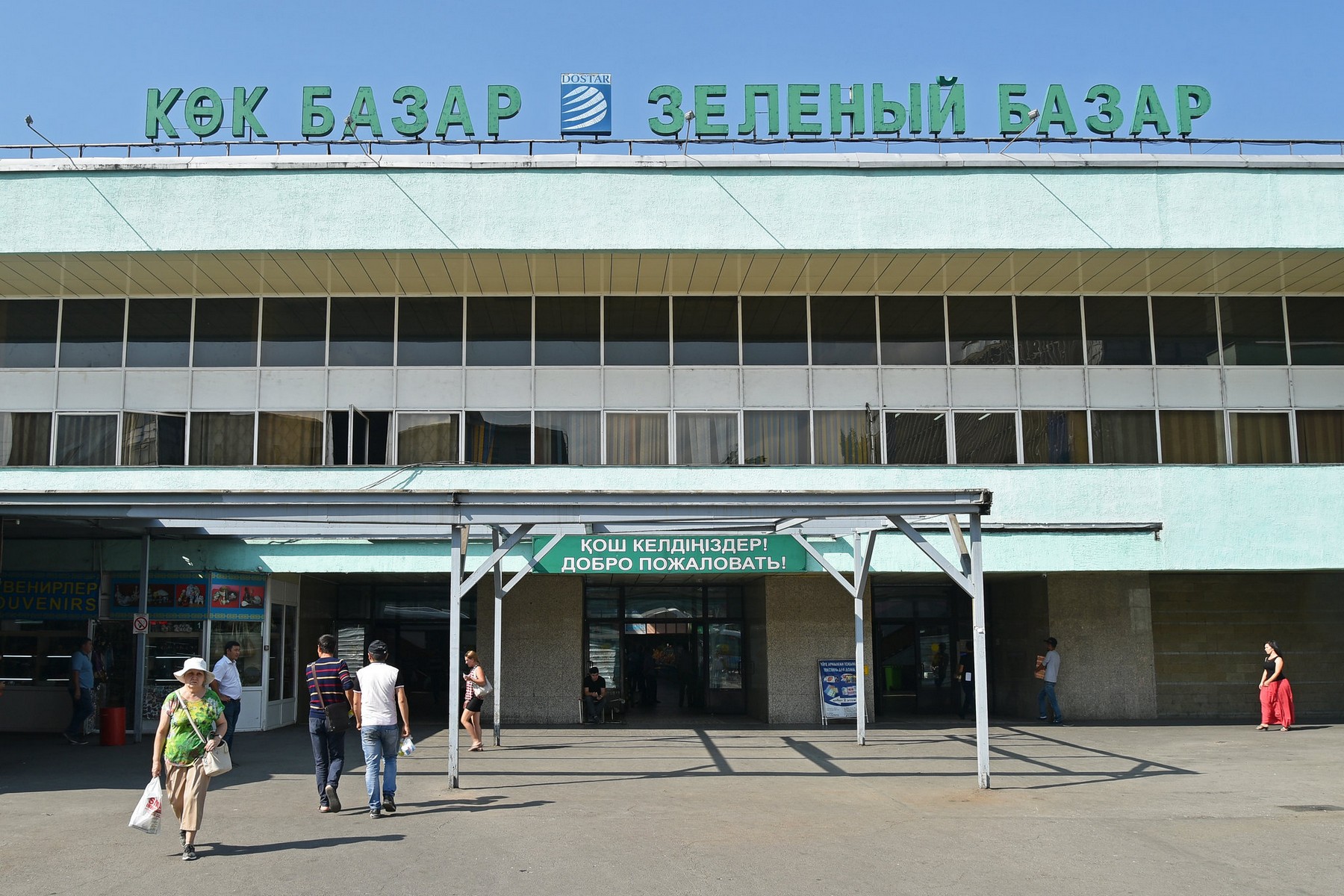
You smell the Green Bazaar before you see it. Not unpleasantly — it is the smell of warm bread and dried apricots and the specific mineral note of freshly cut meat and the faint sweetness of Central Asian spice blends, all arriving simultaneously as you approach the main entrance on Zhibek Zholy Street. Markets have their own atmospheric signature, and the Green Bazaar's is of the most particular in Central Asia.
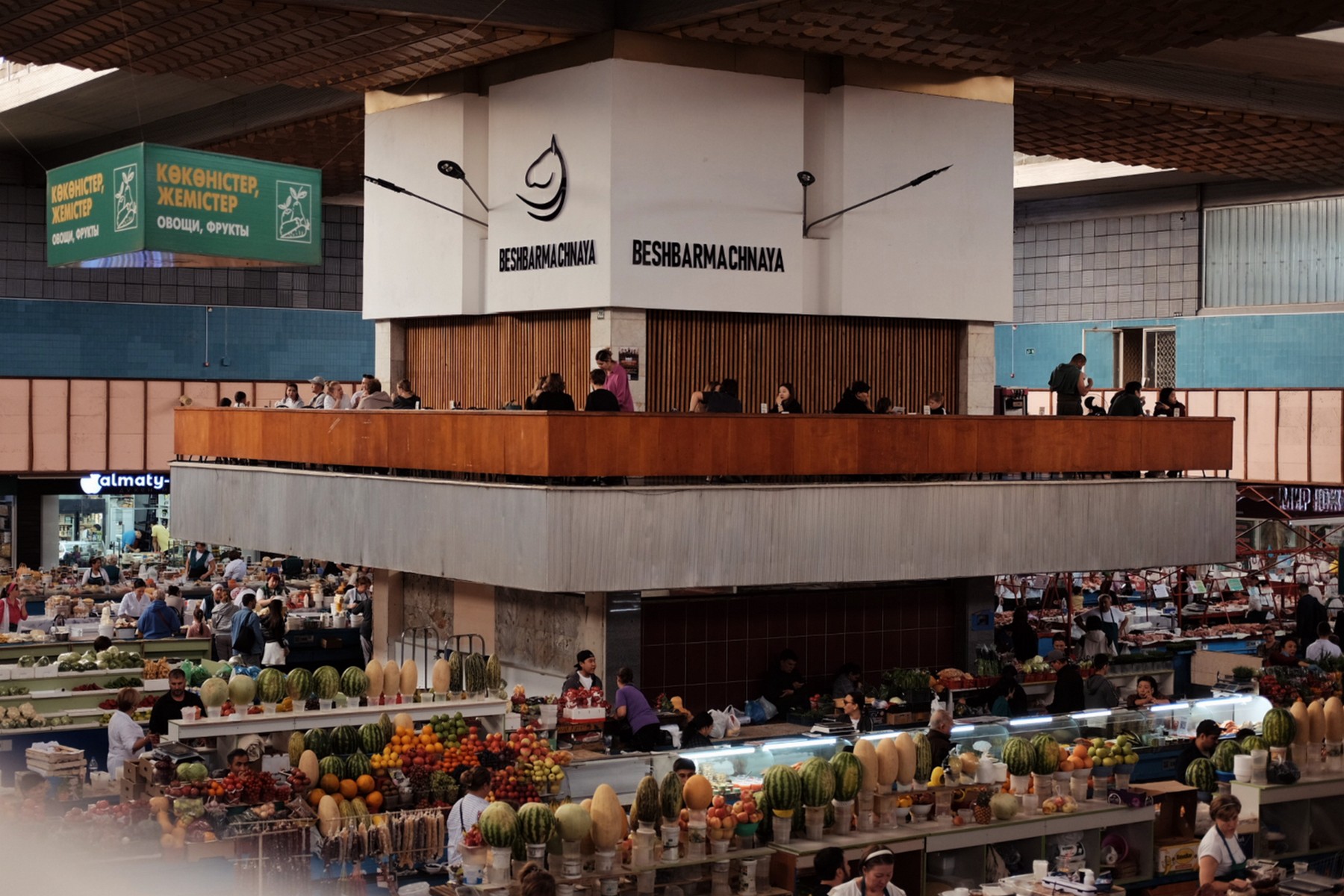
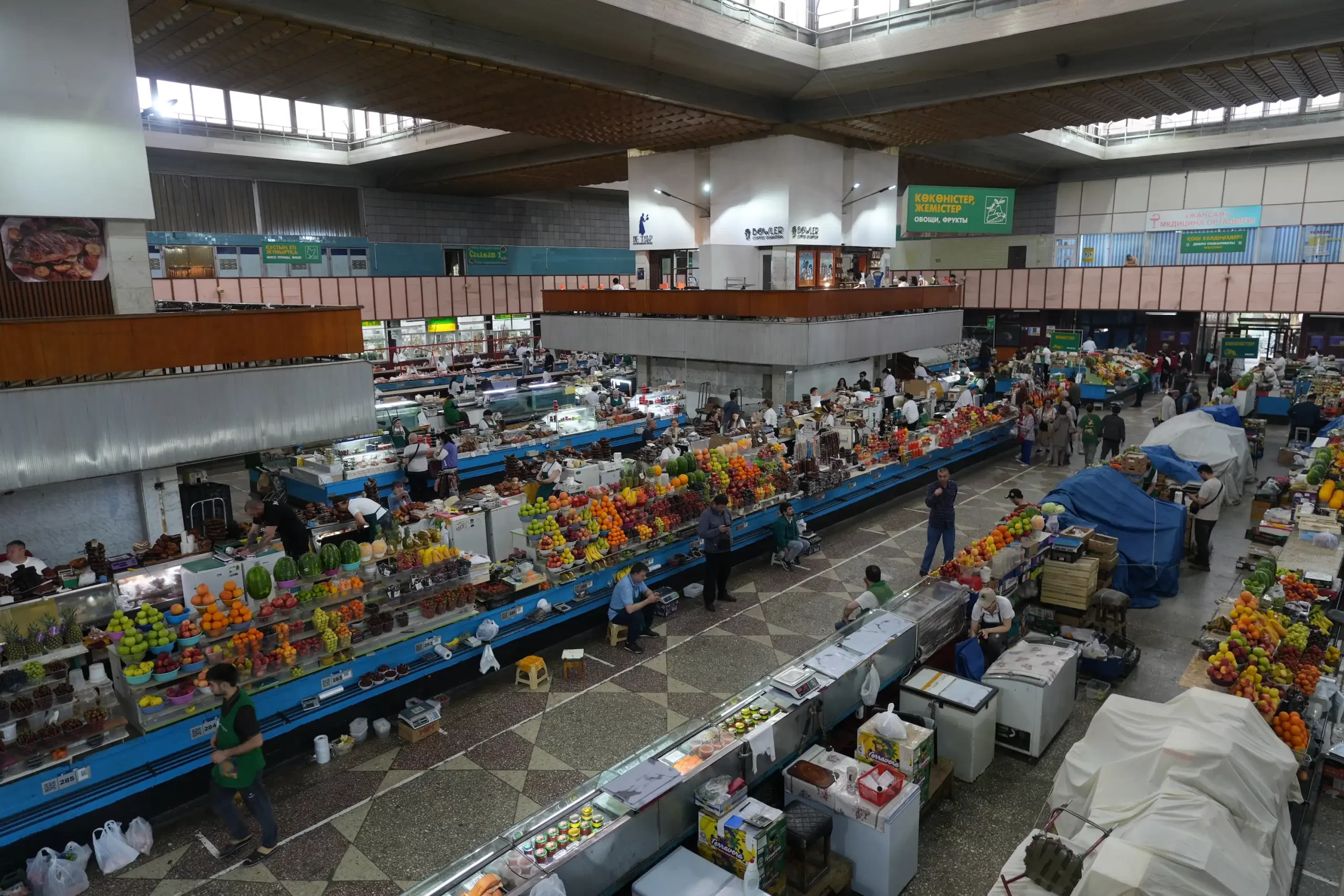
The Zelyony Bazar — Green Bazaar — has been the commercial heart of Almaty since 1875, when the city was still Verniy and the market was a collection of stalls serving the garrison town and the surrounding Kazakh communities. It has been rebuilt, expanded, burned, rebuilt again, and subjected to various modernizations; the current structure dates largely to the Soviet period and carries the pyramid roof form that makes it visible from several blocks away. Inside, the building has the compressed energy of a serious market: dense stalls, narrow aisles, vendors who know exactly where everything is and will find what you need faster than any map.
What the Market Is
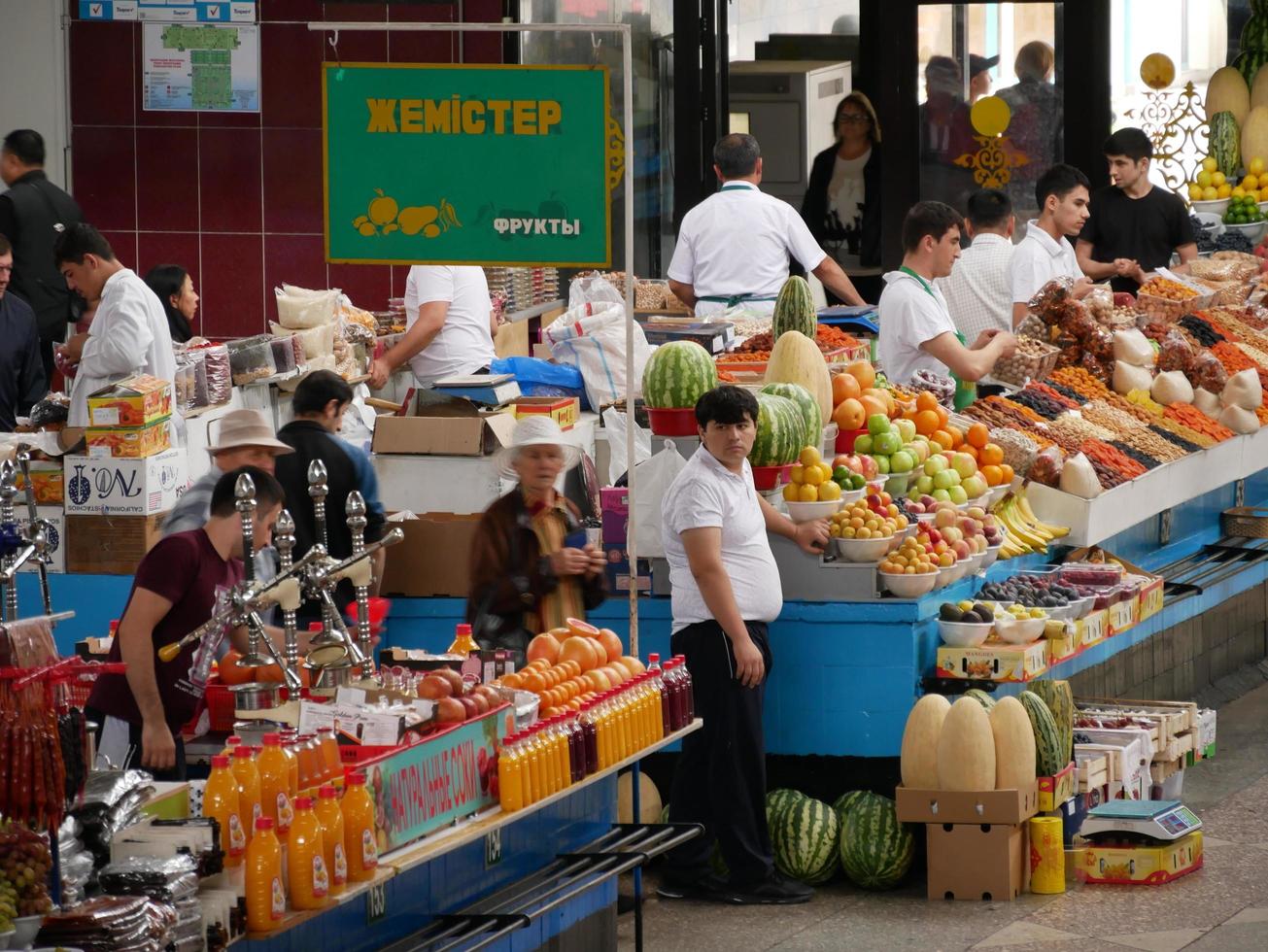
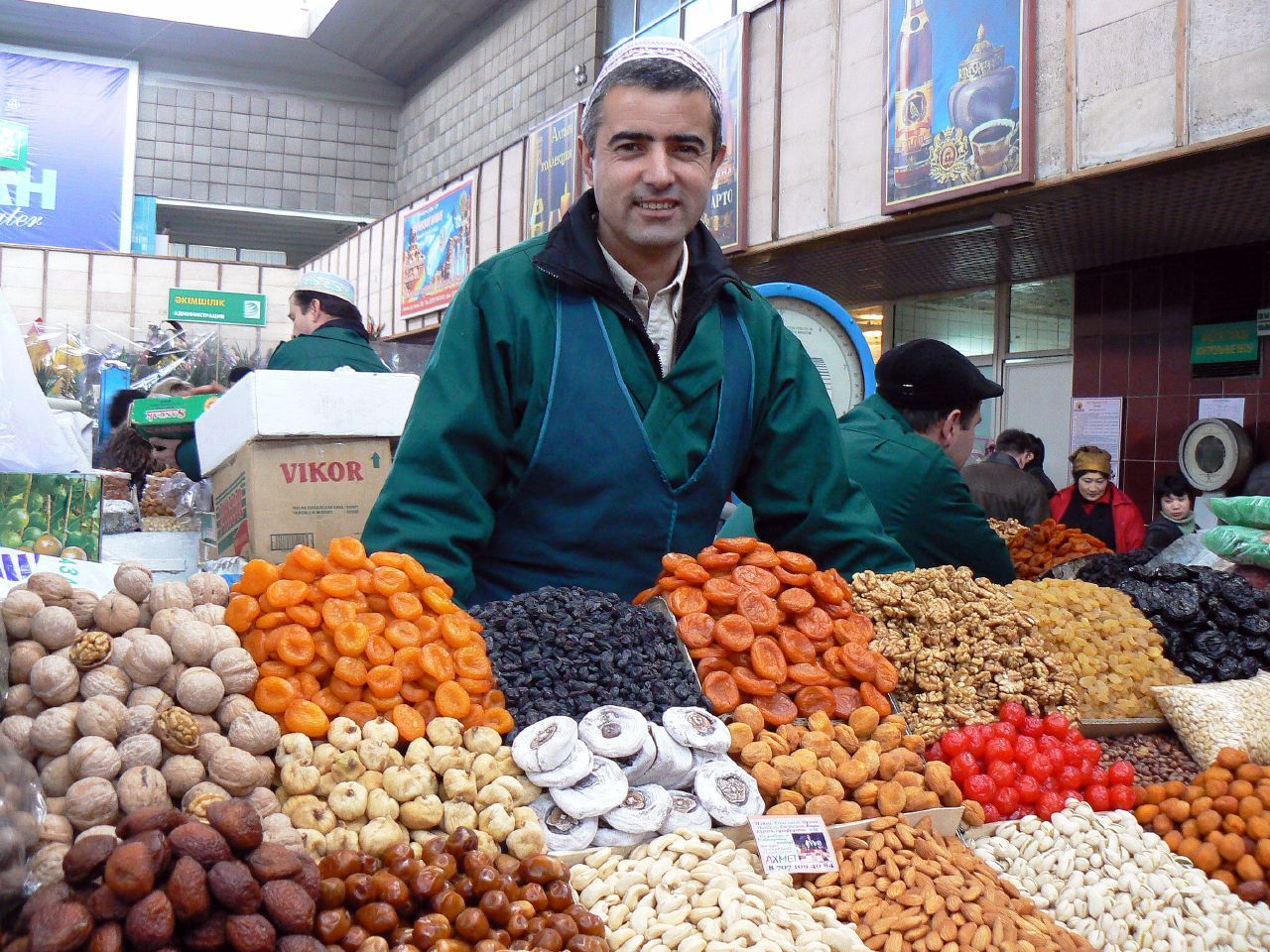
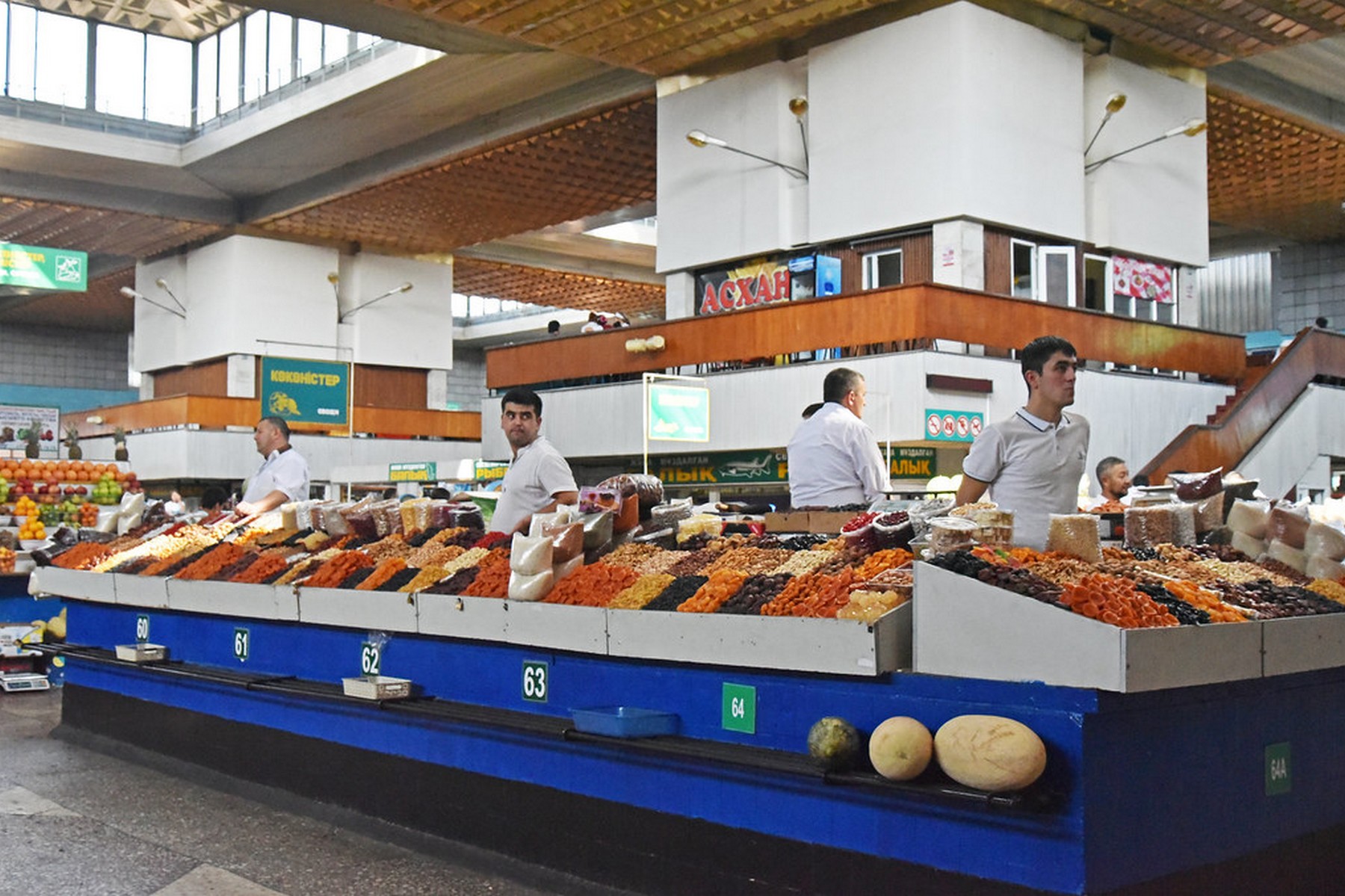
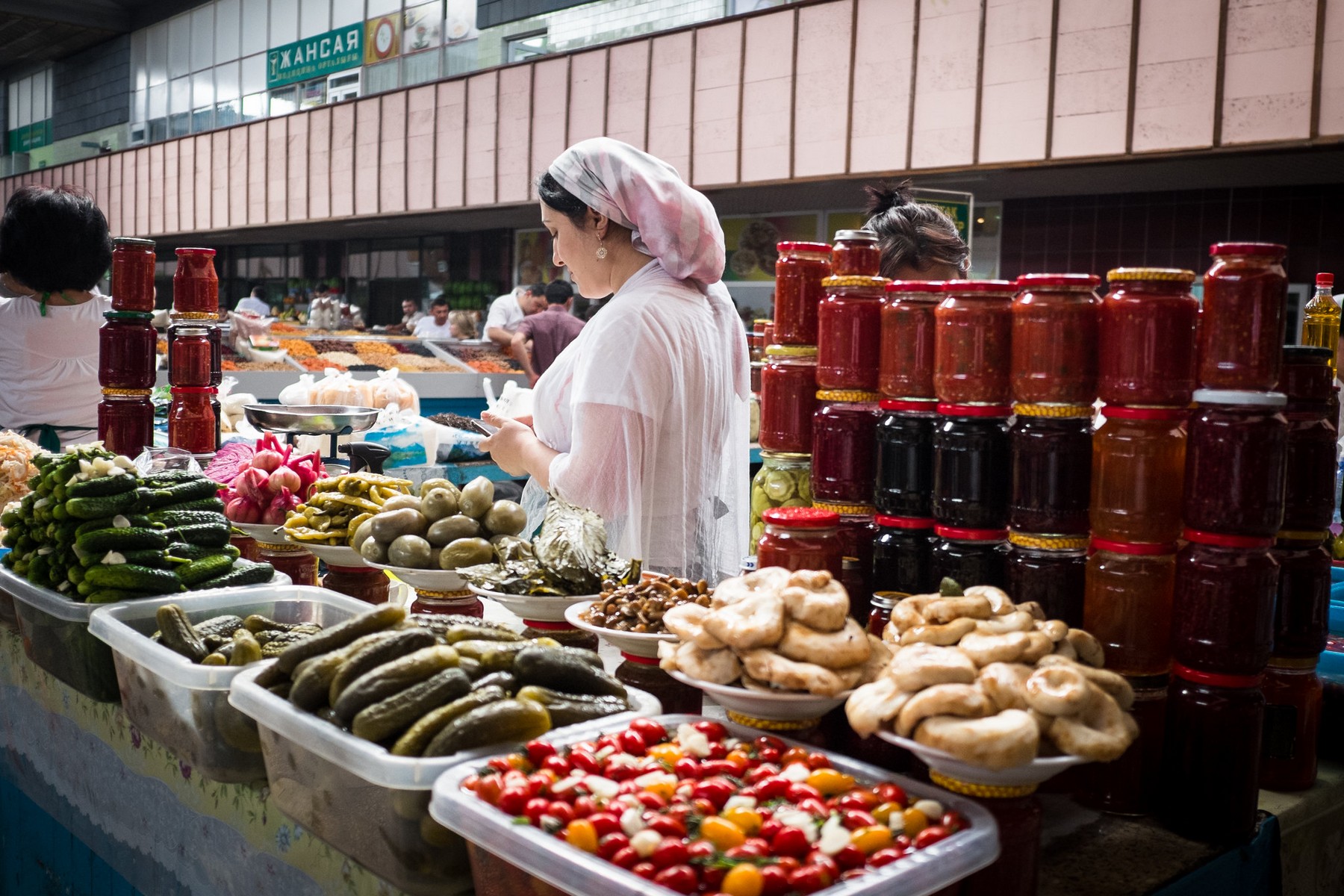
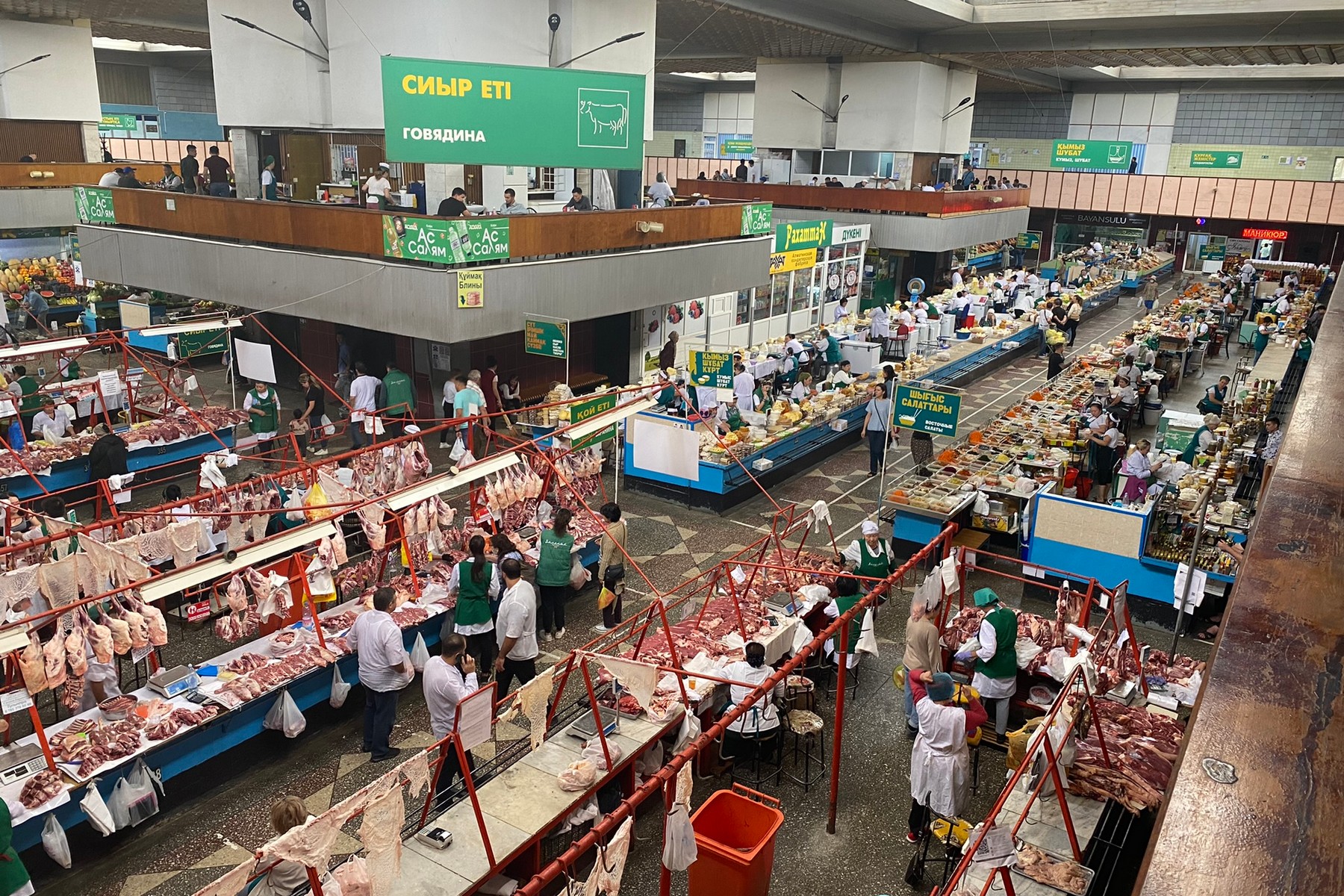
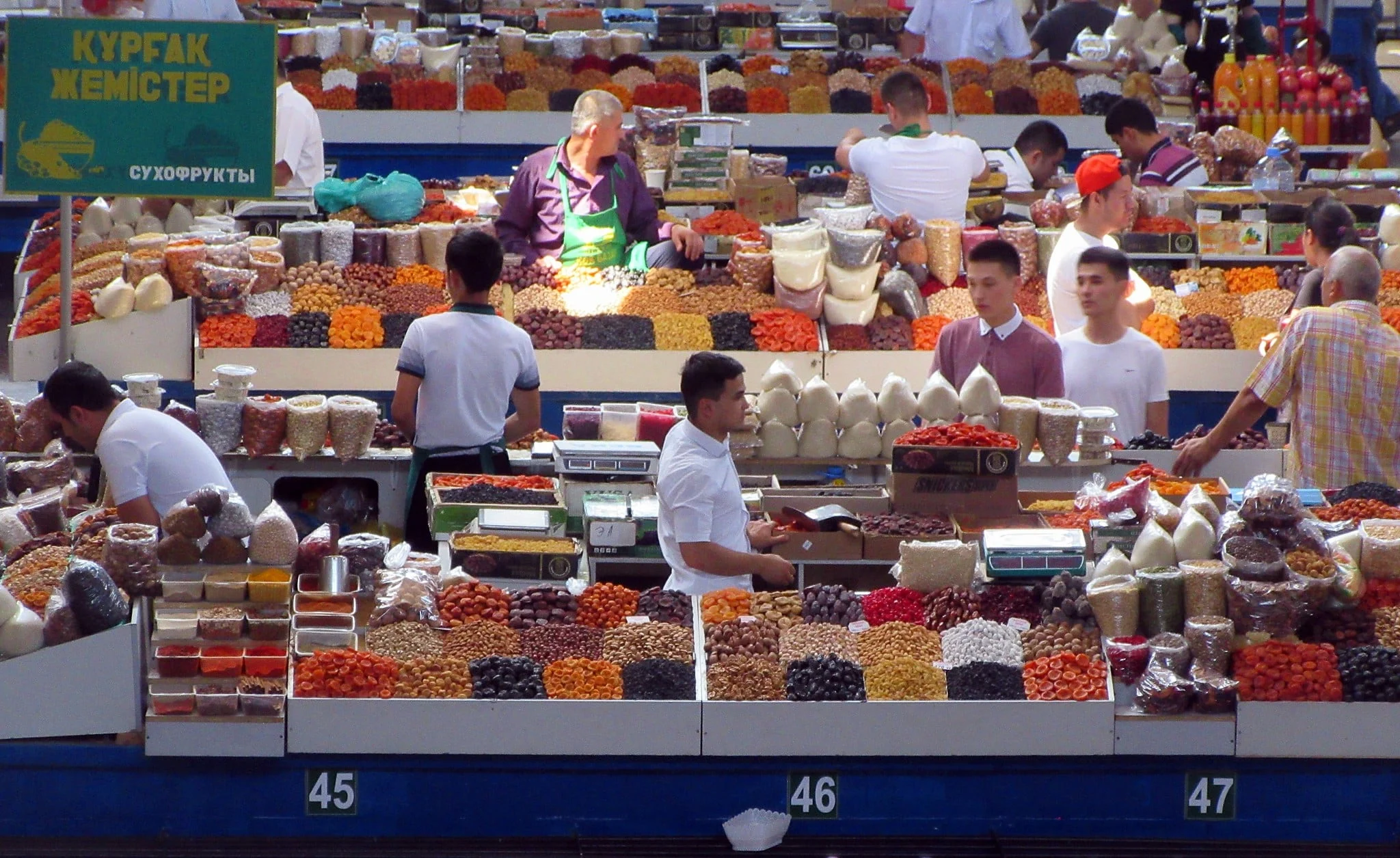
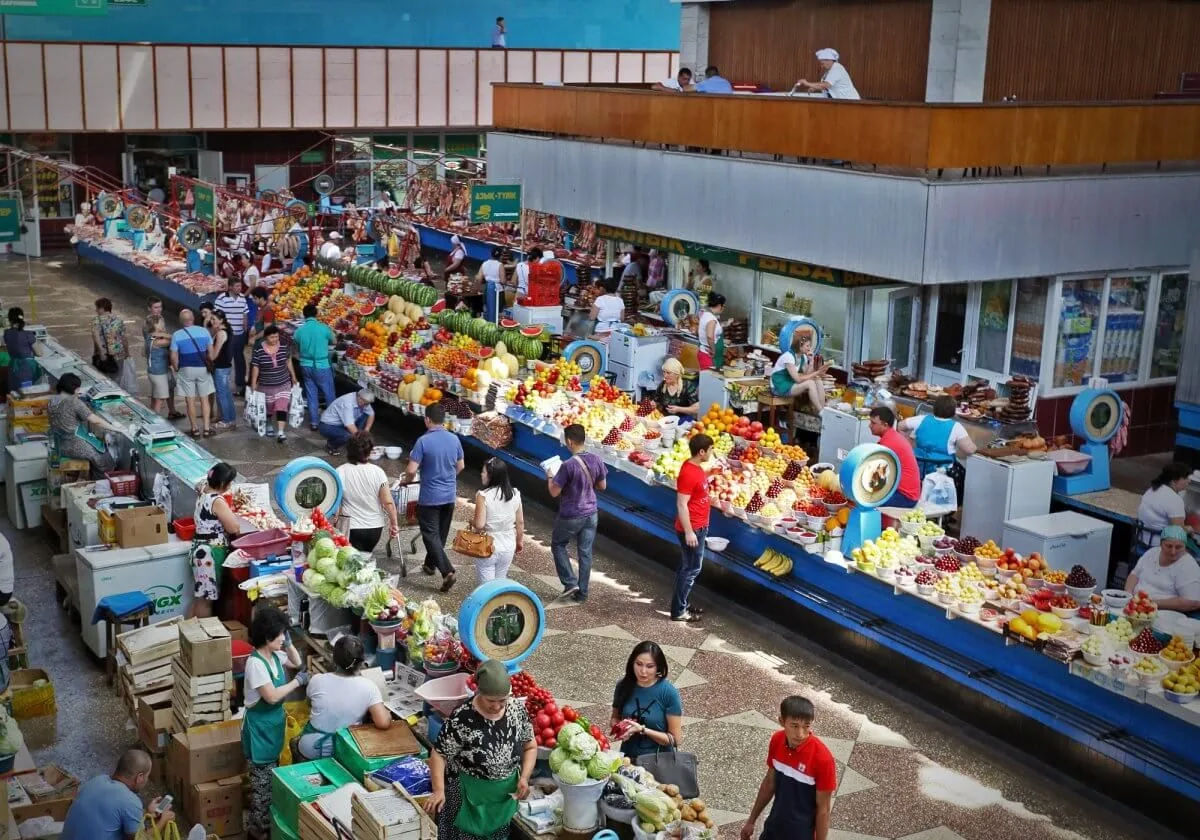
The Green Bazaar is organized across multiple floors and sections, each with its own specialty. The ground floor is the working center: meat in section, dairy in another, produce in a third. The dried fruit and nut section — the most visitors remember longest — lines the central aisles with a density of color and scent that stops you in your tracks. Apricots from the Ile valley, walnuts from the Altai foothills, almonds, pistachios, raisins in multiple varieties, sun-dried tomatoes and chilies from the south — all of it sold by vendors who will insist you taste before you buy, and whose tasting portions are often more generous than they need to be.
The spice section is smaller but serious. The blends available here — including spice mixes for Kazakh and Uzbek cooking that you won't find in standard supermarkets — are worth taking home if you cook. The textile and clothing sections on the upper floors carry traditional Kazakh felt work, embroidered cloth, and the kinds of souvenirs that are worth buying because they are the real thing rather than a manufactured version of it.
Why It Matters
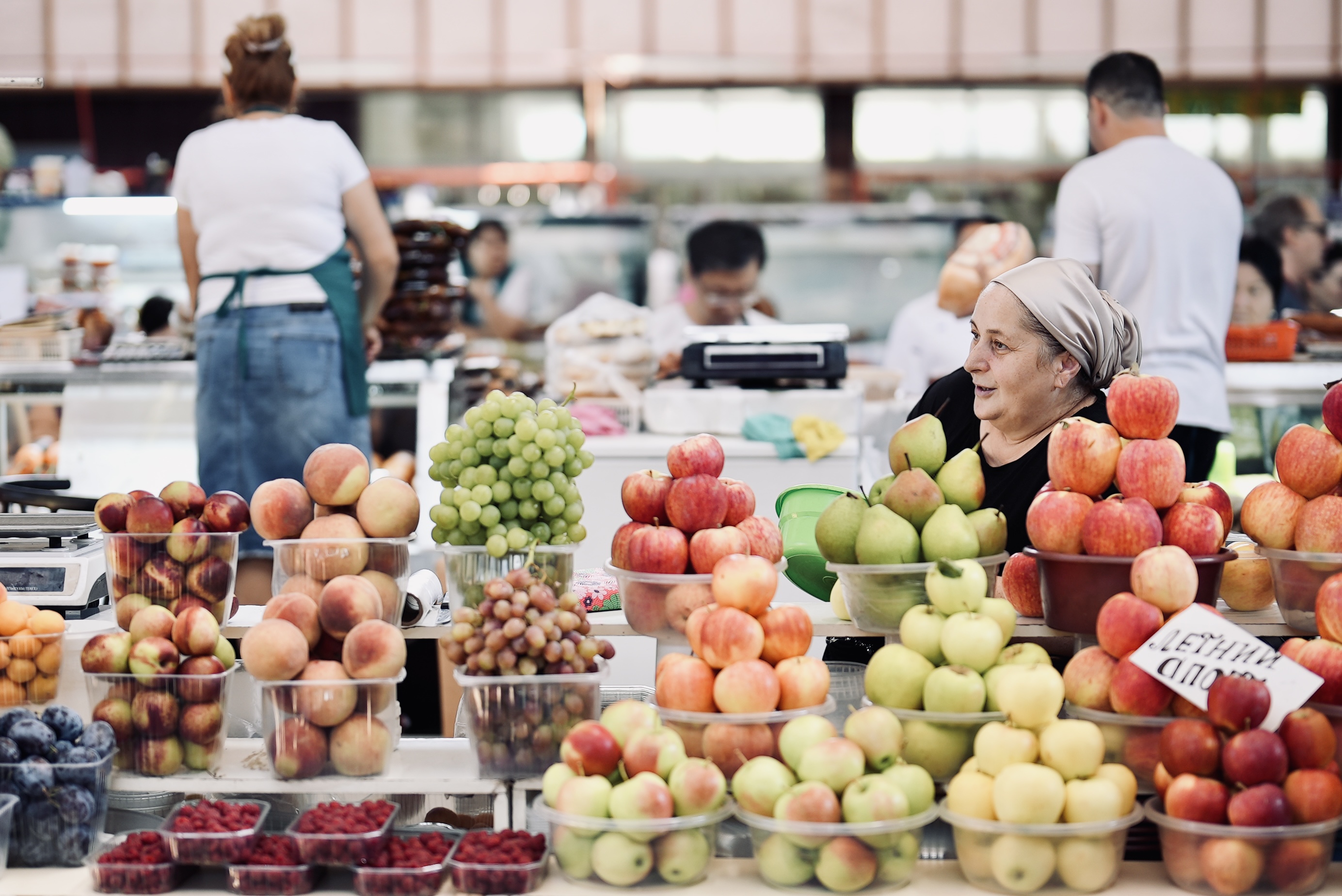
The Green Bazaar is the best single place in Almaty to understand what the city actually eats, what it values, and where its food culture comes from. The produce here reflects the extraordinary agricultural biodiversity of Kazakhstan — the wild apple descendants in the fruit section, the Altai honey, the dried berries and roots used in traditional Kazakh medicine that sit alongside the everyday vegetables. This is a market that has been serving its city for 150 years, and it shows.
The ‘Wow-Factor’
The wow factor of the Green Bazaar is physical and immediate. It hits you in the first thirty seconds.
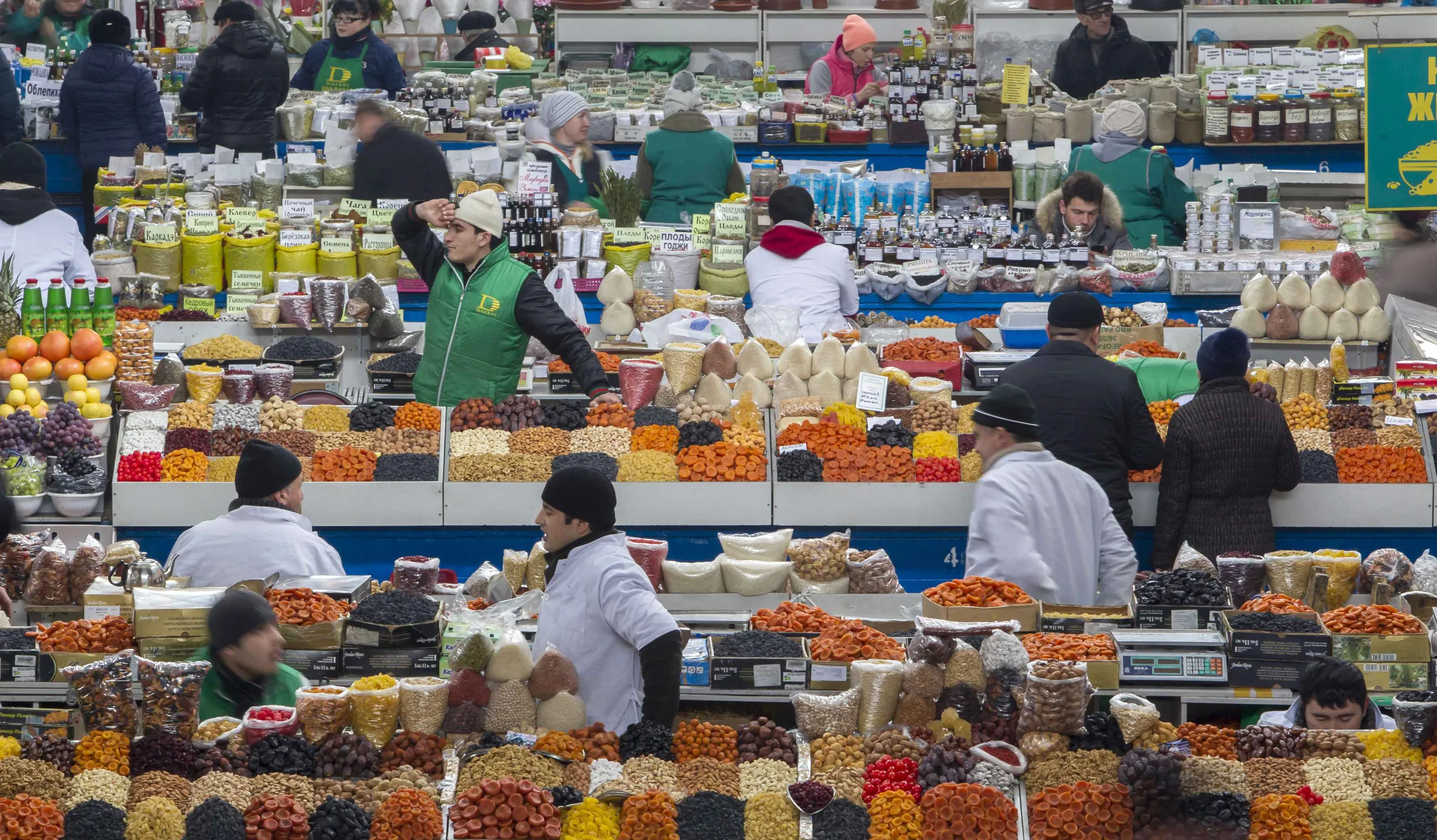
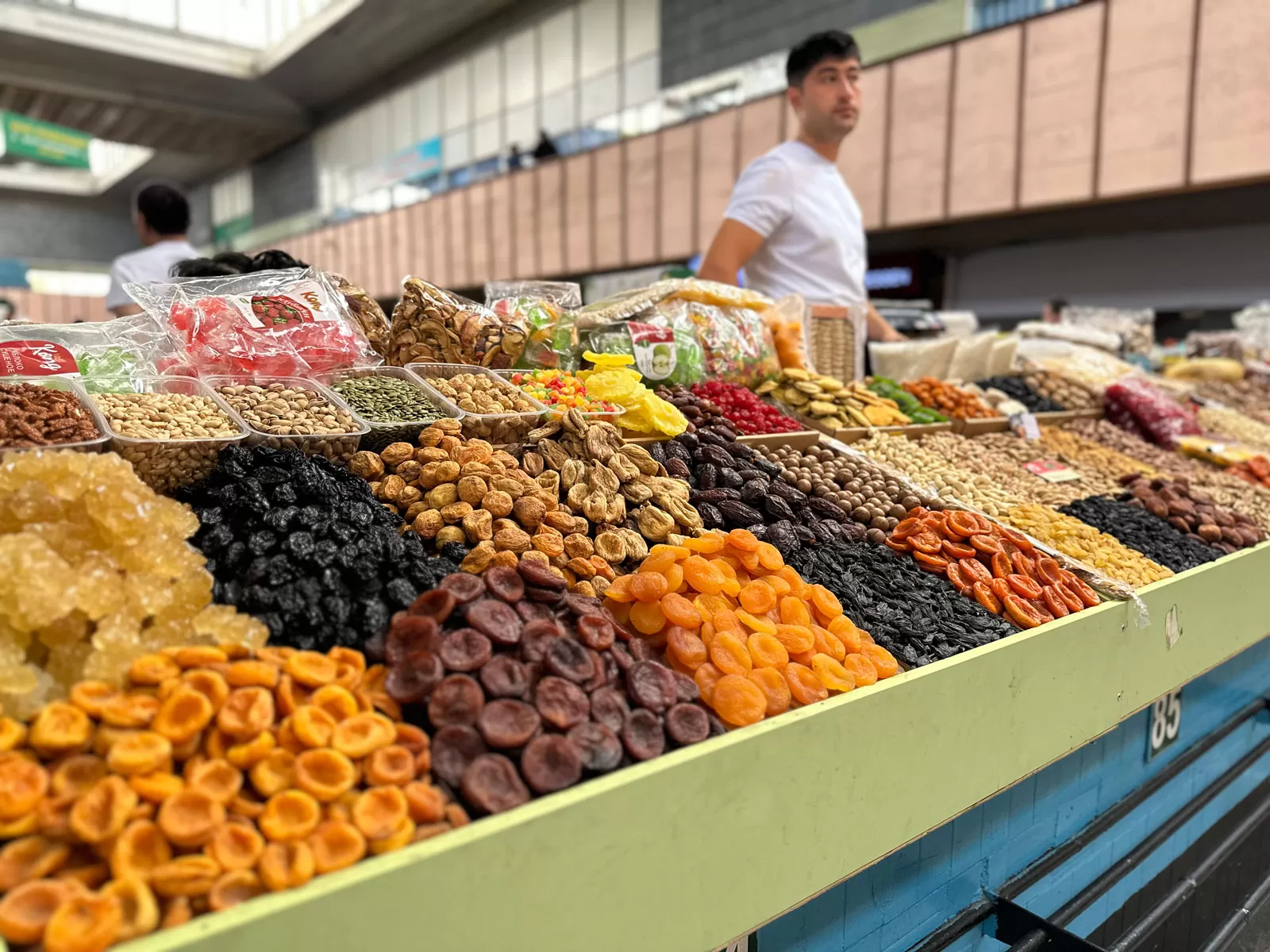
The dried fruit and nut section occupies the central lanes of the ground floor and it is, without qualification, of the most sensory-dense spaces in any Central Asian city. The mounds of dried apricots — orange, amber, dark brown, the colors depending on the variety and the drying method — are stacked waist-high on tables that extend to the full width of the market aisle. Beside them: walnuts, almonds, pistachios, dried figs, raisins in five or six color variations, mulberries, barberries, the small hard dried fruits that traditional medicine and traditional cooking both use with confidence. The smell is sweet and concentrated and changes from stall to stall as you move deeper into the section.
Then the sound: the vendors calling, the prices being negotiated, the clatter of metal scoops on metal bowls, the specific acoustic density that a fully functioning market at peak hours produces. This is not background noise. It is a kind of music organized by commerce and habit and the desire to sell, and it fills the space completely.
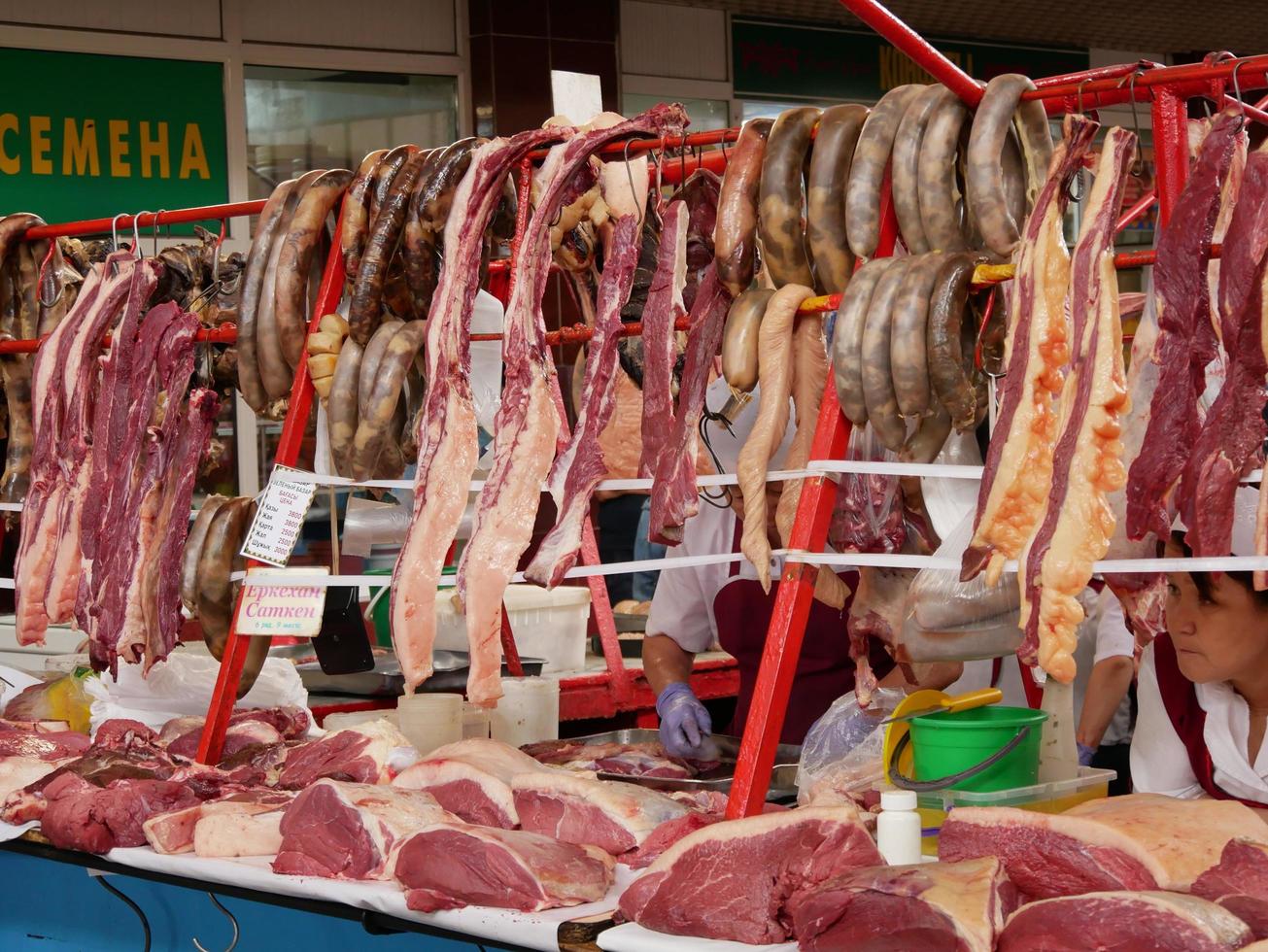
The meat section produces a different sensory register. The horse meat — kazy, the sausage made from horse intestine and fat — hangs in coils from hooks alongside lamb and beef in cuts that would require translation in most Western butcher shops. The smell here is mineral and cool, the air noticeably colder than the rest of the market. Behind the counters, the butchers work with the efficiency of people who have been doing this particular work for decades.
And then the cheese counter: the ball-shaped fermented cheese that Kazakh dairy culture produces, the dried milk balls called kurt that are dense and salty and have a flavor that stays with you, the various forms of suzbe and katyk (fermented dairy products that Kazakh cuisine uses as both ingredient and condiment). You are looking at a working food culture in real time, and that is the real wow factor: the Green Bazaar is not a tourist market. It is a functioning urban food system, and it has been functioning continuously since 1875.
Deep History & Culture
Markets are the oldest institutions in any city, and they are the most honest. The Green Bazaar has been at the center of Almaty's commercial life since 1875, and its history follows the history of the city itself — from Russian colonial garrison to Soviet administrative center to independent Kazakh metropolis — with the market's character shifting at each stage but its function remaining constant.
The Silk Road Context
Before the Green Bazaar, before Verniy, before any Russian presence in this part of Central Asia, the territory around present-day Almaty was a node in the trading networks of the Kazakh steppe world. The Great Zhuz clans who used the Tian Shan foothills as their jailau (summer pasture) territory were not isolated from the broader Central Asian commercial system; horses, wool, felt, and livestock moved southward toward the oasis cities of Turkistan and Samarkand, while grain, metal goods, and manufactured items moved north and east in exchange.
The northern Silk Road branches skirted through the Zhetysu corridor — the "Land of Seven Rivers" that includes the Almaty plain — and the commercial culture that developed here was organized around exactly the kinds of exchanges that a bazaar enables: face-to-face trade, quality assessment by handling and tasting, negotiation as social ritual. The Green Bazaar's trading culture is a direct descendant of this tradition, even after a century of Soviet administration.
The Russian Period: 1854 to 1917
The fortress of Verniy was established in 1854, and a market followed almost immediately. The colonial city needed a mechanism for the exchange of goods between the Russian garrison, the growing settler population, and the Kazakh communities of the surrounding territory. The bazaar that developed served all of these constituencies simultaneously, creating the mixed commercial space that would become the Green Bazaar's defining character.
By the late 19th century, the market had become significant enough that it attracted traders from across Central Asia — Uzbek merchants from Samarkand and Tashkent, Uyghur traders from the Xinjiang border region, Kazakh producers from the steppe and mountain zones. The commercial geography of the bazaar reflected the human geography of Central Asia's trading world, and that diversity persists in the market's current vendor population.
The Soviet Transformation
Soviet rule brought rationalization to the Green Bazaar's chaotic commercial vitality. The state regulated what could be sold, at what prices, and by whom. Private trade was constrained and at various periods banned entirely; the bazaar operated within the frame of the socialist economy as a permitted exception, a place where collective farm surplus and approved private production could be exchanged outside the state distribution network.
This status gave Soviet-era bazaars a particular social charge. They were spaces of relative freedom within a heavily regulated economy — where you could find things that the state stores couldn't supply, where prices reflected actual supply and demand rather than the plan, and where a kind of economic normality persisted amid ideological abnormality. Almaty residents developed the practice of the bazaar visit as a life skill during these decades, and that expertise has been transmitted to the post-Soviet generations who use the Green Bazaar today.
The structure of the current market — its pyramid roof and multi-level organization — was built during the Soviet period and reflects the ambition of Soviet civic architecture to create grand public spaces even for commercial functions.
After Independence
Since 1991, the Green Bazaar has operated in an unregulated market economy, and the diversity of its vendor base and product range has expanded significantly. The dried fruit and spice sections now carry produce from across Kazakhstan and the wider Central Asian region. International traders have established stalls alongside Kazakh and Uyghur vendors. The market has been partially modernized without losing the sensory density that defines it. It remains the best single place in Almaty to understand the commercial culture of the city — which is to say, of the best places in Central Asia to understand what markets are for.
Practical Digital Logistics
The Green Bazaar sits in central Almaty on Zhibek Zholy Street — the main east-west commercial artery — and is of the most accessible destinations in the city.
Getting There
From most central Almaty accommodation, the bazaar is within walking distance or a short taxi ride. A taxi from the hotel zones around Furmanov or Dostyk Avenue costs approximately $2 to $4 and takes ten to fifteen minutes. The Almaty metro's Zhibek Zholy station is nearby and connects the bazaar to the rest of the city center for approximately $0.20. Bus routes on Zhibek Zholy stop at or near the bazaar entrance. If you're within twenty minutes' walk, walk — the approach through the surrounding streets is interesting in its own right.
Hours
The Green Bazaar operates seven days a week, typically from around 7 a.m. to 7 p.m. The market is busiest on Friday mornings and weekend mornings when Almaty families do their weekly food shopping. Weekday mid-mornings are the most practical time for visitors — active enough to have the full market energy but not so crowded that movement becomes difficult. By late afternoon the produce vendors have depleted their best stock and some sections begin to close.
Entry
Entry is free. There is no ticket, no gate, no organized access — you simply walk in from of the several street-level entrances. The pyramid roof is visible from half a block away; the main entrance on Zhibek Zholy is the most-used and puts you directly into the central market floor.
What to Bring and Wear
Comfortable shoes — the market floor is a combination of tile, stone, and uneven surfaces, and you'll be on your feet for at least an hour. A bag for purchases; plastic bags are available from vendors but bringing your own is better practice. Cash — while some vendors accept card payment, many prefer cash, and the smaller stalls and individual produce vendors work exclusively in cash. Having small denomination notes simplifies the transaction with individual vendors.
The market can be crowded and loud during peak hours; this is part of the experience rather than a problem, but it's worth knowing if you're sensitive to dense crowds.
Navigation
The Green Bazaar is large enough to be easy to get turned around in, particularly on the first visit. The ground floor organization is roughly: produce in the center and outer sections, meat and dairy in the dedicated sections toward end, dried fruit and nuts in the central aisles. The upper floors carry clothing, textiles, and household goods. A mental map forms quickly after the first circuit; the second time through the market is considerably more efficient than the first.
Must-Do Activities
The activities at the Green Bazaar are organized around the market itself, and the best approach is to move through it systematically rather than randomly.
The Dried Fruit and Nut Circuit
Start in the central aisles of the ground floor, where the dried fruit and nut vendors are concentrated. The protocol here is to walk slowly, taste what is offered (and you will be offered samples — this is how the vendors work, and it is also genuinely useful for assessing quality), and buy from the vendors whose products justify what they're charging. Prices are posted and approximately consistent across stalls; the variation is in quality, and tasting resolves it.
The best purchases here are the items that travel well and are difficult to find outside Central Asia: the sun-dried Ile valley apricots (tart, dense, nothing like the sulfured versions sold in Western supermarkets), the raw walnuts from East Kazakhstan's Altai foothills, the mixed nut-and-fruit blends that serve as trail food and gifts simultaneously. A kilogram of premium dried apricots costs approximately $3 to $5; a bag of mixed nuts $4 to $8.
The Dairy Counter
The Kazakh dairy section is of the most interesting and least-visited parts of the bazaar. The round balls of dried fermented cheese, the kurt milk balls (dense, salty, requiring an adjustment period), the soft suzbe cheese, the katyk yoghurt — this is a food tradition with no Western equivalent, and the Green Bazaar is the best place in the city to engage with it directly. Buy small quantities of several things and taste your way through them. The kurt in particular will divide opinions sharply; it is either exactly to your taste or completely foreign, and there is limited middle ground.
The Spice Section
The spice vendors in the Green Bazaar carry blends that are specific to Kazakh and Central Asian cooking and that are not available in standard supermarkets. The standard blend for beshbarmak (the lamb-and-noodle ceremonial dish), the spice mixes for shashlik marinades, the dried herbs from the Tian Shan foothills — all are available here at prices that make the souvenir potential obvious. If you cook at home and want to replicate Central Asian food, this is where to start.
The Textile Section
The upper floors of the bazaar carry Kazakh felt work, embroidered cloth, and traditional clothing alongside the mass-produced items that dominate the tourist souvenir market. The distinction between the genuine traditional craft items and the manufactured approximations is not always obvious but is always present. Take time; talk to the vendors; the people selling the genuine handmade items know what they have and are usually willing to explain the difference if asked directly.
Local Flavors & Amenities
The food at the Green Bazaar is not a separate category from the market visit — it is part of the same experience. Eating here is eating at a working Central Asian market, with the specific character that implies: direct, unpretentious, often excellent.
Eating Inside the Bazaar
The cooked food section of the Green Bazaar, typically in the inner areas of the ground floor, serves the people who work in and around the market — vendors who have been on their feet since 6 a.m. and need substantial, efficient food. This is the best argument for eating here: it is food calibrated to real hunger rather than to tourist expectations, and it costs accordingly. Beshbarmak (lamb over flat noodles), shurpa (lamb soup with vegetables), samsa (baked pastries from a clay oven that are usually still warm when they reach you), lagman (noodle soup) — prices run approximately $3 to $6 for a full meal.
The tea counter runs all day. A pot of Kazakh tea with something small alongside costs approximately $1 to $2. This is the appropriate pace-setter for a bazaar visit: arrive, have tea, then begin.
The Samsa Stands
The samsa vendors near the bazaar's main entrances operate from clay ovens (tandoors) and produce pastries — filled with lamb and, or potato, or pumpkin in season — that are significantly better than their supermarket equivalents. The correct protocol is to buy from the oven (still hot enough to require brief patience before eating), eat it standing at the counter, and decide immediately whether you want a second. The answer is usually yes. Cost: approximately $0.50 to $1 each.
Beyond the Bazaar
The neighborhood around the Green Bazaar is of the most interesting eating zones in Almaty, precisely because it serves the market workers and the central-district residents rather than the tourist trade. Uyghur restaurants (lagman and manta are the signature dishes) are concentrated in the streets east of the market; small Kazakh cafes serve the full range of the national cuisine at prices considerably lower than the restaurant-district equivalents. A full lunch with tea in this neighborhood costs approximately $4 to $8.
The best post-bazaar purchase is also edible: the honey vendors near the main entrance sell Altai mountain honey and Ile valley flower honey at approximately $8 to $15 per kilogram. This is the best honey in Kazakhstan and should be acquired before leaving. The vendors let you taste; take them up on it.
Essential Insider Tips
Market tips that will make the Green Bazaar visit more useful.
Go Hungry
This sounds obvious, but most people arrive at a market after breakfast and proceed to turn down the samples they're offered because they're not hungry. The tasting protocol at the Green Bazaar requires appetite. You will be offered dried apricot, walnut, spiced nuts, kurt, honey, tea — and these are not incidental. They are how the transaction works, how quality is assessed, and how the relationship between vendor and buyer is established. Arriving hungry means you engage with this properly.
Morning Is Best
The produce is freshest in the morning, the meat section is at its most complete, and the energy of the market — the controlled urgency of a working commercial space — is most evident before noon. Friday morning and Saturday morning are peak shopping times for Almaty families and produce the busiest, most alive version of the market. Weekday mornings are somewhat quieter but still fully functioning.
Bargaining
Prices are generally posted at the dried fruit and produce stalls and are approximately consistent across equivalent vendors. Bargaining is less central to the Green Bazaar than to some markets; the prices are already reasonable and the vendor-customer dynamic in Almaty's market culture is less negotiation-centered than in some other Central Asian countries. Attempting hard bargaining over small amounts creates awkwardness rather than savings. Buying larger quantities does shift the calculation; asking for a better price on a multi-kilogram purchase is reasonable.
Navigating the Tasting Pressure
The sample-and-buy protocol can feel pressured if you are unfamiliar with it. It is not obligatory to buy from every vendor whose sample you accept; the convention is understood on both sides. The appropriate response to a sample you don't want to purchase is a polite thank-you and moving on. No offense is taken.
Pickpocketing
Dense markets create opportunities for pickpockets, and the Green Bazaar has its share. Keep phones and wallets in front pockets or inside bags with secure closures. Don't count cash visibly in the market aisles. This is standard urban precaution rather than a specific warning about a dangerous space; the Green Bazaar is a normal working market, not unusually risky.
Photography
The bazaar is photographable, but ask before photographing individual vendors at close range. Most will agree if asked directly; some prefer not to be photographed; approaching with a camera raised and firing without permission is considered rude in any market context.
Sustainability & Community
The sustainability conversation at the Green Bazaar is, in many ways, the opposite of the conversation at most destinations. The market is not under threat from over-tourism; it is under a different kind of pressure — from supermarket expansion, from the convenience economy, from the shift in shopping behavior that has affected traditional markets everywhere as urban incomes and retail options have grown.
The Bazaar as Economic Infrastructure
The Green Bazaar employs several thousand people directly and supports a much larger ecosystem of producers, transporters, and service providers. The Altai honey vendors, the Ile valley apricot farmers, the small-scale dairy producers bringing fresh suzbe to the market in the morning — these are the upstream economy that the bazaar's existence sustains. When people buy at the Green Bazaar rather than at a supermarket, the money goes to this upstream network rather than to a retail corporation's supply chain. That distinction is more significant than it appears.
The market functions as a price anchor for fresh food across Almaty. Its existence creates competition that keeps supermarket prices more honest than they would otherwise be. In this sense, the bazaar's health is a public good for the entire city rather than just a commercial space for its vendors.
What Good Visiting Looks Like
Buy things. That is the primary form of support available to a visitor at a market. Not necessarily a lot — you can engage fully with the Green Bazaar for $20 to $30 of purchases — but buying rather than looking. The sampling culture of the market functions sustainably if enough of the people who sample also purchase.
Buy from the smaller producers rather than the larger consolidated stalls when you can identify the distinction. The woman selling honey from her family's three hives in the Ile foothills is a different economic category from the consolidated honey trader who sources from multiple producers. Both are legitimate, but the direct connection is better.
The Future of the Market
Traditional urban markets across Central Asia and Eastern Europe have been under pressure from the supermarket model for two decades, and many have lost the battle. The Green Bazaar has persisted and remained genuinely functional, which is a significant achievement. Its future depends on the willingness of Almaty residents and visitors to continue treating it as a preferred rather than a nostalgic shopping option.
The market has been feeding this city since 1875. The question is whether the next generation of Almaty residents maintains the habit their parents inherited. So far, the answer appears to be yes — the market on a Friday morning shows no signs of becoming a museum of itself, which is the best indicator available.
Key Facts
- Silk Road Heritage
- Operating since 1875, the 'Zelyony Bazar' is the city's most authentic sensory link to the ancient Great Silk Road.
- Apple Origins
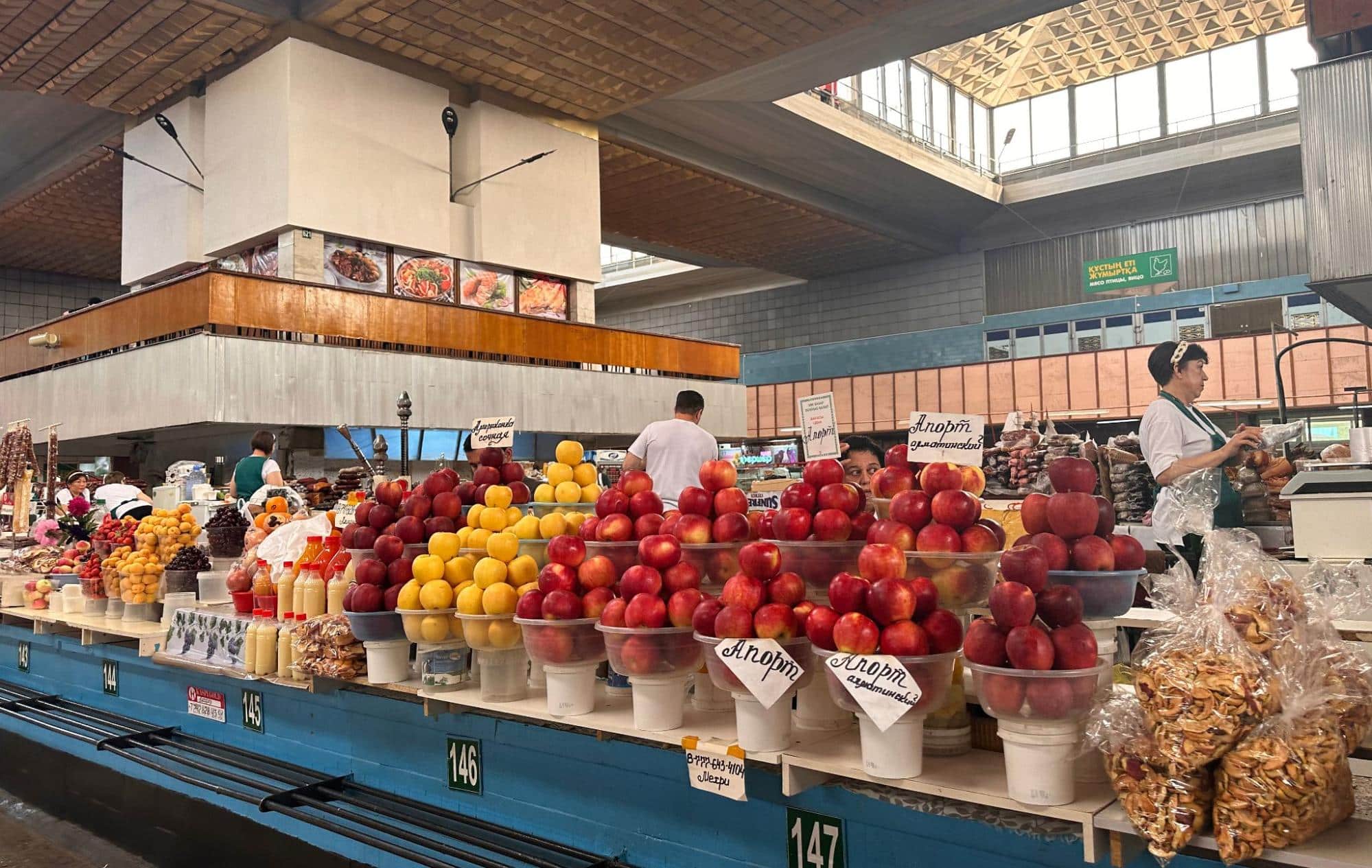
- This is the best place to find the legendary Aport apples, famous for their massive size and distinct aromatic flavor.
- Traditional Meat
- The bazaar is famous for its vast selection of traditional Kazakh horse meat specialties, including Kazy and Shuzhuk.
- Spice Bazaar
- The air is filled with the scent of spices from Uzbekistan, India, and China, reflecting the city's role as a cross-continental trade hub.
- Cultural Mosaic
- Visitors can witness the diversity of Almaty through its vendors, offering everything from Korean salads to Russian honey.
- Modern Food Court
- Recently, the upper levels feature a premium modern food court serving contemporary interpretations of national nomadic dishes.
Photo Gallery
Video coming soon
Green Bazaar
Loading map...Loading map...
Frequently Asked Questions
Have a question?
Ask and get answers in seconds!
Discussion 0
No comments yet. Start the conversation!
Leave a Reply