Airakti Castle Valley
Journey to the edge of the world. Mars on Earth.
Architecture of the Wind
Airakti: The Valley of Stone Castles
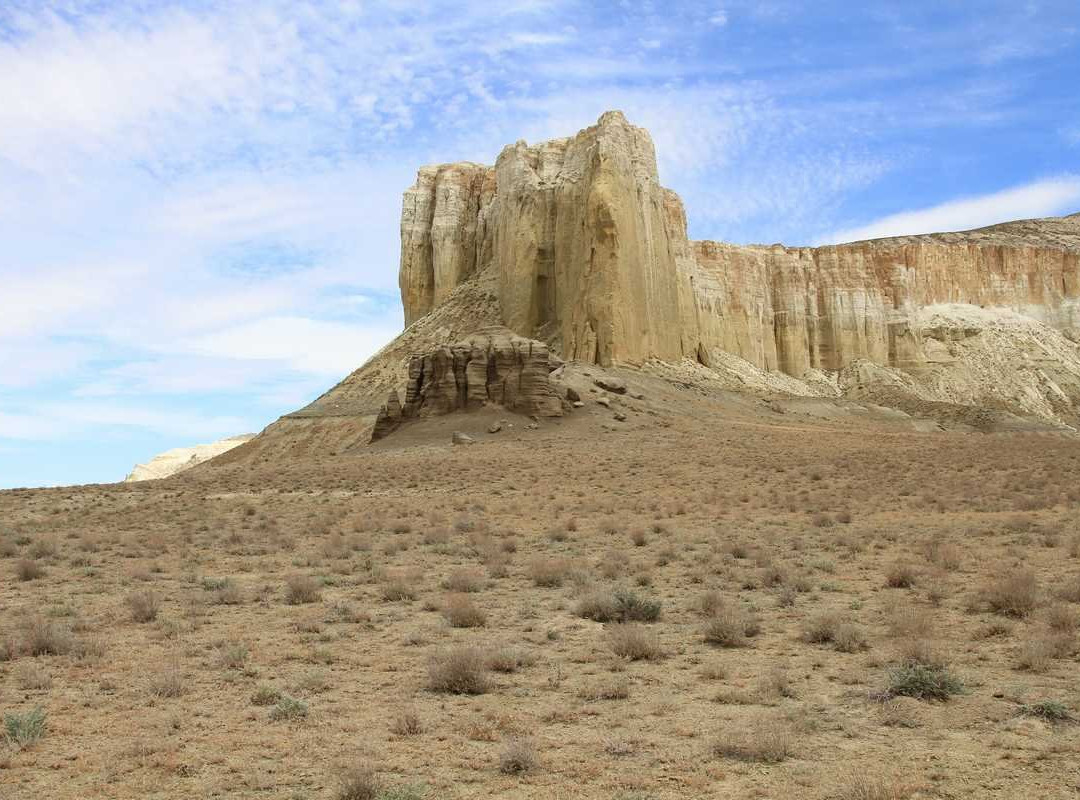
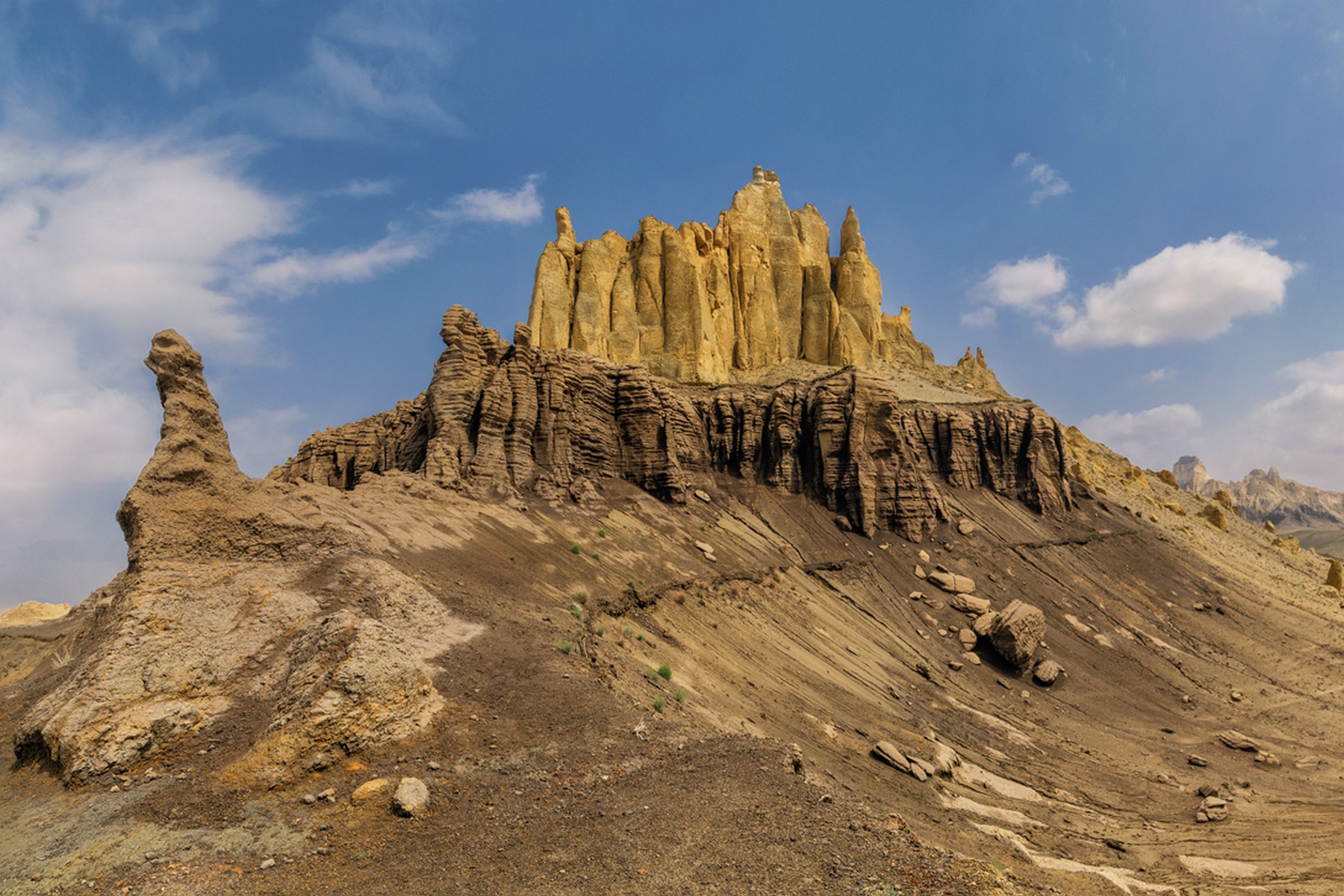
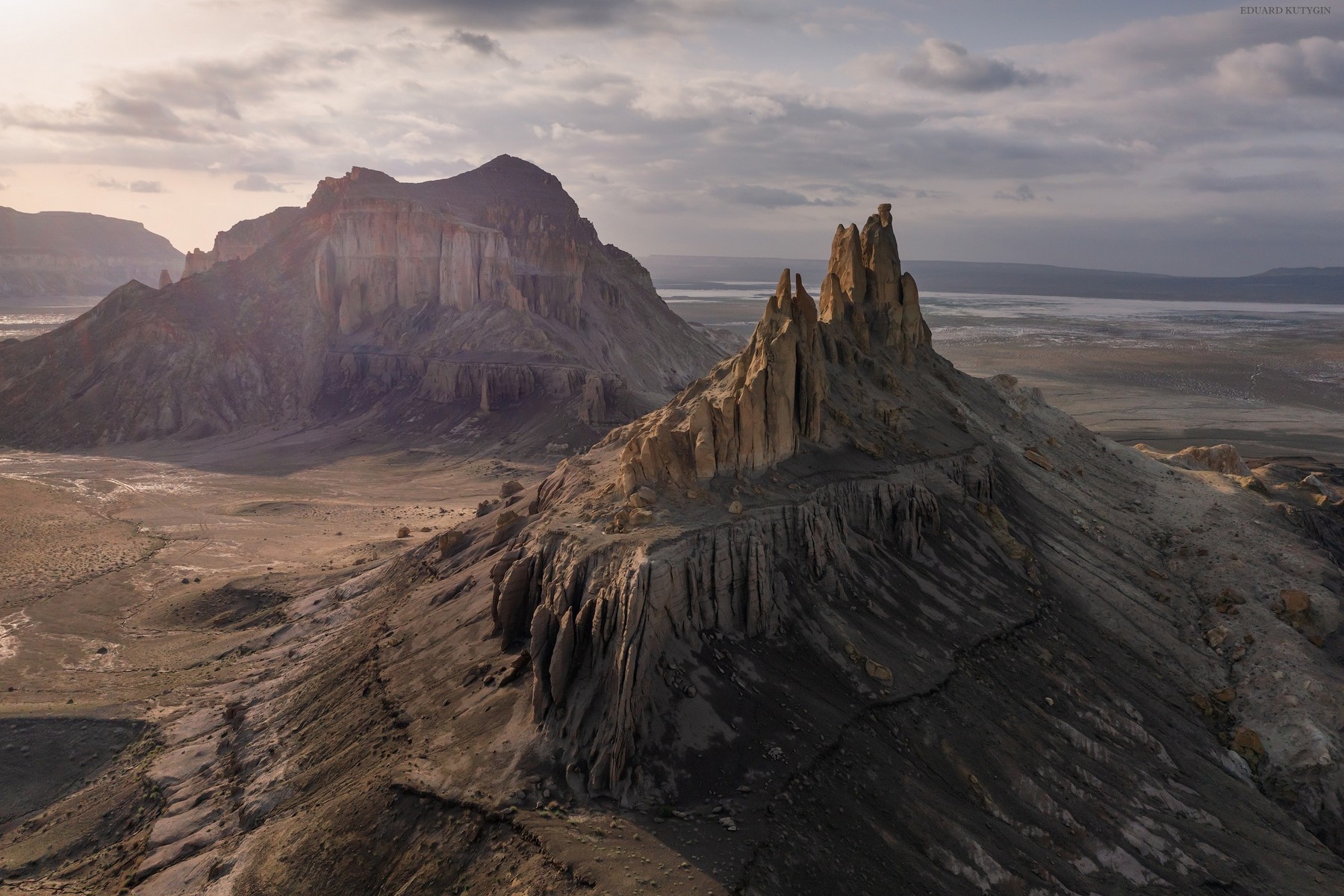
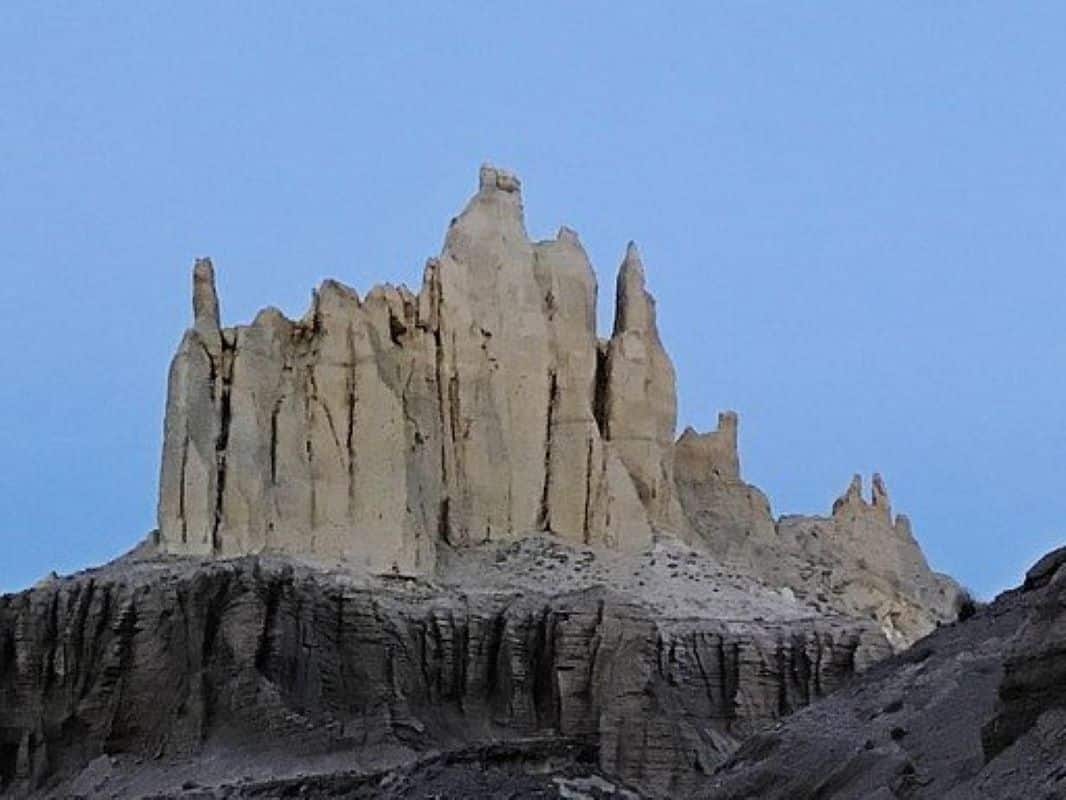
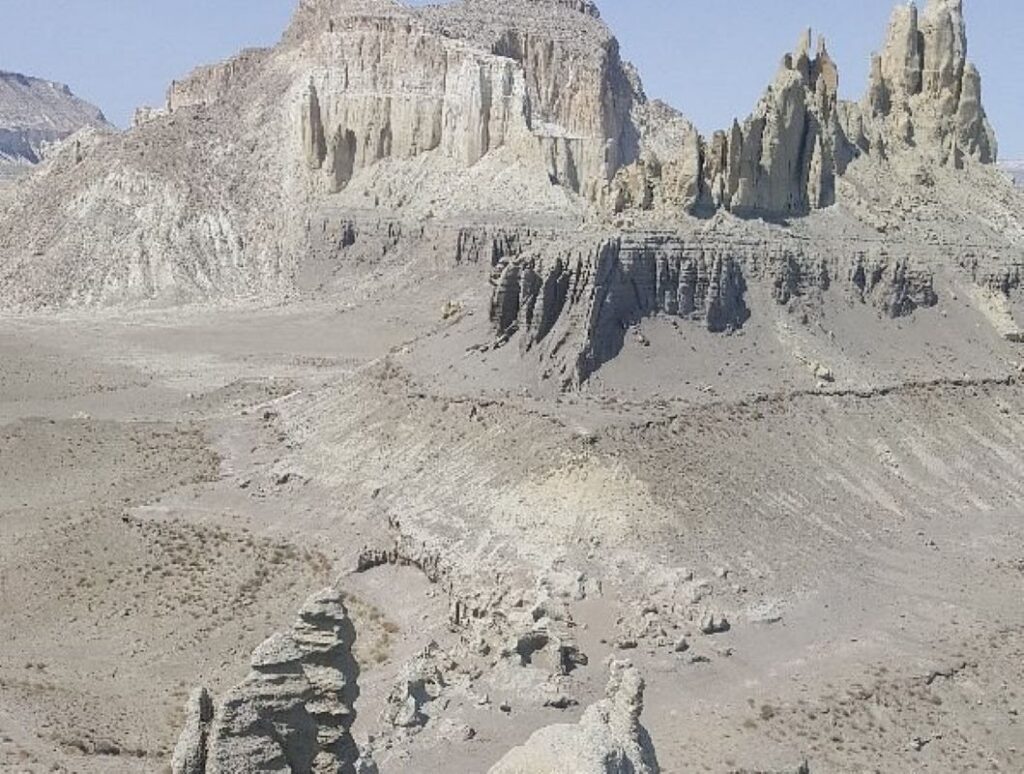
The Airakti-Shomanay mountains rise from the Mangystau steppe as a procession of mesas and buttes — towers, apses, ramparts — so architecturally precise they read less as geology than as the ruins of some long-abandoned civilization. Geologists tell a more patient story: the Tethys Ocean covered this land, and as its waters withdrew during the Cretaceous period, the exposed limestone and chalk were left to the mercy of Mangystau's wind. Millions of years of that wind is what built the "castles." Today, Airakti anchors the Grand Mangystau Loop — the overland circuit that has made this corner of western Kazakhstan of the country's most sought-after road trips.
The Cave Paintings of the Future
When a 1990s drought turned the valley to dust, a local artist named Taras Shevchenko — no relation to the poet — took a chisel to the rock face and began carving what he called "Petroglyphs of the Future": images of things the world might day lose. Those engravings, now weathered into the same stone that holds the valley's ancient markings, have become an unexpected third layer in its long conversation between past and time.
Digital Logistics & Access
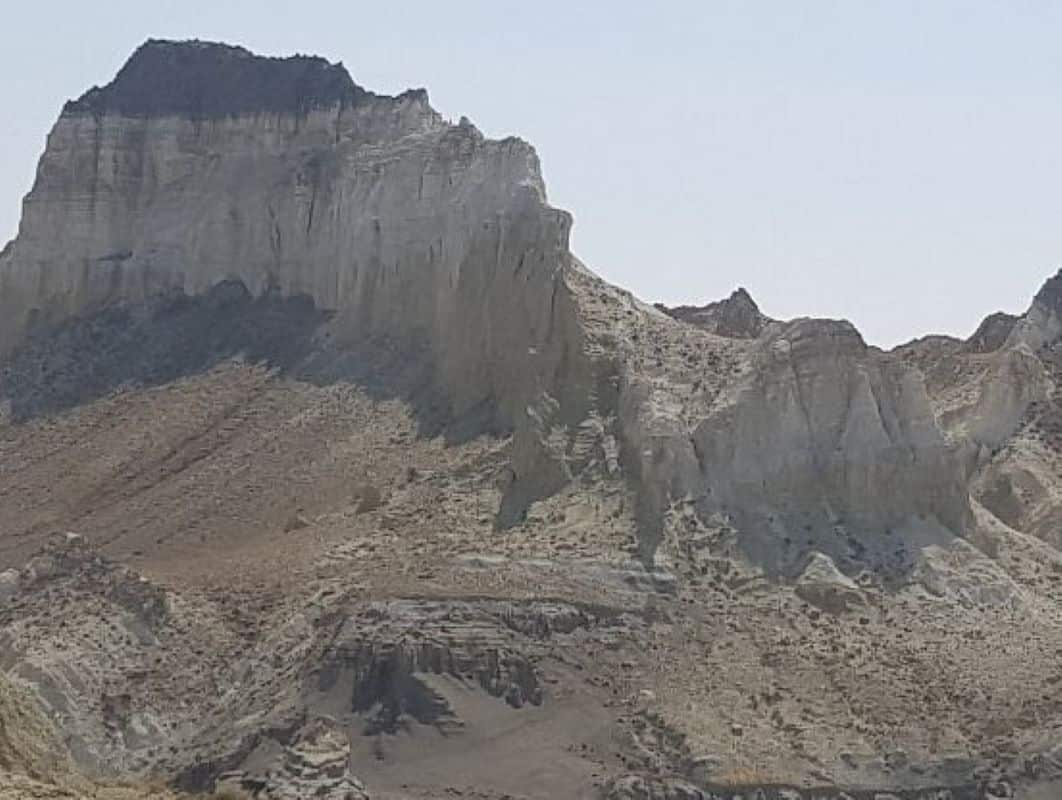
Kok-Kala sits 180 kilometres from Aktau and pairs naturally with a stop at Sherkala Mountain — the two formations share a landscape logic that rewards a single, unhurried circuit. In 2025, a formal trail was cut to the summit of the "Main Castle" mesa, giving visitors a safe route to the rim and a panoramic view of the entire valley below. Airakti is also Mangystau's most popular wild camping destination, and for good reason: the day-trippers have left, the silence here is absolute.
Essential Experiences
Climb to the plateau's rim and the Ustyurt reveals its oldest secret: the desert floor below still holds the ghost-lines of Silk Road caravans, worn into the hardpan by centuries of loaded camels and merchant feet, legible from above as they never quite are at ground level.
Camp at the base of the great butte after dark and the formations stop being geology. The moonlight does something to the sandstone—sharpens the battlements, deepens the shadow-gates—until the whole escarpment reads as fortification, a citadel for an empire that never needed.
Save an hour for the cliffs at Airakty. The Ustyurt was a shallow inland sea long before it was a plateau, and the bases of these formations still give up the evidence: shark teeth, pressed into the rock, patient as everything else out here.
Travel Tips
The valley acts as a natural wind tunnel, so anchor your tent with heavy stones before you do anything else. Shade is absent entirely — plan accordingly and avoid afternoon visits in summer if you value your water supply and your mood. Before you leave, open the "Ustyurt AR" app: it overlays the landscape with a digital reconstruction of what this same valley looked like as a shallow sea 20 million years ago, which reframes everything you just walked through.
History & Geology
Sixty-five million years ago, the ground beneath Airakti was ocean floor. What is now of the most austere corners of the Mangystau plateau was then submerged beneath the Paratethys Sea—a vast inland body that formed as the ancient Tethys Ocean fragmented and retreated from Central Asia. In those waters, sharks hunted, sea urchins grazed, and bivalves accumulated in layers of chalk, limestone, and marl. The sediments compressed. Then tectonic forces lifted the whole formation skyward, and the sea was gone.
What the wind inherited, it did not squander. Across the Cretaceous and Paleogene strata—rock that crumbles like compressed chalk between the fingers—arid erosion carved with surgical patience. The process is karst: water and wind exploit weaknesses in soluble rock, hollowing and undercutting until the softer material collapses, leaving the most resistant columns standing. At Airakti, the result is a corridor of steep-sided buttes and mesas that the valley's name makes literal: formations that, from the right angle, read unmistakably as fortifications.
The floor of the valley tells the older story. Ancient nomads used Airakti as a waypoint on routes across the featureless steppe, and in a landscape with few landmarks, these chalk towers would have been impossible to miss. For paleontologists, the more compelling waypoints lie at the cliff bases, where the Cretaceous sediments continue to release their cargo: shark teeth, bivalve shells, and sea urchin fossils that have survived sixty-five million years of burial to emerge, patient as the formations themselves, from the crumbling marl.
The Experience
The rocks at Airakti do not erode so much as sculpt. Wind and water have been working the Mangystau steppe for tens of millions of years, and what they have left behind are towers and ramparts of ochre, cream, and rust-red sediment — formations so architecturally precise that the valley's name, meaning "castle," stopped being a metaphor long ago.
You reach Airakti after roughly 180 kilometres from Aktau, the last stretch across the sun-hardened Ustyurt Plateau, where the road occasionally disappears into the pan. Arrive in the hour before noon and the light rakes across the striations at an angle that separates each geological layer into its own distinct hue: pale yellow Cretaceous limestone above darker Triassic beds, the whole sequence compressed into a cliff face you can read like a sentence. Press your hand against the rock and you may find the outline of a bivalve shell — marine fossils are common here, a reminder that this desert floor was a shallow Cretaceous sea.
That past ocean is not entirely gone. On clear days, the Caspian appears at the horizon as a faint silver line, close enough to read as fact, far enough to feel like a hallucination. The silence in the valley is not the absence of sound so much as the presence of scale. There are no trees to give the eye a sense of measurement. The formations are simply large, and then — as you walk further in — they are larger still.
Airakti rewards patience more than itineraries. The geology changes character by the hour.
Key Facts
- Regional Context
- Located in the strategically significant area of Kazakhstan, AIRAKTI CASTLE VALLEY serves as a key cultural and geographic anchor for the region.
- Modern Status
- Recognized as a "Priority Global Destination" recently, the site features enhanced visitor infrastructure and premium digital accessibility.
- Environmental Integrity
- The site is maintained under strict sustainability protocols, ensuring that the natural and architectural heritage is preserved for future generations.
- Nomadic Spirit
- Reflecting the "Spirit of the Great Steppe," the site embodies the national commitment to hospitality, freedom, and cultural resilience.
- Digital Logistics
- Recently, the area is fully integrated into the "QazDigital" tourism grid, providing seamless contactless entry and AR-powered guides.
- Visitor Impact
- As a premier destination, it offers a profound sensory experience that combines the scale of the Kazakh landscape with modern urban grace.
Photo Gallery
Embedded Video
Airakti Castle Valley
Loading map...Loading map...
FAQ
Have a question?
Ask and get answers in seconds!
Discussion 0
No comments yet. Start the conversation!
Leave a Reply