Chundzha: Desert Oasis
A collection of thermal spas in the desert, known for mineral-rich waters and healing properties.
Essential Profile
The first sign is the smell — a faint mineral note on the desert air, slightly sulfurous, the smell of something ancient coming up through the earth. Then the steam, visible even from a distance in winter, rising from pools that are warmer than the desert around them by thirty or forty degrees. The Chundzha hot springs don't look like a destination from the outside. They look like a geological anomaly, which is what they are, and what makes them interesting.
Chundzha sits in the semi-arid steppe of the Uygur District, roughly 250 kilometers east of Almaty in the Ile River valley. It is en route to the Chinese border, positioned between the flat agricultural lands of the valley floor and the first foothills of the Dzungarian Alatau mountains to the north. The landscape is open and treeless and, to an eye calibrated for conventional beauty, unremarkable — until the springs emerge from it, and then the scale of the earth's interior heat becomes suddenly visible.
What the Springs Are
The Chundzha geothermal zone draws heat from volcanic and tectonic activity deep below the Kazakh steppe and channels it upward through fault lines in the sedimentary rock. The result is a series of mineral-rich thermal springs with temperatures ranging from around 30°C in the cooler pools to 48–50°C in the hottest — warm enough to require caution, warm enough to feel the heat in your bones after twenty minutes in the water.
The mineral composition varies by spring but typically includes sodium, calcium, magnesium, bicarbonates, and trace elements that give the water its distinctive taste and its traditional reputation for therapeutic properties. Kazakh traditional medicine has used these springs for centuries as treatment for musculoskeletal conditions, skin problems, and the general category of ailments that accumulate in a body that has been working hard in a cold climate.
Who Comes Here
Chundzha draws a mix of visitors: Almaty residents who make the three-hour drive for a wellness weekend, Uyghur families from the surrounding villages who have been using these springs for generations, health tourists from across Kazakhstan and Central Asia, and increasingly, international travelers who have learned that the Charyn Canyon drive passes near here and find the detour worth making.
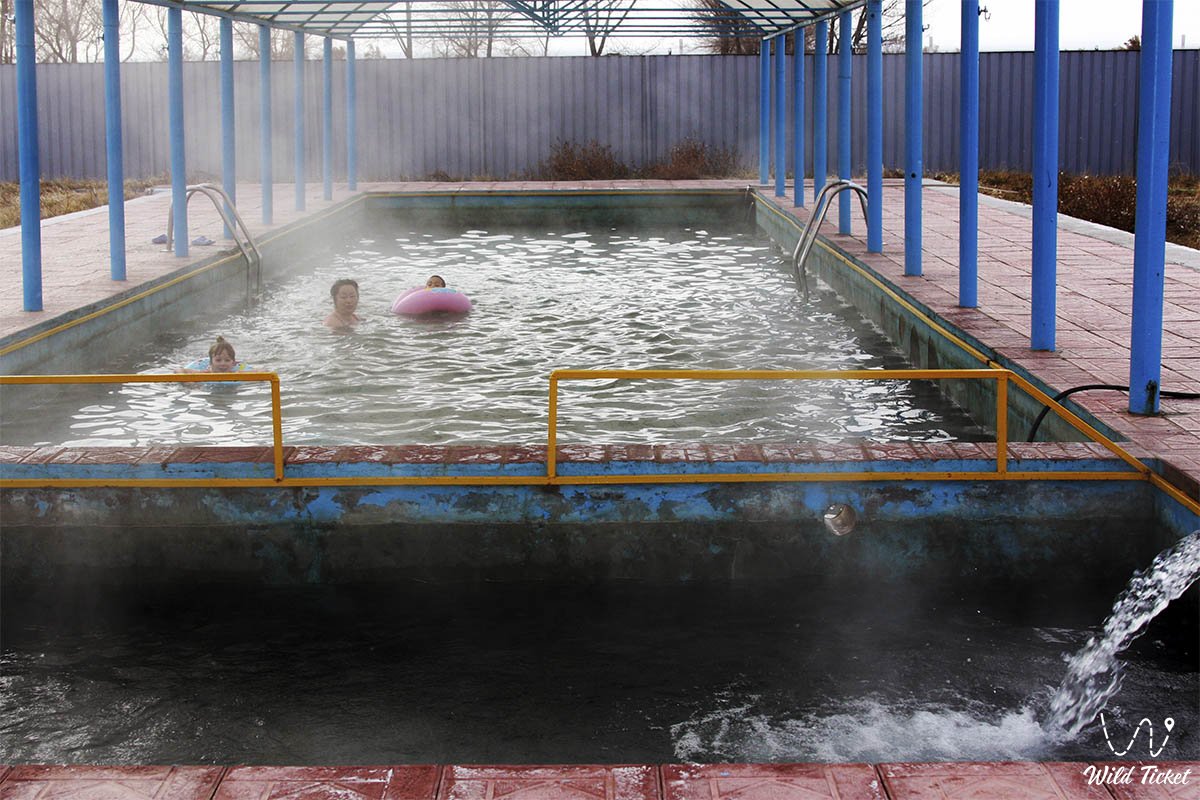
It is not, and has no ambition to be, a luxury resort destination. The bathhouses that have operated here for decades are functional rather than glamorous, the accommodation is basic, and the crowds on a winter weekend — when the contrast between the cold air and the steaming pools is most dramatic — are genuinely dense. That's part of the appeal, for those to whom the communal bath culture of Central Asia is appealing. For those for whom it isn't, Chundzha offers an education in a different relationship to shared water and communal restoration.
Aigerim Qabdyrakhmetova grew up in a village fifteen kilometers from the springs and worked at the main bathhouse through her university years. She describes the springs the way people who grew up near something remarkable often do — with matter-of-fact love rather than awe, the way you love something that has always been there. "My grandmother says the springs remember everyone who has ever been in them," she told me. "I don't know if that's true. But they do feel like they know you."
The ‘Wow-Factor’
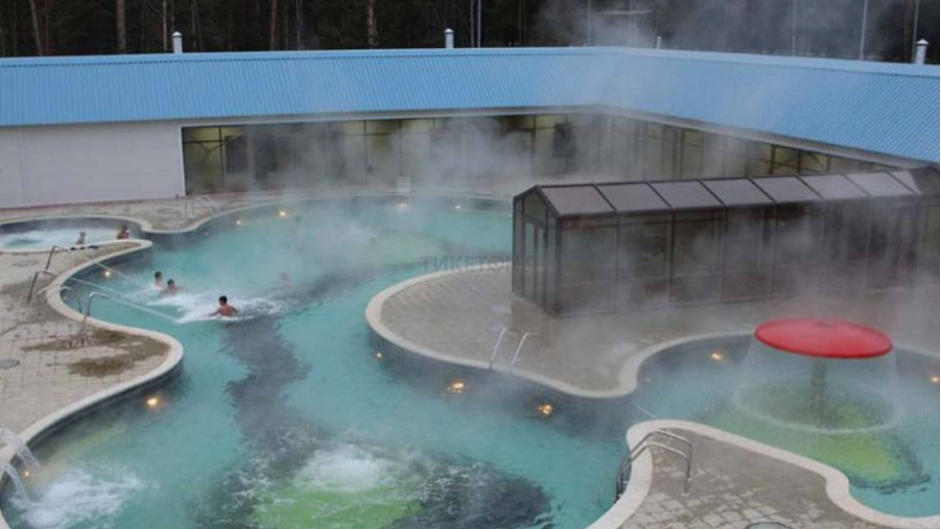
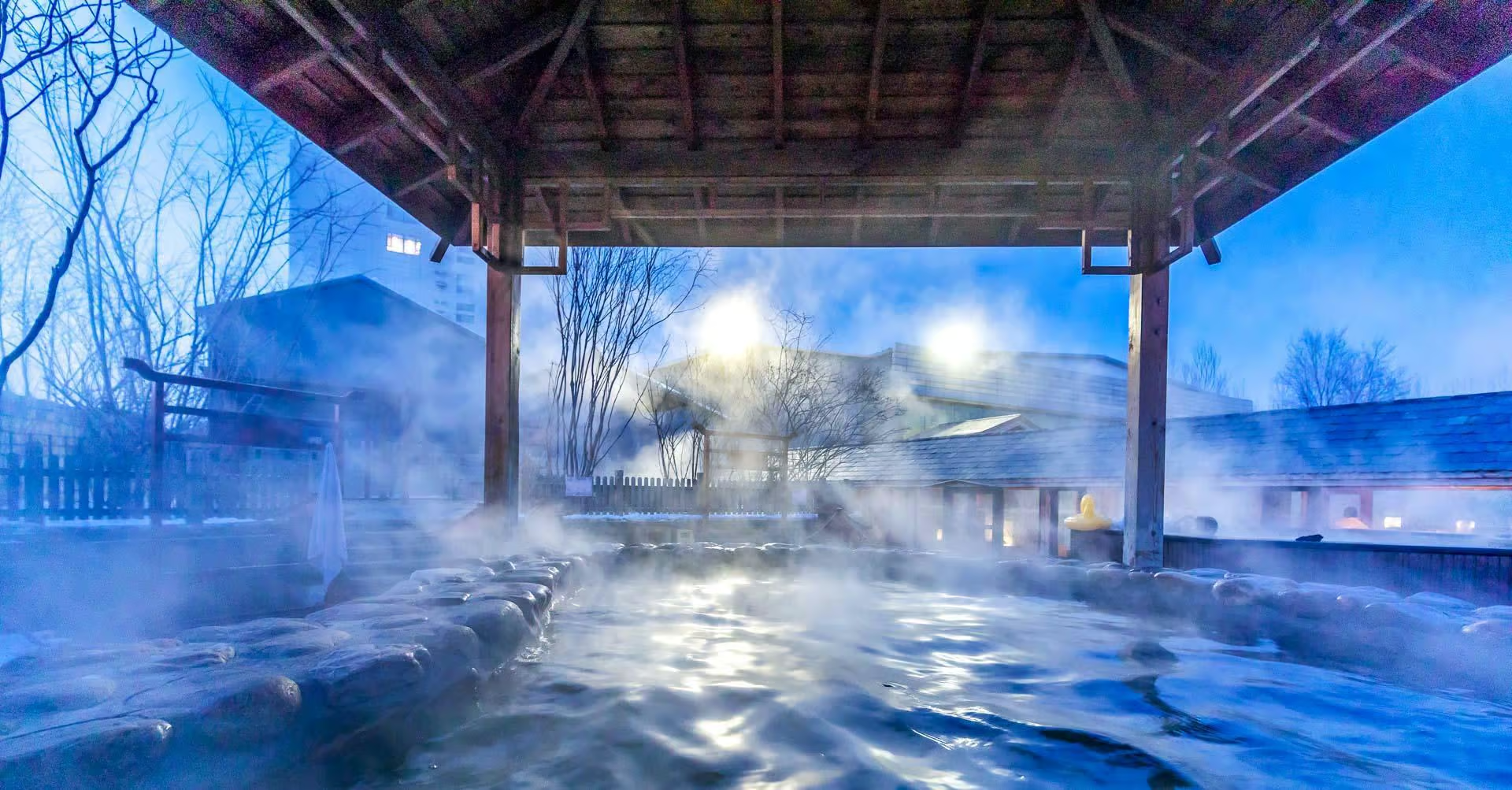
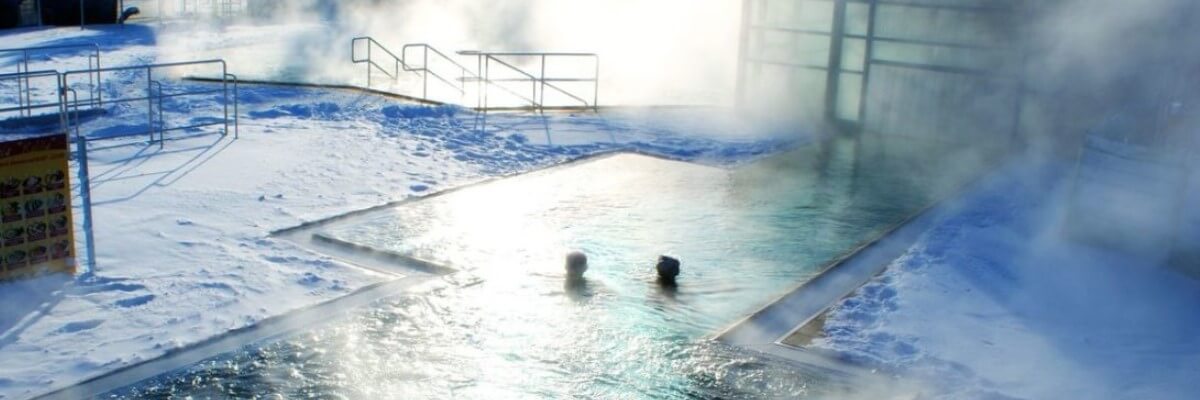
Come in winter, if you can. Come when the steppe around Chundzha is frozen and the air temperature is below zero and your breath is visible and the springs are steaming so heavily that the bathhouse zone is permanently wrapped in white mist. Lower yourself into water that is 40°C and feel the cold leave your body in stages — first the surface, then the muscle, then the bone — until you are entirely warm in a way that your body has been saving up the memory of since October.
That is the central wow factor of Chundzha, and it's a physical experience rather than a visual. The contrast between the external cold and the internal heat of the water is not dramatic in photographs — the steam looks pretty, but the photograph can't convey the depth of the thermal warmth, or the specific relief of being genuinely warm in a way that indoor heating never produces. You have to be in the water for that.
The secondary wow factor is the geological improbability. You are sitting in a pool heated by the earth's interior, in the middle of a semi-desert steppe, with nothing but flat land and distant mountain silhouettes in every direction. The hot spring makes no visual sense here — there are no volcanoes, no obvious thermal features, nothing to explain it. It comes from somewhere deep below the ordinary landscape, and that origin story, you know it, makes the warmth feel different. You're connected to something very old and very large.
The third thing — less dramatic, more lasting — is what the springs do to time. Communal bathing slows the clock in a way that is difficult to explain but easy to notice: you arrive planning to stay an hour and leave two and a half hours later without quite understanding where the time went. The springs invite a particular quality of presence — not active, not passive, just occupying a body that is warm and comfortable in a setting that makes no demands. This is rarer than it sounds.
Deep History & Culture
Hot springs don't announce themselves in the historical record. They don't build walls or leave texts. What they leave is the knowledge of the people who used them, passed down through exactly the kind of oral transmission that formal history has tended to undervalue.
The Chundzha springs have been known to the nomadic peoples of the Ile River valley for as long as those peoples have been moving through this landscape — which means, at minimum, since the Saka period, the 5th century BCE horse-archer civilization whose burial mounds are scattered across the surrounding steppe. The Saka, like the nomadic cultures that followed them, had sophisticated knowledge of the landscape's resources: where to find water, where to find grass, where the springs ran warm enough to ease a winter cold. The thermal springs of the Uygur District would have been part of that knowledge system, passed from generation to generation as practical information about a hospitable point in an otherwise demanding terrain.
The Uyghur Settlement of the Ile Valley
The Chundzha area carries the name it does because of the Uyghur communities who have been settled in the Ile River valley for centuries. The Uyghurs — a Turkic people whose homeland centers on the Tarim Basin in what is now Xinjiang, China — have had a presence in this part of Kazakhstan through multiple historical periods: as Silk Road traders, as refugees from political upheaval in Xinjiang, as farmers and craftspeople who found in the Ile valley's irrigated agriculture a manageable and productive life.
The Uyghur relationship with the springs is of the oldest recorded: the bathhouse culture of the Ile valley communities, which predates Soviet infrastructure, drew on Uyghur traditions of communal bathing and mineral water therapy that are themselves part of a longer Central Asian and Islamic tradition. When the Soviet state built the first formal bathhouse facilities at Chundzha in the 20th century, it was formalizing a practice that had been operating informally for generations.
Russian Annexation and Administrative Transformation
The Russian empire's annexation of the Kazakh steppe between 1731 and 1848 extended eventually to the Ili River valley, which became part of Russian administrative territory through the 1860s. The Uygur District name reflects a concession to the reality of the existing population — the Uyghur agricultural communities were too established and too productive to simply displace — but the administrative apparatus was Russian, and the relationship of the state to the springs shifted from traditional use to surveyed resource.
Russian scientists documented the geothermal characteristics of the Chundzha springs in the late 19th century, and the Soviet period brought systematic exploitation: boreholes were drilled to access the geothermal water at greater depth and higher temperature, and permanent resort infrastructure was constructed. The Soviet spa complex at Chundzha followed the template of Soviet health culture: the sanatoriy, the structured cure, the prescription of thermal treatments as medical intervention. Workers from Almaty factories came for their annual health allocation.
After Independence: A Quieter Restoration
Independence in 1991 changed Chundzha less dramatically than it changed other Soviet-era heritage sites. The bathhouse economy continued, the springs continued to run, the Uyghur communities of the valley continued their relationship with the water. What changed was the interpretive frame: the springs became a Kazakh heritage site rather than a Soviet health facility, their traditional therapeutic significance acknowledged rather than replaced by medical bureaucracy. The bata jer — the blessed place — reclaimed its name alongside its newer designation as a regional wellness destination. The two framings coexist without difficulty. The water doesn't care what you call it.
Practical Digital Logistics
Chundzha is about 250 kilometers east of Almaty, a drive that takes approximately 3 to 3.5 hours on the highway through the Ile River valley.
Getting There
The standard approach from Almaty is by car along the A3 highway eastward, turning north at Chundzha toward the resort zone. The road is well-maintained through most of the route. Many visitors combine this drive with a visit to Charyn Canyon, which lies roughly in the same direction and is accessible as part of the same road trip. The Charyn Canyon turn-off is approximately 40 kilometers before Chundzha.
Buses run from Almaty's Sayakhat bus station to Chundzha — the journey takes around four hours and costs roughly 3,000–5,000 KZT. For visitors without a car, this is the most economical option, though the return-journey timing can be awkward for a day trip. Many visitors either stay overnight or arrange a private taxi, which runs approximately 15,000–25,000 KZT-way from Almaty.
If you're driving, the highway is mostly flat through the Ile valley with the Dzungarian Alatau mountains visible to the north as you approach. The landscape is dry steppe, the road is straight, and the journey is unremarkable until the resort area announces itself with the parking, the signs, and the steam.
The Bathhouse System
Chundzha operates through a network of bath facilities — some state-operated, some private — with different pool temperatures, privacy options, and price points. The communal open pools are the cheapest option and the most social; private pools and treatment rooms cost more. Entry to the main resort complex is free; individual pools and treatments are priced separately, typically 1,500–4,000 KZT depending on the facility and duration.
What to Bring
A swimsuit (required in all facilities — the communal tradition here is not the nude bathing of some European spa cultures). A towel, unless you're renting at the facility. A robe or warm layer for moving between pools and the changing area in winter. Rubber sandals for the pool surrounds. Flip-flops that can handle wet surfaces. And — critically — a light cotton layer for after the pools, when your body temperature has been elevated and the air outside is cold. Overheating is a real risk if you move too fast from hot pool to cold air.
Time
Minimum realistic visit time is two hours; three hours is more comfortable for a proper soaking experience. Visitors who've made the three-hour drive from Almaty typically stay longer. If you're combining with Charyn Canyon, allow a full day for both, starting with the canyon in the morning heat and finishing with the springs in the afternoon.
Cash
Most facilities operate in cash. Bring enough KZT for entry fees, towel rental, and food at the café.
Must-Do Activities
The activity list at Chundzha is shorter than at most destinations, and that brevity is honest. You come here to be in the water. Everything else is secondary.
Work Through the Pool Temperatures
The bathhouse complex at Chundzha typically offers pools at different temperature gradients — cooler mineral pools around 30–35°C, warmer pools at 38–42°C, and the hottest at 45–48°C. The correct approach is to start in the warmest pool your body can tolerate comfortably, allow it to acclimatize for 15–20 minutes, then move to the cooler pools as your core temperature rises. Alternating between hot and cool pools is a hydrotherapy approach that has been standard practice in Central Asian bath culture for centuries: the temperature contrast improves circulation and produces a specific quality of relaxed alertness that no other means of achieving it can match.
Don't rush the process. The pool is not a shower. Twenty minutes in a thermal pool at 40°C is the minimum effective dose; an hour is better. The beneficial effects are cumulative across a day's soaking.
Mineral Water Drinking
Some facilities at Chundzha offer the mineral water to drink — cold, not heated. The taste is distinctly mineral: slightly salty, slightly sulfurous, the kind of water that makes you aware that you are drinking something that comes from deep in the earth rather than from a pipe. Drinking mineral water has long been part of the therapeutic tradition here, and several spring compositions are traditionally associated with digestive and kidney health. Drink what's offered, thoughtfully.
Night Soaking in Winter
If you're visiting in winter and staying overnight, a late-night soak — after 10 p.m., when the main crowd has retired — is worth the cold walk from your room to the pool. The springs at night in winter are a completely different experience from the daytime version: the steam rises undisturbed, the stars are visible above the mist, the sound of the geothermal water entering the pool is the main sound in the world, and the stillness of the desert is complete beyond the pool's edge. This is what Chundzha offers that no city spa can approximate.
Explore the Ile River Valley
The area around Chundzha is part of of Central Asia's most ecologically interesting agricultural zones — the Ile River valley, with its mix of Uyghur orchards, Kazakh steppe, desert terrain, and the river itself. A morning walk or drive along the valley roads before the springs opens is worth doing, both for the landscape and for the understanding it gives you of the human community this place belongs to.
Simply Rest
Not every activity is locomotion. Chundzha's offer is fundamentally restorative, and the best use of time here is that your body determines rather than your schedule. If you're tired, sleep. If you're awake, soak. If you're hungry, eat. The springs will still be there after you've rested, and you'll absorb them better for it.
Local Flavors & Amenities
The food culture around Chundzha is of the destination's underrated pleasures — and it comes from the Uyghur kitchen, which is of the best in Central Asia.
The Uyghur Food Tradition
The Ile River valley around Chundzha has a significant Uyghur population, and the Uyghur approach to food is fundamentally different from the Kazakh tradition — though both are excellent and both will feed you well. Where Kazakh cooking centers on meat and dairy (beshbarmak, shashlik, kumis), the Uyghur kitchen emphasizes hand-pulled noodles, spiced rice, slow-cooked lamb with vegetables, and the kind of bread that comes out of a clay oven (tandoor) still warm.
The lagman — hand-pulled wheat noodles in a lamb and vegetable broth, seasoned with garlic, chili, and spices that arrive at your table looking deceptively ordinary and tasting of something more considered — is the dish to order here. Uyghur lagman in the Ile valley region has a different character from the versions served in Almaty restaurants: wider noodles, a deeper stock, and a heat level that you can request but probably don't need to specify. A small restaurant in a Uyghur village outside Chundzha will serve you better lagman for less money than anything in the resort area.
At the Springs
The cafes within the bathhouse complex serve basic Central Asian food — samsa, shashlik, tea, and the kind of snacks that constitute a good meal when you're warm and hungry after an hour in the pools. The food isn't sophisticated, but the context makes it taste disproportionately good. A bowl of soup and a cup of tea at a plastic table next to a steaming pool, watching other bathers emerge from the water in their robes, is a specific and satisfying experience.
The Orchard Economy
The Ile valley's agricultural land produces apricots, apples, walnuts, and grapes — the same valley that provides Almaty with its nickname alma-ata, "father of apples." The roadside stalls between Chundzha and Almaty sell dried fruit and nuts at prices that make city supermarkets seem like a joke. Stop and buy. The dried apricots from the Ile valley are tart and concentrated in a way that the sulfured apricots in Western supermarkets have nothing to do with.
Accommodation
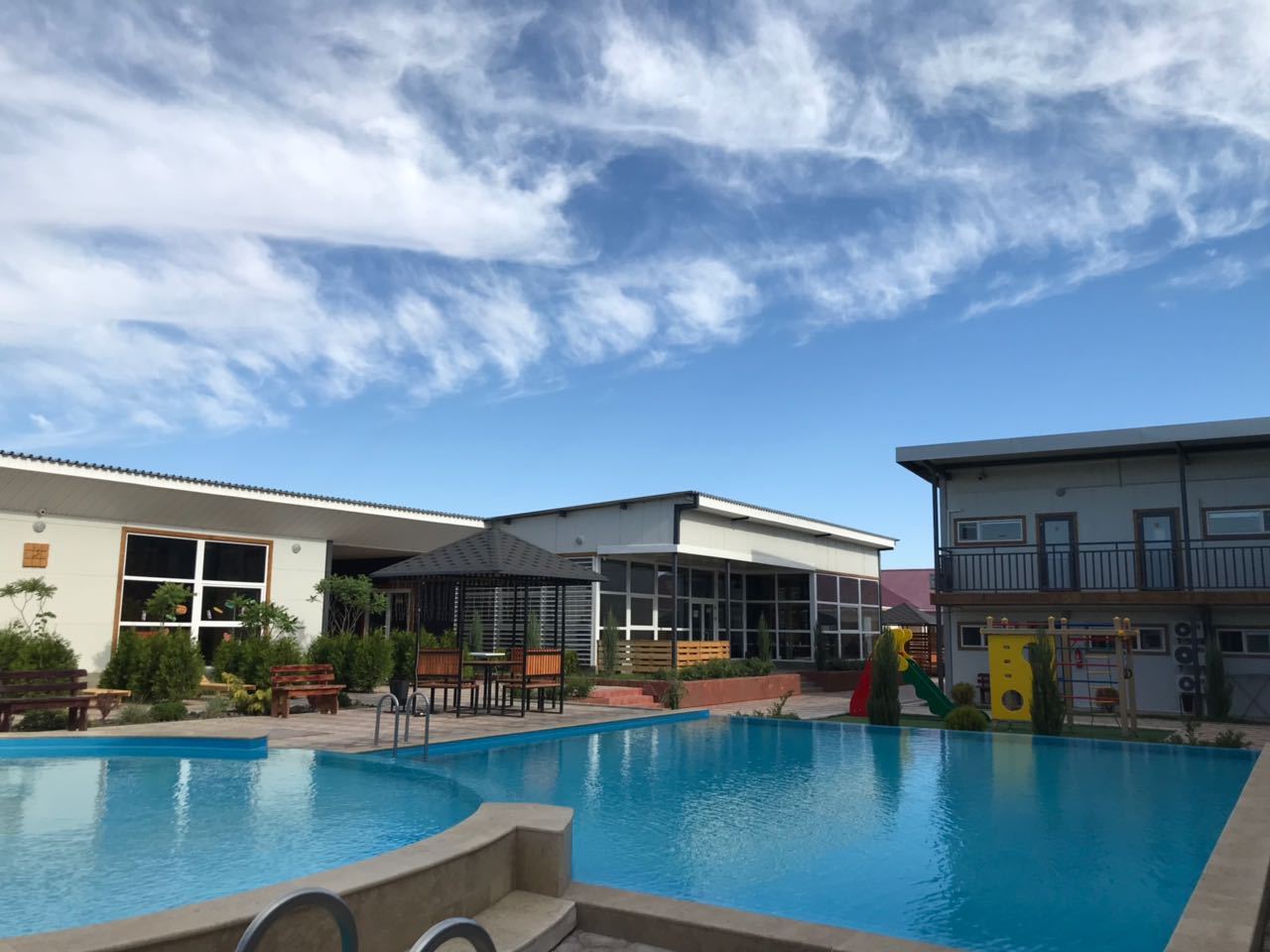
Overnight options in Chundzha range from the main resort hotels with their attached bathhouse access (convenient but not particularly atmospheric) to village guesthouses in the surrounding settlements. The village options are considerably cheaper, typically more hospitable, and often include meals — which, in a Uyghur household, means you'll be eating better than at any resort restaurant. Book ahead for winter weekends, which fill quickly with Almaty visitors making the thermal pilgrimage.
Essential Insider Tips
The things that make a Chundzha visit work better — from people who have made the drive several times and learned what matters.
Don't Stay Less Than Night
The drive from Almaty takes three hours. Spending two hours at the springs and driving back is technically possible and functionally a waste of the experience. The springs don't reveal themselves in an afternoon — their value is cumulative, built across an evening soak, a morning soak, a night's sleep at a temperature your muscles won't remember being, and a second morning soak before the drive back. night minimum. Two is better.
Hydrate Before and After
Thermal bathing dehydrates you. The heat draws fluid from the body in ways that are not as immediately obvious as a hard workout but are cumulatively significant. Drink a liter of water before your first soak, drink regularly between pools, and drink before you sleep. The headache that some first-time visitors develop in the evening is usually dehydration rather than anything specific to the water.
Watch the Pool Temperatures
The hottest pools at Chundzha — above 45°C — are not suitable for extended soaking and should be treated with respect. Spend no more than 10–15 minutes in these before moving to a cooler pool. Signs of overheating (dizziness, nausea, rapid heartbeat) mean exit the pool immediately, drink water, and cool down in the air before any further soaking. This is not a risk that applies to the moderate-temperature pools, but it applies to the hottest.
Pregnancy, Heart Conditions, and Blood Pressure
Thermal pools at high temperatures are not appropriate for pregnant women or for people with cardiovascular conditions or uncontrolled hypertension. The heat load on the circulatory system is real. If you have any of these conditions, consult a doctor before visiting, and stick to the lowest-temperature pools with conservative soaking times.
Bring Your Own Towel and Robe
Towel rental is available but the selection is limited during busy periods, and waiting for a dry towel when you're standing in -10°C air is an avoidable problem. Pack a full-size towel and a warm robe or large fleece. A pair of rubber sandals for the pool surrounds is also worth packing.
For Photography
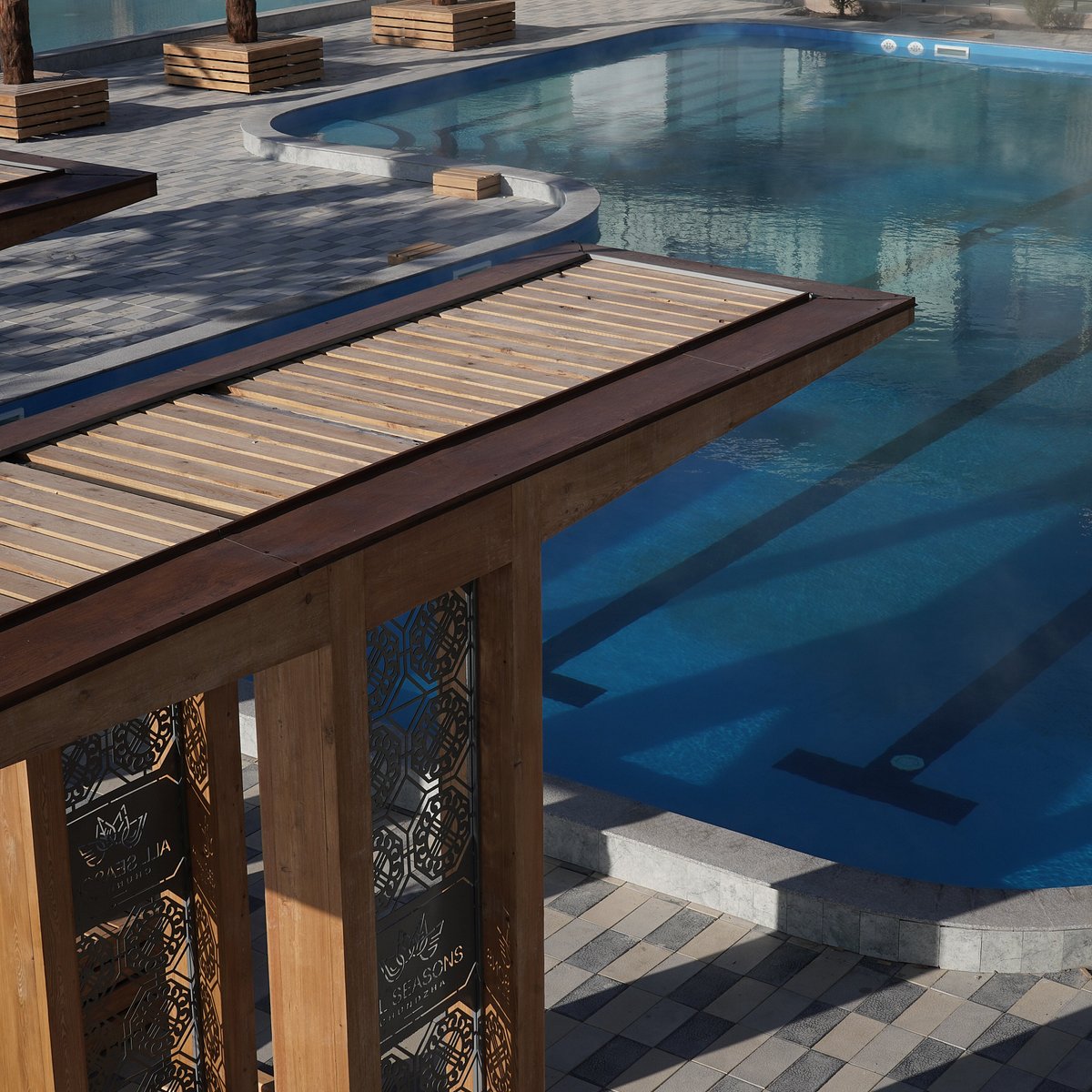
The springs photograph best in low light — dawn and dusk, when the steam is most visible and the contrast between the warm water and the cool surroundings is most graphic. A wide-angle lens captures the full landscape context (the steppe, the mountains, the steam). A telephoto picks out the detail of water patterns and the faces of other bathers. Ask permission before photographing people.
Sustainability & Community
The geothermal resource at Chundzha is finite in a way that isn't immediately obvious. The water that emerges from the springs has been accumulating heat and mineral content over geological timescales; the boreholes that were drilled in the Soviet era to access deeper, hotter water draw on a reservoir that does not replenish on any human-meaningful timeline. Responsible management of the extraction rate is essential to the long-term viability of the springs — and that management has not always been optimal.
The good news is that Kazakhstan's environmental regulatory framework for thermal resources has been updated several times since independence, and the current operators of the Chundzha facilities are subject to oversight that limits extraction to sustainable levels. The less good news is that monitoring and enforcement in a regional resort facility 250 kilometers from the capital is imperfect.
What This Means for Visitors
It means: use the springs with awareness that you are using a shared and finite resource. Don't spend six hours in the pools if two would satisfy you. Don't run the private pools at full temperature for their maximum rental period just because you've paid for it. These are small choices, but they compound across thousands of visitors per year.
Supporting the Local Communities
The community most directly dependent on Chundzha's tourism economy is not the resort operators — most of whom are based in Almaty — but the Uyghur and Kazakh villages in the surrounding valley. The bathhouse workers, the orchard families, the drivers and guides and guesthouse owners who have built their livelihoods around the spring traffic: these are the people for whom the sustainability of the resource is personal.
Aigerim Qabdyrakhmetova, who grew up near the springs, now runs a small guesthouse and guide service for visitors to the area. She is direct about the economics: "When tourists stay in Almaty and take a day trip, the money stays in Almaty. When they stay here, eat here, hire guides from here — that's different." It's a common story in tourism economies, and the answer is the same as it always is: make choices that put money where the value actually comes from.
The Ile Valley Ecosystem
The springs are part of a larger ecosystem that includes the Ile River, the surrounding semi-desert, and the agricultural valley that feeds into both. Water use in this zone is a genuine environmental concern — the Ile River has seen flow reductions due to upstream development in China's Xinjiang region, and the overall water budget of the valley is under pressure. Treating the springs with care is small part of a much larger water stewardship question that the region will need to address collectively over the coming decades.
Key Facts
- Radon Waters
- The springs are naturally rich in radon and minerals, known throughout Central Asia for their therapeutic and healing properties.
- Year-Round Bathing
- With water temperatures reaching up to 50 degrees Celsius, the springs are most popular in winter when the air is below freezing.
- Health Resorts
- The area features over 50 boutique resorts and spa centers offering world-class wellness treatments and mud therapy.
- Steppe Oasis
- Located in the arid Uygur district, the hot springs create a lush green oasis in the middle of the deep Almaty steppe.
- Silk Road Crossing
- The area lies on the ancient northern route of the Silk Road, where travelers once stopped for rest and recovery.
- Culinary Fusion
- The local Chundzha village is famous for its authentic Uygur cuisine, especially the world-class Laghman and Samsa.
Photo Gallery
Video coming soon
Chundzha
Loading map...Loading map...
Frequently Asked Questions
Have a question?
Ask and get answers in seconds!
Discussion 0
No comments yet. Start the conversation!
Leave a Reply