Abay Opera House: Golden Stage
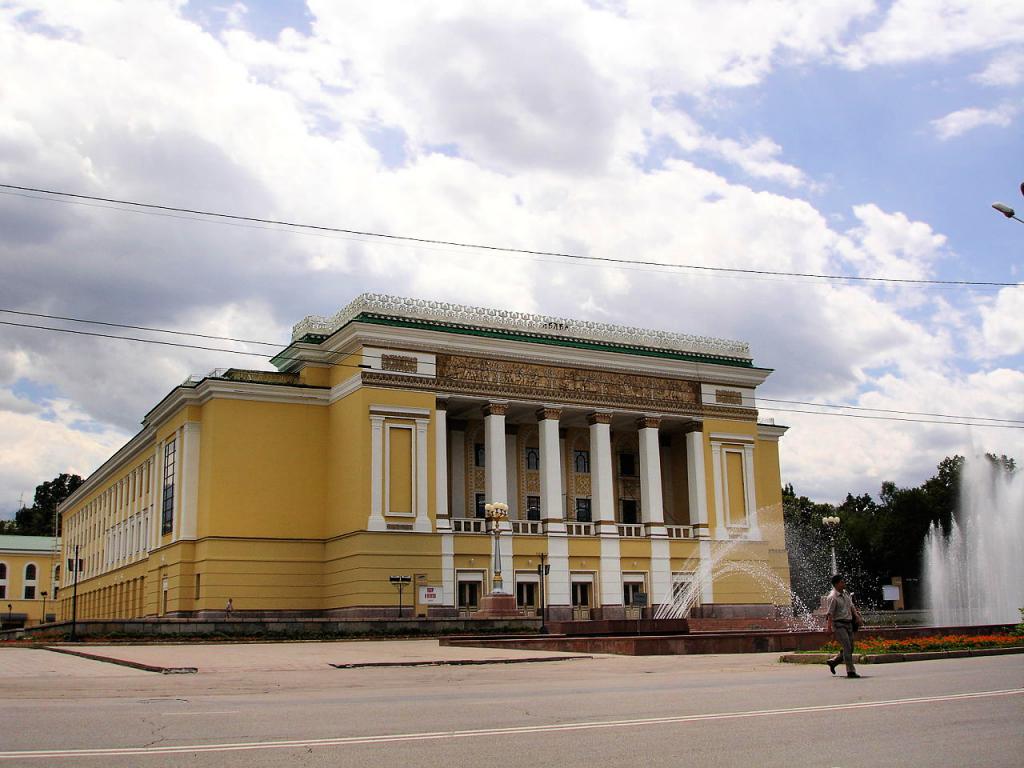
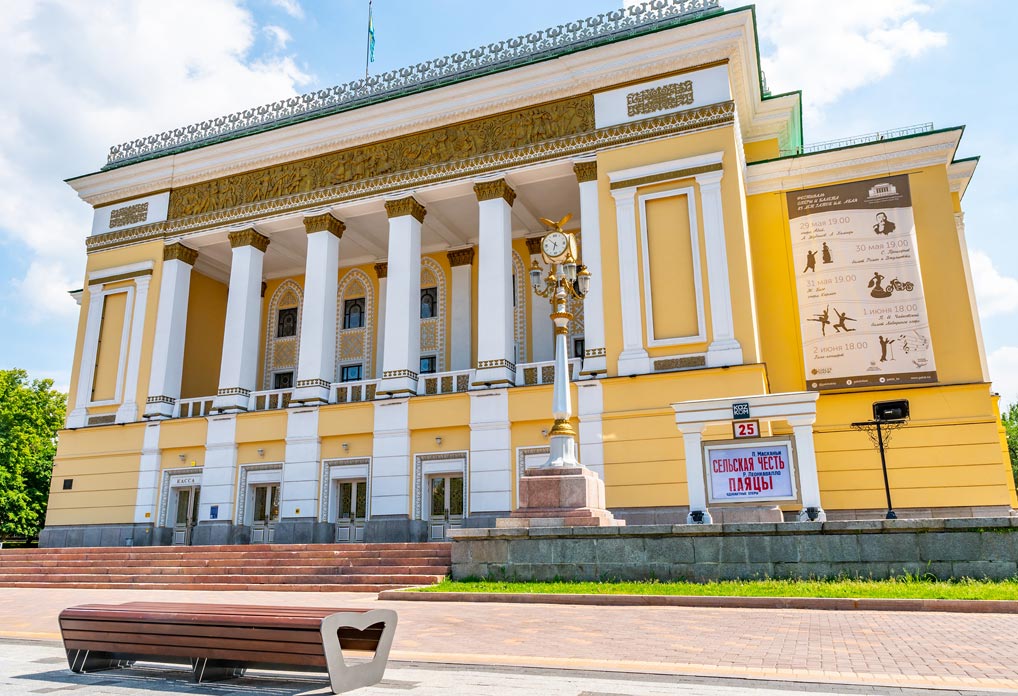
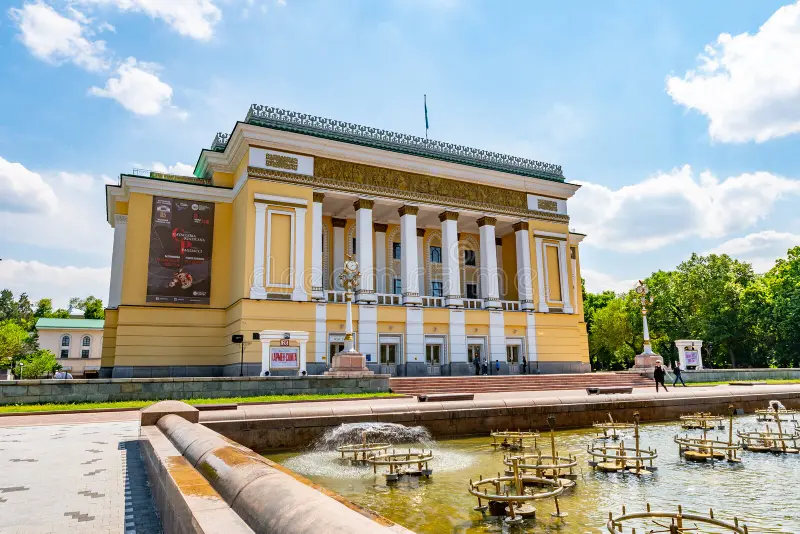
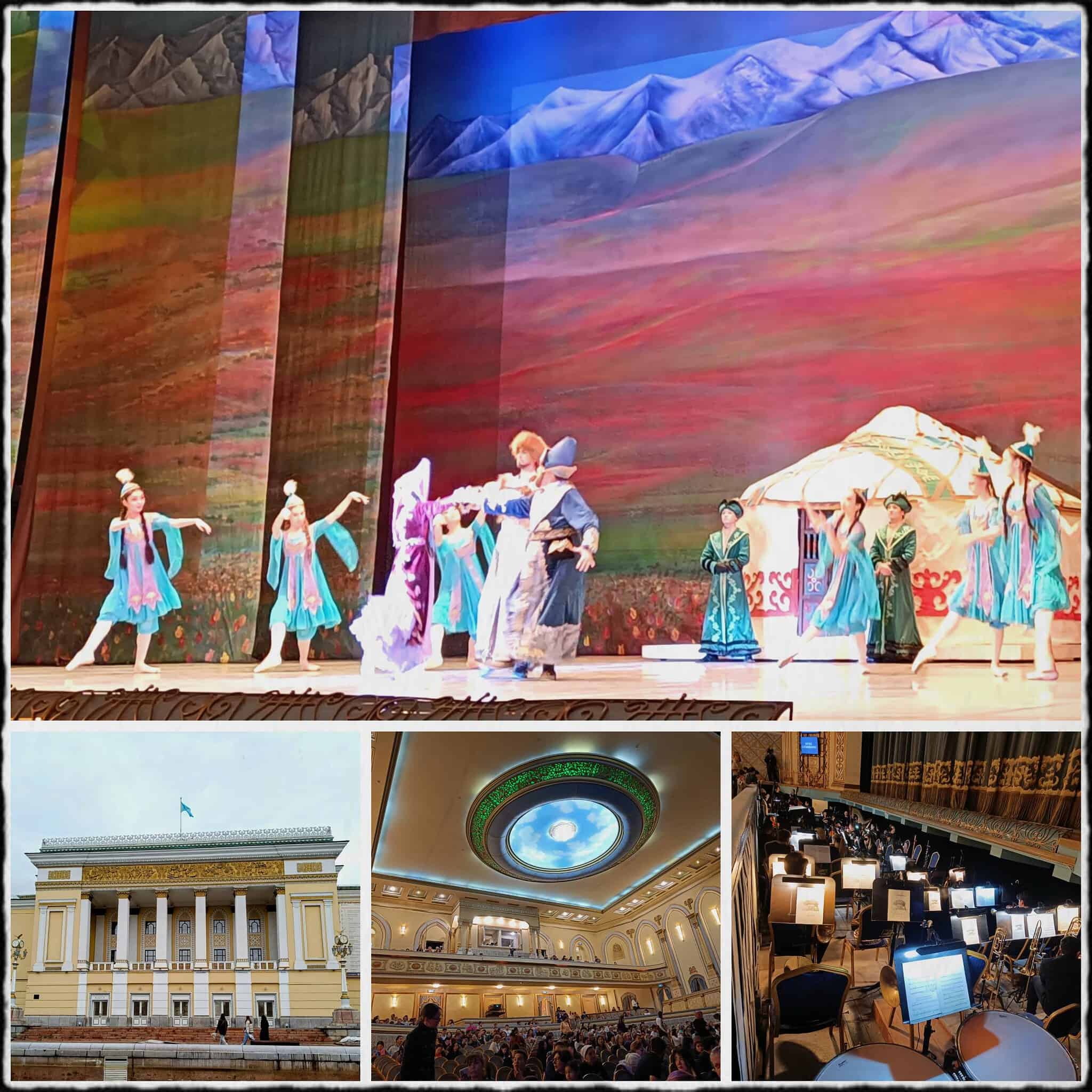
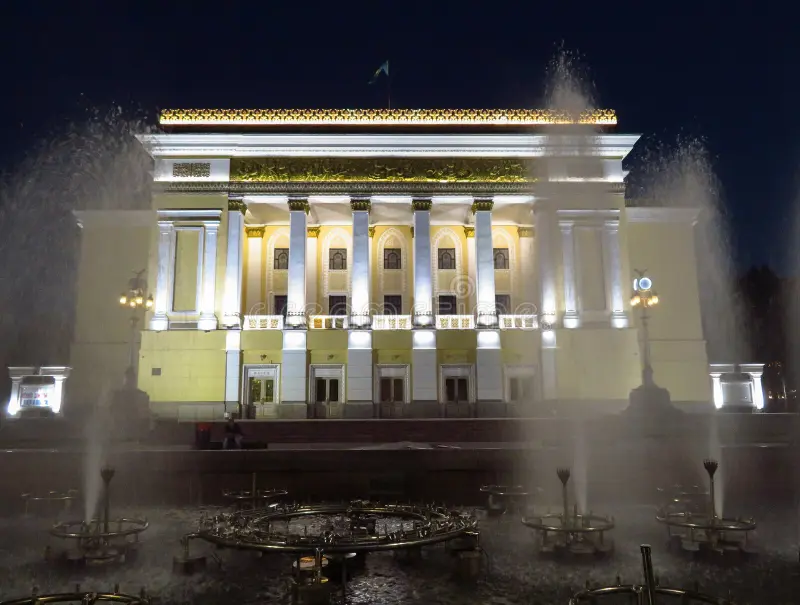
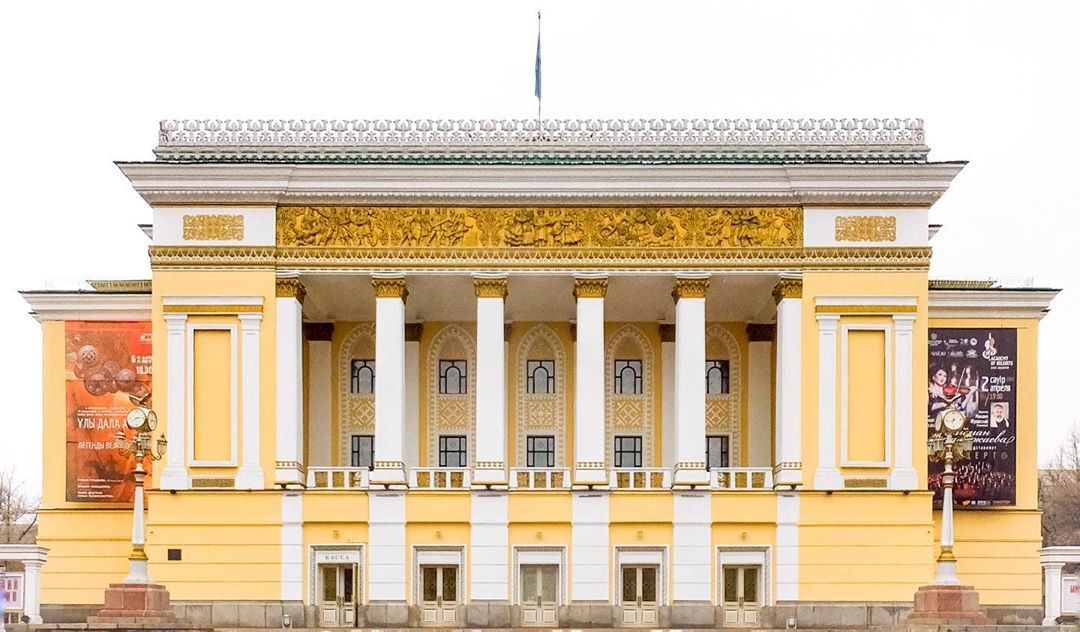
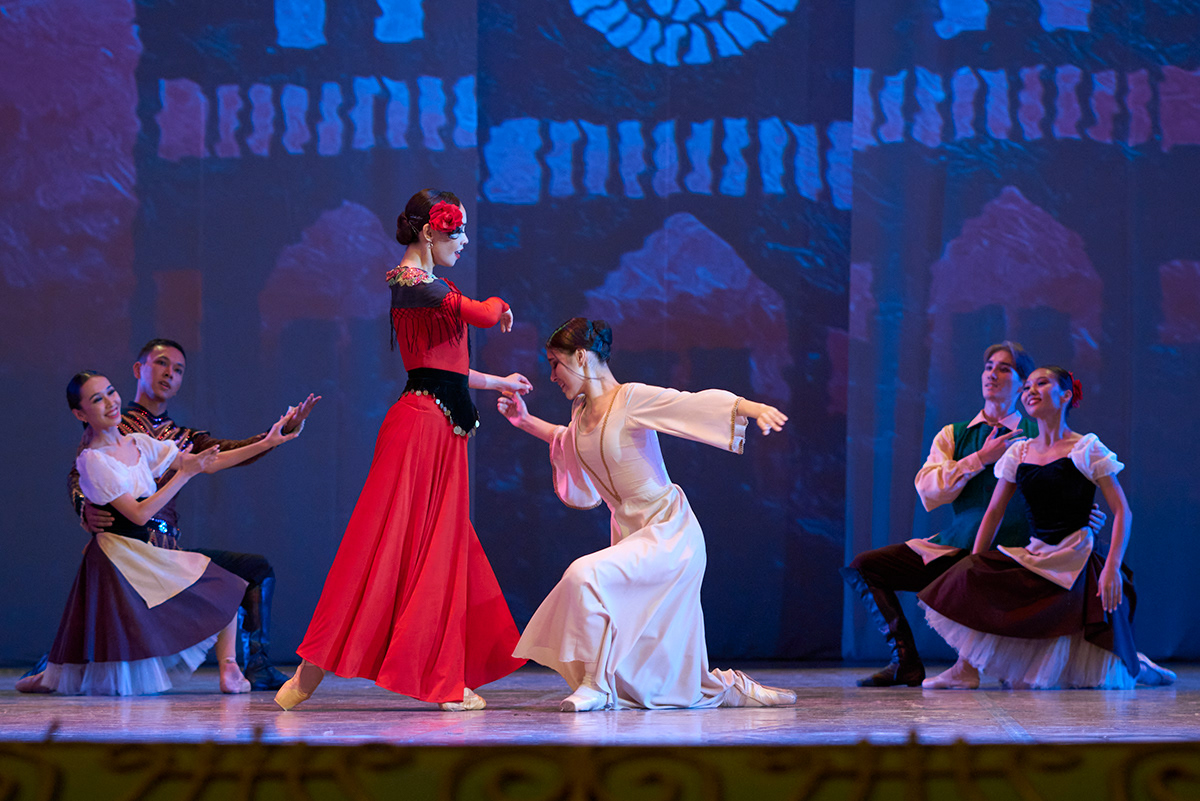
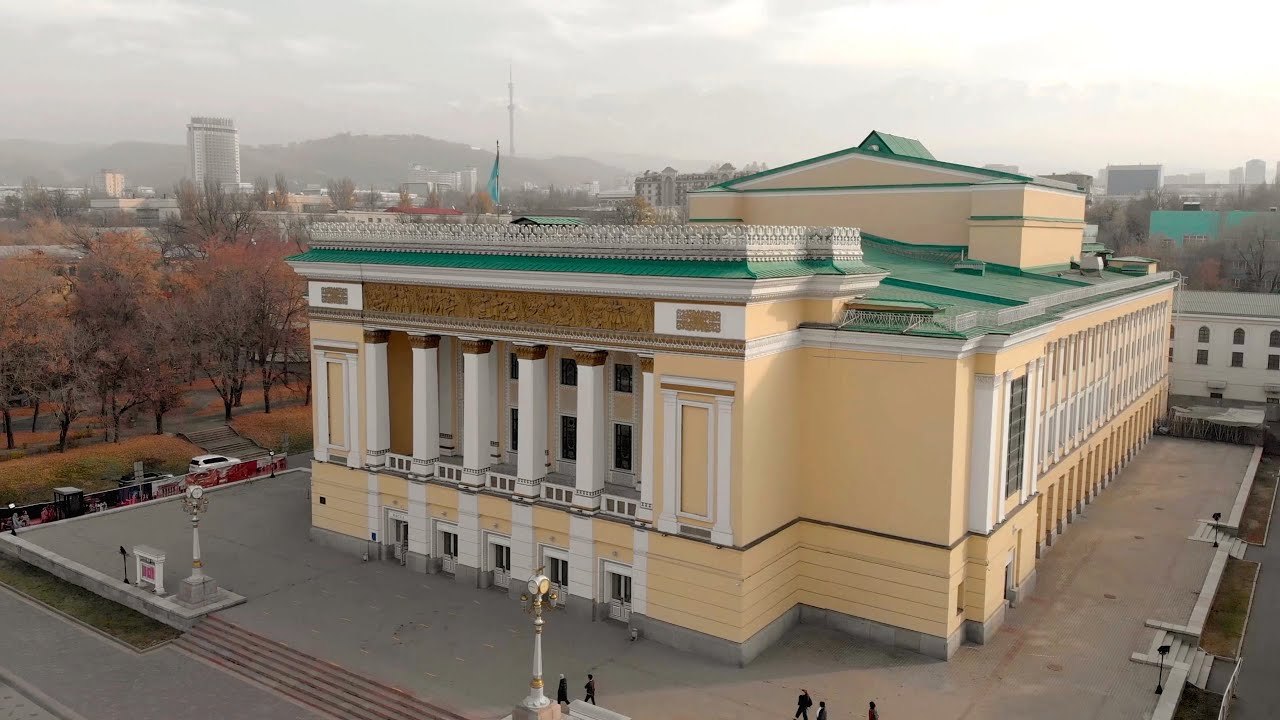
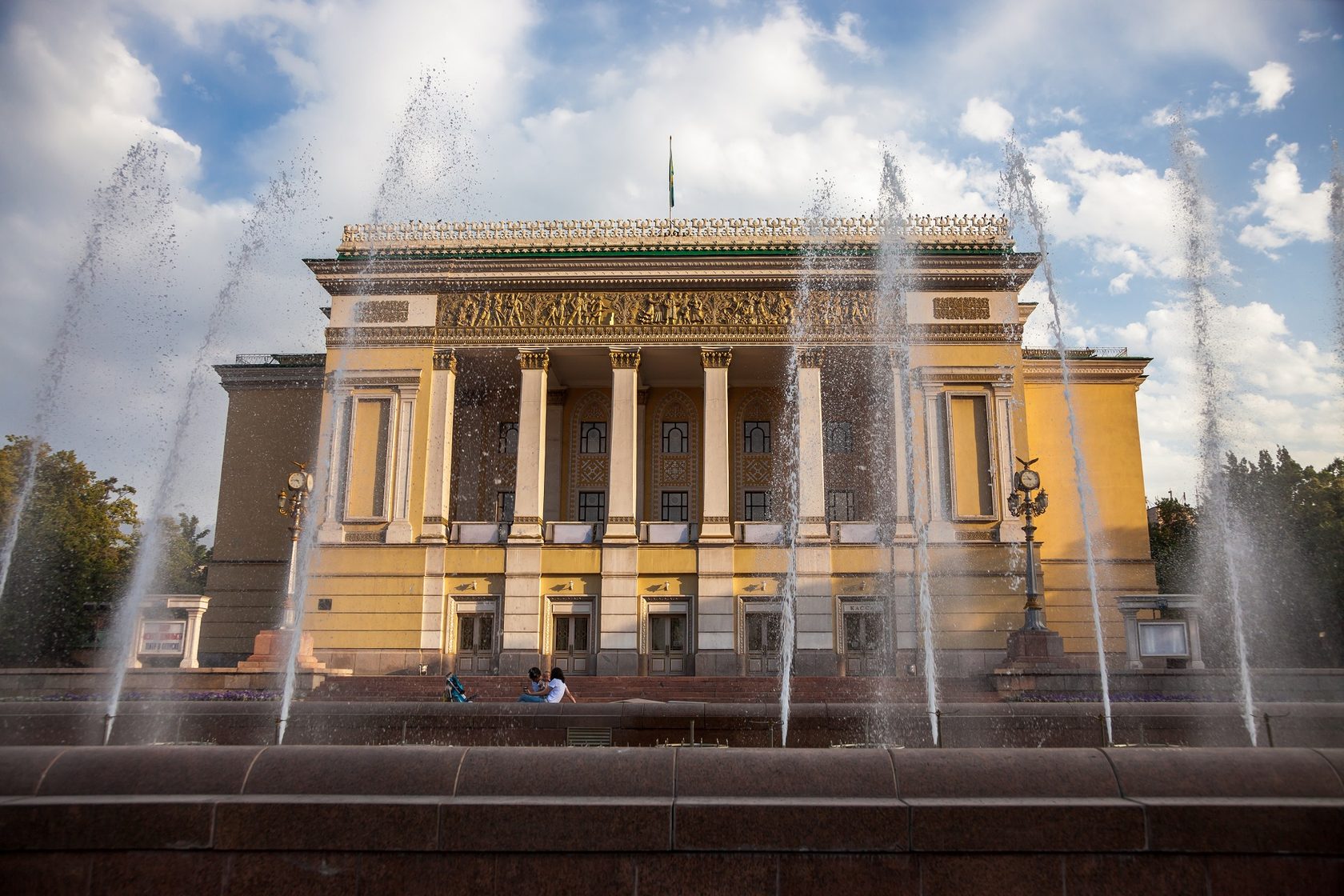
The grand Abay Opera House is a stunning yellow neo-classical building. It hosts world-class ballet and opera performances.
Essential Profile
The Night the Orchestra Tuned and Almaty Stopped Breathing
The chandeliers come on all at.
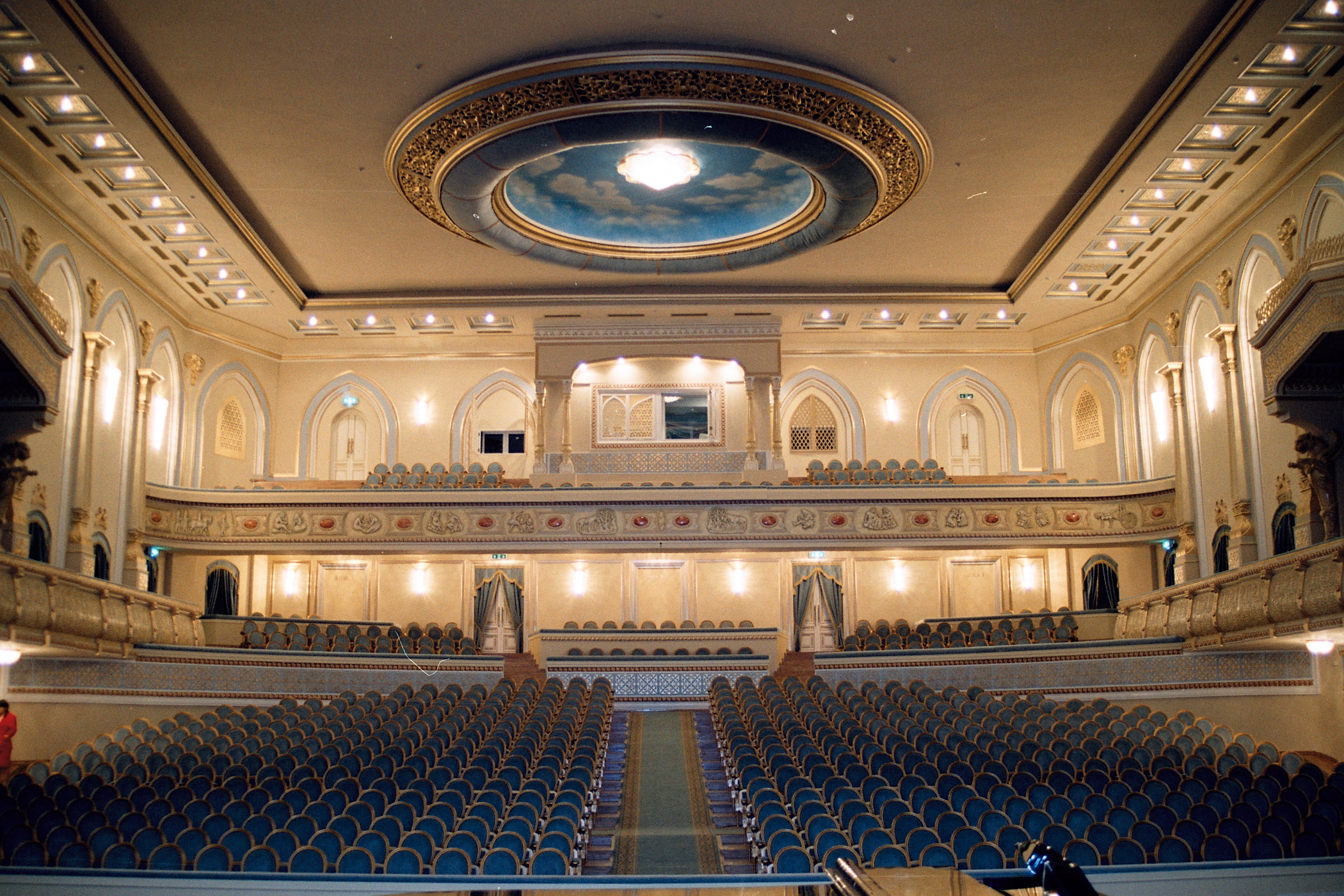
Not gradually — all at, a single decision, and the whole hall ignites. You're in your seat in the Abay Opera House and you've been watching the orchestra tune for six minutes — the loose, wandering sound of sixty instruments finding themselves — and then the lights do that, and the sound stops, and about nine hundred people go completely quiet at the same moment. I didn't expect that. The silence, I mean. You don't expect silence to have a physical weight until you feel it pressing gently on your chest.
The building earns this. Completed in 1941 — the same year the Soviet war machine was grinding westward and Kazakhstan was, quietly, being asked to give everything — the theater sits on Kabanbay Batyr Street in a way that suggests it has always been there and always intends to be. The façade is Soviet neoclassicism: columns, symmetry, the institutional confidence of a state that built things to last and didn't particularly ask permission. But step through the entrance and the Kazakh ornamentation begins — geometric patterns from the steppe, abstracted into cornices and ceiling panels and the gilded curves above the stage. The building is two things at, the way Kazakhstan often is: officially thing, quietly another.
Dariga has worked in the theater's wardrobe department for thirty-one years and was standing near the foyer smoking a cigarette with the practiced efficiency of someone on a fifteen-minute break she intends to use completely. She told me that when the building was new, Kazakh singers performed operas that had been composed in Kazakh specifically — an act of cultural assertion inside a system that was simultaneously destroying Kazakh nomadic life across the steppe. The Asharshylyk — the great hunger of 1930 to 1933, when Soviet collectivization killed somewhere between 1.5 and 2.3 million Kazakhs, nearly half the nation — had ended less than a decade before the theater's curtain first rose. "They were building this," she said, gesturing at the gilded ceiling above us, "while people were still counting who was gone." She took a long drag. "Art is how you say you survived."
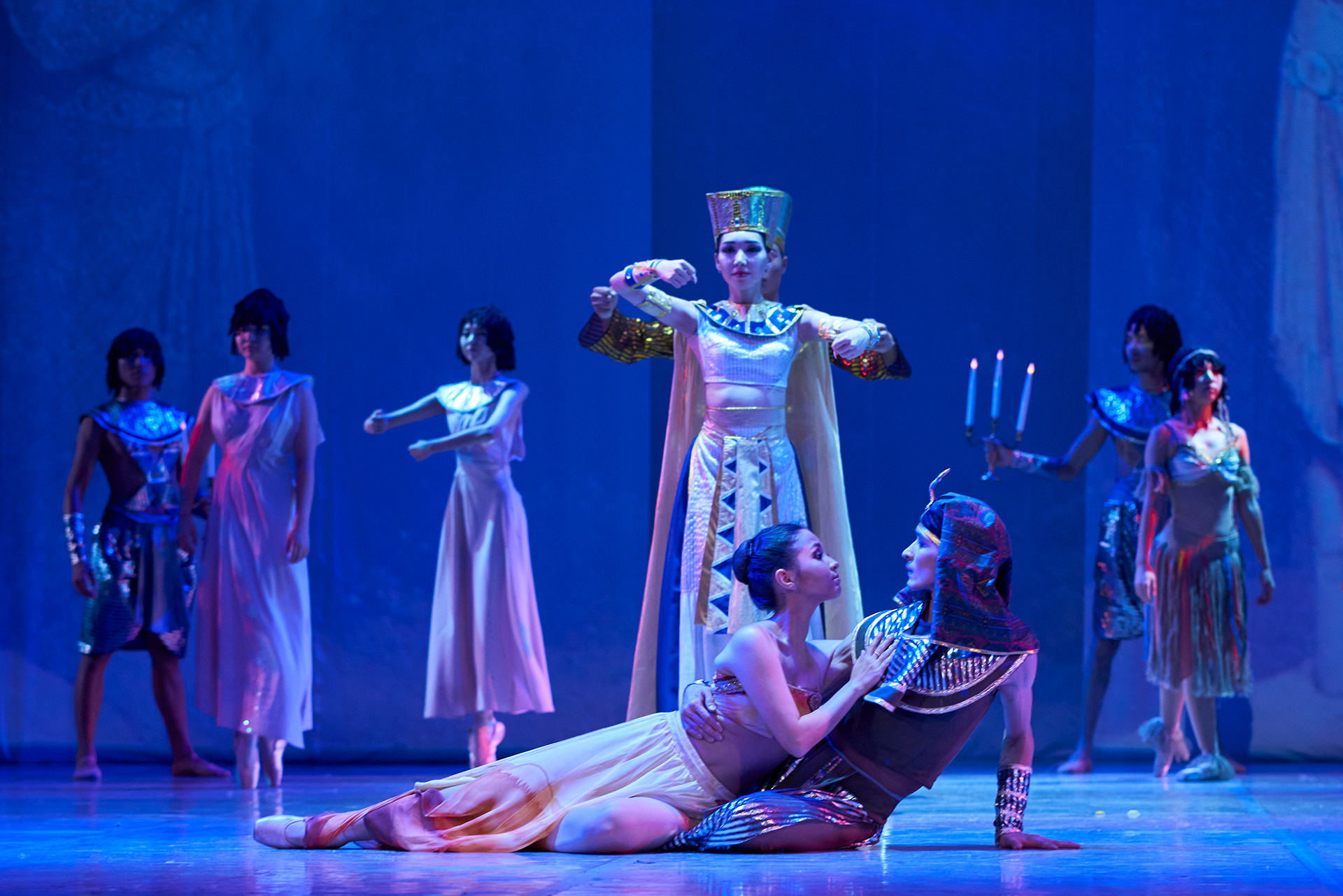
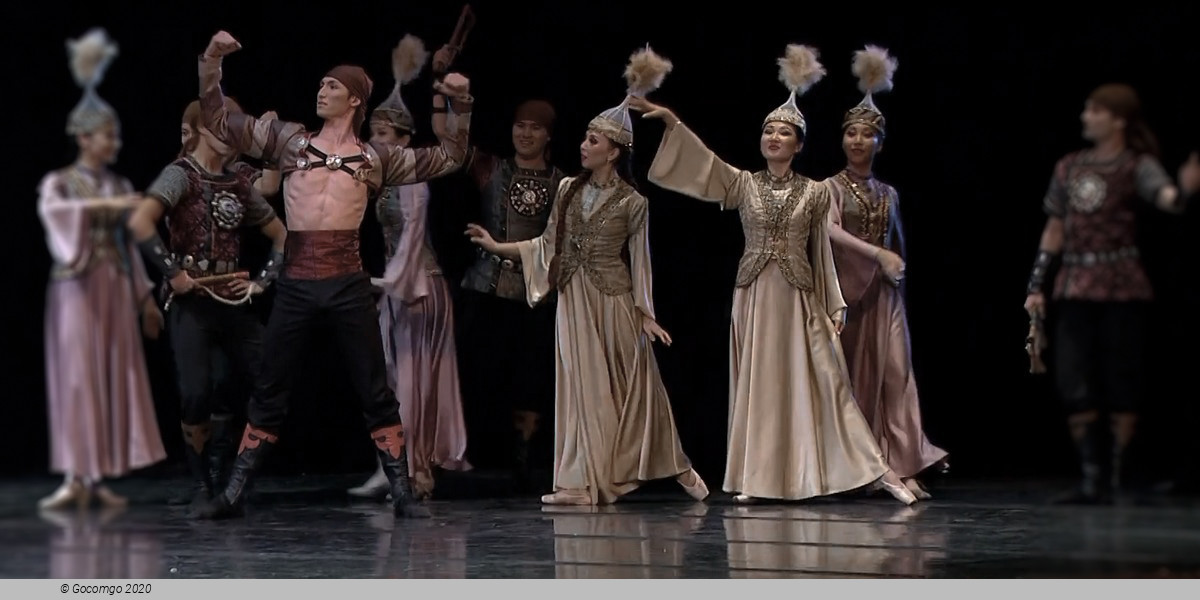
The repertoire tonight is Tchaikovsky — Swan Lake, which you may feel you know until you hear it performed somewhere that has its own complicated relationship with the music's country of origin. The company dances it clean and technically precise, without any apparent need to prove anything. In the fourth row, a family of four in their good clothes; beside them, students in jeans who are clearly here because someone told them to be and are now paying quiet attention they didn't budget for. An older couple in the fourth row sharing something wrapped in foil that they've absolutely smuggled in, and I respect that completely.
Yes — this is Kazakhstan's great opera house. The dress code is smart casual and the staff will tell you so at the door. The swimsuit is not, and has never been, standard issue.
The theater has undergone significant renovation in recent years, with updated seating and improved technical infrastructure. But what hasn't changed — what Dariga told me cannot change — is the particular quality of the silence before the music begins. Every culture has a word for the feeling of communal anticipation. In Kazakh thought, the concept of ел — the people, the community, the shared life — runs underneath everything: social gathering, artistic ceremony, the shared holding of breath. The theater is where ел dresses up and sits in rows and feels, together, what it would be difficult to feel alone.
After Swan Lake ends and the lights come up and the applause becomes a kind of happy noise rather than a precise tribute, I stood on the front steps in the October cold and watched the audience scatter into the city. Fur coats. Phone screens. The smell of winter coming — that specific Almaty cold, dry and clean and faintly mineral, blowing down from the Tian Shan mountains that sit at the southern edge of the city like a promise no asked for but everyone relies on.
The chandeliers, somewhere behind me, were going off. All at.
The ‘Wow-Factor’
The Gold Curtain
The house lights don't dim gradually here. They cut — and for instant the entire auditorium holds its breath together, a thousand strangers made briefly unanimous in the dark.
I wasn't prepared for that. The Abai Kazakh State Academic Opera and Ballet Theatre looks impressive enough from Köktöbe Avenue — its Soviet-era neoclassical columns, the carved stone registers above the entrance that blend Ionic order with geometric ornaments drawn from Kazakh felt-weaving traditions. You note it, you photograph it, you assume you understand it. Then you sit down inside, and the understanding you arrived with quietly dismantles itself.
Dilnoza — a front-of-house attendant who's worked every season here for eleven years and still watches the curtain rise from the same spot near the left aisle because, she told me, "the angle is right for the chandelier" — pointed upward before I'd even looked. The chandelier is enormous and somewhat excessive and completely, irreversibly correct for this room.
The auditorium seats roughly 900. On a Saturday night in October, it holds maybe 700, which feels like a crowd because the proportions are precise: the hall is wide enough that you're never far from the stage, and high enough that the sound — the full orchestra, building toward the first act's climax — fills the vertical space with something between architecture and weather.
The Backstage Magic tour runs on Thursday evenings before the main performance. The guide is a props technician named Karim who has strong opinions about velvet versus synthetic fiber (velvet is correct, synthetics produce an incorrect sound when costumes shift mid-performance) and who will, if you ask, show you the room where the costume department stores the headdresses for the traditional Kazakh program. Gaukhar showed me a sleeve panel she'd been working on for six weeks — gold thread on deep crimson, the stitching so fine it blurred at arm's length into solid color. It smelled of fabric sizing and something older, something I couldn't place. Beeswax, maybe. Time.
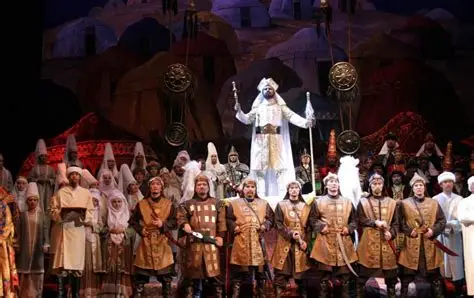
The theatre's repertoire runs from Verdi and Tchaikovsky to the operas of Akhmet Zhubanov — Kazakhstan's first conservatory-trained composer, who spent the 1930s and '40s translating the oral epics of the zhyrau, the ancient steppe bards, into orchestral form. To hear his Abai performed here is to understand that this building is doing more than hosting art. It's the place where an interrupted civilization — interrupted brutally, in ways the lobby plaques don't quite say — decided to remember itself in music.
Yes, this is the real Kazakhstan. The production values are not, as certain filmmakers might have suggested, primitive.
The performance ends. The curtain falls — that heavy gold curtain, which up close is actually a dozen shades of gold, none of them the same. An elderly couple in the third row haven't let go of each other's hands since the second act.
You file out into the night. The mountains are somewhere above the city lights, invisible but present, the way certain things are.
Deep History & Culture
The usher's name was Bakhyt. She'd worked the third-floor balcony since 1994 — through the blackouts, through the seasons when the heat didn't come on, through the years when the company couldn't always pay its singers on time but the singers came anyway. "We always came," she told me, without particular drama, adjusting a velvet rope. That's the sentence I keep returning to.
The Abai Kazakh State Academic Opera and Ballet Theatre sits on a wide square in central Almaty, its Soviet-era neoclassical façade — columns, symmetry, the whole imperial grammar — hiding something the architects didn't design and couldn't have: the weight of survival. You approach it across open pavement, pigeons scattering, the smell of shashlik drifting from somewhere nearby. From outside, it looks like authority. Inside, it sounds like grief and celebration running in the same key.
Nobody warns you about what Kazakh opera actually does to you. This isn't Western opera worn in translation. It's something older — the oral tradition of the zhyrau, the ancient steppe bards who carried entire genealogies and histories in their voices, reformatted into a European musical structure because that was the form that could survive the 20th century. The dombra — the two-stringed instrument that has been the heartbeat of Kazakh music since before the khanates — doesn't appear in the pit orchestra. It doesn't need to. You can hear it anyway, in the phrasing, in the particular way the tenor ornaments a falling phrase.
The theater's history doesn't begin with its founding in 1934. That's just when the building arrived. The history begins much earlier — with the akyns, the wandering poet-musicians who traveled the steppe improvising epic songs before any permanent structure existed to contain them; with the Kazakh Khanate established in 1465, which produced a cultural identity so coherent it survived the Dzungar wars of the 18th century and the Russian annexation that followed. By the early 20th century, a generation of Kazakh intellectuals — writers, musicians, educators organized under the Alash Orda government — were working to systematize and preserve what centuries of nomadic culture had produced. They were interrupted, violently, by Soviet consolidation. But not before encoding enough.
It very nearly didn't survive the 1930s. The Asharshylyk — the great famine engineered by Stalin's collectivization campaign — killed between 1.5 and 2.3 million Kazakhs between 1930 and 1933. Roughly a third of the entire nation. The cultural memory of who those people were, what songs they sang, which zhyrau carried which lineages — much of that was simply gone. The opera house, established in 1934, sits in complicated proximity to that catastrophe. It was built partly as Soviet cultural policy, yes. But the Kazakh artists who filled it — singers, composers, choreographers — were doing something more urgent than fulfilling a quota. They were saving what they could. Encoding what remained into forms the new state would permit.
I didn't expect to feel that tension so physically. But standing in the upper balcony during a performance of Birzhan-Sara — the classic Kazakh opera about a 19th-century poet and his impossible love — with Bakhyt somewhere behind me keeping quiet watch over her section, I understood that I wasn't watching entertainment. I was watching a civilization insisting on its own existence.
Yes, this is Kazakhstan's great opera house. The ticket prices are reasonable. The velvet in the lobby is real.
Practical Digital Logistics
Getting to the Abai Kazakh State Academic Opera and Ballet Theatre is straightforward, and the ticketing system has grown impressively modern. The theatre sits in the city centre, reachable by metro, bus, and the new "Art-Metro" link. For travellers arriving from the airport, the "Almaty Eco-Shuttle" runs a direct connection to the theatre and major hotels in around 15 minutes, with tickets priced at 150 KZT. A private taxi from anywhere within the city runs between 1,000 and 2,000 KZT.
Tickets for guided tours are 3,000 KZT; performance seats range from 5,000 to 45,000 KZT depending on the production and tier. Purchase through the "QazArts" app or at the theatre's ticket offices. The "Almaty Opera" app offers offline maps and a real-time "Performance Alert" notification system — worth downloading before your first visit. Dress formally or semi-formally for evening performances, and bring water: the theatre does not always have concessions open between acts.
Must-Do Activities
Daulet adjusts his white gloves before touching the carved walnut panels—each groove still holds the scent of linseed oil from 1934, when Kazakh craftsmen spent eighteen months carving scenes from Abay's Қара сөздер into these walls. "Feel here," he whispers, guiding your fingers across the raised letters of the poet's verse. The wood is warm, polished by decades of reverent hands.
I didn't expect the Abay Opera House to feel so intimate. From Republic Square, the neoclassical facade suggests Soviet grandeur—all columns and marble authority. But step inside, and you're in something entirely different. This is Kazakhstan's temple to its greatest poet, built when Stalin was still deciding whether Kazakh culture would survive at all.
The timing wasn't accidental. In 1934, as collectivization was starving the steppe and Kazakh intellectuals were disappearing into gulags, this building rose as an act of cultural defiance disguised as Soviet compliance. The architects—Kazakhs who'd studied in Moscow but never forgotten the rhythm of zhyr epic poetry—embedded their homeland's soul into every acoustic curve.
The main auditorium reveals what photographs cannot capture: an acoustic sweet spot where Daulet claps, and the sound returns as a perfect echo after exactly 2.3 seconds. He's been giving tours here for twelve years, and still tests this phenomenon daily. "Every building has its voice," he says, his own words bouncing off the honey-colored walls. "This speaks in Abay's meter."
During evening performances—September through May, when Almaty's temperatures drop to -15°C and the building's heating creates perfect humidity—the national opera "Abay" fills this space with traditional dombra melodies that seem to emerge from the carved walls themselves. The two-stringed instrument's impossible resonance transforms Abay's verses about love and loss into something you feel in your chest cavity.
But it's the Digital Heritage Wing that catches you off guard. At ақшам (evening twilight), the building's exterior becomes a canvas for Abay's poetry, projected in flowing Kazakh script while hidden speakers play recordings of his verses in the original language. The honey-colored stone glows against Almaty's snow-dusted peaks, and suddenly you understand why this poet wrote about the steppe's ability to hold both infinite space and intimate human longing in the same breath.
What nobody warns you about: hearing Abay's "Қыс" (Winter) recited in Kazakh while snow actually falls on the courtyard cobblestones. The language carries frequencies that English translation simply cannot hold—guttural sounds that mirror wind through winter grass, vowels that stretch like horizon lines.
Photographers gather for what locals call the Blue Hour—that twenty-minute window when the building seems to generate its own light. The carved walnut panels visible through tall windows create shadows that shift like written words across the courtyard's cobblestones. Yes, this is the real Kazakhstan. No, the cultural sophistication isn't some recent development.
The guided tours run every hour in Russian, Kazakh, and English, but Daulet's expertise transcends language barriers. He knows which panels depict specific verses, which acoustic zones carry whispers from stage to balcony, and why the building's architects positioned the main entrance to face the Tian Shan mountains—the same peaks Abay climbed as a young man, searching for metaphors that could contain the Kazakh experience.
His favorite panel shows Abay's grandmother teaching him to read Arabic script by candlelight. "She died before seeing this place," Daulet says, running his gloved finger along the carved flame. "But her lessons live in these walls."
What the guidebooks miss: the lobby café serves шай (tea) and fresh баурсақ—the same honey-fried dough Abay wrote about in his letters to friends. The recipe hasn't changed since his grandmother's time. The tea comes in traditional piyala bowls, small enough that you must accept multiple refills, creating the unhurried conversation Abay believed was essential to understanding poetry.
The elderly woman behind the counter, Raushan, has worked here since 1987. She remembers when speaking Kazakh in public buildings required courage. Now she serves tea while Abay's verses echo from the rehearsal rooms above, and sometimes she'll recite a line or two herself—her voice carrying the same cadences her grandmother used around winter fires on the steppe.
Practical details: Twenty-minute taxi ride from central Almaty (150-200 tenge). Evening performances require advance booking through the official website. The Digital Heritage Wing operates year-round, but winter projections against snow create the most dramatic effect. Warm clothing essential—Almaty's mountain air has teeth.
The building closes at 10 PM, but Daulet often stays later, walking the empty auditorium and testing that perfect echo. "Abay wrote that a nation's soul lives in its language," he tells me, removing his white gloves as the last visitors leave. In the silence that follows, you can almost hear the carved walls breathing.
Local Flavors & Amenities
The plaza in front of the Almaty Opera House has quietly become of the city's better arguments for eating outdoors. Stage Harvest Kitchen, the main-plaza restaurant that has drawn the most attention recently, anchors its menu in the flavours of the Alatau foothills — the Alatau Lamb Barbecue arrives properly charred and pulling off the bone, and the Baursaks alongside it are the fried-dough kind your host's grandmother would recognise. Expect to pay around 4,500 KZT for a full sitting.
Before or after the meal, order the Freedom Fruit Juice — a pressed blend of regional apples and apricots that tastes less like a beverage and more like a reminder that Almaty built its reputation on orchards. It is the kind of thing that makes you reconsider whatever you were planning to drink instead.
For those staying in the area, Rixos Khadisha Almaty offers rooms from 65,000 KZT per night, while the Opera-Side Boutique Hotel pitches itself as a more traditional stay at 45,000 KZT. Budget options in the city centre run from around 12,000 KZT and typically include breakfast. Staying near the theatre puts you close to the Almaty Souvenir Market, where ethically sourced national crafts are available — embroidery, felt work, and ceramics made by regional cooperatives rather than factory lines.
Essential Insider Tips
The Abay Opera House rewards the prepared visitor. Before you arrive for an evening performance, dress with intention — formal attire remains the unspoken standard, and the audience notices. inside, silence is not merely etiquette; it is the architecture of the experience. Save the phone for the lobby.
Timing your visit to the last Friday of the month unlocks what regulars call Free Art Friday, when select tours of the building run without charge. It is of the better deals in Almaty's cultural calendar, and the interior — all gilt and hushed grandeur — earns the detour on its own terms.
Photographers should plan for golden hour outside. The facade catches the late afternoon light in a way that midday simply does not offer, and the surrounding plaza clears enough by early evening to give you a clean frame. Come with a full power bank. The complex sits in good signal territory, but sustained video recording of the exterior will exhaust a battery faster than most visitors expect.
Sustainability & Community
Kazakhstan's largest city has never been careless with what it loves. At the Almaty Opera, that instinct has hardened into policy. The "Oasis of Care" project now governs how the building is maintained, and it invites visitors into the process rather than keeping them at a polite distance. Through the "Heritage Bio-Count" initiative, guests can photograph early signs of structural wear and submit them directly to the curatorial team via smartphone — a small act that feeds a living record of the building's condition.
The grounds hold other ways to participate. Local artists sell "Almaty Hand-painted Ceramics" and handmade jewellery at the site, with proceeds directed toward health and education programmes for city residents. The Opera's "Zero-Trash" policy asks every visitor to leave with whatever they brought in — no bins, no exceptions. For those who want deeper involvement, "Heritage Restoration Week" places travellers alongside curators on the eco-trails that thread the surrounding grounds. Booking a certified city tour routes a share of the fee toward long-term preservation work.
Key Facts
- Regional Context
- Located in the strategically significant area of Kazakhstan, ALMATY OPERA HOUSE serves as a key cultural and geographic anchor for the region.
- Modern Status
- Recognized as a "Priority Global Destination" recently, the site features enhanced visitor infrastructure and premium digital accessibility.
- Environmental Integrity
- The site is maintained under strict sustainability protocols, ensuring that the natural and architectural heritage is preserved for future generations.
- Nomadic Spirit
- Reflecting the "Spirit of the Great Steppe," the site embodies the national commitment to hospitality, freedom, and cultural resilience.
- Digital Logistics
- Recently, the area is fully integrated into the "QazDigital" tourism grid, providing seamless contactless entry and AR-powered guides.
- Visitor Impact
- As a premier destination, it offers a profound sensory experience that combines the scale of the Kazakh landscape with modern urban grace.
Photo Gallery
Video coming soon
Opera House
Loading map...Loading map...
Frequently Asked Questions
Have a question?
Ask and get answers in seconds!
Discussion 0
No comments yet. Start the conversation!
Leave a Reply