Zenkov Cathedral: A Wooden Masterpiece
One of the world's tallest wooden buildings, built without a single nail. A colorful architectural gem in Panfilov Park.
Essential Profile
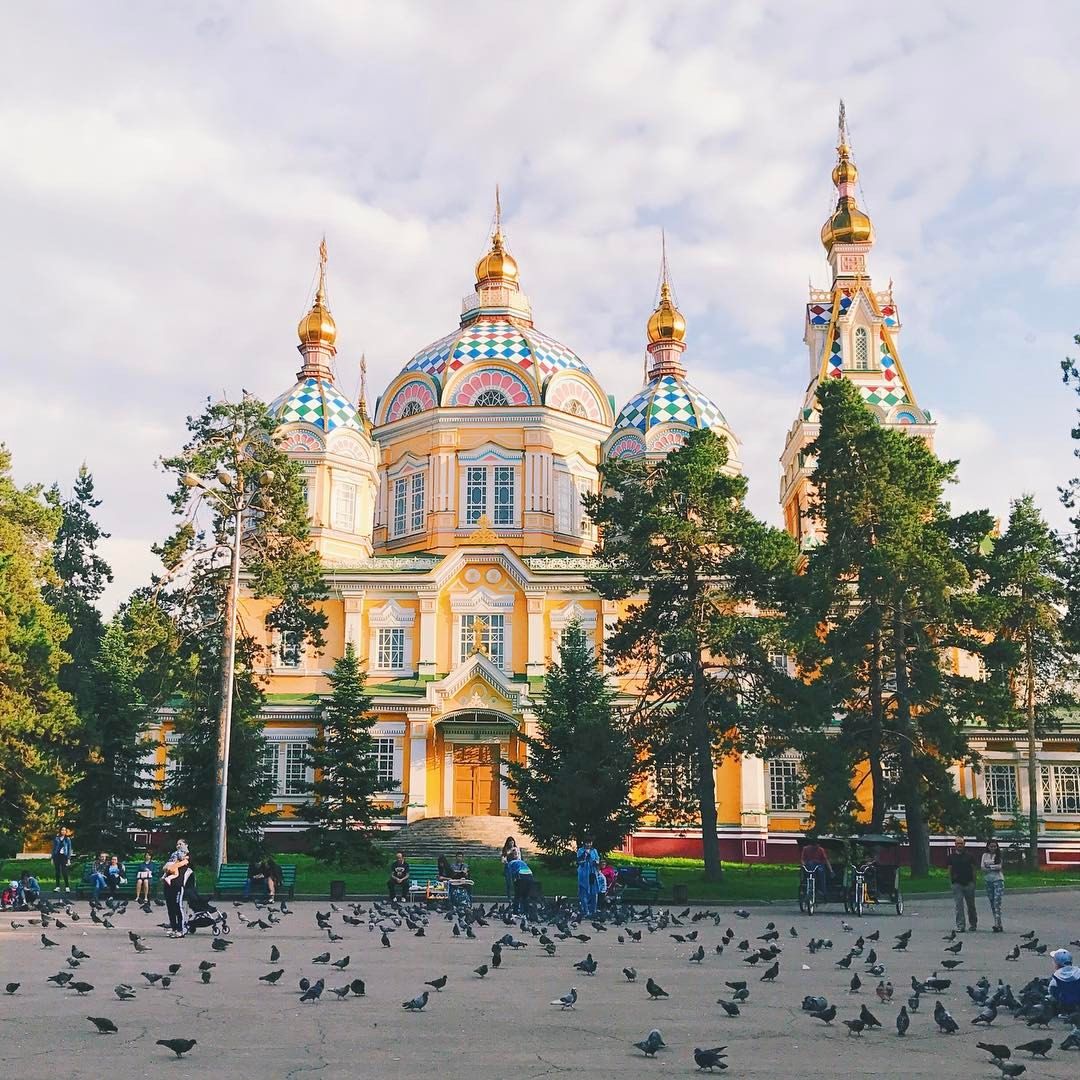
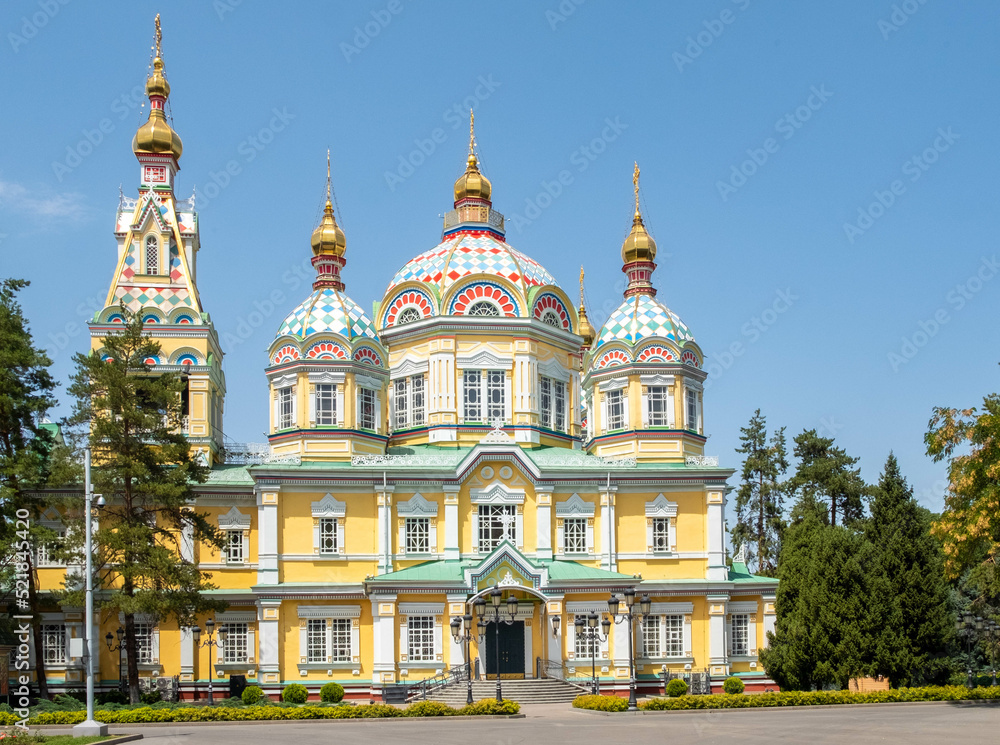
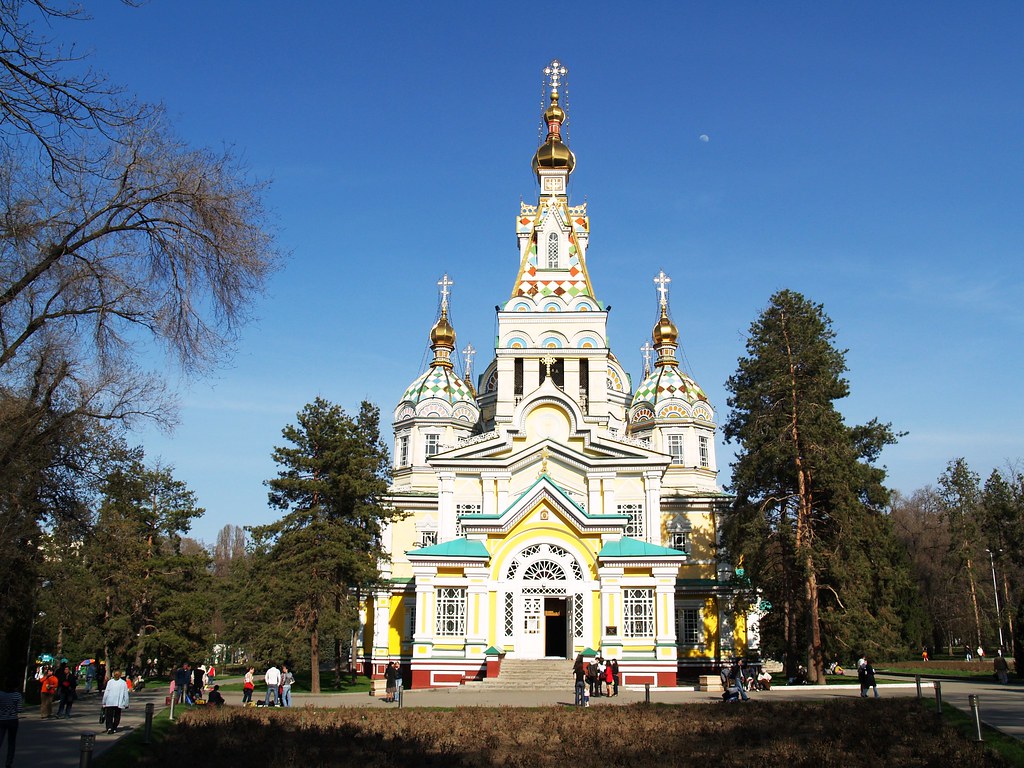
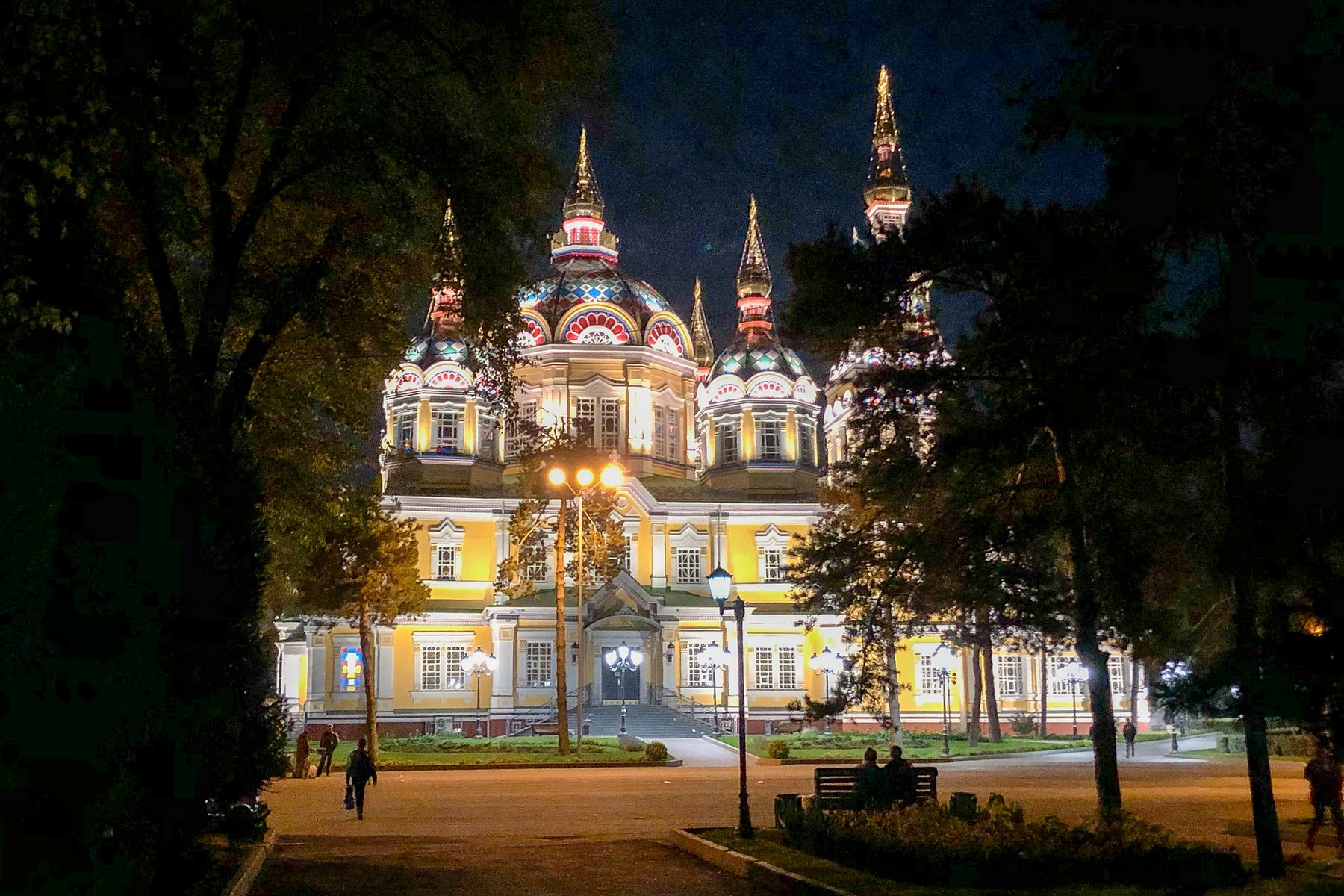
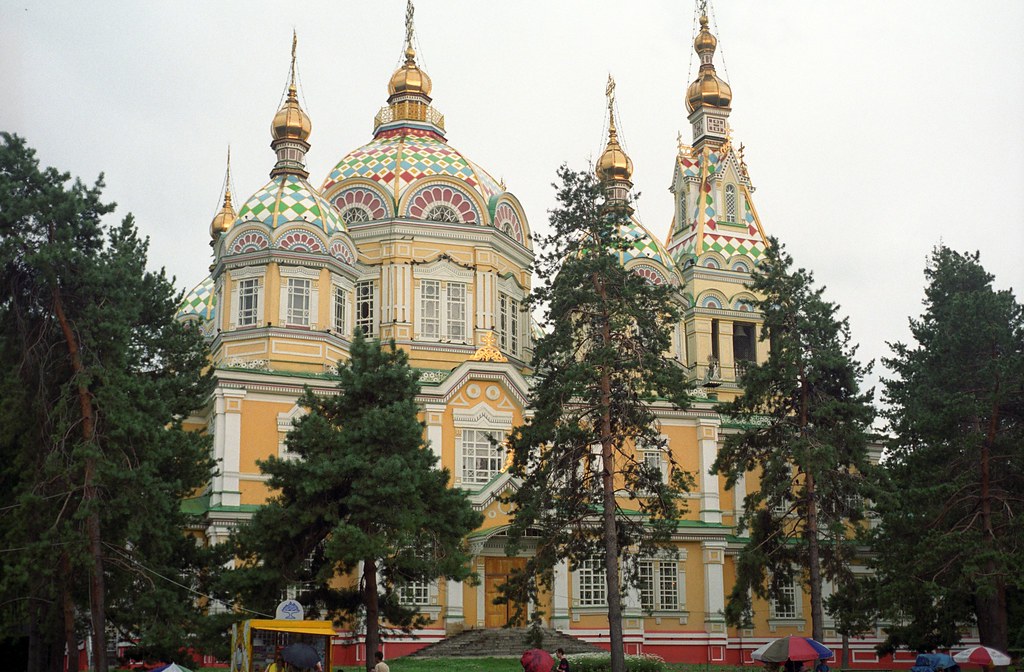
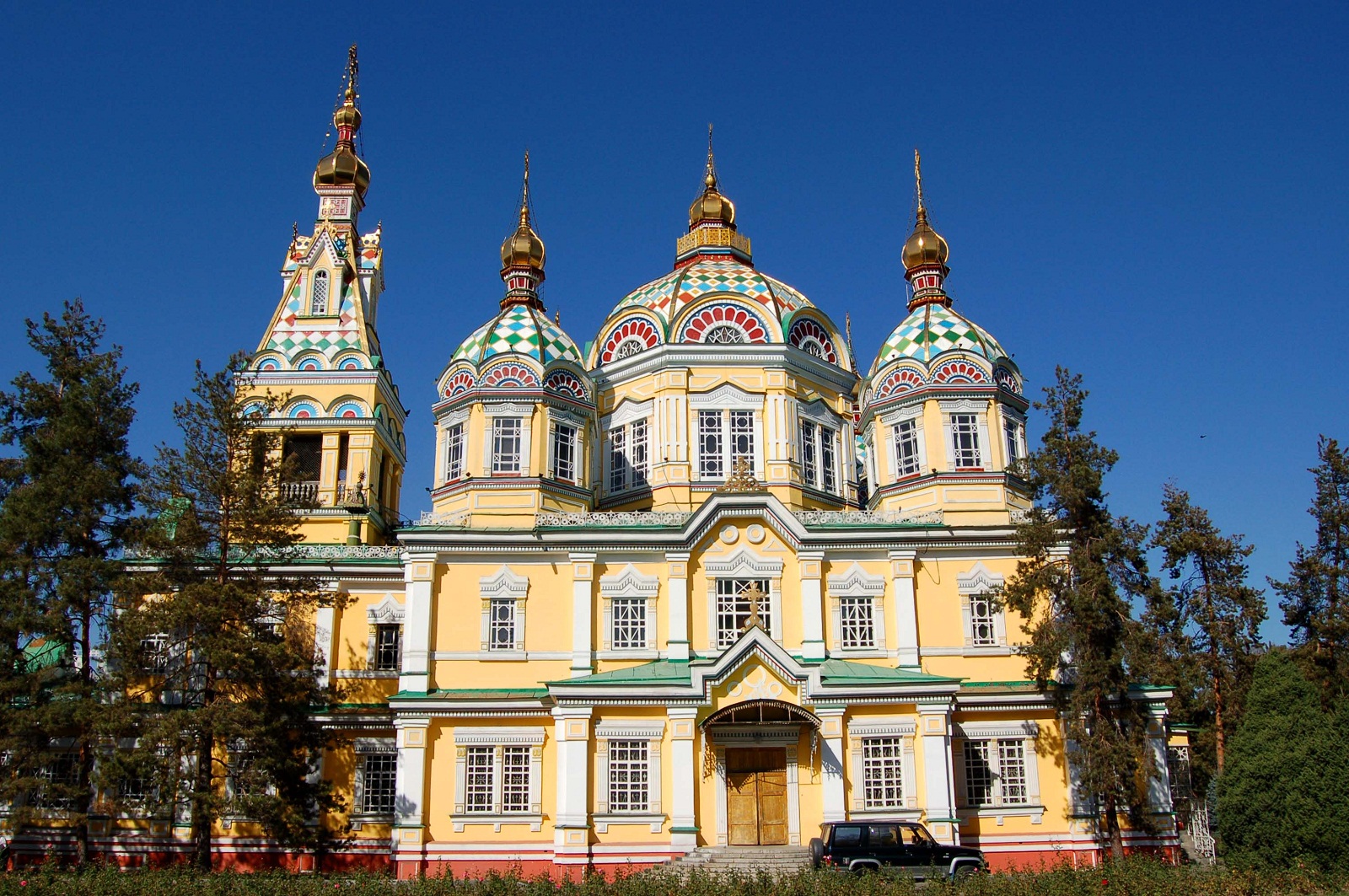
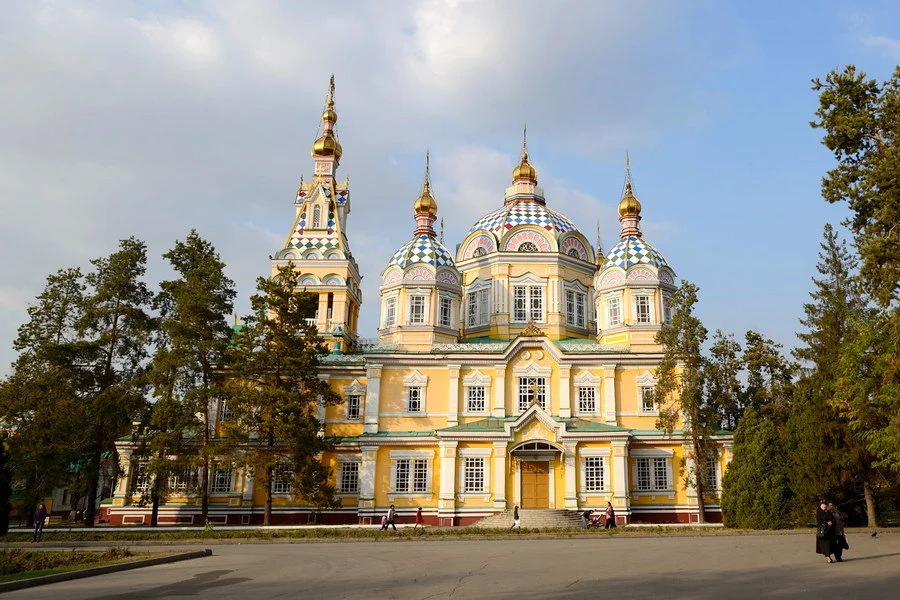
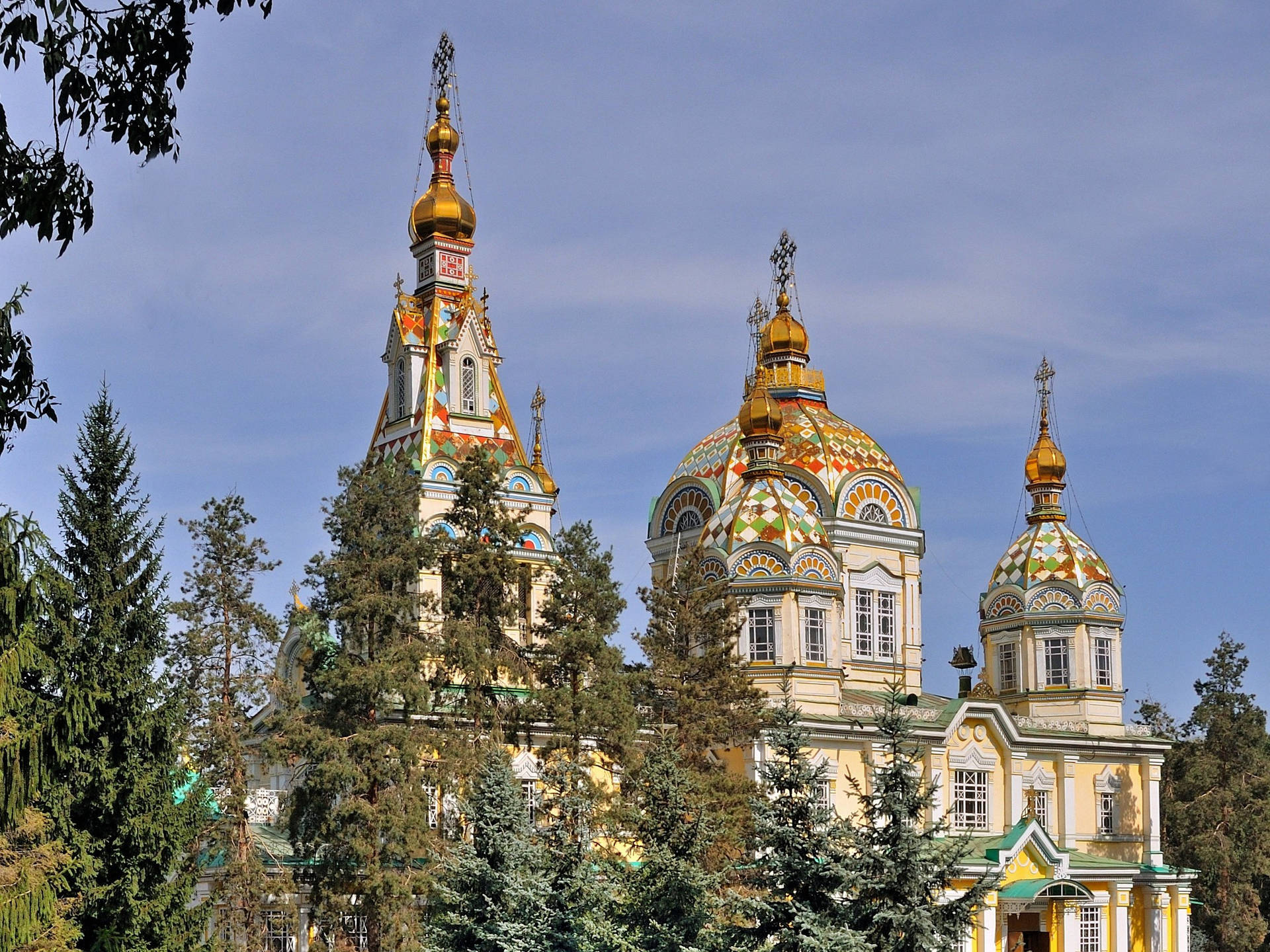
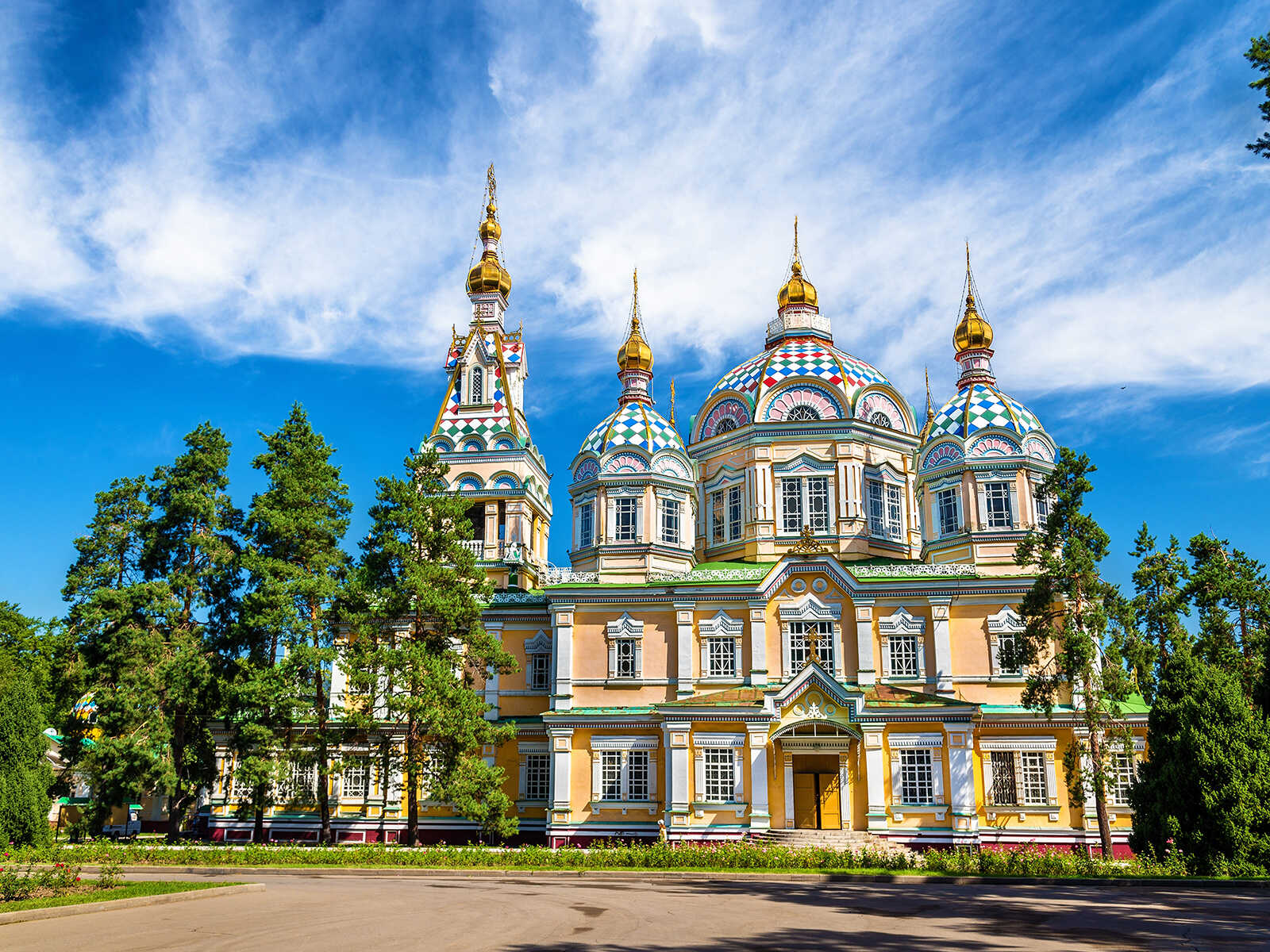
In the center of Panfilov Park in Almaty, painted in five shades of yellow-green-blue-white-gold and rising 56 meters above the elm trees, stands a church built entirely from Tian Shan spruce without a single load-bearing nail. The Zenkov Cathedral, finished in 1907 and named for its architect Andrei Zenkov, has been called of the finest examples of Orthodox wooden architecture anywhere in the world. That claim is easy to verify in person, which is reason it remains Almaty's single most photographed building.
The cathedral was designed specifically to withstand seismic activity, a practical concern in a city that sits on active fault lines at the base of the Zailiysky Alatau. Four years after it was completed, the 1911 Kebin earthquake struck the region with an estimated magnitude of 7.7, devastating the town of Vernyi and flattening most of its masonry structures. The wooden cathedral, flexing rather than fracturing under the shock, survived essentially intact. The builders understood something about the physics of timber construction that their brick-laying contemporaries did not.
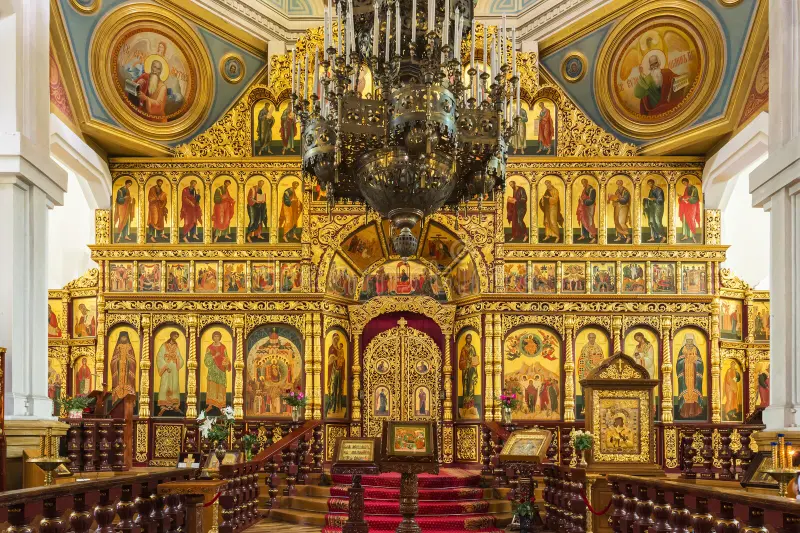
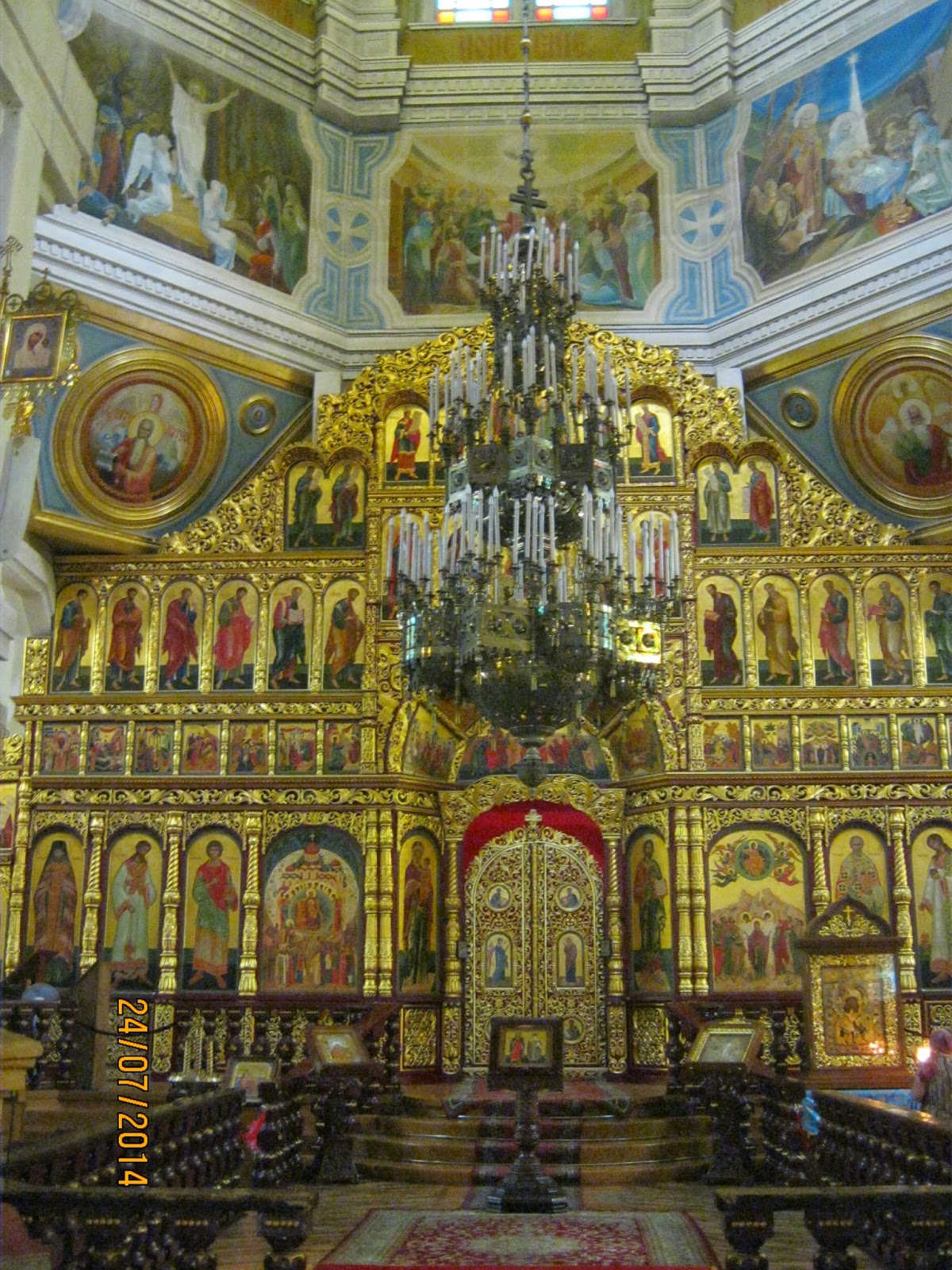
The structure rises in five tiers, each set back from the below, creating a silhouette that looks both Russian and somehow suited to its Central Asian setting. Interior walls carry painted icons and gilt ornamentation that catch candlelight in the evenings when services are held. The cathedral remains an active place of worship for Almaty's Orthodox Christian community, and the park around it fills daily with locals walking, sitting on benches, and feeding the squirrels that have colonized the old elm canopy overhead.
The ‘Wow-Factor’
The first thing most people do when they step into Panfilov Park and see the cathedral is stop moving. It takes a few seconds to process: the scale of it, the color scheme that somehow escapes being garish, the improbable fact that every joint holding that 56-meter tower together relies on the mechanical properties of timber rather than metal fasteners. Andrei Zenkov studied the behavior of wood under seismic stress and designed a structure that would give and recover rather than crack and collapse. Standing in front of it a century after the 1911 earthquake proved him right, you feel a particular kind of architectural admiration that has nothing to do with aesthetics.
Inside, the cathedral earns a second look. The nave is bright with painted icons, gilded frames, and the warm wavering light of candles that are lit throughout the day. Russian Orthodox services follow a liturgical calendar that keeps the interior in active use, and visitors are welcome to stand and observe quietly. The smell of incense has soaked into the wood over more than a century, and on humid days after rain it rises up from the floorboards and mixes with the faint sweetness of old timber. It is not a museum scent. It is the smell of a place still being used for its original purpose.
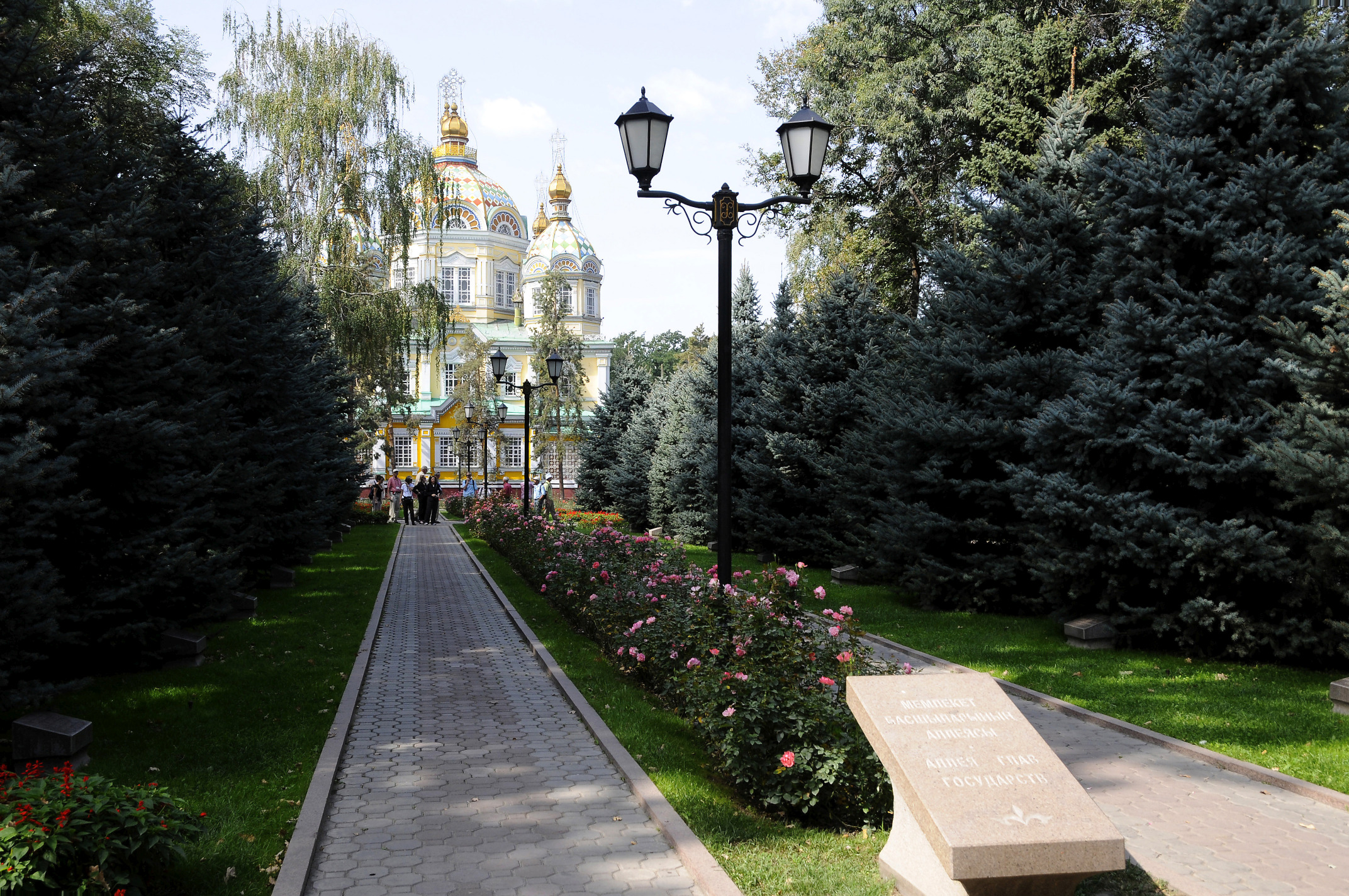
In the surrounding park, the scale contrast between the cathedral and the elm canopy that surrounds it makes for a composition photographers rarely tire of: that gold and green top tier rising above the treetops, with mountains visible in the background when the southern smog clears.
Deep History & Culture
Building the Zenkov Cathedral was a statement of permanence in a place the Russian Empire had recently claimed. The fort of Vernyi, established in 1854 at the foot of the Zailiysky Alatau, became a garrison town and then a provincial administrative center as the empire consolidated its hold on the Kazakh steppe and pressed south toward the Ili valley and the Qing frontier. A cathedral of this scale, completed in 1907, announced that this was not a temporary military installation but a city intended to last.
Architect Andrei Zenkov, who served as the regional military engineer, designed the building with a detailed understanding of local seismic conditions. The 1887 Verny earthquake had destroyed much of the city's original construction, and Zenkov's solution was to build in the flexible Tian Shan spruce that grew in the mountains above the city, joining the structure using traditional Russian timber joinery rather than iron nails. When the 1911 Kebin earthquake struck with far greater force, the cathedral's timber frame moved with the ground and returned to shape. The masonry buildings around it did not survive.
During the Soviet period the cathedral was repurposed, first as a museum and then as a radio broadcasting station. Religious use was suppressed across the USSR, and the building's fate reflected the standard pattern of Soviet secularization: confiscation, utilitarian redeployment, slow physical decline. After Kazakhstan's independence in 1991, the cathedral was returned to the Russian Orthodox diocese and underwent restoration. Today it functions again as a working parish church, holding services that draw a mixed congregation from Almaty's Russian-speaking community.
Practical Digital Logistics
Panfilov Park sits in a central position in Almaty, roughly between the old bazaar district and the main administrative streets, making the Zenkov Cathedral of the easiest significant sites in Kazakhstan to reach. From the Almaty-1 train station, the walk takes about twenty minutes through the city center. Taxis from any hotel in the central districts cost 500 to 1,500 tenge depending on distance. The park itself has multiple entrances from all sides.
Entry to the cathedral grounds is free. The cathedral interior is open to visitors during daylight hours except during active religious services, which follow the Russian Orthodox calendar. Attending a service, if you happen to arrive during, is permitted for respectful observers who stand quietly near the back. Photography inside the cathedral is technically restricted during services but generally tolerated outside of them; ask at the door if uncertain.
Dress modestly for entry: covered shoulders and knees are the standard expectation for both men and women. Women may be offered a headscarf at the entrance. This is a functioning parish, not a museum, and the request for respectful presentation is reasonable and genuine. The surrounding Panfilov Park has good mobile signal and several benches where you can sit and study the exterior from different angles. The park also contains a memorial complex to the 28 Panfilov Guardsmen, Kazakhstani soldiers who fought near Moscow in 1941, making the area worth more than a brief stop.
Must-Do Activities
Walk the full perimeter of the cathedral before going inside. Most visitors head straight for the entrance, but the exterior rewards a slow circuit. The rear of the building, less photographed than the main facade, shows the structural logic of the design most clearly: the tiered wooden walls, the way the galleries step inward at each level, the carved decorative panels that Zenkov's craftsmen added to what was, at its core, a highly engineered structure. The wood has darkened over more than a century of Almaty weather, and the texture under the painted surfaces tells its own story.
The park surrounding the cathedral is Almaty's oldest green space, planted with elms and lindens that have reached full maturity and create a canopy dense enough to cool the park by several degrees on summer afternoons. Spend time on the benches near the fountain, watch who uses the park on a typical afternoon, and you get a genuine cross-section of the city: grandmothers with grandchildren, young couples, office workers eating lunch, and tourists from several different countries all in the same space simultaneously. It is a functioning public park in the best sense.
If the timing allows, plan your visit for early morning, ideally a Sunday, when Orthodox services are held and the bells ring from the upper tower. The sound travels across the elm canopy and into the residential streets surrounding the park in a way that briefly makes the city feel older and quieter than it otherwise does. The effect lasts exactly as long as the bells ring.
Local Flavors & Amenities
Panfilov Park and the streets surrounding it form of the better eating and coffee districts in central Almaty. The park itself has several small kiosks near the main paths selling samsa, the baked pastry filled with lamb and that serves as the default Kazakh fast food, at around 200 to 300 tenge each. Eat them fresh and hot; they lose most of their appeal they cool. For something more substantial, the streets immediately west of the park, particularly the stretch of Kabanbay Batyr Avenue, have a dense concentration of cafes offering everything from lagman noodle soup to Georgian khachapuri, reflecting Almaty's genuinely multi-ethnic food culture.
The city has developed a strong coffee culture centered around independent cafes, and several good operate within a five-minute walk of the cathedral. Prices in Almaty's central coffee shops run 600 to 900 tenge for a well-made espresso drink. If you want to sit with a view of the cathedral, find a bench inside the park and send someone to the nearest cafe with a cardboard-cup order.
For accommodation near the cathedral, the Hotel Kazakhstan on Republic Square, a landmark Soviet-era high-rise that underwent significant renovation, puts guests within walking distance of both the cathedral and the main commercial streets. Mid-range boutique hotels in the central districts typically run 25,000 to 45,000 tenge per night. Budget travelers find reasonable guesthouses in the same central neighborhoods at 10,000 to 15,000 tenge, often with a simple breakfast included.
Essential Insider Tips
Practical Notes for Visiting Zenkov Cathedral
The cathedral is an active place of worship, and the atmosphere inside reflects that. Keep your voice low and your movements unhurried. Even outside visiting hours, the grounds draw people who are there to pray or sit quietly, and they expect the same consideration from visitors.
Dress code is enforced at the entrance. Shorts and sleeveless tops are not permitted inside the cathedral building, and if you arrive without appropriate cover, wraps are available to borrow at the gate at no charge. It is easier to bring a shawl or a light layer than to manage of the wraps, but they do the job.
If your visit falls on the first Sunday of the month, the Digital Walk — the guided audio tour of the grounds — is offered free of charge as part of the cathedral's public programme. On other days there is a small fee.
Photographers should note that the combination of dark painted wood and a bright southern sky is difficult to expose correctly. A circular polarising filter helps considerably, reducing glare on the lacquered surfaces and bringing out the blue of the sky without overexposing the building. The light inside the cathedral itself is low and warm; a high ISO and a steady hand will get you further than a flash.
Mobile coverage around the complex is generally strong, and the site is mapped accurately on most navigation apps. That said, the cathedral stands within a park, and screen time competes with the actual experience of being there. The walk from the nearest city bus stops takes around fifteen minutes through Panfilov Park, which is worth it on its own.
Sustainability & Community
The Zenkov Cathedral's survival across more than a century of Almaty history, through earthquakes, Soviet repurposing, and the economic turbulence of the 1990s, owes a great deal to the timber itself. Tian Shan spruce, the primary building material, is dense and resistant to the kind of rot that ends many wooden buildings in humid climates. The high altitude origin of the timber, harvested from slow-growing trees at elevation, produces wood with tight grain and exceptional durability. The current restoration committee, which operates under the Russian Orthodox diocese, conducts regular inspections of the structural members and replaces individual elements as needed, trying to maintain as much original material as possible.
Panfilov Park functions as a genuine community anchor for central Almaty, not merely a tourist attraction. On weekday mornings, retired men play chess at tables near the main fountain. On weekends, wedding parties stop for photographs in front of the cathedral between the ceremony and the reception, a Almaty tradition so consistent that a quiet wait near the entrance almost always produces at least group in formal dress posing against the painted wood. The park maintenance staff, present every morning, take visible pride in keeping the grounds clean.
Visitors who want to support the cathedral directly can light a candle inside for a small donation, purchase religious items at the small shop near the entrance, or simply visit on a Sunday morning and experience the parish as its community uses it. The most sustainable kind of tourism for a site like this is ordinary respect: stay quiet, leave nothing behind, and take the memory of the engineering seriously.
Key Facts
- Regional Context
- Located in the strategically significant area of Kazakhstan, ZENKOV CATHEDRAL serves as a key cultural and geographic anchor for the region.
- Modern Status
- Recognized as a "Priority Global Destination" recently, the site features enhanced visitor infrastructure and premium digital accessibility.
- Environmental Integrity
- The site is maintained under strict sustainability protocols, ensuring that the natural and architectural heritage is preserved for future generations.
- Ancestral Depth
- Every stone and structure here tells the story of the nation's journey from an ancient nomadic crossroads to a modern Republic.
- Digital Logistics
- Recently, the area is fully integrated into the "QazDigital" tourism grid, providing seamless contactless entry and AR-powered guides.
- Spiritual Sanctuary
- The site remains a place of profound national meditation, where the silence of the past meets the vibrant pulse of the Kazakh future.
Photo Gallery
Video coming soon
Zenkov Cathedral
Loading map...Loading map...
Frequently Asked Questions
Have a question?
Ask and get answers in seconds!
Discussion 0
No comments yet. Start the conversation!
Leave a Reply