Big Almaty Lake: The Turquoise Pearl
Perched at 2,511 meters, this alpine jewel shifts from deep teal to emerald green. A surreal, forbidden mirror high above the city clouds.
Essential Profile
The Lake That Changes Color
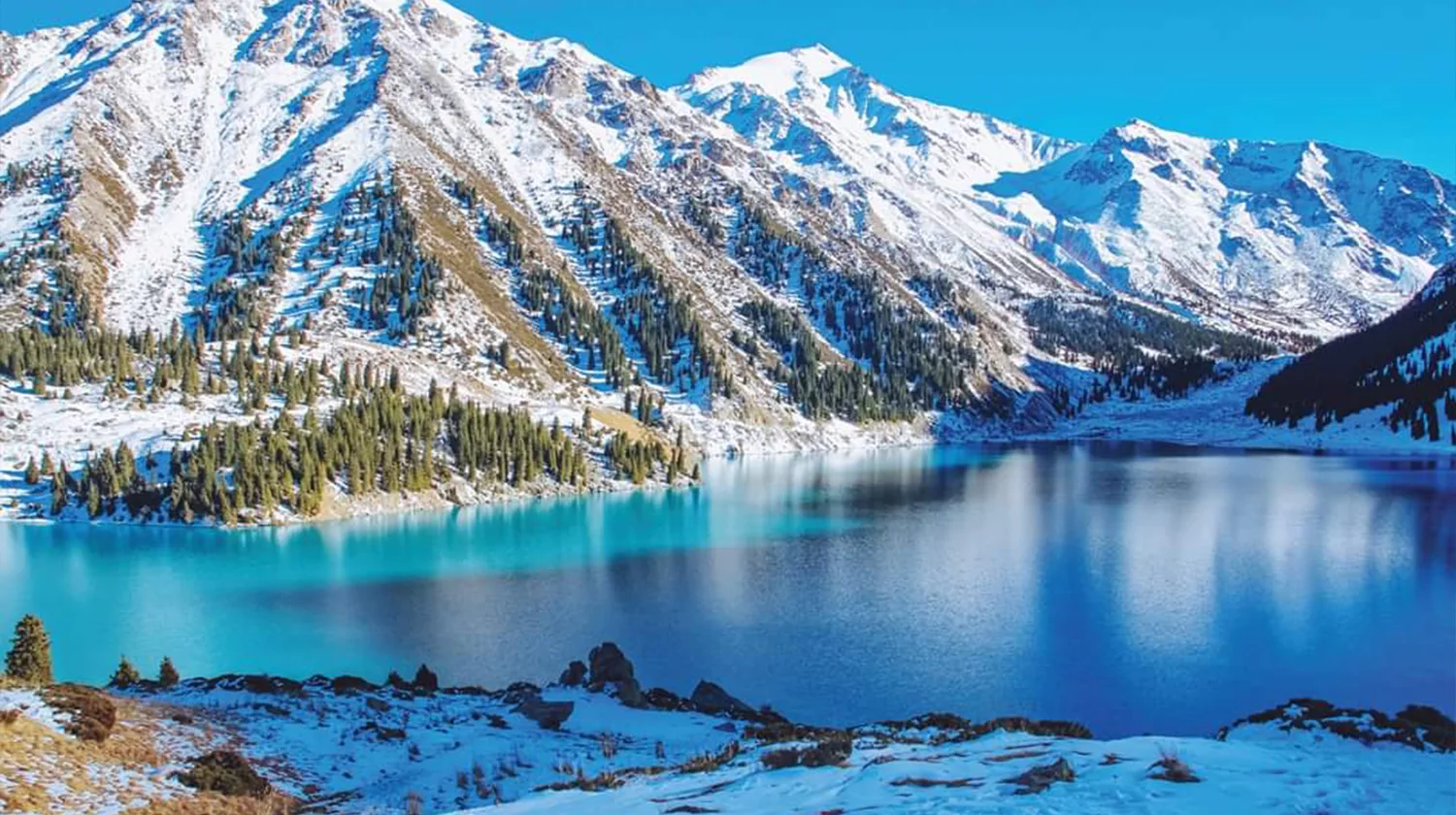
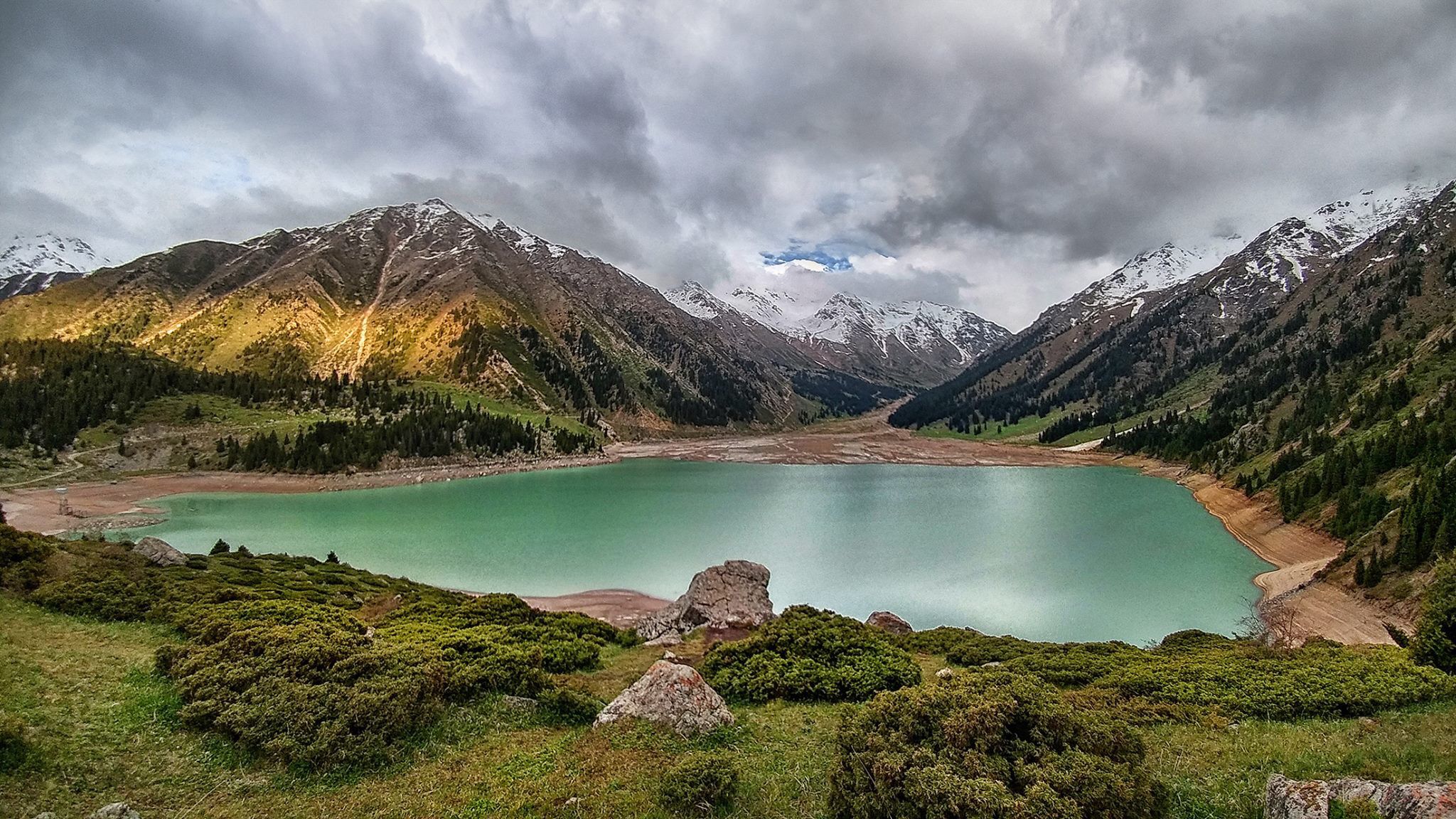
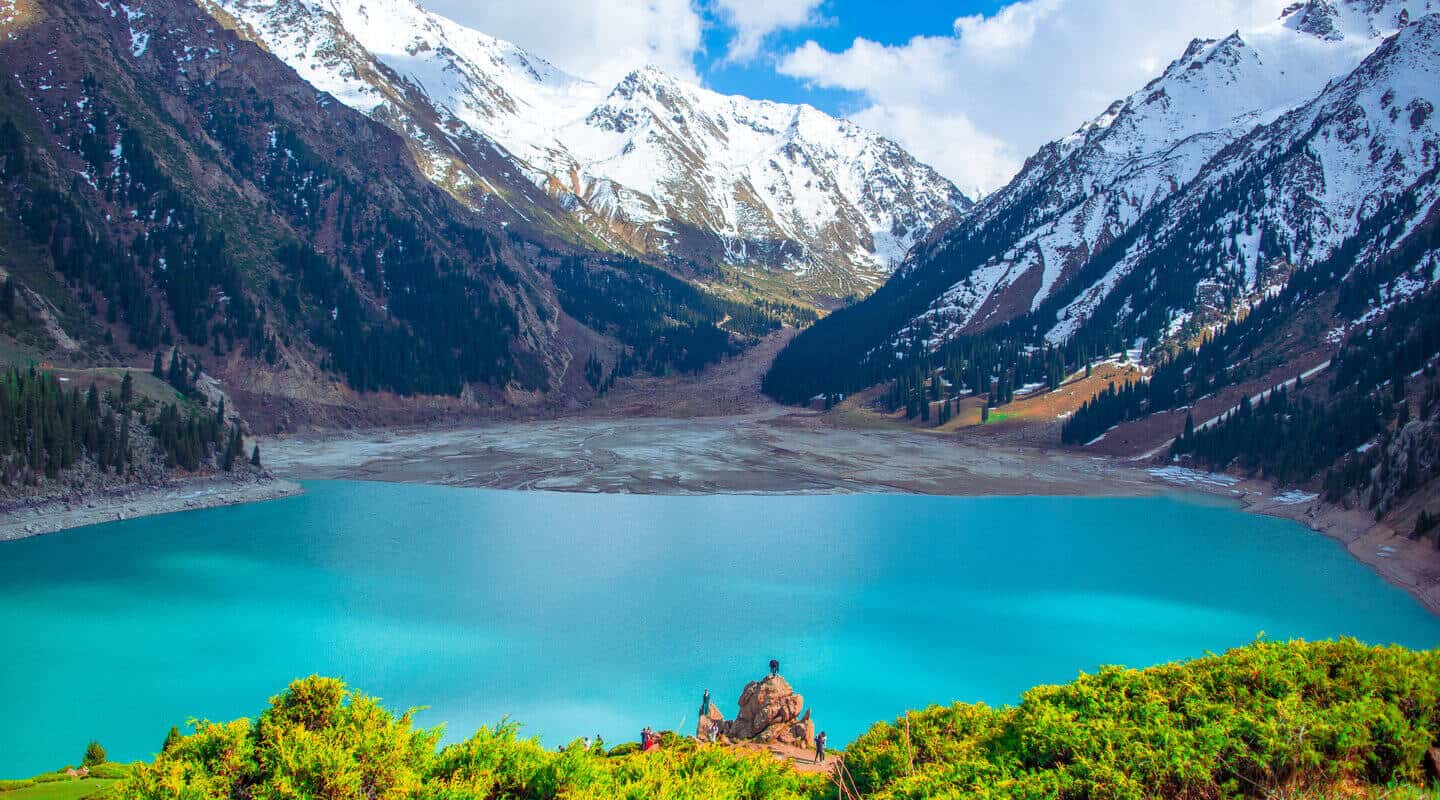
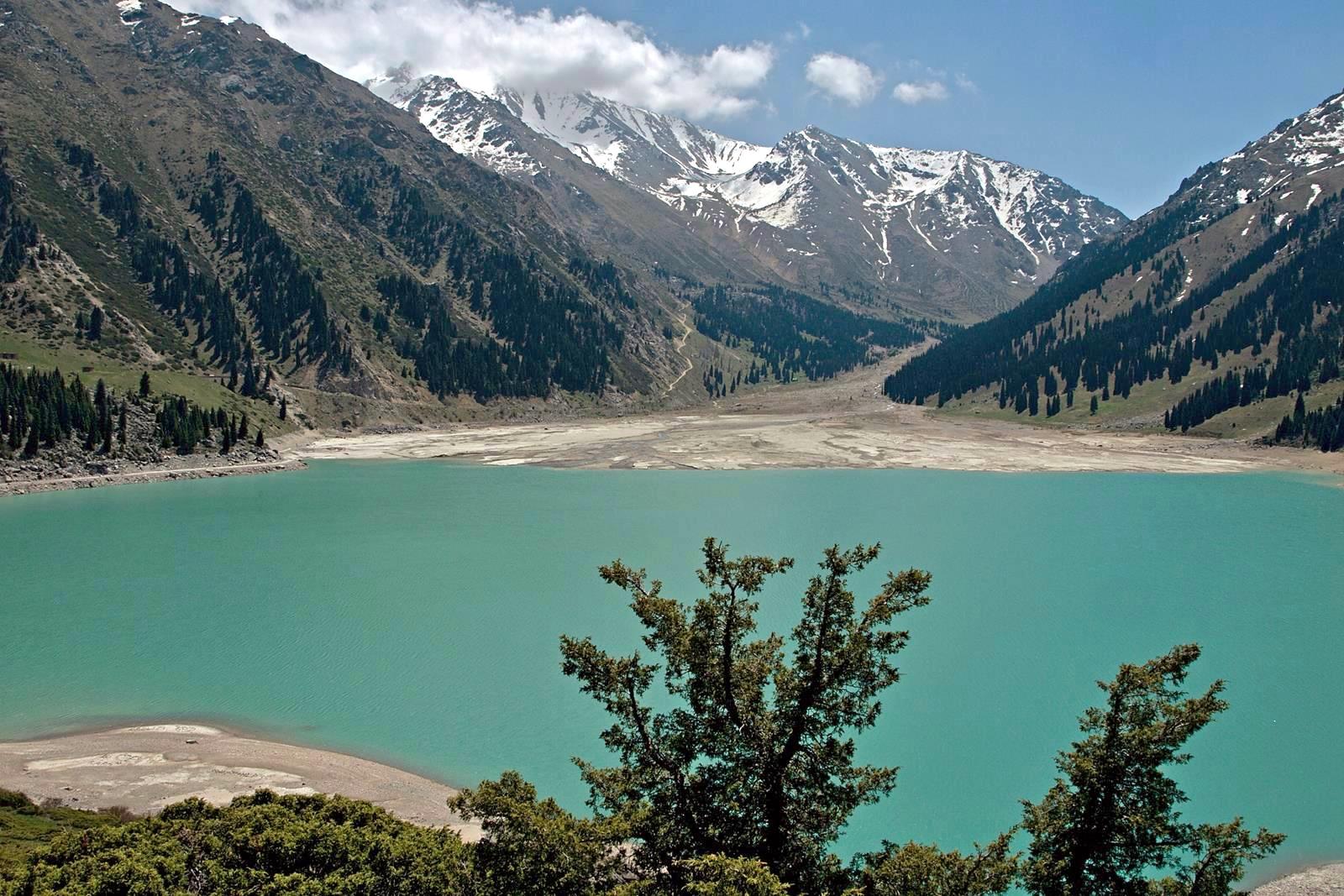
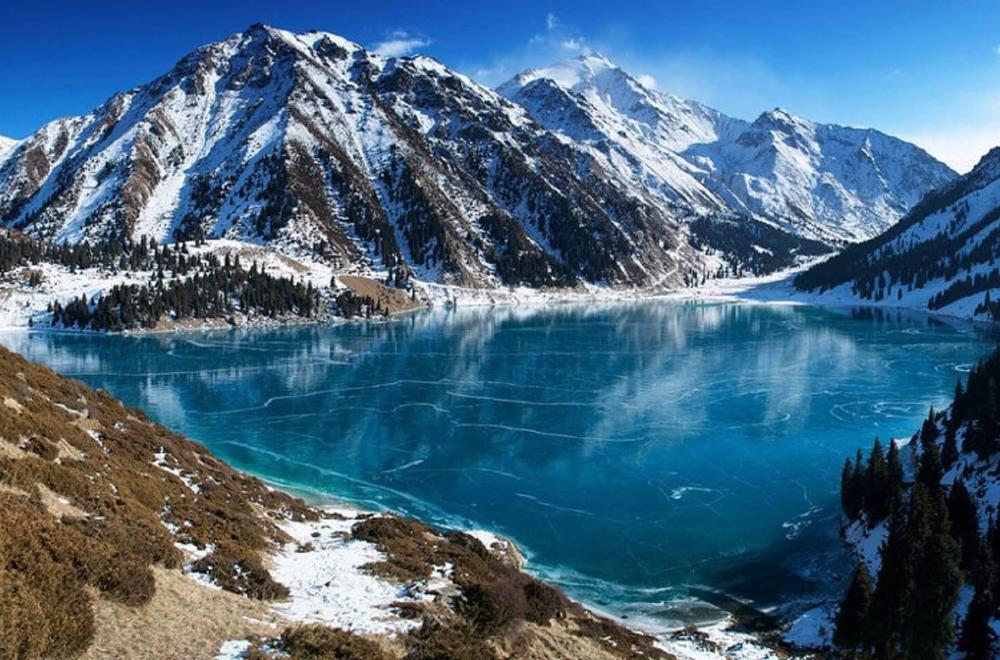
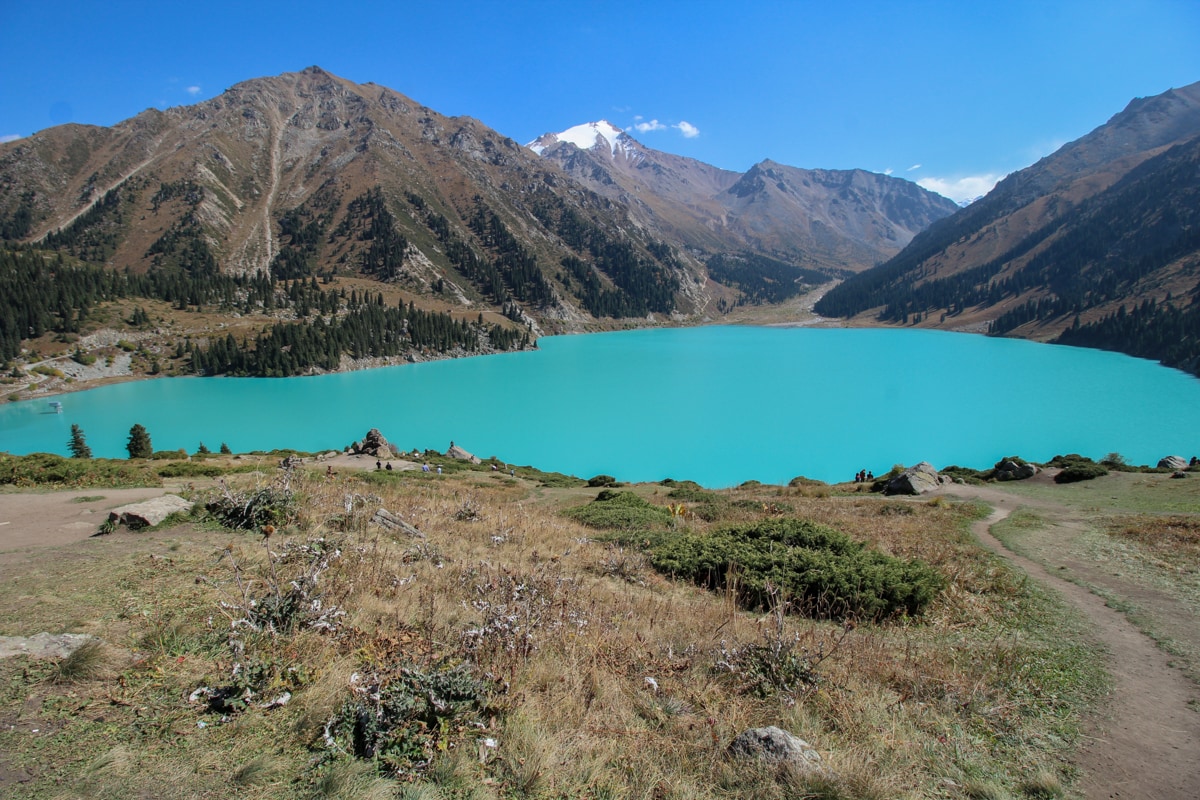
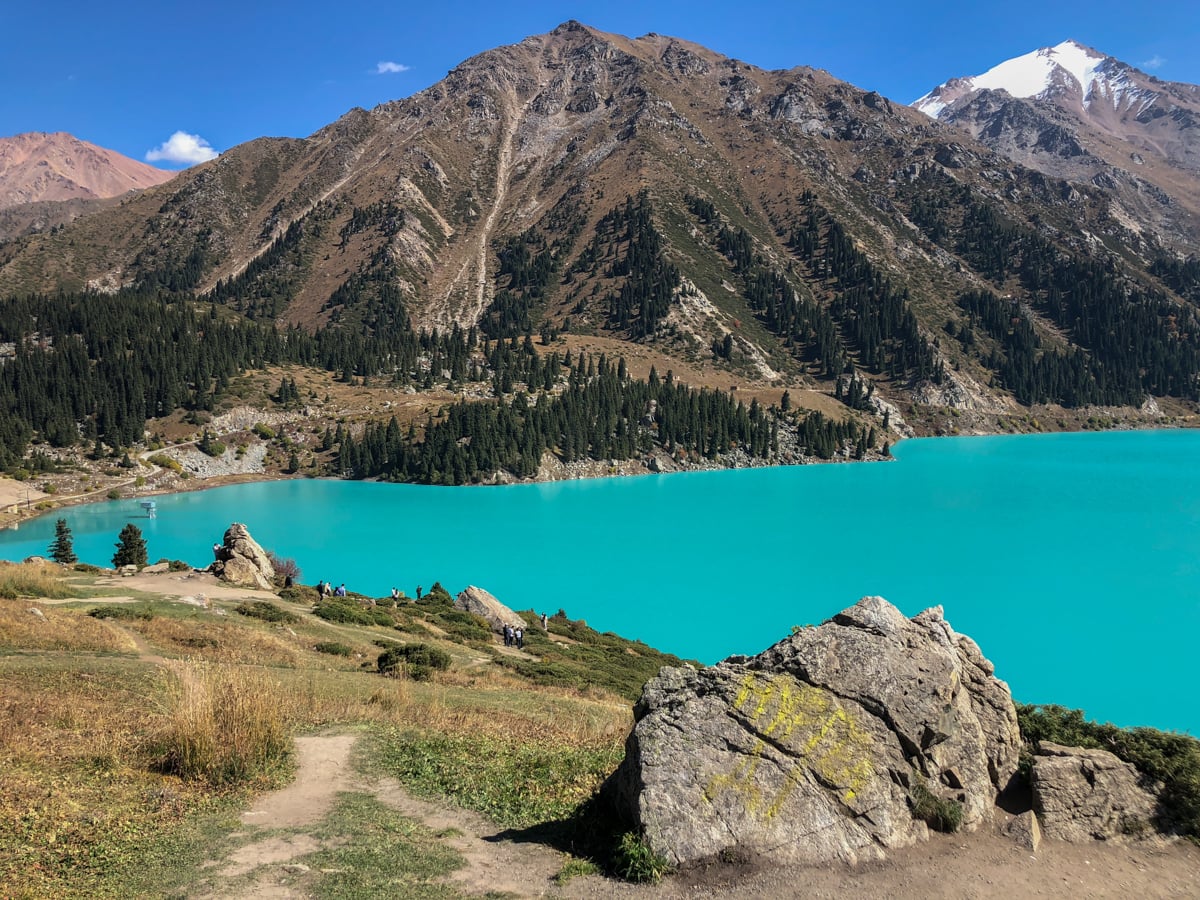
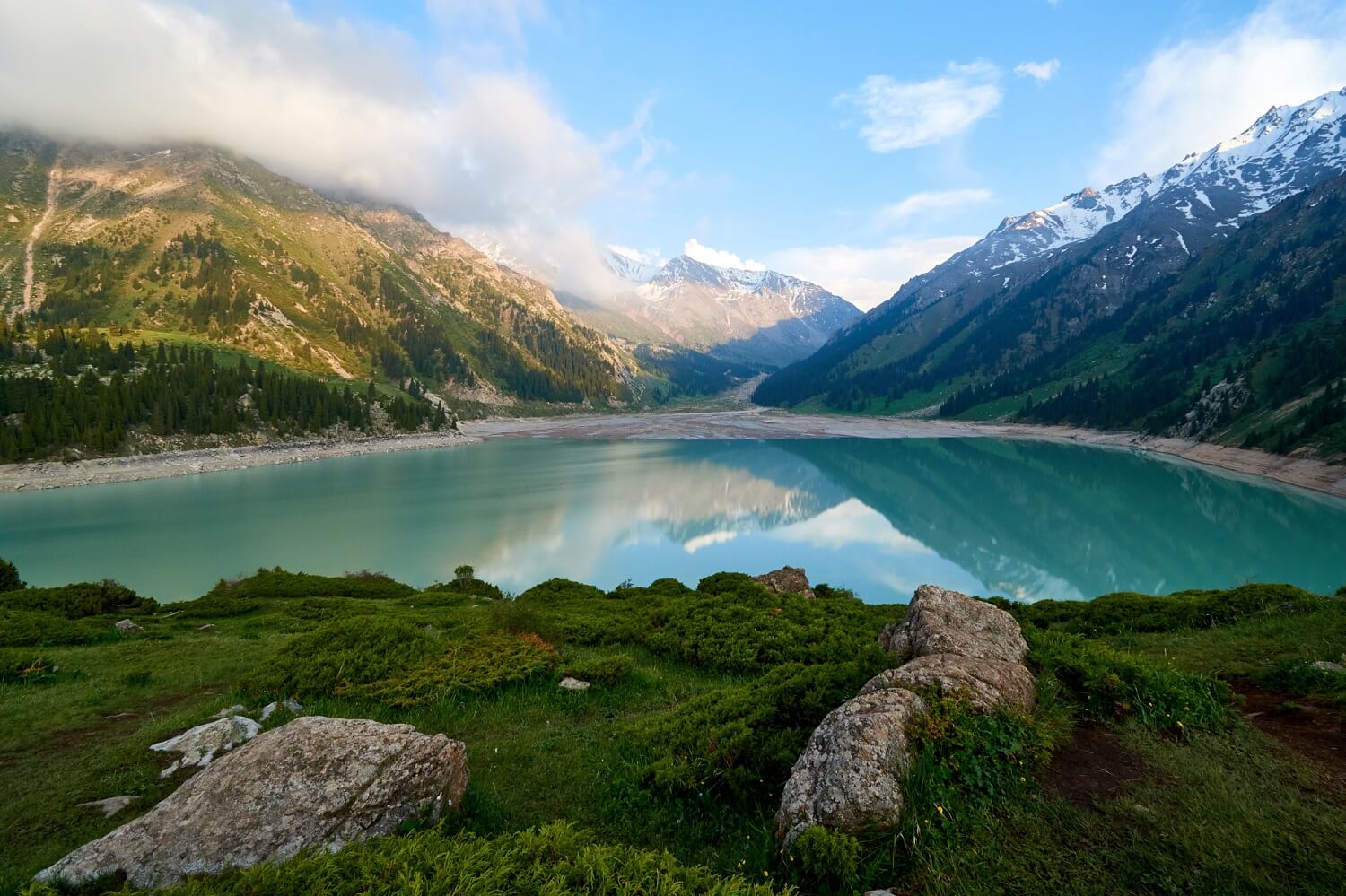
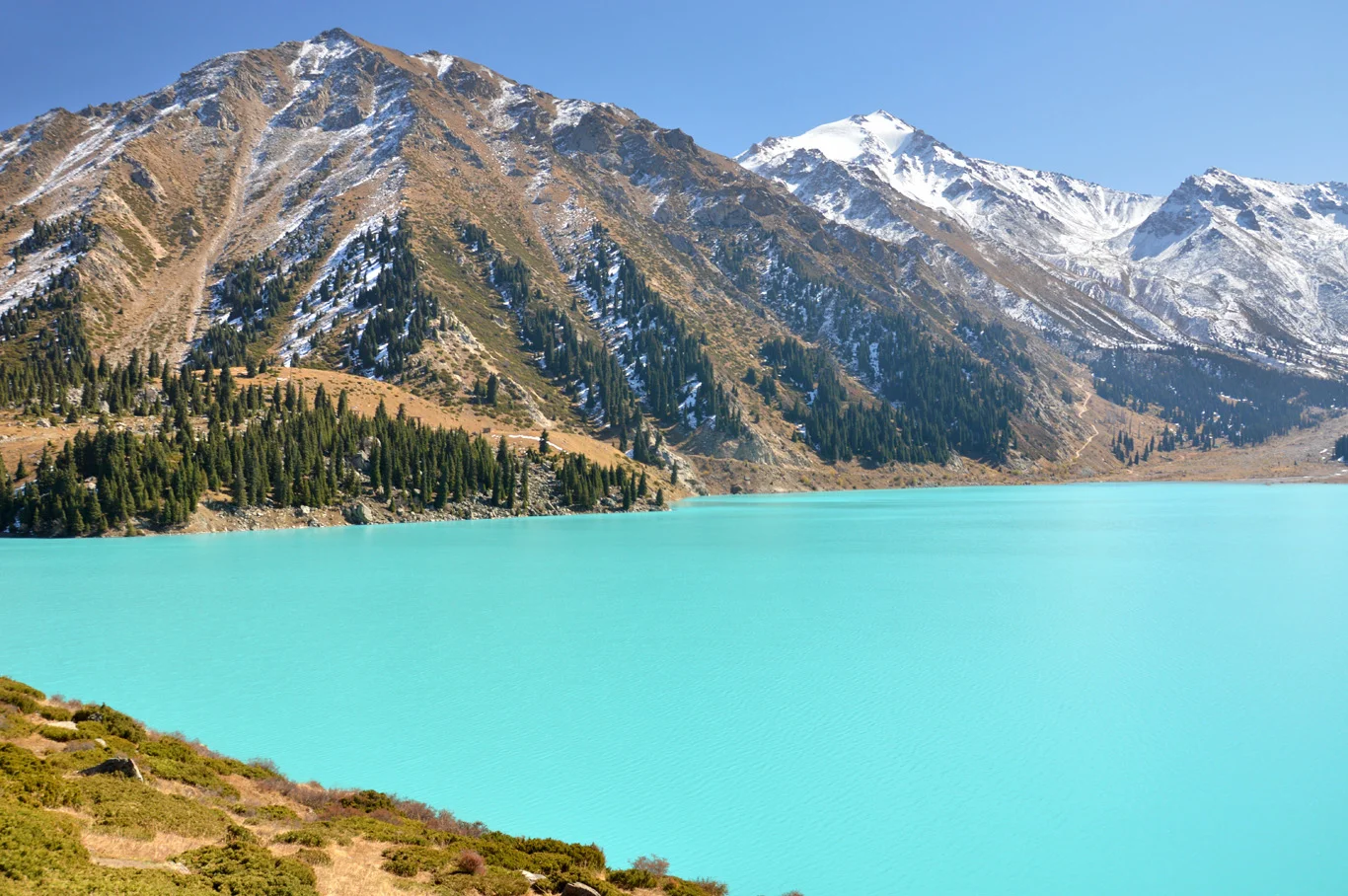
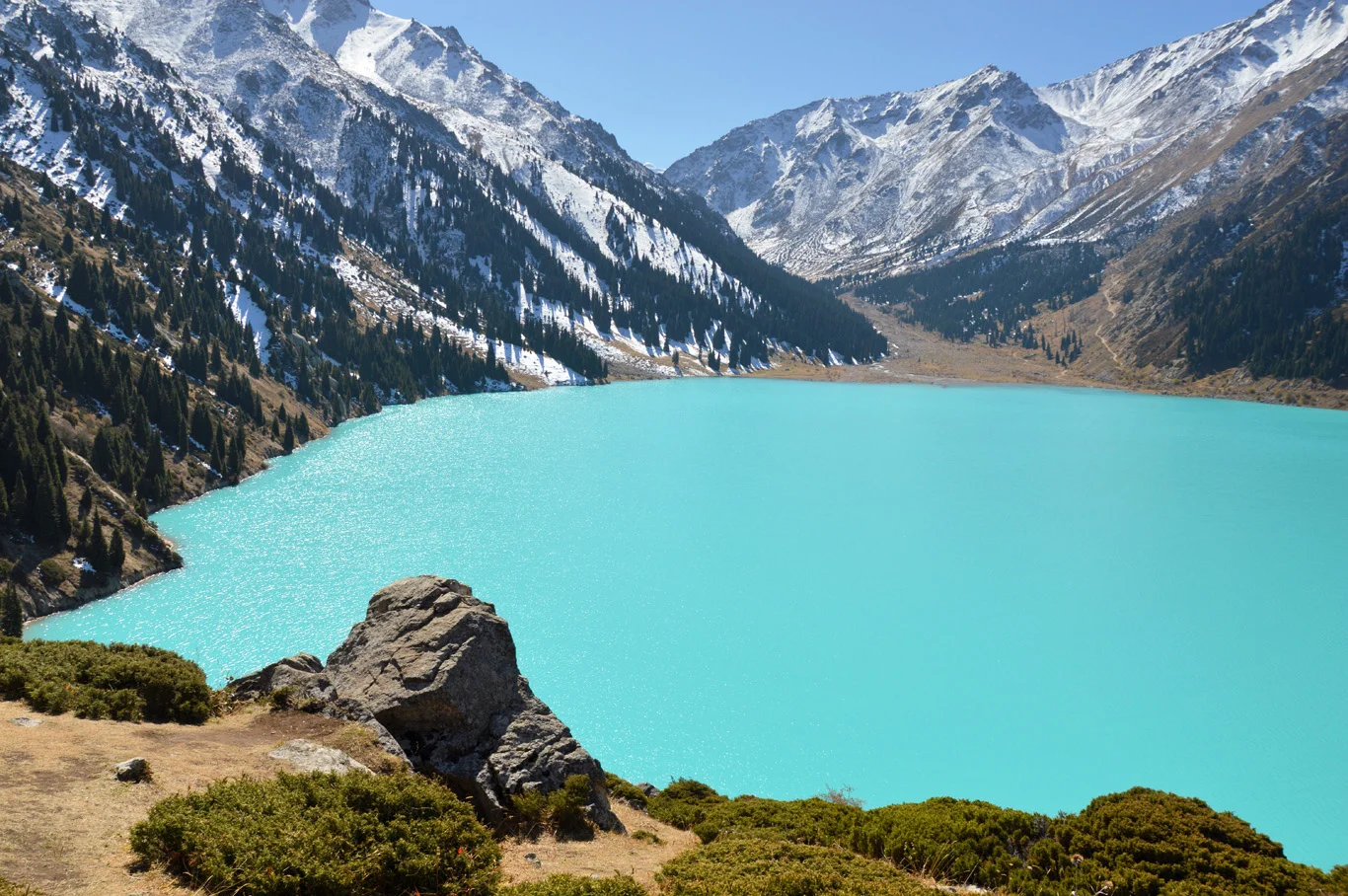
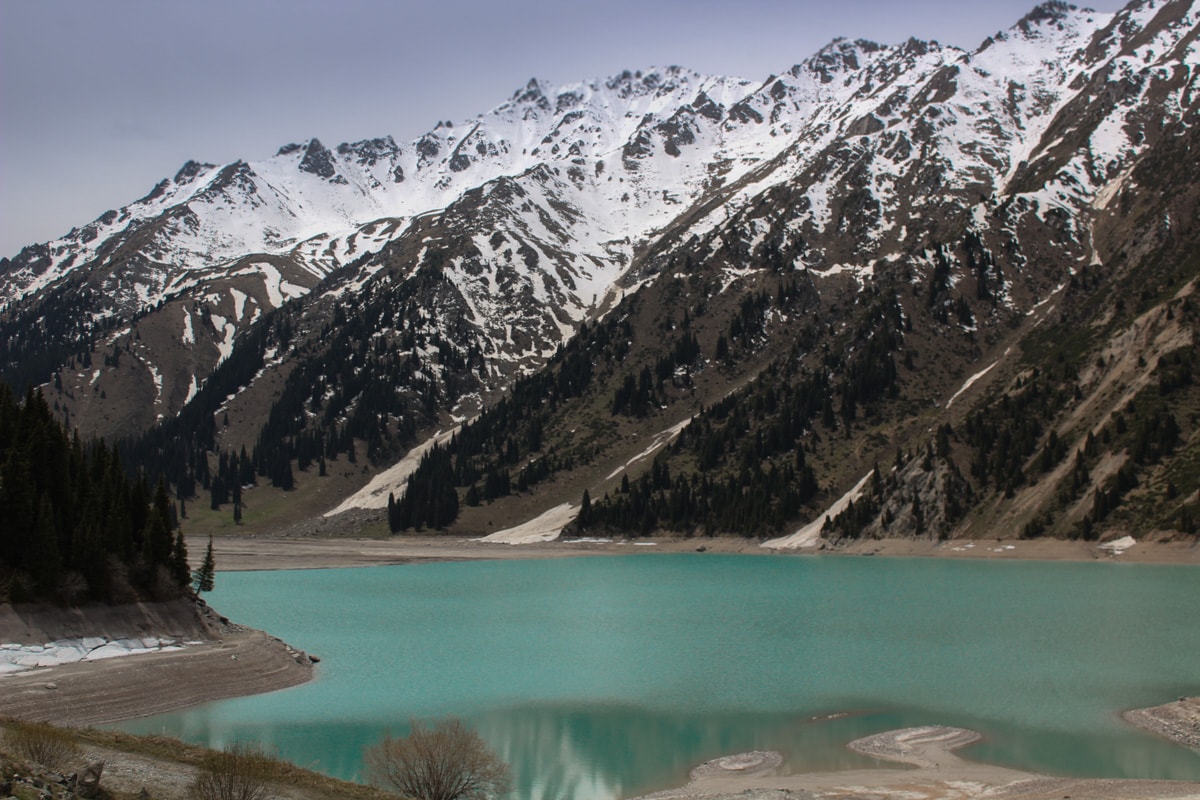
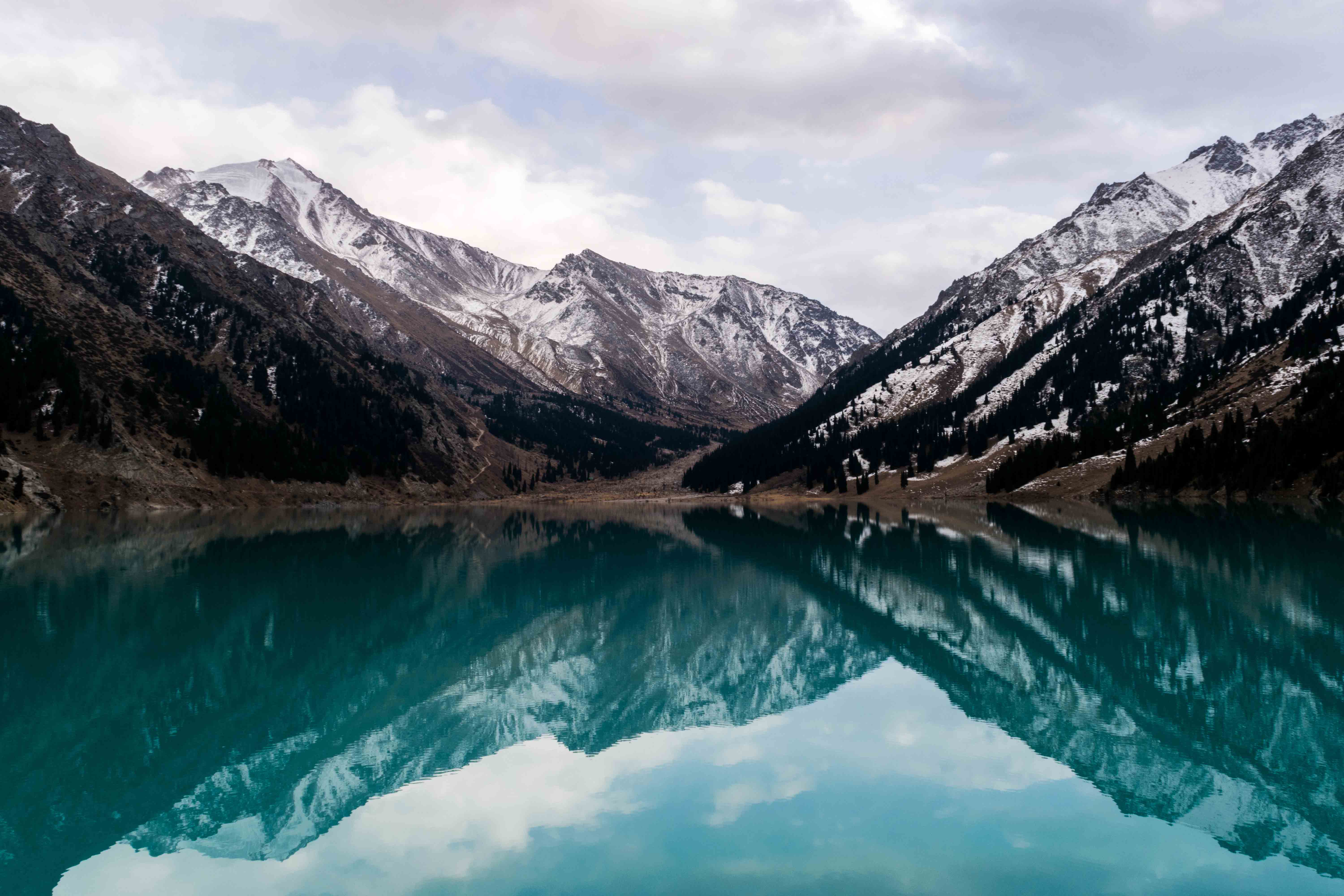
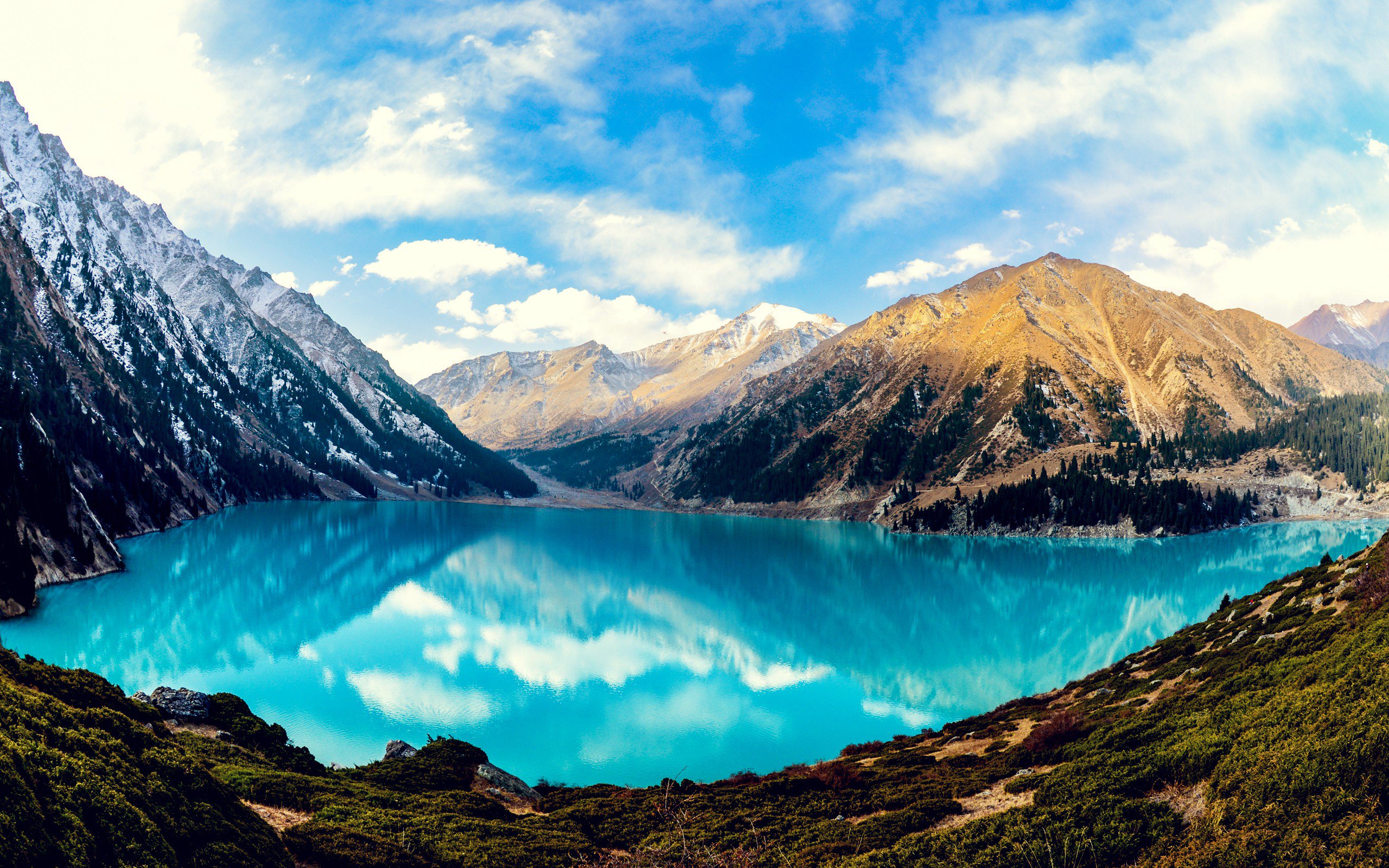
On the road up, you don't see it coming. The trail from the checkpoint climbs through spruce forest and then through the zone where the trees thin and the rock takes over, and then the lake is simply there — a flat surface of impossible color held in a granite cirque at 2,511 meters, surrounded by the permanent snowfields of the Tian Shan. Turquoise is the word people use, and it's accurate, but it doesn't capture the intensity of the blue-green in June, or the way it shifts toward deep teal in August, or turns an almost metallic pewter under overcast skies in October. The water is glacially fed and bone-cold and perfectly transparent to a depth that makes the turquoise look painted.
Big Almaty Lake — Bolshoye Almaatinskoye Ozero, or BAL to the Almaty outdoor community — sits fifteen kilometers south of the city in the Ile-Alatau National Park. It is the most visited alpine lake in Kazakhstan, and for good reason: accessible enough to reach in under two hours from Almaty, dramatic enough to reward every effort required to get there. Zhanna, a glaciologist at the nearby cosmic ray station who has worked at the lake for over a decade, describes it as "a climate instrument as much as a landscape." The lake's water level, fed by the glaciers above it, is a direct record of glacial retreat. It is beautiful and it is also, as she notes, a slowly changing document of the warming that is reshaping the Tian Shan.
Essential Facts
Big Almaty Lake is located within Ile-Alatau National Park, approximately 15 kilometers south of Almaty along the Big Almaty Gorge road. The lake sits at 2,511 meters above sea level; the surrounding peaks reach above 3,500 meters. A special permit is required to enter the restricted zone near the lake — available from the Ile-Alatau National Park entrance or through registered tour operators. The access road is gated; most visitors hire taxis or guided transport from Almaty, or hike from the lower checkpoint (roughly 8-10 kilometers way, gaining 600 meters of elevation). The lake area is accessible from May through October depending on snowfall; July through September is typically the most reliable window. There is a cosmic ray research station near the lake that has been operating since Soviet times.
Photography is permitted from the designated viewpoints. The lake's color is most intense in midday light; morning and evening show the surrounding peaks in their best reflected form. Come prepared for cold even in summer — the cirque is exposed, and temperature drops rapidly in the afternoon when clouds move in from the west.
The ‘Wow-Factor’
Standing at the Edge of the Color
There is a moment, about twenty minutes before you reach Big Almaty Lake, when the spruce forest ends and the trail opens the rock plateau above the treeline. The city of Almaty, visible on clear days far below in the haze of the valley, suddenly seems very far away — which it is, in all the ways that matter. The air changes here. It tastes of snow and cold rock and something floral that comes and goes, possibly the high-altitude wildflowers in the meadows just below you. The wind, if there is wind, is direct and unfiltered. Your lungs notice the altitude.
Then you see the lake.
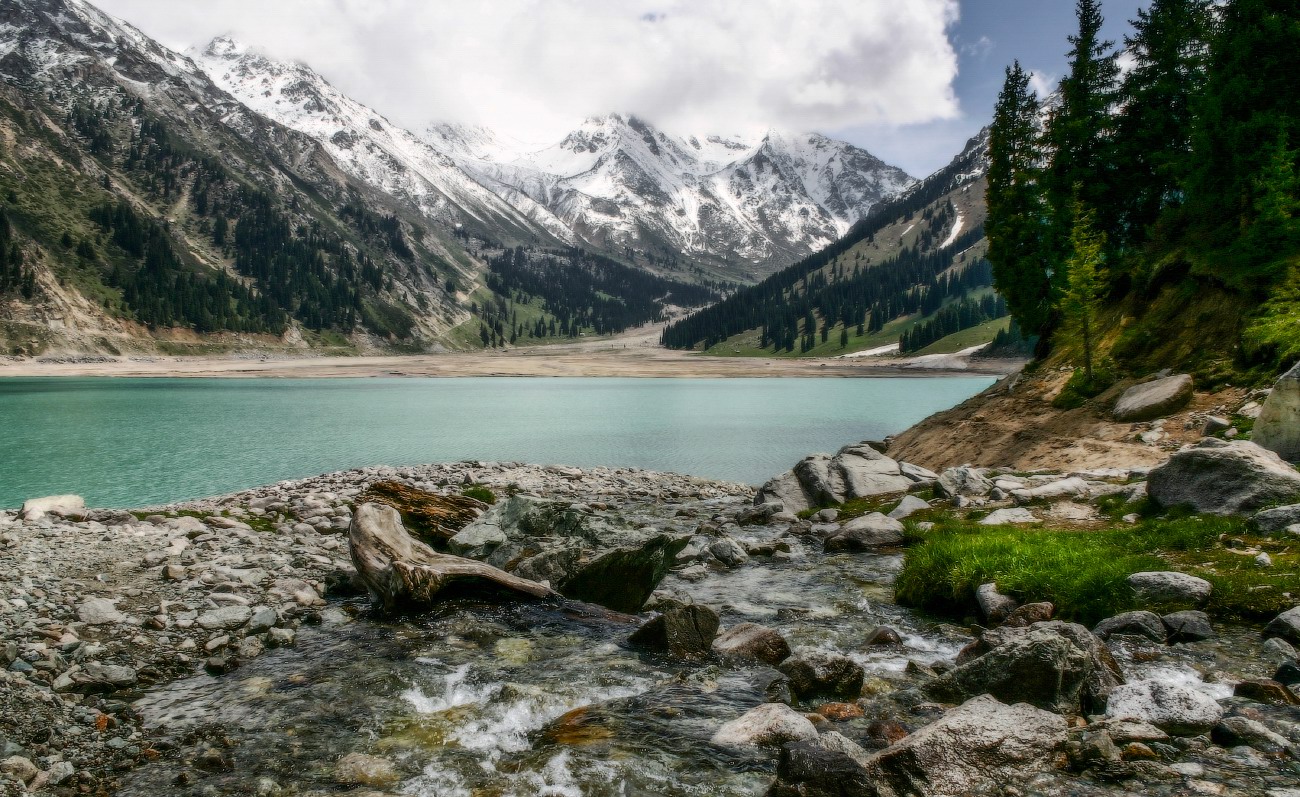
The color is genuinely shocking. Not beautiful in a gradual, building way — shocking, in the first second, in the way that primary colors in nature can be. The turquoise of Big Almaty Lake in June, fed by glacial melt with its suspended glacial flour catching the light, is of those colors that your brain keeps checking against itself to confirm is real. It is real. And it changes: teal in deep summer, paler turquoise in spring when the snowmelt dilutes it, pewter and slate under cloudy skies, and on the rare clear mornings when the entire cirque reflects in the flat surface — the grey and white peaks of the Tian Shan, the snowfields, the sky — the lake becomes a mirror that doubles the world.
The Big Almaty Peak rises to 3,681 meters on the south side of the lake. The peaks on the east and west complete the granite frame. The scale of the cirque does what good mountains always do: it makes the scale of your concerns temporarily ridiculous. You drove up from the city this morning; the rock around you has been here for sixty million years.
The sensory experience is specific and cumulative. The cold — even in July, the air at 2,511 meters is bracing and the water is somewhere near 4°C. The smell — glacial air, wet rock, spruce from the forest below, the high-altitude wildflowers that appear in July in the mornings. The sound — wind mostly, and the occasional rush of water where the outlet stream begins to flow downhill toward the gorge and eventually toward Almaty's water supply. The silence underneath all of this, which is a different quality of silence from anything in the city below.
The emotional register is not complicated. It is the feeling, which some places produce more reliably than others, of being very small in a very beautiful place. Some people take their photographs and go quickly. Others sit for an hour and look, as if something might be communicated if they stay long enough. Zhanna at the cosmic ray station says she has worked near this lake for over a decade and still looks at it every time she walks past. "It never becomes ordinary," she says. That's about right.
Deep History & Culture
The Mountain That Has Always Been Sacred
Before it was a reservoir, before the dam was built in the 1950s to serve the growing city of Almaty below, Big Almaty Lake existed as a natural alpine tarn — glacially carved, fed by snowmelt, part of the high mountain landscape that Kazakh nomadic communities moved through seasonally for centuries. The Tian Shan mountains were not a wilderness that the Kazakh people visited; they were a familiar altitude, part of the seasonal cycle of movement between summer highland pastures (jailau) and winter lowland shelters that defined nomadic life in the Zhetysu (Seven Rivers) region.
The spiritual geography of the mountains runs deep in Kazakh culture. High places — peaks, passes, and the lakes cradled in glacial cirques — carry the quality of the sacred in a way that the open steppe, however vast, cannot replicate. The auliye (sacred sites) of the Ile-Alatau mountains were known by the communities who used the mountain pastures, honored in oral tradition, and incorporated into the ceremonial calendar that marked the passage of the year. The lake in its high cirque, surrounded by peaks that reach above the permanent snowline, fits this geography perfectly.
The Saka cultures — the Iron Age horse peoples who ranged across the Zhetysu from the 5th century BCE — used the mountain zone as seasonal range and left their traces in the form of burial mounds and rock carvings at various elevations in the range. They were the precursors of the Kazakh nomadic tradition, and the mountains they used are the same mountains that later Kazakh communities continued to use across the centuries of the Khanate and beyond.
Russian expansion into the Zhetysu region accelerated through the 1840s, and the establishment of Verniy (later renamed Almaty) as a Russian military outpost in 1854 changed the character of the mountain zone. The Big Almaty Gorge became a route that served the colonial administrative center growing in the valley below — a source of timber, water, and alpine produce. The lake's watershed was already recognized as critical to the settlement's water supply.
The Soviet period formalized this relationship. The dam built in the 1950s converted the natural tarn into a controlled reservoir, deepening and stabilizing the water supply to Almaty and its rapidly expanding population. The cosmic ray research station established near the lake in 1957 — still operating today — was part of the Soviet scientific project of instrumentalizing high-altitude environments for atmospheric and particle physics research. The lake became simultaneously a water utility and a scientific facility.
Independence in 1991 added a third layer: recreation destination and symbol of natural heritage. The Ile-Alatau National Park designation has made the Big Almaty Gorge of the most visited nature corridors in Kazakhstan, and the lake at its head the single most photographed natural site in the country. The Spirit of the Glacier, as local legend has it, continues to protect the city's water. Zhanna and her colleagues at the cosmic ray station continue to measure what the atmosphere is doing at 2,511 meters. The lake continues to change color with the seasons, as it has always done.
Practical Digital Logistics
Getting to Big Almaty Lake: The Practical Guide
Big Almaty Lake is fifteen kilometers from the center of Almaty, but the fifteen kilometers are vertical — the gorge rises from the city at around 900 meters to the lake at 2,511 meters, gaining over 1,600 meters of altitude. Most of that is in the final section of road and trail. Plan accordingly.
The Access Road and Permit
The Big Almaty Gorge road requires a special permit to enter the restricted zone that begins partway up the gorge. This permit is issued through the Ile-Alatau National Park administration or through registered Almaty tour operators. The permit system protects both the water source (the gorge supplies drinking water to Almaty) and the natural environment. Without it, you'll be turned back at the checkpoint. Obtain it before you go — tour operators can arrange this with your transport.
Getting There
Most visitors hire taxis or organized transport from Almaty. The drive to the lower checkpoint takes 30-45 minutes depending on traffic; from there, the road continues to the lake area for those with permits and appropriate vehicles. Private taxis from Shymbulak or Almaty city cost approximately 5,000 to 8,000 KZT for the round trip — confirm whether the driver will wait or you'll need separate return transport.
An eco-shuttle operates from central Almaty to the lake area during the main season, departing at set times and costing around 1,500 KZT per person. Check current departure times with your accommodation or local tour operators; schedules adjust seasonally.
Hiking vs. Driving
It is possible to hike to the lake from the lower checkpoint — roughly 8-10 kilometers way with 600 meters of elevation gain. Allow 3-4 hours each way and plan to return before afternoon when cloud often arrives. This is a serious hike at altitude; it is not difficult terrain, but the elevation change is real and affects people differently. If you haven't been at altitude recently, go slowly and drink water throughout.
Entry Fees
Ile-Alatau National Park entry costs 2,000 KZT, payable at the visitor gates or via the QazPark app before arrival. The permit for the restricted zone near the lake is a separate arrangement; confirm costs with the park administration.
What to Bring
Temperature at 2,511 meters is significantly colder than in Almaty city below — even in July and August, the air is cool and the wind can make it feel genuinely cold. Bring a windproof jacket, warm mid-layer, and waterproof outer layer regardless of the forecast. Afternoon clouds and rain arrive regularly in summer. Carry at least two liters of water per person; there is no reliable drinking water source at the lake itself (it's a water supply reservoir and not for public consumption). Download offline maps before departure — mobile signal in the gorge is intermittent.
Best Time
July through September is the most reliable weather window. The lake is accessible from May depending on snowfall, but early season the access road may have icy sections. October can be spectacular — the autumn colors in the gorge below the lake, and the first snowfall on the peaks above — but conditions can change rapidly and the permit zone has reduced hours in the shoulder season.
Must-Do Activities
What to Do at Big Almaty Lake
Almaty photographer Timur Seilov has been coming to the lake for eight years and has never taken the same photograph twice. "The light is different every time," he says. "The color is different. Even the peaks look different depending on the snowfall." He arrives in the morning, before the shuttle loads, and he stays until the afternoon clouds roll in from the west. Here's how to use the time the lake offers.
Walk the Lakeshore
The viewpoints around the lake offer different perspectives on the color and the surrounding peaks. Walk the full accessible perimeter — the designated paths cover most of the lakeside — and take time at each viewpoint to observe what the light is doing. The turquoise is most intense from the western shore with the sun behind you; the reflection of Big Almaty Peak (3,681 meters) is clearest from the north shore on calm mornings when the wind hasn't disturbed the surface.
Visit the Cosmic Ray Research Station
The Tian Shan research station near the lake has been operating since 1957, conducting atmospheric and particle physics research at altitude. It is not a standard tourist attraction — it's a working scientific facility — but visitors can observe the station exterior and learn about its function from the park information boards. It adds a specific dimension to the site: this lake is simultaneously beautiful, practical (drinking water for Almaty below), and scientific (measuring cosmic radiation for Kazakhstan's physics research program).
The Eagle Ridge Trek
The ridge above the lake's eastern shore involves a genuine climb — roughly four kilometers with significant elevation gain — but the view from the top encompasses the entire Big Almaty cirque, the Almaty valley to the north, and the Tian Shan chain to the south and east. Allow three to four hours for the round trip. Start early; the afternoon clouds that regularly arrive from the west after noon can obscure the view and make the descent slippery.
Blue Hour Photography
The period immediately before and after sunset gives the glacial peaks behind the lake a quality of light that the middle of the day entirely lacks — the ice picks up color (rose, amber, sometimes a deep pink that doesn't look plausible but is) while the lake surface goes darker and the reflection doubles the spectacle. This is the shot that Timur and every serious photographer at Big Almaty Lake is actually there for. Position yourself on the north shore, facing south toward Big Almaty Peak, and wait.
Simply Sitting
The lake also works without any agenda. The altitude and the cold and the color and the silence combine to produce a particular quality of mental clarity that urban environments don't provide. Bring warm clothes and food and sit at the shoreline for an hour without taking photographs. This is not a minor recommendation — some experiences are better absorbed than documented, and Big Almaty Lake is of them.
Local Flavors & Amenities
Eating and Staying Near Big Almaty Lake
The lake itself has no food vendors and no accommodation — it's a water supply reservoir inside a restricted zone, and that status shapes everything about what's available on site. Come with your own food and water. The infrastructure for eating and sleeping is in Almaty city below, or at a small number of guesthouses and camps in the gorge.
At the Lake
There is nothing to buy at the lake. This is not an oversight. Bring your own food, enough water for the full day, and whatever warm clothing you need. The park information boards at the visitor area near the lake provide context about the research station and the ecological history of the gorge. That is the extent of the on-site amenity.
In the Gorge
During the main season, a small visitor facility near the lower checkpoint serves mountain herb teas and traditional baursaks — hot fried dough eaten with the tea, exactly what you want when the altitude starts to make itself felt. Prices run around 4,500 KZT for tea and food. This is the last option before the lake area; stock up on anything you need here.
Alatau mountain honey — produced by beekeepers who work the flower meadows of the gorge at various elevations — is sold at small roadside stalls in the lower gorge and at the checkpoint area. It's legitimately good: floral, slightly resinous, with a complexity that reflects the altitude and variety of the Ile-Alatau meadow zone. Buy a jar if you see it.
Accommodation
The BAL Eco-Lodge offers mountain accommodation close to the restricted zone boundary, with sustainable rooms from around 35,000 KZT per night — functional and well-positioned for pre-dawn starts if you're going for the morning light at the lake. Book well in advance; the lodge has limited capacity and Almaty's mountain recreation community fills it on summer weekends.
Several small yurt camps and guesthouses operate in the gorge below the restricted zone, offering a closer alternative to the full drive back to Almaty city. Donation-based yurt stays (around 15,000 KZT) come with the particular quality of overnight mountain hospitality: a hot meal, conversation, and the sound of the gorge river at night. Ask at the lower checkpoint for current options.
Almaty as Base
Most visitors stay in Almaty and make the lake a day trip. This is entirely sensible — Almaty is a full-service city with every level of accommodation, a restaurant scene that covers Kazakh, Central Asian, Russian, and international cooking, and easy access to the gorge road. The tradeoff is the early morning departure required to reach the lake before the crowds and before the afternoon clouds. If you're staying in Almaty and want to be at the lake before 9 a.m., set your alarm for 6.
Essential Insider Tips
Insider Tips for Big Almaty Lake
Get the Permit Before You Leave Almaty
The restricted zone permit is not something to sort out at the checkpoint. It requires advance arrangement through the Ile-Alatau National Park administration or a registered tour operator. If you arrive at the gate without it, you'll be turned back regardless of how far you've driven. Book through an Almaty tour operator who handles the permit as part of the package, or contact the park administration directly the day before your visit.
Go Early — This Cannot Be Overstated
The shuttle from Almaty fills quickly in summer, and the lake's most crowded window is mid-morning through early afternoon. If you're hiring a private taxi, ask to leave by 7 a.m. at the latest. The lake before 9 a.m. is genuinely different from the lake at noon: fewer people, calmer water (better reflections), and the morning light on the peaks before the sun climbs and flattens everything.
Check Road Conditions in Spring and Autumn
The access road to the lake can be compromised by late snow (spring), early snow (autumn), or heavy rain that turns the upper sections to mud. Check current conditions through the park app or by calling the park administration directly before you go. This is worth the two-minute phone call — turning back halfway up the gorge is a poor use of a day.
Photography: Use a CPL Filter
The turquoise surface of the lake reflects light intensely in midday conditions, and without a circular polarizing filter you'll lose color saturation and pick up glare. The CPL cuts through this and lets you capture the actual color depth of the water. Combined with the blue sky and the grey-white peaks behind, the properly filtered lake shot is the that doesn't look oversaturated in post.
Altitude Affects People Differently
The lake is at 2,511 meters. Most healthy adults adjust without difficulty, but people who have been at sea level for extended periods may notice headaches, reduced energy, or quicker breathing, particularly if they're hiking rather than driving. Drink water consistently throughout the day and don't push the pace on the uphill sections. If you feel unwell, descend — altitude sickness resolves quickly with reduced elevation.
The Lake Is a Water Source
Don't enter the lake. Don't wash in or near the lake. Don't use any cleaning products near the outlet stream. The water in Big Almaty Lake flows directly into Almaty's drinking supply. This is not metaphorical conservation — it is a functional water utility serving of Central Asia's largest cities. The restrictions exist for this reason, and they apply to everyone.
Noise at the Lake
High alpine environments carry sound in particular ways — the cirque amplifies and reflects. Keep voices down. Don't play music. Let the lake be what it is: of the quietest places within reach of two million people, and worth treating as such.
Sustainability & Community
The Responsibility of Visiting Something This Fragile
Ecologist Aliya Nurmagambetova has been monitoring the botanical composition of the Big Almaty Gorge slopes for twelve years. The changes she documents are not dramatic enough to make headlines — a slow retreat of certain endemic species from the lower elevations, a creep of more drought-tolerant plants upward, the gradual thinning of the spruce forest in some sections where soil compaction from foot traffic has reduced water retention. "These are the early signs," she says. "You notice them if you're counting."
Big Almaty Lake sits at the intersection of several pressures: it is a critical water supply for a city of two million people, an active scientific facility, a glacially fed ecosystem whose water levels track the retreat of the Tian Shan glaciers, and of the most visited natural sites in Kazakhstan. Managing all of these simultaneously requires visitors to take their responsibilities seriously.
Zero-Waste Policy
Everything you carry into the restricted zone must come back out. This is enforced at the checkpoint and is not negotiable. There are no waste bins inside the restricted zone — bring your own bag and carry your rubbish back to the facilities at the lower checkpoint. Leave the lake area exactly as you found it.
The Water
Do not enter the lake. Do not wash, fish, or use chemicals in or near the water. The Big Almaty Lake water supply is not treated before distribution to city residents — it relies on the natural filtration of the watershed and the purity of the source. Contamination at the source is not a minor concern.
The Botanical Survey
The Pearls of the Alatau conservation initiative invites visitors to document plant species they observe on the gorge slopes using a smartphone recording app available at the visitor information point. Contributing sightings adds to the monitoring data that Aliya and her colleagues use to track ecosystem change. It takes under ten minutes and contributes to something that matters.
Supporting the Gorge Communities
The beekeepers who work the Ile-Alatau meadows, the guesthouse families in the gorge, the guides and taxi drivers who know the road and the weather — choosing their services over cheaper alternatives or doing without entirely routes money directly into the community that lives with the gorge year-round. They are its most consistent stewards.
The Longer View
Zhanna at the cosmic ray station can tell you exactly how the glacier above the lake has changed since she began working there. The numbers are not encouraging. The lake's turquoise color, caused by glacial flour suspended in the meltwater, will change as the glacier retreats and the meltwater composition shifts. The lake will not disappear — there will always be snowmelt from the Tian Shan — but it will be different. Coming now, and coming carefully, is both a privilege and a responsibility. The Alatau is watching what we do with it.
Key Facts
- Tectonic Origin
- Formed by prehistoric earthquakes, the lake sits at 2,511 meters altitude and is a critical source of drinking water for Almaty.
- Color Variance
- The water changes color from turquoise to emerald green depending on the season and the angle of the sunlight.
- Scientific Hub
- The nearby Tian Shan Astronomical Observatory and the 'Cosmic Ray' station conduct world-class mountain research at high altitudes.
- Alpine Surround
- Surrounded by majestic peaks like Peak Sovietov (4,317m), the lake offers a dramatic vertical landscape for visitors.
- Strict Protection
- As part of a national park and water reservoir, visitors are strictly prohibited from swimming or polluting the pristine waters.
- Seasonal Access
- While reachable year-round, the road is most scenic in autumn when the surrounding larch forests turn brilliant gold.
Photo Gallery
Big Almaty Lake Cinematic
Video coming soon
Big Almaty Lake
Loading map...Loading map...
Visitor Essentials
Have a question?
Ask and get answers in seconds!
Discussion 0
No comments yet. Start the conversation!
Leave a Reply