Hilvet Underground Mosque
Experience the ancient soul of the Silk Road.
Essential Profile
Not everyone who comes to Turkistan for the great mausoleum of Khoja Ahmed Yasawi knows about the mosque beneath the complex. It is smaller, older, and harder to reach — descending into the earth rather than rising toward the sky — and the experience of it is entirely different from the grandeur of the Timurid dome above.
The Hilvet Underground Mosque sits directly adjacent to the Yasawi Mausoleum complex, cut into the earth that the great shrine stands on. The structure dates to the 12th century and is historically associated with the final thirty-three years of Ahmed Yasawi's life. According to Sufi tradition, when Yasawi reached the age of 63 — the age at which the Prophet Muhammad had died — he withdrew from the world above and spent the remainder of his life in underground seclusion, meditating in the khanaka (hermitage cell) that became this mosque.
What the Mosque Is
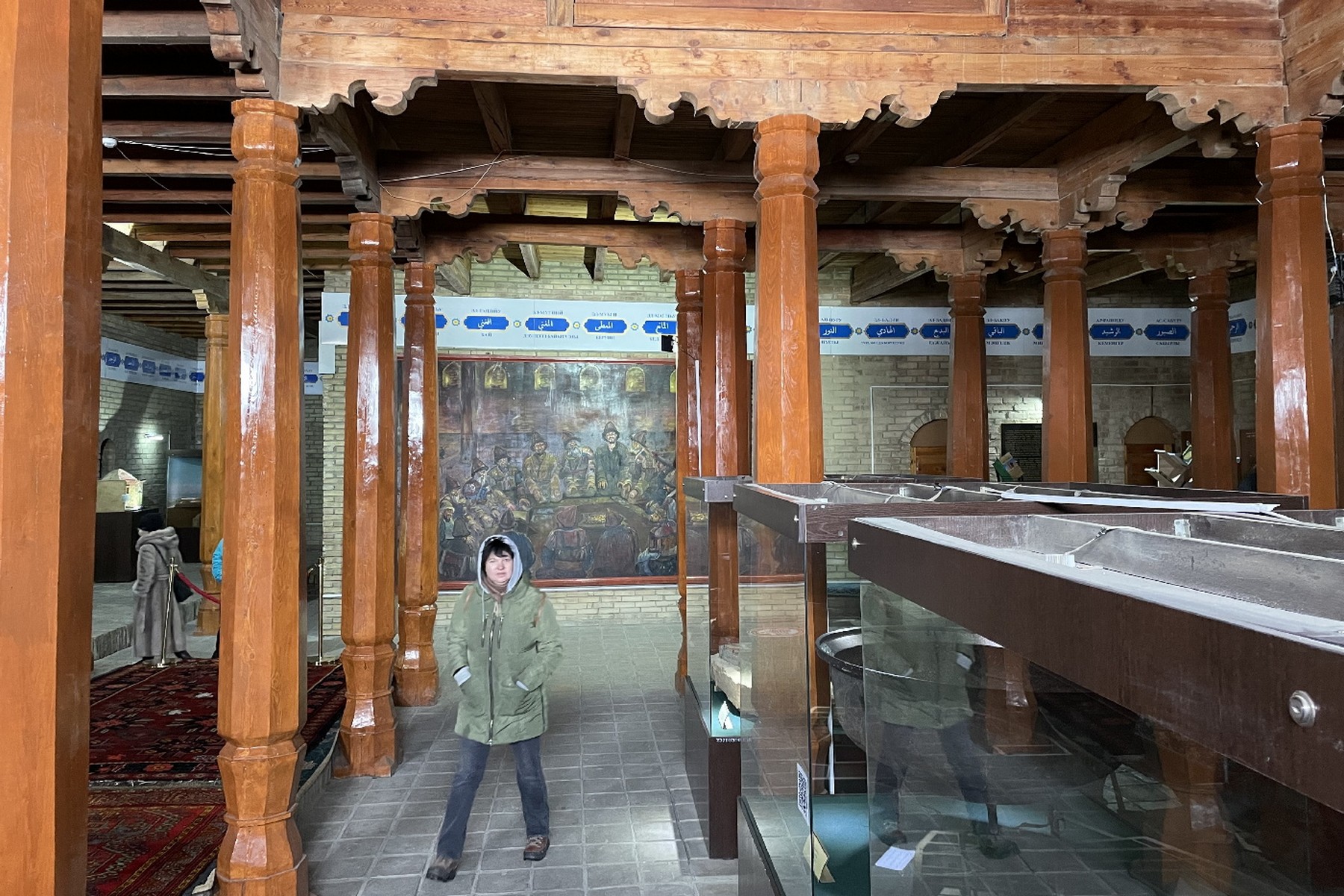
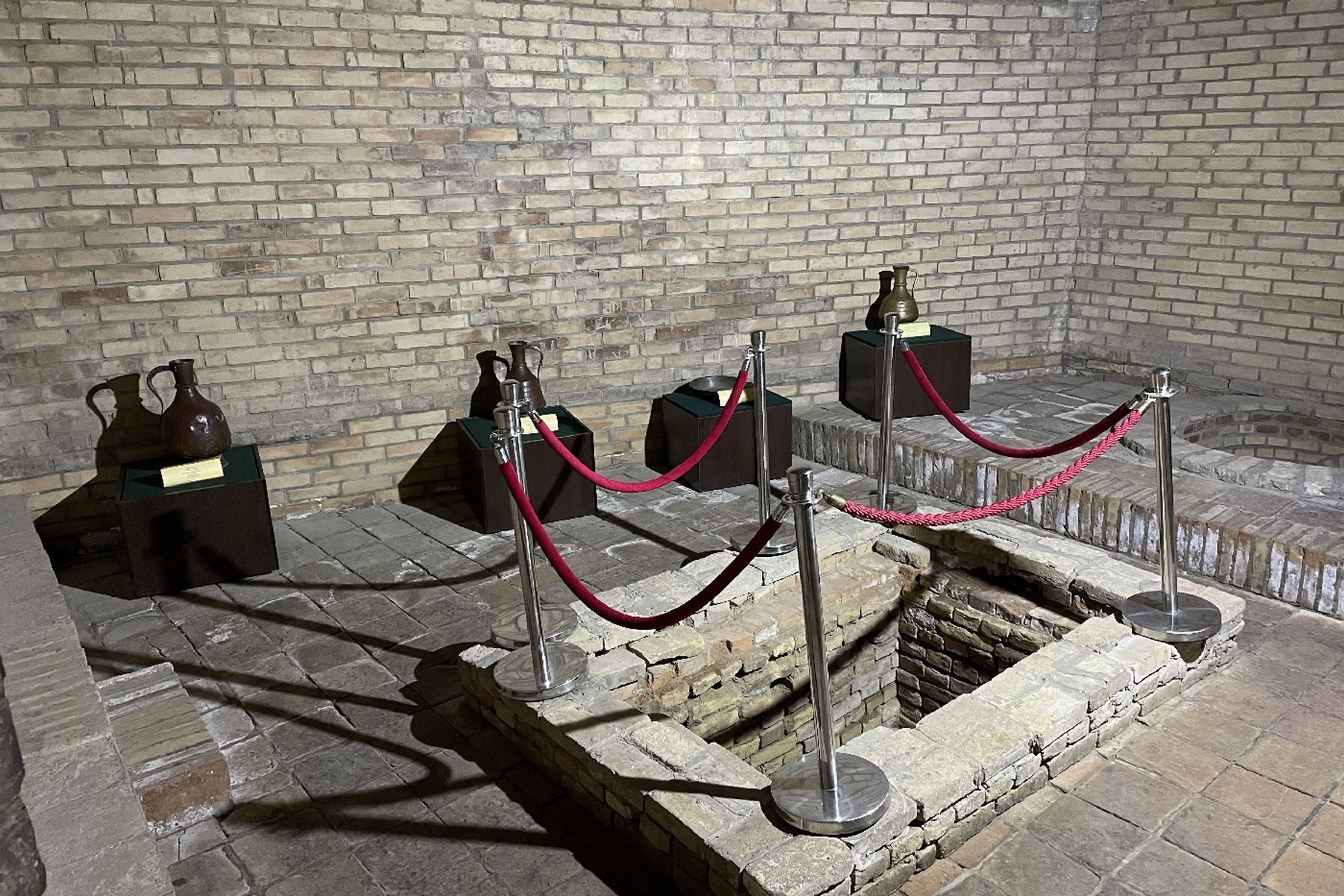
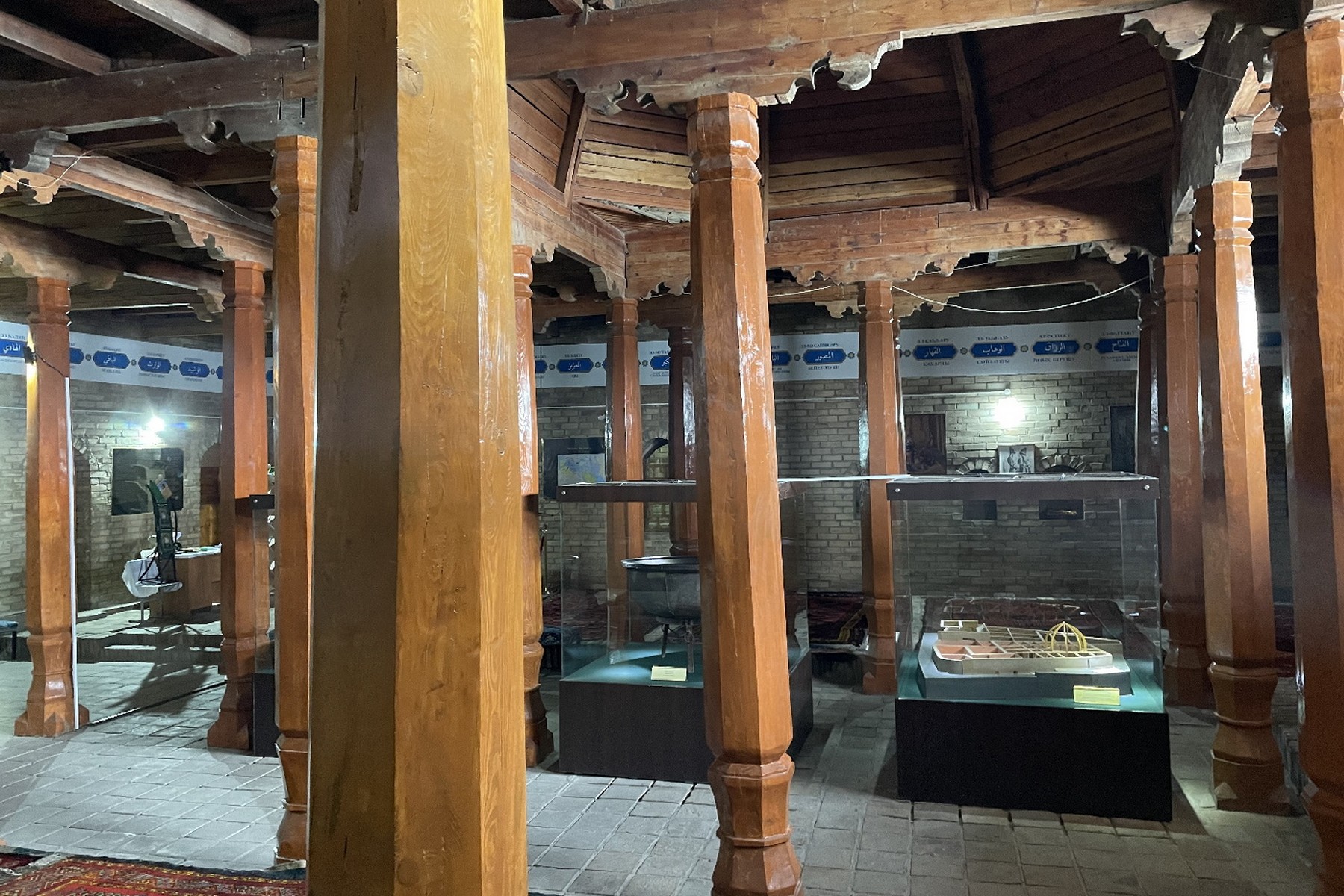
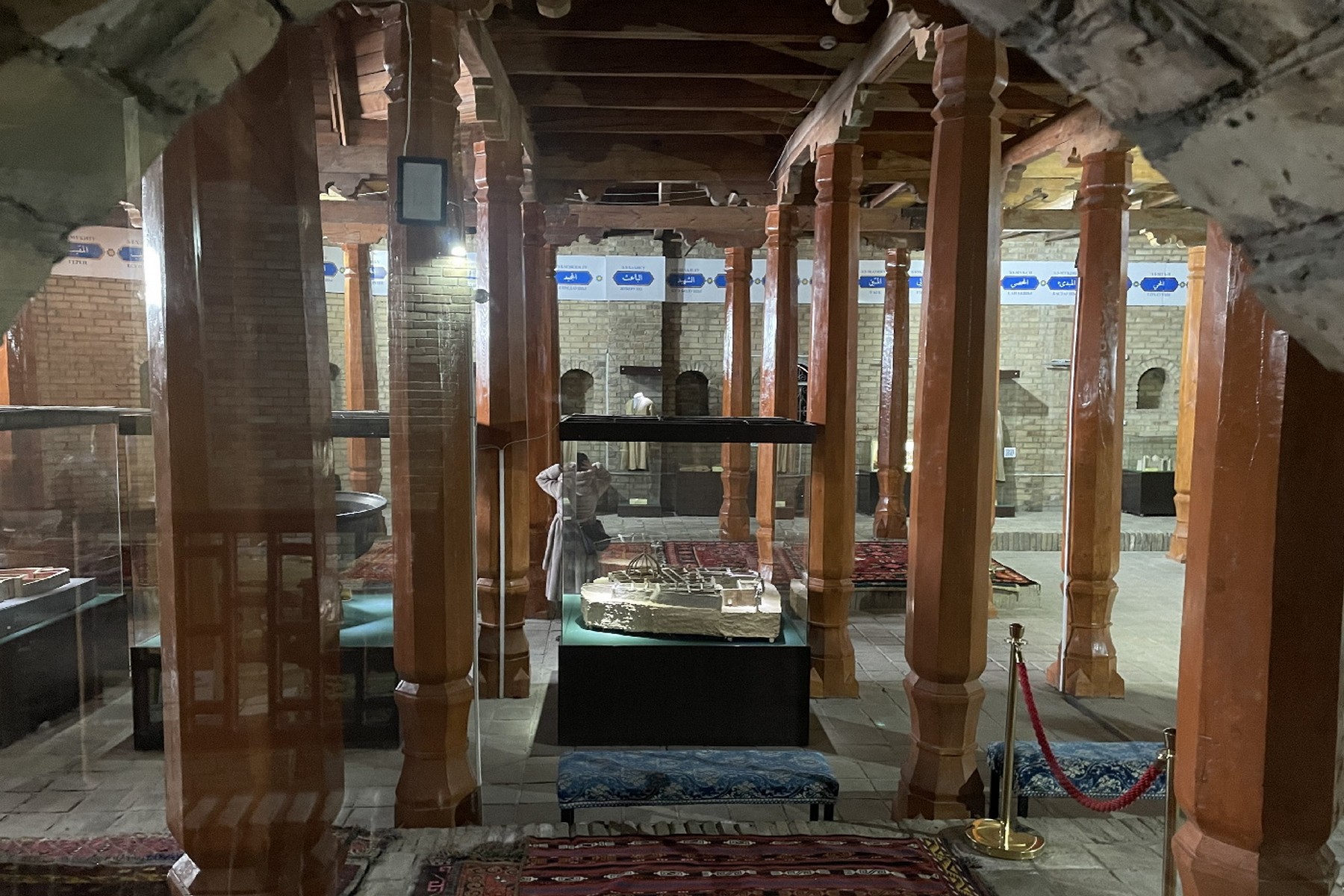
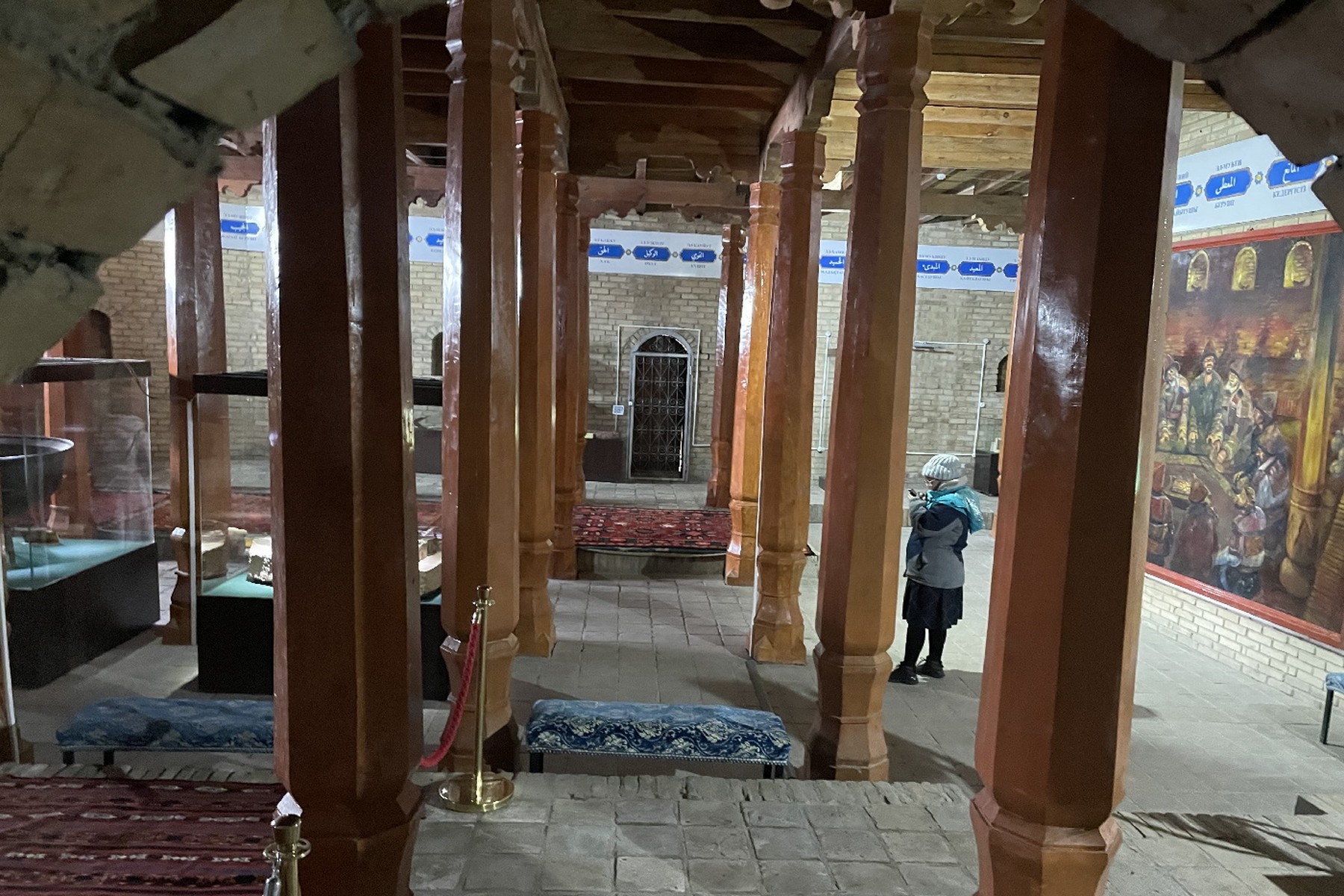
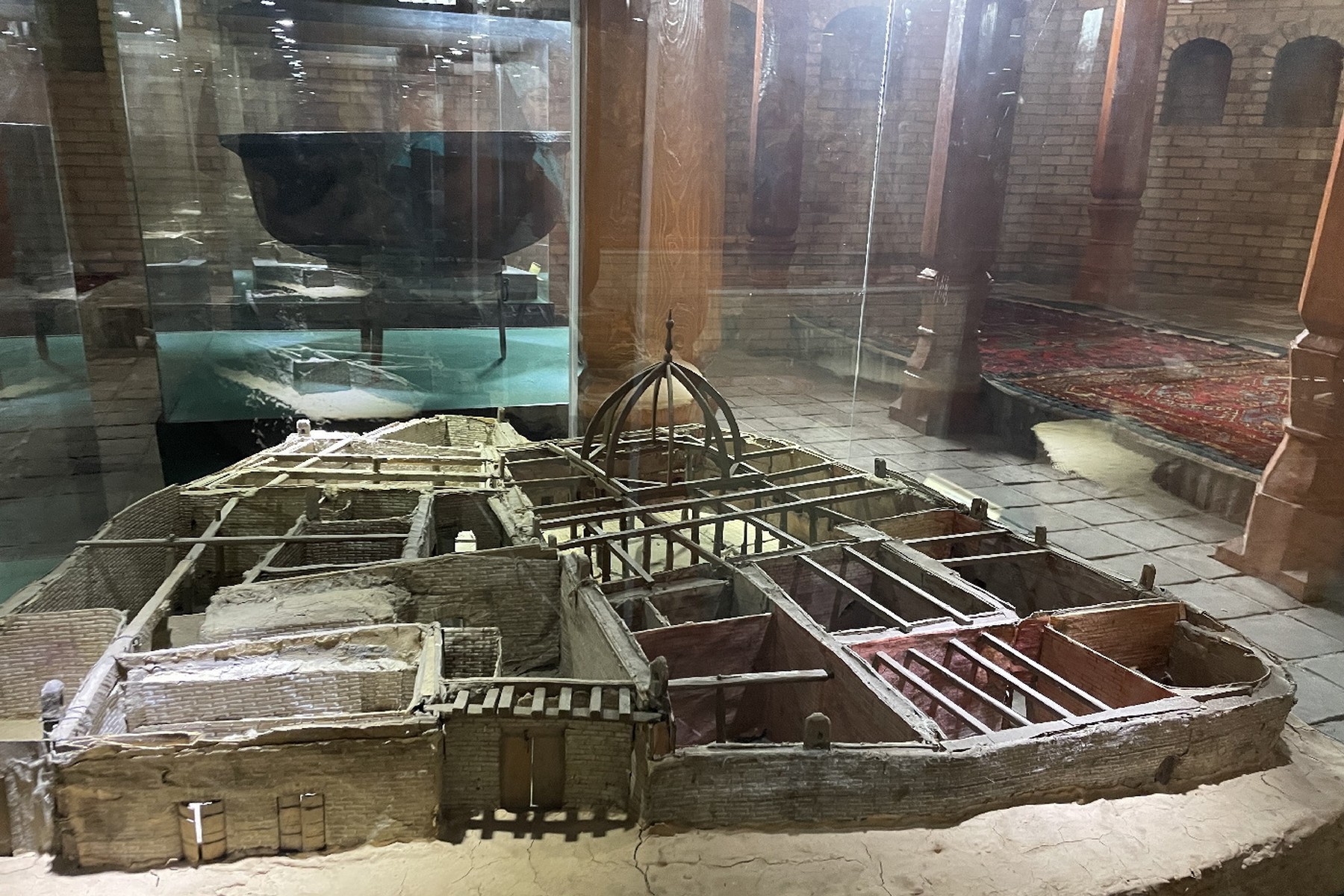
The Hilvet — the word comes from Arabic and means seclusion or retreat — is a semi-underground structure of stone and brick, largely original in its current form, that has been used continuously for prayer and meditation since the 12th century. The interior is low-ceilinged and modest, with the quality of light and air that underground stone spaces produce: cool, still, slightly dim, the silence more complete than above ground.
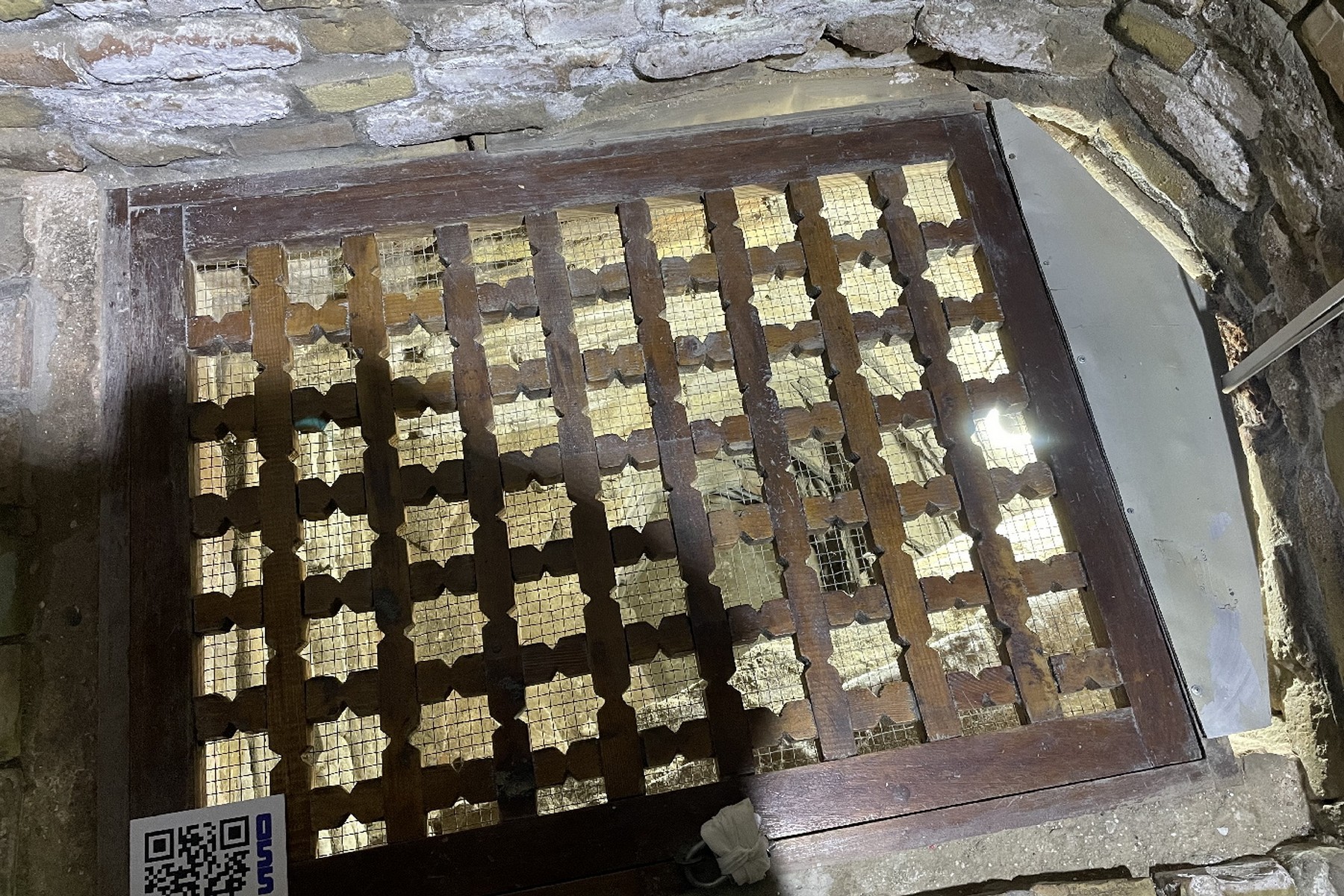
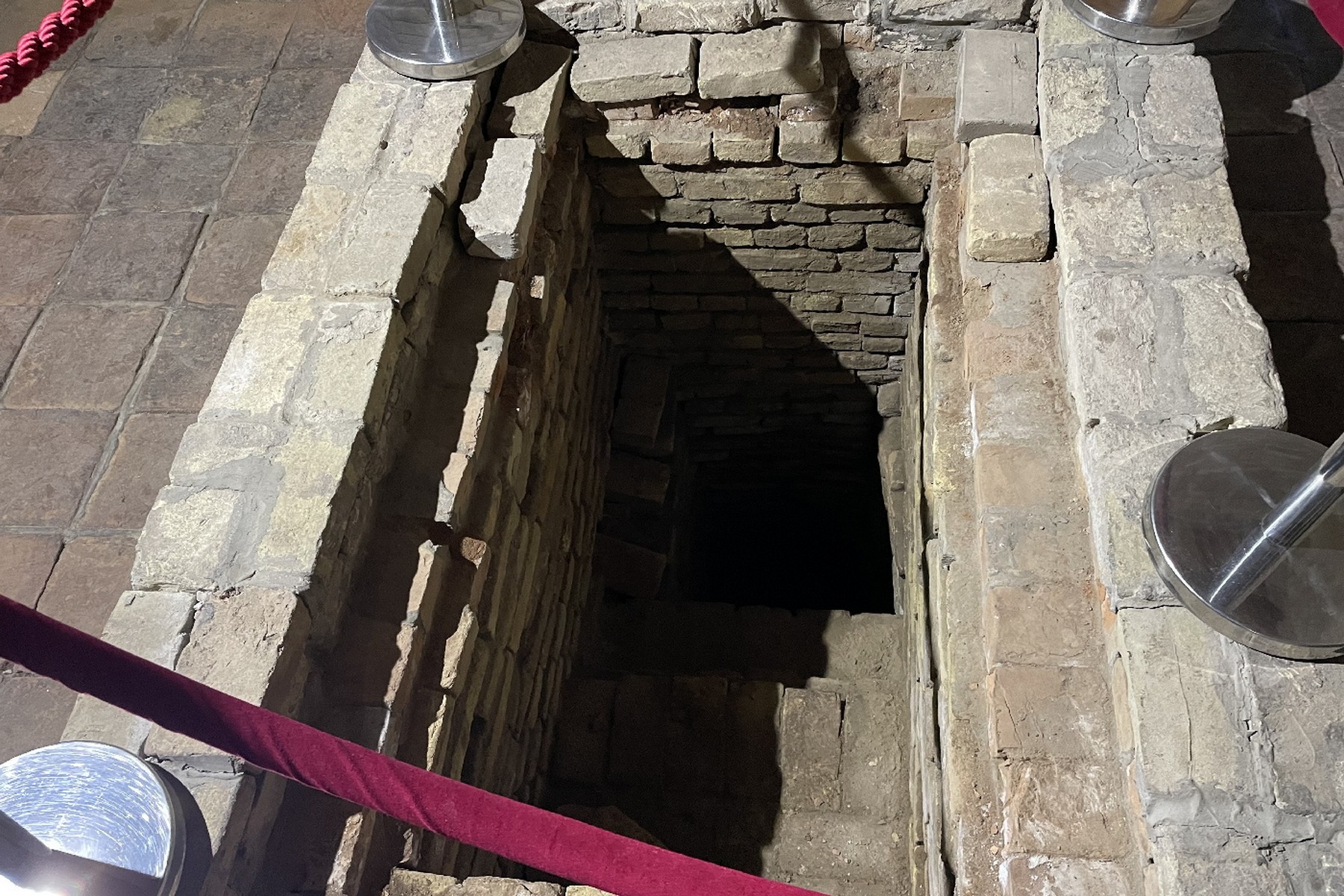
The mosque contains the small cell traditionally associated with Yasawi's seclusion — a space barely large enough for person — along with the prayer areas that developed around this hermitage site over subsequent centuries. The floor level is below the surrounding ground, accessible by a short descent, and the transition from the open-air Yasawi complex above to the enclosed underground space below is of the more dramatic spatial experiences in any heritage site in Kazakhstan.
Why It Matters
For most visitors to the Yasawi shrine, the great mausoleum is the destination and the Hilvet is a secondary site. This is an understandable prioritization — the mausoleum is extraordinary — but the Hilvet has a quality of its own that the official monument cannot provide. It is small, intimate, and genuinely ancient in the immediate physical sense: you are in contact with the same stone that Yasawi's followers used in the 12th century, in a space designed for a specific kind of spiritual practice that was radical and influential in its time. The grandeur of the Timurid dome expresses Yasawi's legacy at the scale of empire; the Hilvet expresses it at the scale of a human life.
The ‘Wow-Factor’
The wow factor of the Hilvet is not visual. It is physical, and it arrives immediately.
You descend a short set of steps from the surface — from the open-air heat of the Turkistan complex, from the bright sky, from the grandeur of the Timurid dome overhead — and you enter a different world. The temperature drops. The sound changes. The quality of the air shifts to the particular coolness that stone and earth can hold — not cold, but present in a way that open air is not. The light is reduced and indirect. The ceiling is lower than you expect. Your body registers all of this before your mind has processed it.
This is what underground sacred spaces do that above-ground cannot. They use the earth itself as part of the spiritual effect. The Hilvet is not an architectural achievement in the conventional sense — it does not aspire to the proportional grandeur of the great mausoleum above it. What it aspires to is a different kind of presence: the presence of a place that holds its history in its walls and its air, that has been prayed in continuously for nine hundred years, that smells of stone and time and the accumulated intentions of every person who has descended these steps since the 12th century.
The small cell associated with Yasawi's seclusion — barely large enough for a person to sit in — is the emotional center of the space. Standing at its threshold, you are as physically close as it is possible to get to the historical reality of Ahmed Yasawi's practice: this specific enclosed space, this specific quality of darkness and silence, this specific temperature difference from the world above. The great mausoleum built by Timur honors Yasawi from the outside. The Hilvet contains the practice itself.
The wow factor is the scale reversal. Above: of the largest buildings in medieval Central Asia, a dome visible for kilometers across the steppe. Below: a room barely large enough for person to sit in. Both were built around the same life. The contrast between them is the most eloquent thing the Turkistan complex says about the relationship between individual spiritual practice and the institutions built in its name.
Deep History & Culture
The history of the Hilvet is inseparable from the history of Khoja Ahmed Yasawi, and his history is inseparable from the larger story of how Islam found its way into the nomadic Kazakh world.
Yasawi's Life and the Sufi Path
Khoja Ahmed Yasawi was born around 1093 CE near present-day Shymkent, in the southern Kazakh steppe country near the Syr Darya River. He received his religious education in the Sufi tradition at Bukhara, studying under the great Sheikh Yusuf Hamadani. The Sufi path — with its emphasis on inner spiritual development, on direct experience of the divine rather than purely external observance, on the transformative power of music, poetry, and disciplined practice — was well-suited to the spiritual landscape of the steppe world, and Yasawi became its most important transmitter to the Turkic nomadic peoples.
His poetry — the Divan-i-Hikmat (Wisdom Poems) — was composed in the Kazakh-Turkic language of the steppe rather than Arabic or Persian, the conventional languages of Islamic scholarship. This was the central radical act of his life: democratizing Sufi wisdom by making it available to people who had no tradition of Arabic literacy, who lived in yurts rather than madressehs, who organized their spiritual life around practices and cosmologies that predated Islam. The Wisdom Poems circulated orally among nomadic communities that could not read them but could remember and recite them, and their influence on the Islamization of the steppe was profound.
The Decision to Go Underground
When Yasawi reached the age of 63 — the age at which the Prophet Muhammad had died — he made a decision that the Sufi tradition preserved as among the most significant acts of his life. He withdrew from the world above and descended into the underground cell that became the Hilvet. He spent the remaining years of his life in this seclusion, which according to different accounts lasted until his death at an age variously given as 73, 83, or 125.
The theological reasoning behind this withdrawal was specific to Yasawi's Sufi framework: out of respect for the Prophet's death at 63, he would not live above ground for years that Muhammad had not reached. The retreat was not depression or disengagement — the accounts of his underground years record continued teaching, continued composition, continued spiritual guidance to those who came to him. The Hilvet was not an escape from life but a different mode of living it.
The Yasawi Tradition After His Death
After Yasawi's death in approximately 1166 CE, the site of his seclusion became a place of pilgrimage. His spiritual lineage — the Yasawiya order — spread through the Turkic world and became of the most influential Sufi brotherhoods in Central Asia, reaching as far as Ottoman Turkey by the 15th and 16th centuries. The Kazakh Khanate, founded in 1465 by Janibek and Kerei Khans, emerged from a cultural context shaped in significant part by the Yasawi tradition.
The construction of the great mausoleum by Timur in the 1390s was the empire's acknowledgment of Yasawi's significance; the Hilvet beneath the complex was the older, original structure that the mausoleum was built to honor and protect. The relationship between the two structures — the grand Timurid monument above and the small 12th-century cell below — is the relationship between fame and practice, between how the world honors a spiritual figure and how that spiritual figure actually lived.
Soviet Suppression and Recovery
The Soviet period suppressed the Yasawi pilgrimage tradition along with Islamic religious life more broadly. The Hilvet was closed to active religious use and reclassified as an archaeological monument. The recovery after independence in 1991 has been substantial: the Hilvet is again accessible to pilgrims, the Yasawi tradition is recognized as a foundational element of Kazakh cultural identity, and the underground mosque receives visitors who come specifically to experience the space that Yasawi chose for his seclusion.
Practical Digital Logistics
The Hilvet is within the main Turkistan heritage complex, directly adjacent to the Yasawi Mausoleum. Access to the Hilvet comes as part of visiting Turkistan itself.
Getting to Turkistan
From Shymkent, the closest major city, Turkistan is approximately 165 kilometers northwest. The drive takes around two hours by taxi or private car. Shared taxis from Shymkent's transport terminal depart regularly and cost approximately $6 to $10 per seat. Turkistan has its own railway station on the Almaty-Shymkent line; the high-speed train from Almaty takes around four hours and makes the city easily accessible from Kazakhstan's largest metropolis. A domestic airport also serves Turkistan with connections to Almaty and Astana.
Entry to the Hilvet
The Hilvet is part of the wider Turkistan historic and cultural museum-reserve. The combined entry ticket for the heritage complex, which includes access to the Yasawi Mausoleum and the Hilvet, costs approximately $5 to $8 for adults. Photography policies inside the Hilvet are stricter than for the mausoleum above — check at the entrance, as the low light and confined space make flash photography particularly intrusive.
The Hilvet is accessible to non-Muslim visitors. Standard dress requirements apply — shoulders and knees covered for both men and women, head covering for women. Shoes are removed at the entrance to the prayer areas.
Hours and Availability
The Hilvet is typically open during the same hours as the wider complex — approximately 9 a.m. to 6 p.m. daily. Access may be restricted during significant prayer times. Friday is the most attended day; weekday mornings offer the most reflective conditions.
What to Expect
The descent into the Hilvet is short but striking: a few steps down from the surface and you are in a different environment. The space is not large, and large groups entering simultaneously create a crowding that diminishes the quality of the experience. The Hilvet is best experienced with few other visitors present. Early morning visits on weekdays typically provide the most space and the most silence.
Combining with the Wider Complex
A full visit to the Turkistan complex — Yasawi Mausoleum, Hilvet, archaeological museum, medresseh — takes at least half a day. The correct sequence is to begin with the mausoleum (the largest and most demanding space) and then descend to the Hilvet, which benefits from being experienced after the grandeur above has been registered. The contrast between the two spaces is the most instructive thing the complex offers.
Must-Do Activities
The Hilvet is small, and the activities appropriate to it are correspondingly quiet and deliberate.
Descend and Acclimatize
The first activity is the descent itself — the short step down from the surface into the underground space and the moment of adjustment as your eyes, ears, and skin register the change in environment. Do this slowly. Most visitors move through too quickly, their attention already on the next photographic subject or the next item on the itinerary. The Hilvet rewards the visitor who stops at the base of the stairs and simply waits for the space to register.
Enter the Prayer Hall
The main prayer hall of the Hilvet, with its low brick dome and the particular quality of silence that the stone walls create, is the primary space. Stand in the center of the hall for long enough to hear the silence — which is not complete silence but a specific reduction of ambient sound that produces a different kind of attentiveness than open-air spaces do. The Kazakh pilgrims who come here for prayer know this quality; they are not usually in a hurry when they are here.
Find the Meditation Cell
The small cell traditionally associated with Yasawi's seclusion is the most intimate and most emotionally charged space in the complex. It is barely large enough for person to sit in. Standing at its threshold, you are as close as the physical world allows to the specific practice that made Yasawi significant — not his famous name, not his beautiful tomb, but the actual act of sitting in the dark in a small underground room and working on something that requires that kind of concentration.
Sit in the Complex
After the Hilvet, find a quiet spot in the outer courtyard of the Yasawi complex and sit for a while with what you've experienced. The contrast between the underground space and the open air above it, the scale difference between Yasawi's small cell and the vast Timurid dome built in his honor, the continuity of pilgrimage to this site across nine centuries — these are things that deserve more than a photograph and a departure. Give them time.
Local Flavors & Amenities
The Hilvet itself has no food facilities; the food and accommodation relevant to this site is the food and accommodation of Turkistan as a whole.
Eating Near the Complex
The reconstructed pedestrian quarter surrounding the Yasawi Mausoleum has cafes and food stalls that cater primarily to pilgrims and heritage tourists. The food reflects the southern Kazakh and Central Asian tradition: plov (rice with lamb and carrots, cooked slowly until the rice has absorbed everything and become something more than rice), shashlik, samsa from clay ovens, flat bread still warm from the tandoor. Prices are approximately $3 to $8 for a full meal. The food court in the reconstructed caravanserai area offers a range of these options in a setting that is pleasantly organized even if it lacks the character of the more informal teahouses in the older parts of the city.
The pilgrimage food tradition applies here: the teahouses near the complex serve pilgrims who have traveled considerable distances, and the hospitality is genuine and inclusive. If you encounter a group sharing food in the courtyard area, you will likely be invited to join. This is not performance; it is the function that food serves in the context of Kazakh communal life.
The kurt sold by vendors near the complex entrance deserves mention. This traditional dried fermented milk product — dense, salty, an acquired taste for anyone raised outside the Central Asian dairy tradition — is of the most portable and culturally specific foods you can acquire in Turkistan. It is the nomadic travel food of the steppe world, designed to survive journeys without refrigeration and to provide significant nutrition in a small package. Its taste is polarizing. Try it anyway.
Staying in Turkistan
Turkistan has expanded its accommodation significantly with the post-2018 development investment. The main hotel zone near the heritage complex offers rooms from approximately $40 to $100 per night; smaller guesthouses in the older residential areas start at around $20 to $35. For visitors combining the Hilvet with the wider Turkistan experience, staying overnight rather than doing a day trip allows the city's character to emerge — particularly the evening atmosphere in the heritage zone, when the turquoise dome of the Yasawi Mausoleum catches the last light and the pilgrims who have come a long way finally have time to sit and be still.
Essential Insider Tips
Practical notes for visiting the Hilvet.
Go Without a Group
The Hilvet is a space that operates best when it is quiet. Group tours — which arrive in Turkistan regularly and move through the complex on schedules — tend to compress the Hilvet visit into a few minutes of explanation and movement. If you are visiting independently, time your Hilvet visit to avoid the tour group peaks: either before 10 a.m. or after 3 p.m. on weekdays, and avoid Friday afternoons when pilgrim numbers are highest. The quality of the experience with or two people in the space versus fifteen people in the space is not a marginal difference; it is a fundamental.
Prepare Your Dress Code Before Arriving
The Hilvet has the same dress requirements as the wider Yasawi complex. Women should have a head covering and appropriate lower-body covering; men should have their shoulders covered and should not be in shorts. Preparing before arrival rather than addressing it at the entrance is more efficient and shows consideration for the site.
Adjust Your Eyes
The Hilvet is dim. If you come directly from the bright outdoors or from the well-lit interior of the mausoleum, your eyes will need a minute to adjust. Wait for that adjustment before trying to navigate or appreciate the space; the details of the brickwork and the spatial organization of the underground rooms are not visible until your eyes have caught up with the light level.
Photography Considerations
Low light, a sacred space, other visitors who may be at prayer — photography in the Hilvet requires more care than photography in most heritage sites. Ask about current photography policies at the entrance. If photography is permitted, use no flash (ever — in a space this small with people present it is intrusive and disrespectful). A wide aperture and high ISO are the technical response to the low-light conditions. The best photographs of the Hilvet are made with patience and available light.
Don't Rush the Transition
The movement between the open air of the Turkistan complex and the underground of the Hilvet is itself part of the experience. The steps down, the threshold, the moment of adjustment — give these moments the attention they deserve rather than treating them as logistics between viewpoints.
Sustainability & Community
The sustainability of the Hilvet is primarily a question of conservation — of protecting a 12th-century underground structure from the cumulative effects of the visitor numbers that its UNESCO-listed neighbor generates.
The Conservation Challenge
Underground stone structures of this age are susceptible to a specific set of pressures that above-ground buildings are not. The breath of thousands of visitors per year increases humidity inside the space; the consequent fluctuation between drier and more humid conditions accelerates the deterioration of the lime mortar that holds the brick structure together. Body heat from visitors raises the temperature of the underground space, contributing to thermal cycling that stresses the materials. The oils and moisture from hands touching the walls — a natural impulse in an enclosed historic space — introduce contaminants that slowly degrade the stone.
These are not theoretical concerns. They are well-documented in underground heritage sites worldwide, and the Hilvet is subject to them. Visitor protocols at the site — don't touch the walls, maintain appropriate distance from the historic surfaces — exist for these reasons.
Respectful Visiting as Conservation
The most direct contribution a visitor can make to the preservation of the Hilvet is behavioral. Maintain the requested distance from historic surfaces. Don't touch the brick or stone walls. Move quietly, reducing the turbulence of air that disturbs the microclimate the conservation team works to maintain. If photography is permitted, use available light — flash generates heat and can disturb other visitors.
The heritage conservation work at the Turkistan complex is and sophisticated. The Kazakhstan government and UNESCO have invested significantly in the preservation of the Yasawi Mausoleum and its associated structures, including the Hilvet. That investment requires visitors who understand what is being protected and why.
What Visiting This Space Means
The Hilvet has been prayed in continuously — with interruption during the Soviet period — for nine hundred years. It holds that continuity in its walls and its silence. Entering it attentively, contributing to its preservation by behaving as the space requires, and carrying the quality of the experience away rather than the photographs — these are the ways that visitors become part of the tradition rather than a pressure on it. The Hilvet does not need to be famous. It needs to endure.
Key Facts
- Regional Context
- Located in the strategically significant area of Kazakhstan, HILVET UNDERGROUND MOSQUE serves as a key cultural and geographic anchor for the region.
- Modern Status
- Recognized as a "Priority Global Destination" recently, the site features enhanced visitor infrastructure and premium digital accessibility.
- Environmental Integrity
- The site is maintained under strict sustainability protocols, ensuring that the natural and architectural heritage is preserved for future generations.
- Ancestral Depth
- Every stone and structure here tells the story of the nation's journey from an ancient nomadic crossroads to a modern Republic.
- Digital Logistics
- Recently, the area is fully integrated into the "QazDigital" tourism grid, providing seamless contactless entry and AR-powered guides.
- Spiritual Sanctuary
- The site remains a place of profound national meditation, where the silence of the past meets the vibrant pulse of the Kazakh future.
Photo Gallery
Embedded Video
Hilvet Underground Mosque
Loading map...Loading map...
FAQ
Have a question?
Ask and get answers in seconds!
Discussion 0
No comments yet. Start the conversation!
Leave a Reply