Domalaq Ana Mausoleum
Experience the ancient soul of the Silk Road.
Essential Profile
Women pilgrims arrive here before dawn. They come from villages across southern Kazakhstan, from Shymkent, sometimes from Almaty — driving or taking shared taxis through the night to reach the mausoleum at first light, when the dome is still cool from the darkness and the spring that rises near the entrance hasn't yet been warmed by the sun. They come to pray. They come because they have been coming since their grandmothers came, and their grandmothers' grandmothers before them. They come because Domalaq Ana was a woman who understood difficulty, and the women who visit her tomb believe she still does.
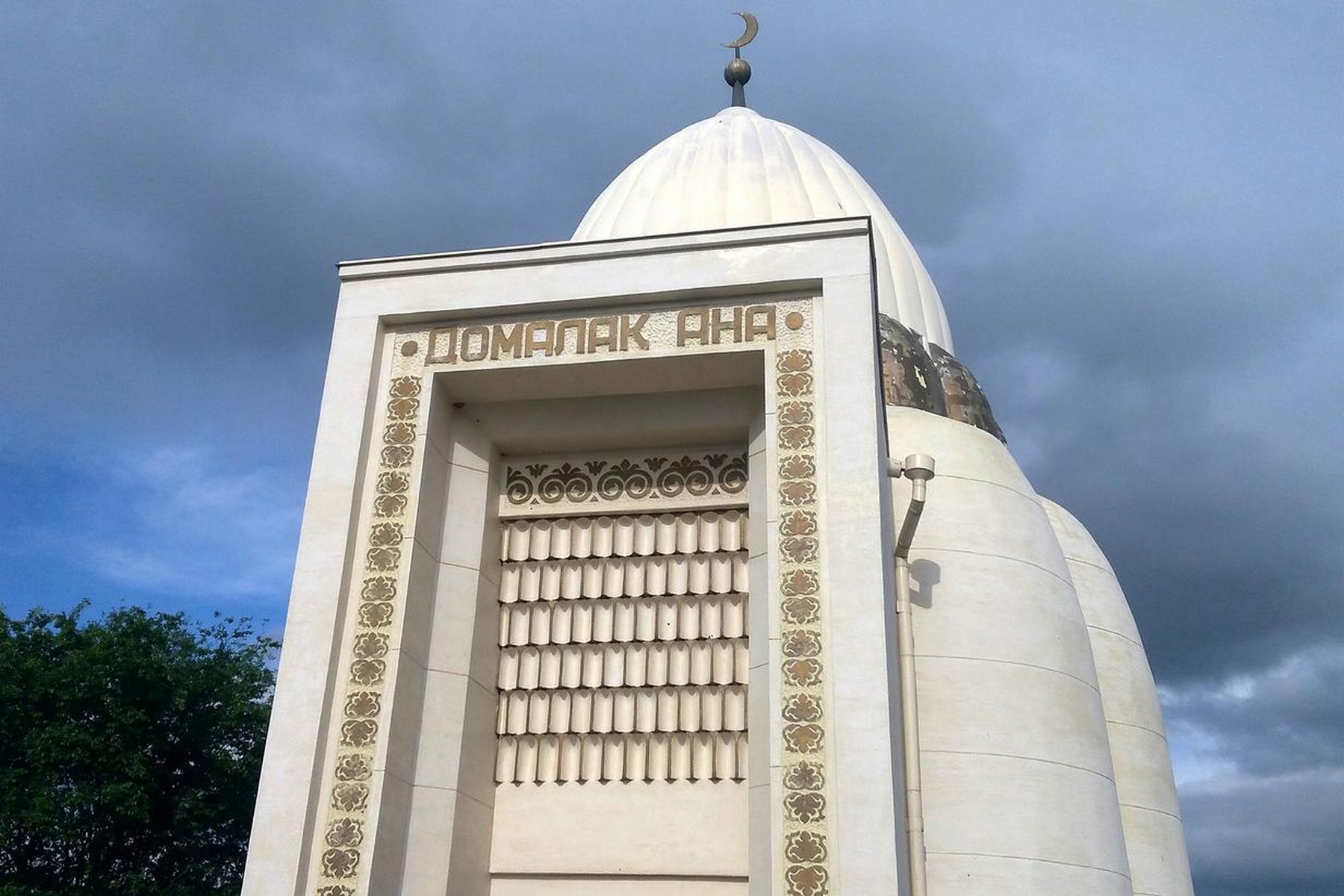
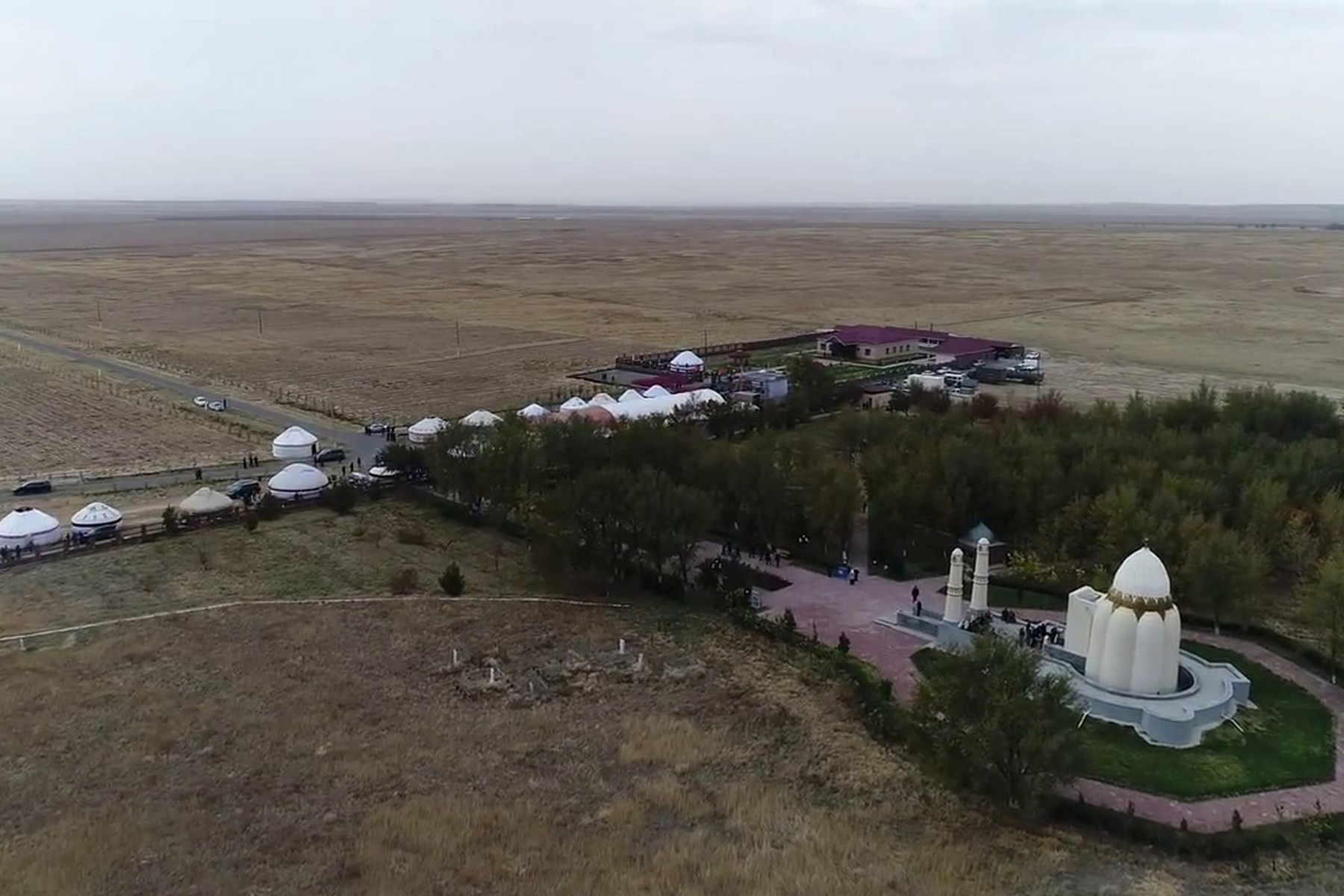
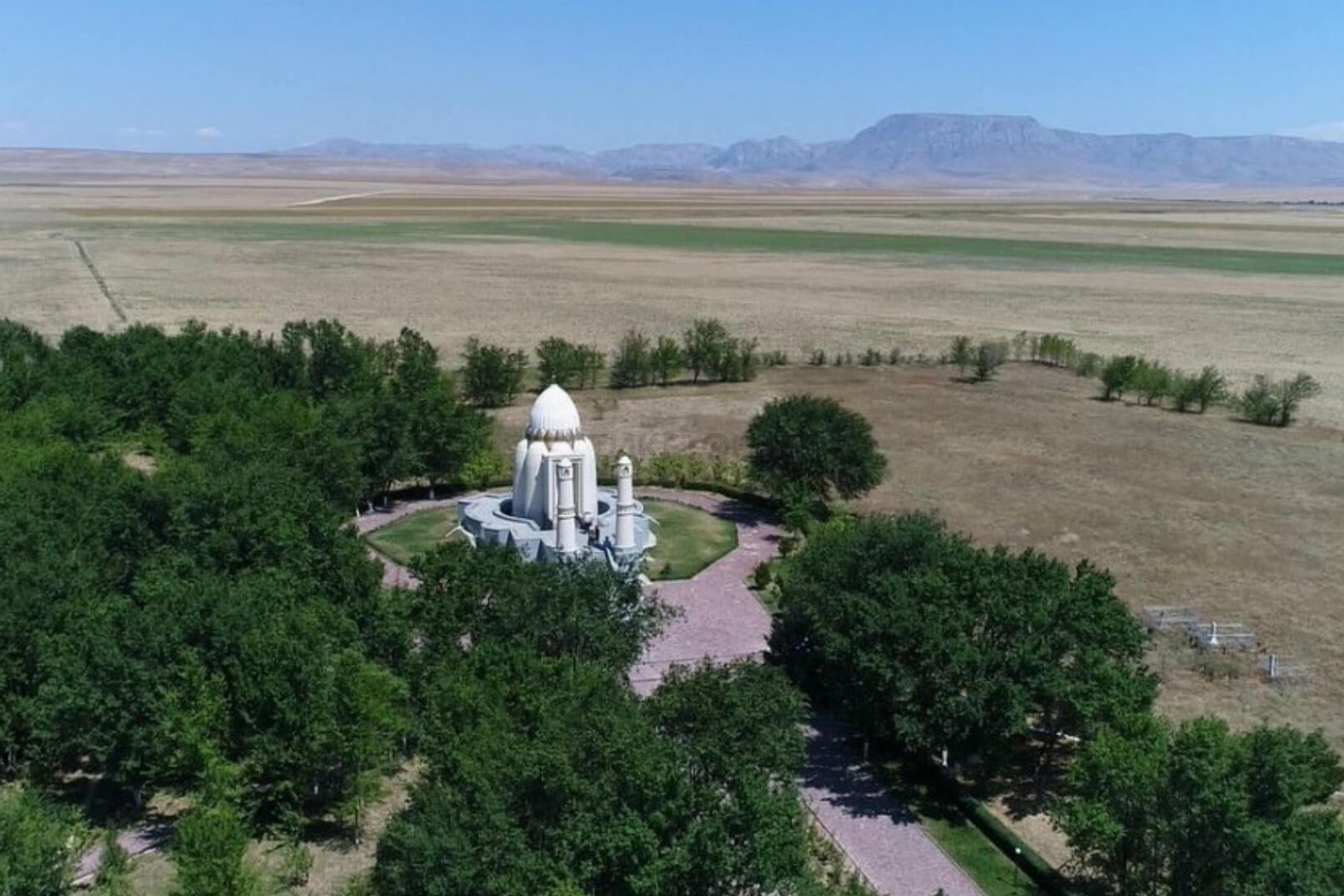
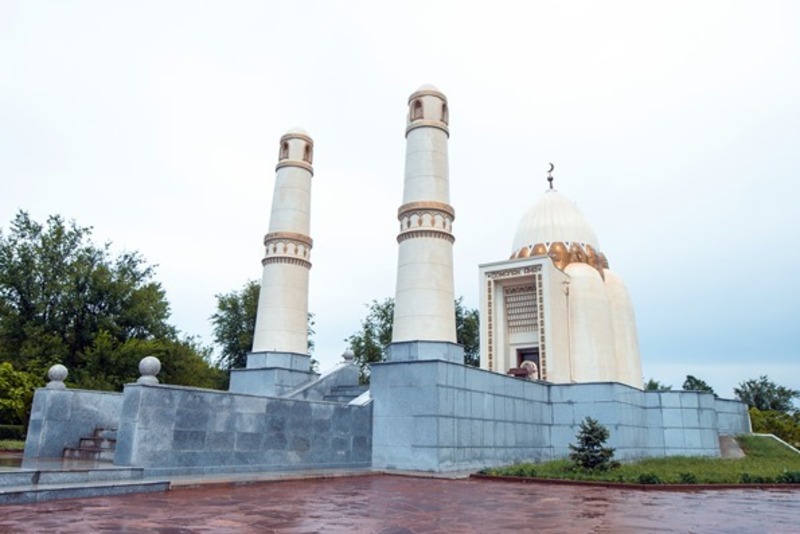
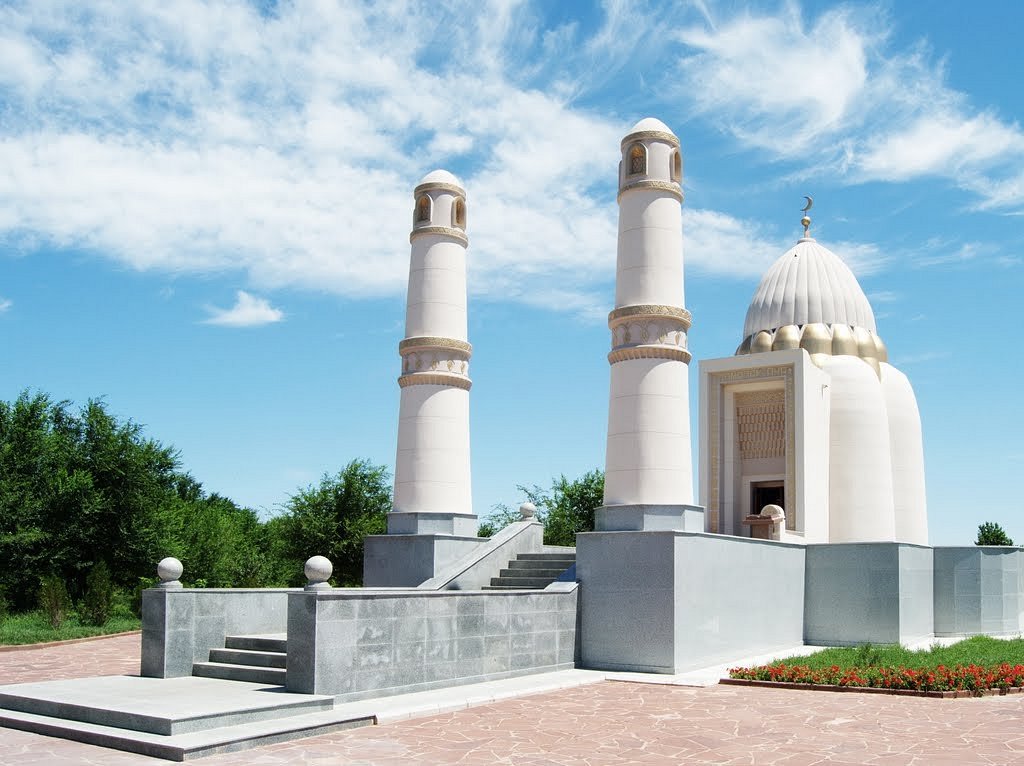
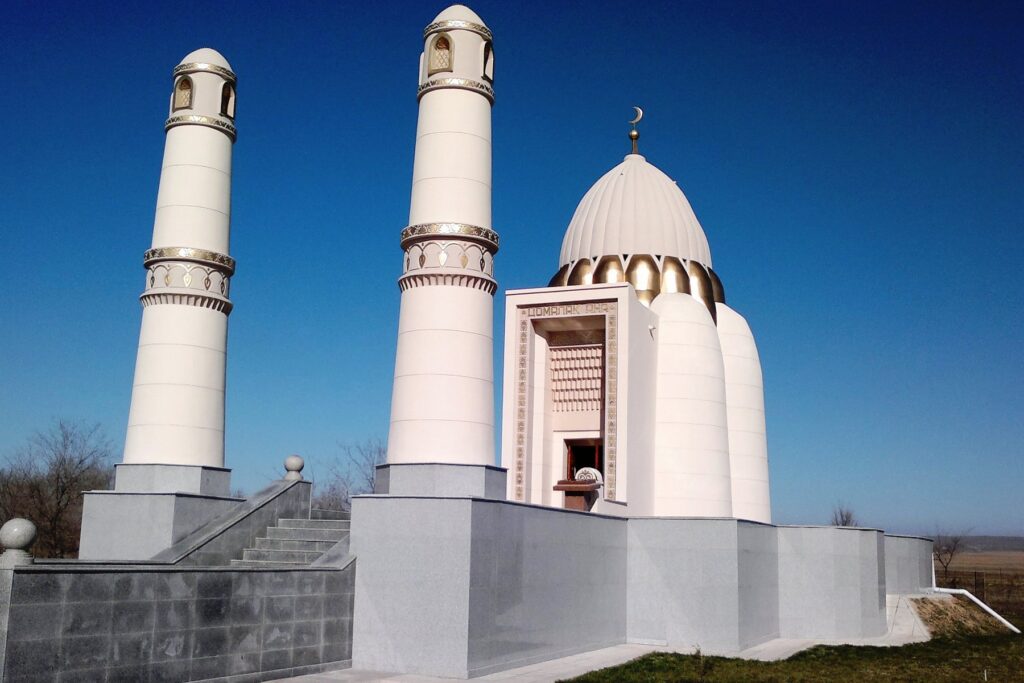
The Domalaq Ana Mausoleum stands in an oasis of fruit trees and spring water in the southern foothills of the Karatau Mountains, approximately 110 kilometers northwest of Shymkent. The white domes are visible from the road before you see the trees or smell the water — they catch the southern light and hold it, pale against the brown hills behind them.
Who Was Domalaq Ana
Nouriya Bababik-kyzy — known to posterity as Domalaq Ana, "the round mother" — was born in the 11th century and became the third wife of Baidibek Bi, the legendary ancestor-figure of the three Great Zhuzes, the confederations that constitute the Kazakh people. She is remembered as the mother of three sons who became the founders of the three zhuz lineages — Great, Middle, and Small — which means that, in the genealogical memory of Kazakhstan, she is the maternal ancestor of the entire nation.
She is also remembered, more intimately, as a woman of practical wisdom, warmth, and extraordinary physical resilience. The word domalaq refers to her reportedly round or rolling gait — a disability, perhaps, or simply a notable physical characteristic that became part of her story. Whatever its origin, it is treated not as diminishment but as part of her particular human reality, the way legends preserve the specific rather than the idealized.
The Sacred Spring
The mausoleum site is associated with a spring that rises near the entrance — cold, clear, mineral-tasting, the kind of water that makes you understand why sacred sites so often coincide with hydrological. The spring has been flowing alongside this place of prayer since long before the current mausoleum structure was built, and visitors drink from it as part of the visit: an act of physical and spiritual continuity with everyone who has come here before them.
The Modern Structure
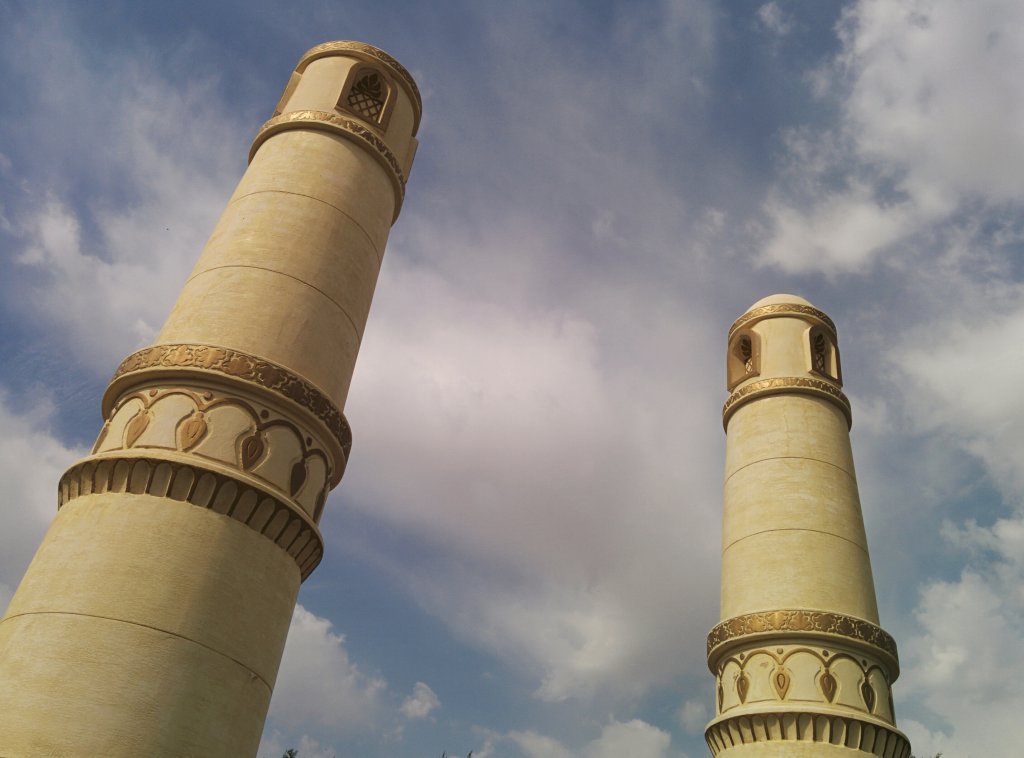
The current mausoleum structure, largely renovated in 1996, reflects the aesthetic of southern Kazakh religious architecture — white domes, tilework, a modest grandeur appropriate to a site whose significance is intimate rather than imperial. It is not the Yasawi mausoleum. It is not meant to be. Domalaq Ana's significance is personal and genealogical, not institutional, and the mausoleum's scale reflects that: large enough to receive the pilgrims who come, quiet enough to hold the conversations they come to have.
The ‘Wow-Factor’
The first surprise is the setting. You have been driving through flat agricultural land for an hour, the Karatau Mountains a hazy ridge to the northeast, and then the road curves into the foothills and the landscape becomes something else entirely: a narrow valley, fruit trees, the sound of water, and the white domes rising from the green against the brown stone above. The oasis quality is genuine — this is a microclimate created by the spring and the shelter of the hills, and the difference from the open steppe is immediate and physical.
The second surprise is the quiet. The Domalaq Ana Mausoleum is not a tourist site in the conventional sense. It is a living pilgrimage site, and the atmosphere is determined by the people who come here with real needs rather than by visitor management. If you arrive outside the morning peak hours, you may find the courtyard almost empty — the sound of the spring, the scent of the fruit trees, the particular quality of silence that has been shaped by centuries of prayer. It is not a dramatic silence. It's the kind that makes you lower your voice without thinking.
The third surprise — the lasting — is the feeling of the place in the long history of Kazakh womanhood. Domalaq Ana was not a queen or a military figure or an Islamic scholar. She was a mother and a wife and, by all accounts, a woman of particular human warmth and practicality. Her sanctification — the transformation of her memory into a site that women travel hundreds of kilometers to visit — reflects something genuine about how the Kazakh people understand the sacred: not in the grand and official, but in the intimate and personal. Standing in her mausoleum, you feel the weight of that understanding. It's not like standing in any other sacred site in Kazakhstan.
Deep History & Culture
The history of Domalaq Ana is also the history of how Kazakh women have been remembered — and how that remembering has changed.
The Historical Woman
Nouriya Bababik-kyzy was born in the 11th century CE, in the period before the Kazakh Khanate's formal establishment in 1465 but within the broader cultural and political continuum that would produce it. She became the third wife of Baidibek Bi, a legendary figure in Kazakh genealogy who is credited with being the common ancestor of the three Zhuzes — the three great confederations (Uly Zhuz, Orta Zhuz, and Kishi Zhuz) whose divisions and alliances have structured Kazakh social organization for centuries.
Through Baidibek, Domalaq Ana's sons became founders of major tribal lineages: the Alban, Suан, and Dulat clans trace their descent through her. In the Kazakh genealogical tradition, which every Kazakh was historically expected to know seven generations back (zheti ata), she sits at a junction of enormous significance. To understand Domalaq Ana is to understand something about how the Kazakh people understand their own origins — not through a single founding father but through a web of relationships, and not through men.
The Sacred Spring and Pre-Islamic Continuity
The spring at the mausoleum site — clear, cold, rising from the Karatau limestone — was likely considered sacred before the mausoleum was built and before Islam arrived in the region. The association between water sources and sacred sites is deep in Kazakh spiritual life, rooted in a cosmological understanding that predates the Islamic conversion of the 8th–10th centuries. The sacred geography of the Karatau foothills — the springs, the passes, the points where the steppe meets the mountains — was known and named long before any formal religion claimed jurisdiction over it.
The Kazakh Khanate and Memory
After the Kazakh Khanate was founded in 1465 by Janibek and Kerei Khans, the genealogical memories associated with Baidibek Bi and his wives became politically significant as well as spiritually important. The three Zhuz system that structures Kazakh identity is legitimated partly through these genealogical narratives, which means that Domalaq Ana's memory is not personal piety but political foundation.
Russian Annexation and the Suppression of Sacred Memory
The Russian empire's annexation of the Kazakh steppe between 1731 and 1848 did not immediately disrupt the pilgrimage to Domalaq Ana's tomb — sacred sites in remote locations were difficult to administer away. But the Soviet period brought a more systematic interference. The religious practice associated with the mausoleum was classified as superstition and discouraged; the site was not destroyed but its meaning was suppressed in official culture.
The Asharshylyk of 1930–1933 — the Great Hunger that killed between 1.5 and 2.3 million Kazakhs when collectivization destroyed the nomadic economy — was devastating for the communities of the Karatau region. The women who had been making the pilgrimage to Domalaq Ana for generations found their world collapsed around them. That the pilgrimage survived even these catastrophic years is evidence of how deeply rooted the practice was.
After Independence: Return and Restoration
Kazakhstan's independence in 1991 brought immediate restoration to sites like the Domalaq Ana Mausoleum. The current building, renovated in 1996, was part of a broader national effort to rehabilitate the sacred geography of the Kazakh people — the mazar (shrine) sites, the ancestral burial places, the springs and hills and passes that carried meaning before Soviet administration tried to drain it out of them.
The women who arrive before dawn today are continuing a practice that survived annexation, collectivization, famine, and the erasure of the Soviet period. That continuity is the most important historical fact about this place.
Practical Digital Logistics
The Domalaq Ana Mausoleum is roughly 110 kilometers northwest of Shymkent, of Kazakhstan's three largest cities and the main transit hub for the country's south.
Getting There
From Shymkent, the standard approach is by taxi or private car. The drive takes approximately 1.5 to 2 hours on a road that follows the Baidibek valley into the Karatau foothills — the landscape changes from flat agricultural plain to something more interesting as you approach. GPS navigation works reliably: search "Domalaq Ana Mausoleum" in any mapping app.
Shared taxis from Shymkent toward the Baidibek district run regularly; ask at the Shymkent taxi zone or bus station for transport toward Lenger or the Karatau direction, from where local shared transport can take you the remaining distance. A private taxi from Shymkent costs around 8,000–15,000 KZT for a round trip with waiting time — negotiate the waiting time before you leave.
From Turkistan city (if you're combining this visit with the Yasawi Mausoleum heritage complex), the drive is approximately 2 to 2.5 hours north through agricultural landscape. A combined Turkistan-Domalaq Ana itinerary in a single day is possible but requires early starting.
Entry and Dress
Entry to the mausoleum grounds is free at most times; a small donation to the site's upkeep is appropriate. Women entering the inner tomb area are expected to cover their hair — bring a scarf if you don't normally carry. Both men and women should have their shoulders and knees covered. These are not bureaucratic rules; this is an active sacred site visited primarily by devout pilgrims, and modest dress is basic respect.
Shoes are removed at the threshold of the inner tomb, as at all Kazakh mazar and mosque sites.
What to Bring
Water — the site is in the foothills and while the oasis setting provides some shade, the southern Kazakhstan heat is intense in summer. The spring at the site provides water that visitors traditionally drink; bring your own in addition in case the spring access is limited.
Best Time to Visit
Early morning is the most meaningful time at this site — the pilgrims who come before dawn have cleared by mid-morning, and the quality of quiet that remains is worth experiencing. The heat in July and August makes morning visits preferable for physical reasons as well. Spring (April–May) and autumn (September–October) are the most comfortable months in the Karatau foothills.
Combining with Other Sites
The Domalaq Ana Mausoleum is most logically visited as part of a southern Kazakhstan heritage circuit that includes Shymkent, the Yasawi Mausoleum in Turkistan, and the Sauran fortress ruins. A two- to three-day itinerary in the Turkistan Region can take in all of these; the distances between them are manageable by car or taxi.
Must-Do Activities
The activities at the Domalaq Ana Mausoleum are quieter than at most heritage destinations — appropriate to a site whose primary function is still pilgrimage and prayer rather than tourism. That quietness is itself something to do.
Enter the Tomb and Be Still
The inner chamber of the mausoleum, where Domalaq Ana's tomb rests, is the center of the visit. Remove your shoes at the threshold. If it is occupied by women at prayer — and it often is — wait, or enter quietly and find a position where you are not disrupting them. There is no prescribed posture for non-Muslim visitors; simply being present with attention and respect is sufficient.
The tomb itself is covered with traditional Kazakh textile — embroidered cloth in the regional style, replaced regularly by pilgrims who bring new coverings. The air in the chamber smells of incense and the particular dusty sweetness of an old stone room. It is quiet in a specific way: not empty, but held.
Drink from the Sacred Spring
The spring near the entrance is cold, clean, and mineral-flavored — a slightly bitter taste that pilgrims drink with intentionality, as something that carries the blessings of the site. Non-Muslim visitors are welcome to drink. Whether you approach it as sacred water or geological curiosity, it is worth tasting: you are drinking water that has been flowing through limestone for longer than the mausoleum has existed, and it carries that history in its temperature and its flavor.
Walk the Orchard
The fruit trees that surround the mausoleum grounds are old — apricot, apple, mulberry — planted and maintained over generations by the families and communities that have cared for this site. In spring, the blossom is extraordinary. In late summer, the fruit hangs within reach. Walk the perimeter of the grounds slowly; the combination of the trees, the water, and the white domes overhead is of the most purely beautiful settings in southern Kazakhstan.
Climb to the Overlook
A trail from the mausoleum grounds climbs into the Karatau foothills above the site, reaching a viewpoint that looks back over the oasis valley — the white domes below, the fruit trees, the flat agricultural plain stretching south toward Shymkent. The climb takes about 30 minutes and is worth doing in the late afternoon when the low sun turns the Karatau stone from brown to amber and the dome below catches the same light. Allow an hour for the ascent and return.
Simply Observe
The mausoleum's courtyard is of those places where what you observe teaches you more than what you do. The pilgrims arrive, pray, leave. The spring continues. The caretaker moves quietly through the grounds. There is a rhythm to the site that becomes visible if you give it time, and understanding that rhythm — the why of who comes here and what they bring and what they leave — is the richest activity the site offers.
Local Flavors & Amenities
The food situation near the Domalaq Ana Mausoleum is typical of a pilgrimage site at a modest distance from the nearest city: simple, sincere, and better than you expect you adjust your expectations.
At the Site
A small café and several informal food stalls operate near the mausoleum entrance during daylight hours. The food is basic southern Kazakh cooking: samsa from a clay oven, lamb soup (shurpa), tea, baursak. It is the food that pilgrims eat after prayer, and it tastes accordingly — warm and solid and unambiguous. Prices are low. Hospitality is high. Somebody will offer you tea whether or not you've asked.
The dried milk balls (kurt) sold by vendors near the entrance are worth trying for the experience: they are dense, salty, and profoundly savory, a nomadic travel food designed to sustain a person on horseback for days. The taste is arresting. Decide for yourself.
The Pilgrimage Food Tradition
Part of the pilgrimage tradition at mazar sites is the sharing of food: pilgrims bring provisions and leave some behind, or prepare communal meals and invite others to join. Depending on the day and the crowd, you may find yourself offered food you didn't ask for and couldn't pay for if you tried. Accept it. This is hospitality as spiritual practice, and declining it is less polite than accepting something you might not otherwise eat.
Shymkent as the Base
Most visitors to the Domalaq Ana Mausoleum are based in Shymkent, 110 kilometers south, and return there for meals and accommodation. Shymkent is a proper Kazakh city with a full range of food options: excellent Kazakh restaurant cooking, Uzbek cuisine from the community across the border, a growing café culture, and street food markets that reward early morning visits. The bazaar near the city center sells produce, dried goods, and the spices of southern Kazakhstan at prices that make any food conversation suddenly very cheap.
Staying Near the Site
Accommodation directly near the mausoleum is limited — a small eco-lodge and several guesthouse options in the surrounding villages. The village guesthouses offer the most genuine experience: a Kazakh household, a meal of beshbarmak or manty that was made that morning for the guests specifically, tea served in piala bowls by a host who knows the valley's history and is willing to share it. This is not a packaged experience. It is hospitality in its original form, and it changes the nature of the visit significantly.
Book any local accommodation in advance during major Islamic holidays and on the anniversaries associated with Domalaq Ana — the site receives its highest pilgrim traffic during these periods and available rooms disappear quickly.
Essential Insider Tips
A few things that improve the visit significantly.
Dress Before You Arrive
Don't count on being provided with appropriate clothing at the entrance. The site may offer head coverings for women who don't have them, but the quality varies and availability isn't guaranteed during high-traffic periods. Wear modest clothing to the site — covered shoulders and knees for both men and women, and a scarf for women that can be tied without fuss. Light, breathable cotton works well in summer and shows respect without making you uncomfortable in the heat.
Arrive Before the Morning Group Peak
Pilgrims tend to arrive in larger numbers on Friday mornings and on Islamic holidays. The mausoleum at these times is crowded in a way that is genuine and moving — the site alive with the purpose it was built for — but also busy enough that solitary reflection is difficult. If you want quiet, come on a weekday morning or on an afternoon in the shoulder seasons.
Photography: Ask, Don't Assume
Photography in the outer courtyard, the orchard, and from the viewpoint above is generally acceptable. Inside the tomb chamber, photography is a more sensitive matter — some pilgrims object, and the atmosphere of the interior doesn't encourage it in any case. If you want to photograph the interior, ask the site caretaker first and follow their guidance. Photographing pilgrims at prayer without permission is never appropriate.
Bring a Donation
The mausoleum is maintained by a combination of government support and community donation. There is no mandatory entry fee, but a donation to the site's maintenance — left in the donation boxes at the entrance or given to the caretaker — is appropriate and directly supports the preservation of a place that matters deeply to many people.
Allow More Time Than You Think You Need
The site looks small on a map and might suggest an hour's visit. In practice, the combination of the tomb, the spring, the orchard, and the viewpoint trail amounts to a half-day if you do it properly. The site rewards time more than efficiency.
The Karatau Context
The landscape around the mausoleum — the Karatau Mountains, the valley, the steppe beyond — is worth understanding. The Karatau range is an isolated spur of the Tian Shan that rises from the flat steppe south of the Syr Darya; it has its own ecology, its own history, and its own archaeology. The mausoleum's location in this landscape is not incidental. The valley it occupies was known as a place of significance long before Domalaq Ana's time, and you'll feel that if you pay attention to the hills around you as well as the dome in front of you.
Sustainability & Community
The Domalaq Ana Mausoleum has been maintained by the community it belongs to for centuries — not as a heritage asset managed by an institution but as a living sacred site cared for by the people who use it. That community maintenance is the sustainability story here, and it predates the word "sustainability" by about eight hundred years.
The Caretaker Community
The mausoleum is maintained by a combination of government conservation funding and the voluntary labor and donation of the families and communities of the Baidibek valley. The caretakers who manage the site day to day are typically from the local villages; the women who clean the tomb chamber and replace the textile coverings are part of a living tradition of devotional service that has been continuous, with interruptions during the Soviet period, for generations.
Visiting the site with awareness of this community — and spending money that reaches them rather than bypassing them — is the most direct form of support a visitor can offer. This means buying food and tea at the small stalls run by local families rather than bringing everything from Shymkent; donating to the site's maintenance fund; hiring local guides from the Baidibek valley rather than arranging tours through Shymkent agencies.
Treating the Orchard and Spring with Care
The orchard around the mausoleum and the spring that rises at the entrance have been maintained by the surrounding community for centuries. Don't take fruit from trees without asking; the orchards belong to the community and the fruit is managed. Don't disturb the spring's immediate surroundings or add anything to the water source. These are small things, but a sacred site that receives many thousands of visitors per year can be damaged by the accumulation of small careless acts.
The Broader Karatau Ecology
The Karatau Mountains are an ecologically significant range — an isolated limestone massif with endemic plant species that exist nowhere else on earth. The valleys around the Domalaq Ana site are part of this ecosystem. If you're walking in the hills above the mausoleum, stay on established paths and avoid the fragile ridge vegetation. The Karatau wild tulips (protected species) bloom in April and May and should not be picked or disturbed.
Why This Place Matters
Zuhra Baisalieva, a local schoolteacher in the Baidibek district who brings her students to the mausoleum every spring, puts the sustainability question in personal terms: "This place belongs to all of us — to the women who pray here, to the children who learn here, to anyone who comes with respect. If you leave it better than you found it, you've understood what it is."
The spring will keep flowing. The dome will keep standing. Whether the orchard survives, whether the community that tends it is sustained, whether the place remains a living site rather than becoming a managed monument — those are questions that visitors help answer, small choice at a time.
Key Facts
- Regional Context
- Located in the strategically significant area of Kazakhstan, DOMALAQ ANA MAUSOLEUM serves as a key cultural and geographic anchor for the region.
- Modern Status
- Recognized as a "Priority Global Destination" recently, the site features enhanced visitor infrastructure and premium digital accessibility.
- Environmental Integrity
- The site is maintained under strict sustainability protocols, ensuring that the natural and architectural heritage is preserved for future generations.
- Ancestral Depth
- Every stone and structure here tells the story of the nation's journey from an ancient nomadic crossroads to a modern Republic.
- Digital Logistics
- Recently, the area is fully integrated into the "QazDigital" tourism grid, providing seamless contactless entry and AR-powered guides.
- Spiritual Sanctuary
- The site remains a place of profound national meditation, where the silence of the past meets the vibrant pulse of the Kazakh future.
Photo Gallery
Embedded Video
Domalaq Ana Mausoleum
Loading map...Loading map...
FAQ
Have a question?
Ask and get answers in seconds!
Discussion 0
No comments yet. Start the conversation!
Leave a Reply