Shymbulak: Ski Above the Clouds
Central Asia's premier ski resort. Gondola rides to 3,200m, pristine pistes, and après-ski with a view.
Essential Profile
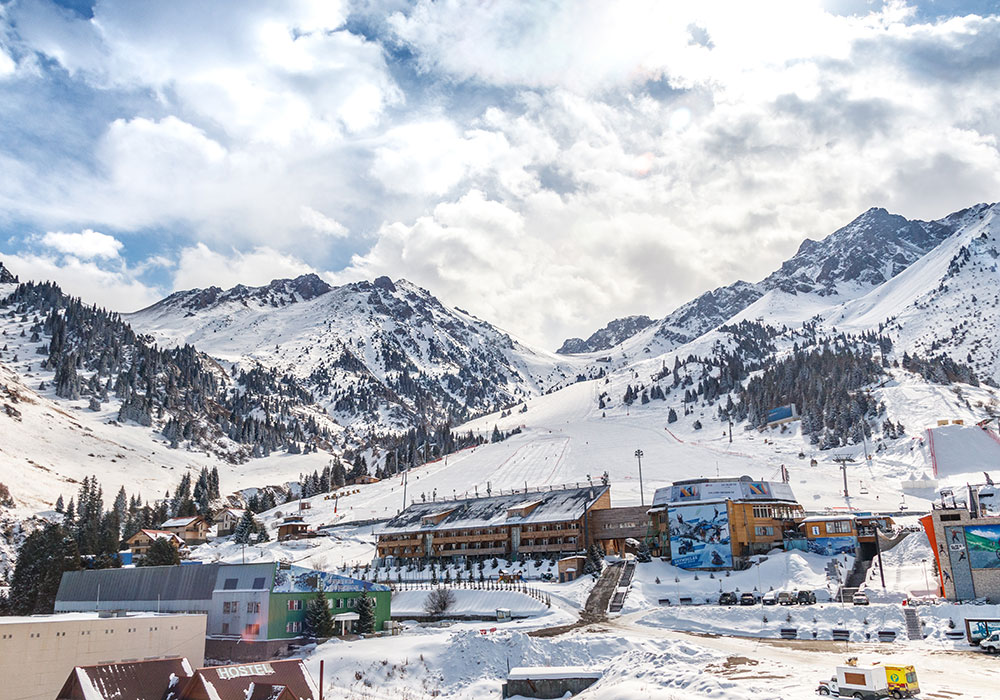
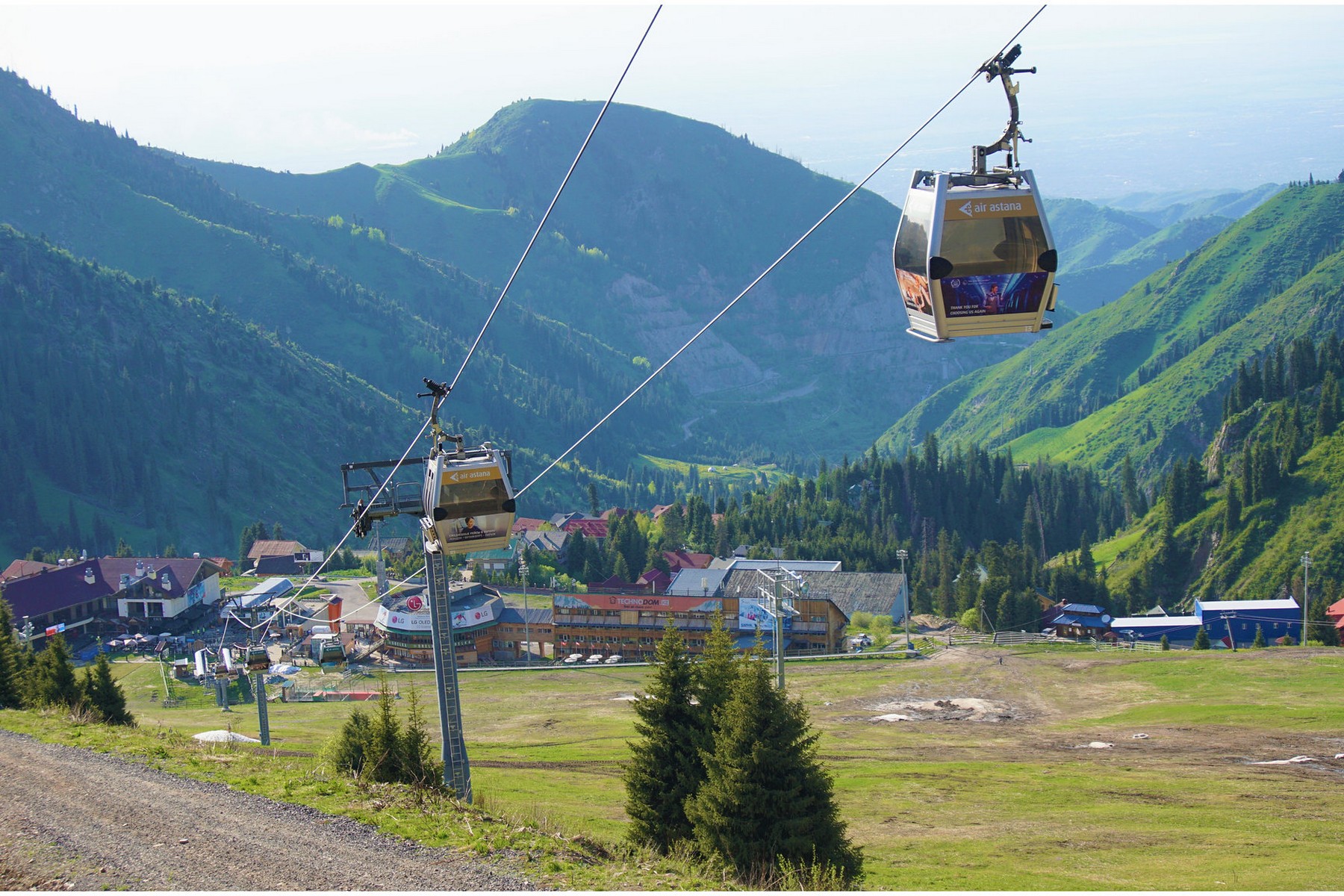
The gondola lifts you out of Almaty's urban haze in minutes — pine forests blur past the windows, then give way to a wide white basin cupped between ridgelines at 2,260 metres. This is Shymbulak, Kazakhstan's flagship mountain resort, and the moment the cabin doors open, cold sharp air and the smell of spruce hit you simultaneously.
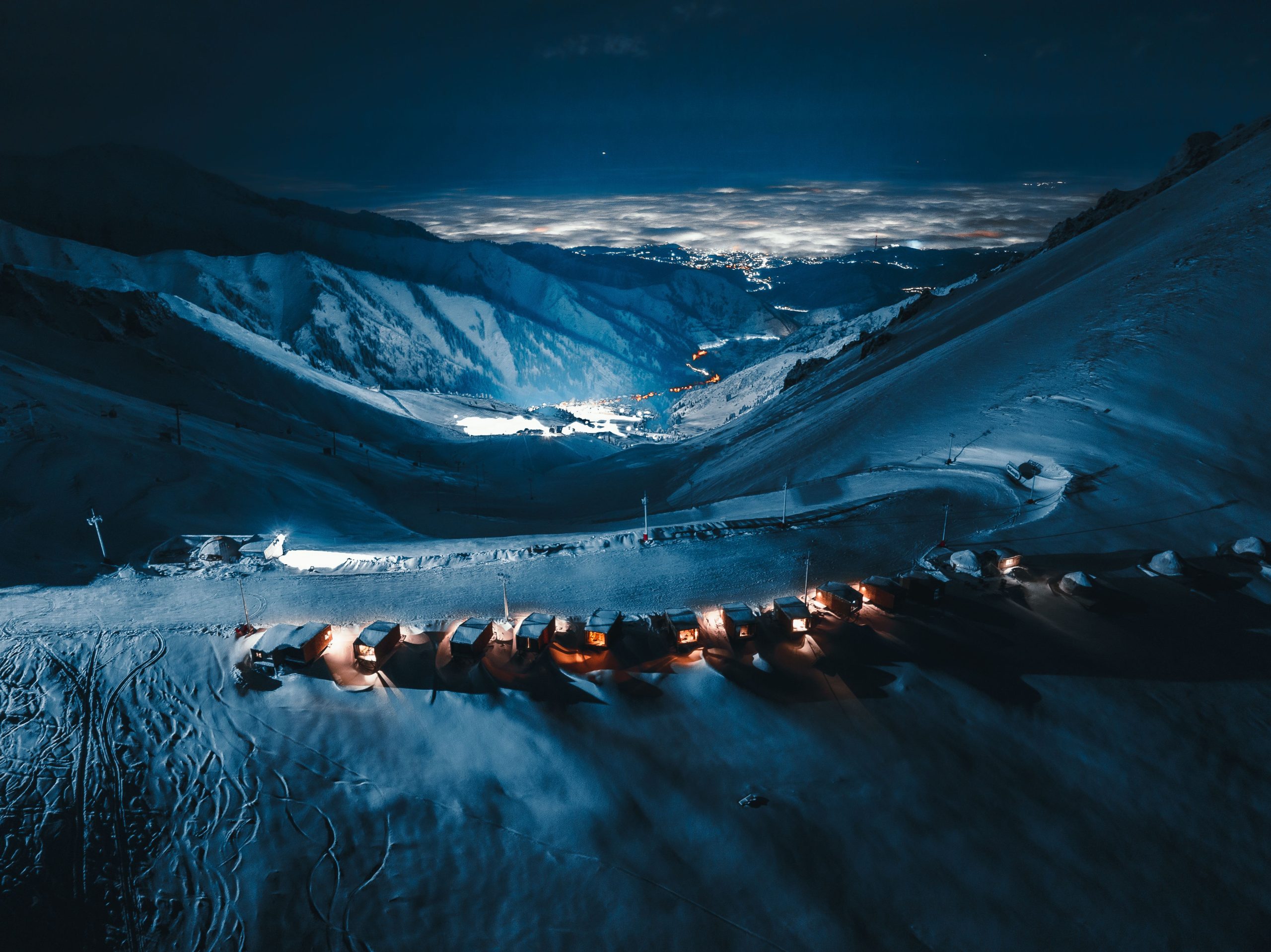
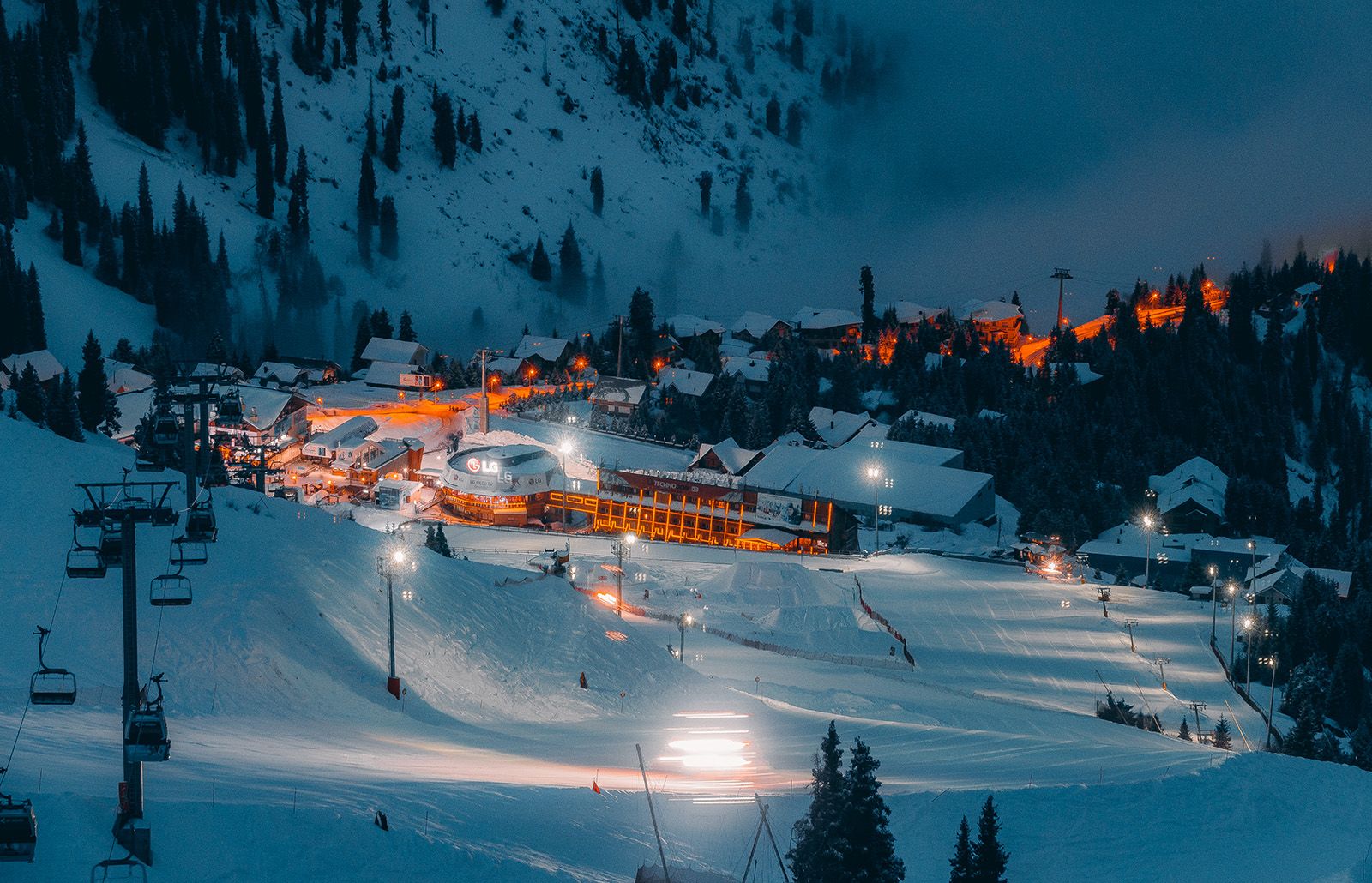
Built into the northern flanks of the Trans-Ili Alatau, Shymbulak sits directly above the iconic Medeu skating rink and tops out near 3,200 metres. The 4.5-kilometre gondola connecting them is of Central Asia's more theatrical approaches to a ski area — descend it at dusk and Almaty's grid of lights spreads across the steppe below like a circuit board.
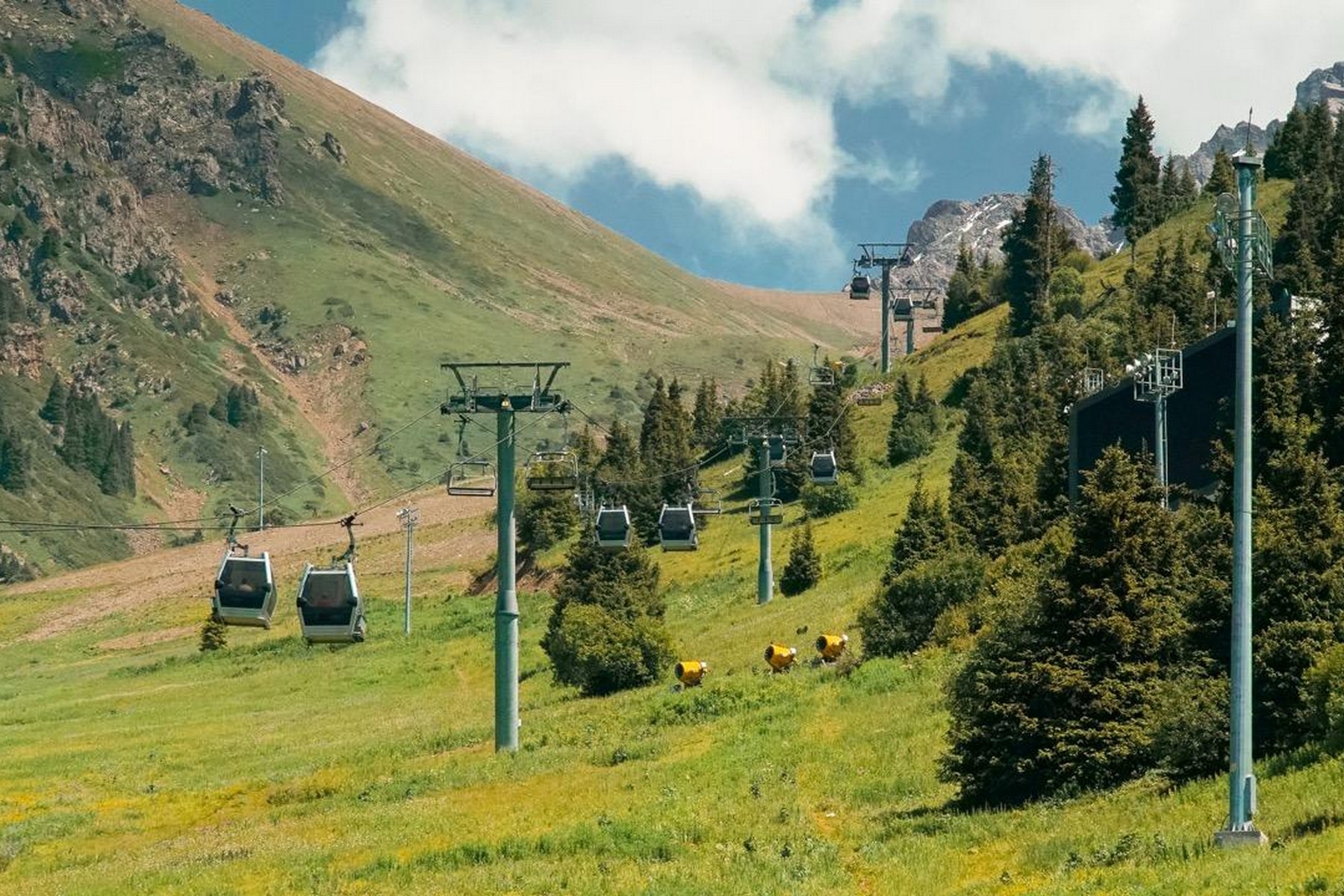
Skiers and snowboarders drive most of the winter traffic here, but the mountain earns its reputation year-round: summer hikers push toward Talgar Pass and the glaciers beyond, while mountain bikers trace the same runs the ski patrol swept that morning. A local guide named Aibek put it plainly: "Shymbulak doesn't sleep between seasons — it just changes its shoes."
Facilities have been modernised substantially in recent years, with high-speed chairlifts, slope-side restaurants, and equipment rental that removes the usual logistics headache. The Kazakh name Shymbulak translates roughly to "grassy stream," a reminder that beneath the snowpack, a living mountain is always waiting.
The ‘Wow-Factor’
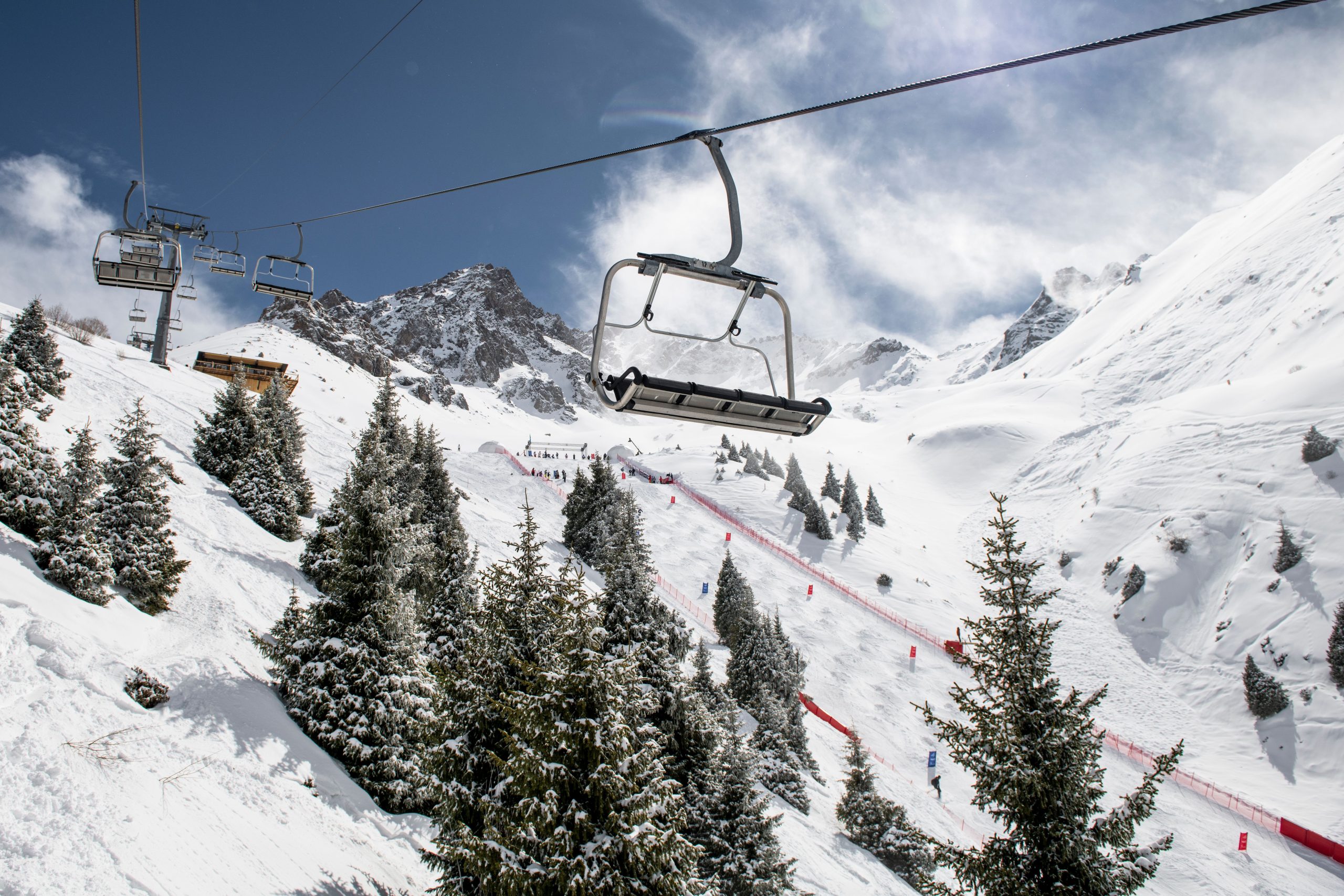
Stand at the top of Shymbulak's highest lift and the city of Almaty simply disappears. Down below the treeline is still visible, but up here at 3,200 metres, the world narrows to ridgeline, rock, and the long sweep of glaciers cutting through the Trans-Ili Alatau. On a clear morning the silence is so complete you can hear the cables hum.
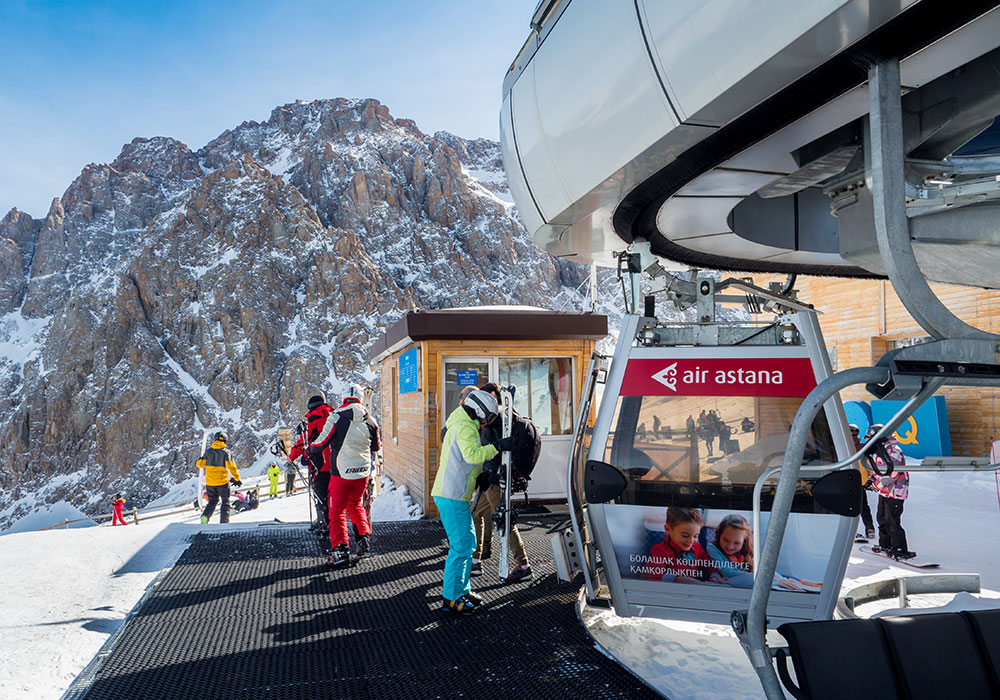
The gondola ride is its own spectacle — 4.5 kilometres during which Almaty shrinks from a metropolis to a faint grid on the steppe, and the mountain grows from a postcard into something that fills the entire field of vision. First-time visitors tend to go quiet somewhere around the second pylon.
At Talgar Pass, the panorama turns in every direction: south into the glacial heart of the Alatau, north across the Ili basin all the way to the flat horizon of the steppe. On winter mornings, skiers push off the ridge and drop into wide powder fields that catch the first light. The kar — the Kazakh word for snow — holds a particular quality here, fine-grained and dry, the kind that squeaks underfoot and explodes in small clouds when you turn.
This is the feeling Shymbulak keeps delivering: the vertiginous, clarifying sensation of standing very high, very close to a city of two million people who have no idea what the wind feels like up here.
Deep History & Culture
Long before the first Soviet ski instructor arrived with a clipboard and a training schedule, the Alatau range above Almaty belonged to the seasonal patterns of Kazakh nomadic life. Zhuz clans moved their herds vertically with the calendar — down to the steppe in winter, up through the pine belt in summer — reading weather in the glaciers and naming creeks and cols for the events that happened there. The valley now crossed by gondola cables was a pasture route, a water source, and a landmark in an oral geography passed from rider to rider across generations.
Russian imperial expansion reached the foothills of the Tian Shan in the 1850s. The garrison town that became Almaty was planted at the base of these mountains, and the heights above it were gradually reframed — first as a military buffer, then as a resource zone, eventually as recreational space for a growing colonial settlement. The name Shymbulak, meaning grassy stream in Kazakh, survived every reframing; the mountain did not forget what it was called.
Soviet planners formalized the resort in 1954, constructing a ski training base that served the athletics programs of the Kazakh SSR. The gondola came later, linking Medeu to the upper slopes and opening the mountain to mass tourism. What had been a pastoral landscape became a managed destination, with operating hours and entry fees.
After independence in 1991, Kazakhstan inherited the infrastructure and slowly began asking different questions about it — questions about ownership, about who the mountain had always belonged to, and what name it had always carried.
Practical Digital Logistics
Getting to Shymbulak from central Almaty takes about an hour door to door. The standard route runs by taxi or rideshare to the Medeu skating rink, then up by gondola — the 4.5-kilometre cable car that rises through pine forest before delivering you to the resort base at 2,260 metres. Rideshares from the city centre to Medeu cost roughly 2,000 to 4,000 tenge depending on traffic and time of day. The gondola return ticket runs around 5,000 tenge and can be purchased at the base station booth or through the Shymbulak resort app, which also shows live piste conditions and trail maps.
Ski and snowboard equipment is available for hire at the resort. Boots, skis, poles, and helmets are all stocked, sized, and fitted on site, so there is no need to travel with gear. The ski school runs lessons in Kazakh, Russian, and English; book directly through the resort rather than through vendors at the gondola base, where prices are less predictable.
The mountain gets cold. Even in summer, the ridge above 3,000 metres drops sharply after midday, and UV intensity at altitude is significantly higher than in the city below. Pack a wind-resistant outer layer, good sunglasses, and at least and a half litres of water. Altitude dehydrates faster than most people anticipate, especially those arriving from low-elevation cities.
There are no ATMs or fuel stations on the mountain. Handle cash and top up your tank in Almaty before you leave. The Kaspi app and contactless card payments are accepted at most resort outlets.
Must-Do Activities
Skiing and snowboarding run from December through March, and the mountain offers enough variety to hold your interest for several days. The upper runs from the Talgar Pass chairlift are the most demanding — steep, exposed, and rewarding when the powder is fresh. Lower on the mountain, wider groomed pistes suit beginners and those who prefer a more measured descent. The ski school's instructors know every metre of the terrain and are worth the fee if you are still finding your edges.
When the snow retreats, the mountain turns into a serious hiking destination. The trail to Talgar Pass gains around 1,000 metres over roughly eight kilometres and delivers of the more dramatic views available within two hours of Almaty — glaciers south, steppe north, the city invisible somewhere below the treeline. Ibex have been spotted on the upper scree slopes in early morning; bring binoculars if wildlife is part of your motivation.
Mountain biking has grown into a legitimate summer activity on the resort's marked trails. Bikes are rentable at the base and the descent through the pine zone, with the resin thick in the heat of the afternoon, is fast and genuinely enjoyable.
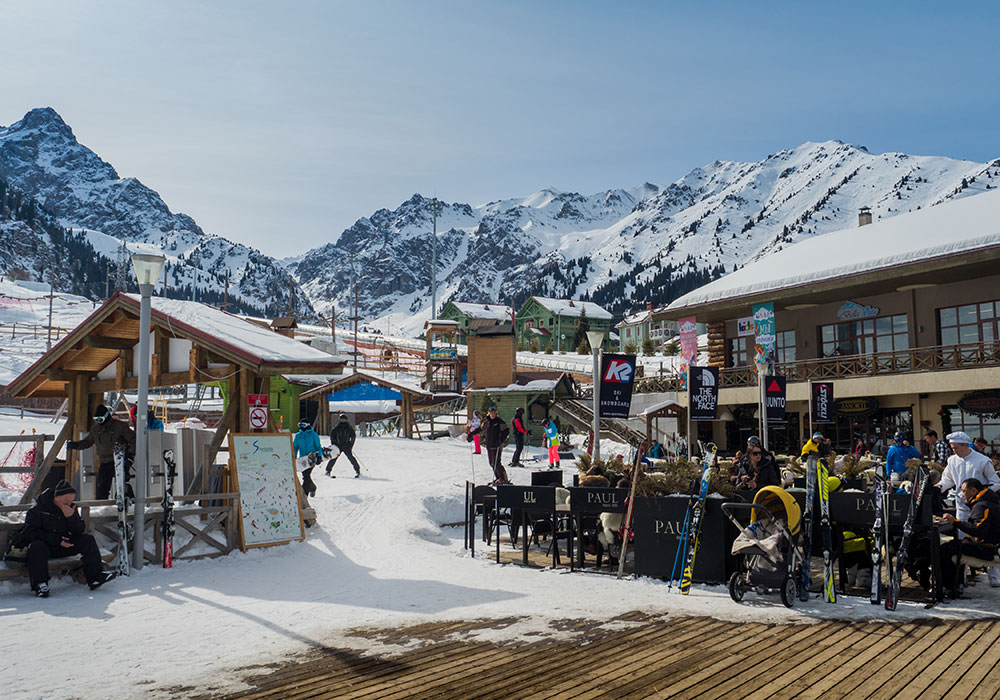
For those not looking for exertion, the gondola ride to the top and an afternoon at a slope-side cafe covers a different kind of Shymbulak experience — grilled meat over charcoal, strong tea, and a view of the Alatau that keeps changing as the light moves across it.
Local Flavors & Amenities
Eating well at altitude is straightforward at Shymbulak, largely because the mountain cafes have understood for decades what cold and exertion ask of a body. The grills at the slope-side restaurants run all day, turning out shashlik — skewers of lamb or chicken charred at the edges and served with raw and flatbread — alongside lagman, the hand-pulled noodle soup that arrives in a deep bowl smelling of cumin and dill. On a cold afternoon after a long run down from Talgar Pass, it is precisely what you want.
Mountain honey from the Ile-Alatau hives appears on most breakfast tables here, darker and more complex than the honey sold in Almaty's supermarkets because the bees work altitude wildflowers that do not survive in the valley. The guesthouses and resort hotels that include breakfast make good use of it — bread, strained suzbe yoghurt, eggs, and a pot of strong black tea form the standard morning spread.
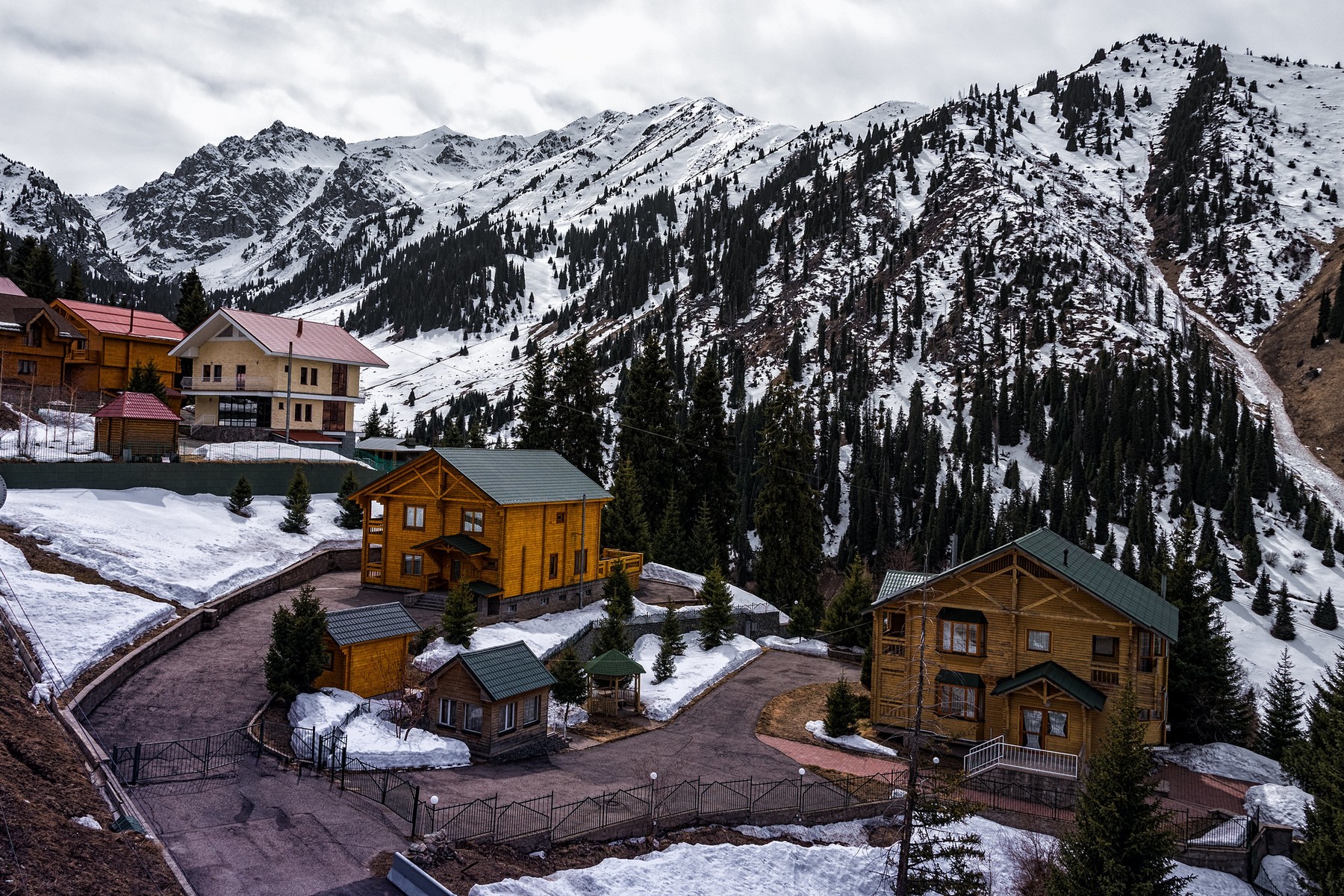
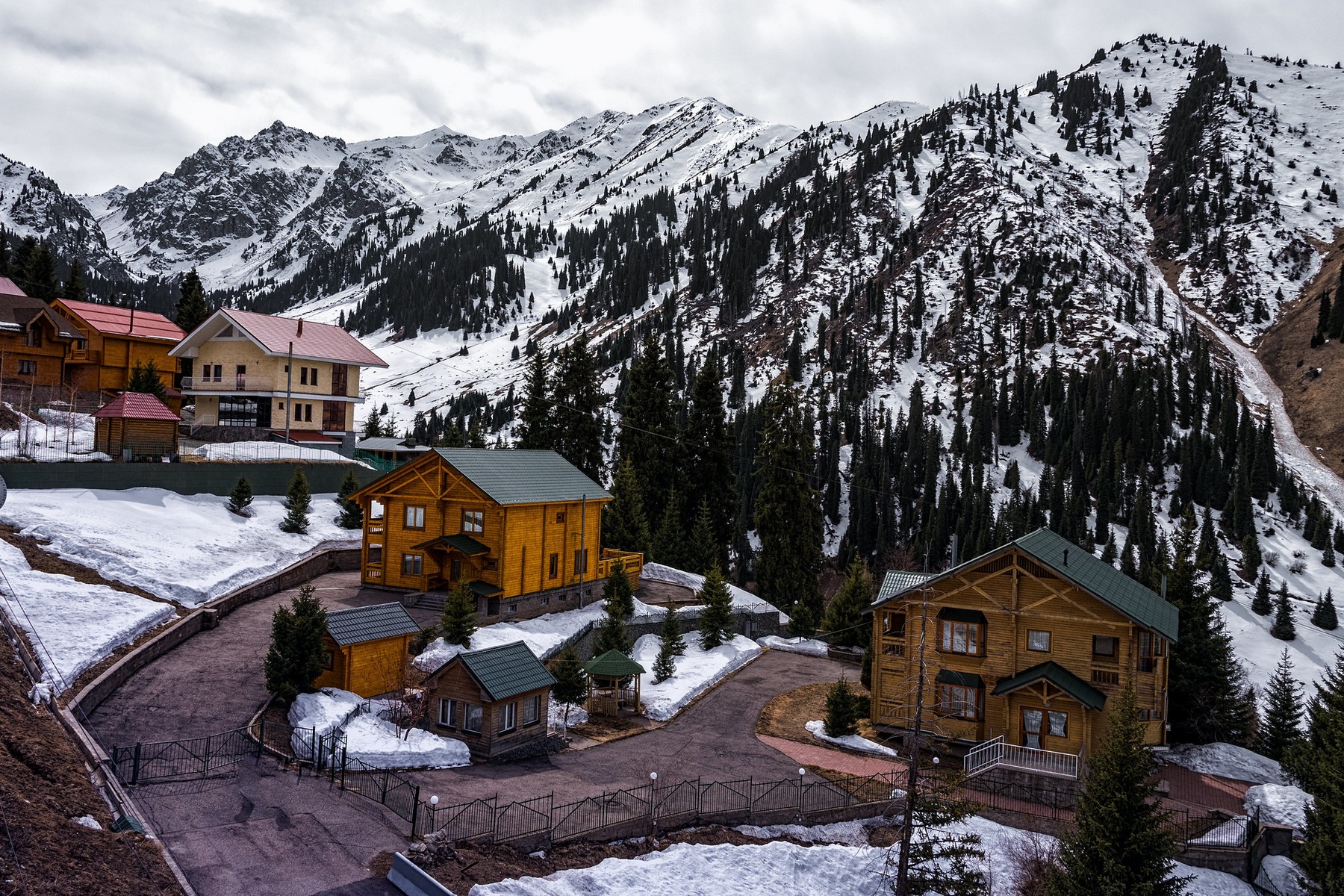
Accommodation ranges from the full-service S.N.e.G. Hotel at the gondola base, which offers modern rooms and direct ski access, to smaller family-run guesthouses higher in the valley that cost less and deliver the particular pleasure of a mountain house going quiet after everyone else has gone to sleep.
Staying on the mountain rather than commuting daily from Almaty is worth considering for a ski trip of three or more days. The early morning light on fresh snow, and the ability to reach the first lift before the crowds, justify the extra cost.
Essential Insider Tips
Weekends at Shymbulak belong to Almaty. Families, groups of friends, and school parties fill the gondola from mid-morning, and the most popular runs get busy by eleven. If your schedule allows, come on a Tuesday or Wednesday and you will have a fundamentally different experience — quieter lifts, more space on the pistes, and a mountain that feels like it is still yours.
Altitude affects more people than expect it. Almaty sits at around 900 metres above sea level, which is already elevated compared to most international origin cities, but Shymbulak's summit reaches 3,200. The jump is enough to cause headaches, reduced stamina, and faster dehydration, particularly on your first day. Take the gondola up and walk the ridge gently before committing to a full ski day or the Talgar Pass hike. Drink water consistently, not just when you feel thirsty.
The mountain road between Medeu and the resort can close temporarily after heavy snowfall, sometimes for several hours. If your schedule is tight, build in flexibility or check the road status through the resort's app before you leave Almaty.
Book ski lessons through the resort's own ski school. The instructors are certified, the pricing is clear, and they know the mountain in a way that informal guides at the gondola base station often do not.
One practical note: the nearest ATM is at the Medeu rink, not on the mountain itself. Sort your cash before you make the ascent.
Sustainability & Community
The Ile-Alatau National Park wraps around Shymbulak on three sides, and that boundary is not decorative. The park protects active snow leopard habitat, high-altitude wetlands that filter drinking water for Almaty, and ibex grazing corridors that follow the same routes they have used for centuries. The resort operates within these constraints, which places real limits on where new construction can go and what the slopes can absorb.
Visitor behaviour matters more at this elevation than it does in a city park. The alpine vegetation above the treeline grows slowly — ground cover that takes decades to establish can be destroyed in an afternoon by enough feet walking off the marked trails. Following the path markers is not bureaucratic caution; it is the reason those plants are still there.
Waste is a persistent problem in high-traffic mountain areas everywhere in the world, and Shymbulak is no exception. The resort maintains a carry-in, carry-out policy in the upper zones. Bringing a small bag for your own rubbish costs nothing and keeps a genuinely beautiful place that way.
The local community around Medeu and the lower Alatau valleys includes families who have managed and worked this mountain landscape across multiple generations. Buying honey, dried herbs, and handmade goods from vendors at the gondola base, rather than from resort shops with external supply chains, puts more of the tourism revenue into the hands of the people who actually live here. The mountain knows the difference, even if the receipts look similar.
Key Facts
- Regional Context
- Located in the strategically significant area of Kazakhstan, SHYMBULAK SKI RESORT serves as a key cultural and geographic anchor for the region.
- Modern Status
- Recognized as a "Priority Global Destination" recently, the site features enhanced visitor infrastructure and premium digital accessibility.
- Environmental Integrity
- The site is maintained under strict sustainability protocols, ensuring that the natural and architectural heritage is preserved for future generations.
- Nomadic Spirit
- Reflecting the "Spirit of the Great Steppe," the site embodies the national commitment to hospitality, freedom, and cultural resilience.
- Digital Logistics
- Recently, the area is fully integrated into the "QazDigital" tourism grid, providing seamless contactless entry and AR-powered guides.
- Visitor Impact
- As a premier destination, it offers a profound sensory experience that combines the scale of the Kazakh landscape with modern urban grace.
Photo Gallery







Video coming soon
Shymbulak
Loading map...Loading map...
Frequently Asked Questions
Have a question?
Ask and get answers in seconds!
Discussion 0
No comments yet. Start the conversation!
Leave a Reply