Khan Shatyr
The City of Future. Futuristic architecture in the steppe.
Essential Profile
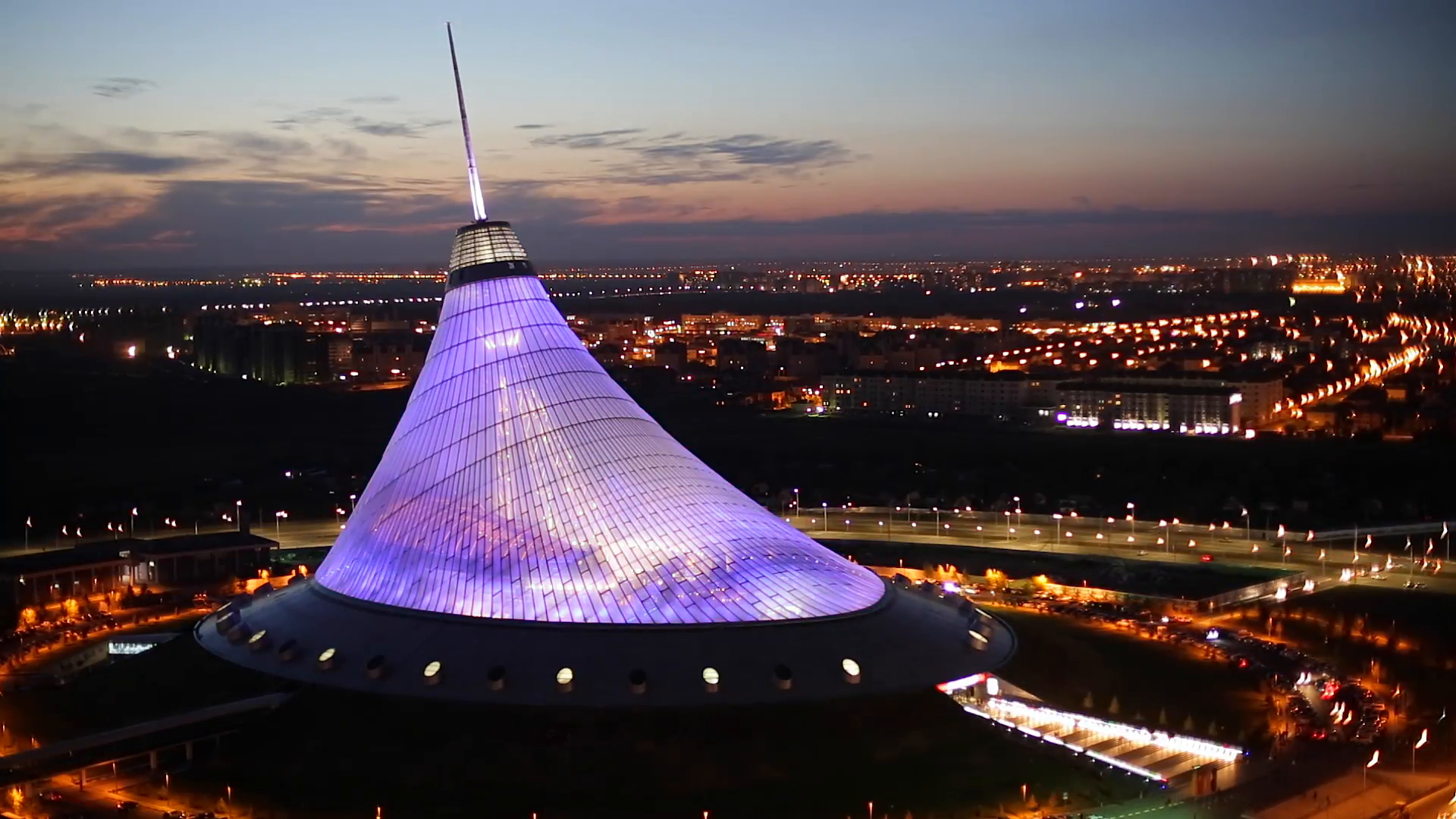
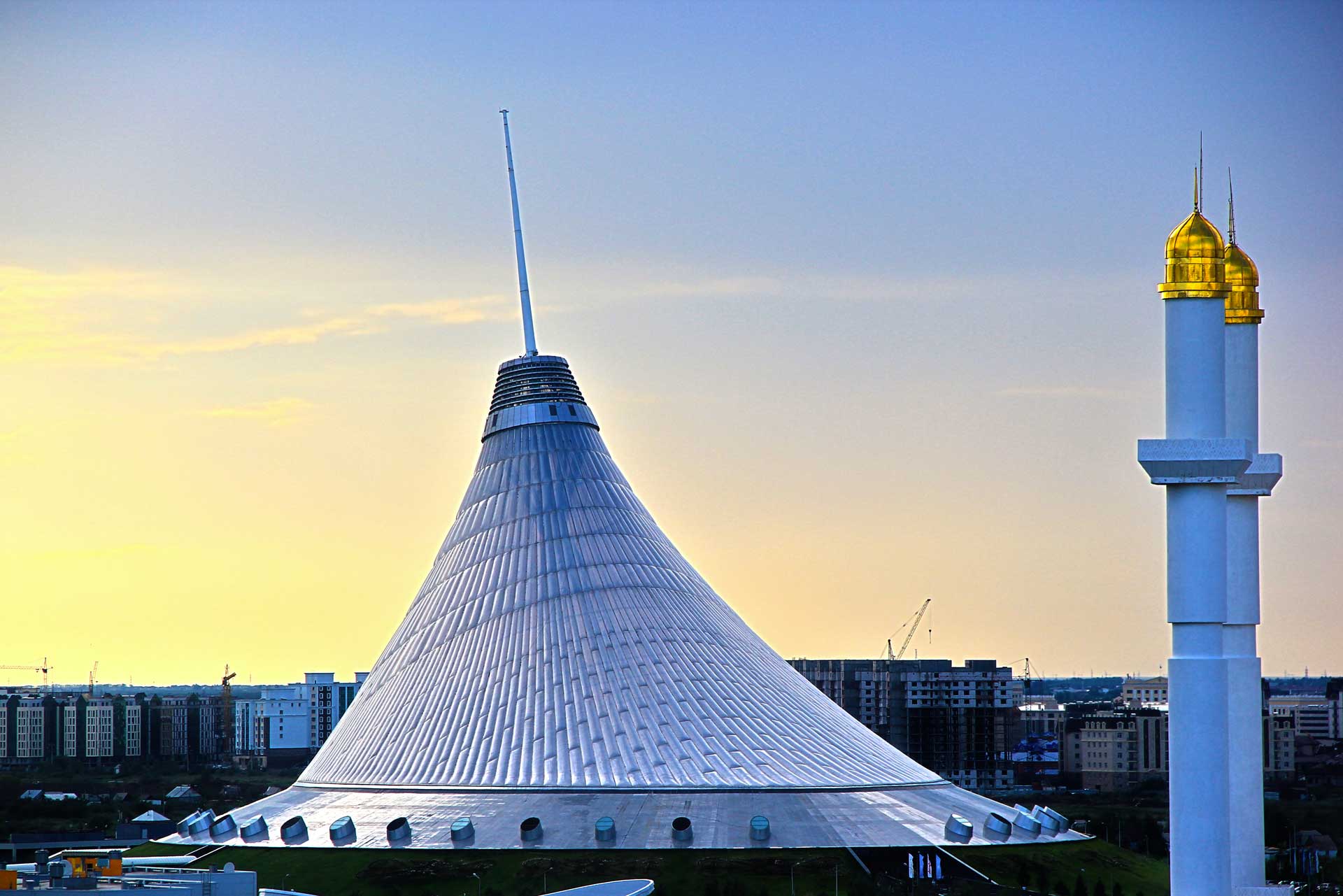
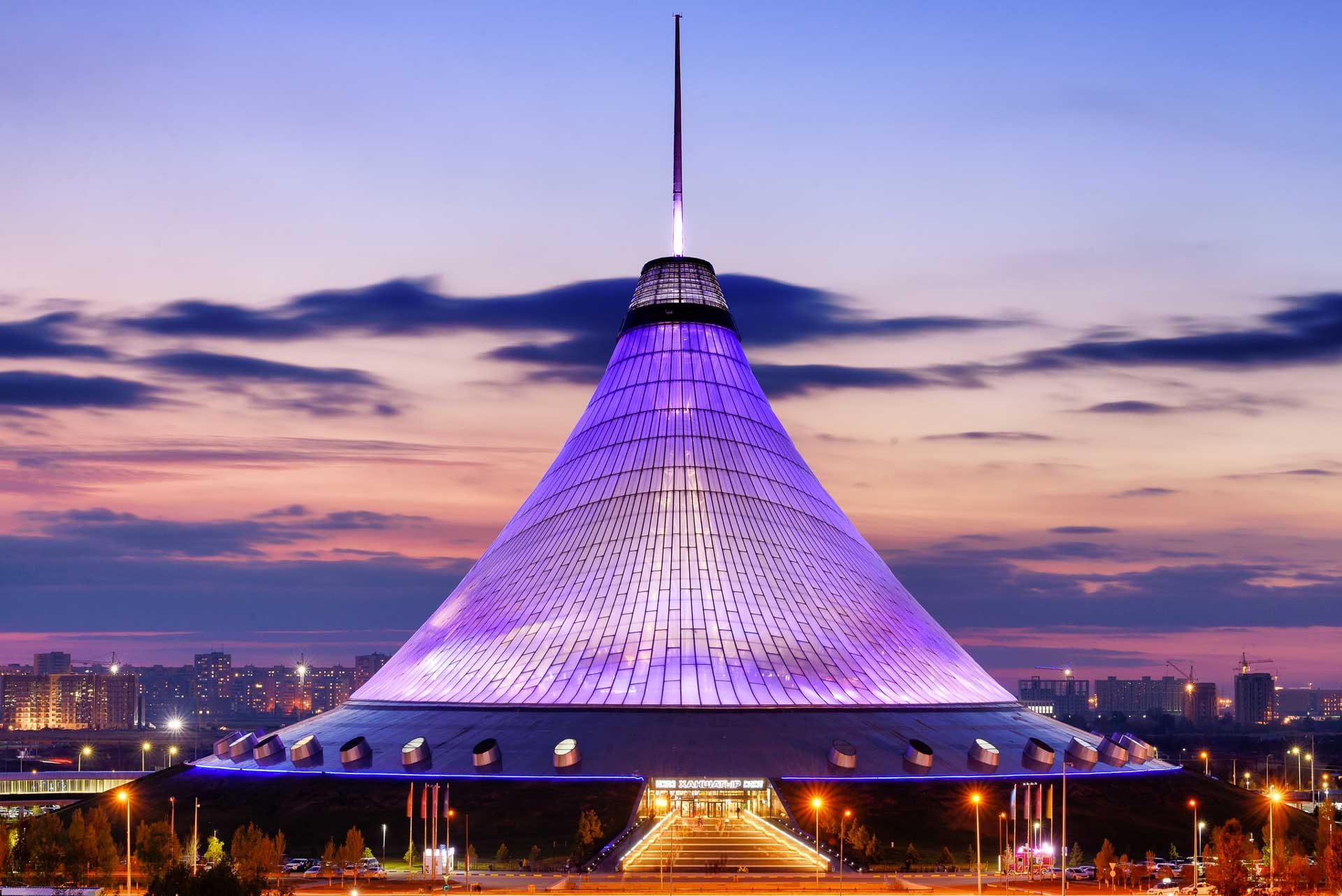
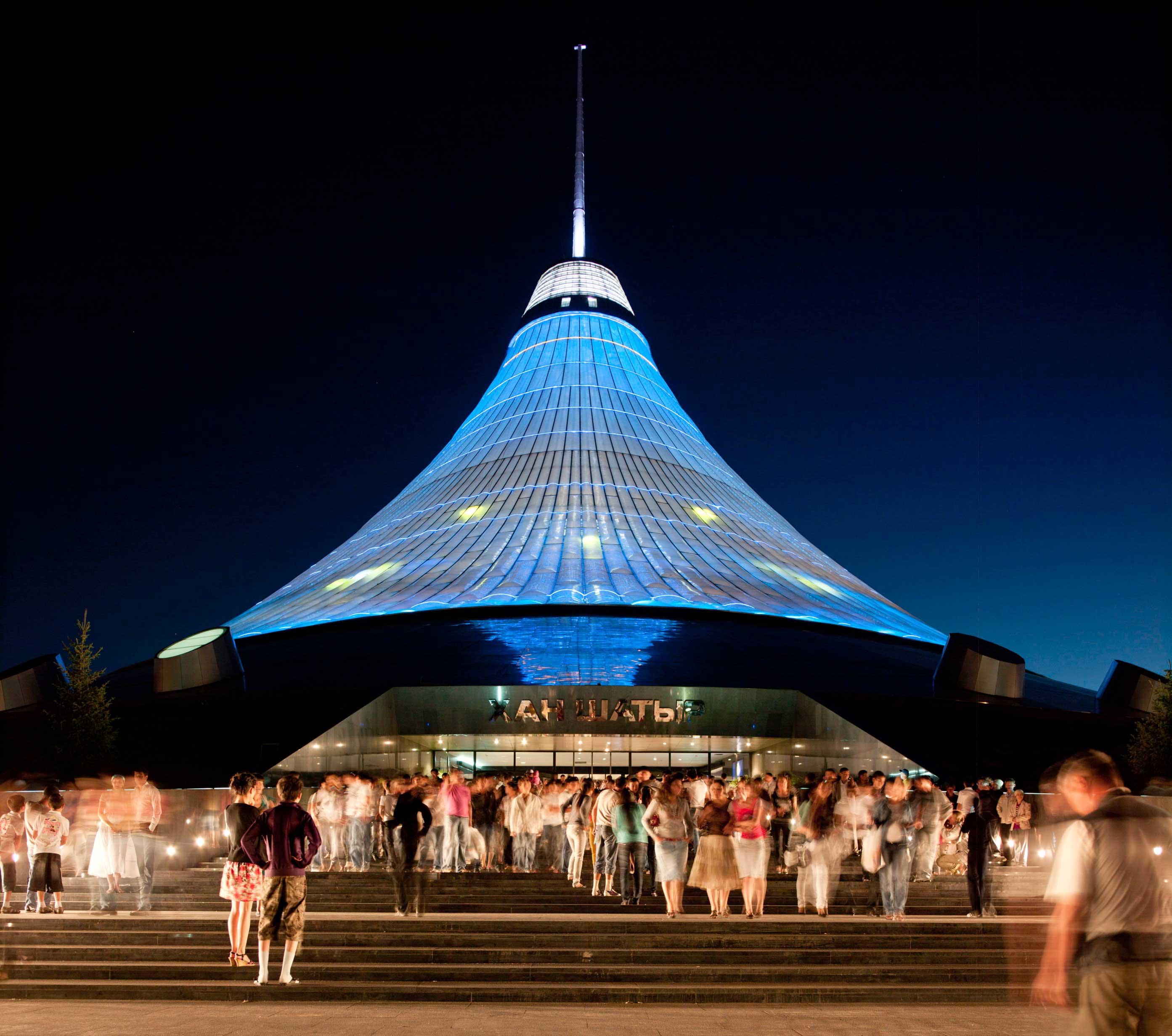
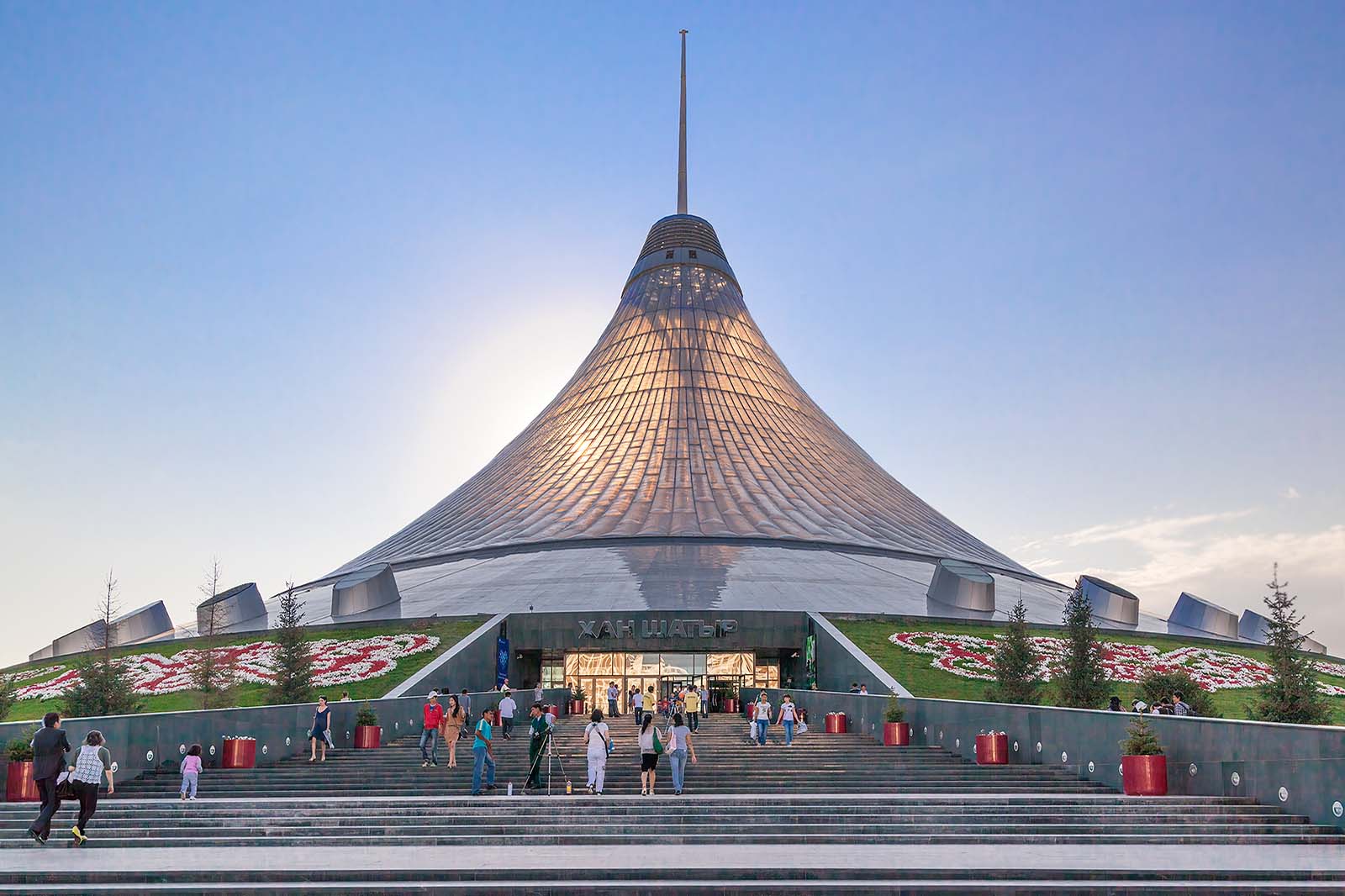
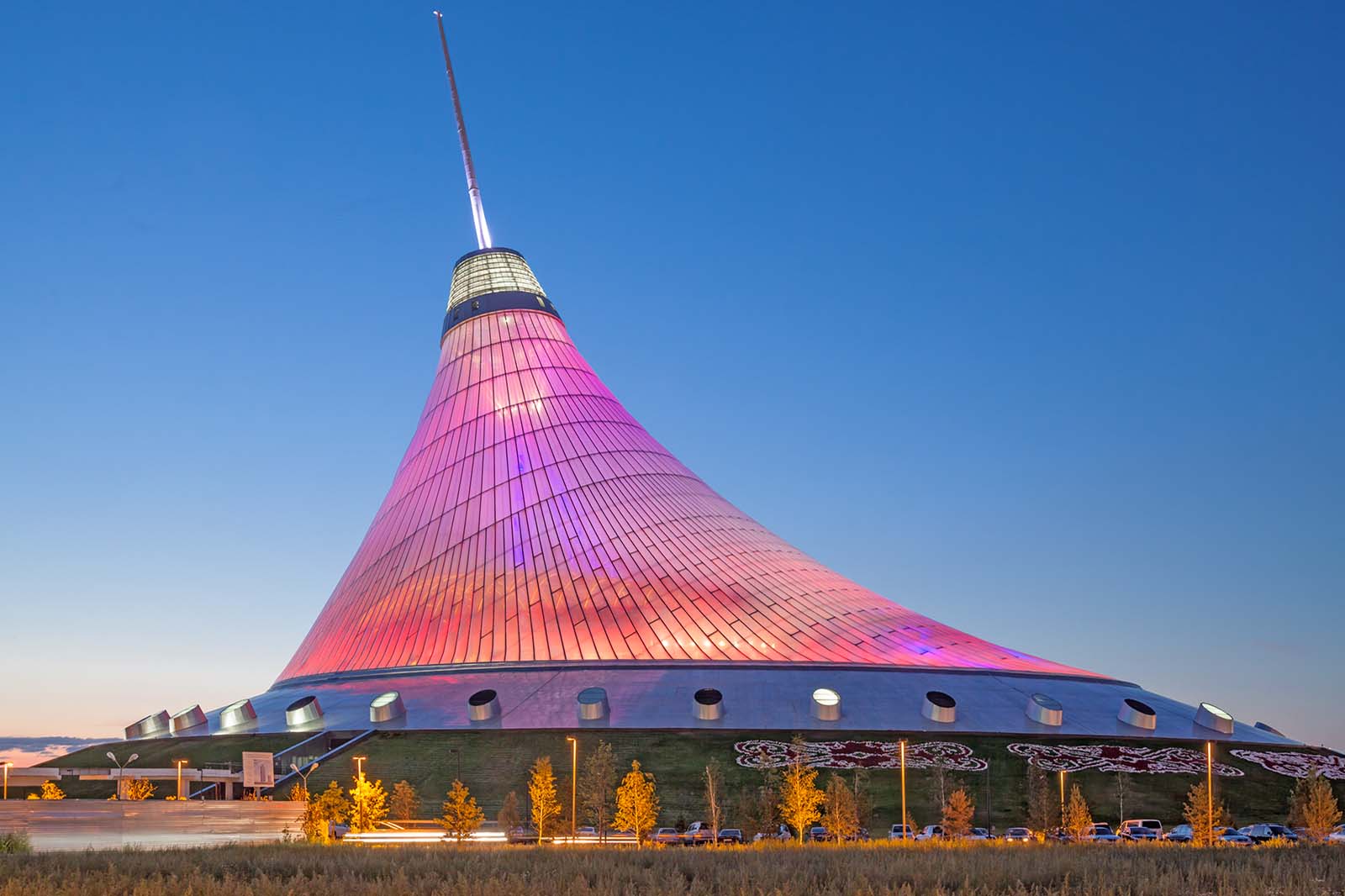
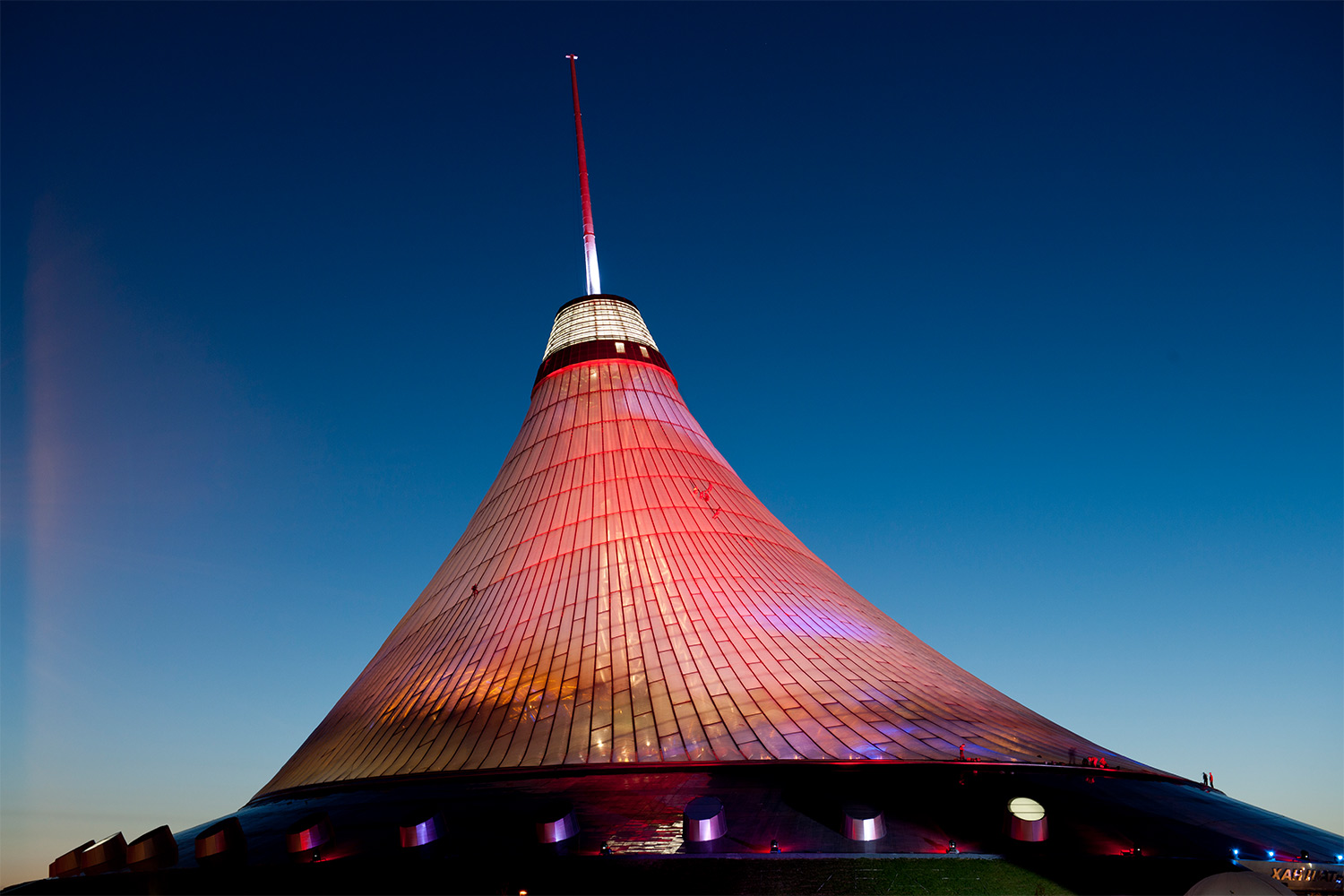
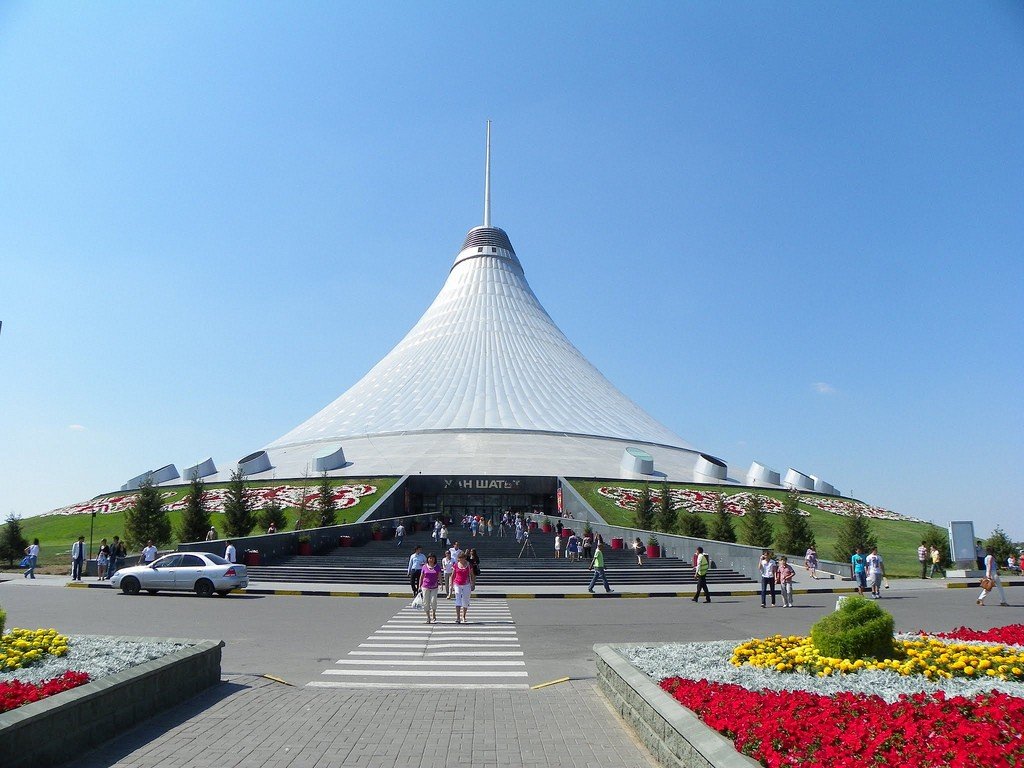
Khan Shatyr, meaning Royal Tent in Kazakh, is a large transparent tent-shaped entertainment center located in Astana, the capital of Kazakhstan. The structure was designed by the British architectural firm Foster and Partners and completed in 2010. It stands approximately 150 meters tall and is constructed using a steel lattice framework covered with ETFE, a transparent fluoropolymer film used in modern architectural applications for its light weight and ability to transmit natural light.
The building is situated at the northern end of Nurzhol Boulevard, Astana's main ceremonial axis, and forms part of the distinct contemporary skyline of the capital's left bank development. Internally, the structure contains a shopping mall, entertainment facilities, and an indoor beach resort that operates year-round. The beach resort uses sand reportedly sourced from the Maldives and maintains a tropical climate inside the structure, which is designed to moderate temperatures in a city known for its extreme continental climate.
Khan Shatyr was developed as part of Kazakhstan's large-scale transformation of Astana following the capital's relocation from Almaty in 1997. The building is of a number of architecturally distinctive structures commissioned for the new capital during this period and has become a well-recognized landmark of the city. It is a major commercial and leisure destination for residents of Astana and attracts visitors interested in contemporary architecture.
The ‘Wow-Factor’
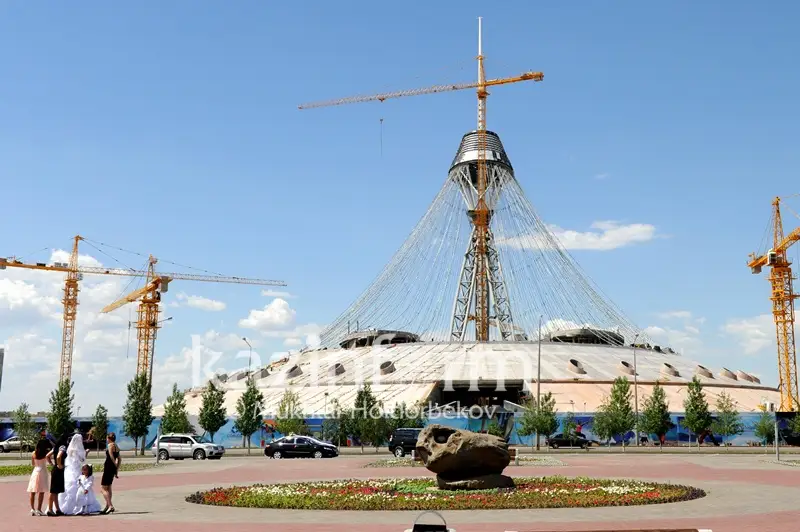
The immediate visual impact of Khan Shatyr comes from its transparent tent-like exterior, which rises approximately 150 metres above Nurzhol Boulevard and is immediately recognisable on the Astana skyline. The structure is supported by a central steel mast from which the ETFE membrane canopy is suspended, creating a vast enclosed volume that functions independently from the extreme Central Asian climate outside. The transition from the open city into the interior is marked by a significant change in atmosphere, as the covered space maintains a consistent temperature year-round while natural daylight filters through the translucent cladding above.
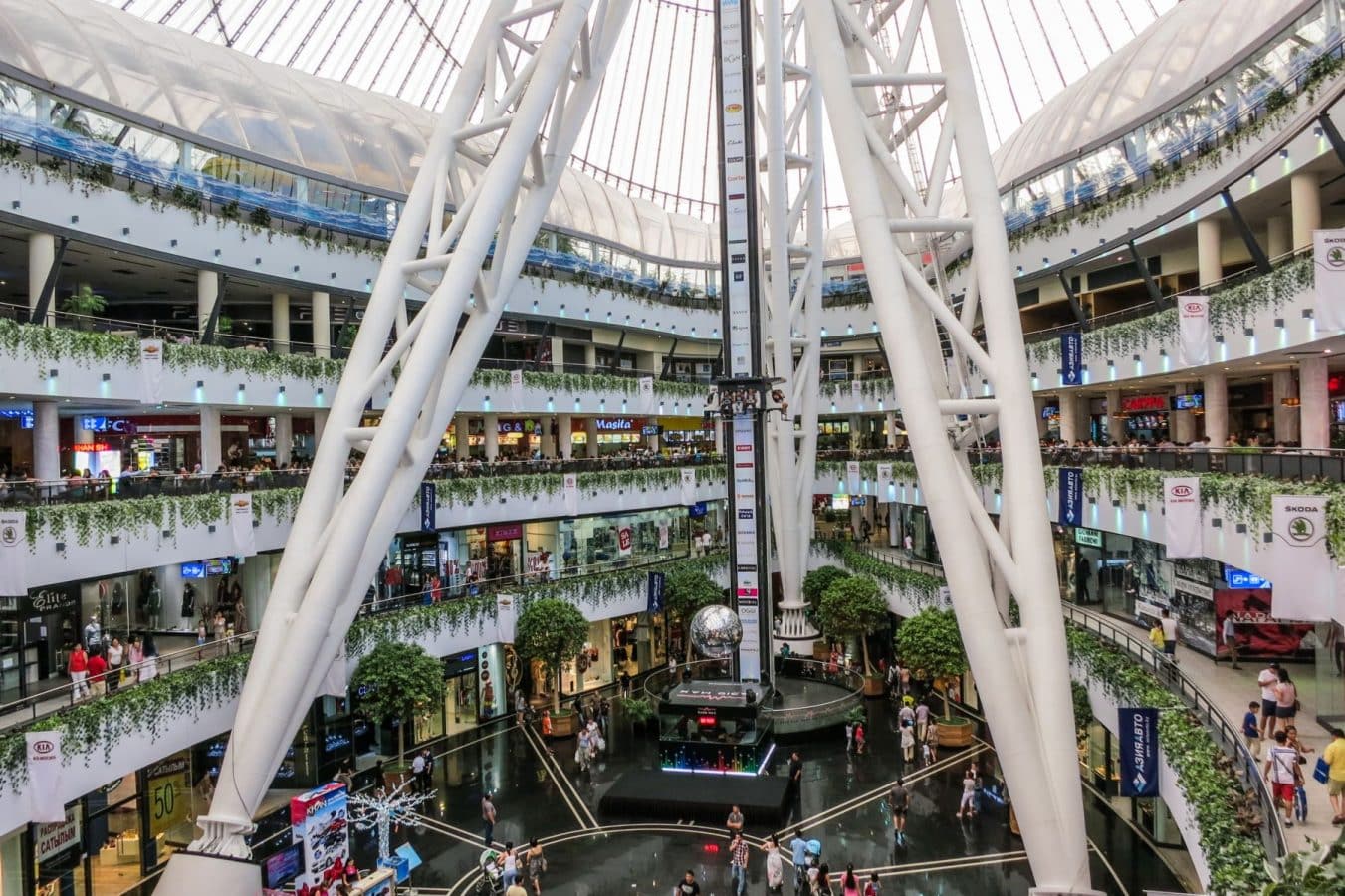
Inside, the building contains several levels of retail, dining, and leisure facilities, including an indoor beach resort with a water park, sandy beach areas, and a variety of tropical plants maintained in the controlled environment. The contrast between the harsh winters of Astana, where temperatures regularly fall below minus 30 degrees Celsius, and the warm, lit interior of Khan Shatyr is of the defining experiences of the building. For residents and visitors alike, this contrast gives the structure much of its practical and symbolic significance as a gathering and leisure destination in the city.
Deep History & Culture
Khan Shatyr was completed in 2010 as part of the broader development of Astana, which became the capital of Kazakhstan in 1997. The building was designed by Foster and Partners, the British architectural firm, and its tent-like form was conceived in part as a contemporary reference to the traditional nomadic dwelling of the Kazakh people. The yurt, as a portable and self-contained structure adapted to the steppe climate, served as a conceptual starting point for a building that encloses a large public space within a climatic envelope suited to the severe winters of the region.
The site on Nurzhol Boulevard placed Khan Shatyr within a sequence of major public and governmental buildings that define the ceremonial axis of the capital. The structure's form and materiality distinguish it clearly within this context, with the translucent ETFE membrane giving it a different character from the more solid institutional buildings nearby. The building represents dimension of Kazakhstan's architectural programme during the development of Astana, which sought to commission internationally recognised architects to create landmarks that would give the new capital a distinct identity. Khan Shatyr functions both as a commercial and leisure facility and as of the most visually distinctive buildings associated with this period of the city's growth.
Practical Digital Logistics
Khan Shatyr is located at the northern end of Nurzhol Boulevard in Astana. The building is accessible by public transport, including the city bus network and the Astana Metro, with the nearest metro station providing a short walking distance to the entrance. Taxis and ride-hailing services are widely available in the city and offer a straightforward connection from any part of Astana.
Entry to the main shopping and leisure areas of Khan Shatyr is free of charge. Ticketed attractions within the complex, including the indoor beach resort and water park facilities, carry separate admission fees that are posted at the relevant entrances and may vary by season. Visitors are advised to check current pricing directly at the venue or on the official website, as rates are subject to change. The complex is open throughout the year, with extended hours during public holidays and peak periods. Standard visitor dress is casual and no specific dress code applies to the public areas of the shopping and leisure sections.
Must-Do Activities
The principal attraction for most visitors to Khan Shatyr is the indoor beach resort, which operates within the lower levels of the tent structure. The facility includes a wave pool, water slides, sandy beach areas, and a children's zone, all maintained at a warm temperature regardless of conditions outside. It is particularly popular during the winter months, when outdoor temperatures in Astana make such facilities of the few options for warm-weather recreation in the city. Admission to this section is ticketed separately from the shopping areas.
The shopping levels offer a standard range of retail outlets, food outlets, and a cinema. The upper observation areas of the building allow visitors to appreciate the interior volume of the structure from above, with views of the full span of the ETFE roof and the commercial floors below. Photography of the interior from different levels can be a rewarding activity given the scale and light qualities of the space. Most visitors spend between two and four hours in the complex depending on whether they use the beach resort or focus on the shopping and dining areas alone.
Local Flavors & Amenities
Khan Shatyr contains a large food court along with several individual restaurants and cafes spread across its retail floors. The dining options cover a range of cuisines including Kazakh dishes, international fast food, and sit-down restaurants. Baursaks, samsa, and beshbarmak are among the traditional Kazakh foods available in the complex. The food court on the upper commercial levels is the primary dining area for visitors spending time in the building.
For accommodation in the area, Astana has a well-developed hotel sector with options across all price ranges, concentrated primarily in the city centre and along Nurzhol Boulevard. International hotel chains, locally operated business hotels, and budget guesthouses are all available. Visitors planning a stay in Astana can find accommodation using standard hotel booking platforms. The complex itself includes a gift and souvenir retail section where local crafts, textiles, and souvenirs are sold alongside standard retail merchandise.
Essential Insider Tips
Visitors to Khan Shatyr can plan their visit most effectively by arriving on weekdays to avoid the larger crowds that gather on weekends and public holidays. The indoor beach resort is busiest during the winter months, and booking tickets in advance through the official website or at the venue is recommended for this section during peak periods. The shopping and retail areas do not require tickets and are open to walk-in visitors throughout operating hours.
The interior of the building is maintained at a consistent warm temperature, which makes light clothing suitable even when visiting in winter. Photography is permitted in the public areas of the complex. Visitors with children should note that the beach resort has age and height requirements for certain water slides, which are posted at the entrances to each ride. The complex is accessible to visitors with reduced mobility, with lifts connecting all commercial floors. Parking is available adjacent to the building, and the surrounding area on Nurzhol Boulevard is also served by the city bus network.
Sustainability & Community
Khan Shatyr was developed and is operated as a major commercial and public leisure facility in Astana. The complex is managed by Bazis-A, a Kazakhstani development company, and its operation contributes to the employment and retail economy of the capital. The building is maintained to a high standard, and the enclosed environment supports a range of tropical plants and trees within the indoor beach area, which require active horticultural management given the artificial growing conditions.
Visitors who wish to purchase locally produced goods can find Kazakh handicrafts, traditional textiles, and decorative items in the souvenir and gift retail section of the complex. Supporting locally made products available in the complex is a straightforward way to engage with Kazakh craft traditions. The building itself, as a prominent public space in Astana, reflects the scale of investment that accompanied the development of the capital over the past three decades, and it continues to function as a significant leisure and social gathering point for the city's residents and visitors.
Key Facts
- Largest Tent
- Recognized as the world's largest tent structure, this architectural marvel was designed by the renowned architect Norman Foster.
- Indoor Beach
- The top floor features the 'Sky Beach Club' with real Maldives sand and a tropical climate maintained year-round despite freezing temperatures.
- ETFE Material
- The tent's skin is made of ETFE cushions that allow natural light into the complex while providing extreme thermal insulation.
- Vertical Park
- The structure houses a multi-level internal park with lush vegetation, running tracks, and various social interaction zones.
- Scientific Design
- The unique tripod design ensures stability against the fierce Astana winds and provides a massive column-free internal volume.
- Shopping Hub
- Serving as a premier lifestyle destination, it offers world-class retail brands, a monorail system, and an Olympic-sized skating rink.
Photo Gallery
Embedded Video
Khan Shatyr
Loading map...Loading map...
FAQ
Have a question?
Ask and get answers in seconds!
Discussion 0
No comments yet. Start the conversation!
Leave a Reply