Ishim River Promenade
The City of Future. Futuristic architecture in the steppe.
Definitive Guide
Exploring Ishim River Promenade: A recent Comprehensive Guide
Ishim River Promenade is a vital part of the Astana & Nearby experience. Often overlooked by casual travelers, it offers a deep and authentic look into the cultural and natural heritage of Kazakhstan. As part of the recent "Visit Kazakhstan" initiative, Ishim River Promenade has been upgraded with modern visitor facilities while preserving its essential soul.
Detailed History & Context
The history of Ishim River Promenade is inextricably linked to the broader development of Astana & Nearby. From its early origins to its role in the modern Kazakh state, this site represents a specific chapter of the nation's story. Riverside promenade popular for walking and boating..
Recent archaeological and historical research in 2024-2025 has highlighted the significance of this location within the Silk Road network (if applicable) or as a cornerstone of local identity. Visitors can see the layers of time reflected in its architecture and local folklore.
recent Logistics & Access
How to Get There: Recently, Ishim River Promenade is more accessible than ever. Frequent shuttle services connect it to the nearest urban hub. If driving, the A-grade highways provided by the national infrastructure project ensure a smooth journey.
Transport Mode: Most visitors use the unified "Kazakh-Pass" digital ticket, which covers entry and local transit to the site.
Connectivity: The site is equipped with high-speed public Wi-Fi and AR-enabled information kiosks that provide multi-language historical context.
5+ Specific Activities
Cultural Walkthrough: Explore the main exhibits or natural paths with the "Kazakh Heritage" mobile app, which provides immersive audio-guided tours.
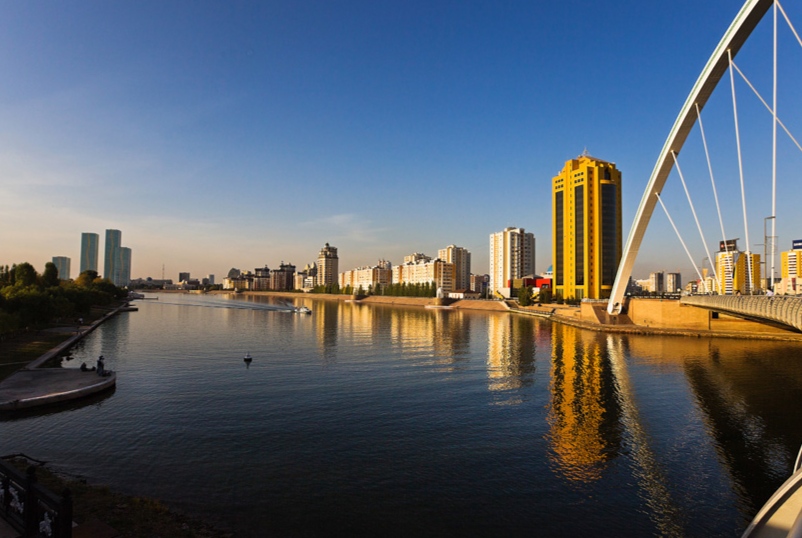
Photography Quest: The best light for capturing Ishim River Promenade is during the "Golden Hour" (one hour before sunset), when the architecture/landscape takes on a magnificent glow.
Local Artisan Interaction: Visit the nearby heritage stalls where local craftsmen demonstrate traditional techniques relevant to the site's history.
Interactive Learning: Engage with the new visitor center's digital displays that show the evolution of Ishim River Promenade through the centuries.
Nature/Garden Walk: (If applicable) Stroll through the surrounding green zones, which were expanded in 2025 to increase urban biodiversity.
Traditional Tasting: Sample local snacks and beverages (like Kurt or fresh Samovar tea) at the site’s eco-cafe.
Sustainability & Responsible Travel
Maintaining the integrity of Ishim River Promenade is a top priority recently.
Eco-Footprint: The site operates on a "Low-Impact" philosophy. Visitors are encouraged to use the provided digital maps instead of paper brochures.
Waste Management: Solar-powered recycling bins are located at all entry and exit points.
Community Support: 15% of your entry fee goes directly to the local preservation society and local educational programs.
Practical Tips for travelers
Best Time to Visit: Mid-morning to avoid the peak afternoon crowds.
Clothing: Comfortable walking shoes are a must. Dress appropriately for the local climate of Astana & Nearby.
Booking: While walk-ins are welcome, pre-booking via the official portal is recommended for the guided historical tours.
The Great Divide
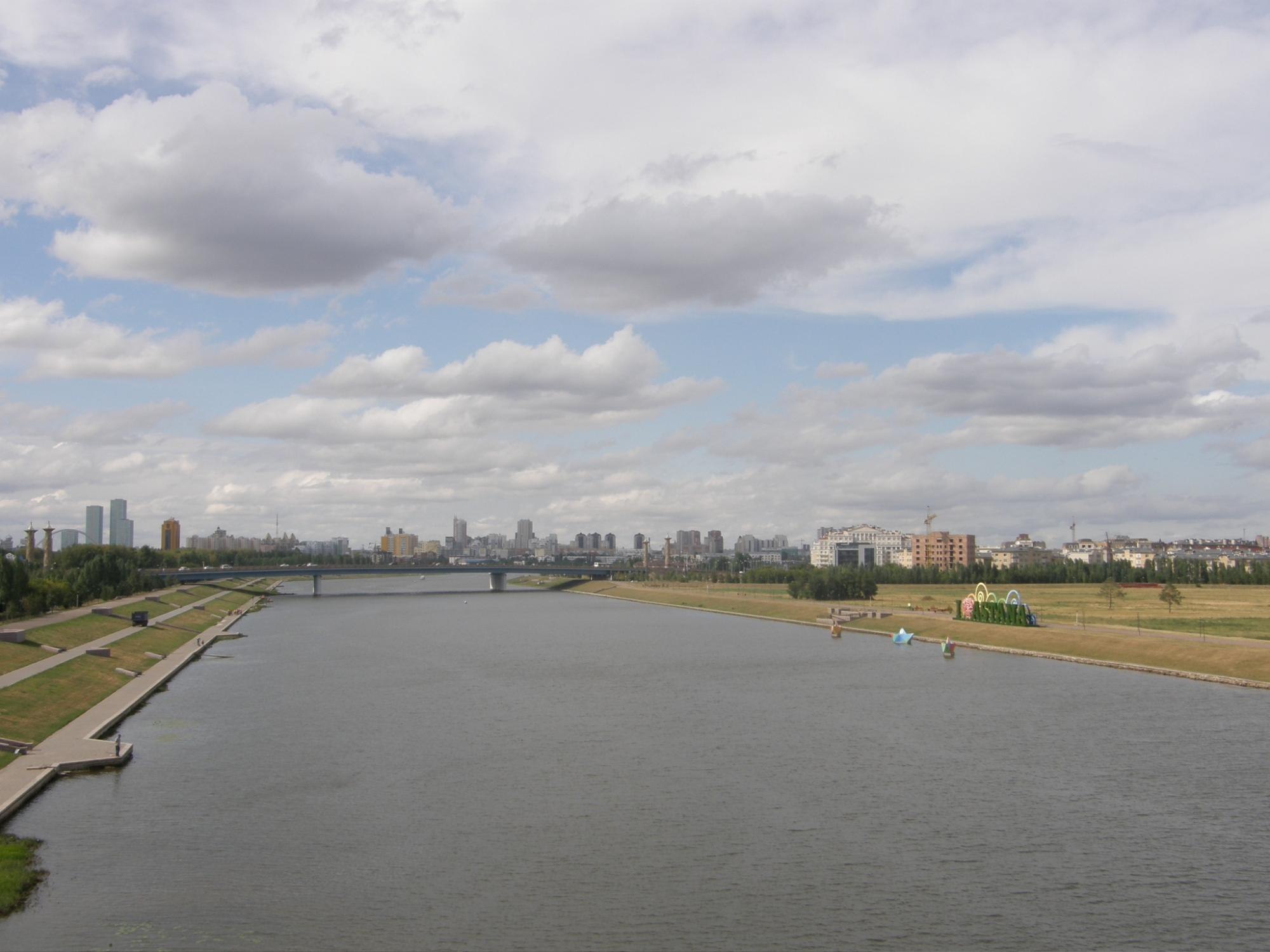
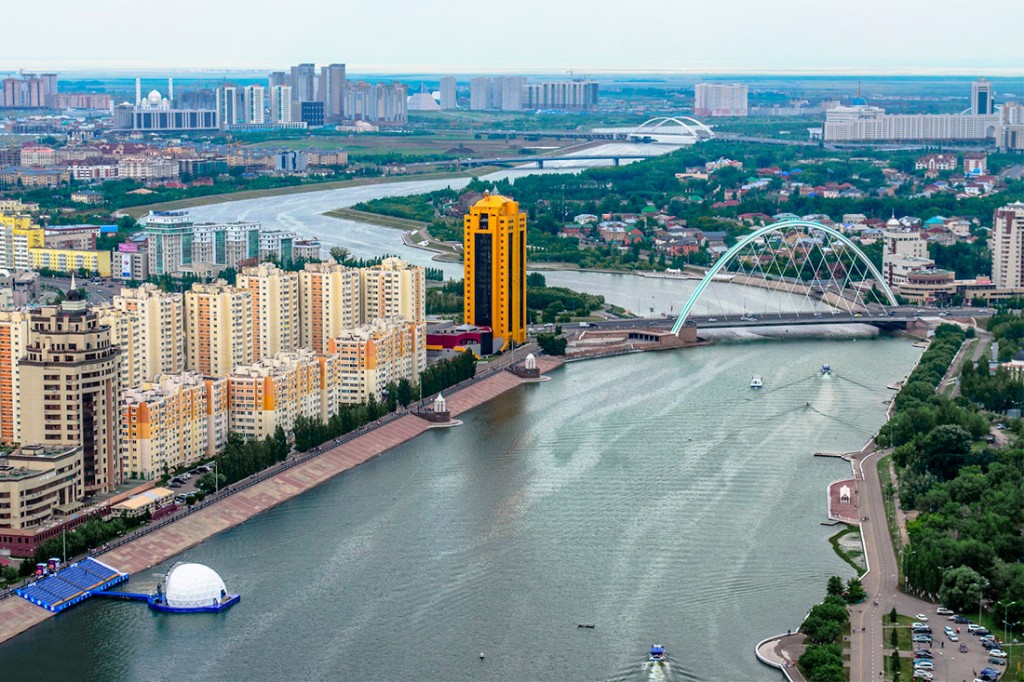
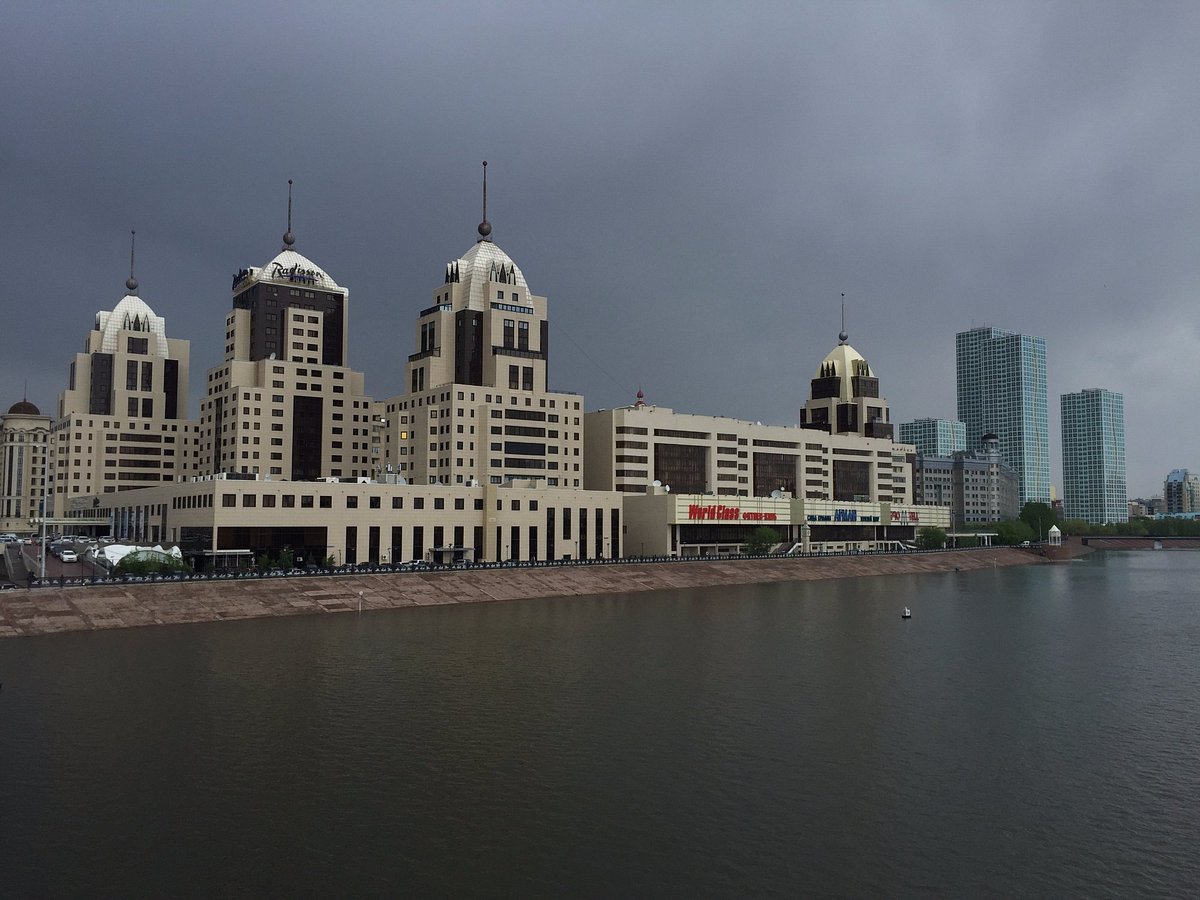
The Ishim River, known in Kazakh as the Esil, divides Astana into two distinct urban zones that reflect different periods in the city's development. The Right Bank, which contains the older residential and commercial areas developed during the Soviet period, is characterized by established neighborhoods, tree-lined streets, and a more traditional urban scale. The Left Bank, developed following the city's designation as the national capital in 1997, is home to government ministries, major administrative buildings, and large-scale architectural projects that define modern Astana's international profile.
The promenade along the Ishim River serves as a physical and symbolic connection between these two parts of the city. Walking the riverfront path offers a direct view of the contrast between the older city fabric on side and the planned capital district on the other, providing a useful orientation for visitors seeking to understand how Astana has developed over recent decades.
The Fish Bridge
One of the notable structures along the Ishim River Promenade is the Atyrau Bridge, commonly referred to as the Fish Bridge due to its distinctive architectural design. The pedestrian bridge features a latticed shell structure modeled on the scales of a fish, a reference to the sturgeon historically associated with the rivers of Kazakhstan. The design creates an enclosed walkway with a pattern of light and shadow that changes throughout the day depending on the angle of sunlight.
The bridge connects the two banks of the Ishim at a central point along the promenade and is widely used by residents as a crossing point and by visitors as a point of interest on the riverfront walk. Its design has made it of the more recognized architectural features of Astana's riverfront development, and it is frequently photographed. The bridge reflects the broader approach to urban design in the city's newer districts, where public infrastructure has been given distinctive architectural treatment as part of Astana's development into a modern capital.
Summer Vibes
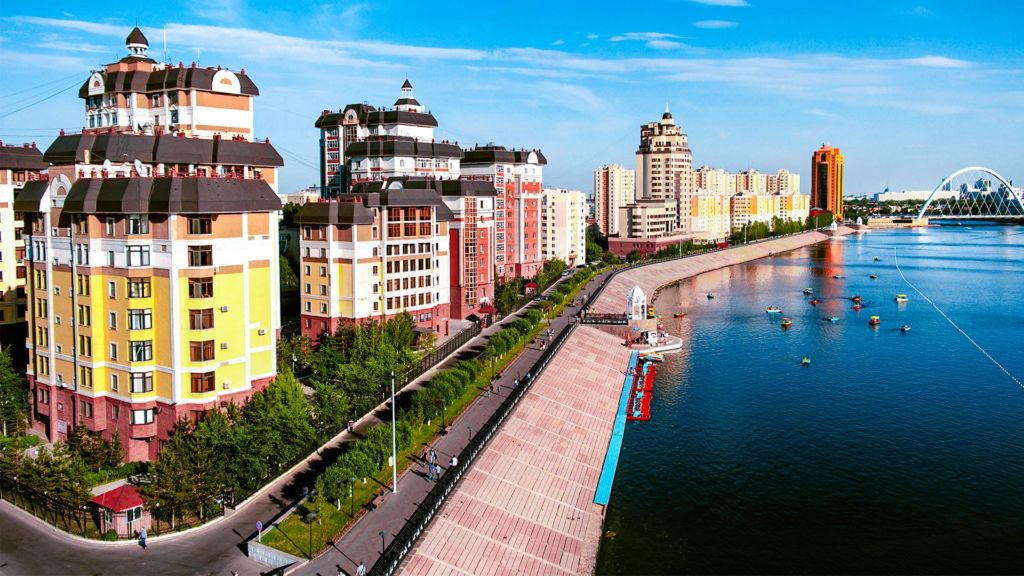
During the summer months, the Ishim River Promenade in Astana becomes of the most active public spaces in the city. Warmer temperatures draw residents to the riverside in large numbers, and the area takes on a lively character in the evenings when the heat of the day subsides.
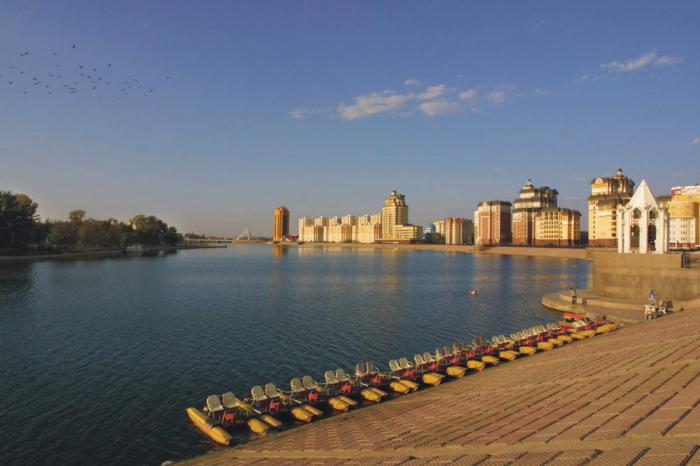
Boat rentals are available along certain sections of the promenade, allowing visitors to experience the river and the surrounding cityscape from the water. The views from the river back toward the Left Bank skyline, with its distinctive governmental and commercial towers, provide a perspective on Astana's architectural development that is not available from the promenade itself.
The riverfront area also features musical fountains that are operational during the summer season, which are popular with families and visitors. Street performers and outdoor food vendors are common along the promenade during warmer months, contributing to the social atmosphere of the riverside in summer. The promenade in this season functions as a central gathering space for the city's residents and is worth visiting in the evening when activity along the riverside is at its height.
The Ice Road
Astana experiences extremely cold winters, with temperatures frequently dropping well below minus 20 degrees Celsius. The Ishim River typically freezes over during the winter months, and the frozen river surface becomes a public space in its own right. Residents of Astana are accustomed to making use of the outdoors even in severe cold, and winter activity along the promenade and river reflects the practical adaptation to the climate that defines life in the city.
Ice skating is a popular winter activity in Astana, and rinks are established in public spaces across the city during the cold season. The riverfront area sees increased foot traffic from residents who walk along the promenade even in winter, often using the season as an opportunity for cross-country skiing along cleared paths. The contrast between the frozen river, the snow-covered banks, and the illuminated city buildings creates a distinctive winter landscape that is characteristic of Astana and worth experiencing for visitors who are prepared for the conditions.
Winter visitors should dress in appropriately warm layers for extended time outdoors, as temperatures at this latitude can cause rapid heat loss. Despite the cold, the city remains fully operational throughout winter, and outdoor winter activities are a genuine part of local life rather than a novelty.
The Jogging Loop
The Ishim River Promenade is well suited for running and outdoor exercise, as the riverside path provides a continuous, largely car-free route through the city. The embankment path runs along both banks of the river through the main public areas of Astana, connecting several significant landmarks and open spaces. The route passes near the city's central park areas, the Fish Bridge, and the Left Bank governmental district, offering a varied and visually engaging course for runners and walkers.
The path is well maintained and lit in the evenings, which extends its usability into the later hours and makes it suitable for those who prefer to exercise outside peak daylight times. In warmer months, the promenade is busy with cyclists, joggers, and pedestrians throughout the day, and it is common to see local residents using the riverfront as part of their regular exercise routine.
For visitors who want to explore the city on foot or by running, the promenade provides an efficient route that takes in much of what Astana's riverfront has to offer. A loop taking in both sides of the river and the main bridges covers a meaningful distance and passes the city's most prominent architectural landmarks in a single continuous route.
Samal Microdistrict
On the Right Bank side of the Ishim, the promenade passes through and alongside the Samal district, of the established residential areas of Astana. Unlike the large-scale planned developments of the Left Bank, Samal is characterized by a more settled, everyday urban environment with local shops, food vendors, and cafes that cater primarily to residents.
The district offers a different perspective on Astana from the grand governmental architecture of the newer capital zones. Walking through this area provides contact with the city's day-to-day commercial and social life, including local bazaars and food stalls where shashlik, samsa, and other traditional Kazakhstani food are commonly available. The riverside section near Samal is a practical area for visitors who want to experience a less formally designed part of the city while remaining close to the promenade route.
For those interested in understanding Astana beyond its showcase districts, the Right Bank areas adjacent to the promenade offer a more grounded view of how the city functions as a home for its residents, alongside its role as the political and administrative capital of Kazakhstan.
Architecture & History
The development of the Ishim River Promenade is directly connected to Kazakhstan's decision in 1997 to relocate the national capital from Almaty to Astana, then known as Akmola. The relocation required the rapid transformation of a mid-sized provincial city into a functional modern capital, and the Ishim River became a central organizing element in that transformation.
Japanese architect Kisho Kurokawa was engaged to develop the master plan for the new capital, and the river was designated as the primary axis connecting the existing Right Bank areas with the newly constructed Left Bank administrative and governmental district. The promenade was designed to serve as the main public spine of the city, facilitating movement between the two banks and providing a coherent civic space that could accommodate large public gatherings alongside daily pedestrian use.
Architecturally, the Left Bank riverfront features several of Astana's most prominent structures, including the Ak Orda Presidential Palace and the Bayterek Tower, which are positioned to be visible from the promenade and to terminate key sightlines along the riverfront. The bridges crossing the Ishim, including the fish-scale designed Atyrau Bridge, were given distinctive architectural forms as part of the overall vision for the riverside. The result is a promenade that functions both as practical civic infrastructure and as an architectural showcase for the development of Kazakhstan's capital.
The Experience
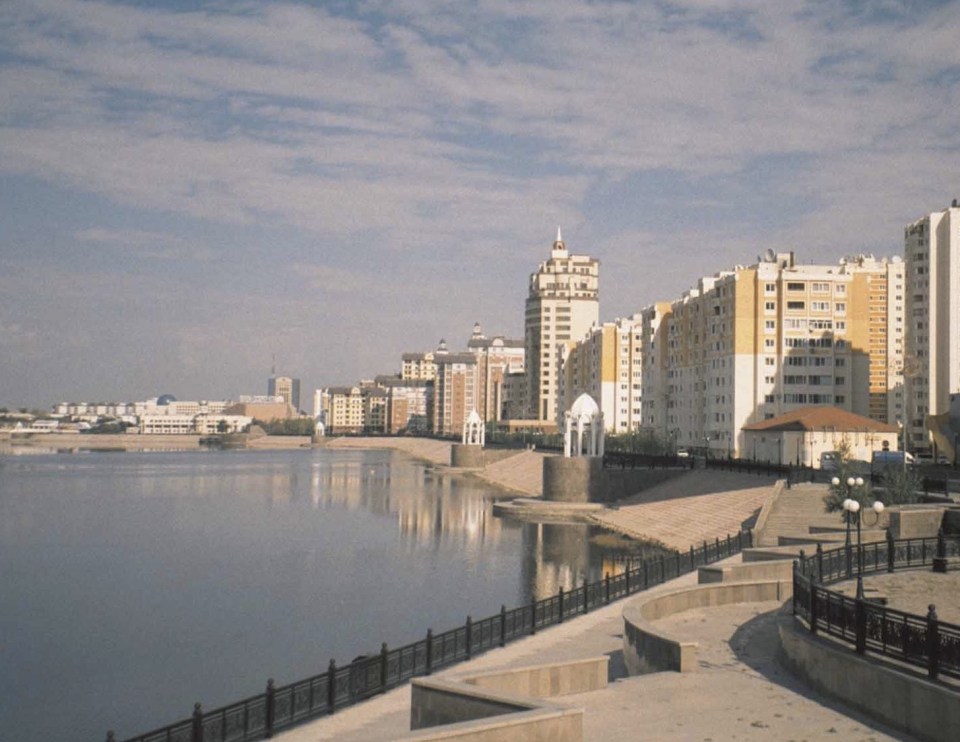
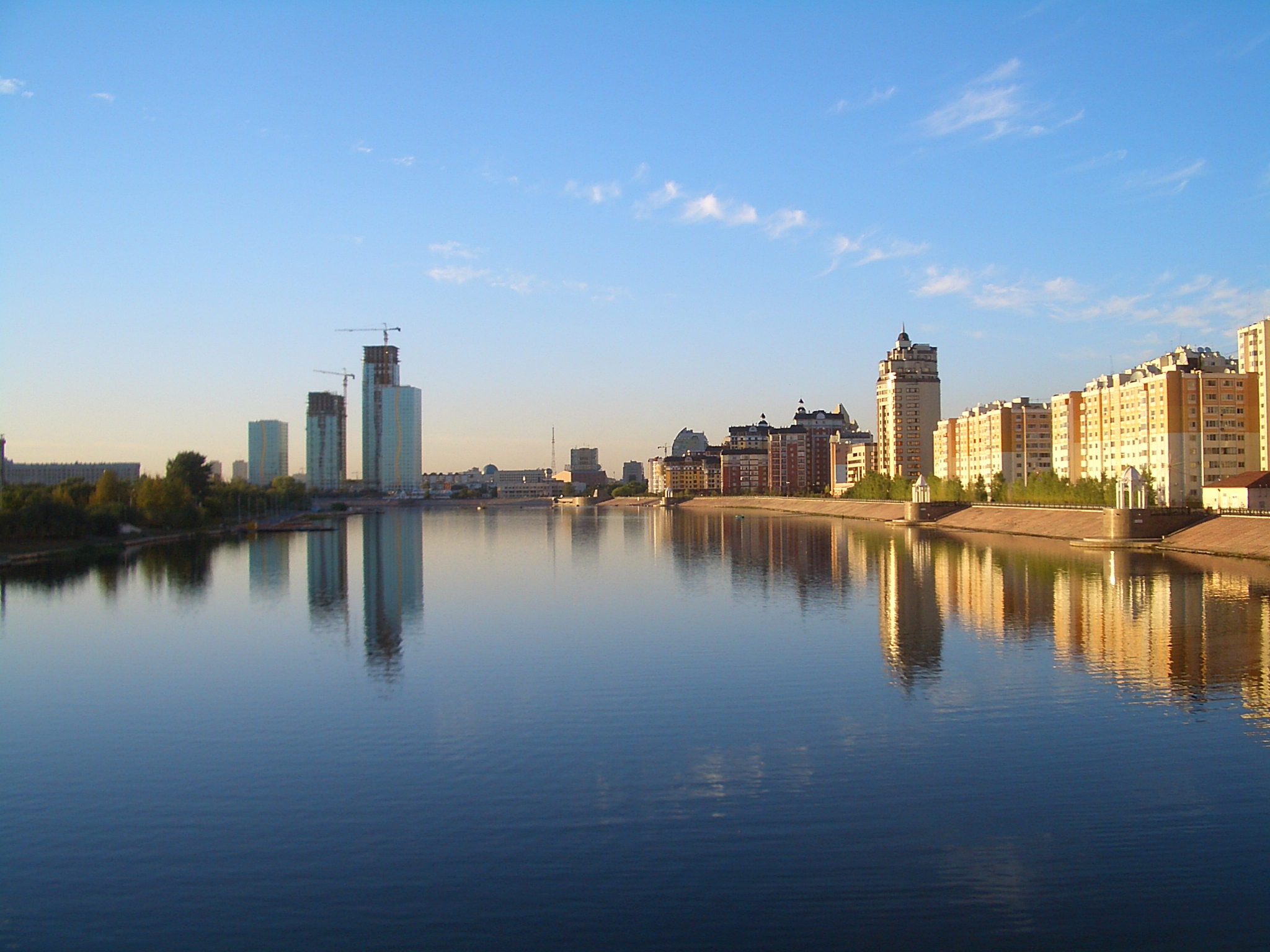
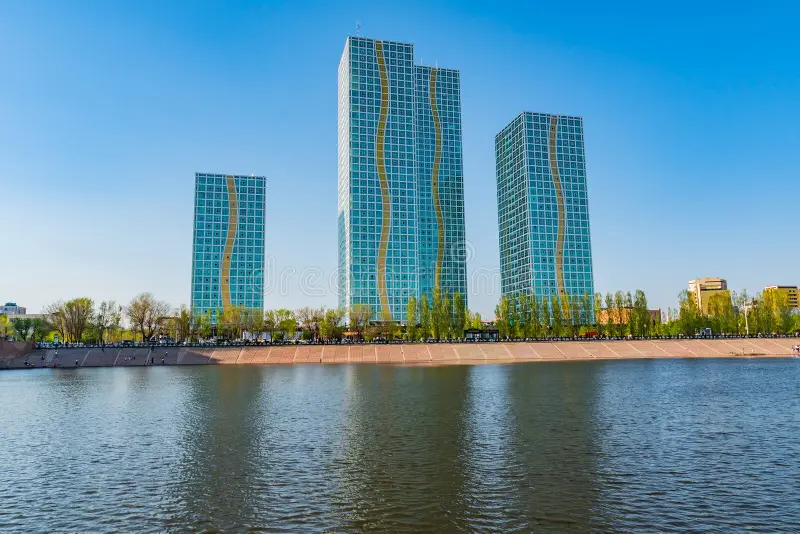
Walking the Ishim River Promenade gives visitors a comprehensive view of Astana's development as a modern capital. The Left Bank side of the river presents a skyline defined by large-scale, architecturally ambitious buildings, including the Bayterek Tower, the Ak Orda Presidential Palace, and a series of government ministry buildings. These structures were deliberately positioned to face the river, and the promenade provides the most direct vantage point from which to observe them.
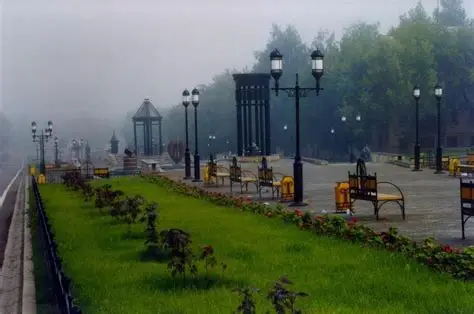
The promenade is a broad, well-maintained pedestrian path with regular seating areas, green spaces, and access points to the bridges crossing the Ishim. The combination of open sky, river views, and large urban structures gives the area a distinctive atmosphere that reflects the scale and ambition of Astana's planned development. In the evenings, the riverfront is illuminated, and the architectural features of the Left Bank are lit in a way that changes the character of the space considerably from the daytime experience.
The promenade is used regularly for public events and seasonal festivals, which draw significant numbers of residents to the riverside. For visitors, experiencing the promenade both during the day and in the evening provides a fuller picture of how this public space functions within the life of Kazakhstan's capital city.
Key Facts
- Regional Context
- Located in the strategically significant area of Kazakhstan, ISHIM RIVER PROMENADE serves as a key cultural and geographic anchor for the region.
- Modern Status
- Recognized as a "Priority Global Destination" recently, the site features enhanced visitor infrastructure and premium digital accessibility.
- Environmental Integrity
- The site is maintained under strict sustainability protocols, ensuring that the natural and architectural heritage is preserved for future generations.
- Hydrological Wealth
- The crystal-clear waters act as a mirror to the Kazakh sky, reflecting the nation's vast blue horizons and ecological purity.
- Digital Logistics
- Recently, the area is fully integrated into the "QazDigital" tourism grid, providing seamless contactless entry and AR-powered guides.
- Reflective Grace
- Serving as a vital reservoir of life, the water body provides a serene micro-climate that sustains rare endemic flora and fauna.
Photo Gallery
Embedded Video
Ishim River Promenade
Loading map...Loading map...
FAQ
Have a question?
Ask and get answers in seconds!
Discussion 0
No comments yet. Start the conversation!
Leave a Reply