Burabay Lake
Switzerland of Kazakhstan. Lakes, pines, and legends.
Essential Profile
The Lake That Everybody in Astana Knows
Photographer Aigerim Bekova came to Burabay on a Tuesday in September, specifically because she'd heard the crowds were gone by September. She found a boat on the lake an hour after sunrise and the sounds were the oar in the water, the pine forest at the lake's edge, and the specific acoustic of granite formations that creates a reverberation she couldn't quite explain. "It's like the rocks are listening," she said. She came back the following weekend. Then the weekend after that.
Burabay Lake — also known as Borovoe — sits within the Burabay National Nature Park in Akmola Oblast, approximately 250 kilometers north of Astana. The park encompasses a chain of lakes surrounded by forested granite hills, in a landscape that breaks so abruptly from the surrounding flat northern steppe that it earned its popular nickname of the "Switzerland of Kazakhstan" — a description that undersells the specific Kazakhstani quality of the landscape but accurately conveys the surprise of encountering forest and rock and water in a zone where the steppe extends in every other direction to the horizon.
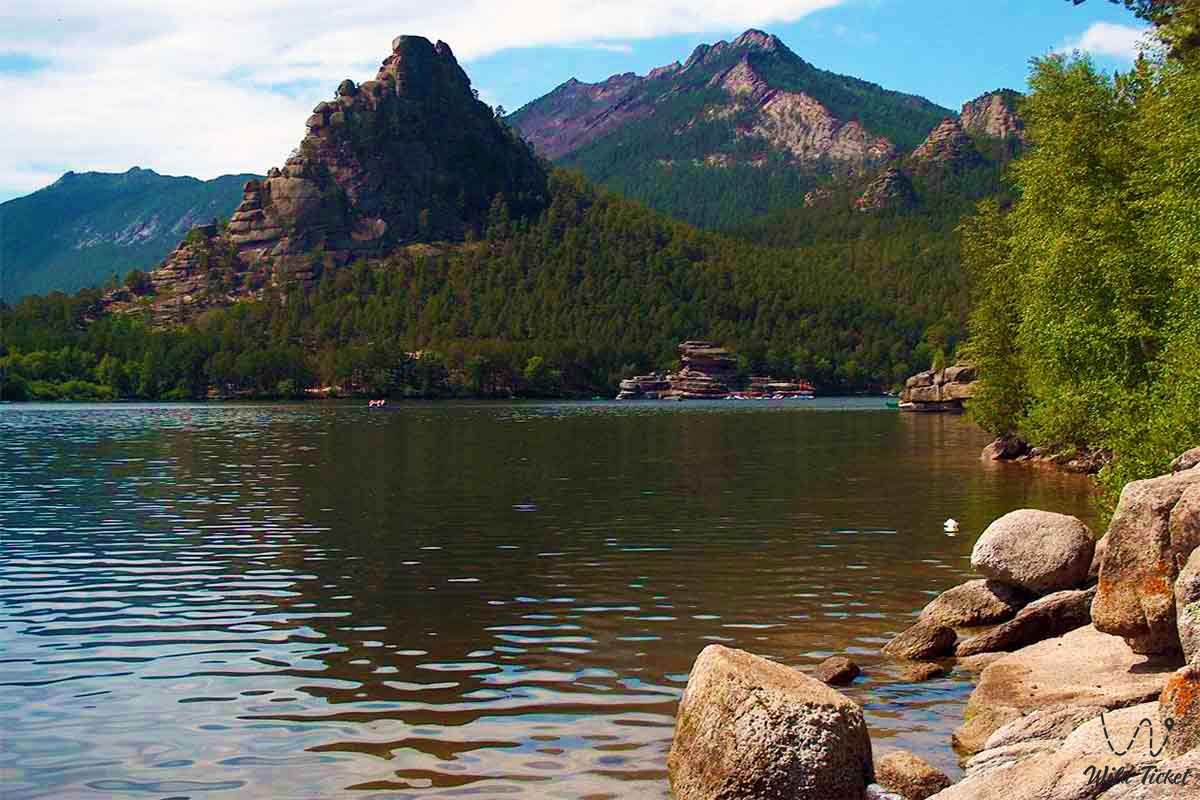
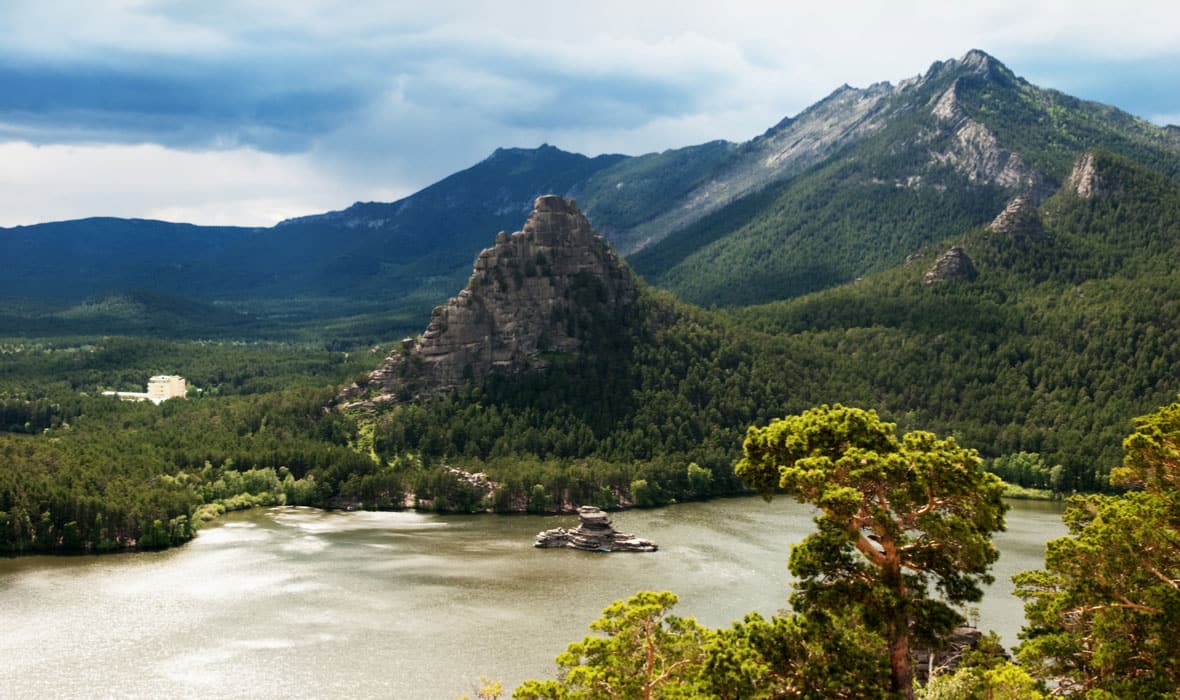
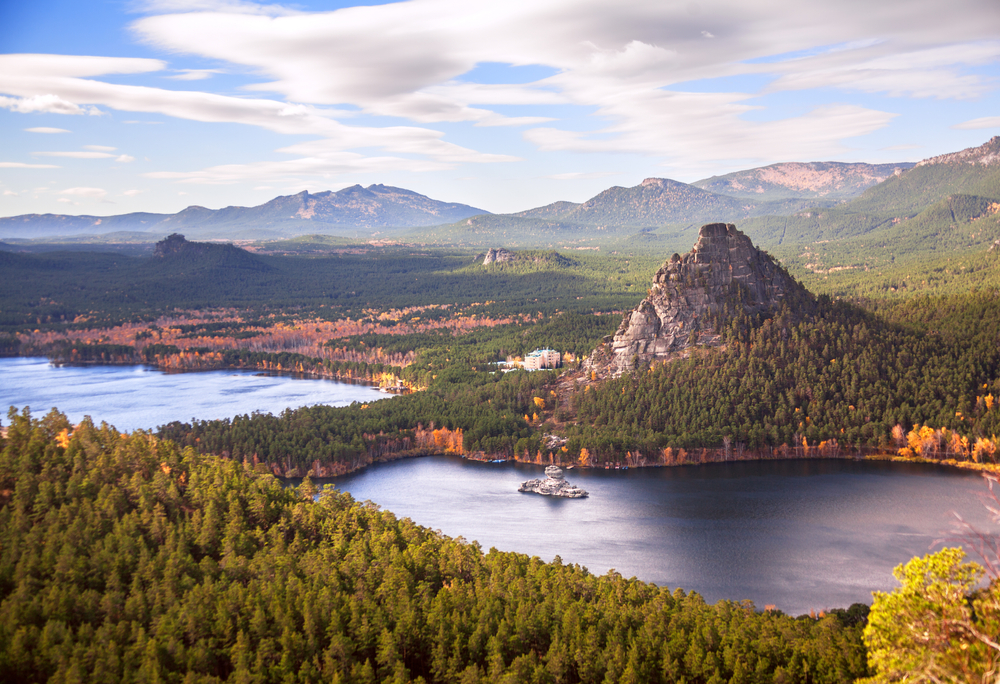
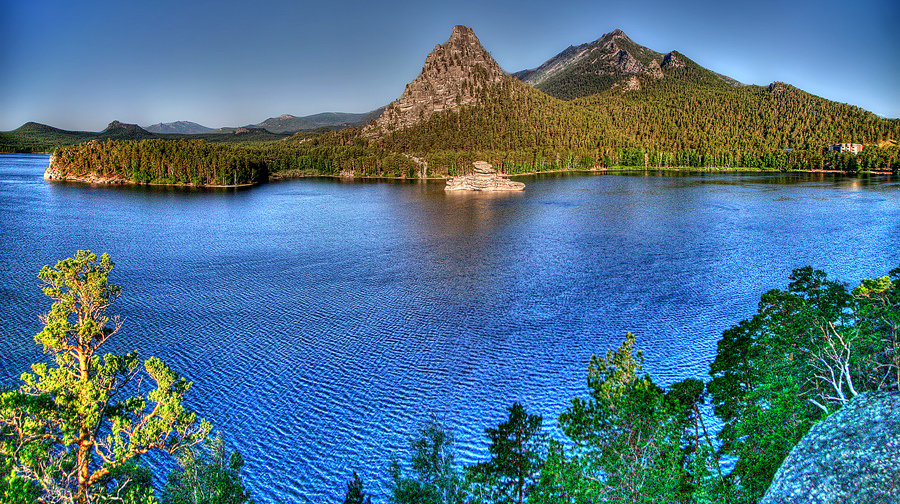
The lakes are fed by groundwater and seasonal precipitation, embedded in a granite landscape that was shaped by the same geological processes that created the Bayanaul formations further south. The combination of clear water, granite formations emerging from the lake surface (the most famous being the formation called Zhumbaktas, the "Sphinx"), pine and birch forest on the slopes, and the particular quality of northern light across the water at dawn and dusk makes Burabay of the most photographed landscapes in Kazakhstan.
Essential Facts
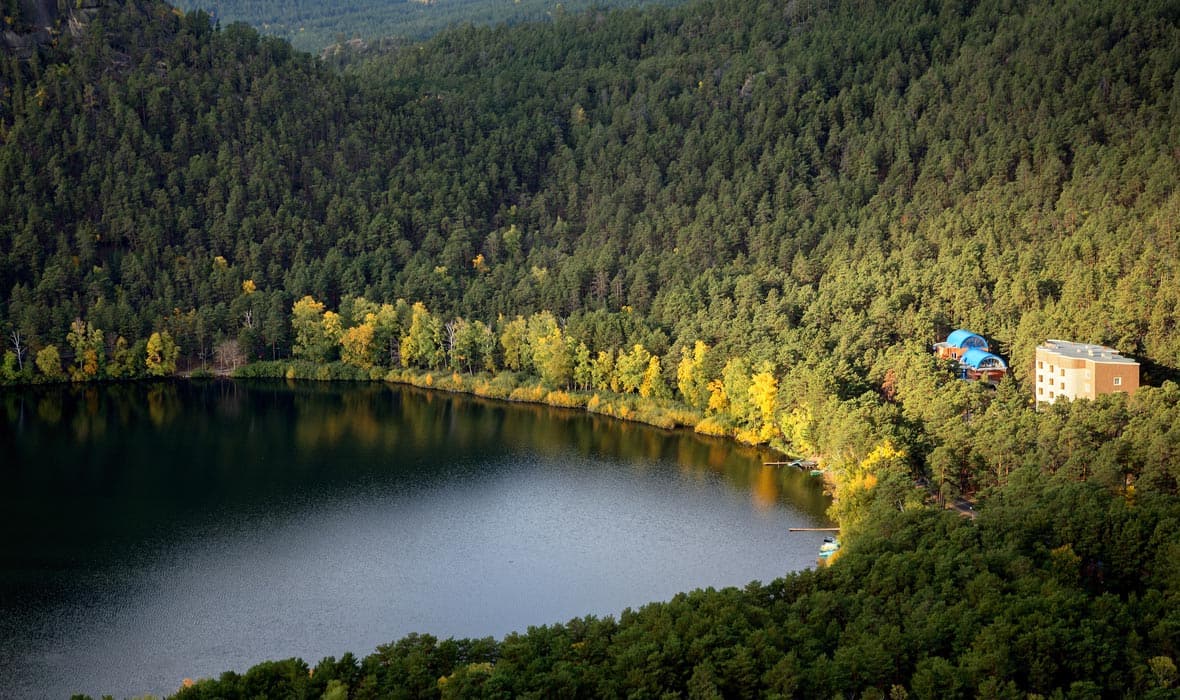
Burabay National Nature Park is approximately 250 kilometers north of Astana. The main visitor hub is the resort town of Borovoe (officially Burabay), accessible by regular train from Astana (around 3.5 hours) or by road (2.5–3 hours). Entry fees apply for the park. Accommodation ranges from basic sanatoriums and guesthouses to mid-range hotels; the resort has been a recreation destination since Soviet times and the infrastructure shows it in both its dated Soviet-era facilities and its more recently renovated options. Peak season is June through August; September and early October are the ideal months for quiet, cool visits with autumn color beginning on the hillsides.
The ‘Wow-Factor’
What Stops You
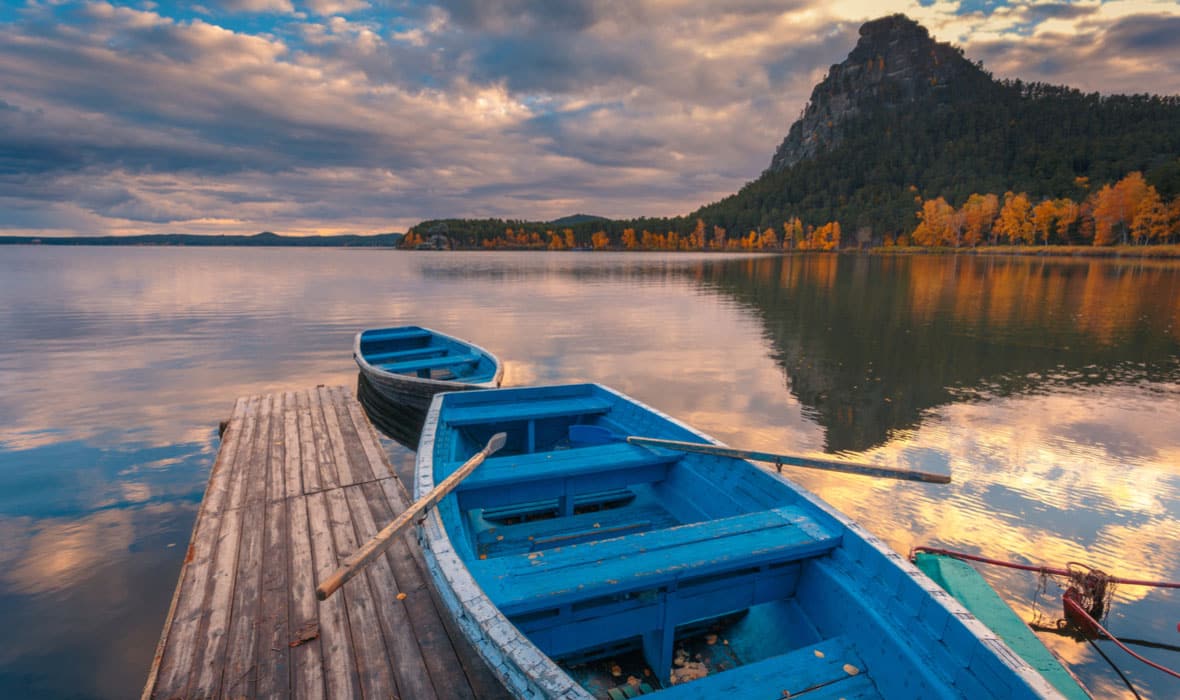
The boats at Burabay are wooden rowboats, available for hourly rental at the main pier from the time the resort opens. This is deliberate: on a lake this size, in this landscape, a motor would be wrong. The oar in the water makes the appropriate amount of noise — which is almost none — and from the center of the lake the silence that arrives is the specific silence of water and granite and pine forest at morning, before the families from Astana arrive with their picnic equipment and their children, before the resort's soundtrack starts.
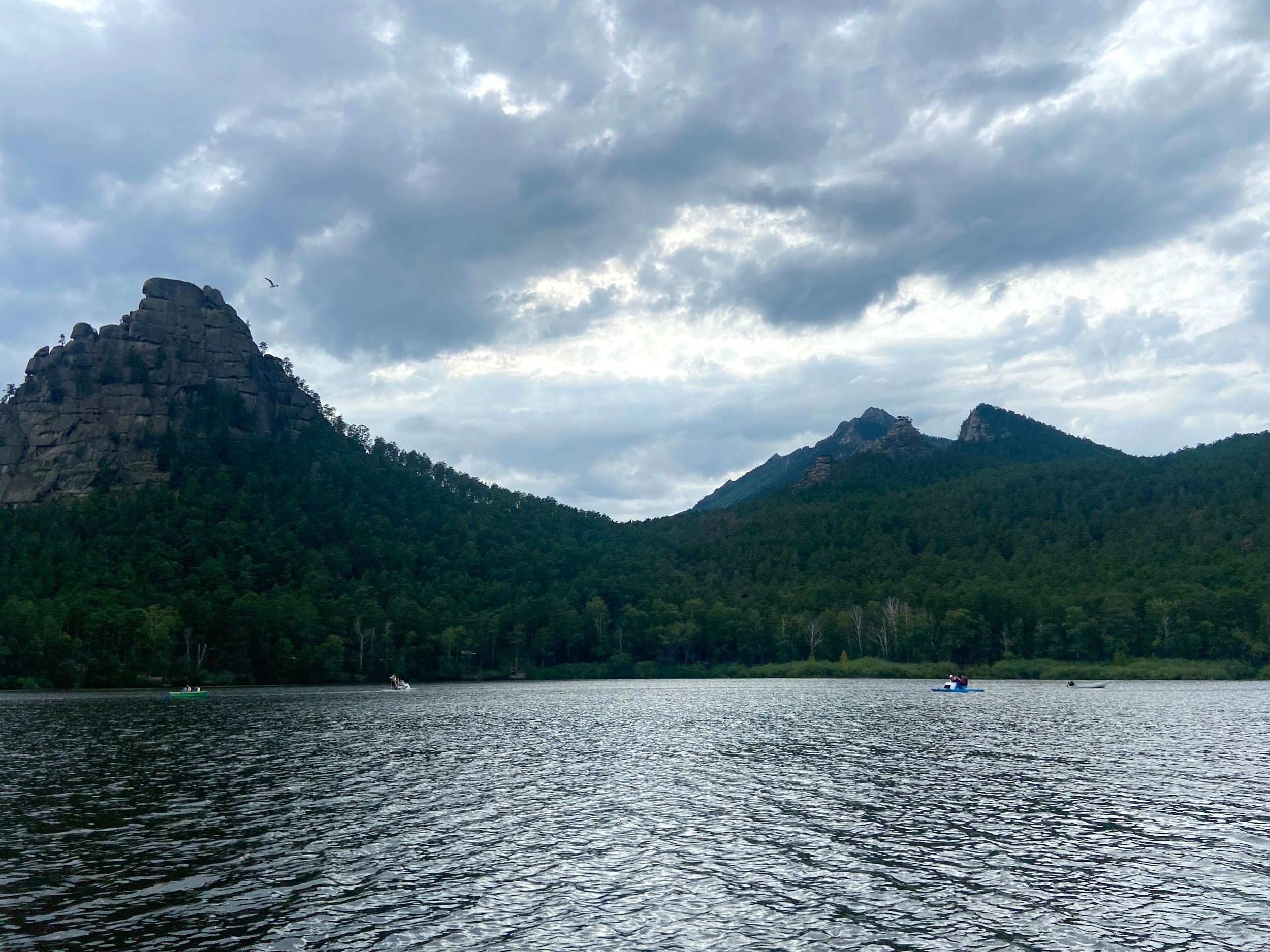
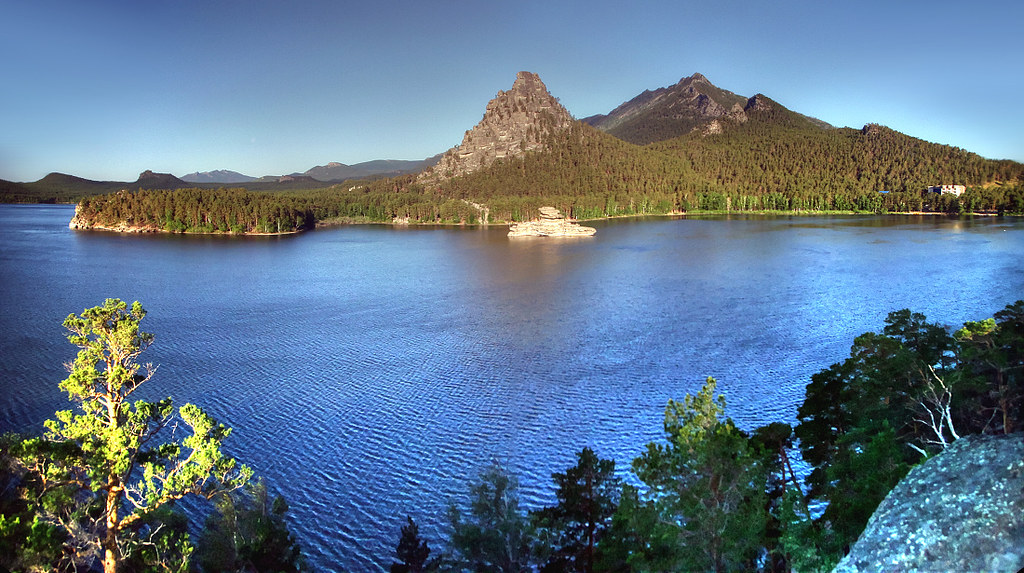
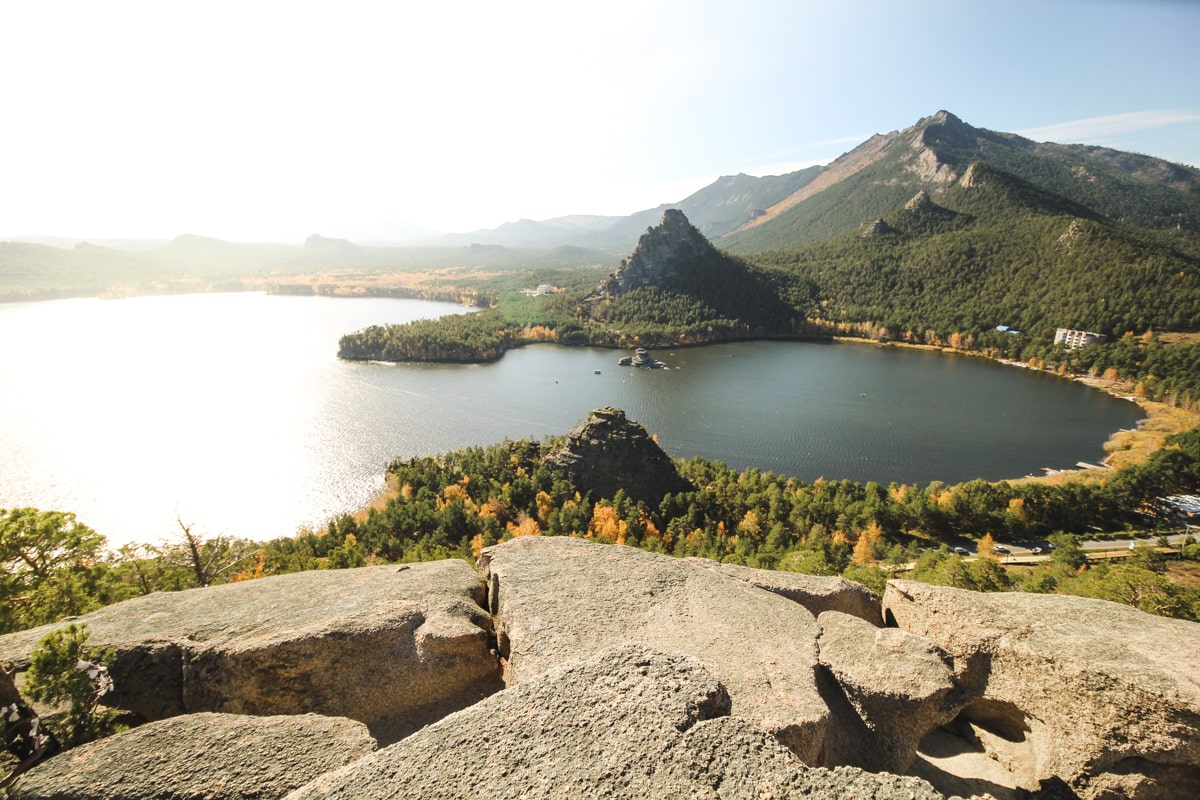
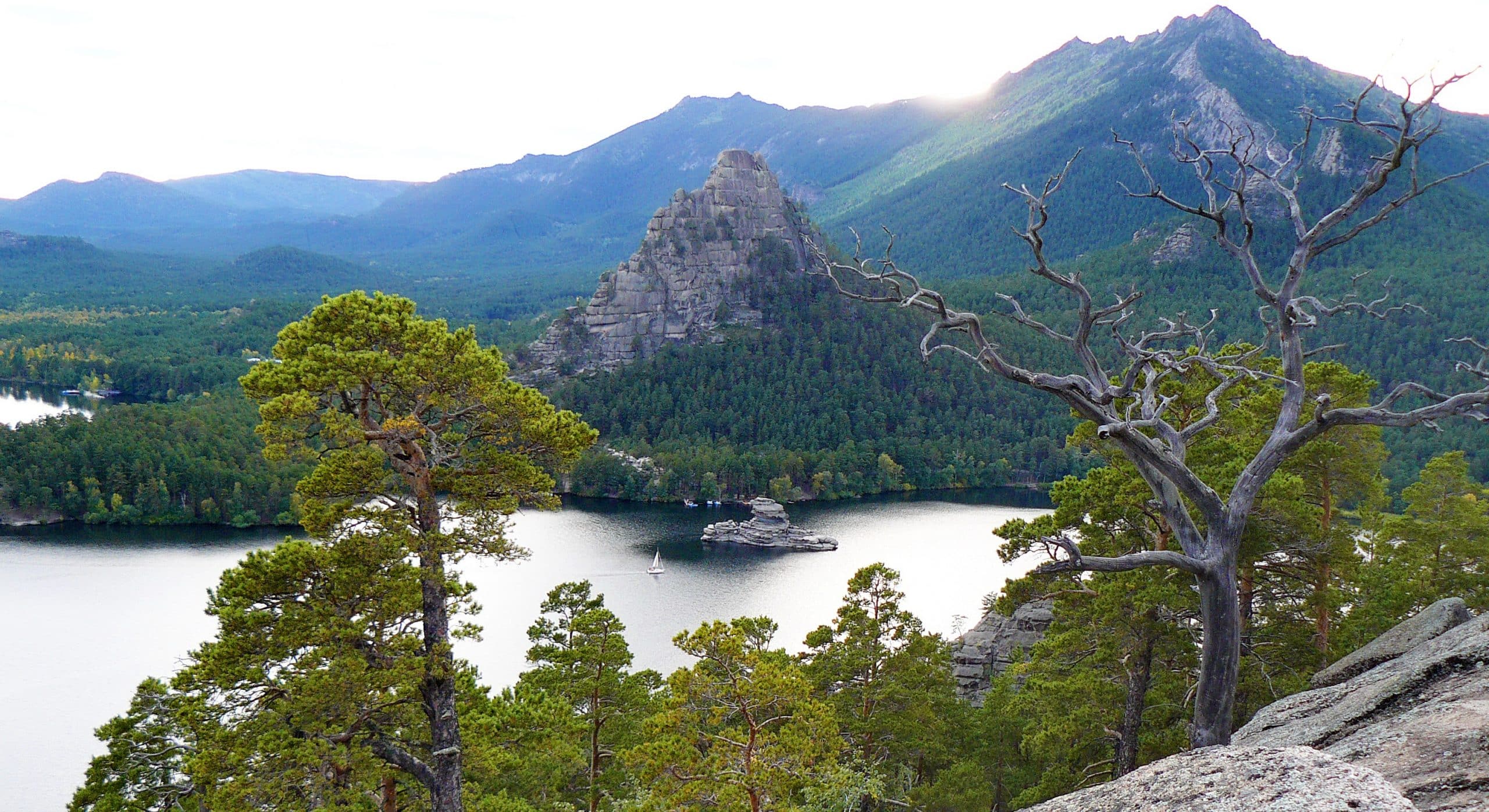
Zhumbaktas — the "Sphinx," the distinctive granite formation rising from the water near the lake's eastern shore — is what ends up in the photographs. It earns this: the rock, shaped by millennia of freeze and thaw into a profile that does look, from specific angles, like a reclining face staring at the sky, sits at the intersection of the lake surface and the forest behind it in a way that frames photographs naturally. In the morning mist, with the birch trees behind it still in low shadow, it looks ancient in a way that doesn't require any particular knowledge of geology to register.
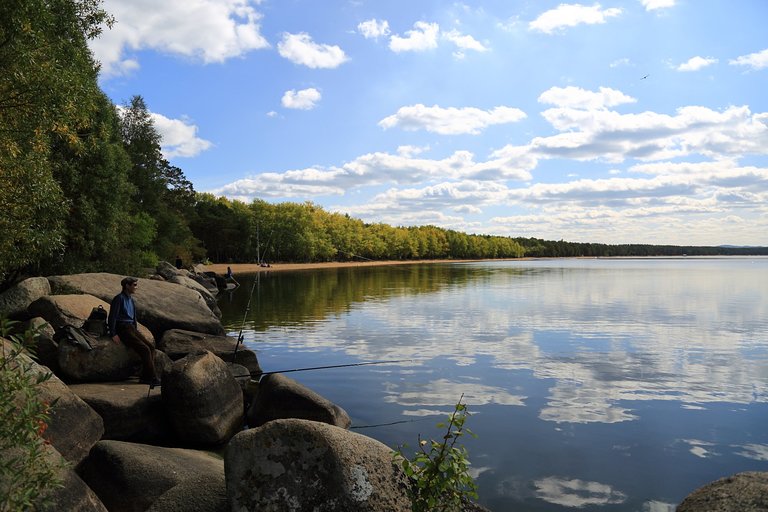
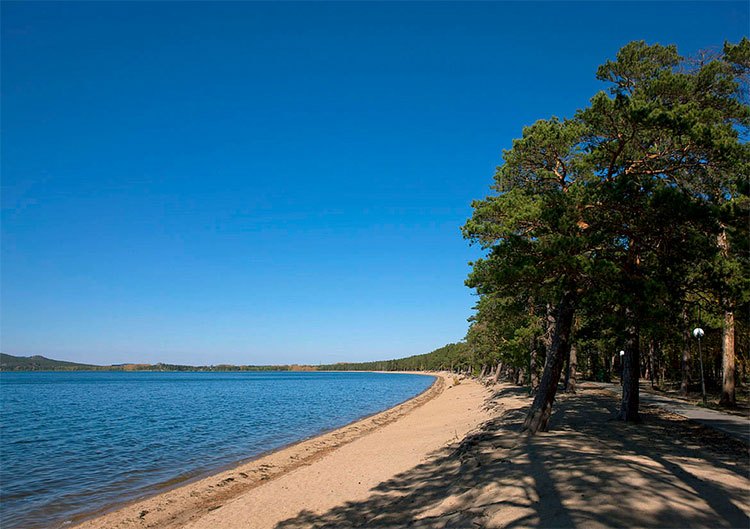
But the real wow factor at Burabay is quieter than any single landmark. It's the particular shock of arriving from the flat northern steppe and finding forest. Pine-scented air. Granite formations. Clear lake water where you can see the bottom in the shallows. After hundreds of kilometers of horizontal grassland, the vertical surprise of the Burabay landscape produces a specific recalibration — your eyes re-learning how to work in a space that has depth and texture and variation. And at dawn, before anyone else is on the water, that recalibration happens in silence that feels like a gift.
Deep History & Culture
The Forest the Kazakhs Called Sacred
The Burabay landscape was not always a resort. Long before the Soviet sanatoriums arrived in the 1930s, the forested granite hills and the chain of lakes were part of the Kazakh Middle Zhuz's seasonal territory — a sheltered zone of forest, water, and elevated terrain in the vast northern steppe that held both practical and spiritual significance. The Kazakh name for the area — Burabay, sometimes translated as "camel foal" in reference to of the granite formations — indicates a naming tradition that is specific to Kazakh cultural geography, where landscape features are individuated and incorporated into oral tradition.
The sacred formations around the lakes — Zhumbaktas (the Sphinx), Okyetpes (the rock that an arrow can reach), Zheke Batyr (the lone warrior) — each carry stories in the Kazakh oral tradition that connect the landscape features to ancestral figures, cosmological events, or moral narratives. This is the standard form of Kazakh landscape knowledge: not mythology in the European sense, but a mnemonic system that uses named features as anchors for historical memory and ethical instruction.
Russian settlement of the northern steppe, which accelerated following the formal annexation of Kazakhstani territory in the 18th and 19th centuries, brought a different set of relationships to the Burabay landscape. Russian and Ukrainian settler communities found the forested hills familiar enough to settle near — and the resort development that eventually transformed the area into a recreation destination for the regional aristocracy and then the Soviet nomenklatura built on this settlement history.
The Soviet period established Burabay as the primary resort destination for the Akmola region's industrial and administrative workers, building the sanatoriums and recreation facilities that still form the backbone of the tourist infrastructure. Independence brought new investment in the resort facilities and new attention to the Kazakh cultural heritage of the landscape — the legend of Kozy Korpesh and Bayan Sulu, whose tragic romance is set at Burabay, was rehabilitated from Soviet-era suppression and restored to the lake's cultural identity.
Today the Zhumbaktas and the other formations are photographed millions of times a year. The stories attached to them are less photographed. Both are part of what the landscape is.
Practical Digital Logistics
Getting to Burabay
Burabay is of the most accessible wilderness destinations in Kazakhstan — a direct train from Astana, a park entrance with established visitor infrastructure, and accommodation options at multiple price points make it significantly easier to reach than most of the country's nature reserves.
By Train
The regular train from Astana to Burabay (Shchuchinsk) takes approximately 3.5 hours and runs multiple times daily. This is the standard way Astana residents arrive; the train station in Shchuchinsk is close to the park entrance, and taxis are available at the station for the final approach to the lake. The journey is comfortable and the scenery on the northern steppe section of the route has its own horizontal quality before the forested hills of Burabay appear ahead.
By Road
The drive from Astana takes 2.5 to 3 hours on the main highway north. The road is good for the entire distance. Many visitors bring their own vehicles for the flexibility of exploring the multiple lakes within the park (Borovoe, Bolshoye Chebachye, Maloye Chebachye) without relying on local transport between them.
Entry and Fees
Entry to Burabay National Nature Park requires payment of the park fee, currently around 1,500 KZT per person. Pay at the park entrance gate or through the QazPark app. Boat rental on the main lake is available at the pier — negotiate directly with the rental operators. The QazGreen app provides offline trail maps for the park's hiking network.
Accommodation
The resort town of Borovoe (officially Burabay) has accommodation ranging from Soviet-era sanatoriums (basic, functional, cheap) to modern mid-range hotels. Weekend rates in July and August are significantly higher than weekday rates and mid-season rates; booking in advance is essential in summer. September and early October offer the same landscape at lower prices and with fewer visitors.
Mobile Coverage
Reliable in the resort town and main lake area. Drops in the more remote forest and ridge sections. Download offline maps before entering the park.
Must-Do Activities
What to Do at Burabay
Resort manager Asel Nurmagambetova runs the main activity desk at the Borovoe resort and has seen enough first-time visitors to know the pattern: they arrive, they look at the lake, they take photographs, and then they ask what else there is to do. "Everything," she says. Here's a more specific answer.
Rowboat on the Lake
The wooden rowboats available at the main pier are the central Burabay activity, and have been since the Soviet-era resort was established. Renting a boat for an hour or two and rowing out toward the Zhumbaktas formation — sitting with the granite Sphinx against the forest backdrop, the water clear to the bottom beneath you — is the experience that defines the lake. Go in the morning before 9 a.m. for the best light and the quietest water.
The Okjetpes Summit Trail
The trail to the top of Okjetpes peak — "the rock that an arrow can reach" — climbs through pine forest to an elevated viewpoint above the lake system. The view from the top encompasses Burabay Lake, the surrounding chain of connected lakes, and the northern steppe stretching to the horizon in every direction. Allow two to three hours round trip from the resort. The trail is well-marked. Bring water.
Kozy Korpesh and Bayan Sulu Memorial
The famous Kazakh epic — the story of two young people from opposing families, betrothed from birth, separated by jealousy and killed by treachery — is set at Burabay. The memorial marker near the lake commemorates the story's connection to this specific landscape. It's worth understanding the narrative before you visit; the epic is of the great works of Kazakh oral literature and the landscape at Burabay, seen through this story, becomes layered in a way it isn't without it.
Hiking the Pine Forest
The network of forest trails on the hillsides above the lake offers several hours of walking through the Scots pine and birch forest that gives Burabay its unexpected forest smell in the middle of the steppe. These trails are less crowded than the lakeshore and provide the particular sensory quality of northern forest — resin, leaf litter, the sound of wind through pine needles — that is genuinely different from anything else in Kazakhstan.
Swimming
The lake is clean and swimmable in summer. The water is cold early in the season — warming through July — and the designated swimming areas near the main beach are supervised. Swim in designated areas; the lake bottom has varying depths and the currents near the inlet are not obvious from the surface.
Local Flavors & Amenities
Eating at Burabay
The resort town of Borovoe has developed enough in recent years to support a range of eating options that go beyond the basic Soviet-era cafeteria model, though the Soviet model is still present and occasionally still the best value at the table.
Kazakh Food
The resort restaurants along the main promenade serve the northern Kazakhstani table: beshbarmak (lamb and noodles in broth), sorpa (the clear broth served alongside or as a first course), plov, manty, and the local specialty of samsa from roadside vendors who set up near the park entrance in summer. Prices in the restaurant run around 4,000 to 6,000 KZT for a full meal. The best food is generally found in the smaller, less tourist-facing establishments a street or two back from the promenade.
The Lake Cafe
The small cafe near the main boat pier serves tea, baursaks, and light snacks. It is the correct place to eat after an early morning boat trip — hot tea, fried dough, the lake still visible through the window. Nothing fancy. Entirely appropriate.
Forest Berries and Local Produce
In late summer, local families sell forest berries at roadside stands near the park entrance — wild strawberries in June, blueberries through July and August, and in some years mushrooms in September. These are cheap, excellent, and specific to the northern forest ecosystem that makes Burabay what it is. Buy them.
Accommodation
The resort's accommodation spectrum runs from the large Soviet sanatoriums (rooms from 8,000 KZT, meals included, somewhat institutional in character) to mid-range resort hotels (30,000–55,000 KZT) to rental apartments and guesthouses available through local booking channels. The sanatoriums are often dismissed but should not be — they're clean, the food is regular, and they position you inside the resort without needing a vehicle. Book everything in advance for July and August.
Essential Insider Tips
Tips for Burabay
Go in September, Not August
August at Burabay brings Kazakhstani families in numbers that fill the resort town, occupy every boat on the lake, and produce the particular atmosphere of a popular domestic resort at peak season — which is fine if you like that, but antithetical to the landscape's actual qualities. September has the same forest and the same lake and the beginning of the autumn color on the birch trees, at a fraction of the crowd density. September is the right month.
Go Early
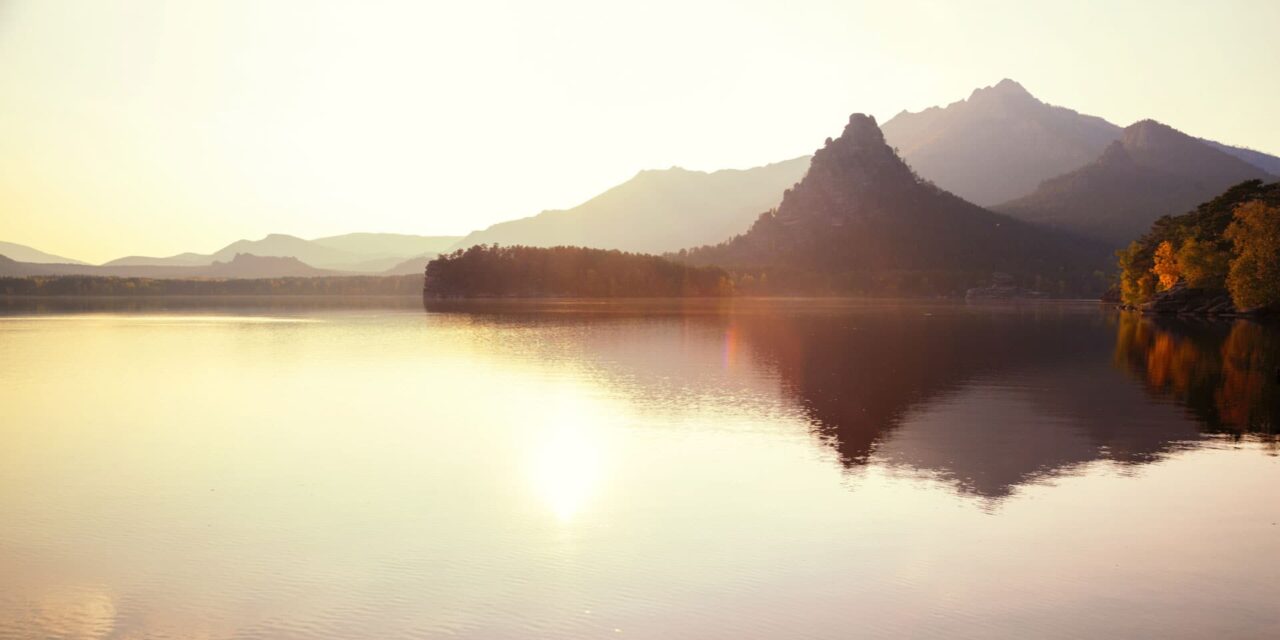
The boats fill up by mid-morning on busy days. The lake is flattest and quietest in the first two hours after sunrise. If the point is to be on the water in the early morning light with Zhumbaktas visible across the still surface, arrive at the pier before 8 a.m.
Learn the Formation Names
The named rock formations around the lake — Zhumbaktas, Okjetpes, Zheke Batyr — each carry stories in the Kazakh oral tradition that make the landscape more than a pretty backdrop. A short conversation with a local guide, or reading the park information boards in the national language, provides this context. The Kozy Korpesh and Bayan Sulu epic is worth understanding before you visit the memorial marker; it transforms a stone into a narrative.
Photography
Morning light on the lake, with the forest behind Zhumbaktas still in partial shadow, is the signature Burabay shot. The evening light on the granite formations — when the low sun angles across the rock and the texture becomes visible — is the that the serious landscape photographers come for. A circular polarizing filter helps with the lake's water glare and intensifies the pine-blue sky contrast.
Weekday vs. Weekend
If your schedule allows any flexibility, visit on a weekday. The resort town on a Saturday in July is a different experience than the same resort on a Tuesday in September. Both are Burabay; of them is quiet enough to hear the water.
Sustainability & Community
Protecting the Forest in the Steppe
Park ecologist Daniyar Seikov has been tracking the health of the Burabay pine forest for nine years. His concern is specific: the Scots pine stands, which give the resort its signature forest atmosphere and the park its ecological value, are showing signs of stress from a combination of bark beetle pressure, drought stress related to reduced precipitation, and the cumulative damage from decades of high-volume recreation. "The forest looks fine," he says. "You don't see what's happening inside the tree until the tree falls over."
What Responsible Visiting Looks Like
Stay on the marked trails in the forest sections. Walking off the trails compacts the thin forest soil and damages the root systems of trees that are already under stress. The forest looks robust; it is less resilient than it appears.
Don't pick plants, pull bark, or take anything from the forest. The lichen and moss communities on the granite formations are slow-growing and do not recover from disturbance on any timeline a human visitor will live to see. The named rock formations are cultural monuments as much as natural; treat them accordingly.
Zero-Waste
The park operates a zero-waste policy. Everything you bring in comes out with you. The resort town has waste facilities; the forest trails do not. Pack a bag. Use it.
The Forest Bio-Count
The Pulse of the Steppe initiative has a Burabay component: visitors are invited to photograph and report any signs of bark beetle damage, diseased trees, or other forest health indicators using the park monitoring app, available at the visitor center. These sightings go directly to Daniyar's monitoring database. Ten minutes and a phone camera.
Supporting Local Operators
The boat rental operators, the forest guides, the village guesthouses in the Borovoe resort area — these are the people whose livelihoods depend on the park remaining healthy and worth visiting. Book through them directly. Their continued presence depends on the forest continuing to be the forest. Their investment in its protection is proportional to their investment in their own futures, which is the most reliable form of conservation motivation there is.
Key Facts
- Regional Context
- Located in the strategically significant area of Kazakhstan, BURABAY LAKE serves as a key cultural and geographic anchor for the region.
- Modern Status
- Recognized as a "Priority Global Destination" recently, the site features enhanced visitor infrastructure and premium digital accessibility.
- Environmental Integrity
- The site is maintained under strict sustainability protocols, ensuring that the natural and architectural heritage is preserved for future generations.
- Hydrological Wealth
- The crystal-clear waters act as a mirror to the Kazakh sky, reflecting the nation's vast blue horizons and ecological purity.
- Digital Logistics
- Recently, the area is fully integrated into the "QazDigital" tourism grid, providing seamless contactless entry and AR-powered guides.
- Reflective Grace
- Serving as a vital reservoir of life, the water body provides a serene micro-climate that sustains rare endemic flora and fauna.
Photo Gallery
Discussion 0
No comments yet. Start the conversation!
Leave a Reply