Boszhira Tract
Journey to the edge of the world. Mars on Earth.
Essential Profile
The Place That Looks Like Somewhere Else
When geologist Rауhan Seitkali first brought his international colleagues to Boszhira, of them stopped the vehicle at the plateau edge and sat down without saying anything. He sat for about four minutes. Then he said: "I need a moment. I'm not sure what I'm looking at." That's a reasonable response. Boszhira is of those landscapes that requires recalibration — your eyes have a set of expectations about what rock formations look like, how far the horizon should be, what the relationship between scale and color should be, and Boszhira defeats all of them simultaneously.
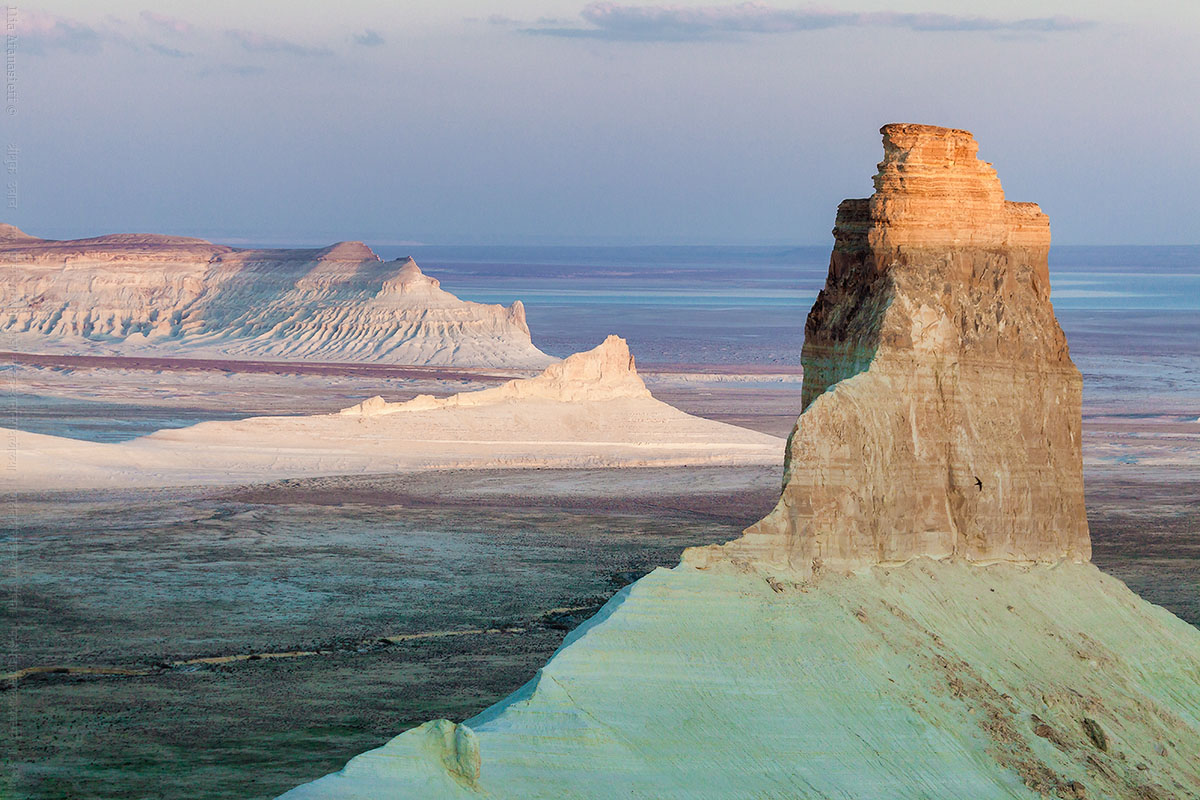
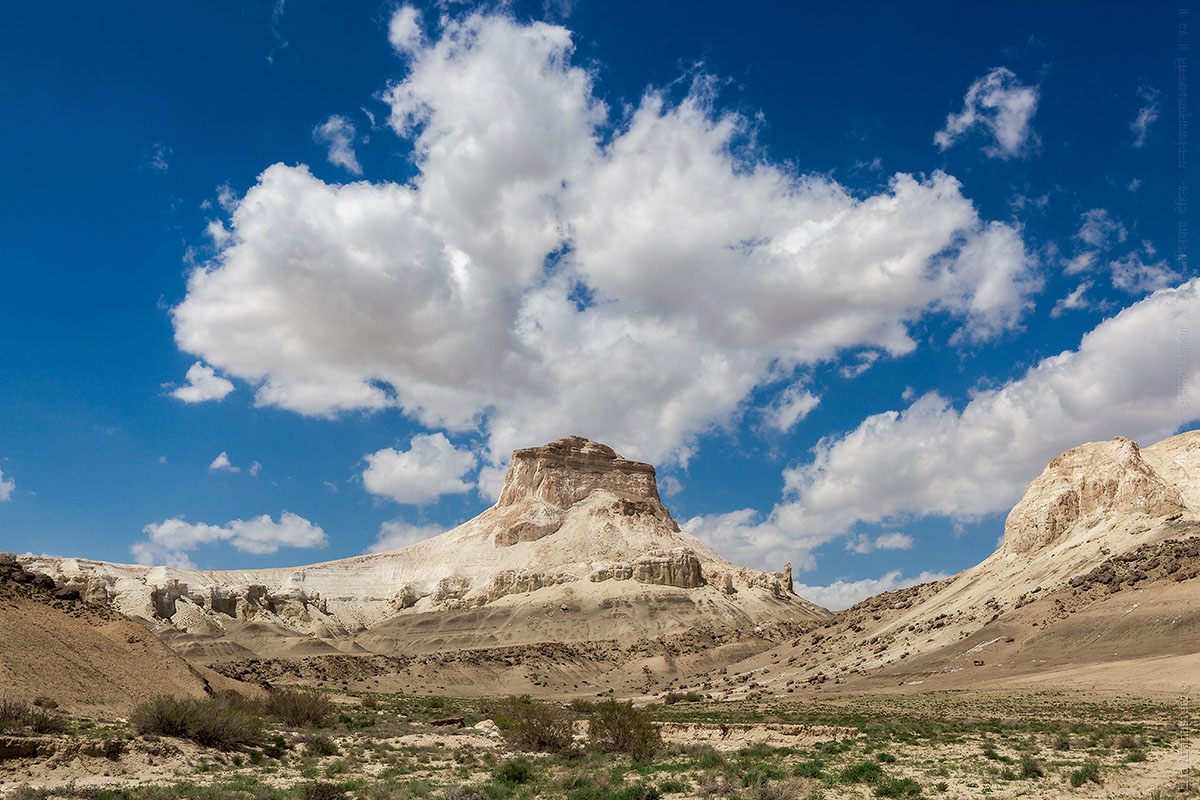
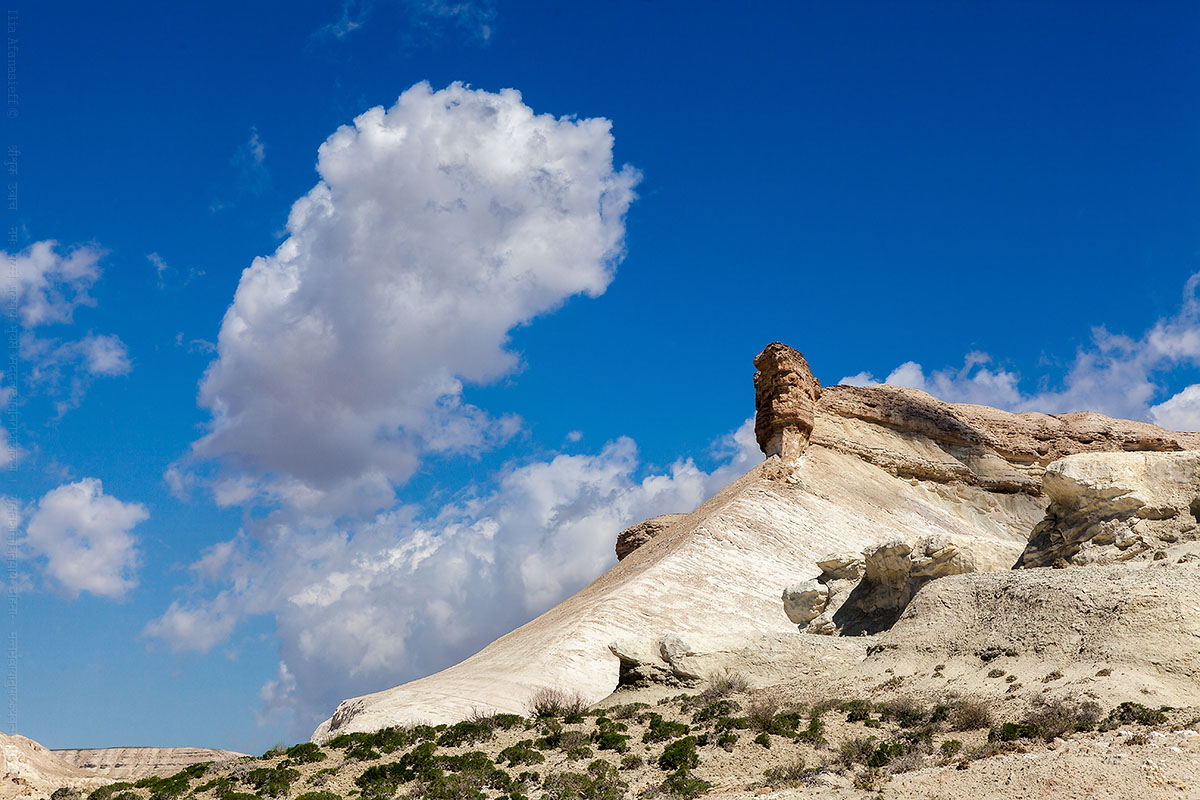
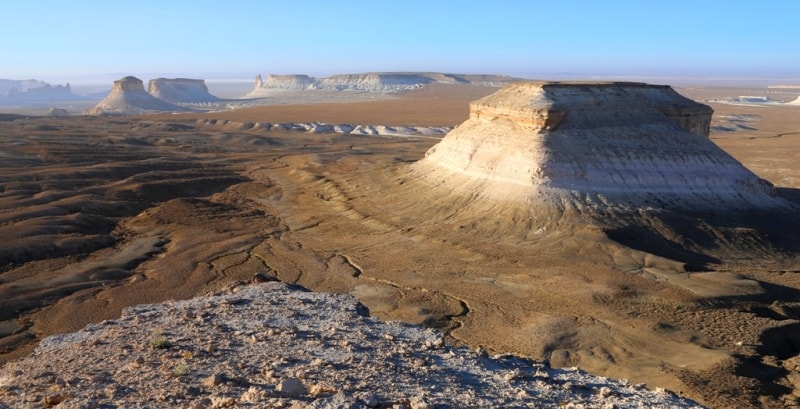
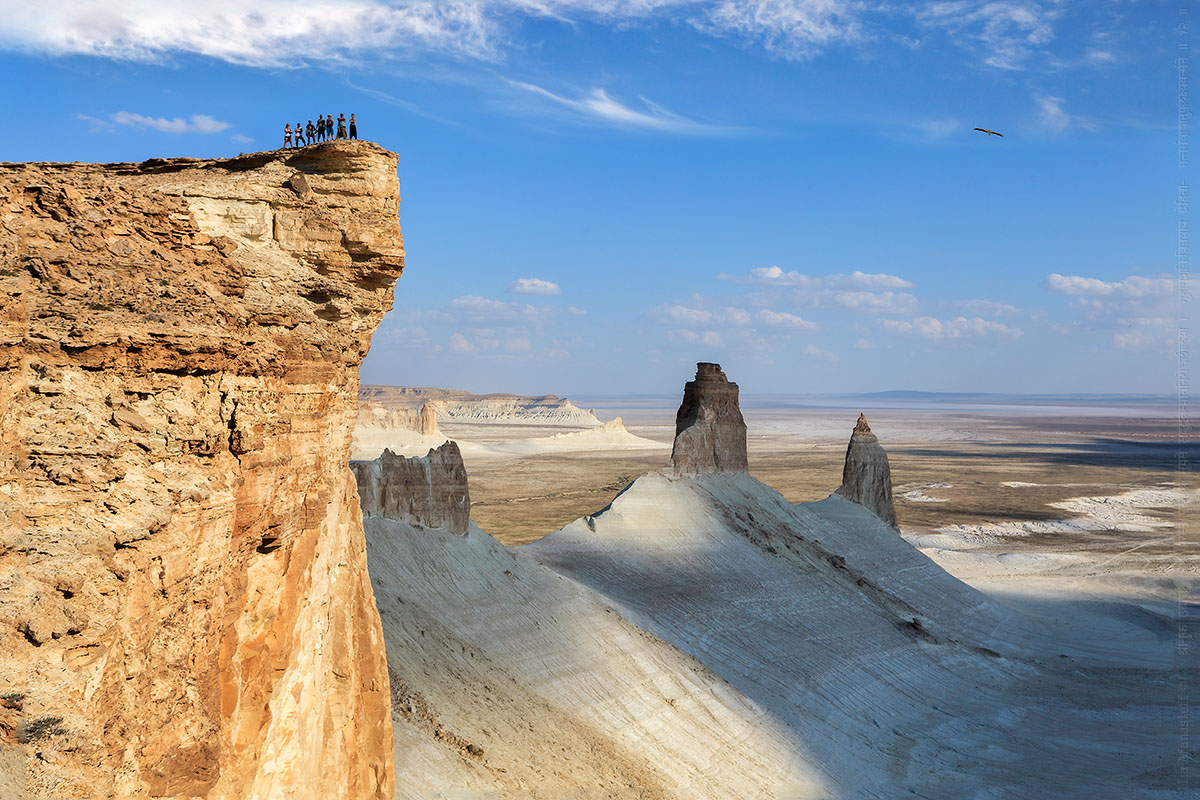
The Boszhira Tract occupies the western edge of the Ustyurt Plateau in the Manghystau Region, approximately 300 kilometers east of Aktau. What you see from the plateau rim is a white canyon of impossible depth and complexity: chalk spires rising from the canyon floor, razor-edged ridgelines running in parallel across the landscape, the whole thing bleached to a bone white by the Manghystau sun and offset by a sky of saturated Central Asian blue. The word most visitors reach for, eventually, is lunar. Or Martian. Something not-earthly, despite being very specifically geological and very specifically here.
It is a remnant of the Tethys Ocean — the ancient sea that covered this region millions of years ago before the African and Asian tectonic plates closed it off. As the sea receded, it left behind layers of limestone and sedimentary deposits, which the wind and infrequent water erosion of subsequent millions of years have carved into the forms visible today. The result is a landscape that records deep time in its physical structure: the white chalk, the layered walls of the canyon, the angular spires shaped by the particular chemistry of limestone dissolution.
Essential Facts
Boszhira is located within the Ustyurt Plateau in Manghystau Oblast, approximately 300 kilometers east of Aktau. Access requires a 4WD vehicle — the tracks across the plateau are rough, unmaintained in sections, and require desert driving experience or an experienced local guide. Most visitors arrange 3-5 day tour packages from Aktau that include Boszhira as the centerpiece, often combined with other Manghystau sites including the chalk formations at Sherkala, the underground mosques of Beket-Ata, and the coastal landscapes of the Caspian.
There is no infrastructure at Boszhira — no facilities, no water, no shade structures. Camping is how most visitors experience the site. The site is accessible year-round in principle, but spring (April–June) and autumn (September–October) are the practical windows; summer heat on the exposed plateau exceeds 40°C and is genuinely dangerous. This is a remote landscape in a serious climate, and it asks for proportionate preparation.
The ‘Wow-Factor’
The Moment the Plateau Ends
The Ustyurt Plateau offers almost nothing by way of warning. You drive across it for hours — flat chalk in every direction, the sky enormous, the horizon a line so straight it looks artificial — and then the plateau simply ends, and below you is Boszhira.
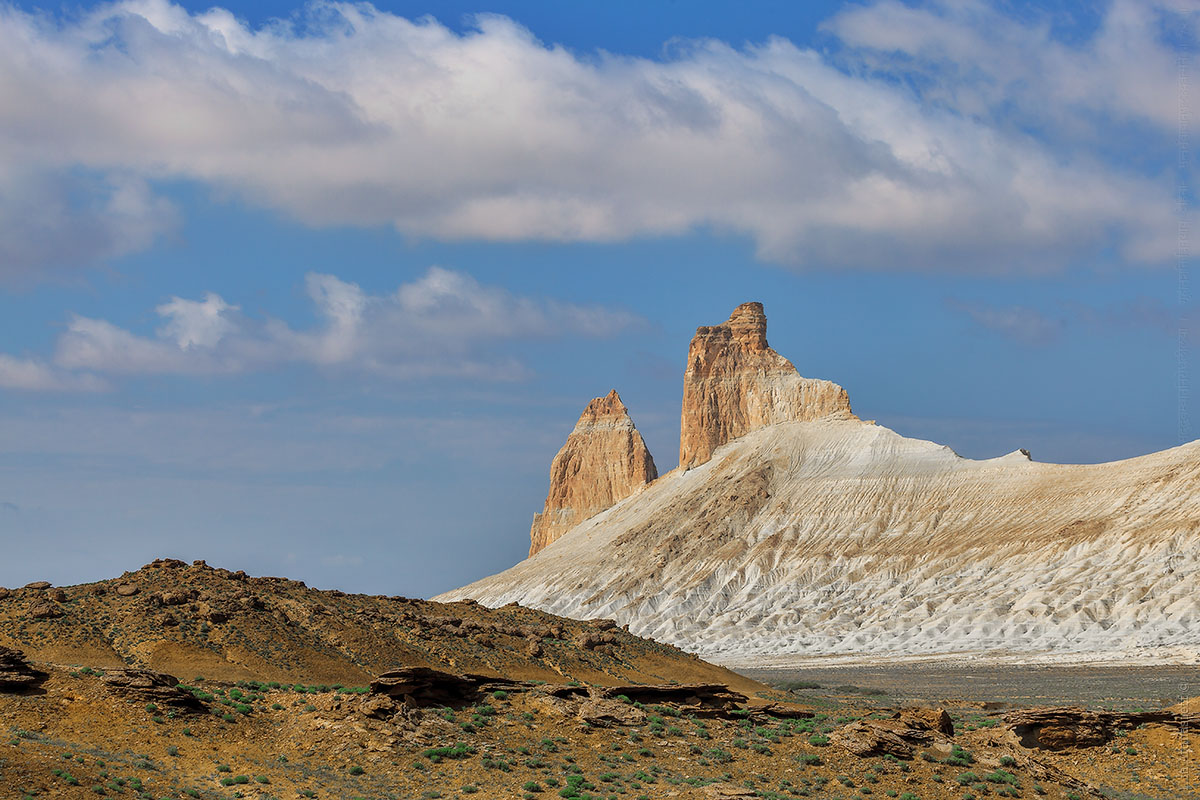
The formation known as the Fangs — two chalk spires rising hundreds of meters from the canyon floor, separated by a saddle that makes their twin profiles unmistakable from the upper ridge — is the image that most people carry home. And it's justified: the scale, the whiteness against the blue, the fact that these are natural objects shaped by dissolution and wind rather than any human intention, the way they look like something from a planetary exploration documentary rather than from western Kazakhstan. But the Fangs are two objects in a landscape that contains thousands of formations, ridgelines, canyon walls, and spires, each the product of the same long geological process that made the Tethys Sea floor into this.
The play of light across the chalk does something over the course of a day that photographs fail to capture in sequence. In the morning, the low sun angles across the spire faces and throws shadows that reveal the layered internal structure of the rock — each horizontal band a different sedimentary period, each layer a different color from pale cream to ochre to the grey-white of compressed limestone. By midday the shadows flatten and the landscape goes almost uniformly white, a high-contrast blaze against the blue sky. In the late afternoon the ochre returns, deepens, and at golden hour the entire canyon turns a warm amber that holds the day's heat long after the sun has gone below the plateau rim.
The silence compounds everything. The Ustyurt Plateau carries no background noise — no traffic, no human settlement within earshot, no trees to generate the windnoise that forested landscapes create. The silence at Boszhira is geological in scale. You are standing at the edge of an ocean floor that dried up sixty million years ago, looking at formations carved by processes measured in millennia, in a quiet that your nervous system wasn't built to process as normal. Most visitors describe some version of the same thing: the feeling of being very small and very awake simultaneously, the usual noise of the internal monologue reduced by the scale of what you're looking at to something manageable and clean.
Deep History & Culture
A Fifty-Million-Year Archive
The fossil record at Boszhira begins long before human beings existed to find it. The chalk walls of the canyon contain shark teeth, marine reptile bones, and mollusks from the Tethys Ocean — the ancient sea that occupied this basin for tens of millions of years before tectonic forces closed it and the water retreated south and east into what became the Caspian, the Aral, and the Black Sea. Every horizontal band in the Boszhira canyon walls is a page in this record: different sediment, different organisms, different epoch of a sea that is now a desert.
The Adai tribe — a clan grouping of the Manghystau region whose descendants still live in western Kazakhstan today — knew Boszhira as a navigational landmark and a spiritual place. The chalk spires known as the Fangs were, in Adai oral tradition, sacred guardians of the plateau — warriors who turned to stone while defending the steppe, their forms preserved in the rock as both monument and warning. This kind of origin narrative — rock formations personalized as ancestral protectors — is common across Kazakh cultural geography, and it reflects a worldview in which landscape and history are not separate categories but continuous.
The Ustyurt Plateau itself was a major corridor of Eurasian movement. The Saka peoples who ranged from the Black Sea to the Altai in the 5th century BCE and earlier moved across this plateau as they moved across all the steppe between the mountain ranges and the sea. The Silk Road's northern routes passed through the Manghystau region, and the white spires of Boszhira, visible at distance on the flat plateau, functioned as a landmark for caravans crossing from the Caspian coast inland — navigational reference points in a landscape otherwise devoid of fixed orientation markers.
The Kazakh Khanate, established in 1465 by Janibek and Kerei Khans, included the Manghystau region within its western territories, and the Adai — fierce, independent, and formidably difficult to subjugate — maintained their autonomy under and alongside the Khanate structure through the centuries. When Russian annexation advanced through the 18th and 19th centuries, the Manghystau was among the last regions to be effectively incorporated — partly because of the Adai resistance, partly because the extreme terrain and climate made it difficult to administer from the north.
Soviet geological surveys in the 20th century mapped the Boszhira formation in scientific terms for the first time, identifying the Tethys-origin of the chalk deposits and cataloguing the fossil record. The surveys also noted the potential for petroleum extraction in the Manghystau basin — which eventually made the region economically significant in a way entirely separate from its natural landscape. Today, the oil and gas infrastructure of western Kazakhstan exists in uncomfortable proximity to landscapes like Boszhira; the tension between extraction and preservation is part of the story of the Ustyurt Plateau.
Independence returned the naming rights and the cultural authority to tell Boszhira's story in Kazakh terms. The Adai oral tradition, which never required academic validation, continues to describe the Fangs as guardians of the steppe. Both accounts — the geological and the cultural — are true, and neither cancels the other.
Practical Digital Logistics
Getting to Boszhira: The Desert Logistics
Boszhira is not a place you drive past on the way to somewhere else. It is a destination that requires specific planning, a capable vehicle, and the willingness to commit to the logistics that remote desert travel demands. Get this right and you'll arrive at of the most extraordinary landscapes on earth. Get it wrong and you'll be stranded on the Ustyurt Plateau with a broken axle and no mobile signal.
The Vehicle Requirement
A professional-grade 4WD vehicle with dual spare tires is non-negotiable. The track from the nearest road to Boszhira covers approximately 60 kilometers of Ustyurt plateau surface — sharp limestone debris, soft sand sections, and in wet conditions, mud that requires genuine ground clearance and experienced handling. Standard AWD crossovers are not appropriate. If you don't have the right vehicle, hire with a driver.
Organized Tours from Aktau
The most practical option for most visitors. Guided 4x4 expeditions from Aktau run between 90,000 and 115,000 KZT per day, including a driver-guide who knows the track and carries the emergency equipment and spares necessary for the terrain. Multi-day itineraries covering Boszhira and other Manghystau sites (Sherkala, Beket-Ata, the Caspian coast chalk formations) offer the best value per site visited and the company of someone who has driven this landscape hundreds of times. Book through Aktau-based tour operators in advance — demand is strong in spring and autumn, and last-minute availability is not guaranteed.
Desert Entry Permit
Independent travelers require a Desert Entry Permit (approximately 3,500 KZT), registered through the Visitor Mangystau portal before departure. This is a safety and tracking measure as much as an administrative — the permit records your planned route and expected return, which matters when you're 300 kilometers from the nearest city in a landscape with no mobile signal.
No Public Transport
There is none. The nearest village, Senek, is approximately 100 kilometers from the Boszhira rim — and Senek itself has no regular transport to Aktau. Unless you have your own capable vehicle or are joining an organized tour, there is no way to reach Boszhira independently.
Fuel
Fill your vehicle completely in Aktau before departure and carry additional fuel in approved containers — the round trip to Boszhira from Aktau and back consumes roughly 60 to 80 liters in a 4WD depending on the vehicle and track conditions. There is no fuel anywhere near the site. Running out of fuel on the Ustyurt Plateau is not a minor inconvenience.
Water
Carry a minimum of 10 liters per person for a day trip, more for overnight camping. There is no water at Boszhira. The plateau offers no shade and temperatures in spring and autumn can still exceed 30°C in the afternoon. In summer the heat is genuinely dangerous.
Navigation
Download offline GPS maps of the Manghystau track network before leaving Aktau. Mobile data coverage ceases several hours before you reach the site. Satellite communication devices are strongly recommended for independent travelers — emergency assistance, if required, will not arrive quickly in a landscape this remote.
Must-Do Activities
What to Do at Boszhira
Guide Dias Ospanov has been leading expeditions to Boszhira for six years and says the single best thing visitors can do there is also the simplest: get up before dawn on the first morning, find a position on the plateau rim above the Fangs, and don't move until the sun is fully up. "People want to rush to the canyon floor," he says. "But first you have to understand what you're looking at from above. You have to see the whole thing." He's right. Here's how to approach the time.
Stand at the Plateau Rim at Dawn
The upper viewpoints above the Boszhira canyon provide the orientation that the canyon floor cannot. From above, the scale of the formation becomes comprehensible — the depth of the canyon, the relationship between the Fangs and the surrounding landscape, the way the white chalk formations extend across the plateau edge in both directions. The morning light arrives at low angle and the shadows cut across the spires in ways that reveal their internal structure. Start here. Stay longer than you think you need to.
Descend into the Valley of the Fangs
The guided descent from the plateau rim to the canyon floor takes three to four hours round trip and crosses through the different geological layers visible in the chalk walls. Your guide can identify fossil-bearing sections — shark teeth and marine remnants from the Tethys epoch are occasionally visible in the wall surfaces and in the canyon floor debris. Observe them, photograph them, leave them where they are. The geology is fragile and the fossil record is protected.
Walk among the Spires
The canyon floor between the major chalk formations offers a completely different perspective than the rim view — the formations tower above you, the scale inverses, and the paths between the spires are narrow enough in places to require single-file movement. Allow half a day for a thorough walk. Bring more water than you think you need.
Camp Under the Stars
Boszhira is of the darkest places in Kazakhstan — no light pollution within a hundred kilometers, and the flat horizon of the Ustyurt Plateau gives the night sky its full vertical extension. The Milky Way at Boszhira on a clear night is not a decorative background; it is a dome of light that requires adjustment from your eyes before you can actually resolve the structure of it. Guided stargazing sessions with telescopes are available through some tour operators; independent campers get this simply by lying on their backs in their sleeping bags. This is, without qualification, of the great night sky experiences in Central Asia.
Photograph the Blue Hour
The twenty minutes before sunrise and the twenty minutes after sunset give the chalk spires a quality of light — blue-white, cool, the shadows deep — that the daylight hours don't produce. Position yourself on the plateau rim or in the canyon below the Fangs. Bring a wide-angle lens. The blue hour at Boszhira is the primary reason serious landscape photographers make the journey.
Local Flavors & Amenities
Food and Shelter at Boszhira
There is nothing to buy at Boszhira. No cafe, no vendor, no water tap, no guesthouse, no fuel. This is stated plainly because visitors who arrive expecting the amenity standard of a managed tourist site will find a chalk canyon, some extraordinary geology, and whatever they brought with them. Plan accordingly.
Eating in the Field
Organized tour packages typically include catering as part of the package price. The standard for well-run Manghystau expeditions is campfire cooking from a support vehicle that travels with the tour: shorpa (lamb broth soup) that has been traveling in a thermos since Aktau, grilled meat prepared over a fire built from scrub wood on the plateau, shubat (fermented camel milk) that some visitors acquire a taste for and others do not. The meal at a campfire with the Boszhira canyon visible from the cooking area in the fading light is of the more specific pleasures of this journey.
Prices vary by operator; meals run around 8,000 KZT per day as a standalone service if arranged through the Nomadic Catering operations out of Senek village.
The Catering Basics
The food of the Manghystau expedition is nomadic logic adapted to modern camping: portable, calorie-dense, built for sustained energy in a hot and demanding environment. Beshbarmak around the campfire, hot tea at sunrise, shubat from the cold chest. If you have dietary restrictions, communicate them to your tour operator in advance; improvisation in the middle of the Ustyurt is limited.
Camping Accommodations
The camp experience at Boszhira ranges from basic (your own tent, your own equipment, your own food) to organized (insulated tents with portable solar power, prepared meals, a tour operator who handles logistics). Eco-pop-up camps run by tour operators cost around 40,000 KZT per night for the full package — expensive compared to a guesthouse in Aktau, but it includes everything and positions you on the plateau rim for the pre-dawn light.
Senek Village
The nearest village with permanent accommodation is Senek, approximately 100 kilometers from Boszhira — a drive of two to three hours on the plateau track. The Senek Desert Lodge offers basic but functional rooms for around 15,000 KZT, and the village has a small market and fuel. Some tours use Senek as a staging base for multi-day expeditions.
Aktau as Base
Most international visitors base themselves in Aktau, western Kazakhstan's main city and Caspian port, and make Boszhira as a multi-day excursion. Aktau has hotels at every price point, a seafood restaurant scene built around the Caspian harvest, and the logistical infrastructure (tour operators, 4WD rental, permits) needed to organize the plateau expedition. It's also worth staying for its own merits — the coastal cliff landscapes of the Manghystau are significant enough to justify extra nights, and the city's Soviet-era coastal architecture has a strange charm that grows on you.
Essential Insider Tips
The Desert Demands Respect: What to Know Before You Go
The Equipment Checklist Is Not Negotiable
Two full-sized spare tires. Not — two. The sharp limestone debris of the Ustyurt plateau track destroys tires without warning, and the combination of heat, load, and rough surface means a second flat on the same trip is not unusual. A satellite communicator (Garmin inReach or equivalent) is the other non-negotiable: your phone stops receiving signal several hours before you reach Boszhira, and if something goes wrong on the plateau — a mechanical breakdown, a medical issue, someone who can't walk back to the vehicle — you need a way to call for help that doesn't depend on the mobile network. Emergency assistance from this location will take hours regardless; don't add to that by being unreachable.
Dress for the Full Range
The Ustyurt plateau at the rim of the Boszhira canyon is exposed to wind that can be freezing even in spring. The canyon floor, sheltered from the wind and absorbing radiated heat from the chalk walls, can be fifteen to twenty degrees warmer. You will need both capabilities — windproof outer layer for the rim, breathable cooling layers for the canyon walk. A base layer of moisture-wicking fabric, an insulating mid-layer, and a windproof shell that packs into a pocket is the standard solution. Don't leave the vehicle without all three accessible.
Hire a Local Guide Who Knows the Hidden Passages
The main viewpoints and the standard descent to the Fangs are well-established. But the Boszhira formation extends well beyond what the standard route covers, and a local guide who has been working this landscape for years can show you sections of the canyon — narrow chalk passages, elevated outcrops, ancient eagle-nesting sites in the higher cliff faces — that are not on any official map. This is worth the hire regardless of whether you speak a shared language; the guide's knowledge of the terrain, the weather patterns, and the emergency navigation routes is the most valuable thing they carry.
Loud Music and Aggressive Driving
Don't. The Boszhira landscape holds deep significance for the Adai communities of the Manghystau, and for Kazakhstani visitors who have traveled long distances to experience of their country's most significant natural sites. Revving engines and blasting speakers in this context is simply disrespectful. Beyond cultural considerations, aggressive off-road driving in the chalk formation area causes irreversible damage to the geology — the chalk is erosion-prone and the natural drainage patterns of the canyon are delicate. Drive on established tracks.
Night Photography
The Boszhira dark sky is exceptional. If astrophotography is part of your reason for making this journey, test your equipment setup in Aktau before departure — you don't want to discover that your intervalometer is malfunctioning when you're set up on the plateau rim at 2 a.m. with the Milky Way overhead. A red-light headlamp preserves your night vision while allowing you to manage your equipment. Bring a second battery for your camera; cold nights reduce battery performance significantly.
The Single Most Important Tip
Build a buffer day into your Boszhira schedule. Plateau tracks become impassable after rain. Weather on the Ustyurt changes faster than forecasts capture. A vehicle breakdown adds unpredictable time. If your return flight from Aktau allows no flexibility, you will spend part of the trip anxious about whether you'll make it back in time. Give yourself a day of margin and spend it however the landscape deserves.
Sustainability & Community
Keeping Boszhira What It Is
Driver and guide Erlan Akhmetov has been running Manghystau expeditions for a decade. His operating principle is simple: "Leave the chalk exactly as you found it." He says this to every group before they leave the vehicles — not as a formality, but as a genuine instruction that he enforces. The chalk formations at Boszhira are not regenerating. What the wind and water dissolution created over fifty million years, careless driving can damage in an afternoon. The tracks that cross-hatch the plateau surface around poorly managed tourist sites take decades to recover, if they recover at all.
Track Discipline
The "Keep Boszhira Wild" initiative requires all vehicles to stay strictly on established tracks. "Track-braiding" — the practice of creating parallel routes by driving slightly off the existing track when it becomes rough — spreads the erosion footprint across the plateau and creates a widening band of disturbed surface that is visible from altitude and takes decades to stabilize. Fines apply. More importantly, the ethics apply regardless of enforcement.
Pack Out Everything
There are no waste disposal facilities at Boszhira, and the platau's remote character means litter accumulates with no natural mechanism for removal. All solid waste must be carried back to Aktau for proper disposal. This is not a casual recommendation — it is the condition of being permitted to visit the site. The Bio-Waste policy is strict and monitored by the regional park administration.
Supporting the Local Economy
The Zhanaozen Guide Association connects visitors with local drivers and guides from the communities nearest to the Boszhira formation — families whose livelihoods are directly tied to the expedition tourism the landscape generates. Booking through the association rather than through large tour aggregators ensures a greater share of the money reaches the people who live with this landscape year-round.
In Senek village, local artisans produce camel-wool items and hand-crafted talismans connected to the Adai cultural tradition. Purchasing directly from the village supports families whose craft practice carries cultural knowledge that is not commercially valuable anywhere else.
The Fossil Patrol
The Ustyurt Fossil Patrol is a volunteer initiative that invites expedition participants to document and report any newly disturbed geological features or illegal fossil removal they observe during their visit. The chalk formations contain marine fossils from the Tethys epoch — shark teeth, reptile fragments, mollusk remains — that are scientifically significant and legally protected. Report any evidence of fossil collection or rock removal to your guide or the park administration.
The Long Argument for Leaving It Alone
Boszhira's remoteness is not incidental — it is part of what the landscape is. The effort required to reach it has, historically, kept its visitor numbers manageable. As access infrastructure improves and the site becomes better-known internationally, pressure on the chalk formations and the plateau ecology will increase. The habits that visitors establish now — track discipline, waste management, guide support, quiet movement through the canyon — will determine whether the next generation of visitors finds what we found. The Fangs have been standing for millions of years. The question is whether they'll still look like this in fifty.
Key Facts
- The White Grand Canyon
- Boszhira is Mangystau's most dramatic landscape, featuring towering white chalk cliffs and 'teeth' rising 200 meters from the floor.
- Ancient Sea Floor
- The entire tract was once the floor of the Tethys Ocean; today, visitors can find shark teeth and fossilized shells in the chalk walls.
- Vertical Scale
- From the upper plateaus, visitors look down on a landscape that is so vertical and vast it is often compared to the American Southwest.
- Adventure Gateway
- Reaching Boszhira requires a heavy 4x4 vehicle and professional desert navigation, making it the ultimate destination for adventure travelers.
- Cinematic Fame
- The tract has been the filming location for numerous international films and car commercials due to its futuristic and alien appearance.
- Preservation Status
- Recently, the area is strictly protected as an 'Eco-Sanctuary,' limiting traffic to certified zero-impact tours to preserve the fragile chalk.
Photo Gallery
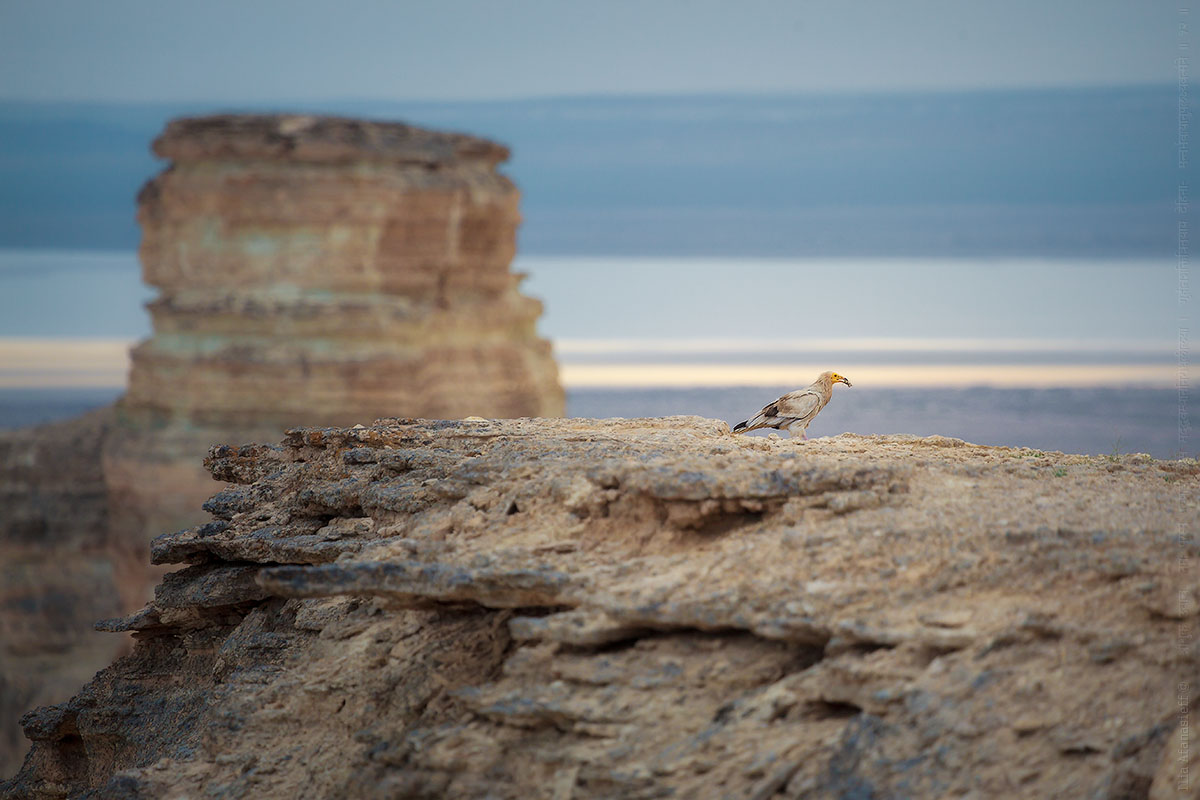
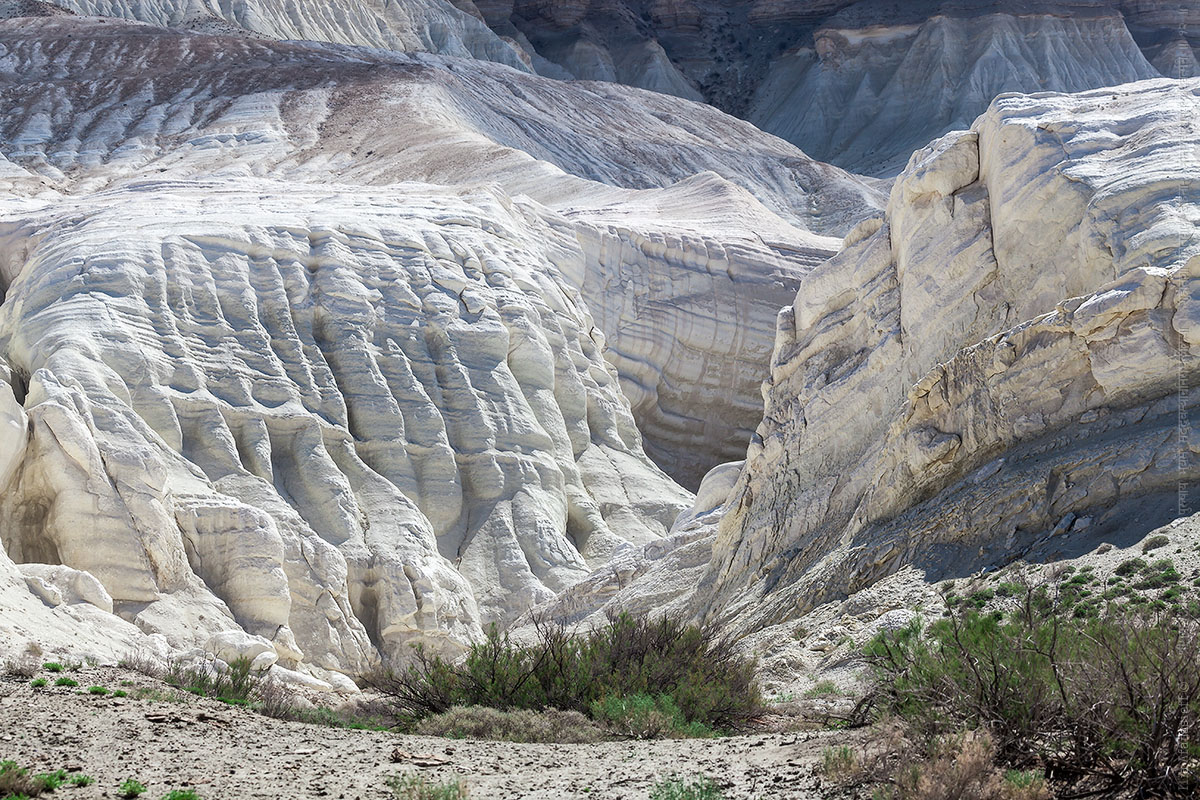
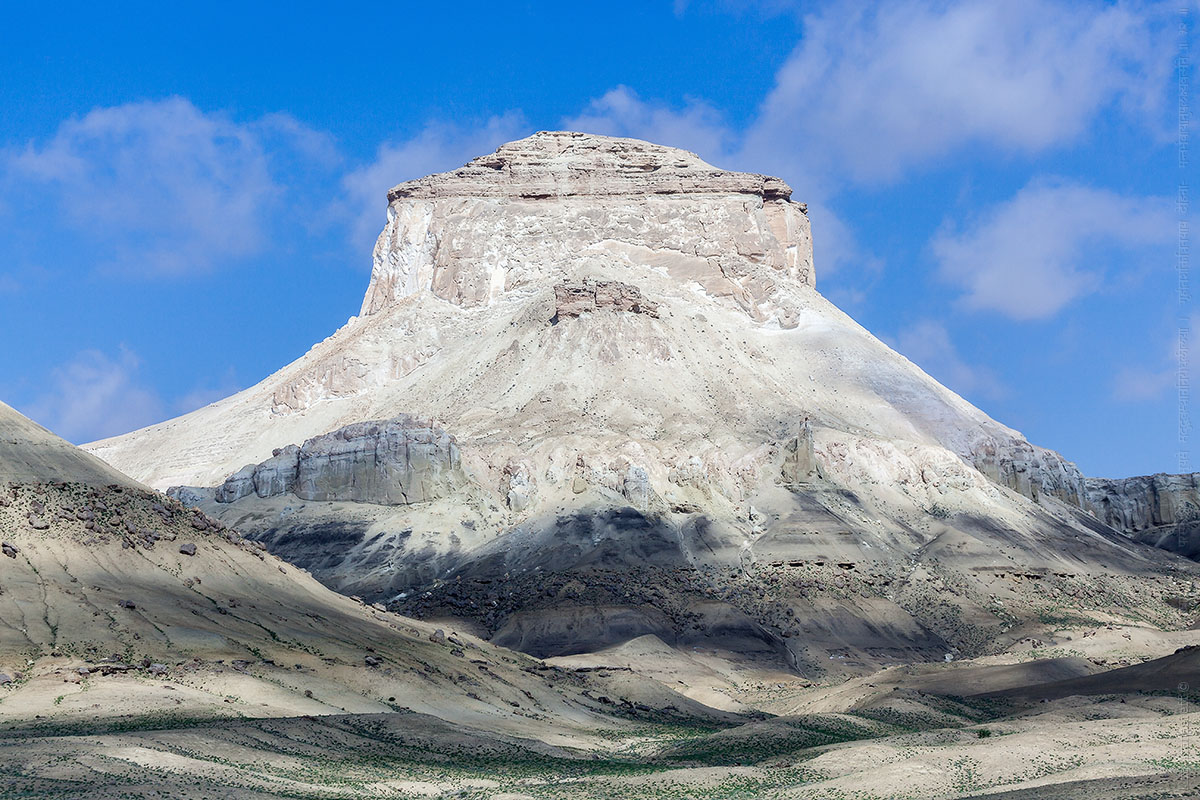
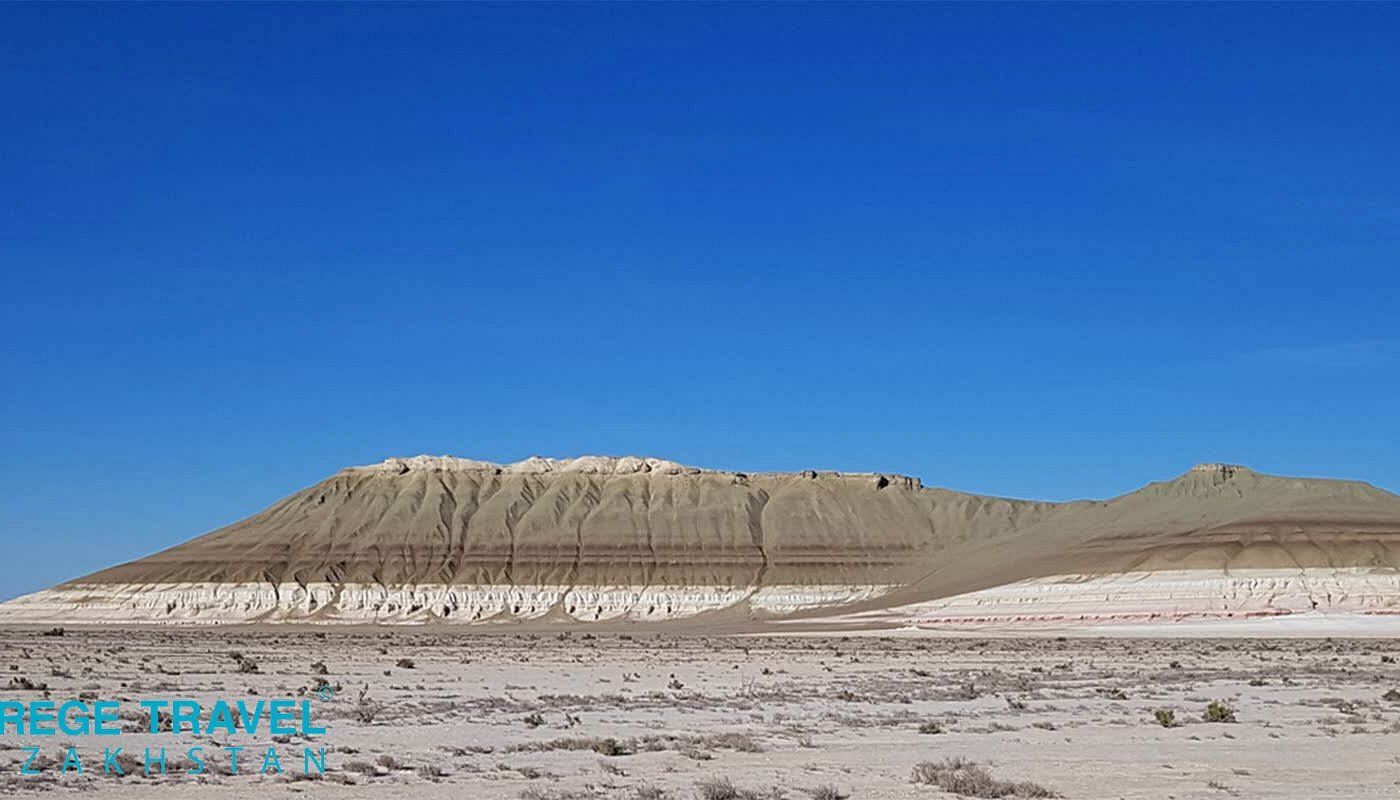
Embedded Video
Boszhira Tract
Loading map...Loading map...
FAQ
Have a question?
Ask and get answers in seconds!
Discussion 0
No comments yet. Start the conversation!
Leave a Reply