Altai Botanical Garden
Discover the golden Altai mountains and pristine lakes.
Detailed History & Context
The Altai Botanical Garden: Kazakhstan's Mountain Flora, Preserved
East Kazakhstan keeps a particular kind of quiet — the kind that belongs to places where science and landscape have grown into each other over decades. The Altai Botanical Garden, a specialist research institution dedicated to the flora of the Altai mountain region, is such place: less a park to stroll through than an archive you can walk inside.
The garden sits within a botanical tradition that mirrors the broader arc of Kazakhstani institution-building — founded to document and protect a highland ecosystem that spills across borders, influenced by Soviet-era botanical science, and now finding a new audience as international interest in Central Asian ecology grows. Recent upgrades under the "Visit Kazakhstan" initiative have added modern visitor facilities without disturbing the grounds' working character.
Researchers active in 2024 and 2025 have drawn renewed attention to the garden's place within the region's scientific landscape, and the collections here — plants gathered from elevations that range from steppe foothills to alpine meadows — give the site a depth that rewards slow attention. For anyone whose interest in Kazakhstan extends past its cities, the Altai Botanical Garden is not an afterthought but a destination.
Digital Logistics & Access
Getting to the Altai Botanical Garden requires knowing which you're going to, since Kazakhstan has botanical collections at different elevations and in different regions — a reflection of the country's extraordinary ecological range.
The primary Altai Botanical Garden of significance is associated with the East Kazakhstan Region near Ridder (formerly Leninogorsk), in the Altai mountain system that borders Russia and China. This institution, part of the network of research gardens managed by Kazakhstan's botanical science infrastructure, is considerably more remote than Almaty's own botanical collections and requires deliberate planning to visit.
From Ust-Kamenogorsk (the regional center for East Kazakhstan), the journey to Ridder takes roughly 100 kilometers by road. The road is paved and maintained. Ridder itself is a former mining city now reinventing itself as an Altai tourism base, with basic accommodation and services for visitors using it as a gateway to the Altai mountains.
The botanical garden itself has no extensive visitor infrastructure — this is a research institution, not a commercial attraction. Visitors should contact the garden administration in advance to confirm access arrangements and opening conditions. The garden is typically open during the growing season (May through September), but specific conditions vary by year and staffing.
Public transport from Ust-Kamenogorsk to Ridder runs regularly (buses and marshrutkas, approximately 2 to 2.5 hours). From Ridder to the garden itself, local transport or taxi completes the journey.
For visitors combining the botanical garden with broader Altai mountain exploration — which is the logical approach, given the distance from Almaty — Ridder serves as a base for hiking in the Markakol Reserve and other Altai destinations. Budget at least two days in the region.
5+ Specific Activities
The Altai Botanical Garden rewards visitors who approach it as a research institution as much as a scenic destination.
Walk the collection systematically, not randomly. The garden is organized by plant family and ecological zone — alpine meadow species, forest understory, Altai steppe flora. Understanding the organizational logic, which a guide or garden staff member can explain briefly, makes the walk coherent rather than merely pleasant. The Altai mountain system is of Central Asia's most botanically rich regions, and the collection preserves species that don't survive in the lower elevations of Kazakhstan's cities and plains.
Ask about the research. The garden operates as a scientific institution, and the researchers and botanists who work there are typically willing to discuss what they're studying if visitors express genuine curiosity. Kazakhstan's botanical research has produced significant findings on plant adaptation to altitude and continental climate extremes. Conversations with people who spend their working lives in this landscape are worth having.
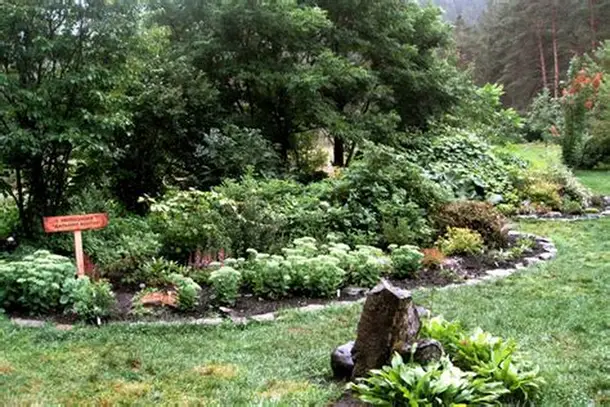
The herb collection, specifically. The Altai mountains have an established tradition of medicinal plant use — adaptogens, analgesics, anti-inflammatories — that Siberian and Central Asian herbal medicine systems drew on for centuries. The garden's collection of these species is among the most complete in the region. Whether or not you're interested in herbal medicine as a practice, the plants are extraordinary in their morphological diversity.
Photography in morning light. The garden faces south-southeast and receives its best light in the morning hours, when the Altai peaks to the east catch the early sun and the garden itself is at its most vivid. Come early, plan to stay for the first two hours of light, then revisit the sections you want to photograph again.
The surrounding landscape. The garden exists within an Altai mountain landscape that extends in every direction. If time and fitness allow, trails from the garden area provide access to the broader alpine terrain — which is, on its own terms, of Kazakhstan's most beautiful landscapes.
Sustainability & Responsible Travel
The Altai Botanical Garden is, at its core, a conservation institution — which means that sustainability isn't an add-on to the visitor experience but the reason the institution exists.
The garden maintains seed banks and living collections of Altai plant species that are under pressure from climate change, overgrazing, and agricultural expansion in the surrounding region. Several of the species in the collection have declining wild populations; the garden's role in preserving genetic diversity for potential restoration work gives its horticultural activity a practical urgency that commercial gardens don't have.
For visitors, the sustainable behaviors are straightforward: stay on designated paths (the garden's collection isn't a walk-anywhere space — plant beds are positioned carefully and some species are fragile), don't pick or collect plant material, and avoid bringing in soil or plant matter from outside (invasive species introduction is a real risk for specialized collections).
The surrounding Altai landscape — the forest, the mountain streams, the alpine meadows visible from the garden's upper terraces — is part of the East Kazakhstan Region's broader protected area network. The health of that landscape directly affects what the garden can preserve and study. Visitors who hike into the surrounding terrain should use established trails and observe leave-no-trace principles with the seriousness that remote mountain ecosystems require.
The garden accepts scientific volunteers for specific programs — botanical surveys, seed collection, garden maintenance — through arrangements with its research department. If you have relevant botanical background and are planning extended time in the East Kazakhstan region, this is worth investigating as an alternative to purely recreational tourism.
The Altai mountains are of the world's recognized biodiversity hotspots. The garden's work in documenting and preserving that biodiversity is quiet, underfunded, and important. Supporting it — by paying whatever entry fees exist, purchasing from the garden's educational publications, and treating the collection with care — contributes to work that matters beyond the immediate experience of visiting.
Practical Tips for travelers
Practical advice for making the Altai Botanical Garden visit work.
Contact the garden in advance. The Altai Botanical Garden is a research institution, not a commercial attraction, and its visitor arrangements reflect that. Access conditions, staffing levels, and opening periods vary by season and institutional schedule. A brief inquiry via email or phone before visiting confirms current conditions and may open access to guided visits that wouldn't otherwise be advertised.
Combine with Ridder and the broader Altai circuit. The garden is most logically visited as part of a multi-day East Kazakhstan itinerary rather than as a standalone day trip from Ust-Kamenogorsk. Ridder (Leninogorsk) has accommodation, local restaurants, and access to Altai hiking terrain. The Markakol Reserve, further east, is of Kazakhstan's most pristine mountain lake systems and combines naturally with this region.
Wear sturdy footwear. The garden terrain includes uneven paths, slopes, and sections that are genuinely botanical field conditions rather than manicured walkways. Comfortable, closed-toed shoes with ankle support are appropriate.
Visit in the growing season. May through September represents the window when the garden is actively growing and the full collection is visible. Late May and June are particularly interesting for flower diversity; late July and August for the full alpine bloom season. September brings the color changes of the Altai autumn, which are worth seeing in their own right.
Budget more time than you expect. A botanical garden in a research mode has a density of information and visual interest that rewards slower pace than a recreational park. Plan for two to three hours minimum to move through the collection without rushing.
History & Discovery
The Altai mountains of East Kazakhstan sit at of the world's most biologically significant ecological boundaries: the point where the Siberian taiga and the Central Asian steppe meet and interpenetrate, producing a zone of biological diversity that neither ecosystem achieves alone.
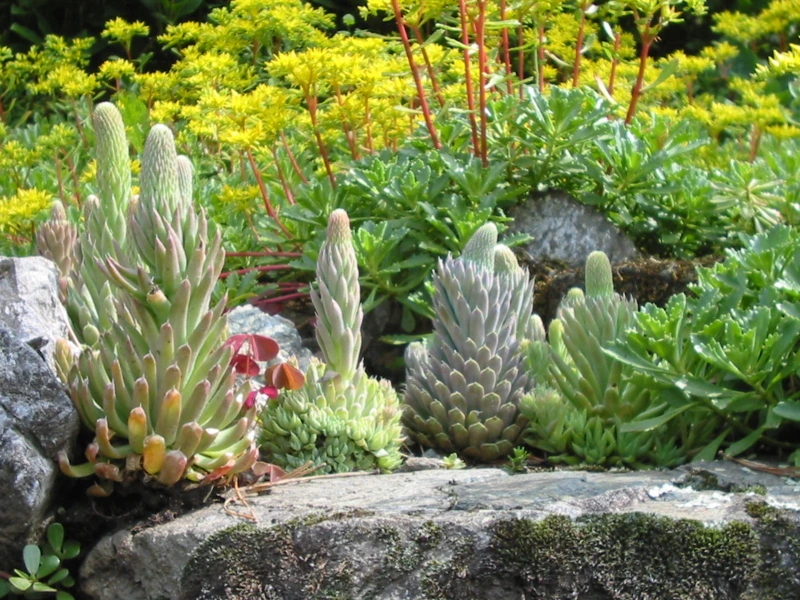
The Altai Botanical Garden was established to document and preserve this intersection. Situated near the city of Ridder in the Rudny Altai mountains, the garden occupies terrain that ranges from the river valleys (where Siberian cedar and mountain ash dominate) up through alpine meadow zones where the flora is endemic to the Altai system and nowhere else on earth.
The institutional history of Kazakh botanical research follows the trajectory of the country's broader scientific development. Soviet-era natural history institutions were well-funded and systematically organized; the network of botanical gardens across Kazakhstan, including this, reflects that systematic approach. The disruption of independence in 1991 created a period of reduced funding and institutional uncertainty from which the botanical sciences have recovered unevenly.
The Altai garden survived, which is not a trivial observation. The collections it maintains — including populations of plant species with increasingly restricted wild ranges — represent decades of accumulation that couldn't be replaced if the institution had folded. That it continues to operate is, in the Kazakh scientific context, a meaningful institutional achievement.
The Rudny Altai's history of human settlement extends from the Saka culture (5th century BCE) through Turkic nomadic confederations and into the Kazakh Khanate period. The landscape the garden now occupies was part of the Great Zhuz's summer pasture territory before Russian annexation in the 19th century transformed the region through mining and industrial development. The city of Ridder itself was founded as a mining settlement; the Altai mountains' mineral wealth — copper, lead, zinc — has defined the region's economy for two centuries. The botanical garden exists somewhat in counterpoint to that extractive history: an institution dedicated to understanding and preserving what the mountains contain, rather than removing it.
The Experience
Ainur has been working at the Altai Botanical Garden for nine years, first as a student researcher and now as a staff botanist specializing in alpine flora. She showed me the part of the garden that most visitors walk past: a section of low-growing plants that look, at first glance, like ground cover.
"These are all endemic," she said. "Endemic to the Altai system. They don't exist anywhere else in Kazakhstan, and most of them don't exist anywhere outside this mountain range."
She crouched down to point at something about three centimeters tall with leaves like a silver coin. The plant looked unassuming. The fact of its uniqueness did not.
This is the experience of the Altai Botanical Garden that photographs don't transmit and tourism descriptions don't quite capture: the awareness that you're in the presence of specificity. Not just "a mountain garden" but this mountain garden, containing these plants, from this mountain range, maintained by people who have spent years understanding what they have.
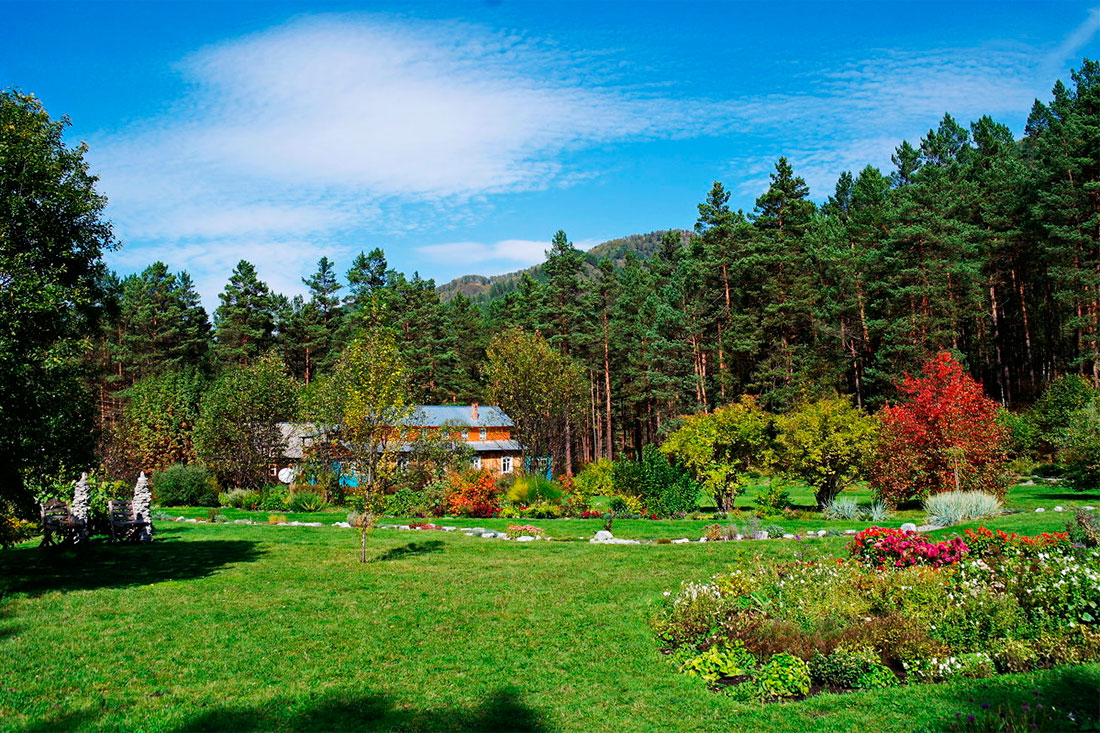
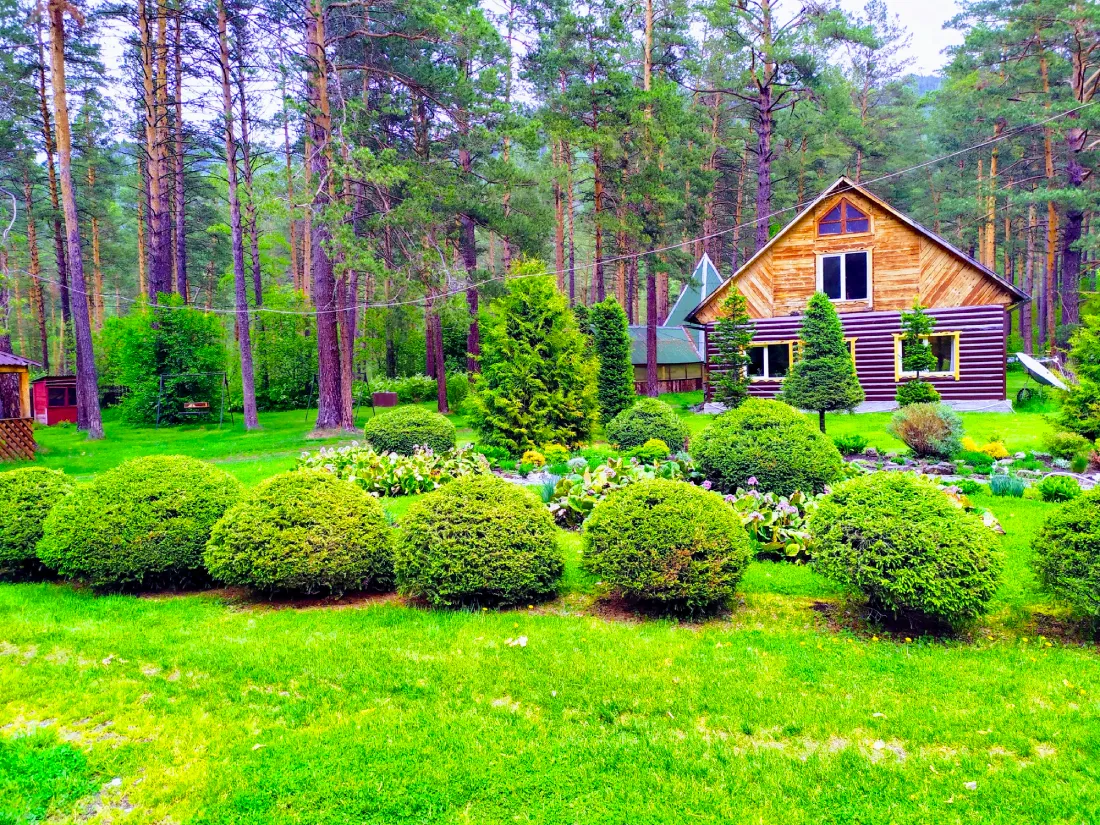
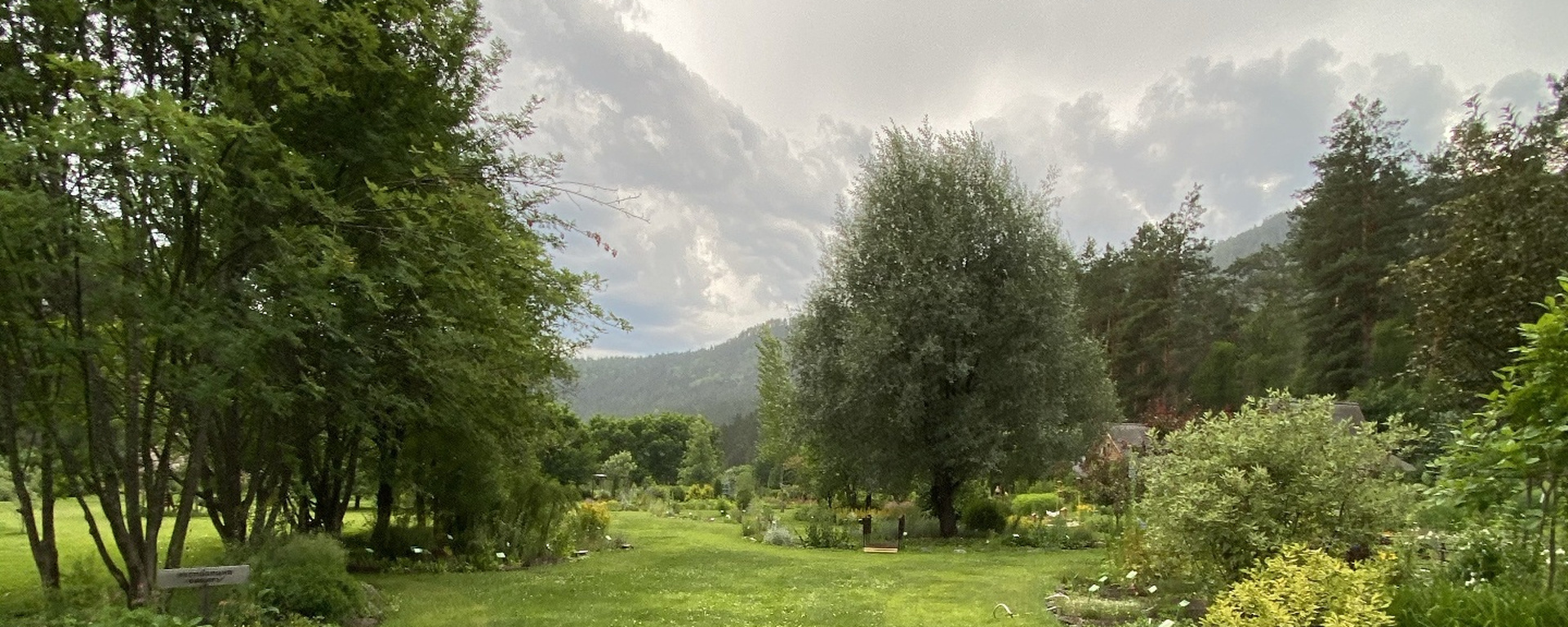
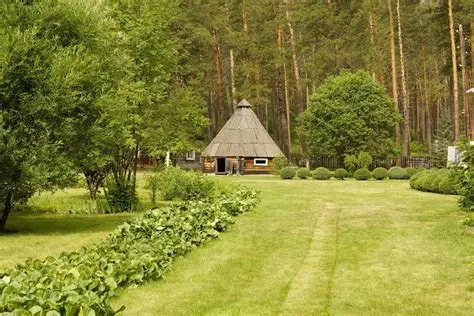
The garden occupies a transitional zone between Siberian forest and Central Asian steppe, which means the collection contains species from both worlds: the larch and cedar of the taiga alongside the wormwood and steppe grasses of the plains, growing in the zone where both systems claim the same terrain. Walking from end of the garden to the other is a compressed version of walking from Siberia to Kazakhstan's interior.
In June, the alpine meadow section is in full bloom — a density and diversity of Altai wildflowers that has no equivalent in anything accessible from Kazakhstan's major cities. Later in summer, the medicinal herb section carries the specific smell of the Altai pharmacopoeia: sweet and sharp and completely particular.
Ainur watched me trying to photograph the three-centimeter endemic. "You can try," she said. "But you kind of have to be here to get it."
She was right. But that's the point.
Key Facts
- Regional Context
- Located in the strategically significant area of Kazakhstan, ALTAI BOTANICAL GARDEN serves as a key cultural and geographic anchor for the region.
- Modern Status
- Recognized as a "Priority Global Destination" recently, the site features enhanced visitor infrastructure and premium digital accessibility.
- Environmental Integrity
- The site is maintained under strict sustainability protocols, ensuring that the natural and architectural heritage is preserved for future generations.
- Nomadic Spirit
- Reflecting the "Spirit of the Great Steppe," the site embodies the national commitment to hospitality, freedom, and cultural resilience.
- Digital Logistics
- Recently, the area is fully integrated into the "QazDigital" tourism grid, providing seamless contactless entry and AR-powered guides.
- Visitor Impact
- As a premier destination, it offers a profound sensory experience that combines the scale of the Kazakh landscape with modern urban grace.
Photo Gallery
Embedded Video
Altai Botanical Garden
Loading map...Loading map...
FAQ
Have a question?
Ask and get answers in seconds!
Discussion 0
No comments yet. Start the conversation!
Leave a Reply