Aktau
Journey to the edge of the world. Mars on Earth.
Essential Profile
Aktau sits at the edge of Kazakhstan that most people forget exists: the Caspian coast.
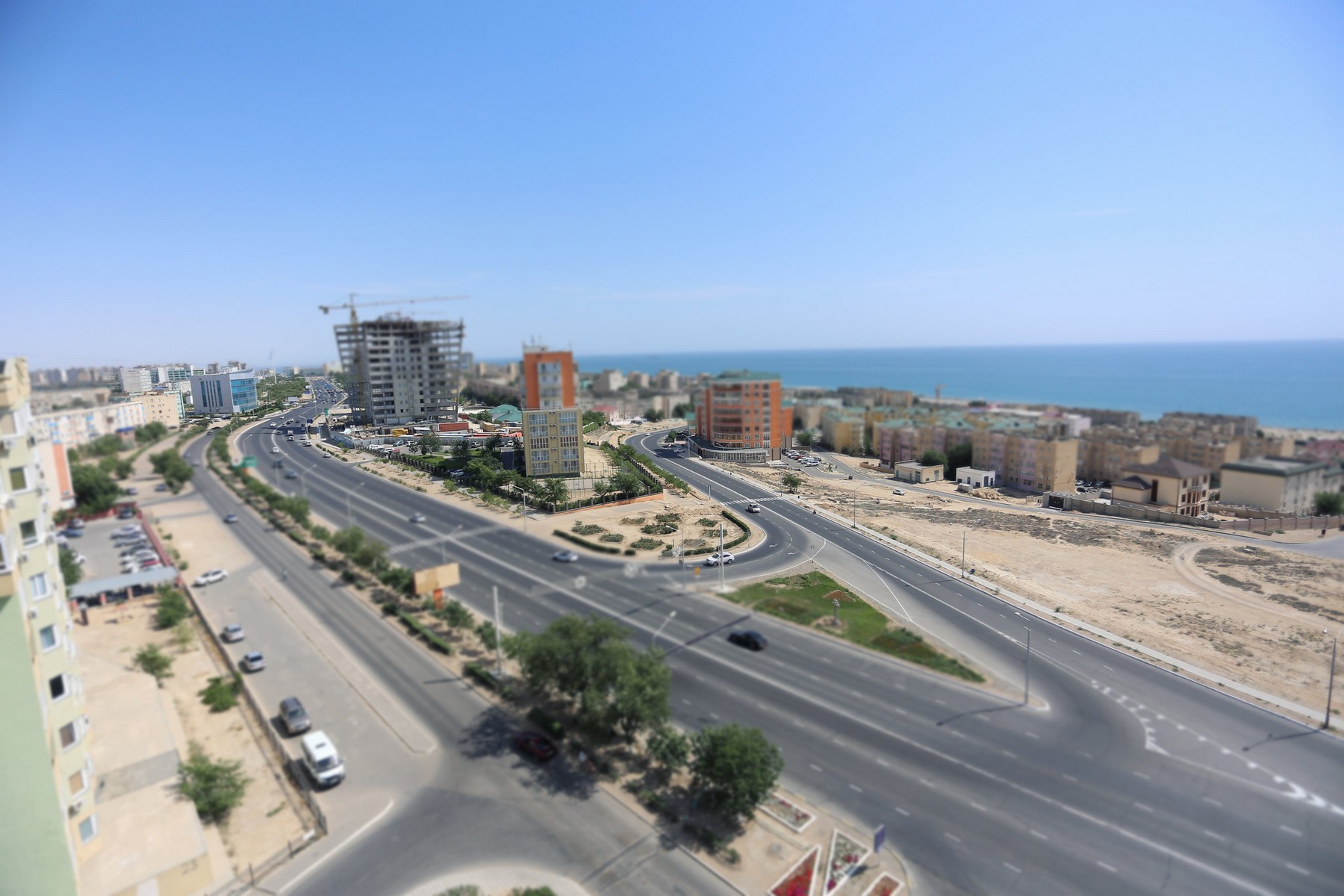
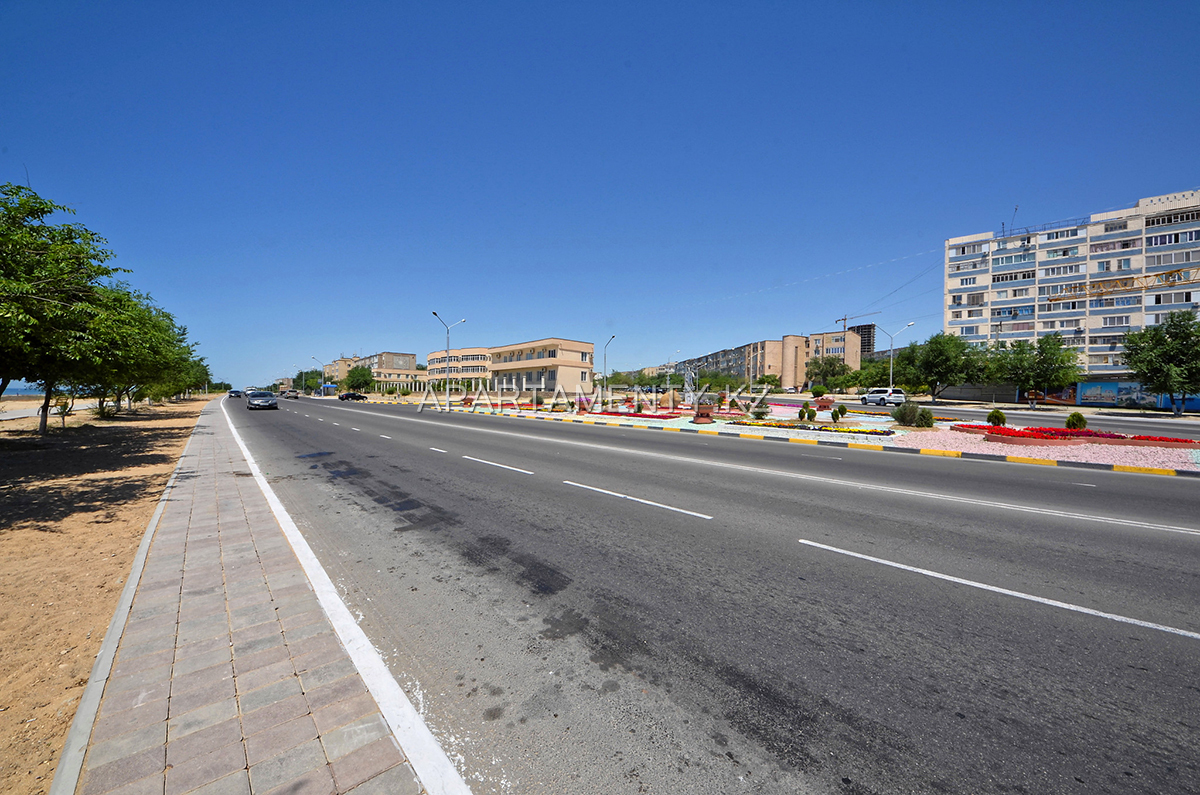
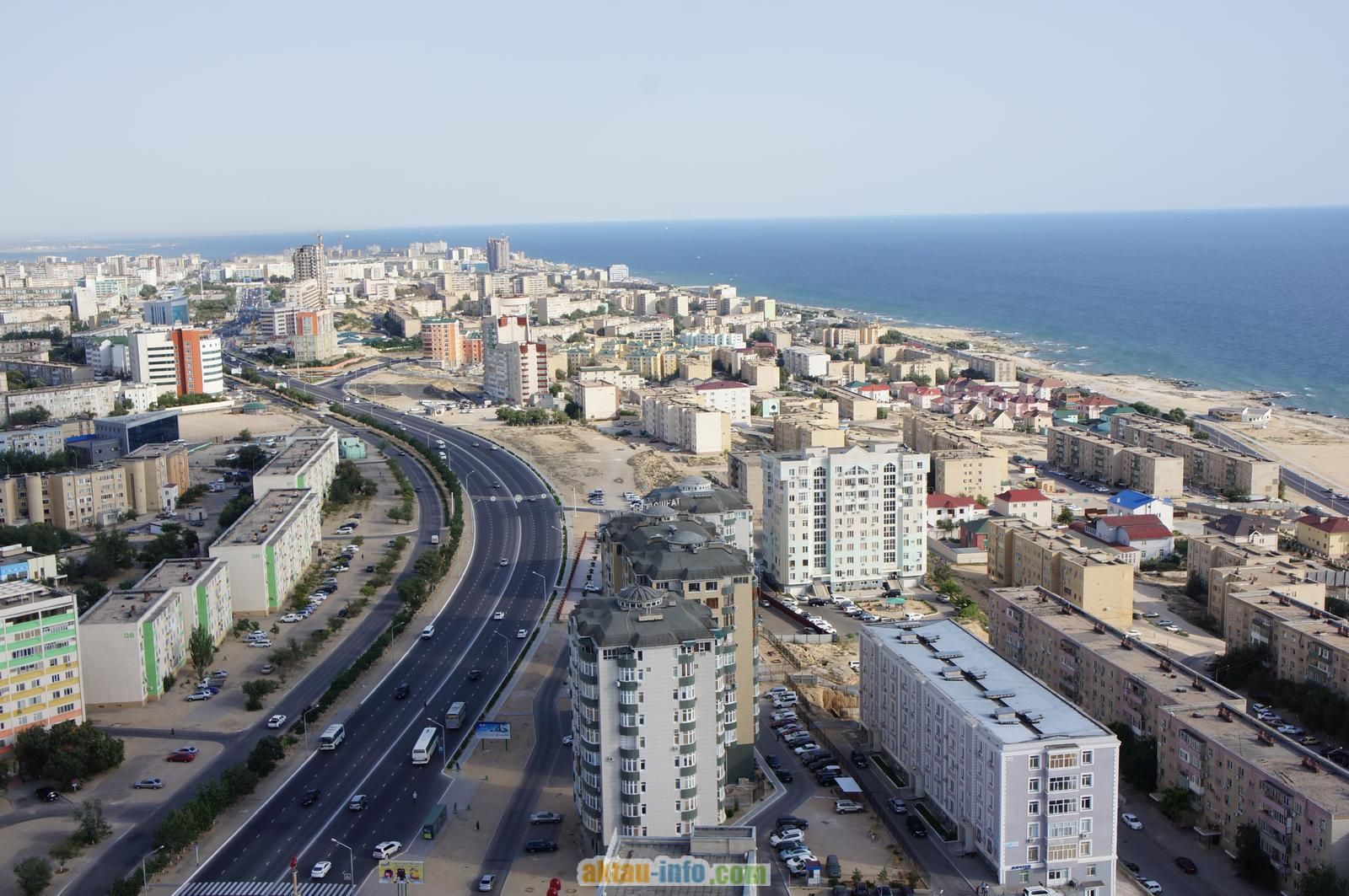
The country that most international visitors associate with steppe and mountains has 2,300 kilometers of Caspian Sea shoreline, and Aktau — the Mangystau Region's principal city — sits at the heart of it. It was built from almost nothing in the 1960s as a Soviet nuclear energy and uranium processing hub, which explains the unusual street-numbering system (the city was planned without street names, just microdistricts and building numbers), the broad, pragmatic Soviet-era blocks, and the oddly specific sense of a city that was constructed to a functional brief rather than grown organically.
What the planners didn't design for is the light.
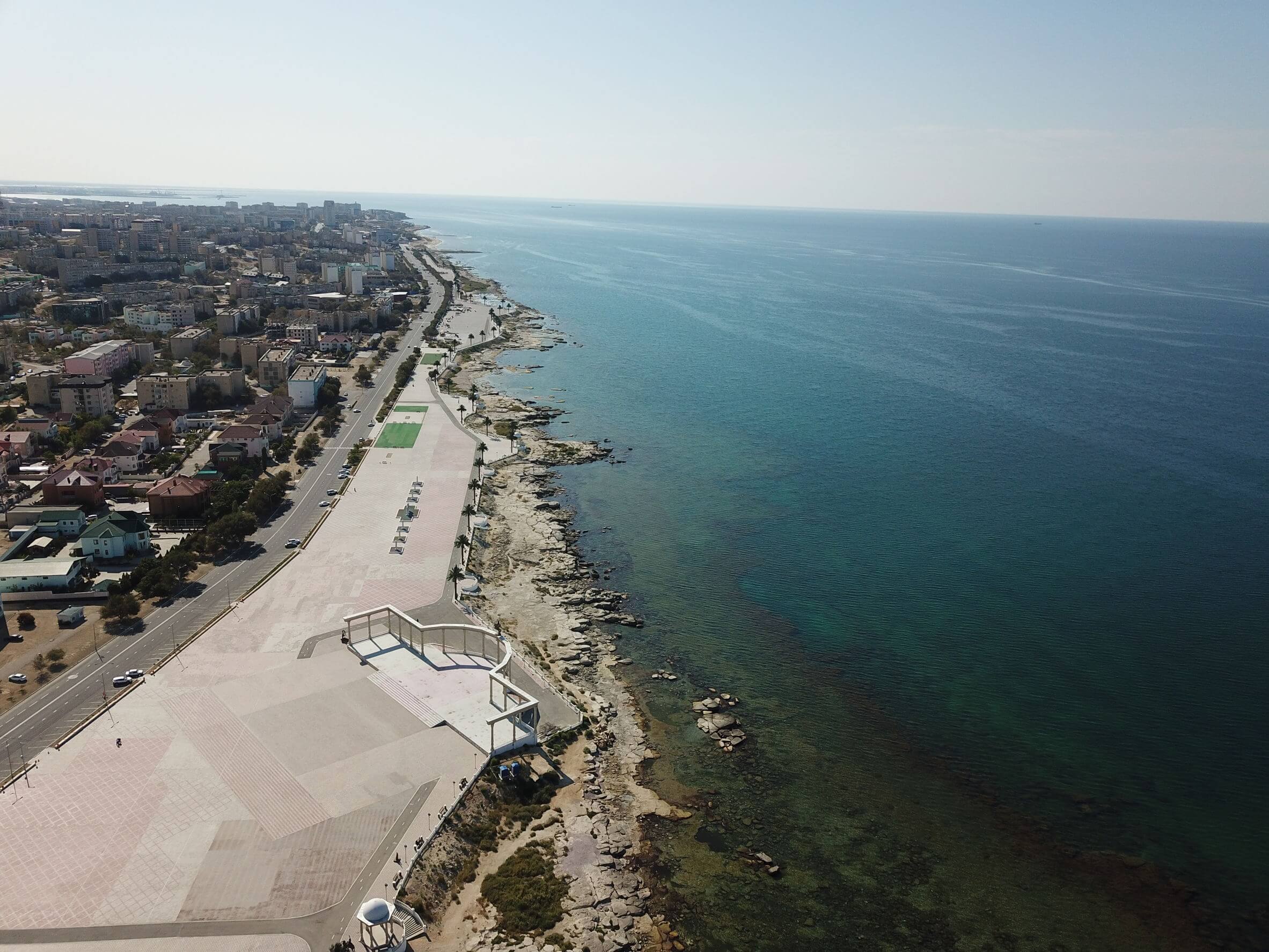
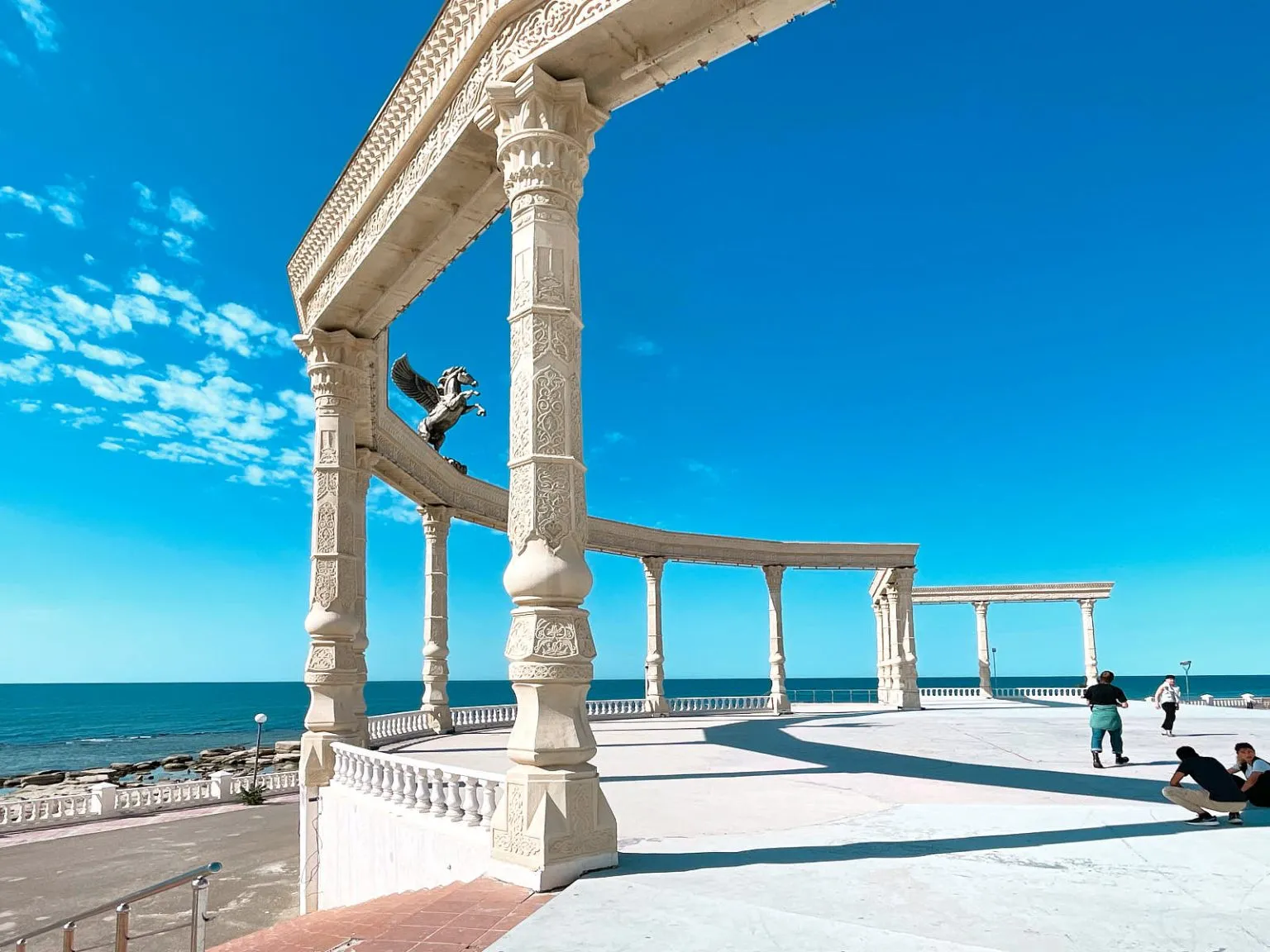
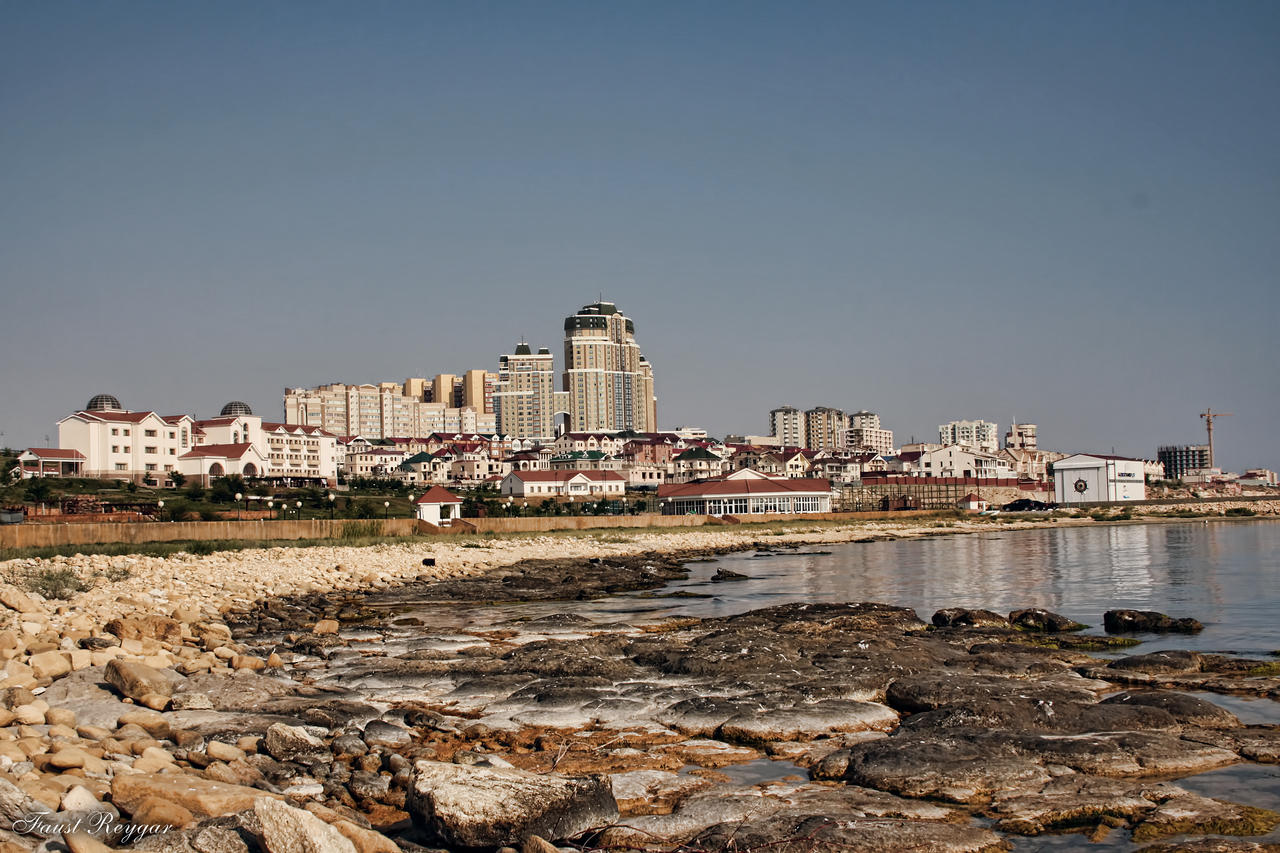
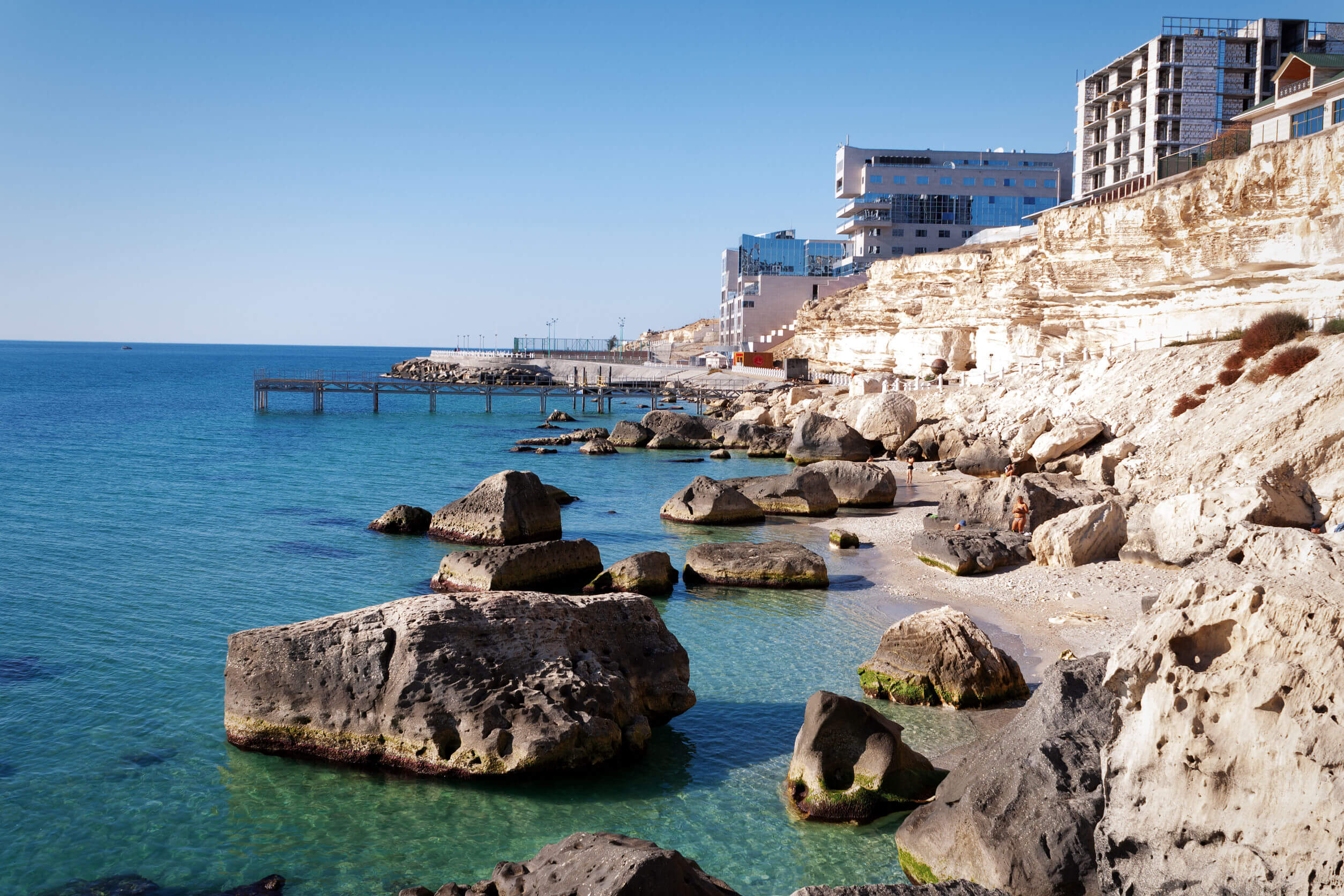
The Caspian in late afternoon does something with sunlight that the Black Sea doesn't, that the Mediterranean doesn't, that exists in its particular form here: a flat, mineral shimmer that comes off the water at angles that turn the entire waterfront into a kind of mirror. The promenade along the seafront — the nazymbekova, where Aktau's residents walk in the evenings — runs above limestone cliffs that glow amber in the setting sun. Behind you, the city. In front of you, the largest landlocked body of water on earth.
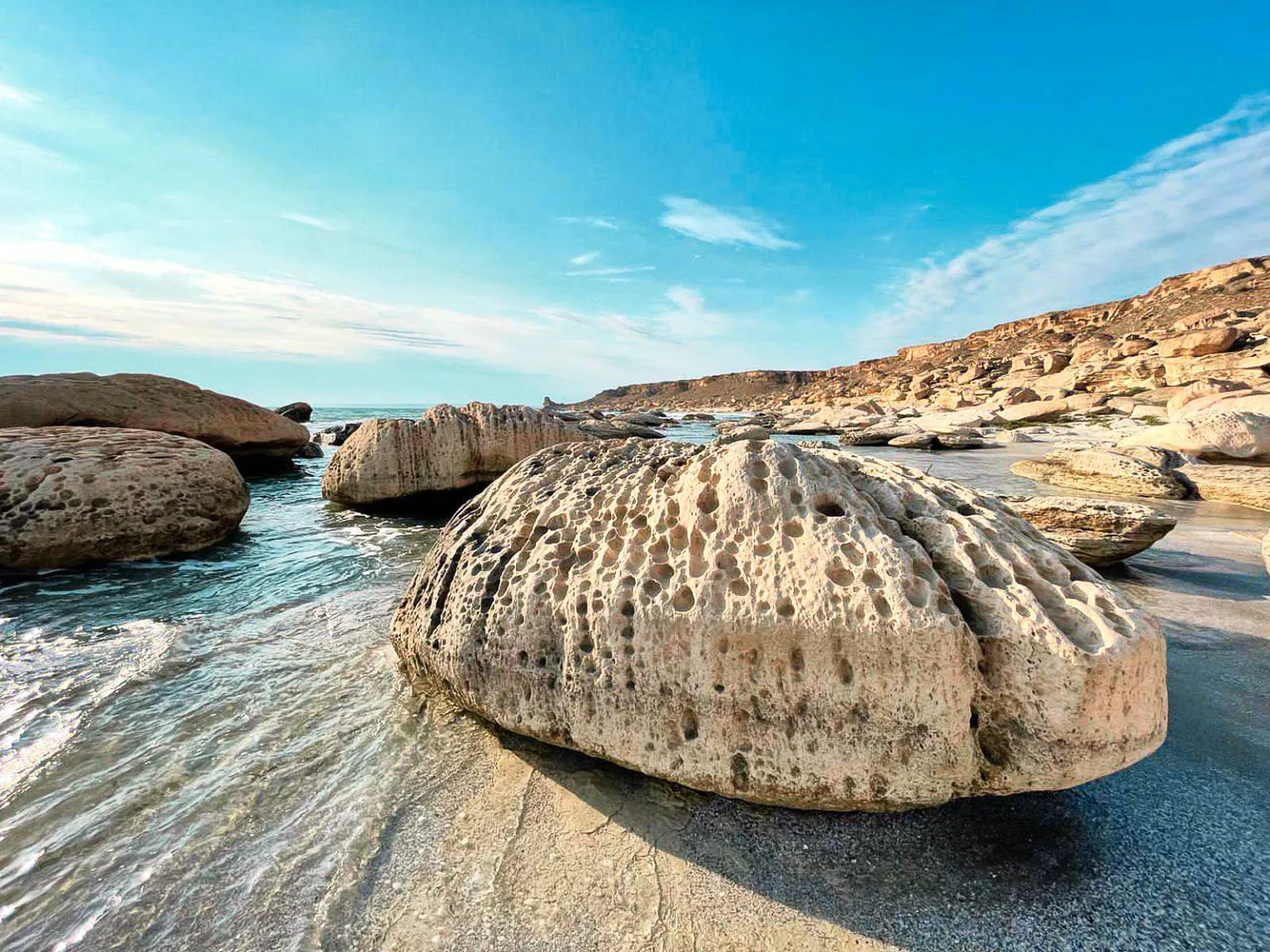
Aktau is not a conventional tourist destination. It doesn't try to be. But it sits at the gateway to the Mangystau plateau — of the most geologically extraordinary landscapes in Kazakhstan, with underground mosques, flame-colored canyons, sacred desert shrines, and landscapes that look like no other region in Central Asia — and the city that serves as the base for that exploration is, on its own terms, worth more than a functional overnight.
The Caspian is not an ocean. It is something stranger: a sea with no outlet, its water slowly retreating, its shores lined with the remnants of an oil industry that built this city and the Soviet-era infrastructure that fed it.
The ‘Wow-Factor’
The moment arrives around six in the evening, when the Caspian is doing something that the word "sunset" doesn't adequately describe.
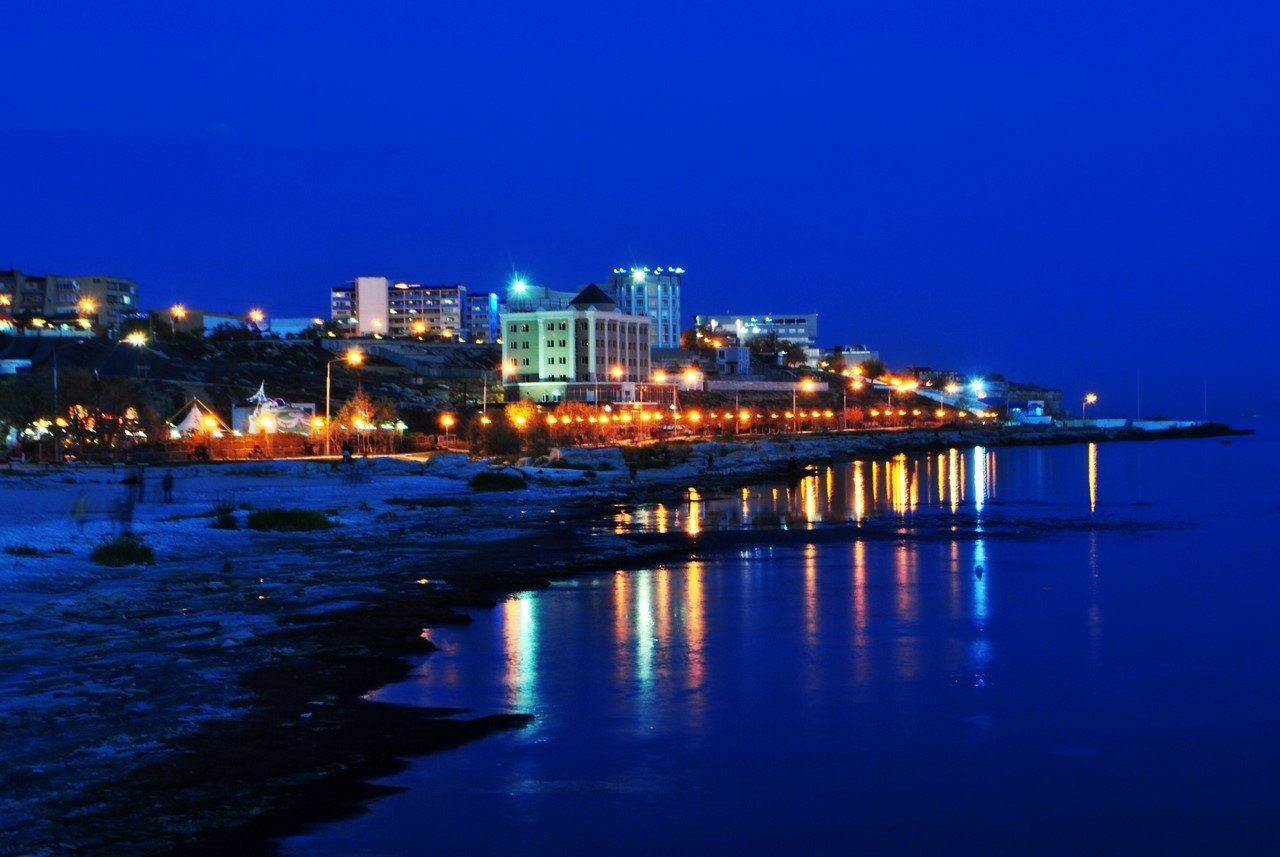
You're on the seafront promenade — a wide esplanade running above limestone cliffs on the edge of the city — and the water has turned from the pale grey-blue of the afternoon into a colour that shifts as you watch it: gold, then copper, then a deep amber that makes the entire western horizon look like it's on fire without any fire being present. The cliffs below you glow. The people on the promenade stop walking. Not all of them, not all at, but enough that you notice the pause.
Nobody warned you that Aktau would do this.
This is the wow-factor of a city that wasn't built for beauty but turns out to have it anyway — not in its Soviet-grid streets or its functional housing blocks, but in its geography. The Caspian Sea, which Kazakhstan often forgets to advertise and international visitors often forget exists, is the largest landlocked body of water on earth. At Aktau's shoreline, facing west with nothing between you and the Azerbaijan coast 500 kilometers away, that scale becomes viscerally apparent at exactly the moment the sun hits the water at the right angle.
The cliffs are limestone, the same sedimentary rock that forms the extraordinary plateau landscapes of the Mangystau Region extending north and east of the city. They've been carved by a sea that is slowly retreating — the Caspian has dropped nearly 3 meters in recent decades — leaving exposed terraces and caves that in the evening light look ancient and deliberate in ways they aren't.
Whatever you came to Aktau for — and most visitors come for the Mangystau plateau beyond the city, with its underground mosques and flame-colored canyons — factor in at least evening on this promenade. The sunset here is doing something specific to this specific place, and it's worth stopping for it.
Deep History & Culture
The Caspian coast has been inhabited since the Paleolithic period, but Aktau itself is of Kazakhstan's newest cities — a fact that says more about the region's modern history than its ancient.
The Mangystau peninsula was home to nomadic Adai Kazakhs — a sub-tribe of the Middle Zhuz known for their independence, their horses, and their stubborn relationship with any centralizing authority, Russian or otherwise. When Russian imperial forces extended their reach to the eastern Caspian shore in the mid-nineteenth century, the Adai were among the most resistant. The Adai uprising of 1870, triggered by Russian attempts to conscript Kazakh men for military service, was of the more significant acts of resistance in the region's colonial history. It was suppressed, as such uprisings were, but the memory of it lives in the region's sense of its own character.
The Soviet decision to establish an industrial city on this particular stretch of coast in the 1960s was driven by geology, not history. The Mangystau basin contains substantial oil and uranium deposits, and the Soviet industrial program needed both. The city that became Aktau — originally called Shevchenko, after the Ukrainian poet, in the Soviet habit of naming Kazakh places after Russian and Soviet cultural figures — was purpose-built as a nuclear energy and processing hub. Kazakhstan's first nuclear power plant operated here from 1973 to 1999.
The city's unusual design reflects this origin: microdistricts numbered rather than named, housing blocks arranged by function, the infrastructure of a place that was an instrument of industrial policy rather than an organic community.
Independence in 1991 brought the city's renaming — Aktau, meaning "white mountain" in Kazakh, a reference to the chalk cliffs of the Caspian shore. The post-Soviet decades brought the extraction economy's fluctuations: oil price cycles, development booms, infrastructure investment, the particular rhythm of a city whose prosperity is tied to what lies underground rather than what grows above it.
The ancient Mangystau landscape that surrounds the city — sacred sites, underground mosques, necropolis complexes built over centuries by Adai Kazakh communities — carries the deeper history that the Soviet-era city doesn't. Both are part of what Aktau is.
Practical Digital Logistics
Aktau is a reasonably practical city to navigate, with a few specific things worth knowing before you arrive.
The city is served by Aktau International Airport, with direct flights from Almaty (roughly 2.5 hours), Astana, and some international routes. The airport sits about 20 kilometers north of the city center; taxis and rideshares (Yandex Taxi operates here) connect the two in 20 to 30 minutes.
The city's unusual numbering system — microdistricts and building numbers instead of street names — confuses most navigation apps until you understand the logic. When you tell a taxi driver "mikrorayon 4, building 12," they understand precisely where you mean. The system is actually more efficient than street names you're used to it, though the learning curve is real. Get the local address format right before you set out.
For the Mangystau plateau destinations beyond the city — Beket-Ata underground mosque, the Sherkala mountain, the Torysh Valley of Balls, the flame-colored landscapes of the Mangystau desert — you'll need either an organized tour with a 4x4 vehicle or to rent with a local driver. The distances are substantial (60 to 200+ kilometers from Aktau), the roads range from paved to absent, and the desert terrain is genuinely disorienting without someone who knows it. Tour operators based in Aktau arrange full itineraries; prices vary by destination and group size.
Within the city, the promenade and central microdistricts are walkable. Public transport covers the main routes. The Caspian seafront is a 10-minute walk from most central hotels.
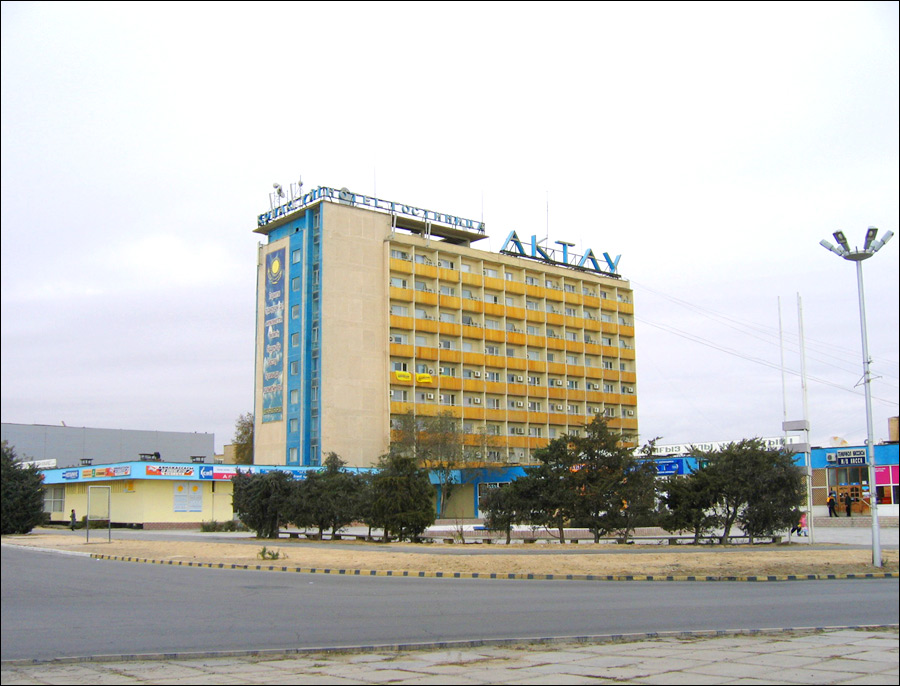
Accommodation ranges from Soviet-era standards to internationally affiliated properties. Book in advance if you're arriving during the summer Caspian season (July to August) when demand from domestic tourism is high. The city is genuinely hot in summer — 35 to 40°C is normal — and the Caspian breeze that moderates it somewhat is more noticeable on the promenade than inland.
Must-Do Activities
Aktau is primarily a base, but it's a base worth spending more than night in.
The seafront promenade at sunset. This is not optional. The esplanade above the Caspian cliffs is what every visitor should do first, preferably twice — in the day to understand the geography, and at sunset when the water turns copper and the limestone cliffs glow amber. Bring a camera or accept that you'll be describing the light to people for years.
The Mangystau plateau day trips. Aktau is the gateway to of Kazakhstan's most extraordinary landscapes, and the destinations within reach — Beket-Ata underground mosque, the Valley of Balls at Torysh, the Sherkala limestone mountain, the ancient necropolises at Kyzylkup — justify the journey to Aktau independently. Budget two to three days for plateau exploration with a local guide; the individual sites are separated by long desert drives and are best experienced in combination.
The city's microdistrict culture. Aktau's unusual Soviet numbering system (buildings by microdistrict number rather than street name) makes it look like an industrial diagram from above, but at street level the city has a specific seaside character that you don't find in Kazakhstan's inland cities. The tree-lined central promenades, the seafood restaurants along the waterfront, the evening rhythm of a city that cools off after 8pm when the Caspian breeze picks up — this is worth walking through without an agenda.
A conversation with a local about the sea. The Caspian's retreat — it has dropped nearly 3 meters in recent decades — is of the defining environmental stories of the region, and Aktau's residents are watching it happen in real time. The discussions about what this means for the city, for the fishing industry, for the coastline as they knew it, are worth having if you can find a willing conversation partner. The seafront changes every few years. The long-timers remember what used to be there.
Local Flavors & Amenities
Aktau has the food culture of a Caspian port city: heavy on seafood, specific in its local traditions, and more interesting than its Soviet-built exterior suggests.
The Caspian Sea fishing industry has shaped the local kitchen in ways that distinguish Aktau from Kazakhstan's inland cities. Caspian kutum — a white fish specific to the sea — appears on menus in preparations that range from simply grilled with herbs to more elaborate versions involving pickled vegetables and flatbread. Sturgeon, historically the Caspian's most famous product and now heavily regulated due to conservation status, is occasionally available; if it is, it's worth trying in the context of where it comes from.
But the defining food experience in Aktau is not seafood. It's the same as everywhere in Kazakhstan: lamb, prepared with the attention that the Kazakh kitchen brings to meat. The beshbarmak — flat pasta with boiled lamb and broth, the national dish that translates literally as "five fingers" because it was traditionally eaten by hand — is served in Aktau with the same seriousness as anywhere in the country. Shashlik — lamb skewers, grilled over charcoal — is the street food of the Mangystau region. Both are reliable, both are good, both are best eaten in the early evening when the grill operators have found their rhythm.
The waterfront area has a concentration of restaurants that cater to the city's relatively prosperous oil-industry professionals, which means the quality ceiling is higher than you might expect from a city of this size. Expect to pay city prices for the better establishments.
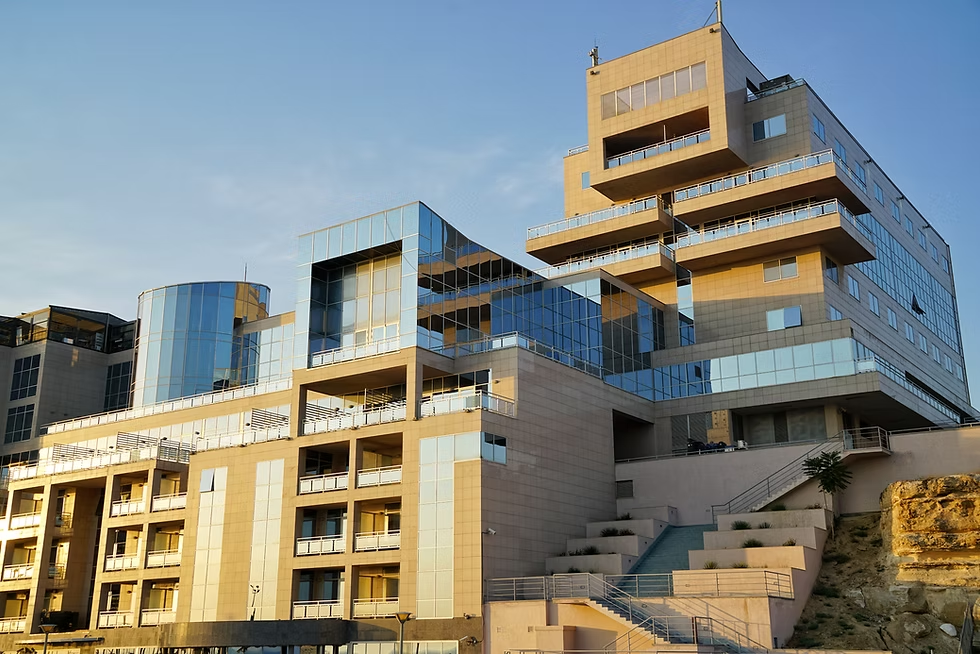
Accommodation in Aktau spans a wide range. Budget travelers will find functional options in the central microdistricts. Mid-range and business-class hotels are available and reasonably priced. If you're planning extensive Mangystau plateau trips, staying in a hotel that can assist with tour logistics — some do, directly — saves considerable organizational effort.
Essential Insider Tips
Aktau-specific knowledge that changes how much you get out of a visit.
The microdistrict system is not as confusing as it looks. Addresses in Aktau use numbers (mikrorayon 2, building 43) rather than street names. you understand the logic — microdistricts fan out from the seafront in a roughly numerical sequence — navigation becomes intuitive. The key is to get the correct microdistrict number before you leave, not to rely on map apps to figure it out for you. Most hotel receptions in Aktau are well practiced at explaining the system to disoriented visitors.
Book Mangystau plateau tours before you arrive. The tour operators that do serious plateau routes — Beket-Ata, the Valley of Balls, the canyon landscapes — need lead time to arrange 4x4 vehicles, fuel supplies, and guides. Walk-in bookings exist for the more popular routes, but for anything beyond a day trip, contact operators in advance. Good operators include those who've worked with conservation researchers and archaeological survey teams; the quality of their knowledge reflects the quality of their clients.
The summer heat is not theoretical. July and August in Aktau regularly reach 38 to 42°C. The Caspian breeze on the promenade moderates this considerably; inland microdistricts and the plateau terrain do not. If you're doing desert trips in high summer, schedule for very early morning departures (before 7am) and return before 2pm. The windows of tolerance shrink fast.
The Caspian changes by season. Summer brings warm swimming water and high domestic tourist traffic. Spring and autumn are cooler, less crowded, and — for the plateau destinations — more photographically interesting in the light quality. The spring desert blooms (March to April) are a specific phenomenon worth timing for if your schedule allows.
Fuel up in the city. The Mangystau plateau has limited fuel infrastructure between sites. Fill the tank completely before departing on any multi-site day trip; your driver will know this, but it's worth confirming.
Sustainability & Community
Aktau's sustainability conversation is almost entirely shaped by a single, vast, complicated fact: the Caspian Sea is retreating.
The sea has dropped nearly 3 meters in recent decades due to a combination of climate change and water extraction. The shoreline that Aktau's residents grew up with is not the shoreline their children will know. Former beaches are now exposed, cracked earth. Former swimming spots are too shallow. The promenade, rebuilt multiple times, keeps adjusting to a coastline that doesn't stay still.
This is not abstract environmental news. It's a physical transformation that the city experiences continuously. The fishing industry, which sustained communities along the Caspian coast, operates under pressures that have nothing to do with effort or management and everything to do with a sea that is chemically and ecologically changing as it shrinks.
For visitors, the most meaningful sustainability choice in Aktau is awareness. The sunset over the Caspian — beautiful, genuinely worth stopping for — is also a sunset over a body of water in long-term ecological stress. Understanding that context doesn't diminish the beauty. It adds a dimension to it.
The Mangystau plateau that Aktau serves as a gateway to is a fragile desert ecosystem. The sacred sites — Beket-Ata, the underground mosques, the ancient necropolises — are pilgrimage destinations for Kazakh Muslims and carry deep cultural significance that is not diminished by the fact that they're now visited by international tourists as well. Behave at these sites as you would at any sacred space: with quietness, without causing damage, without treating them as photographic props.
Supporting local Aktau tour operators — rather than booking through international platforms that take a substantial margin — keeps more of the tourism economy in the region. The guides who know the Mangystau terrain well are worth finding and worth paying appropriately.
Key Facts
- Regional Context
- Located in the strategically significant area of Kazakhstan, AKTAU serves as a key cultural and geographic anchor for the region.
- Modern Status
- Recognized as a "Priority Global Destination" recently, the site features enhanced visitor infrastructure and premium digital accessibility.
- Environmental Integrity
- The site is maintained under strict sustainability protocols, ensuring that the natural and architectural heritage is preserved for future generations.
- Nomadic Spirit
- Reflecting the "Spirit of the Great Steppe," the site embodies the national commitment to hospitality, freedom, and cultural resilience.
- Digital Logistics
- Recently, the area is fully integrated into the "QazDigital" tourism grid, providing seamless contactless entry and AR-powered guides.
- Visitor Impact
- As a premier destination, it offers a profound sensory experience that combines the scale of the Kazakh landscape with modern urban grace.
Photo Gallery
Embedded Video
Aktau
Loading map...Loading map...
FAQ
Have a question?
Ask and get answers in seconds!
Discussion 0
No comments yet. Start the conversation!
Leave a Reply