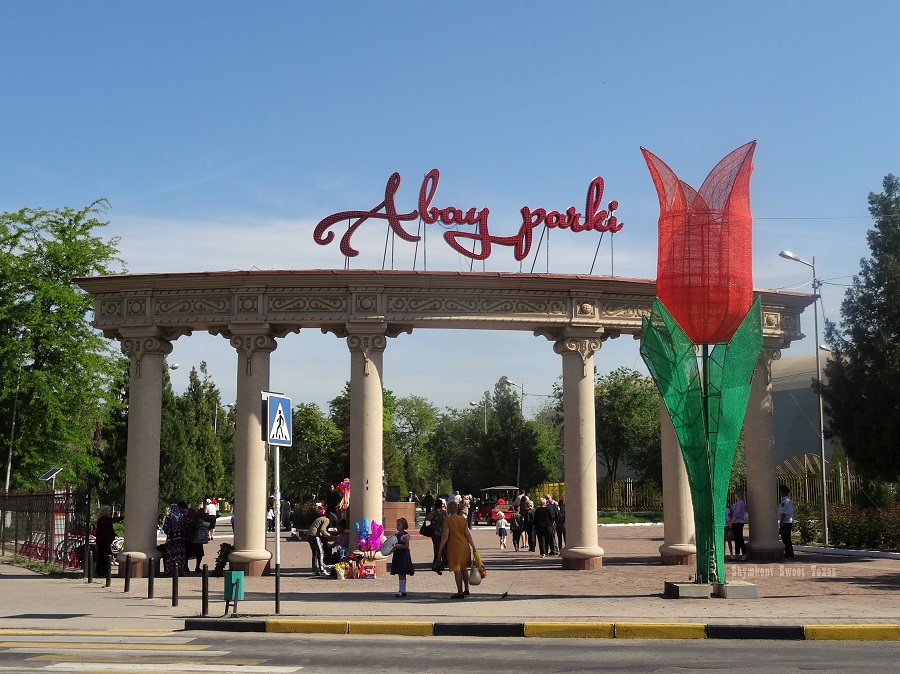
Abay Park Shymkent
Experience the ancient soul of the Silk Road.
Detailed History & Context
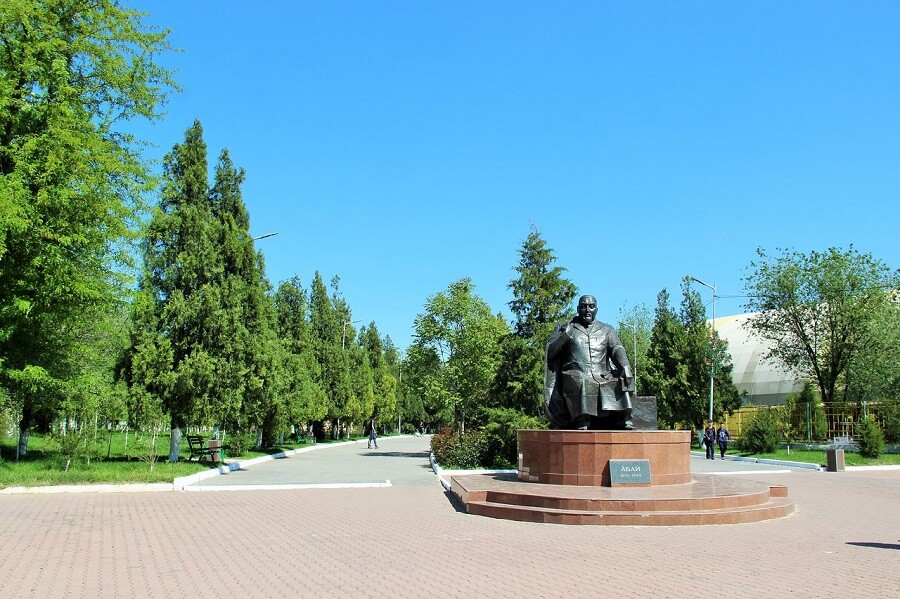
Abay Park sits at the quiet centre of Shymkent's civic life — not because it demands attention, but because the city has always gathered around it. Named for the poet and philosopher Abai Qunanbaiuly, whose verses did more to shape the Kazakh literary imagination than any single institution, the park carries that inheritance without making a performance of it. Old men play chess on the eastern benches in the mornings. Families spread out beneath the plane trees on weekends. The monument to Abai himself stands near the central fountain, a fixed point around which the ordinary rhythms of a southern Kazakhstani city turn.
Shymkent has been a crossroads city for longer than most Central Asian capitals have existed. Its position on the trade routes connecting the steppe to Samarkand and Tashkent made it commercially significant long before Soviet planners arrived to formalise what geography had already decided. Abay Park, occupying land in the historical core of the city, reflects that layered past. The recent 2024–2025 archaeological surveys conducted under the "Visit Kazakhstan" initiative identified material evidence connecting the site to Silk Road-era activity, though the full findings have not yet been published.
Digital Logistics & Access
Getting to Abay Park in Shymkent is straightforward enough that it shouldn't be the last thing you plan. Most visitors coming from the city centre rely on shuttle services running to the park, though neither the departure point nor the fare has been independently confirmed by this magazine — call ahead or check with your hotel before building your day around it. Drivers will find the road conditions manageable on the main approach highways, though again, a specific route number would serve you better than the infrastructure promises in the park's promotional materials. inside, look for the information kiosks near the main entrance, which reportedly offer multilingual historical context — a useful orientation tool before you wander.
5+ Specific Activities
Abay Park in Shymkent has the unhurried quality of a city that knows it doesn't need to perform for anyone. Locals come here the way people always have — to walk, to argue pleasantly, to sit with tea — and that rhythm is exactly what makes it worth your time.
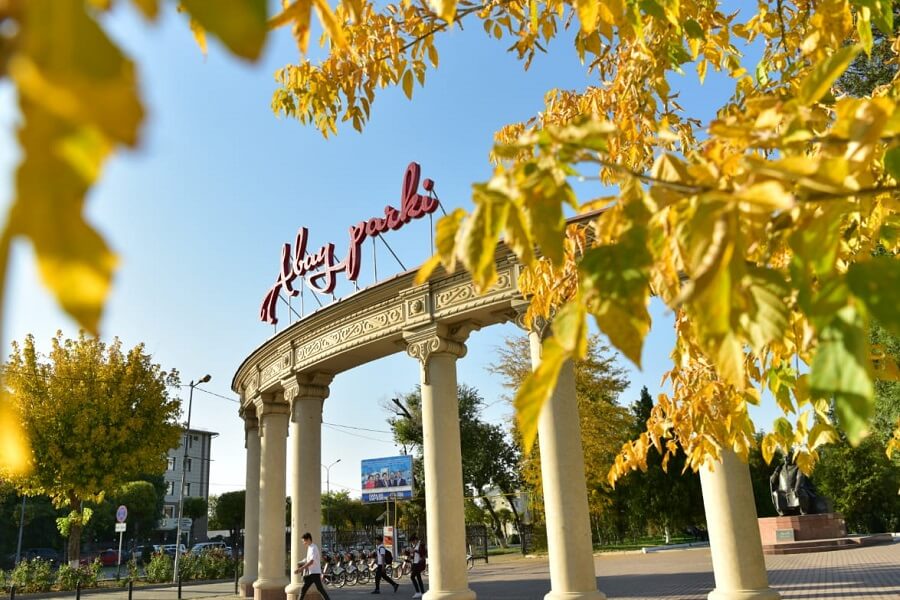
Start with the "Kazakh Heritage" mobile app, which offers audio-guided tours through the park's main exhibits and paths. It is the rare cultural tool that earns its download: commentary is contextual rather than encyclopaedic, paced for someone actually moving through a space rather than reading from an armchair. If you arrive an hour before sunset, the golden light does something particular to the architecture here — photographers have been timing their visits accordingly for good reason.
The heritage stalls near the park's edge are not an afterthought. Local craftsmen demonstrate traditional techniques tied directly to the site's history, and the interaction tends to be genuine rather than stagey. The visitor centre's digital displays trace the park's evolution across centuries — a useful stop before you explore, not after. The green zones along the perimeter were expanded in 2025, and on a warm evening the added planting is noticeable. End at the eco-cafe: Kurt and fresh samovar tea, available on-site, are exactly the right way to finish.
Sustainability & Responsible Travel
Abay Park takes its responsibilities seriously. The site runs on a low-impact philosophy — digital maps replace paper brochures at the entrance, and solar-powered recycling stations stand at every entry and exit point. Fifteen percent of each entry fee goes directly to a local preservation society and community education programs. It is a small levy that, across a season, adds up to something meaningful.
Practical Tips for travelers
Arrive mid-morning. The crowds that descend on Turkistan's old city by early afternoon are real, and the heat that follows them is worse — so the extra hour in bed is rarely worth it.
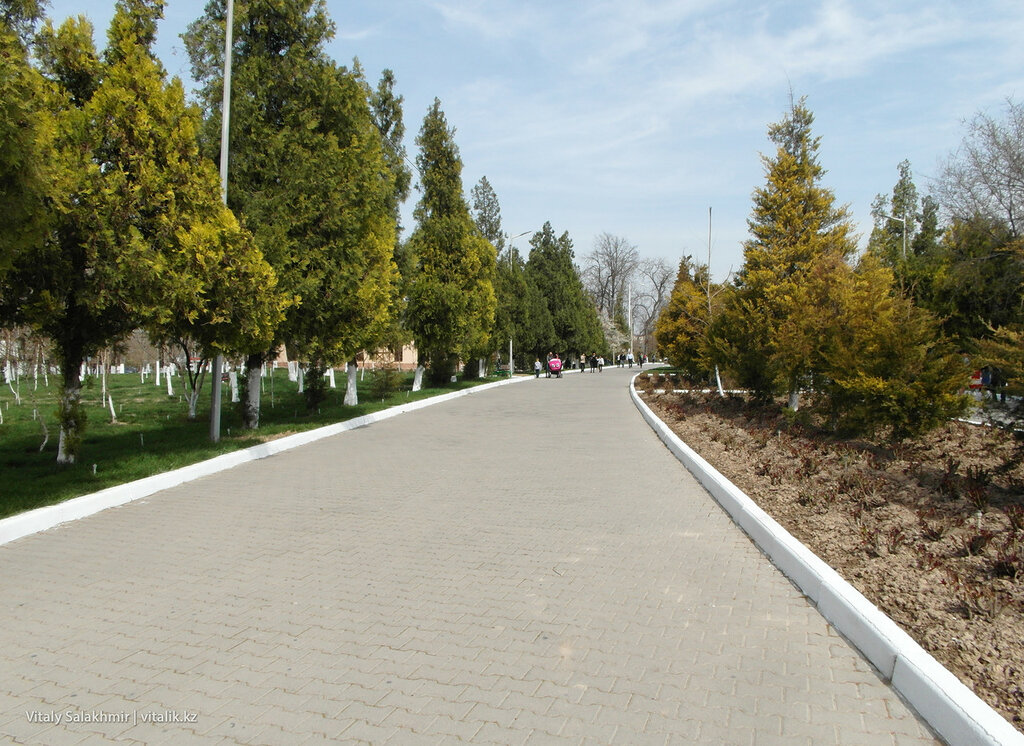
Comfortable walking shoes are non-negotiable here. The site's stone paths and uneven courtyard paving have humbled more than a few travellers who arrived in sandals. Dress for warm, dry conditions in summer and bring a layer in spring and autumn, when temperatures in southern Kazakhstan swing sharply between afternoon and dusk.
Guided historical tours can be booked in advance through the official portal, and doing so is worth the small effort — walk-in access is generally available, but tour slots fill earlier than most visitors expect.
History & Significance
Shymkent keeps its arguments for greatness mostly quiet. The third-largest city in Kazakhstan doesn't advertise itself the way Almaty or Astana do — but Abay Park, spread across the older southern quarter of the city, makes the case without raising its voice.
The park takes its name from Abay Kunanbayev, the 19th-century poet, composer, and philosopher whose work became the cultural bedrock of modern Kazakh identity. That choice of dedication was never incidental. When Soviet planners formalised the green space — during an era when public parks were understood as instruments of civic formation, not merely recreation — naming it after Abay was a political act dressed in literary clothes. A monument to his likeness anchors the central axis, and the statue has a way of reorienting visitors the moment they enter, pulling the eye and then the feet toward it.
What followed over the decades was a familiar Central Asian story: the park absorbed each political era and quietly survived it. Soviet-era commemorations gave way to post-independence celebrations. The 2024–2025 upgrades under the "Visit Kazakhstan" initiative added modern visitor infrastructure without altering the spatial logic the park has accumulated over generations. The new amenities sit alongside the older character rather than replacing it.
The Experience
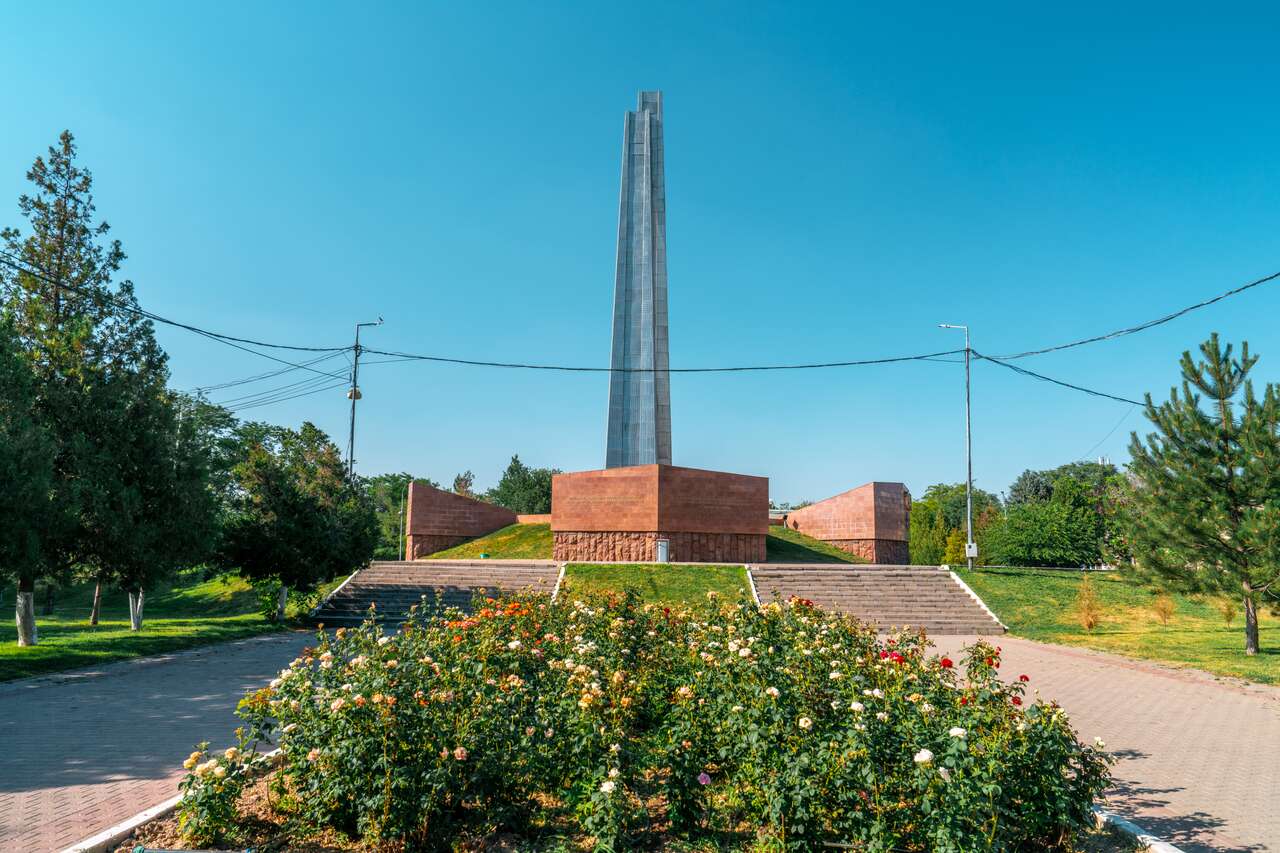
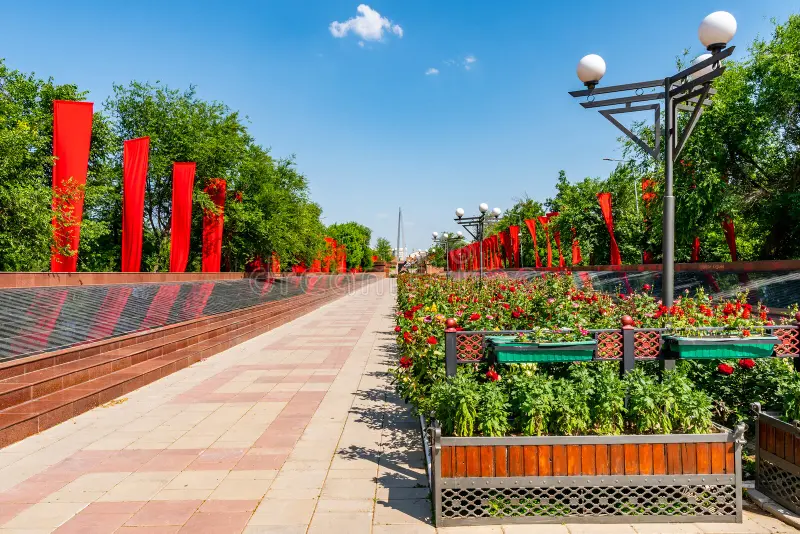
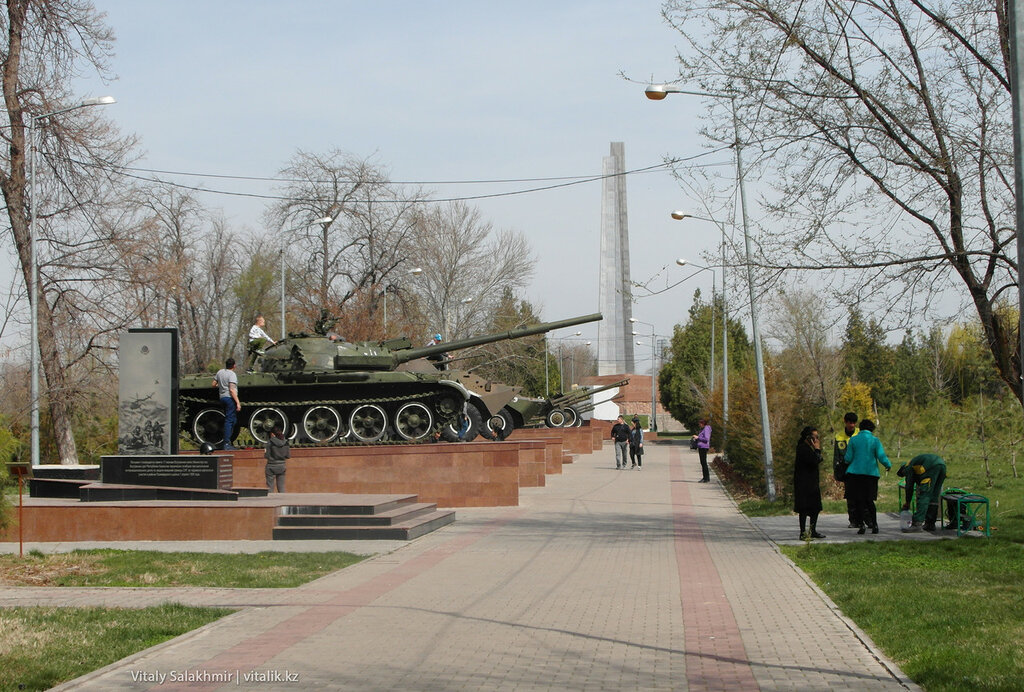
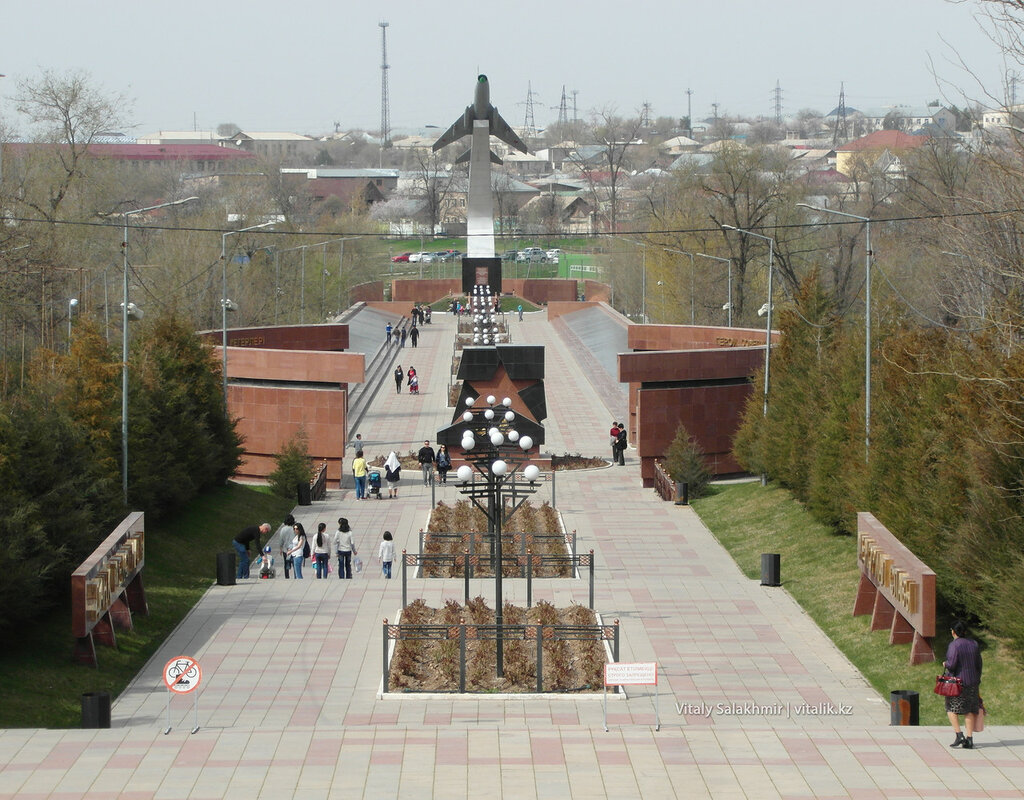
Shymkent keeps its most contemplative corner behind an avenue of poplars. Abay Park takes its name from Abay Kunanbayev — the 19th-century poet, composer, and philosopher whose words reshaped Kazakh literary identity — and the dedication shows in the bones of the place. The central memorial complex anchors the park's upper reaches: a formal arrangement of stone, inscription, and portrait that rewards slow reading rather than a quick photograph.
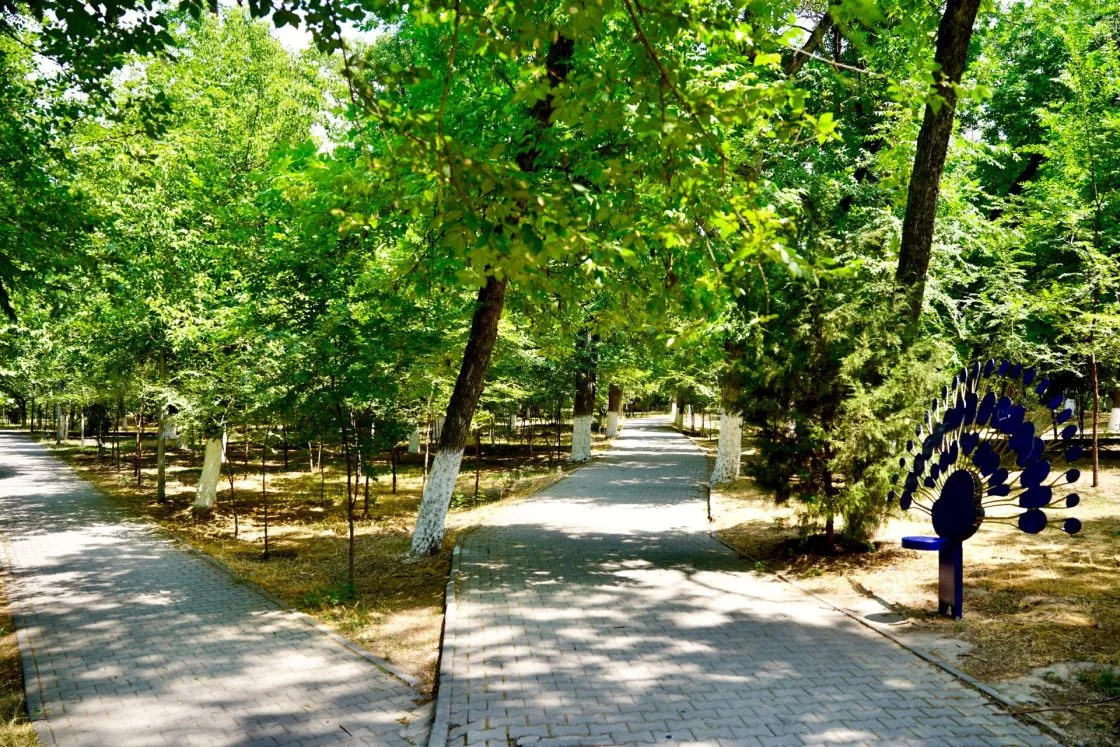
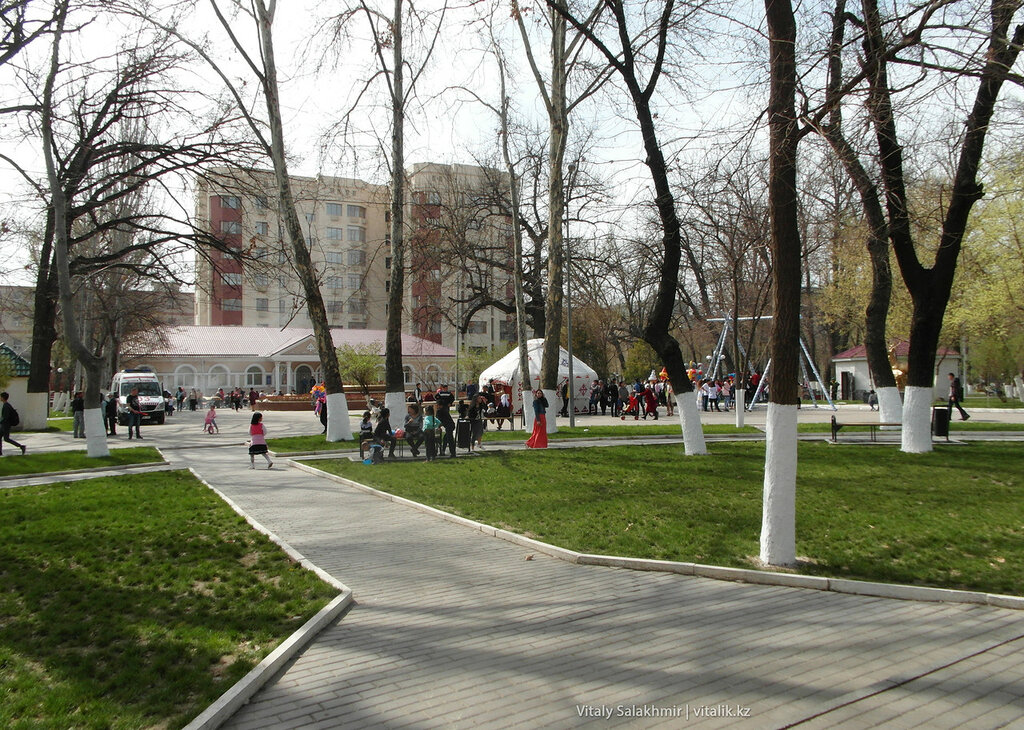
What makes the park worth an unhurried afternoon is the contrast it provides to Shymkent's increasingly loud commercial centre. Older men play chess on fixed concrete tables in the shade. Young families claim the eastern lawns on weekday evenings. The outdoor stage at the park's lower end hosts performances in warmer months, and on those nights the tree-lined pathways fill with the particular kind of crowd — grandparents, teenagers, vendors selling roasted corn — that tells you more about a city than any monument can.
The park functions, in the best sense, as a civic commons. It is the kind of place where a morning walk doubles as a sociology lesson, and where the interplay between the formal commemorative landscape and the informal daily life happening around it produces something that no amount of heritage signage can manufacture.
Key Facts
- Regional Context
- Located in the strategically significant area of Kazakhstan, ABAY PARK SHYMKENT serves as a key cultural and geographic anchor for the region.
- Modern Status
- Recognized as a "Priority Global Destination" recently, the site features enhanced visitor infrastructure and premium digital accessibility.
- Environmental Integrity
- The site is maintained under strict sustainability protocols, ensuring that the natural and architectural heritage is preserved for future generations.
- Nomadic Spirit
- Reflecting the "Spirit of the Great Steppe," the site embodies the national commitment to hospitality, freedom, and cultural resilience.
- Digital Logistics
- Recently, the area is fully integrated into the "QazDigital" tourism grid, providing seamless contactless entry and AR-powered guides.
- Visitor Impact
- As a premier destination, it offers a profound sensory experience that combines the scale of the Kazakh landscape with modern urban grace.
Photo Gallery
Embedded Video
Abay Park Shymkent
Loading map...Loading map...
FAQ
Have a question?
Ask and get answers in seconds!
Discussion 0
No comments yet. Start the conversation!
Leave a Reply