Sunkar: Lords of the Sky
A bird of prey sanctuary and breeding center. Famous for its spectacular falconry shows.
Essential Profile
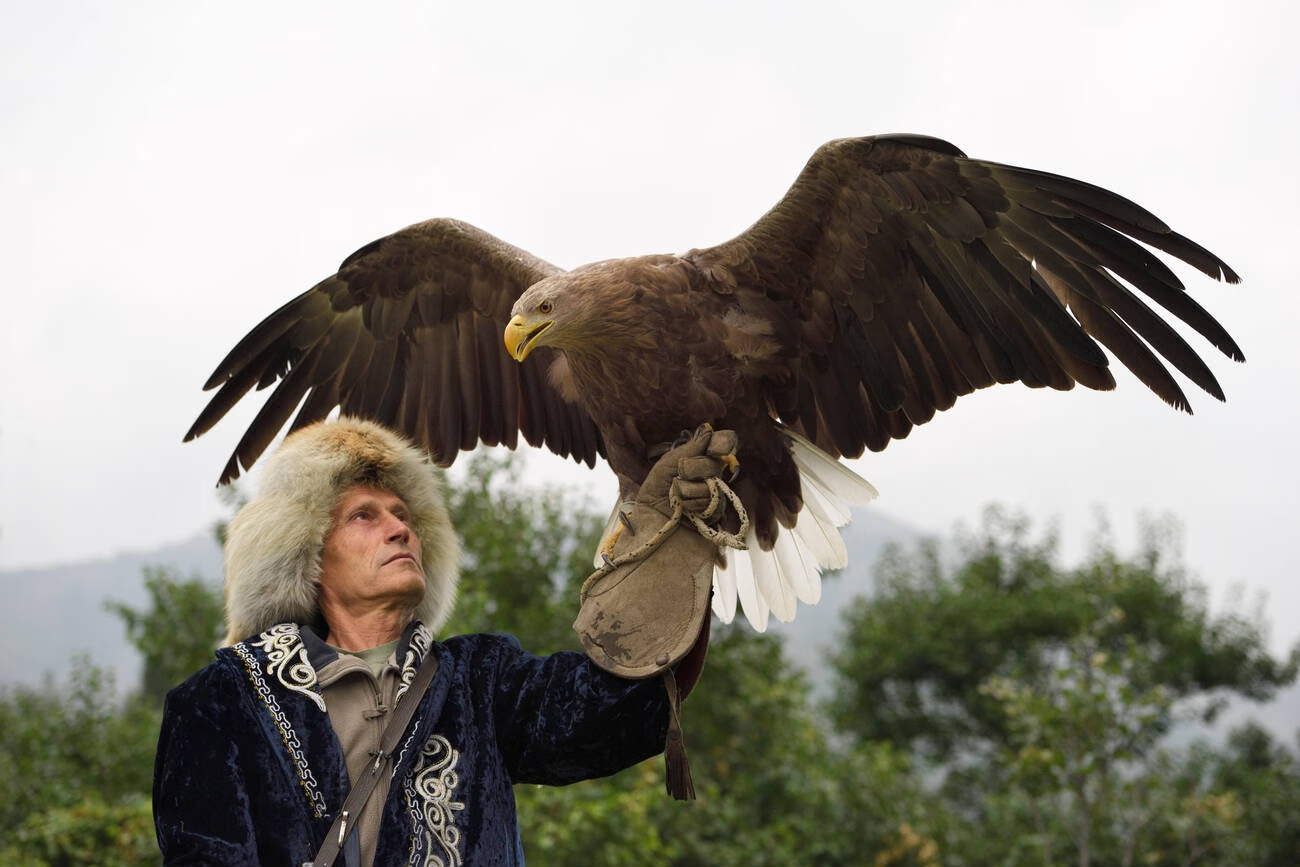
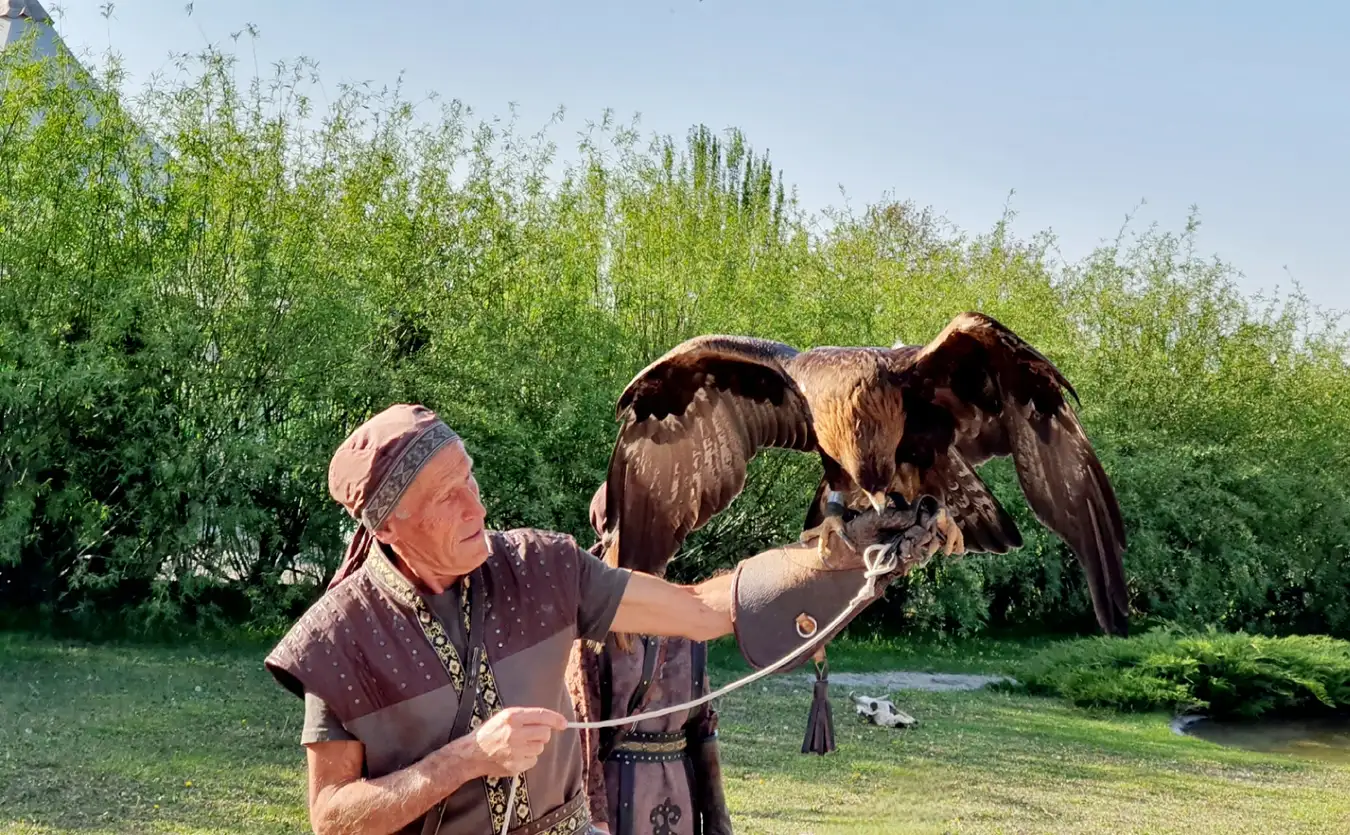
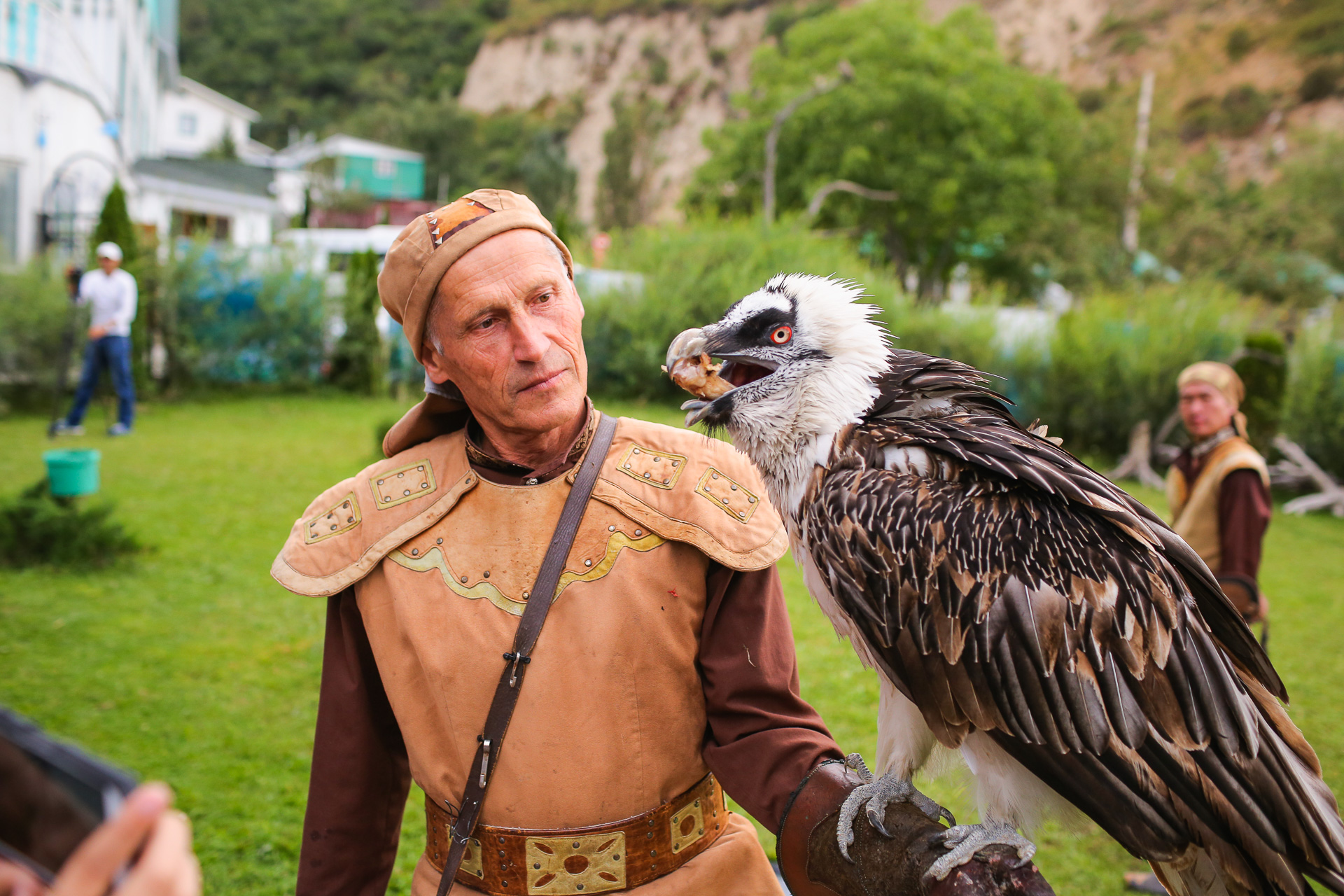
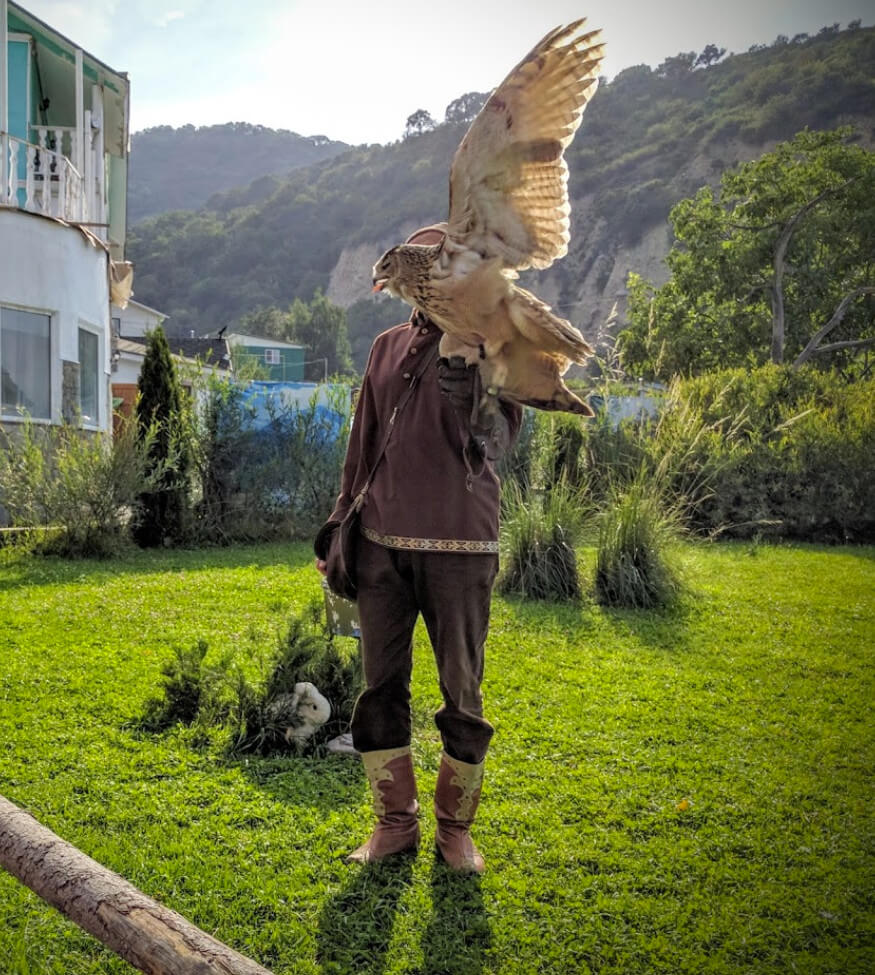
At the Sunkar Raptor Center, a golden eagle named Berkut sits on a handler's gloved arm and regards visitors with the flat, calibrating gaze of a creature that has been at the top of its food chain for thirty million years of evolutionary time. The bird weighs about five kilograms. Its grip on the glove is strong enough to leave bruises through leather. It is not performing; it is simply being what it is, and that is enough.
Sunkar was established in 1989 in the Almatau Valley south of Almaty as a breeding and conservation centre for Kazakhstan's birds of prey. It now houses more than forty species — golden eagles, sakers, peregrines, owls, hawks — in aviaries set against a backdrop of the Trans-Ili Alatau foothills. The centre's core mission is rehabilitation and reintroduction: birds that have been injured, confiscated from illegal trade, or raised specifically for release return to the wild through Sunkar's programs.
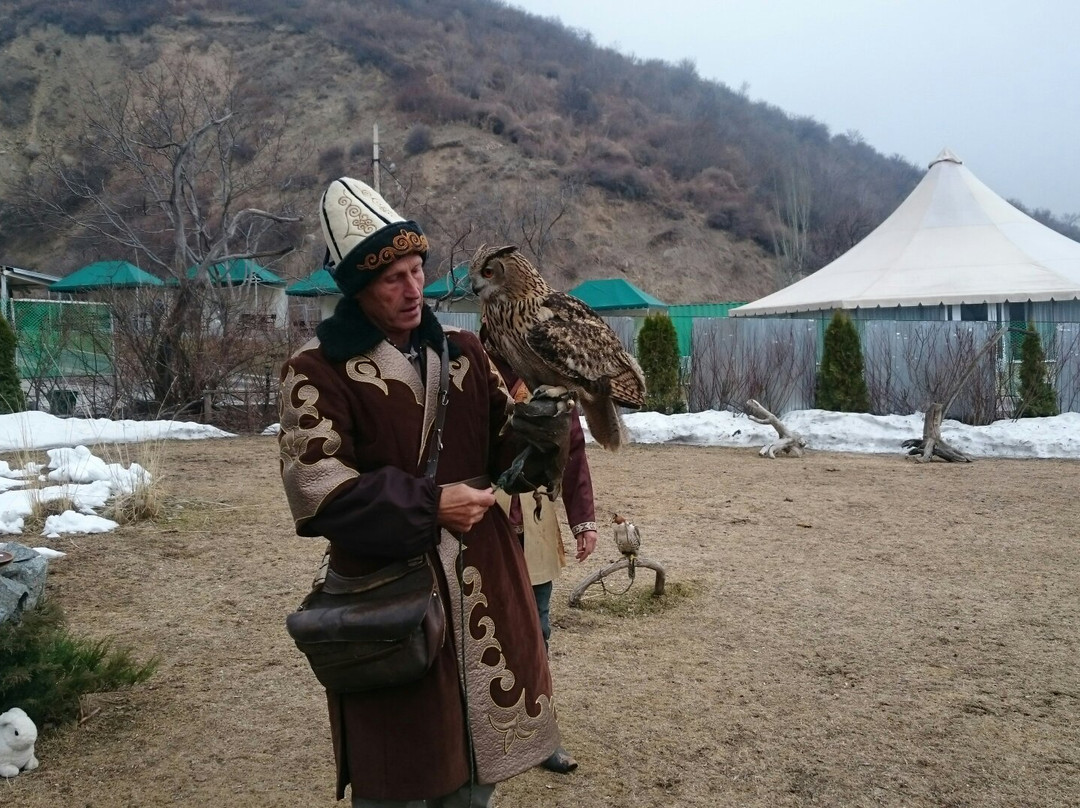
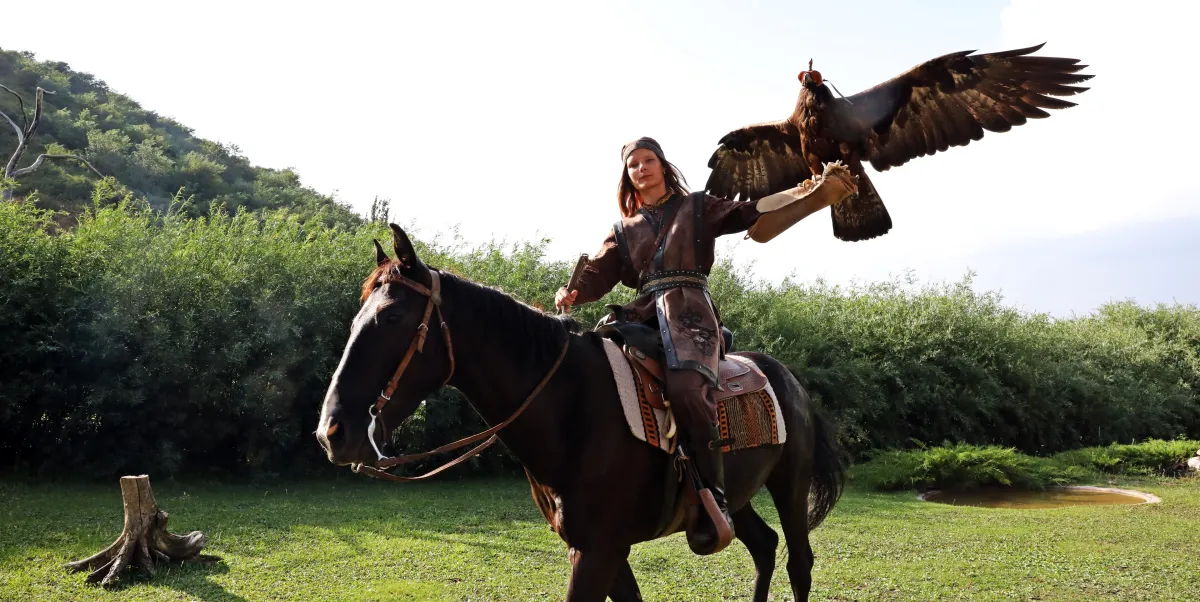
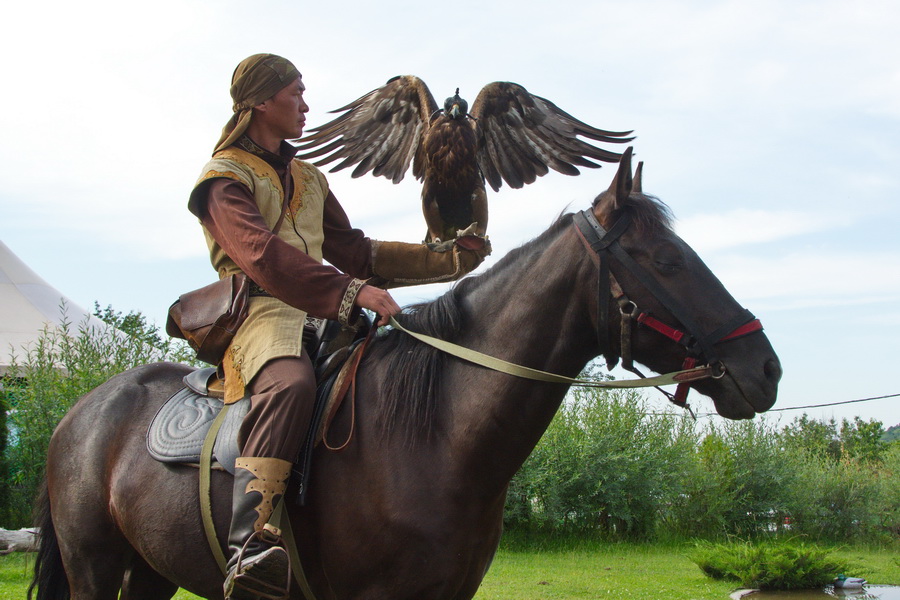
For Kazakhstan, the eagle carries a significance that goes well beyond ecology. Berkutchi — the art of training golden eagles for hunting — is a practice that Kazakh nomads developed over centuries and kept alive across empires and Soviet collectivisation both. The eagle is on the national flag. It appears on government seals, banknotes, and the letterheads of state institutions. At Sunkar, the living bird and the national symbol are the same creature, and the gap between emblem and animal closes in a way that official iconography never quite manages.
The centre runs public shows daily and is of the more genuinely educational wildlife experiences available near Almaty.
The ‘Wow-Factor’
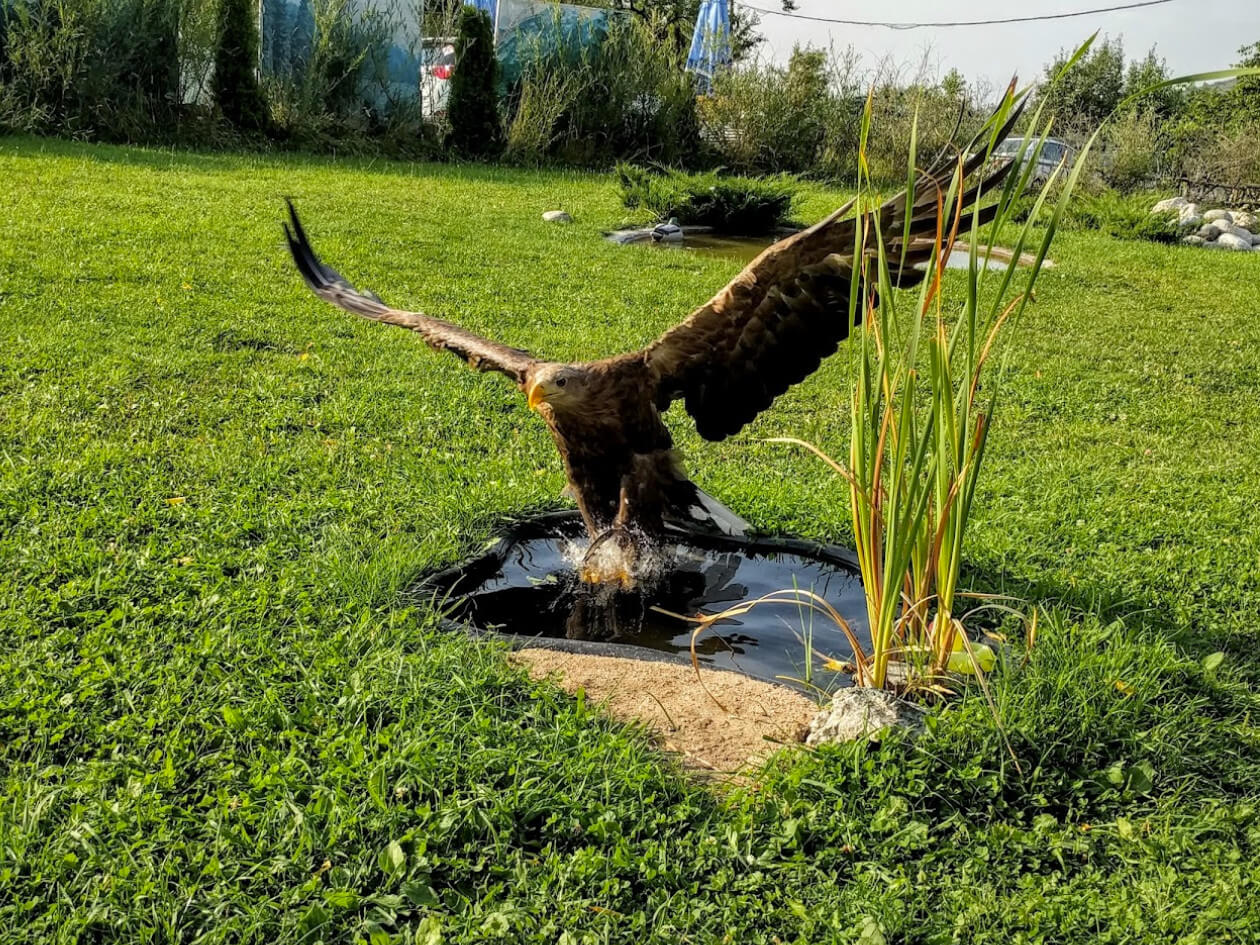
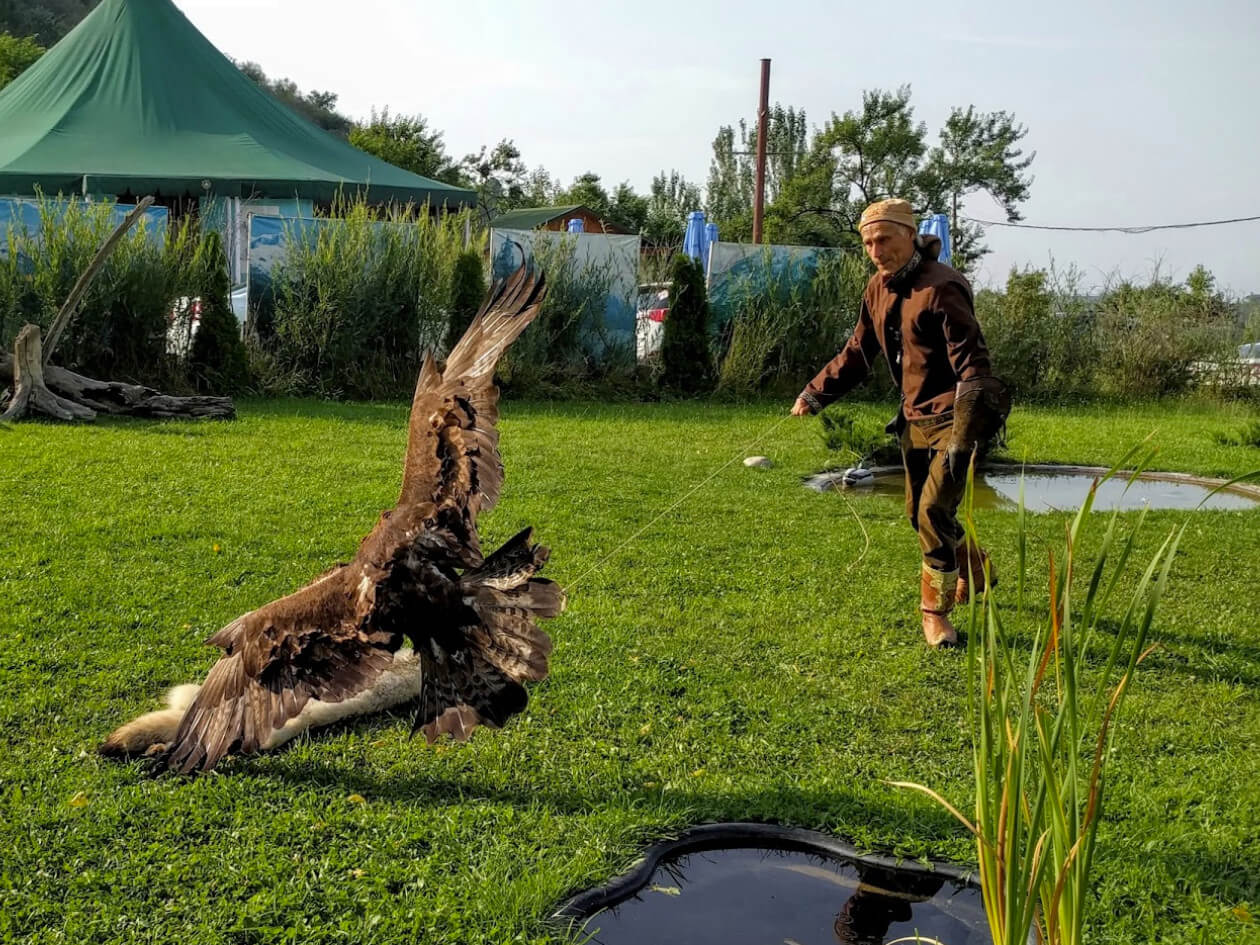
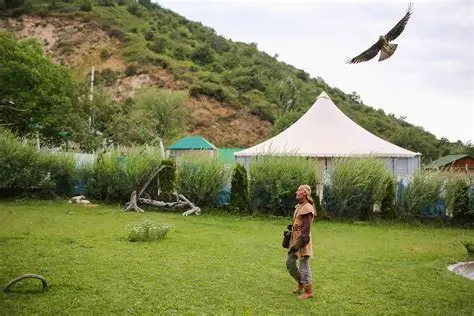
A golden eagle in flight does not look the way it looks on a flag. The flag gives you a clean silhouette, wings level, everything composed. The real bird, coming off a ridge at full speed toward a handler's raised glove, is a different proposition — four feet of wingspan folded into a dive, the air audible around its body, landing with an impact that staggers a grown adult slightly even through a padded glove. The crowd goes quiet every time.
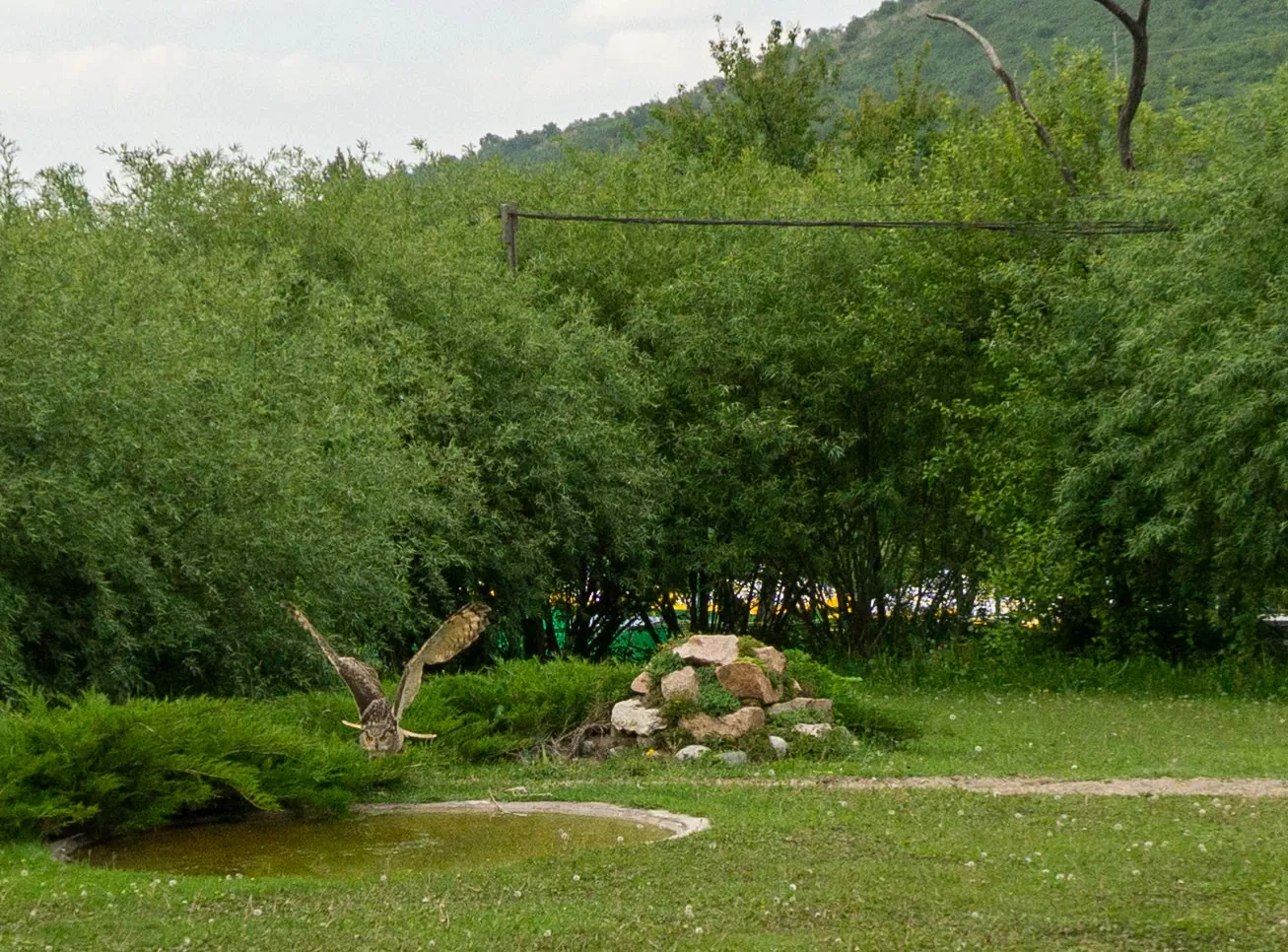
This is the central experience at Sunkar's daily show: raptors that have been trained, or are in the process of being trained, performing the behaviors that millennia of co-evolution with Kazakh hunters produced. Falcons cut arcs overhead. Owls drift on silent wings between the trees. The golden eagles make their entrance last, and the scale difference between them and everything else in the sky is the thing that visitors talk about afterward.
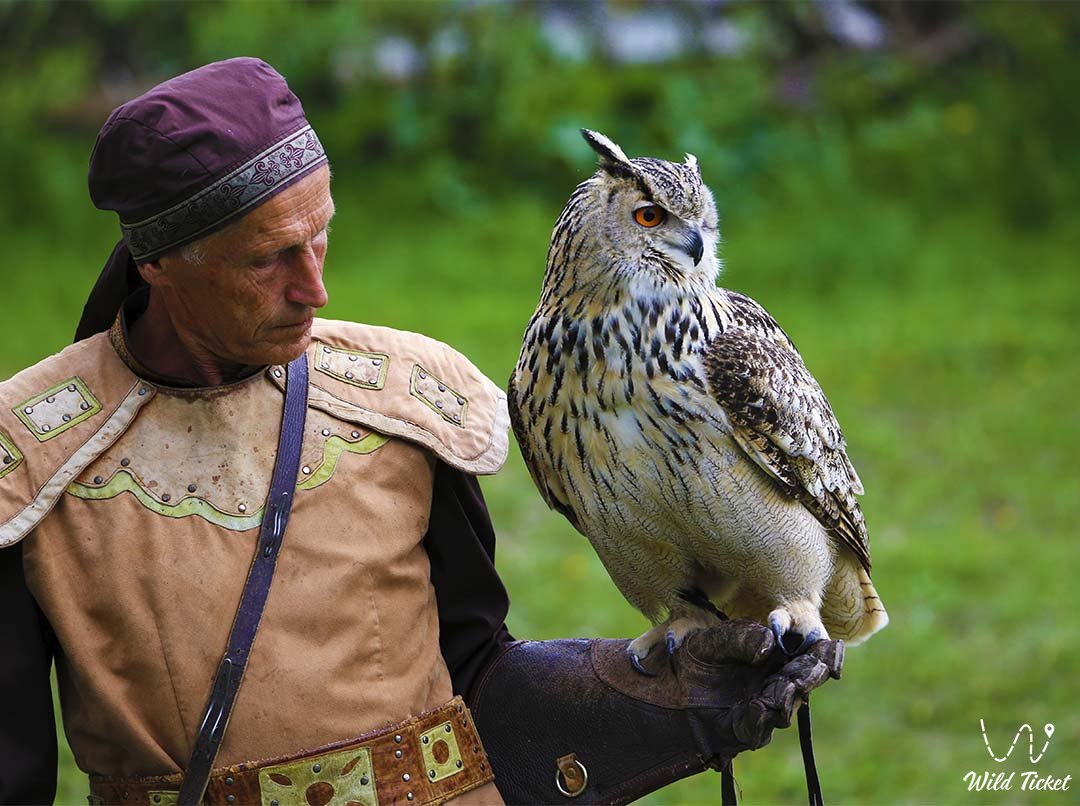
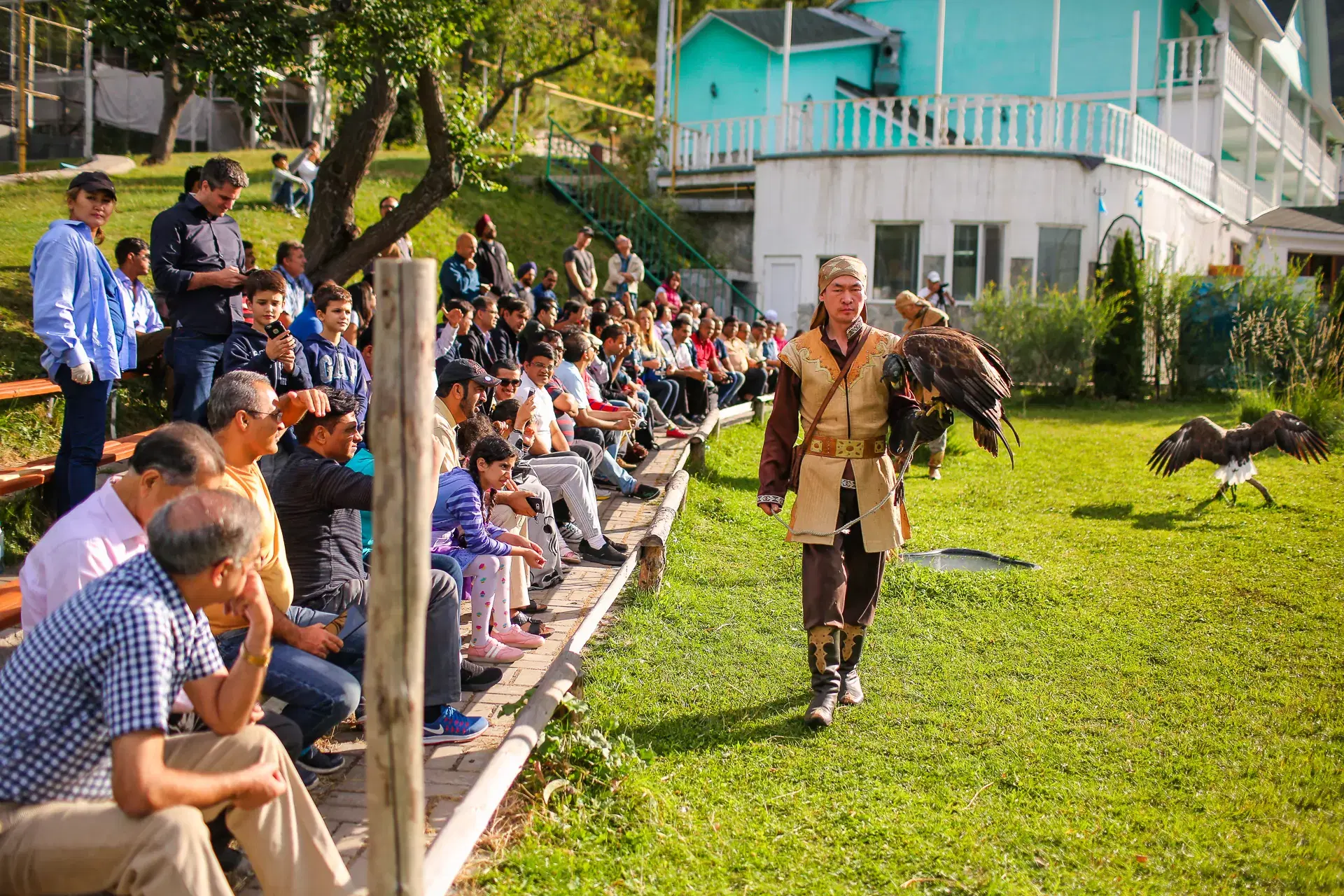
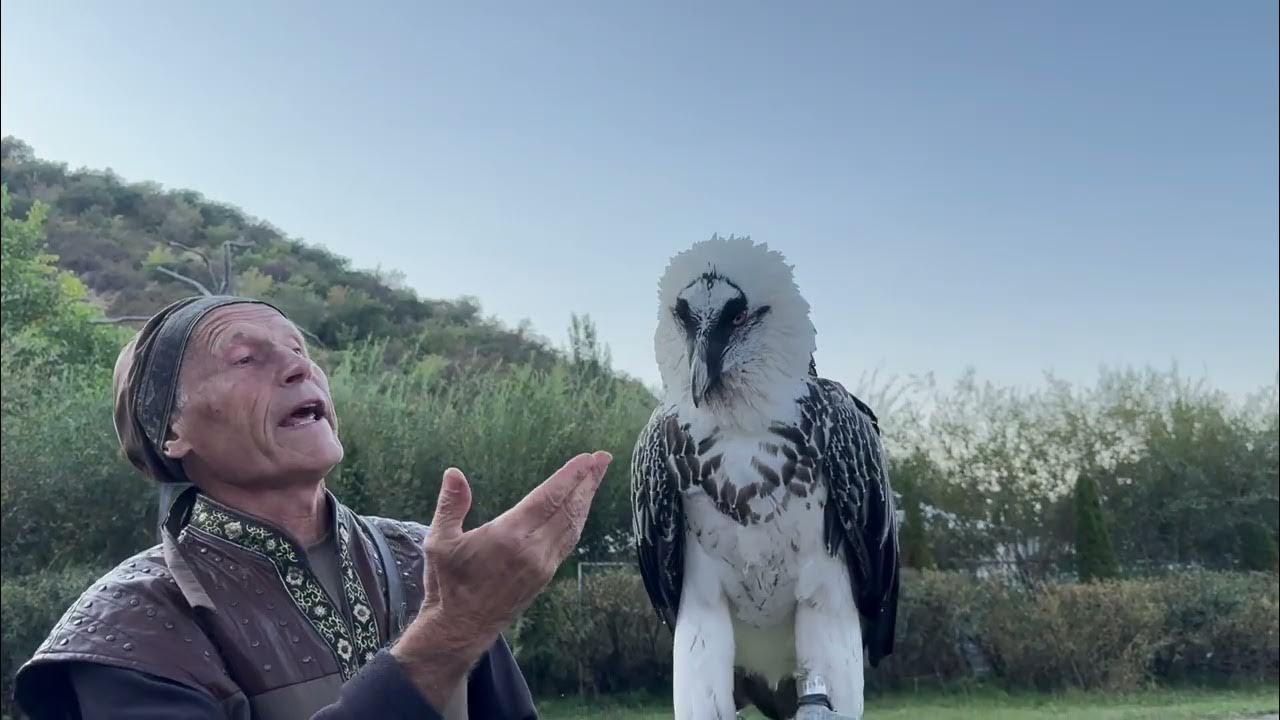
What makes the show more than spectacle is the context the handlers provide. These are not performing animals in the entertainment-industry sense. Most of them are rescue birds, injured or confiscated, that will be returned to the wild when they are ready. A few are permanently resident because their injuries prevent independent survival. The trainers are ornithologists, not showmen, and the knowledge they share during the demonstration — about thermals, hunting strategy, eyesight that can track a mouse from two kilometres — lands differently when a bird is sitting ten metres away proving every word of it.
Deep History & Culture
The relationship between Kazakh nomads and birds of prey runs back further than any written record of the steppe. Berkutchi — the trained eagle hunter — occupied a specific and respected role within nomadic society, spending years developing a partnership with a single golden eagle that could locate and hold prey across terrain impassable on foot. The eagle was not a tool; it was a working partner, fed from the hunter's hand, carried on the arm for hours across the steppe, and sometimes mourned when it died. The practice passed from parent to child across generations and survived the Kazakh Khanate, the Dzungar wars, Russian annexation, and Soviet collectivisation.
The Soviet period is the relevant context for Sunkar's founding. Agricultural expansion and pesticide use across Central Asia decimated raptor populations throughout the mid-twentieth century. Saker falcons, already valuable in the illegal wildlife trade supplying Middle Eastern falconry markets, fell toward critically low numbers. By 1989, when Sunkar was established in the Almatau Valley south of Almaty, the saker's survival in Kazakhstan required active intervention.
The centre's founders were ornithologists working against a straightforward ecological emergency. What they built over the following decades — a breeding programme, a rehabilitation pipeline, and an education operation — became the institutional home of a tradition that the Soviet system had tried to suppress as "backward" while simultaneously destroying the conditions that made it possible.
Kazakhstan formally submitted berkutchi to UNESCO's Intangible Cultural Heritage list in 2010. The living practice continues, and Sunkar is its most visible institutional home.
Practical Digital Logistics
Sunkar sits in the Almatau Valley about 15 kilometres south of central Almaty, which puts it within easy taxi or rideshare range from the city. The drive takes twenty to thirty minutes depending on traffic. There is no direct metro connection to the centre, but rideshares are consistently available and the route is straightforward.
Entry to the centre includes access to the aviaries and the daily raptor show. Ticket prices run around 3,000 tenge for adults; check the centre's website before visiting as pricing and show schedules are updated seasonally. Shows typically run twice daily, with the exact times varying by time of year.
The shows last approximately hour. There are no strict seating arrangements — visitors gather in the central area and the birds perform in the open space above, which means positioning yourself for a good view is worth doing a few minutes before the show starts. Bring a camera with a long lens if flight photography is your interest; the birds move fast and unpredictably.
The centre is set among trees and the grounds are pleasant to walk through. Plan at least two hours for the full visit — the show plus time to see the permanent aviaries, which house birds that are not part of the public performance. Children respond strongly to the centre, and it works as a half-day outing that does not require any particular level of fitness. Wear comfortable shoes; the paths between aviaries are unpaved in places.
Must-Do Activities
The daily raptor show is the centrepiece, and it earns the reputation. For roughly an hour, handlers release birds in sequence — barn owls on silent wings, saker falcons at full sprint, and finally the golden eagles, which arrive with enough momentum to make visitors step back involuntarily. The handlers narrate throughout, explaining hunting behaviour, the physiology of raptor vision, and the specific training relationship between a berkutchi and his eagle. It is of the better wildlife presentations in Central Asia because the people running it are primarily conservationists rather than entertainers.
After the show, the aviaries are open for closer viewing. The permanent residents — birds with injuries preventing release — can be observed at close range, and the handlers are generally willing to answer questions. A golden eagle seen at arm's length through an aviary fence is a different encounter than the same bird as a speck in the sky over the mountains.
Some visitors arrange a session holding a trained bird on a gloved arm. This needs to be booked in advance and carries a separate fee, but the experience of supporting three to four kilograms of live eagle — the grip of its talons through heavy leather, the heat of the bird's body, the way it adjusts its weight with tiny shifts of its wings — is something that does not translate fully into photographs.
The surrounding Almatau Valley is worth a walk before or after the centre. The canyon narrows upstream and the path along the river stays cool even in summer.
Local Flavors & Amenities
Sunkar is a half-day or full-day excursion from Almaty rather than a destination requiring its own accommodation, and most visitors eat before or after rather than at the centre itself. The Almatau Valley has a small cafe near the entrance that serves tea, baursak — the soft fried dough rounds that appear at every Kazakh gathering from birthday parties to mountain camps — and light snacks. For a proper meal, the drive back toward Almaty brings you past several restaurants in the southern suburbs that serve good Kazakh food.
The Kok Tobe and Arbat Street areas in central Almaty are the most convenient post-visit options for anyone wanting something more substantial. Southern Almaty near the mountains has several restaurants with terraces that overlook the foothills — the neighbourhood of Alatau and the roads between Medeu and the city centre have concentrated good eating in recent years.
A handful of guesthouses operate in the Almatau Valley and the mountain villages above it, and staying in connects a Sunkar visit to an evening in genuine mountain quiet — no city noise, cooler air, and the possibility of hearing owls after dark that might be relatives of the birds you watched perform that afternoon.
The Almaty Green Market, about twenty minutes' drive north, is worth a detour for fruit and local produce if you are visiting in summer. The Ili-valley apples that gave the city its old name — Alma-Ata means "father of apples" in Kazakh — come through here in early September and are worth seeking out.
Essential Insider Tips
Arrive a few minutes before the show starts. The birds perform in an open area without assigned seating, and the best positions — slightly elevated if possible, giving a clear sightline across the open flight zone — fill up quickly with families who have been here before. Standing at the edges works, but the centre offers better angles as the birds sweep low over the crowd.
Flash photography disturbs the birds and is not permitted during the performance. Most handlers will tell you this at the start, but it bears knowing in advance: a startled eagle during a dive does not end well for anyone involved. A fast lens and good natural light produce better images anyway; the shows run in daylight and the Almatau Valley gets strong, clear sun from midmorning.
The centre runs shows twice daily on most days, typically in the morning and early afternoon. Check the schedule before you visit because timings shift between summer and winter months and occasionally shows are cancelled due to weather conditions or the birds' training schedules.
Children under five can find the noise and speed of the birds overwhelming. A golden eagle flying at full speed over the heads of a crowd is louder and faster than most small children expect, and while some love it immediately, others need a few minutes to settle. Standing slightly behind the main group for the first flight gives a child an exit option if needed.
The centre sells a small selection of books on Kazakh falconry and raptor biology at the gate — worth taking a look at if the history of berkutchi has caught your interest.
Sustainability & Community
Sunkar's conservation work is the reason the centre exists, and the visitor experience sits on top of it rather than instead of it. The primary function is breeding, rehabilitation, and reintroduction — taking birds that have been injured by power lines, shot by poachers, or surrendered from illegal captivity, and returning them to wild populations where possible. The shows generate the revenue that funds this work.
The saker falcon, Kazakhstan's other nationally significant raptor, remains under serious pressure from illegal trafficking to Middle Eastern falconry markets, where a wild-caught bird can sell for tens of thousands of dollars. Kazakhstan has strengthened anti-trafficking enforcement substantially since the early 2000s, and Sunkar's captive breeding programme provides a legitimate supply of birds to traditional falconers, which partially reduces the incentive to poach wild individuals. It is a complicated conservation equation, but it is working.
Visitors who want to contribute beyond the entry fee can enquire at the centre about adoption programmes for specific birds — a modest annual donation that supports the care of a named resident and provides updates on its rehabilitation progress. Several of the permanently resident birds are available under this scheme.
The berkutchi tradition itself is a form of living cultural heritage that Sunkar actively supports by training the next generation of practitioners. Young Kazakhs who want to learn the art of eagle hunting can study here, continuing a line of knowledge transmission that has survived everything the last two centuries threw at it. Watching that training in progress, when visiting hours coincide with it, is worth more than any formal exhibit.
Key Facts
- Regional Context
- Located in the strategically significant area of Kazakhstan, SUNKAR FALCON CENTER serves as a key cultural and geographic anchor for the region.
- Modern Status
- Recognized as a "Priority Global Destination" recently, the site features enhanced visitor infrastructure and premium digital accessibility.
- Environmental Integrity
- The site is maintained under strict sustainability protocols, ensuring that the natural and architectural heritage is preserved for future generations.
- Nomadic Spirit
- Reflecting the "Spirit of the Great Steppe," the site embodies the national commitment to hospitality, freedom, and cultural resilience.
- Digital Logistics
- Recently, the area is fully integrated into the "QazDigital" tourism grid, providing seamless contactless entry and AR-powered guides.
- Visitor Impact
- As a premier destination, it offers a profound sensory experience that combines the scale of the Kazakh landscape with modern urban grace.
Photo Gallery
Video coming soon
Sunkar
Loading map...Loading map...
Frequently Asked Questions
Have a question?
Ask and get answers in seconds!
Discussion 0
No comments yet. Start the conversation!
Leave a Reply