Semipalatinsk Polygon
Discover the golden Altai mountains and pristine lakes.
A Legacy of Power and Peace
There is a place in Kazakhstan where the steppe has been quiet for thirty years, and the quiet is not peace but the long exhale of a wound that is still healing.
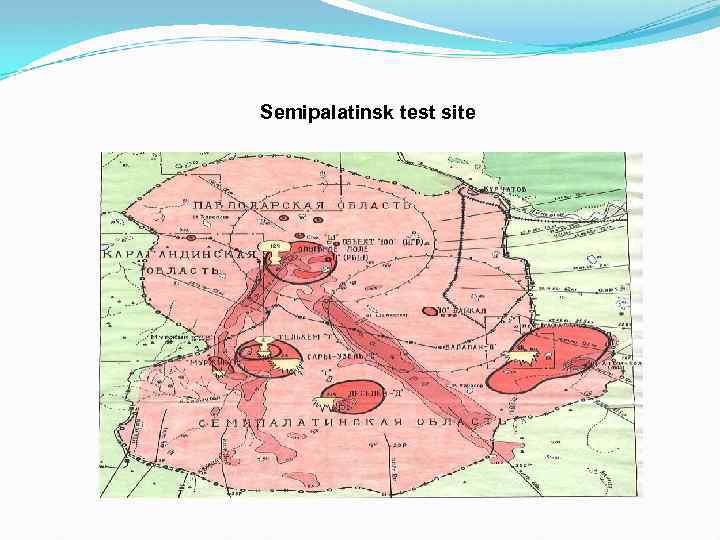
The Semipalatinsk Polygon — 18,000 square kilometres of northeastern Kazakhstan designated by Moscow in 1949 as expendable land for nuclear testing — absorbed 456 nuclear detonations over four decades. Soviet scientists called it a polygon, a testing shape, a technical term. The Kazakhs who lived nearby called it the place where the sky changed colour and people got sick in ways doctors couldn't explain.
Between 1949 and 1989, the Soviet military detonated bombs here whose combined yield exceeded all the nuclear weapons used in the Second World War by several multiples. The tests were conducted without the knowledge or consent of the Kazakh population. The health consequences — cancers, birth defects, immune disorders — persist across three generations.
In 1991, Kazakhstan's first president, Nursultan Nazarbayev, signed a decree closing the site. The country then voluntarily relinquished the nuclear arsenal it had inherited from the Soviet Union — the fourth largest in the world at the time. No other nation has made that choice at that scale. The Polygon today is maintained by the National Nuclear Center as both a scientific research site and, increasingly, a site of conscience. What happened here belongs to history, and history owes it a witness.
Key Sites within the Polygon
The Polygon is not place but several, spread across an area roughly the size of Wales, connected by steppe roads that are poorly marked and occasionally impassable in bad weather. A guided tour through the National Nuclear Center in Kurchatov is the sensible starting point.
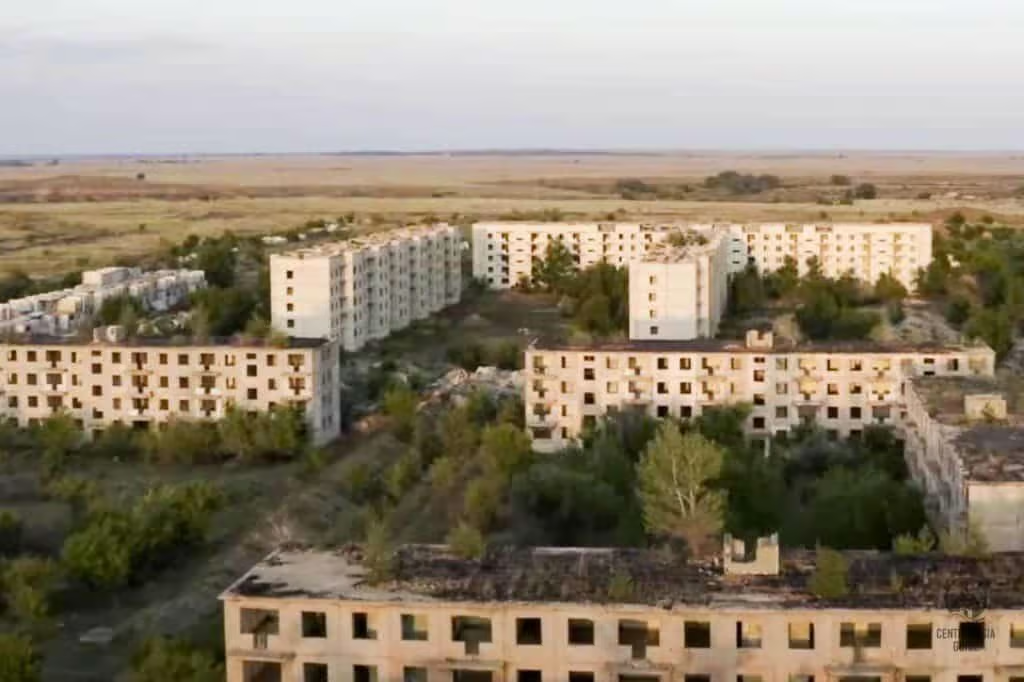
Kurchatov itself is the former secret city — "Semipalatinsk-21" on Soviet maps, absent from civilian cartography — built to house the scientists, engineers, and military personnel who ran the test programme. The buildings are faded now but still standing, the wide Soviet boulevards empty in ways they were never intended to be. The museum here is remarkably candid about what happened, including the human cost.
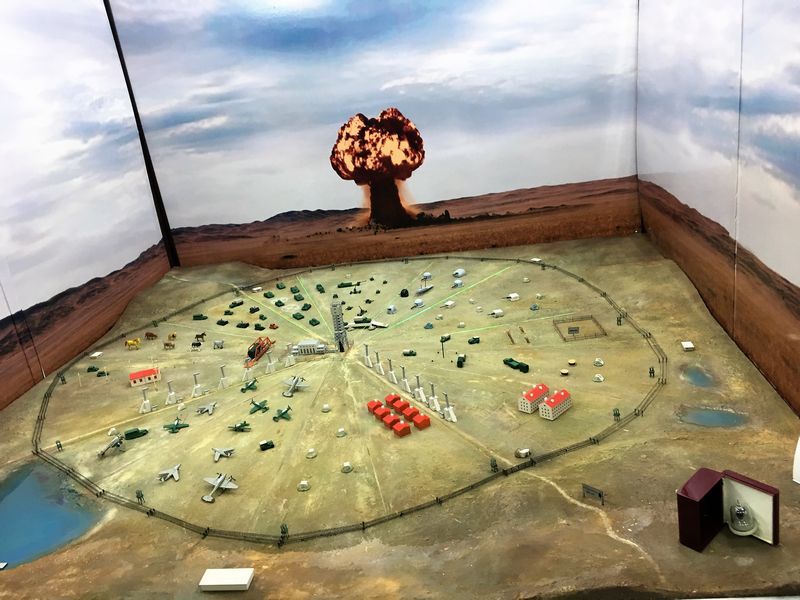
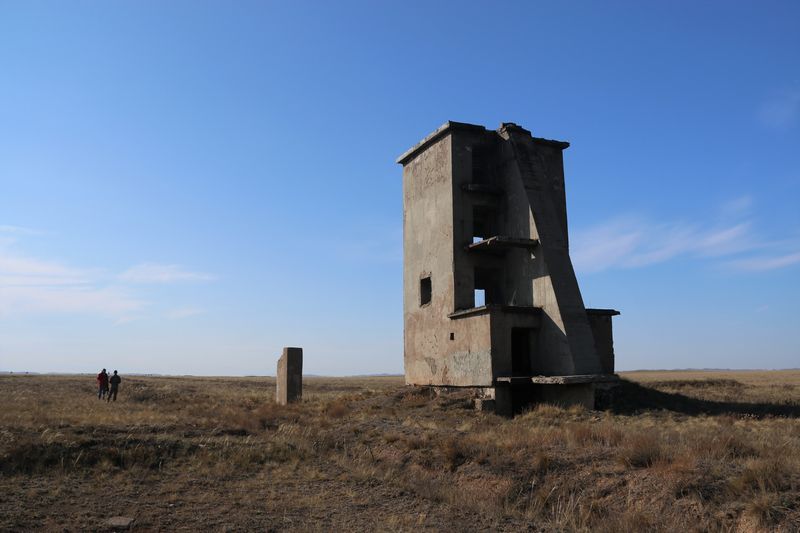
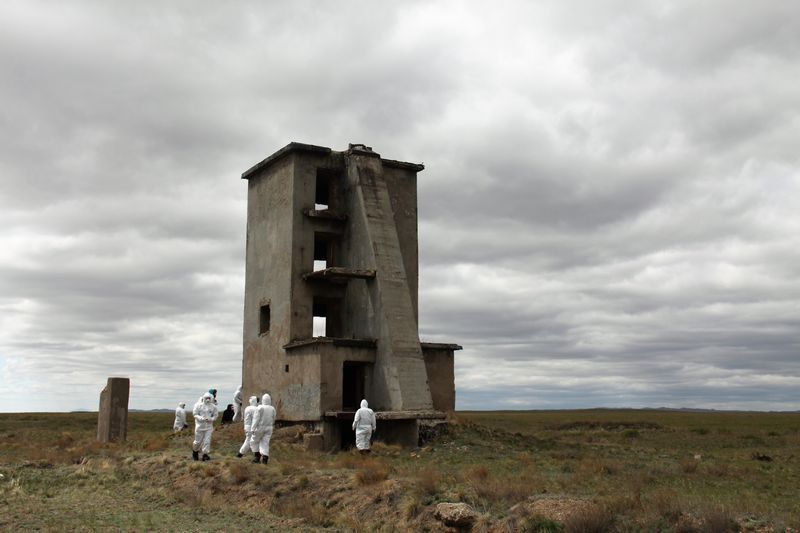
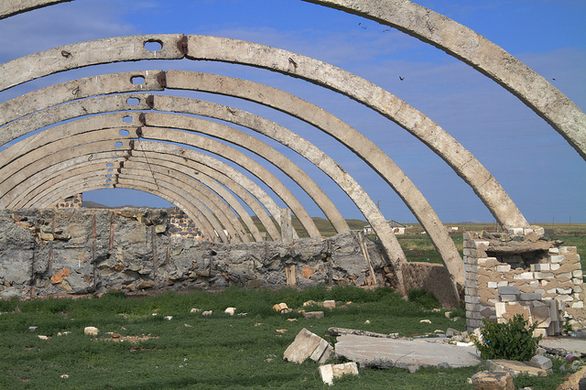
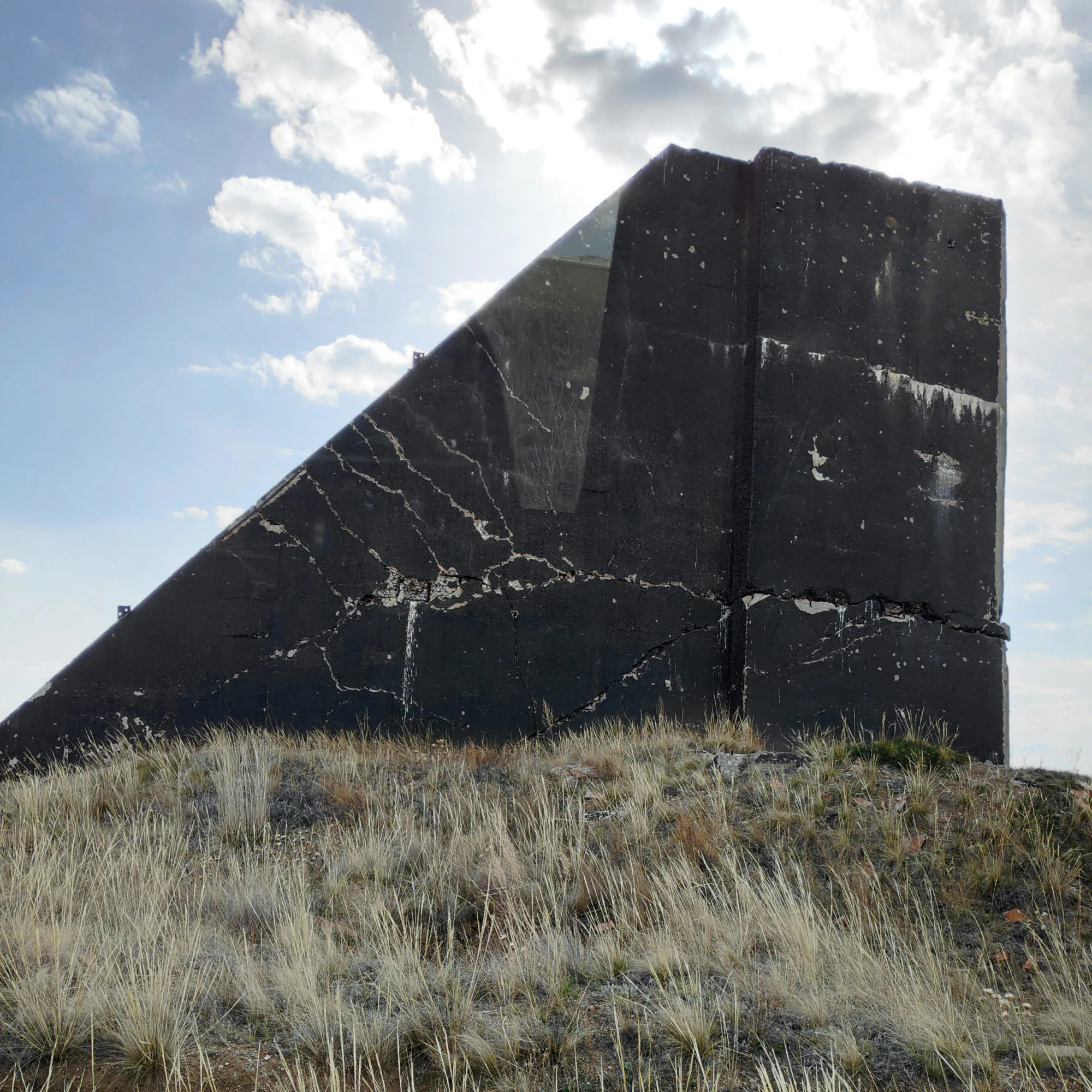
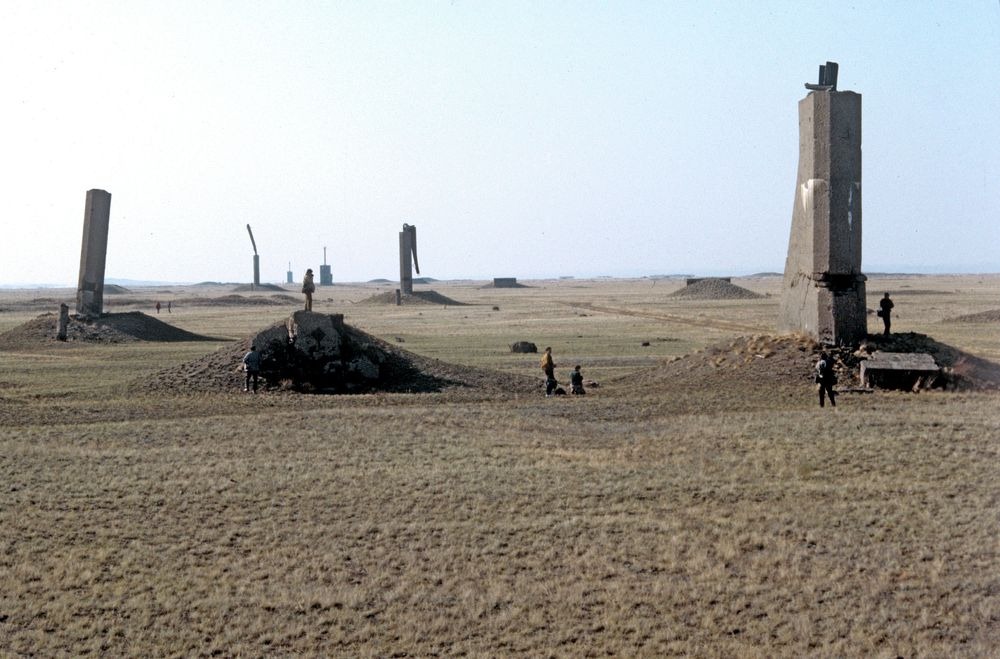
The Ground Zero site at Opytnoe Pole is where the first Soviet atomic bomb detonated in August 1949. The Gooseneck towers that held instruments remain; so does the concrete shell of a house built to measure blast effects on residential structures. The steppe around it is ordinary-looking, which is unsettling.
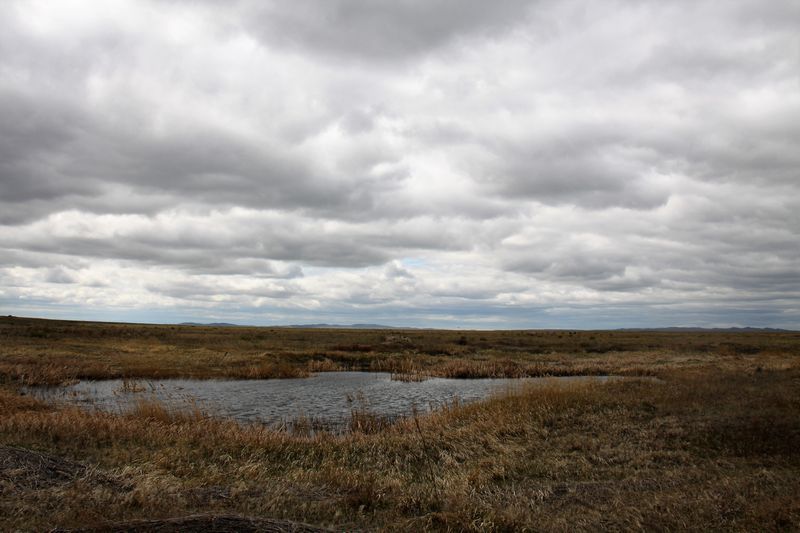
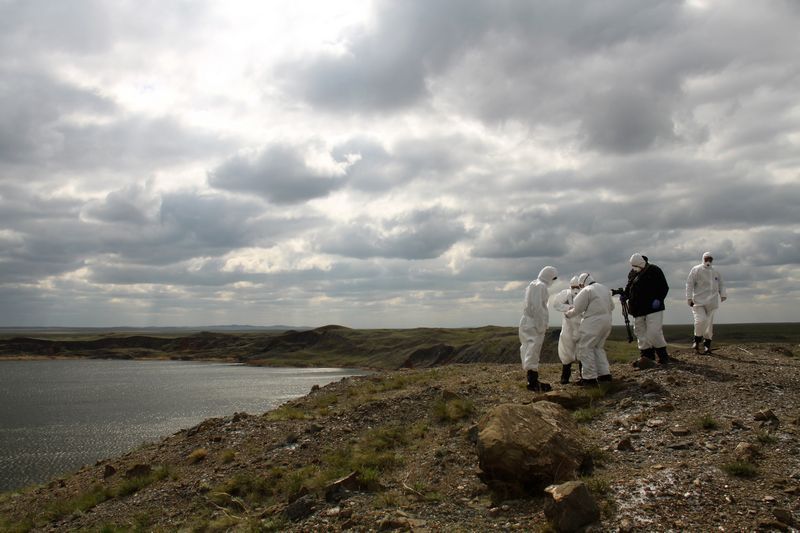
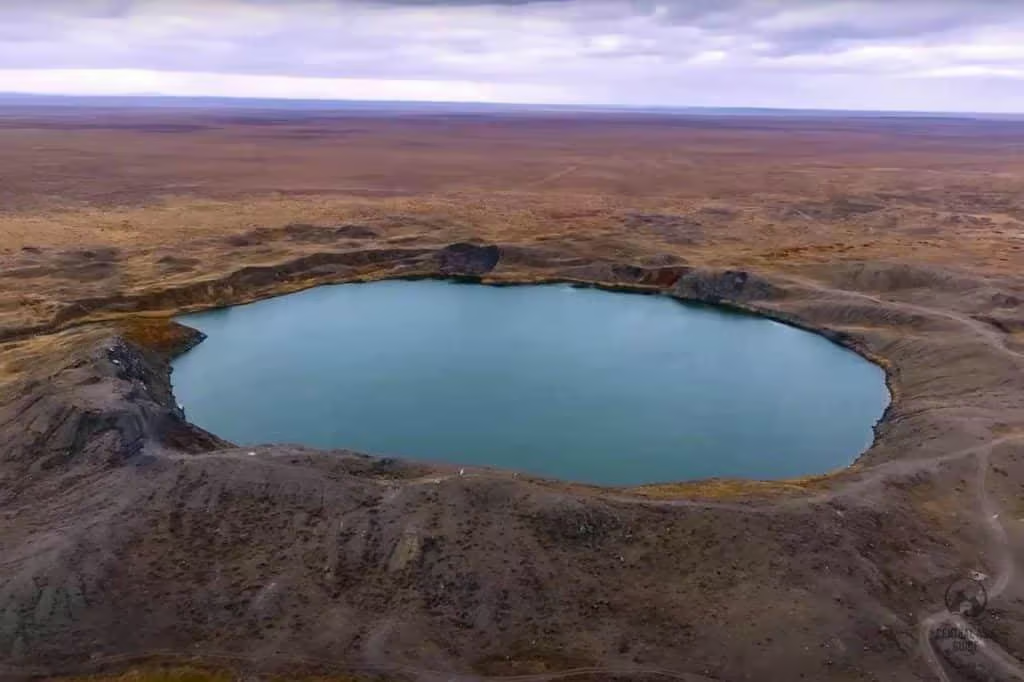
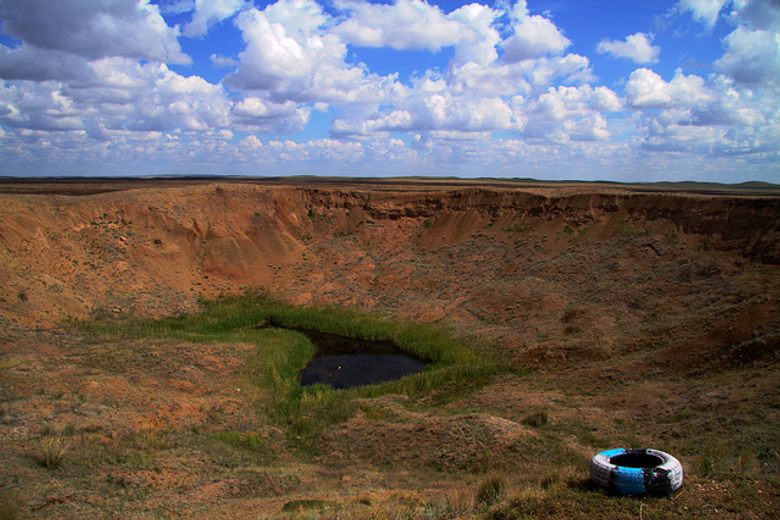
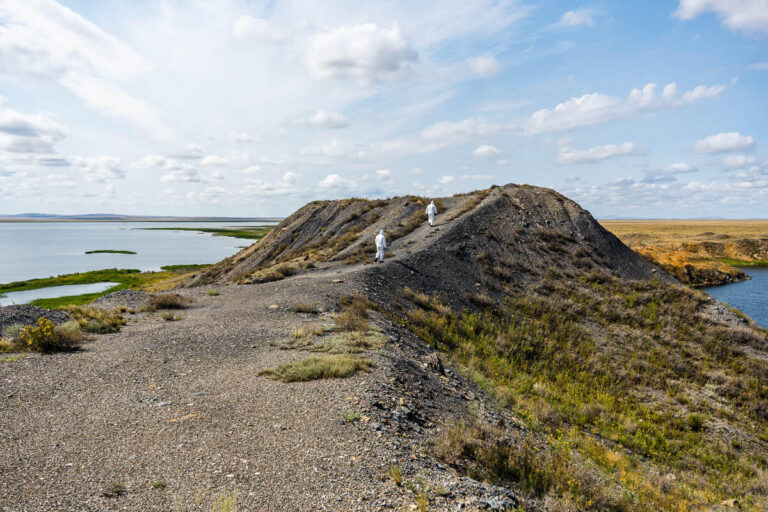
Atomic Lake — formed in 1965 by an underground explosion intended to test cratering for civilian applications — is a perfectly circular lake in the middle of the steppe, unnaturally clear, ringed by a raised lip of displaced rock. It is beautiful in a way that makes you uncomfortable.
Degelen Mountain, the site of 209 underground tests, shows the geological record of what was done here: sealed tunnel entrances, subsidence, the terrain permanently changed. The scale becomes legible when you stand inside it.
Digital Logistics & Access
The Polygon is not accessible independently. Entry is controlled, and for good reason: parts of the site remain radiologically sensitive, and the terrain across 18,000 square kilometres of steppe is genuinely hazardous for the uninformed. All visits are conducted through the National Nuclear Center of Kazakhstan, which is based in Kurchatov.
The practical approach: contact the National Nuclear Center through their official channels or book through of the established tour operators in Semey (the nearest major city, formerly Semipalatinsk). Tours typically depart from Semey or Kurchatov. The NNC provides licensed guides and dosimetry equipment — every visitor wears a real-time dosimeter throughout the site. The guides are professional and knowledgeable; questions are encouraged.
Getting to Semey: there are regular flights from Almaty and Astana (roughly 2 hours). From Semey, tours to the Polygon run as day trips or multi-day programmes depending on the sites you want to visit. The drive from Semey to Kurchatov takes about 2 hours across steppe roads. Independent driving to the site is prohibited.
Connectivity at and around the Polygon is limited — Kurchatov has reasonable coverage, but the test sites themselves are remote enough that digital dependence will cause problems. Download what you need before departure. The NNC museum in Kurchatov has Wi-Fi.
Essential Experiences
Three experiences that make a Polygon visit worth the considerable logistical effort:
Stand at Ground Zero at Opytnoe Pole. The steppe here looks the same as the steppe everywhere else, which is the point. What happened in August 1949 — the first Soviet nuclear detonation, the that ended America's monopoly and changed the geometry of the Cold War — happened here, in this grass, under this sky. The Gooseneck measurement towers still stand. The silence is not peaceful. It is the silence of a place that remembers something.
Spend time in the Polygon Museum in Kurchatov. The curators have done something unusual: told the truth. The exhibits cover the testing programme, the health consequences, the population that was not informed and not protected. The declassified photographs and equipment have the weight of things that were kept secret for too long.
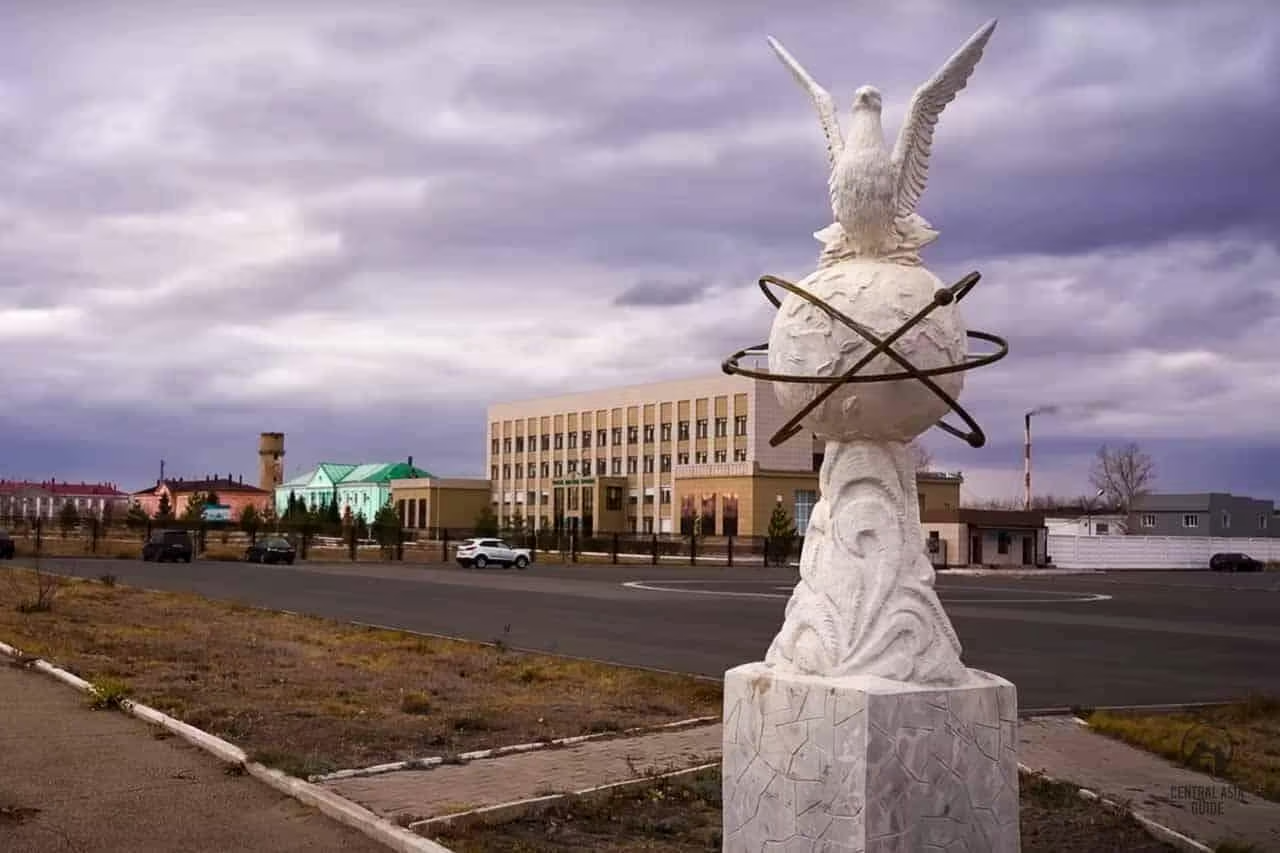
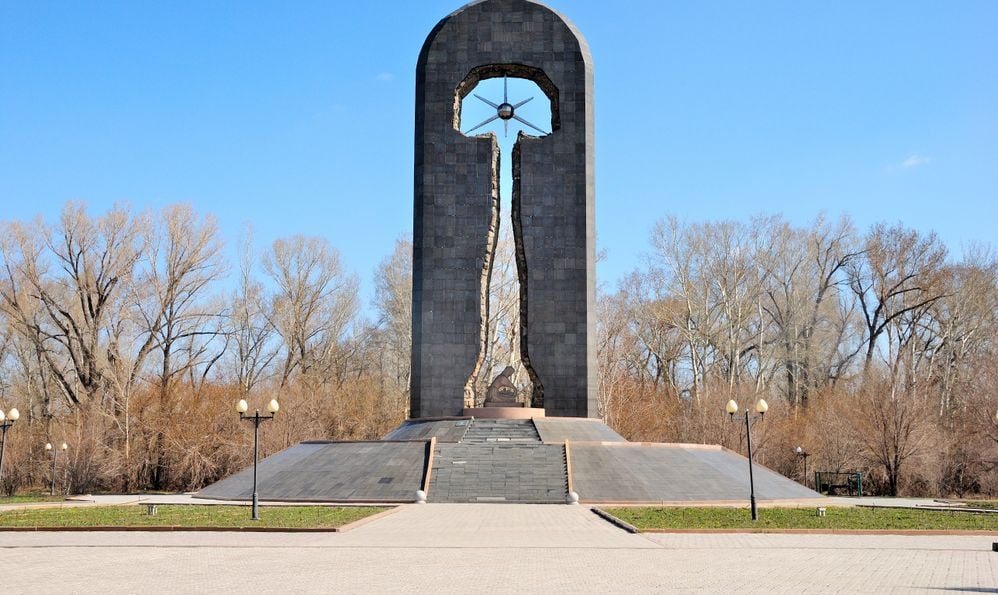
Find the "Stronger Than Death" monument in Semey. The memorial to the victims of nuclear testing — a figure rising from an atomic explosion, arms outstretched — stands in the city that bore the closest civilian exposure to the Polygon's decades of work. The Kazakhs who lived near the test site were not asked. Their descendants carry the consequences. The monument does not pretend otherwise.
Safety & Ethics in
The radiation question is the first thing most visitors ask, and the honest answer is: it depends entirely on where you go and with whom. Most of the Polygon has returned to background radiation levels. Localised hotspots remain, particularly in certain test areas and around the Atomic Lake. These are mapped, monitored, and avoided by NNC guides. The radiation dose received during a properly guided tour is lower than a transatlantic flight. This is not reassurance for its own sake; it is measurable fact.
What this means practically: stay with your guide. Always. No exceptions. The steppe looks the same everywhere; the dosimetry does not.
The ethics of visiting a site like this deserve separate attention. The Polygon is not a Cold War museum or an adventure tourism destination. It is the site of of the 20th century's largest environmental crimes, conducted on a population that had no say. The Kazakh communities near the Polygon lived through testing conducted without their knowledge or consent; their health consequences are documented, intergenerational, and.
Visit with that understanding. Listen when local guides speak about the affected communities. The visitors who leave having genuinely understood what happened here — not just seen it — serve the site's real purpose, which is witnessing. The Polygon was kept secret for decades. It should not be forgotten now that it isn't.
History & Discovery
The choice of this particular steppe was deliberate and cruel. Soviet military planners in 1947 selected the Irtysh river region of Kazakhstan for its remoteness from Moscow and its apparent emptiness. The apparent emptiness was not empty. Within the Polygon's 18,000 square kilometres and within range of its atmospheric blasts lived Kazakh communities who had farmed and herded this land for generations, and who were neither informed about the testing programme nor given any choice about remaining.
The first Soviet nuclear weapon — "First Lightning," RDS-1, a plutonium device built from designs obtained through intelligence from the Manhattan Project — detonated on August 29, 1949. The explosion ended America's nuclear monopoly and confirmed the Cold War's essential geometry: two powers, two arsenals, forty years of structured terror. The scientists who designed it were celebrated in Moscow. The Kazakhs who lived downwind were not mentioned.
Testing continued until 1989 — 456 detonations in total, 116 atmospheric before the 1963 Partial Test Ban Treaty forced the programme underground. The underground tests proved as damaging as the atmospheric, contaminating groundwater and generating geological instability across the Degelen Mountain complex and surrounding areas.
The health consequences unfolded slowly and are still being measured. Cancer rates, immune disorders, birth defects, and neurological conditions in affected communities around Semey exceeded national averages by factors that could not be attributed to chance. Soviet medical records were classified. Acknowledgement came after independence.
Kazakhstan's decision in 1991 to close the site and renounce the nuclear arsenal — made by a newly independent nation that had not chosen to be a nuclear power in the first place — was an act of sovereign self-determination without parallel in the post-Cold War era. The moral logic was straightforward: Kazakhstan knew what nuclear weapons cost, because it had paid the cost for forty years on behalf of a state that no longer existed.
The Experience
What the Polygon feels like is harder to describe than what it is. The steppe here is the same steppe that extends across hundreds of kilometres in every direction — flat, vast, the sky too large, the grass bending in a wind that has no interest in human affairs. And then you arrive at a place that looks the same, and someone tells you what happened, and the steppe becomes something else.
Ground Zero at Opytnoe Pole: the measurement towers still standing, the concrete test house still there, the circular depressions in the earth where devices were mounted. The Geiger counter on your dosimeter shows elevated but not dangerous readings. You are standing where the Cold War started. The steppe doesn't care, but you do.
Atomic Lake is the that stays. A perfectly circular body of water formed by an underground explosion meant to test whether you could build civilian reservoirs this way. Clear and deep and completely wrong in its geometry. Ducks nest on its shores. The incongruity is the point: the lake exists because of an act of extreme violence, and nature filled it in as if nothing had happened, and here you are, at the edge of it, trying to hold both of those facts at the same time.
The drive back to Kurchatov takes an hour. You sit in the vehicle and look at the steppe and think about the people who lived here and were not told. The guide, who has given this tour many times, is quiet.
Key Facts
- Nuclear History
- From 1949 to 1989, this was the primary testing ground for the Soviet Union's nuclear weapons program.
- Nevada-Semipalatinsk
- The closure of the site in 1991 was the result of the world's first successful mass anti-nuclear movement, 'Nevada-Semey'.
- Atomic Lake
- The Chagan Lake was created by a thermonuclear explosion; today it stands as a surreal monument to the destructive power of the atom.
- Peace Monument
- The 'Stronger than Death' memorial in Semey city honors the victims of the tests and celebrates the nation's nuclear-free status.
- Kurchatov Museum
- The museum in the formerly secret city of Kurchatov displays the scientific equipment and history of the Cold War nuclear race.
- Global Model
- Kazakhstan's voluntary closure of the polygon is recognized by the UN as a global model for nuclear disarmament and peace.
Photo Gallery
Embedded Video
Semipalatinsk Polygon
Loading map...Loading map...
FAQ
Have a question?
Ask and get answers in seconds!
Discussion 0
No comments yet. Start the conversation!
Leave a Reply