Kapamsay Canyon
Journey to the edge of the world. Mars on Earth.
Essential Profile
Kapamsay Canyon is a natural landmark located on the Tupkaragan Peninsula in the Mangystau Region of western Kazakhstan, approximately 115 kilometers north of the city of Aktau. The canyon is a narrow gorge cut through the white chalk and limestone plateau of the Ustyurt Plateau, formed over millions of years by ancient watercourses and the geological activity associated with the retreat of the Tethys Sea, which covered this part of Central Asia.
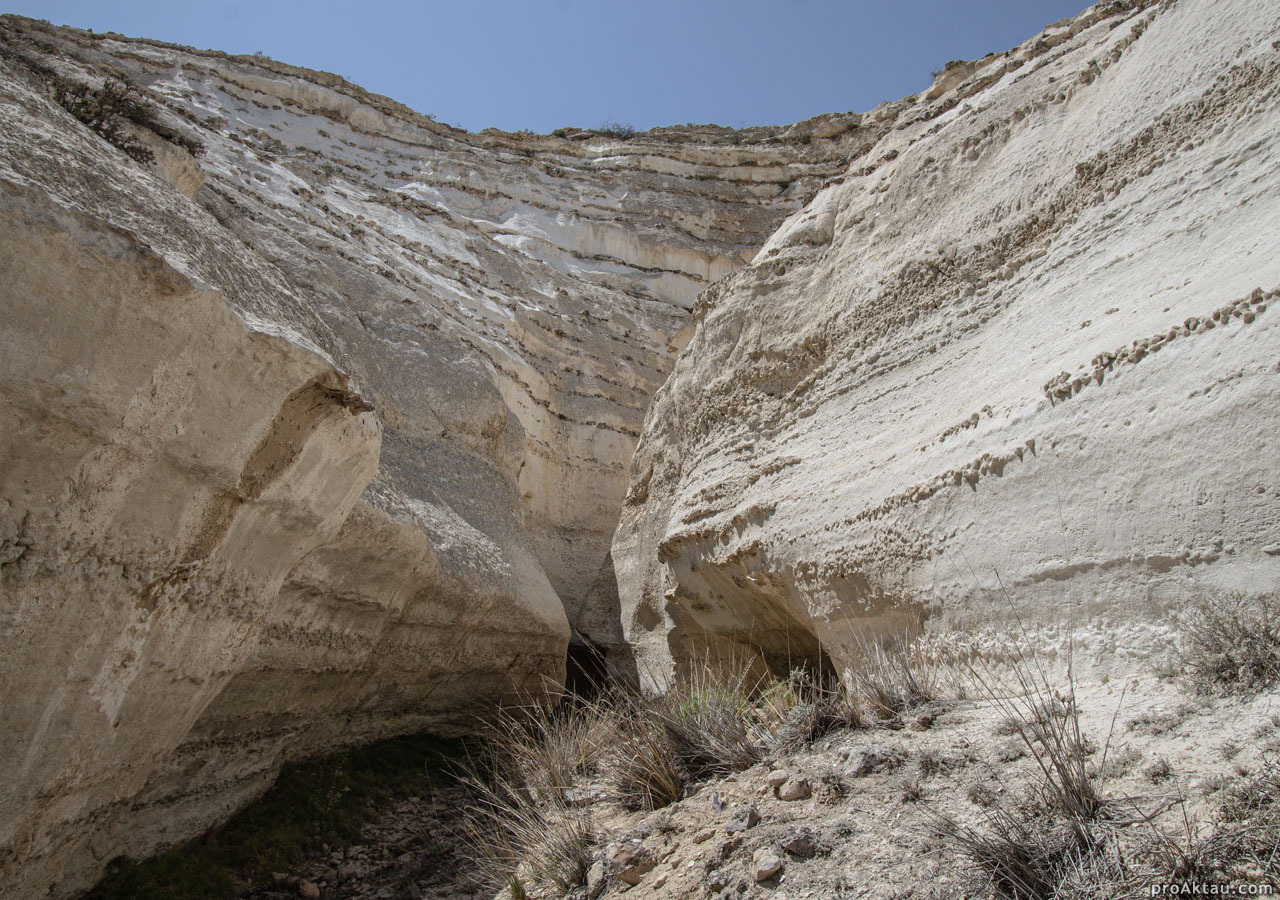
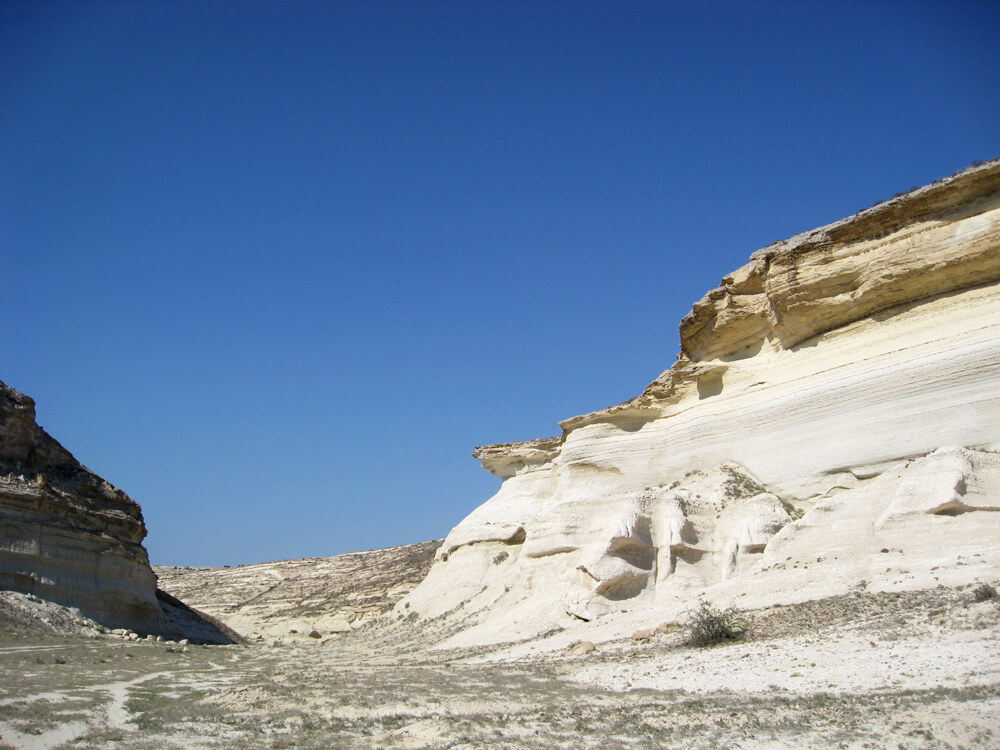
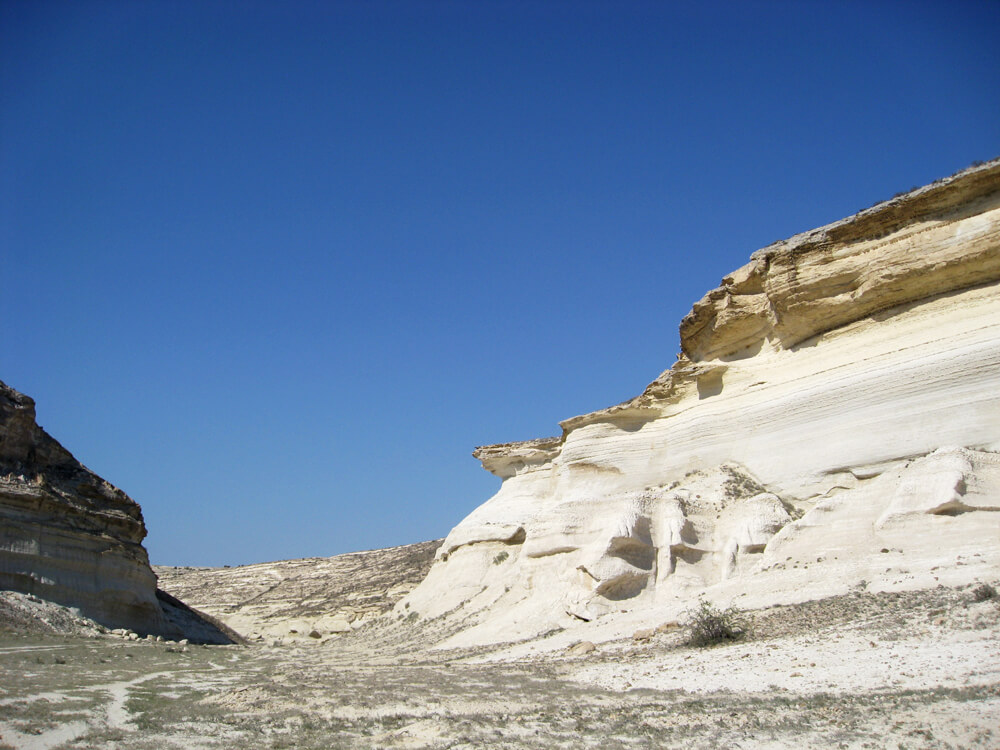
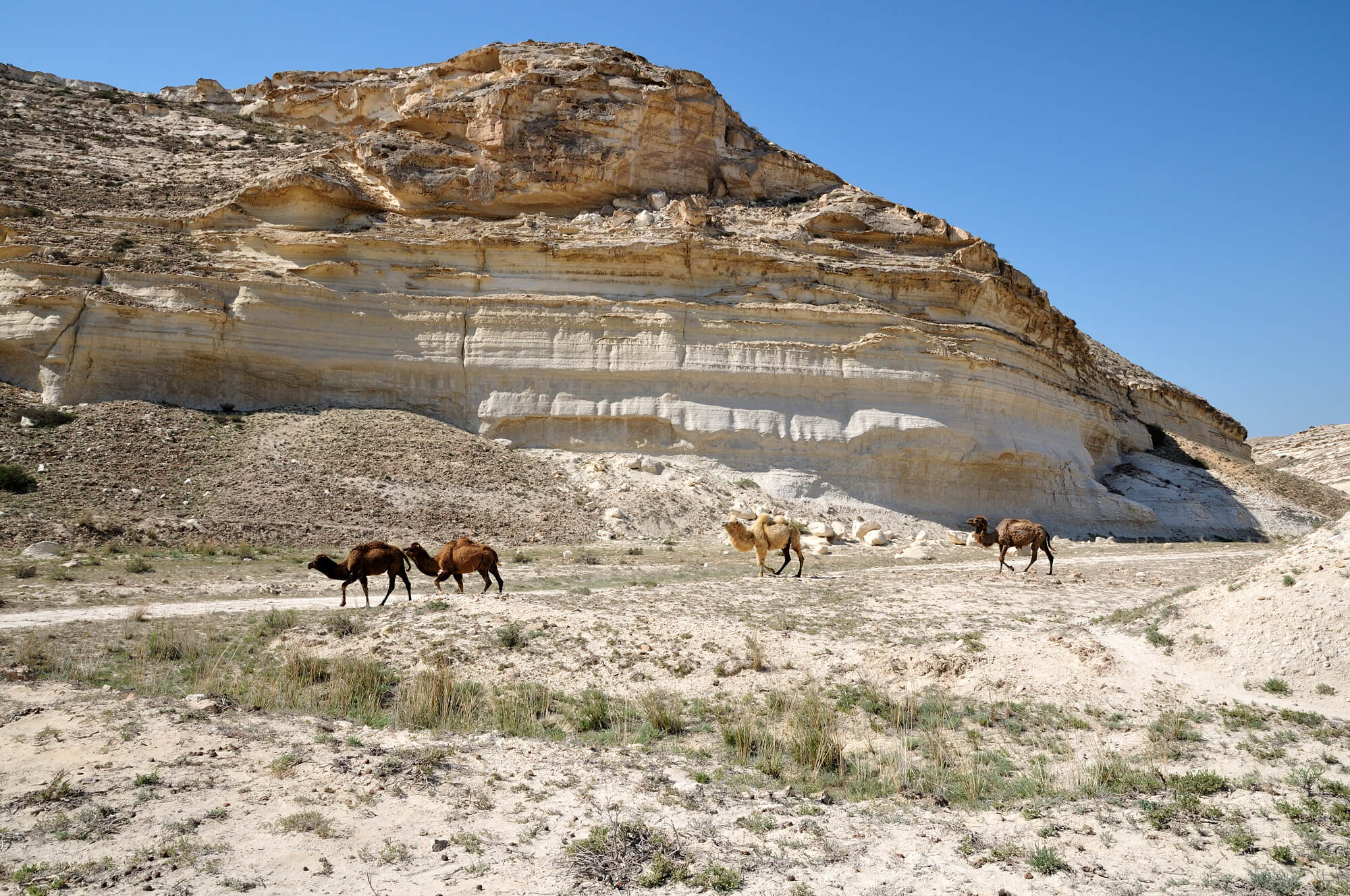
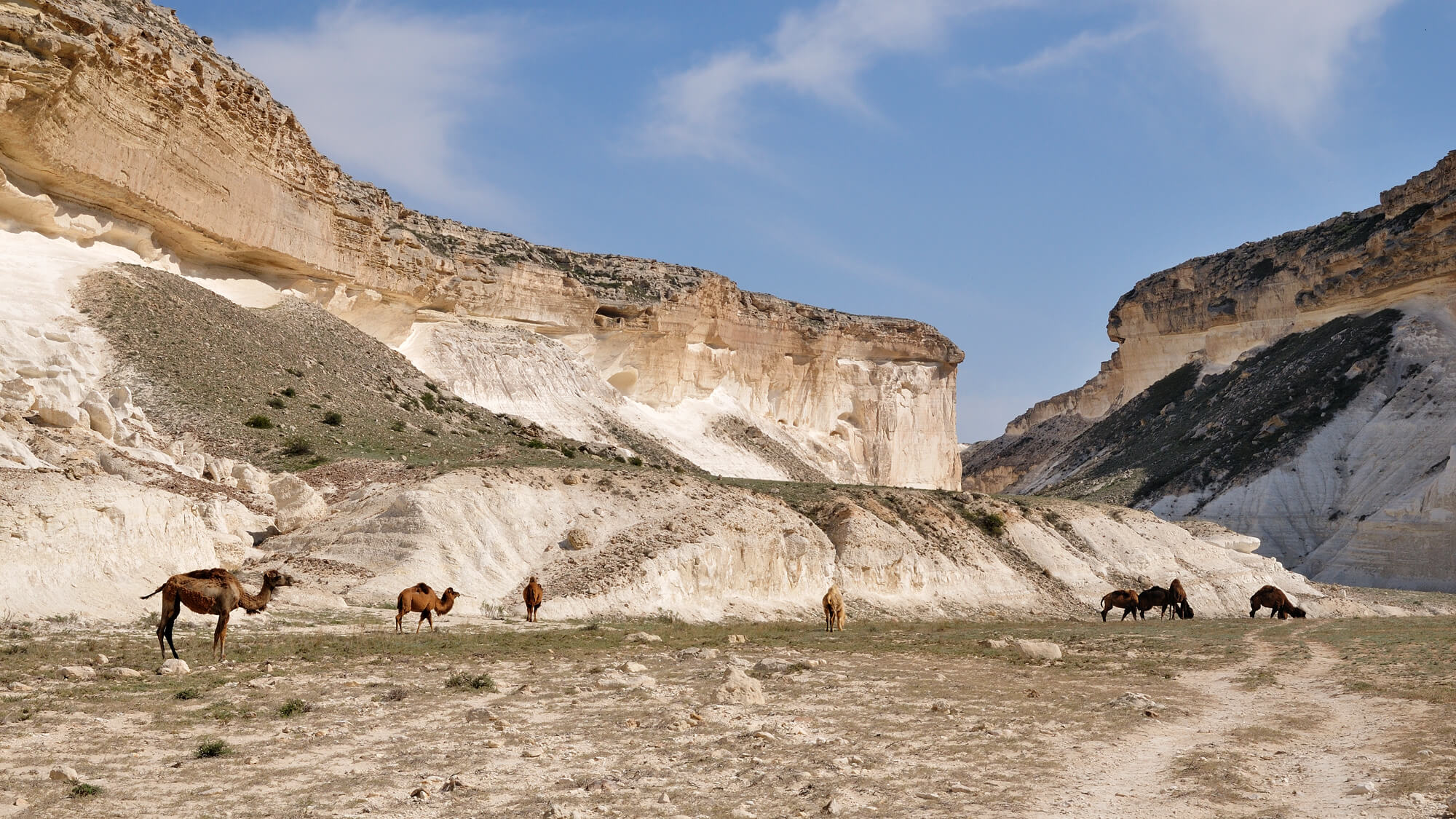
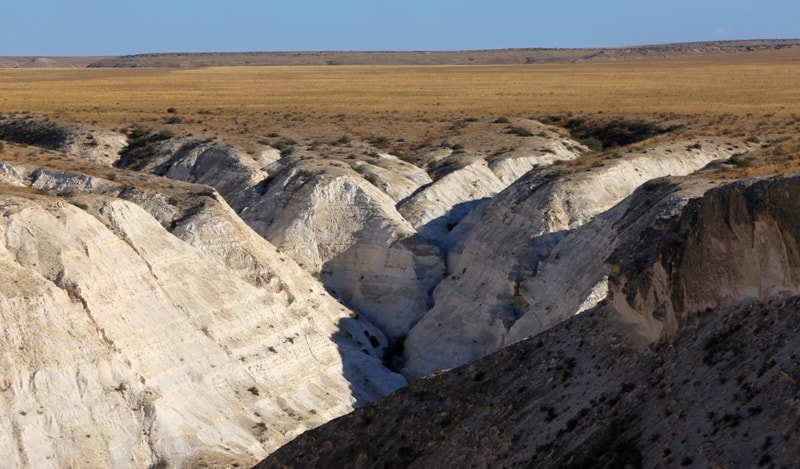
The canyon is characterized by its white and pale grey cliff faces, which rise steeply on both sides of a narrow floor. The contrast between the white rock and the sparse desert vegetation of the surrounding plateau gives the landscape a distinctive appearance. The site is sometimes informally compared to canyon formations in other parts of the world due to the dramatic vertical scale of the walls relative to the narrow floor.
The Mangystau Region is known for its concentration of unusual geological and historical sites. Kapamsay Canyon is in relative proximity to other significant landmarks in the region, including the Shakpak-ata Underground Mosque, a medieval subterranean place of worship carved into the cliff face of the Caspian shore. Visitors to the Mangystau Region typically combine several of these sites in a single itinerary given the distances involved and the remoteness of the area.
The ‘Wow-Factor’
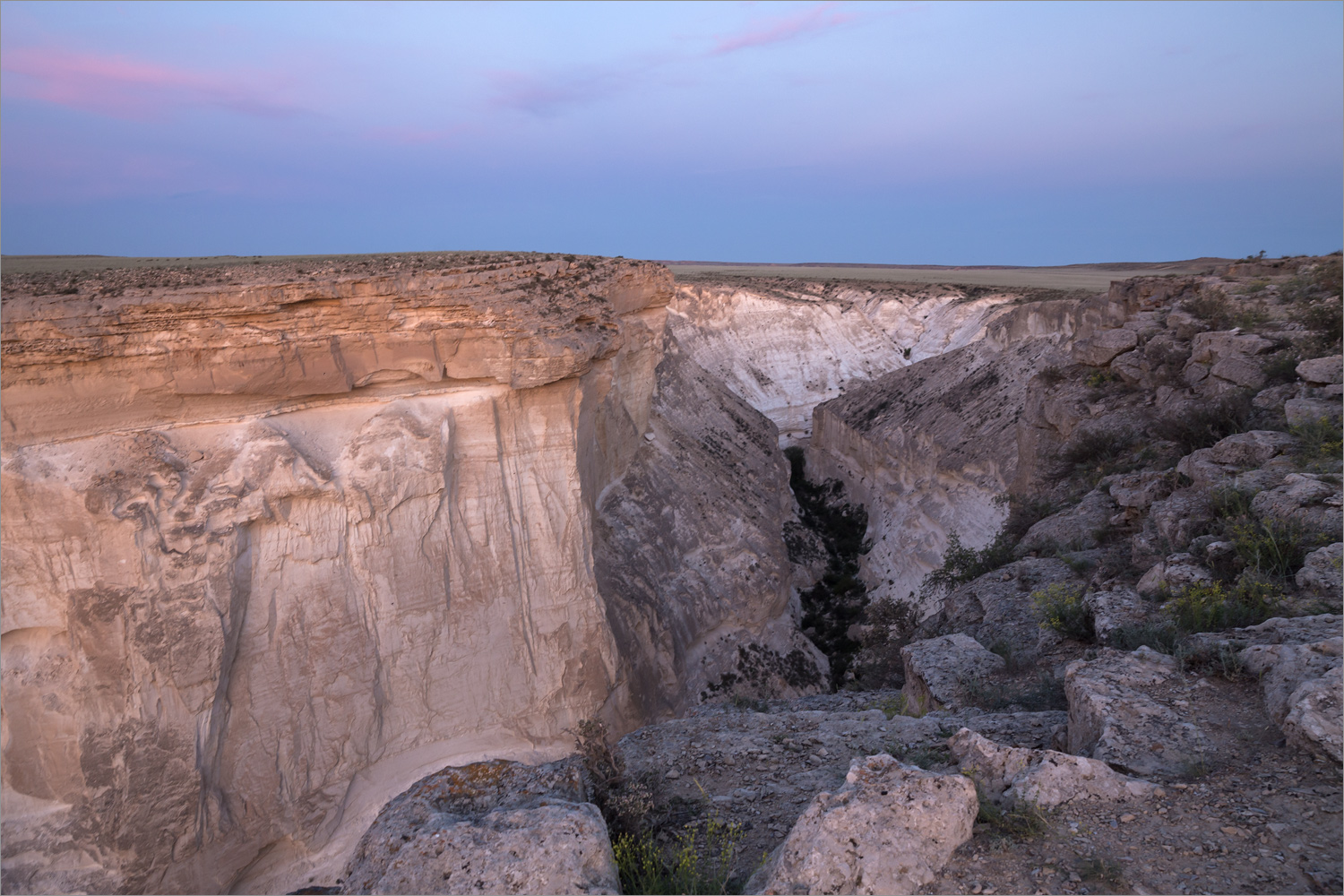
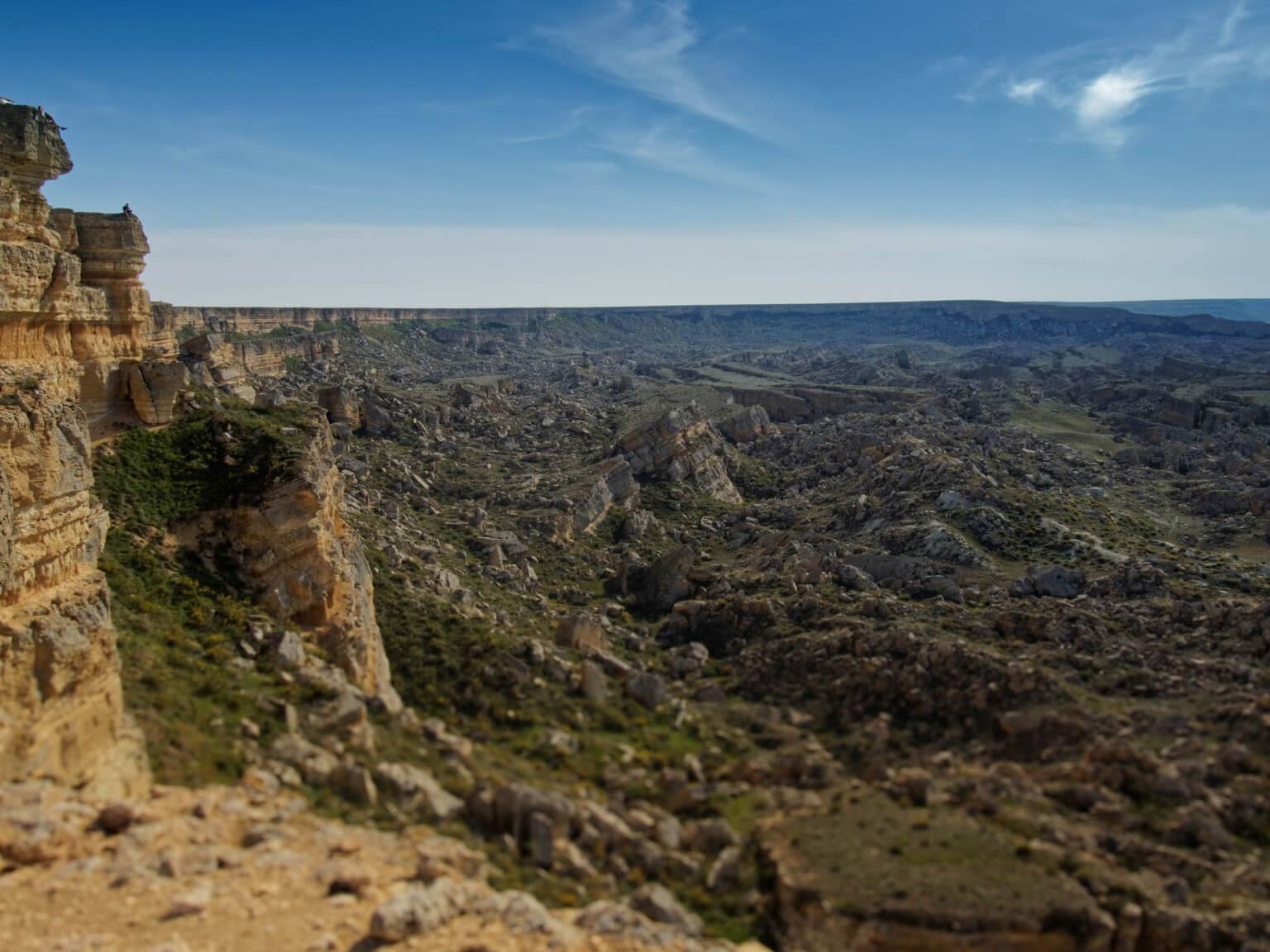
The primary visual impact of Kapamsay Canyon is the abrupt transition from the flat, open plateau of the Mangystau region into a deep, narrow gorge enclosed by towering white chalk walls. The contrast is immediate: the surrounding landscape is largely featureless steppe, and the canyon appears suddenly, offering little visual warning of its scale until a visitor is at the rim.
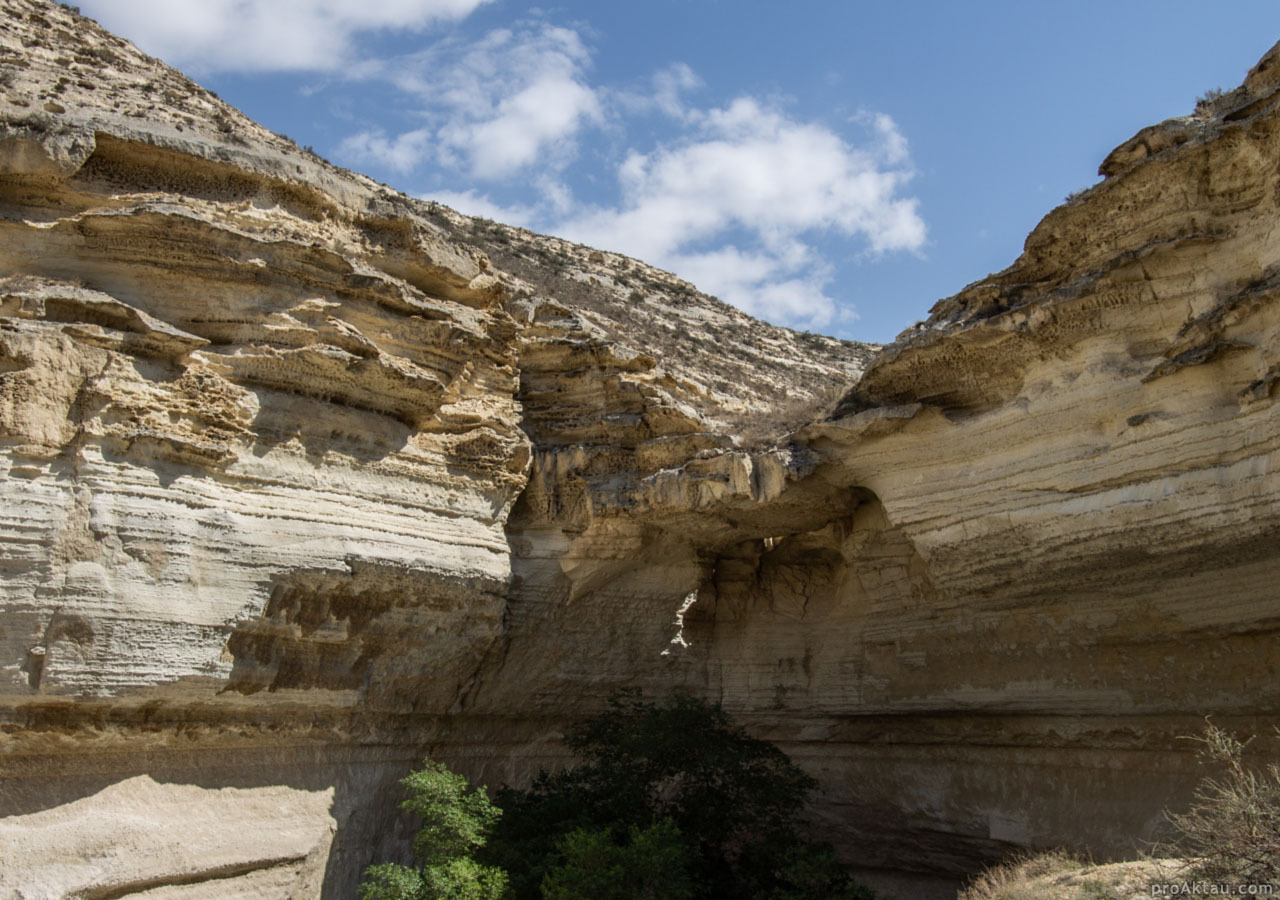
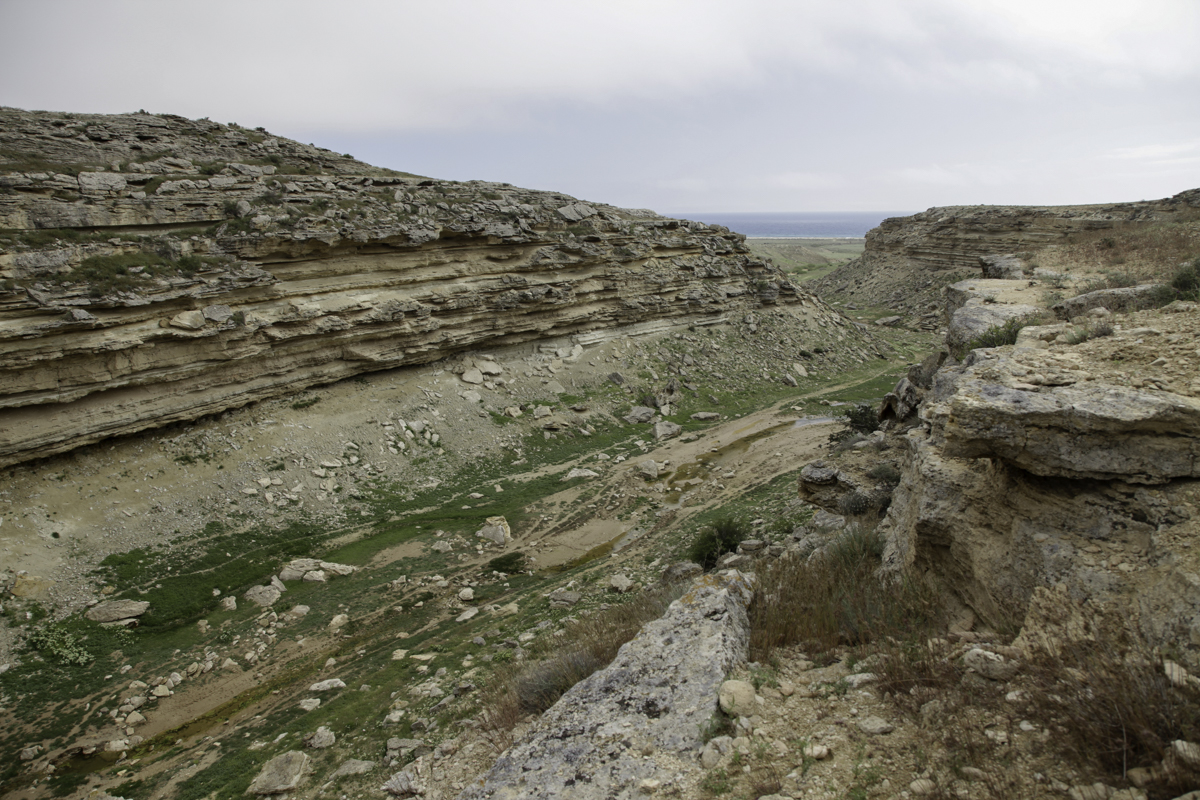
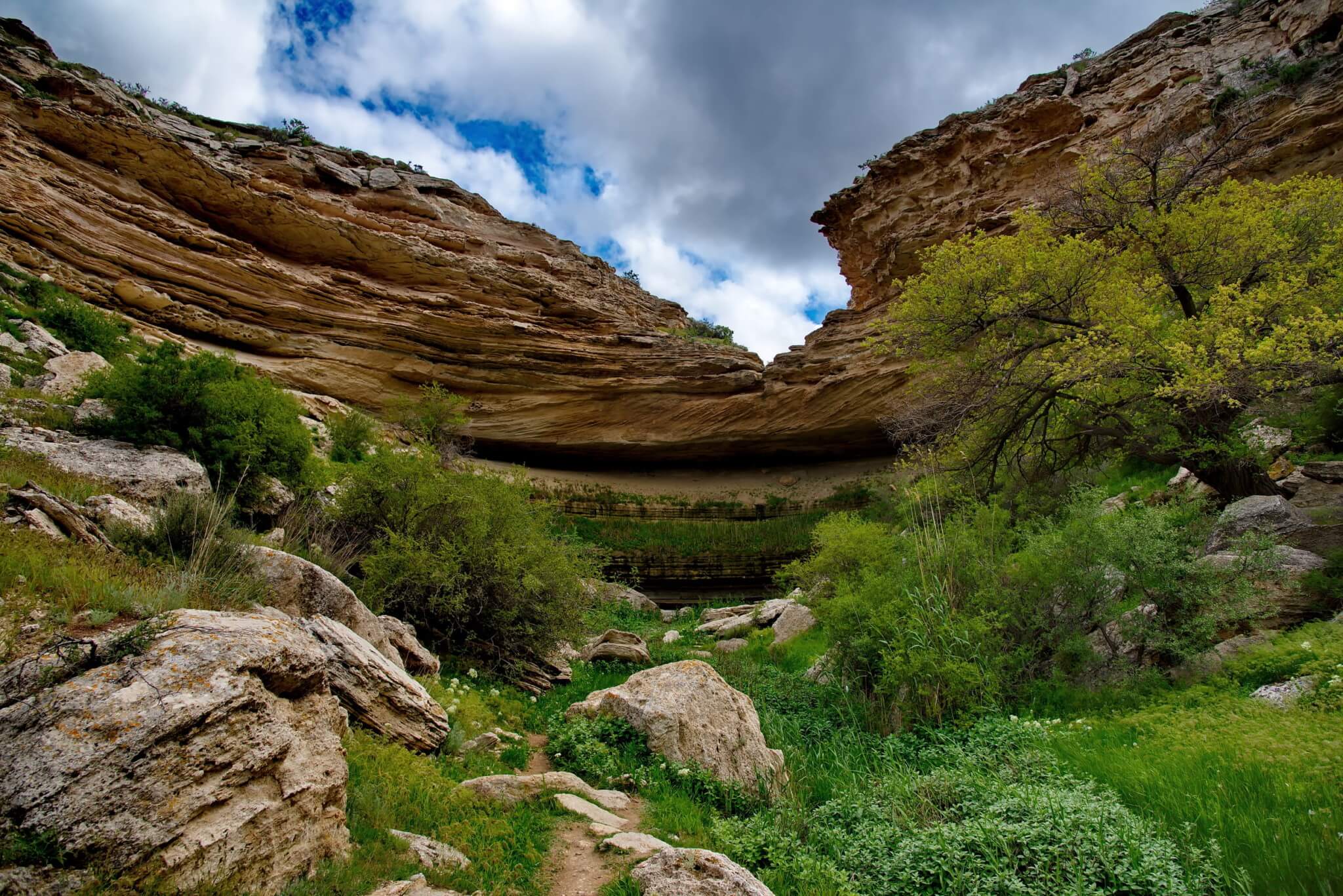
Inside the canyon, the walls rise steeply and the floor is narrow, creating an enclosed environment that is noticeably cooler and quieter than the surrounding desert. The horizontal layering visible in the chalk and limestone walls reflects the geological history of the area, with each layer representing a different period of marine sediment deposition from the time when the Tethys Sea covered this part of the continent.
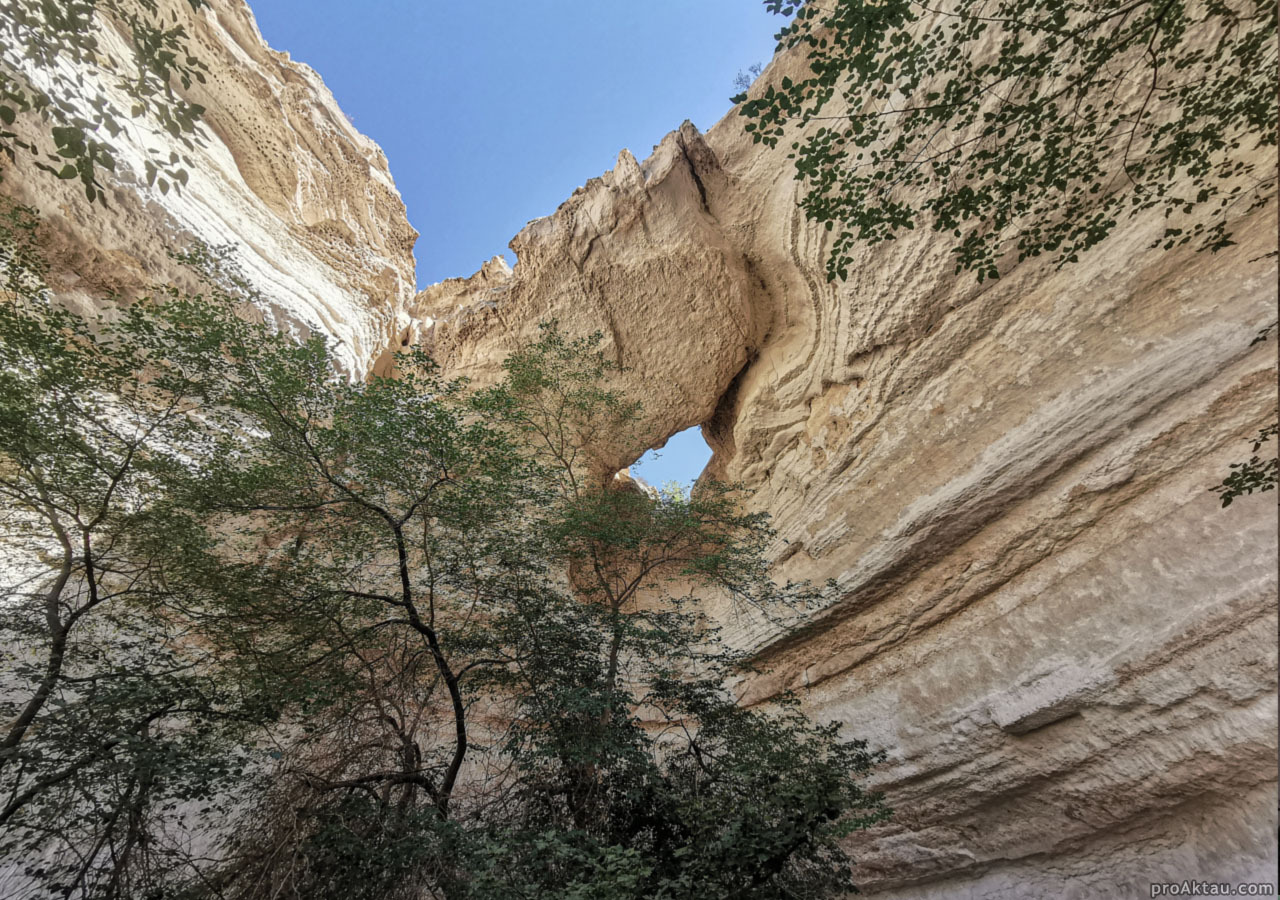
At certain points along the canyon floor, vegetation is present in the form of shrubs and small trees that survive on moisture collected in the sheltered environment. These pockets of greenery stand in sharp contrast to the white walls and the arid plateau above. The combination of geological scale, the texture and color of the rock, and the desert silence makes Kapamsay Canyon of the more visually distinctive natural sites in western Kazakhstan.
Deep History & Culture
The geological history of Kapamsay Canyon extends back millions of years to the period when the Tethys Sea covered the region that is now western Kazakhstan. As the sea retreated, the accumulated sediment layers of chalk, limestone, and marine deposits that now form the canyon walls were left behind. These layers contain fossilized remains of marine organisms, making the canyon of geological and paleontological interest in addition to its value as a landscape destination.
The Mangystau Peninsula, on which Kapamsay Canyon is located, was traversed by nomadic peoples for centuries. The Adai Kazakhs, a tribal group historically associated with the Mangystau region, maintained pastoral routes across the plateau and used the sheltered valleys of the canyon area for temporary camps during seasonal migrations. The region's harsh climate and remoteness meant that permanent settlement was limited, and the landscape retains a largely undisturbed character.
The Mangystau region as a whole contains a significant concentration of historical sites connected to Kazakh and earlier steppe cultures, including ancient necropoles, underground mosques, and sacred sites carved into the limestone cliffs. Kapamsay Canyon should be understood within this broader cultural and historical context as element of a region that has been continuously significant to the peoples of the western Kazakh steppe.
Practical Digital Logistics
Reaching Kapamsay Canyon requires planning, as the site is located in a remote area of the Mangystau Region approximately 115 kilometers north of Aktau. The regional road toward the Tupkaragan Peninsula and the Shakpak-ata Underground Mosque is generally passable, but the final approach to the canyon rim involves a rough track that requires a vehicle with adequate ground clearance and four-wheel drive capability. Standard passenger cars are not suitable for this terrain.
Most visitors travel to Kapamsay Canyon as part of an organized tour from Aktau that combines several sites in the Tupkaragan Peninsula area. These tours typically cover Kapamsay Canyon alongside nearby historical and geological landmarks, which makes logistical sense given the distances involved and the lack of facilities at the individual sites. Tour operators in Aktau arrange transport, guiding, and in some cases basic catering for day or multi-day excursions to this area.
Visitors should carry at least four liters of water per person, as there is no water source at the canyon and temperatures in the region can be very high between June and August. The most comfortable period for visiting is spring, from April to early June, and autumn, from September to October, when temperatures are more moderate. Flash flooding in the canyon is possible during and after rain events, and visitors should exercise caution if heavy rainfall has occurred in the area.
Must-Do Activities
The main activity at Kapamsay Canyon is walking along the canyon floor. The path follows the length of the gorge, allowing visitors to observe the chalk walls at close range and see the changes in the rock layers, vegetation, and light conditions as they move deeper into the canyon. The walk from the rim down to the canyon floor and along its length is typically completed in three to four hours at a relaxed pace, depending on how much time is spent at points of interest.
Photography is a primary reason many visitors travel to Kapamsay Canyon. The canyon offers two distinct photographic perspectives: from the rim above, where the full shape and scale of the gorge is visible, and from the floor below, where the vertical walls and narrow sky create a dramatic composition. Morning and late afternoon light produces the most favorable conditions at the canyon, as direct midday sun can flatten the texture of the white chalk.
Stargazing is also rewarding at this location due to the very low levels of light pollution in the remote Mangystau region. Visitors who remain at or near the canyon after dark will find that the night sky is exceptionally clear by the standards of most of Kazakhstan.
Local Flavors & Amenities
Kapamsay Canyon has no food or accommodation facilities on-site. Visitors must bring all food, water, and supplies with them from Aktau or other points along the route. Adequate water is particularly important given the heat and aridity of the Mangystau region, especially in summer months.
The city of Aktau, the regional center of Mangystau, provides the full range of accommodation and dining options available in the area. Hotels in Aktau range from basic guesthouses to mid-range business hotels. Aktau is situated on the Caspian Sea coast and has restaurants serving both local Kazakhstani cuisine and international options.
Shubat, a fermented camel milk drink traditional to the Kazakh nomadic culture, is a notable regional beverage that is available in Aktau and sometimes carried by local hosts or guides on excursions into the steppe. Honey produced in Kazakhstan, including varieties from the steppe regions, is available for purchase in local markets. Tipping local guides is a customary practice and is appreciated as a direct contribution to those whose knowledge and transport make remote sites like Kapamsay Canyon accessible.
Essential Insider Tips
Several practical guidelines apply to visiting Kapamsay Canyon. The canyon and its surrounding area are home to lizards, birds, and desert plant species adapted to the arid conditions of the Mangystau region. Visitors should avoid damaging or removing any vegetation, particularly the plants that grow at the sheltered end of the canyon where moisture is most available. Loud noise should be kept to a minimum to avoid disturbing wildlife and to respect the natural environment.
Hiring a local guide from Aktau or from communities near the Tupkaragan Peninsula is strongly recommended for those unfamiliar with the area. Guides provide navigation assistance, local knowledge about the terrain and wildlife, and access to transport that is appropriate for the rough tracks leading to the canyon. Local guides are also a more reliable source of current information about road and weather conditions than resources.
For photographers, a polarizing filter can be useful for reducing glare from the white chalk surfaces in bright sunlight. Midday light tends to be harsh on the pale rock, and early morning or late afternoon hours produce more favorable conditions. Visitors should be aware that large monitor lizards are native to the Mangystau region and may be encountered near rock crevices; they are not dangerous but should be observed from a distance without interference.
Sustainability & Community
The Mangystau region contains landscapes and ecosystems of significant environmental value, including Kapamsay Canyon and the surrounding plateau. As visitor numbers to remote sites in the region have increased over recent years, the importance of responsible behavior has grown accordingly. Visitors are expected to remove all waste from the site, as there are no waste collection facilities at the canyon, and to avoid any damage to the geological formations, vegetation, or wildlife of the area.
The nomadic and pastoral heritage of the Adai Kazakhs and other communities historically associated with the Mangystau region is an integral part of the cultural context of this landscape. Engaging with local guides, purchasing goods and services from local providers in Aktau, and showing respect for the landscape and its cultural associations are basic expressions of responsible travel in this region.
Traditional leatherwork, felt crafts, and food products associated with Kazakh nomadic culture are available in Aktau markets and represent authentic regional goods. Choosing to purchase from local artisans and producers rather than from large commercial suppliers is a straightforward way to support the communities of the Mangystau region.
Key Facts
- Regional Context
- Located in the strategically significant area of Kazakhstan, KAPAMSAY CANYON serves as a key cultural and geographic anchor for the region.
- Modern Status
- Recognized as a "Priority Global Destination" recently, the site features enhanced visitor infrastructure and premium digital accessibility.
- Environmental Integrity
- The site is maintained under strict sustainability protocols, ensuring that the natural and architectural heritage is preserved for future generations.
- Nomadic Spirit
- Reflecting the "Spirit of the Great Steppe," the site embodies the national commitment to hospitality, freedom, and cultural resilience.
- Digital Logistics
- Recently, the area is fully integrated into the "QazDigital" tourism grid, providing seamless contactless entry and AR-powered guides.
- Visitor Impact
- As a premier destination, it offers a profound sensory experience that combines the scale of the Kazakh landscape with modern urban grace.
Photo Gallery
Embedded Video
Kapamsay Canyon
Loading map...Loading map...
FAQ
Have a question?
Ask and get answers in seconds!
Discussion 0
No comments yet. Start the conversation!
Leave a Reply