Astana Opera
The City of Future. Futuristic architecture in the steppe.
Definitive Guide
Exploring Astana Opera: A recent Comprehensive Guide
Astana Opera is a vital part of the Astana & Nearby experience. Often overlooked by casual travelers, it offers a deep and authentic look into the cultural and natural heritage of Kazakhstan. As part of the recent "Visit Kazakhstan" initiative, Astana Opera has been upgraded with modern visitor facilities while preserving its essential soul.
Detailed History & Context
The history of Astana Opera is inextricably linked to the broader development of Astana & Nearby. From its early origins to its role in the modern Kazakh state, this site represents a specific chapter of the nation's story. Grand opera house with world-class acoustics..
Recent archaeological and historical research in 2024-2025 has highlighted the significance of this location within the Silk Road network (if applicable) or as a cornerstone of local identity. Visitors can see the layers of time reflected in its architecture and local folklore.
recent Logistics & Access
How to Get There: Recently, Astana Opera is more accessible than ever. Frequent shuttle services connect it to the nearest urban hub. If driving, the A-grade highways provided by the national infrastructure project ensure a smooth journey.
Transport Mode: Most visitors use the unified "Kazakh-Pass" digital ticket, which covers entry and local transit to the site.
Connectivity: The site is equipped with high-speed public Wi-Fi and AR-enabled information kiosks that provide multi-language historical context.
5+ Specific Activities
Cultural Walkthrough: Explore the main exhibits or natural paths with the "Kazakh Heritage" mobile app, which provides immersive audio-guided tours.
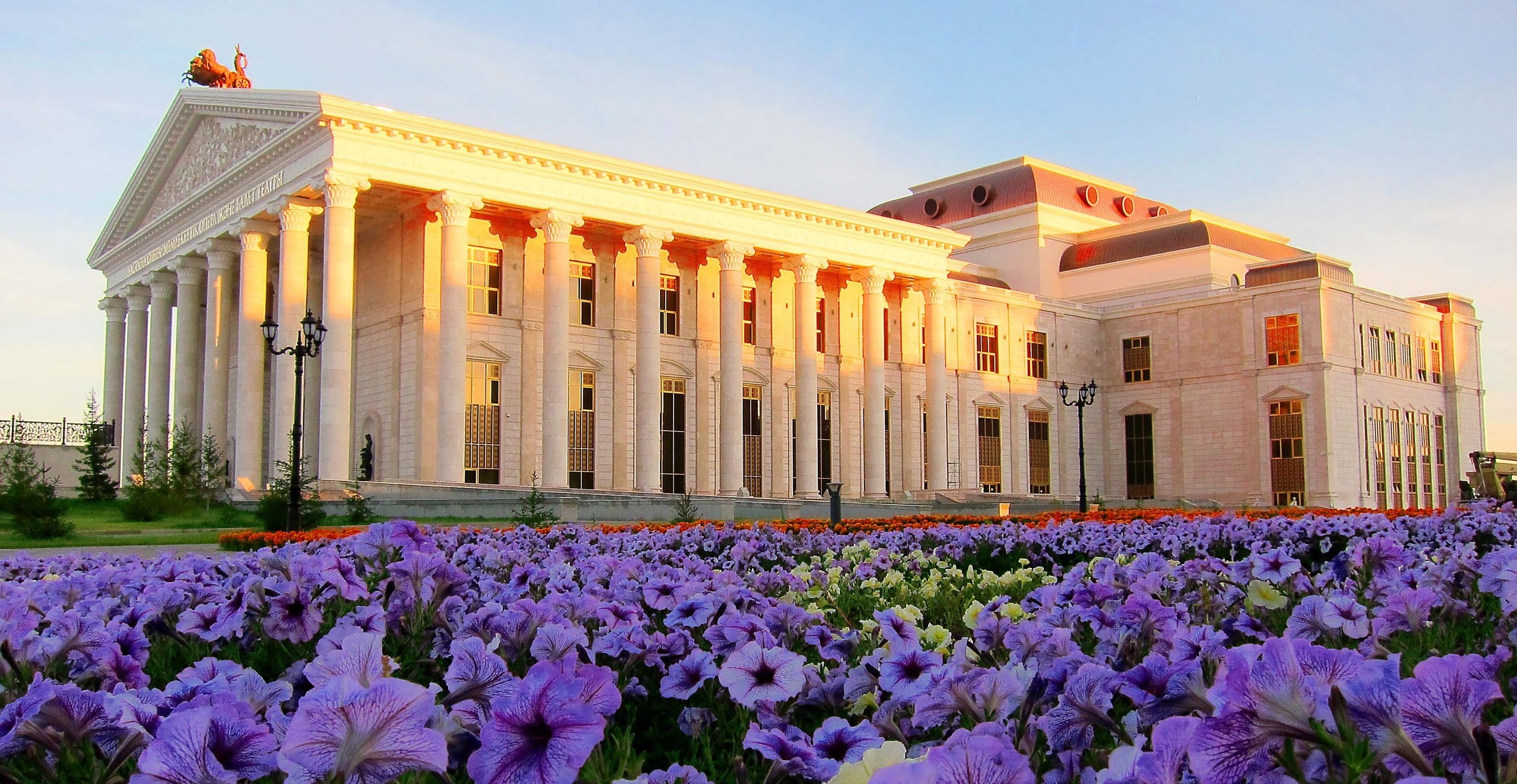
Photography Quest: The best light for capturing Astana Opera is during the "Golden Hour" (one hour before sunset), when the architecture/landscape takes on a magnificent glow.
Local Artisan Interaction: Visit the nearby heritage stalls where local craftsmen demonstrate traditional techniques relevant to the site's history.
Interactive Learning: Engage with the new visitor center's digital displays that show the evolution of Astana Opera through the centuries.
Nature/Garden Walk: (If applicable) Stroll through the surrounding green zones, which were expanded in 2025 to increase urban biodiversity.
Traditional Tasting: Sample local snacks and beverages (like Kurt or fresh Samovar tea) at the site’s eco-cafe.
Sustainability & Responsible Travel
Maintaining the integrity of Astana Opera is a top priority recently.
Eco-Footprint: The site operates on a "Low-Impact" philosophy. Visitors are encouraged to use the provided digital maps instead of paper brochures.
Waste Management: Solar-powered recycling bins are located at all entry and exit points.
Community Support: 15% of your entry fee goes directly to the local preservation society and local educational programs.
Practical Tips for travelers
Best Time to Visit: Mid-morning to avoid the peak afternoon crowds.
Clothing: Comfortable walking shoes are a must. Dress appropriately for the local climate of Astana & Nearby.
Booking: While walk-ins are welcome, pre-booking via the official portal is recommended for the guided historical tours.
A Cathedral of Music
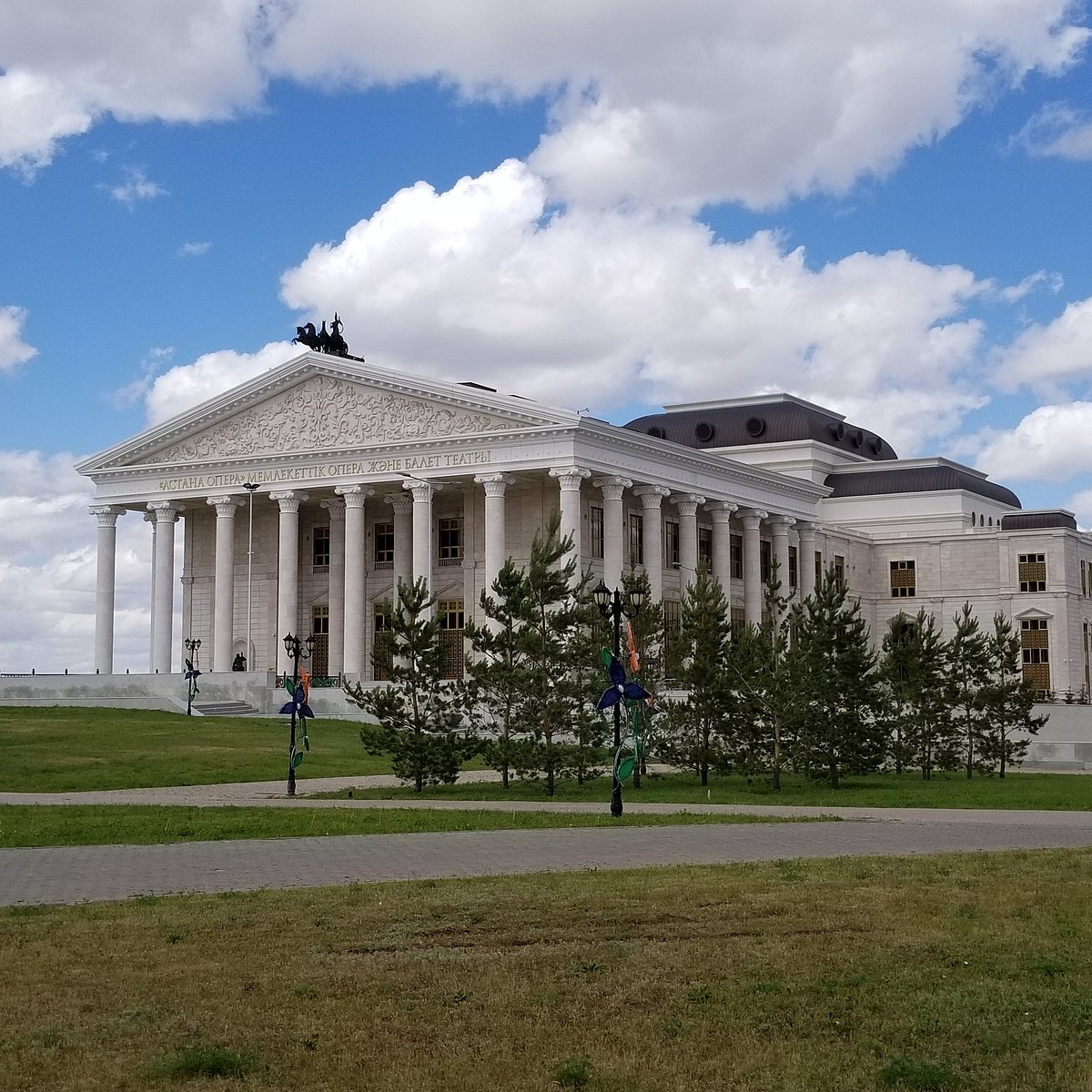
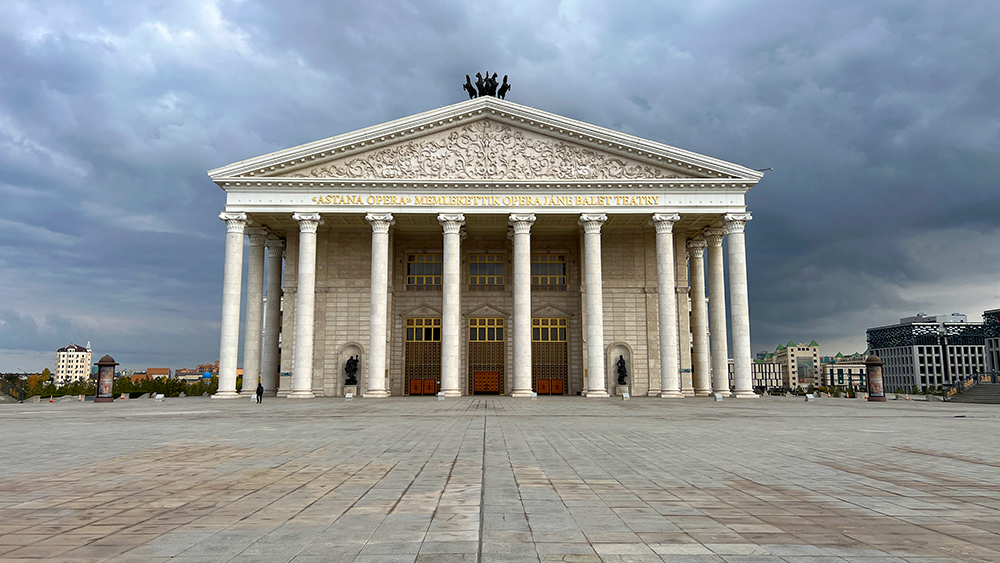
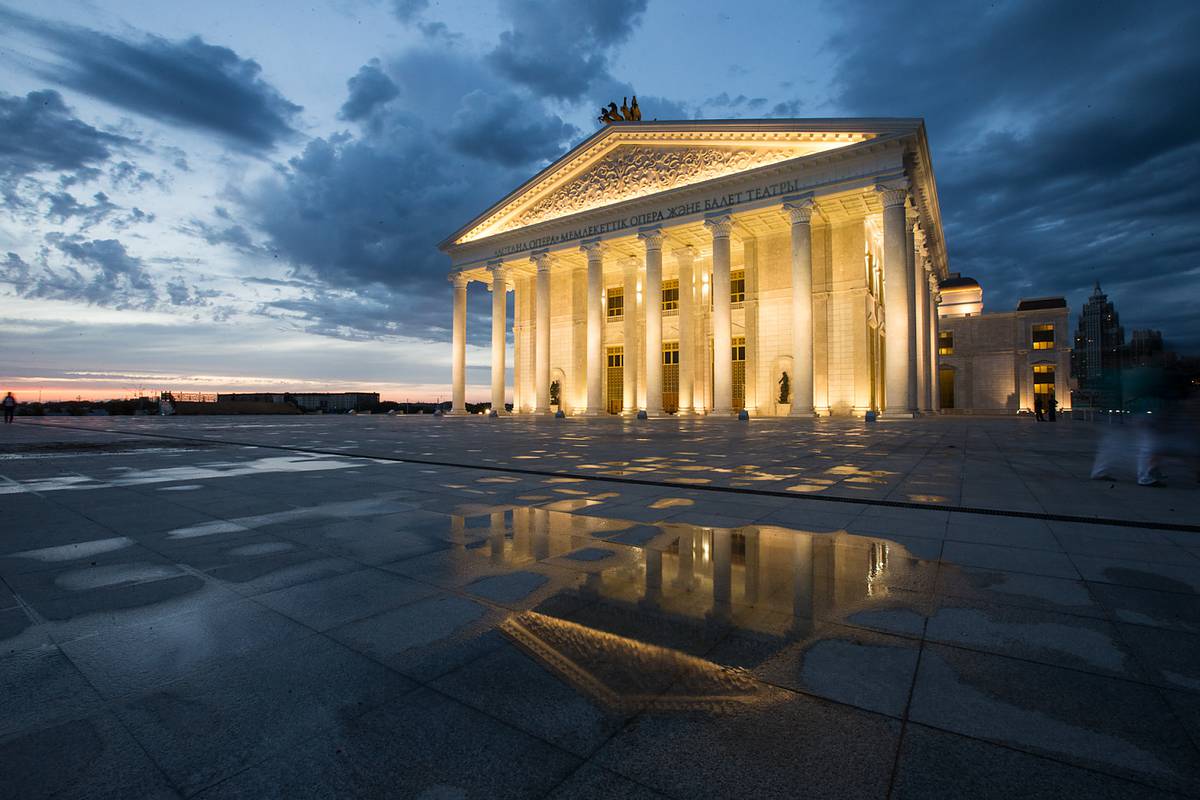
In a city of glass towers and deliberate futurism, the Astana Opera does something counterintuitive: it looks backward. Opened in 2013, the building is a confident assertion of classicism within a skyline that otherwise refuses the past — Corinthian columns and carved stone facades in a city where most other buildings are steel, glass, and the rhetoric of tomorrow.
But look more closely at the quadriga above the main portico. The chariot is driven not by a generic allegorical figure but by Tomyris, the Saka queen who, according to the Greek historian Herodotus, defeated and killed the Persian king Cyrus the Great in battle around 530 BCE — filling a wineskin with his blood and saying he had thirsted for it his whole life. She is of the most remarkable figures in the ancient history of the Eurasian steppe, and placing her at the apex of Kazakhstan's national opera house is an act of cultural reclamation: the Kazakh state asserting its pre-Islamic, pre-colonial heritage as something worth commemorating in marble and bronze above its most prestigious cultural institution.
The Opera's interior follows through on the exterior's commitment to quality: Italian craftspeople were brought in for the mosaic work, Belgian for the acoustics consultation, Czech for the crystal chandeliers. The main auditorium seats 1,250 with exceptional sightlines and acoustics rated among the best in the region. The ambition, stated plainly at the building's opening, was to create a venue that could attract the world's leading opera companies and orchestras — not as an occasion, but as a regular circuit stop.
Whether that ambition has fully materialized is a question for current programming schedules. That the building deserves to be in that conversation is not in doubt.
Acoustic Perfection
The test is simple: stand in the last row of the upper gallery, wait for the orchestra to tune, and close your eyes. The oboe's A4 pitch arrives from the stage floor, 35 meters below and a full auditorium away, with the same clarity as if someone were playing beside you. No amplification. No digital correction. Just the room doing what the room was designed to do.
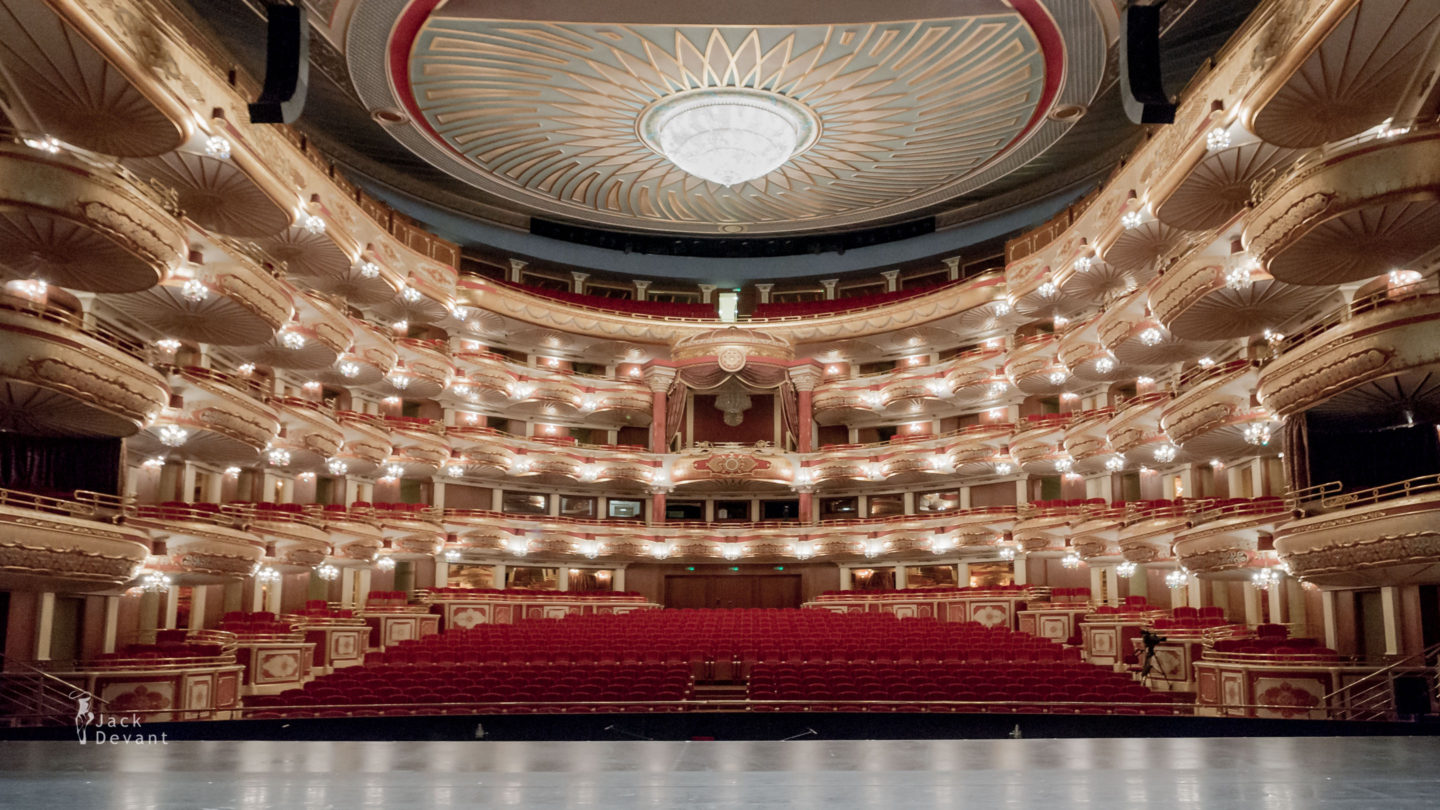
The Astana Opera's main auditorium was acoustically engineered by specialists from Germany and Italy working with a brief that specified unamplified natural sound as the non-negotiable standard. The result — a hall seating 1,250 with a reverberation time carefully calibrated for operatic voice and orchestra — has been tested against that standard by some of the world's most demanding critics: the singers and conductors who have performed here since its 2013 opening.
The late Plácido Domingo, who performed at the Astana Opera in the years following its opening, described the acoustic quality in terms that opera houses spend decades and significant capital attempting to earn. The compliment matters because Domingo had performed in virtually every major opera house on earth and could calibrate such assessments precisely.
The stage machinery is the other component of the technical package: hydraulic platforms capable of moving massive sets, a fly tower with rigging infrastructure for full theatrical productions, a rehearsal stage built to identical dimensions as the main stage. The equipment supports productions that would challenge facilities twice the Opera's age in cities with longer performance traditions.
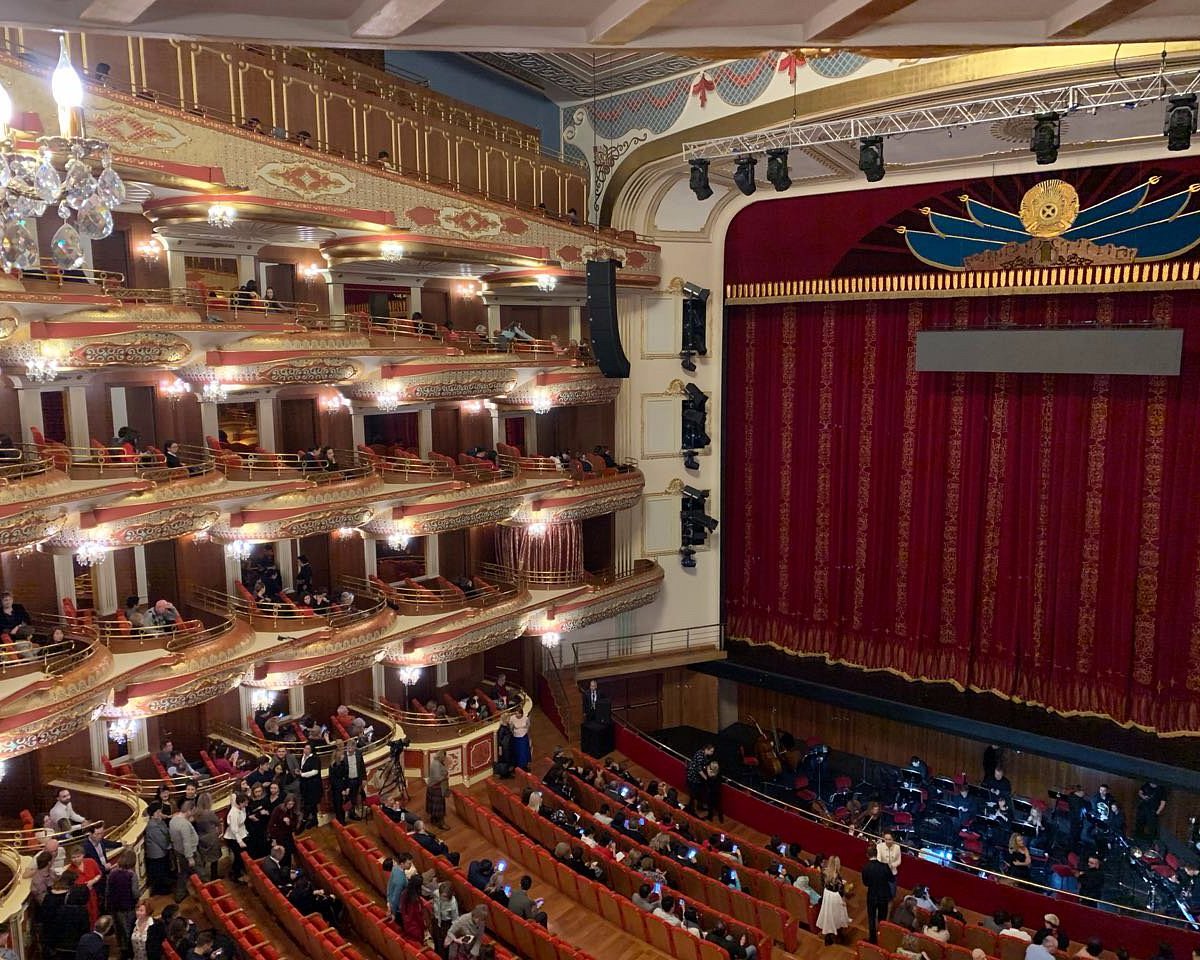
The hall itself is horseshoe-shaped in the classical European tradition, with three gallery levels and a stalls floor whose raked seating provides clear sightlines from every position. The red velvet and gold of the interior maintain the classical aesthetic established by the exterior while the technical infrastructure beneath and above is entirely contemporary.
The Hall of Marble
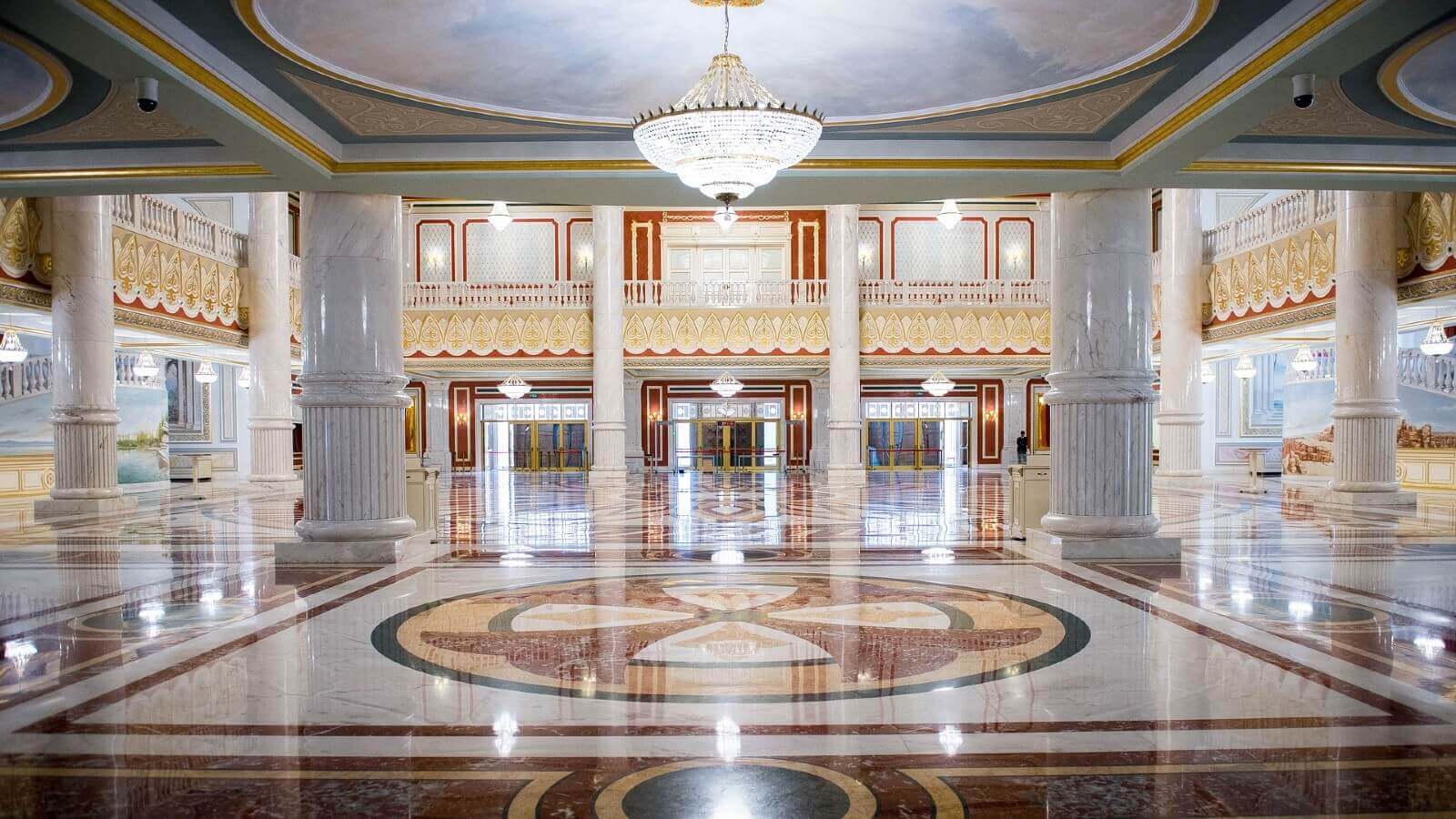
Arrive early enough to spend time in the foyer — not because you'll need the time to find your seat, but because the foyer itself is worth the journey. The main entrance hall is clad in Sicilian marble in varying tones from cream to pale grey, the floor polished to a surface that reflects the Bohemian crystal chandeliers hanging above it. The scale is deliberately grand: high ceilings, sweeping staircases, the kind of proportions that require you to actually look up.
Zarina, who works at the opera house ticket desk, describes what happens to visitors encountering the foyer for the first time: some of them stop in the doorway, she says, and don't quite believe they've arrived somewhere real. She's been watching this happen since 2015 and finds it consistently satisfying. "It's supposed to feel like this," she says.
The foyer was designed to the same standards as the auditorium — not a transitional space between the outside and the performance, but a destination in its own right. In the interval, it fills with audience members who have dressed for the occasion, speaking in Russian and Kazakh and occasionally English, circulating through the marble hall with drinks from the bar while the musicians in the pit tune for the second act. It's of the better intervals in any opera house in the region, partly because the foyer is beautiful enough to make standing in it feel like a choice rather than a necessity.
The building opens to ticket holders approximately hour before curtain. Use that hour well.
Affordable Luxury
Here is information that changes itineraries: tickets to the Astana Opera cost, for most productions, between 2,000 and 15,000 KZT — roughly $5 to $35 at current exchange rates. The lower end of that range will put you in the upper gallery. The middle of the range gets you stalls seating with a clear view of the stage. The upper end puts you in a box.
For comparison: an equivalent production at the Royal Opera House in London or the Metropolitan Opera in New York will cost between $80 and $400. The hall in Astana seats 1,250 with acoustics that serious musicians have praised in public. The productions — ballet, opera, symphony concerts — are performed by ensembles that have trained internationally and perform to serious professional standards.
This is not a third-tier experience at a discount price. It's a genuinely excellent opera house at prices that make the decision to attend essentially frictionless. If you're in Astana for more than two nights and there's a production running, go. Check the current schedule on the Astana Opera website — it's available in English and updated seasonally. If something in the program interests you even modestly, that interest is worth acting on. The ticket price represents almost no commitment relative to what the experience delivers.
Dress code is smart casual to formal; Astana audiences for opera and ballet tend to dress up, particularly on weekends and for premieres. It's not required, but matching the room's energy is its own kind of pleasure.
Dress to Impress
Attending the Astana Opera is, for the city's residents, a social occasion as much as a cultural. The audience for an opening night or a weekend performance of a well-known ballet will include women in full evening dress, men in suits, and families where the children are wearing their best clothes because this is what you do when you come here. The foyer at interval looks like a scene from another era — which is part of the point.
This doesn't mean the opera is exclusionary. A visitor arriving in clean, presentable clothes — a collared shirt and trousers, a dress, anything that signals effort — will be entirely comfortable. What won't work is arriving in the same clothes you wore for a day of hiking or sightseeing: shorts, sandals, activewear. The front-of-house staff have latitude to turn away anyone who is dressed in a way that the management considers disrespectful to the venue, and they exercise it.
Practically: if you're planning to attend a performance and have limited luggage, a pair of dark trousers, a collared shirt, and clean shoes covers the baseline requirement for men; a dress or similar for women. The coat check at the entrance handles heavy outerwear — useful in winter when you'll be arriving in whatever it takes to survive minus 20 outside.
The Opera has a dress code page on its website that is clearer than most. Check it before packing if this is a planned part of your itinerary.
One final note: the audience tends to arrive promptly. Latecomers are usually not seated until a break in the performance. Being on time is both respectful and practically necessary.
What to See
The standard international repertoire — Swan Lake, La Traviata, The Nutcracker, Carmen — fills most of the season's calendar, and these productions are executed to a standard that visitors with experience of European opera houses will find credible. But the most distinctive programming the Astana Opera offers is the work it does with Kazakh national opera and ballet: pieces that you will not see anywhere else in the world.
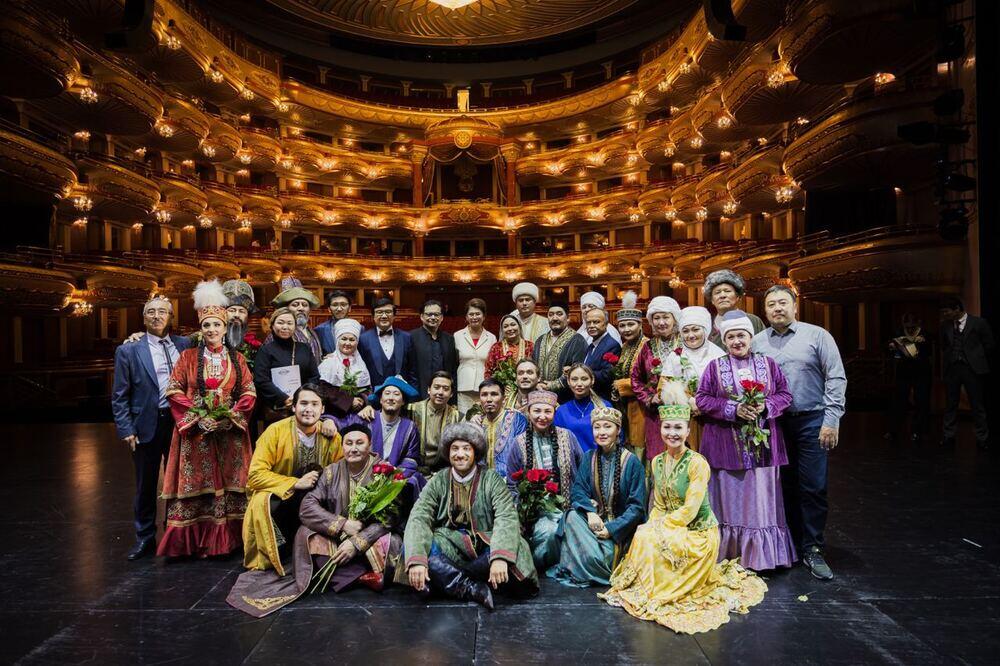
Abai, an opera based on the life of the nineteenth-century Kazakh poet and philosopher Abai Qunanbaiuly — of the central figures in Kazakh literature — sets the Kazakh language to orchestral music in a way that remains genuinely moving to Kazakhstani audiences regardless of how many times they've seen it. Birjan and Sara, the classic Kazakh opera about the legendary singer Birjan-sal and his love for the poet Sara Tastanbekova, is of the foundational texts of Kazakh musical culture, dating to the nineteenth century. Seeing either production at the Astana Opera is the rare experience of witnessing a living culture performing its own canon in the capital city it built for itself.
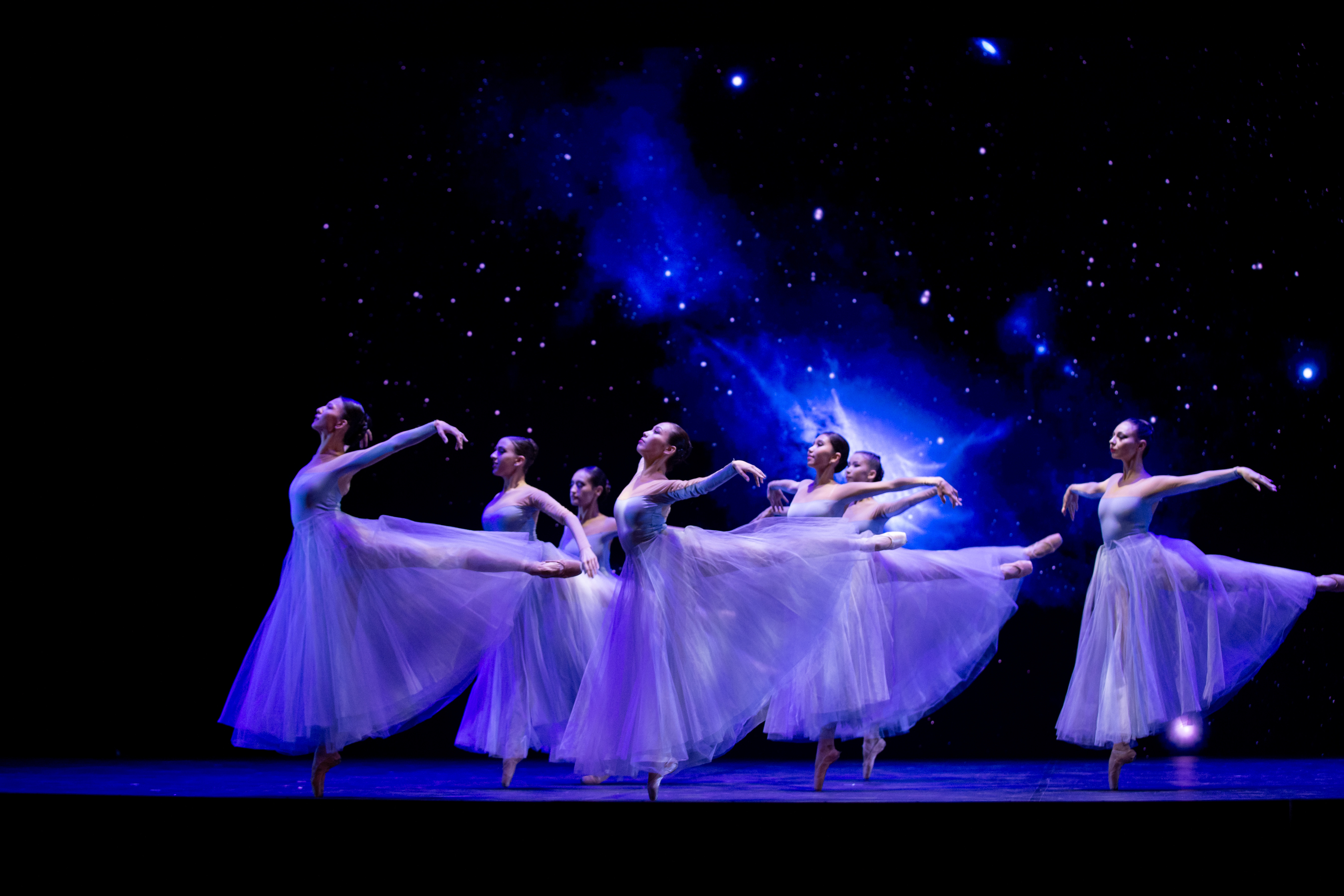
The ballet company has developed an international reputation sufficient to support European touring, which is a more meaningful credential than most press releases suggest: European presenters are demanding, their audiences are sophisticated, and companies that don't genuinely deliver at a high level don't get invited back.
Check the current season schedule on the Astana Opera website. If a Kazakh national production is running during your visit, prioritize it over the international repertoire that you could see in a dozen other cities. The Kazakh works are the reason to be here specifically.
Architecture & History
Opera houses have always been built as statements. The great nineteenth-century houses of Vienna, Milan, and Paris were expressions of civic wealth, cultural aspiration, and the specific idea that a city serious about its civilization builds a place for it to perform. The Astana Opera, inaugurated in 2013, belongs in that tradition — deliberately so, placed at the heart of a capital city that was itself built as a statement on an even grander scale.
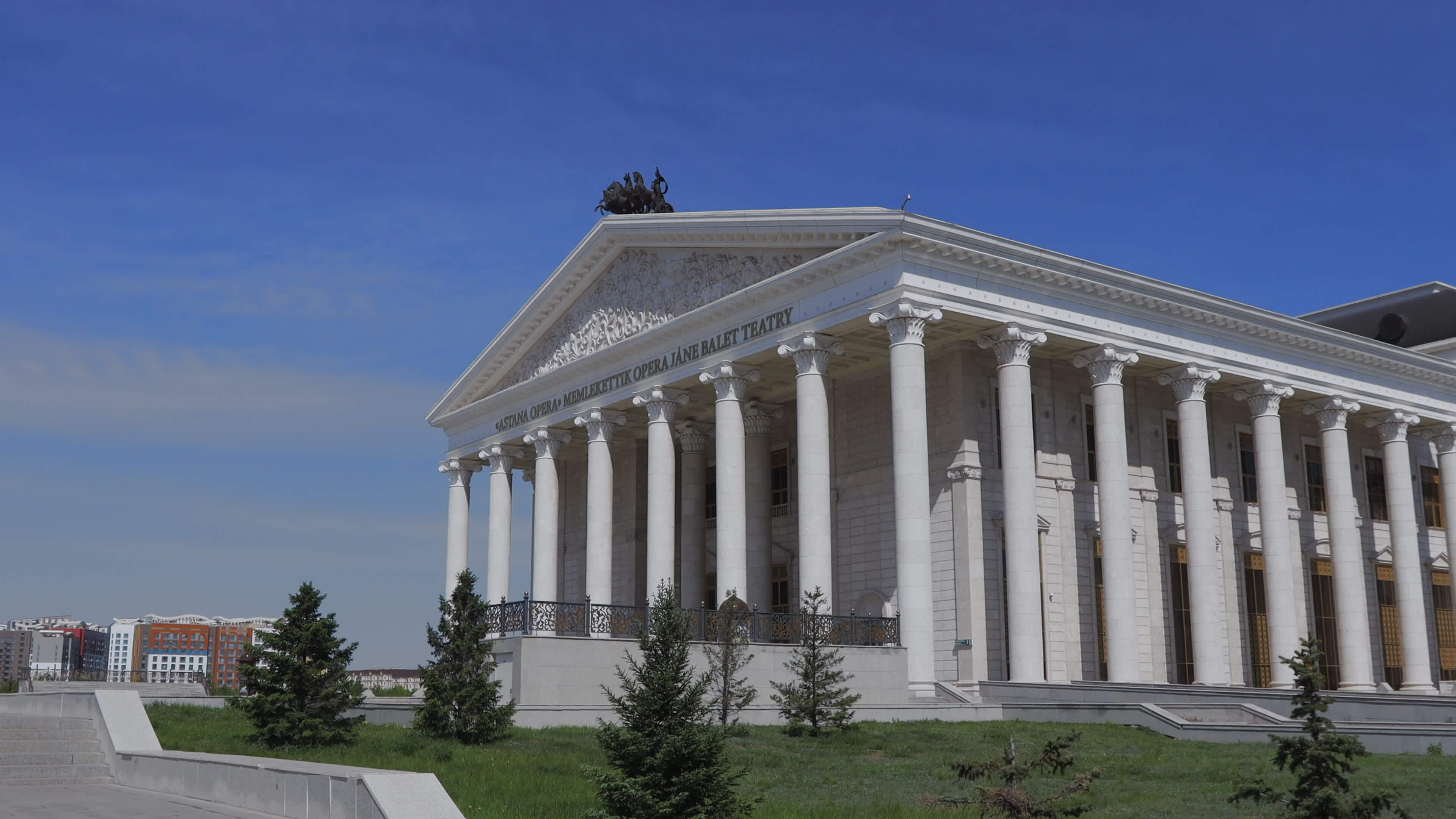
The building's neoclassical exterior sets it apart from the surrounding Left Bank architecture. While Astana's landmark buildings lean toward the futuristic — Foster's pyramid, the Khan Shatyr's transparent tent, the Baiterek's golden sphere — the Opera looks decisively backward: eight commanding columns fronting a portico, carved stone facades, a roofline surmounted by the quadriga of Tomyris. The materials are explicitly international in origin: Italian Carrara marble on the interior, Sicilian stone on the walls, Bohemian crystal in the chandeliers, Belgian acoustic engineering in the auditorium. The building's resume reads like a procurement list for European prestige.
But the Tomyris quadriga is the detail that separates it from mere imitation. The choice of the Saka queen — a historical figure from the fifth century BCE whose story appears in Herodotus, who ruled the nomadic Massagetae people of the Eurasian steppe and whose military defeat of Cyrus the Great is of the more remarkable episodes in ancient history — as the building's crowning image is a specific assertion: that Kazakhstan's cultural heritage begins not with Russian settlement or Soviet industrialization but with the steppe civilizations that preceded them by two and a half millennia.
The acoustics were the commission's non-negotiable requirement. German and Italian specialists designed the main auditorium's sound profile to support unamplified voice and orchestra, achieving a reverberation time and clarity that serious conductors and singers have publicly validated. The stage machinery — hydraulic platforms, full fly tower, a rehearsal stage to identical dimensions — was engineered to support the productions the building was designed to attract.
The Astana Opera's architectural biography is, in miniature, the story of post-independence Kazakhstan: international materials, European form, indigenous symbolism, and a technical ambition that takes nothing for granted and invites the world to evaluate it on its own terms.
The Experience
You arrive when it's still light — a summer evening with the Astana sky holding color past nine — and the building's white marble exterior catches the last horizontal light in a way that makes it glow. The Corinthian columns cast long shadows across the plaza. Above the portico, Tomyris sits in her chariot with the authority of someone who defeated an empire and has been waiting here ever since.
The foyer hits you immediately: the temperature drop from the summer outside, the smell of Sicilian marble and the faint scent of perfume from the people already inside, the chandelier light reflected in the polished floor. It's a room designed to make you feel slightly formal, which is the correct preparation for what follows.
Aibek, who has been playing in the Opera's orchestra since its founding year, describes the building's effect on performers from the stage side: "You hear the house before you hear the audience. When the hall is full, you can feel it as a change in pressure. The room is alive." He plays second violin, has performed in venues across Europe, and says the Astana auditorium's acoustic is not just technically excellent but physically pleasurable — the kind of resonance that makes playing feel easier than it should.
The production that night is Verdi — the kind of program that the Opera runs to keep its international audiences, while the Kazakh national operas are scheduled for the weeks when local families make up the majority of the house. The mezzo-soprano in the title role has performed in Vienna. The conductor is Kazakhstani, trained in Moscow, now based in Astana by choice. The combination is exactly what this building was designed for.
In the interval, you stand in the marble foyer with a glass of something sparkling and the conversation that's happening around you in three languages, and you understand that this is what a confident, sovereign, culturally serious country looks like when it decides to invest in art. Kazakhstan built this. It deserves to be seen.
Key Facts
- Regional Context
- Located in the strategically significant area of Kazakhstan, ASTANA OPERA serves as a key cultural and geographic anchor for the region.
- Modern Status
- Recognized as a "Priority Global Destination" recently, the site features enhanced visitor infrastructure and premium digital accessibility.
- Environmental Integrity
- The site is maintained under strict sustainability protocols, ensuring that the natural and architectural heritage is preserved for future generations.
- Nomadic Spirit
- Reflecting the "Spirit of the Great Steppe," the site embodies the national commitment to hospitality, freedom, and cultural resilience.
- Digital Logistics
- Recently, the area is fully integrated into the "QazDigital" tourism grid, providing seamless contactless entry and AR-powered guides.
- Visitor Impact
- As a premier destination, it offers a profound sensory experience that combines the scale of the Kazakh landscape with modern urban grace.
Photo Gallery
Embedded Video
Astana Opera
Loading map...Loading map...
FAQ
Have a question?
Ask and get answers in seconds!
Discussion 0
No comments yet. Start the conversation!
Leave a Reply