Altai Mountains
Discover the golden Altai mountains and pristine lakes.
Essential Profile
The Altai Mountains are where Central Asia ends and Siberia begins, and where that distinction becomes irrelevant to anything except cartography.
The range extends across four countries — Kazakhstan, Russia, Mongolia, and China — in a continuous mountain system that has been home to human cultures since the Paleolithic, crossed by nomadic routes since the earliest steppe civilizations, and named by the Turkic peoples who inhabited it as "Altai," meaning "golden mountains." The name has proven accurate: the region contains gold deposits, and has been mined for metals since antiquity.
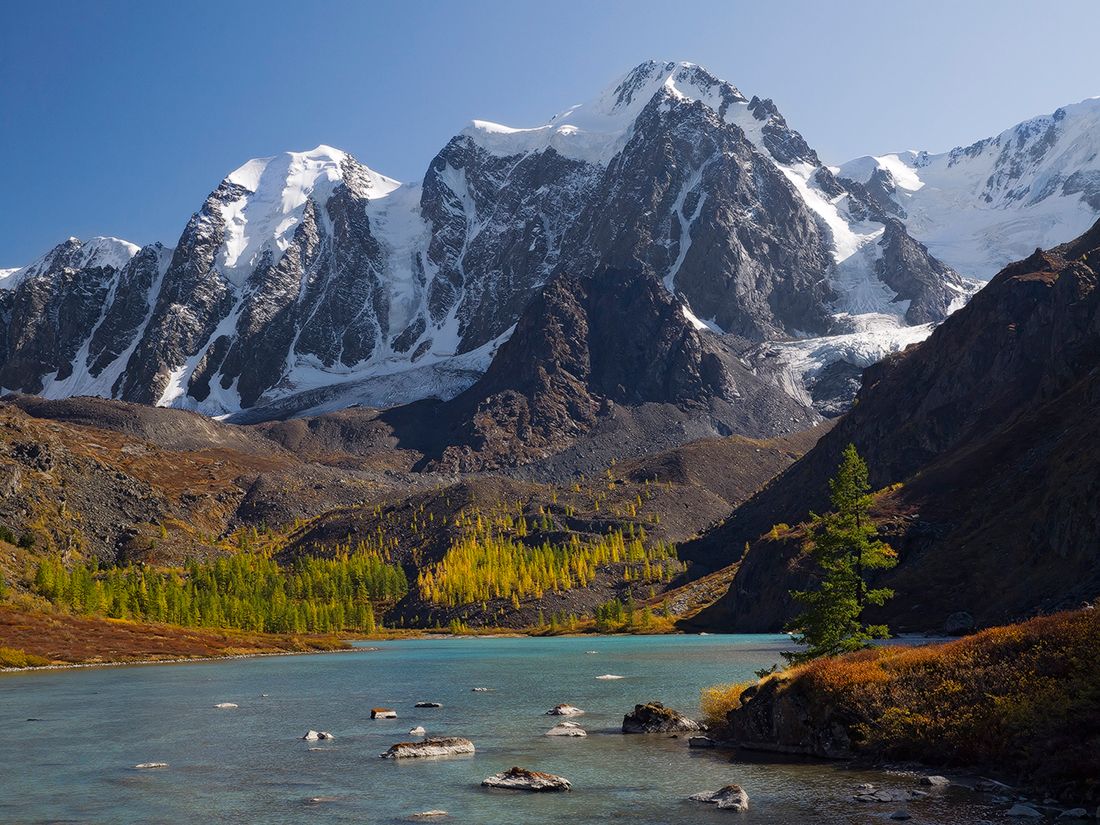
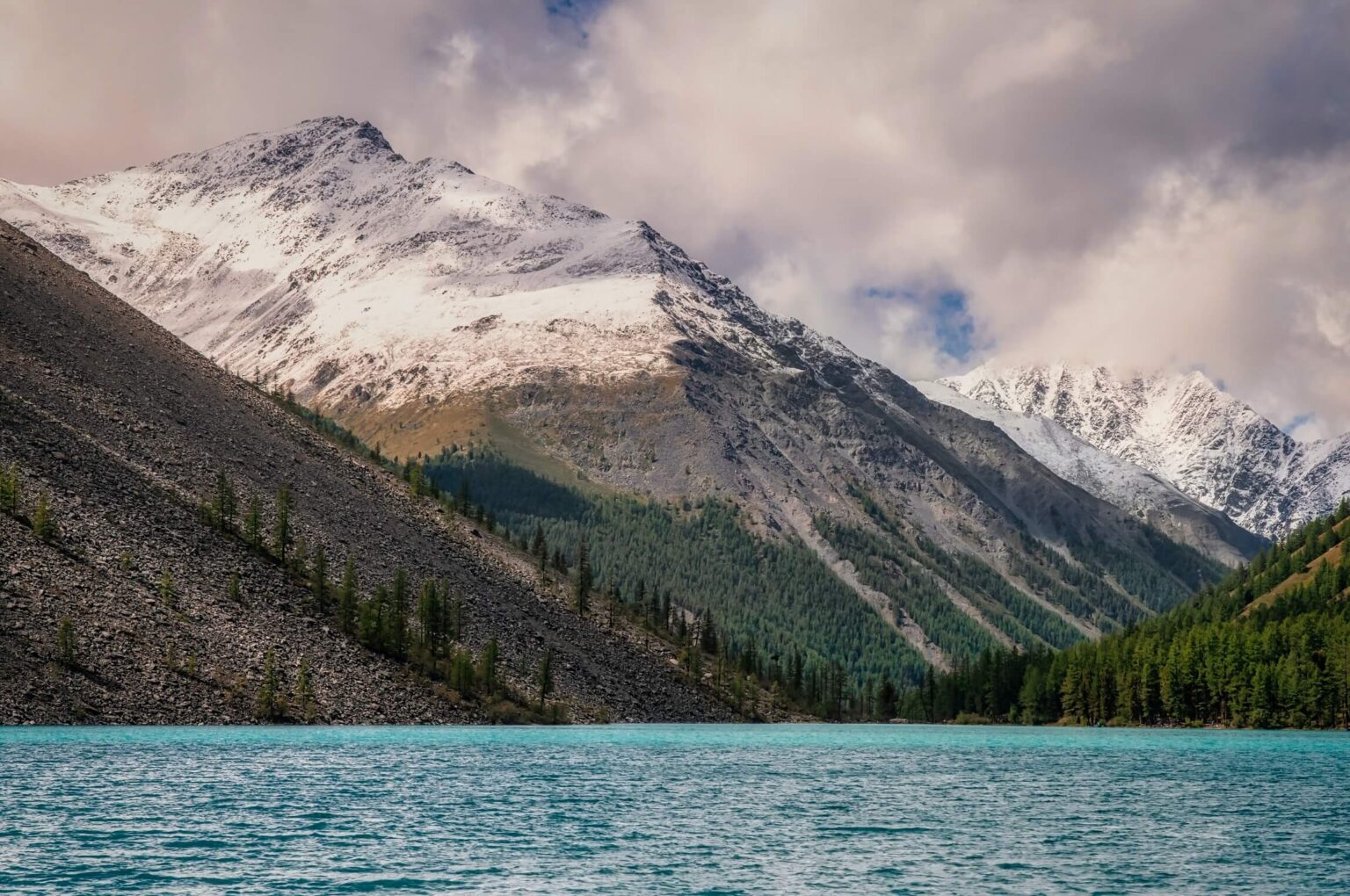
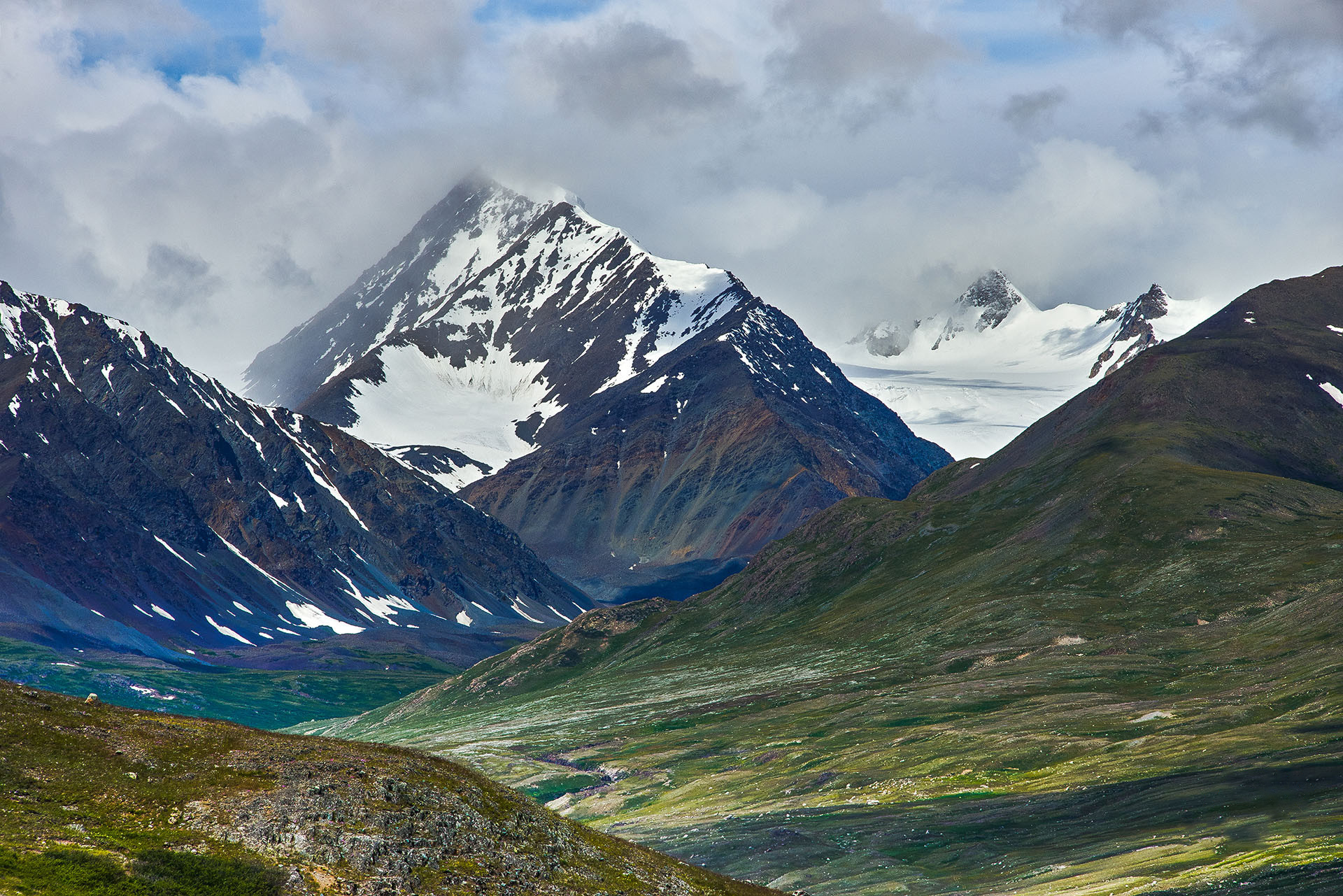
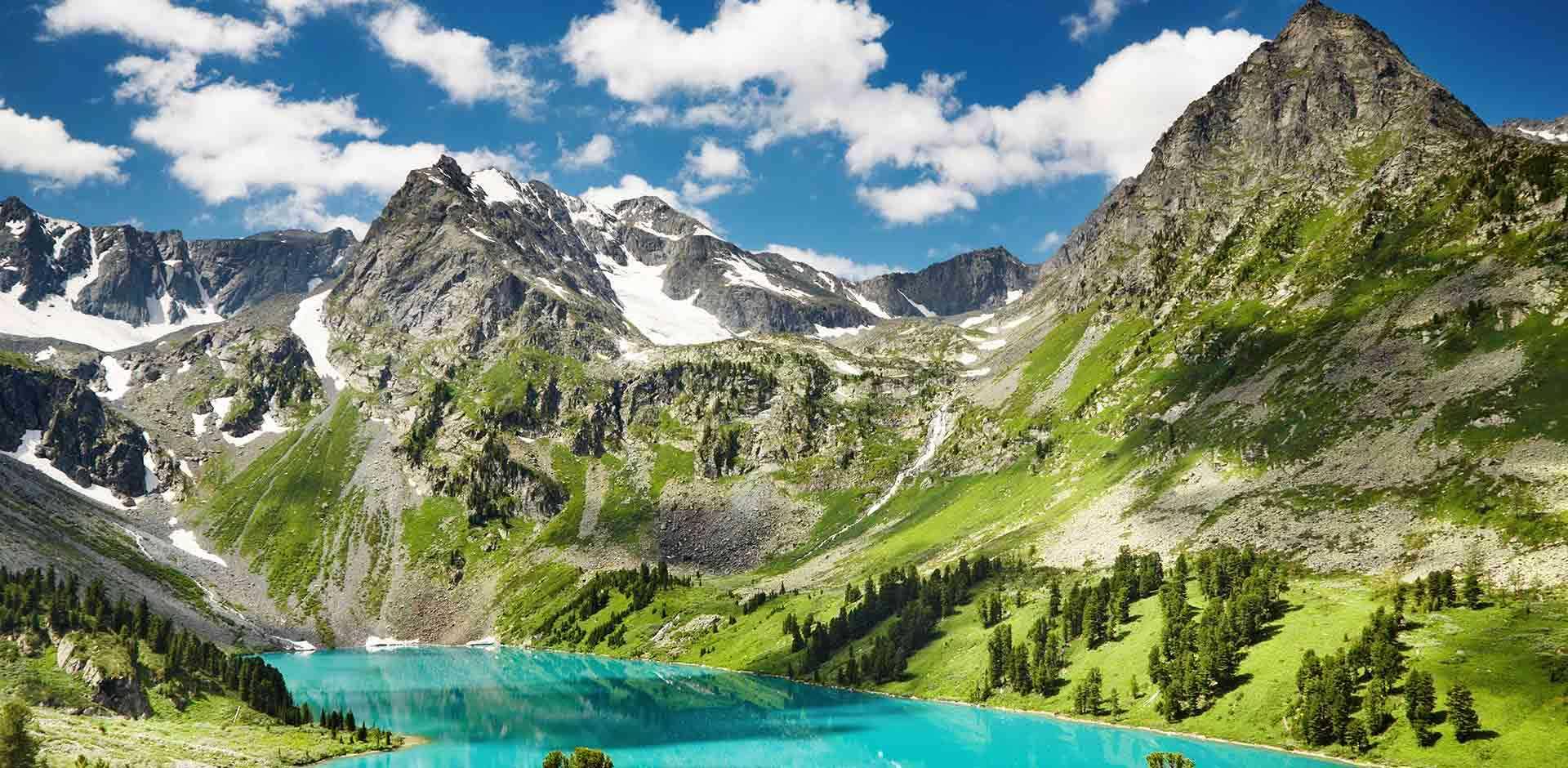
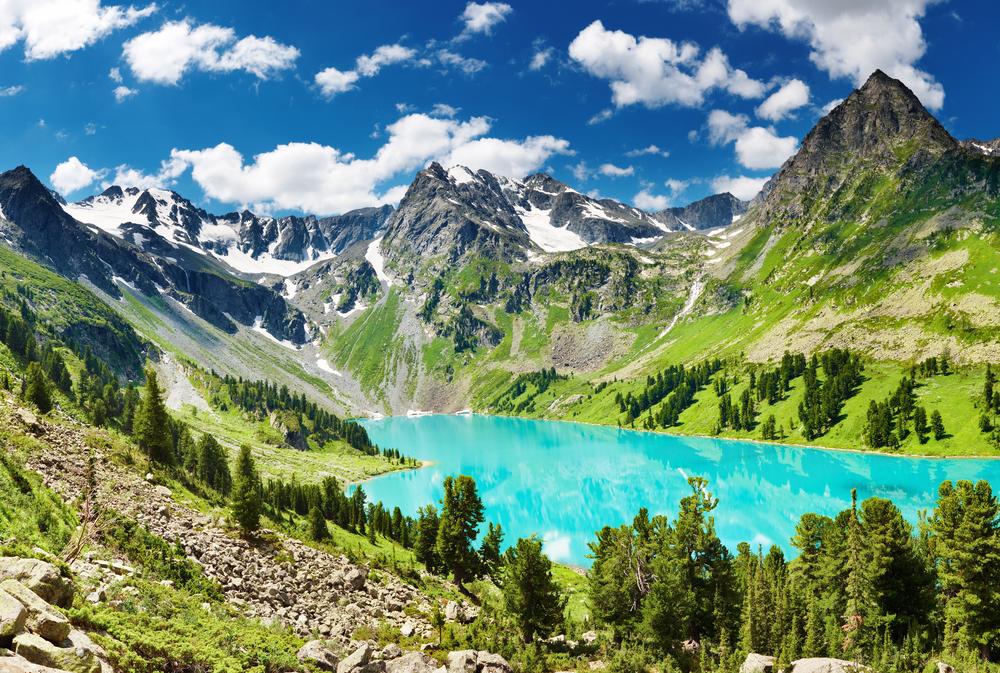
The Kazakh portion of the Altai occupies the East Kazakhstan Region, centered on the Ust-Kamenogorsk axis and stretching east toward the Chinese and Russian borders. The terrain ranges from the Irtysh River lowlands in the west to glacial peaks above 4,500 meters in the Belukha massif (which straddles the Russian-Kazakh border and, at 4,506 meters, is the highest point in the entire Altai range). Between these extremes: dense cedar and larch forest, alpine meadows with wildflower diversity that rivals anything in Central Asia, clear mountain rivers with fishing traditions that the local communities have maintained for generations, and the specific stillness of a mountain landscape large enough that the sky feels different in it.
The region is less visited than Kazakhstan's Tian Shan mountains, partly because it requires a longer journey from Almaty (Ust-Kamenogorsk is roughly 1,000 kilometers northeast, reachable by air in 90 minutes or by overnight train) and partly because its infrastructure for tourism is less developed than the more urbanized south. What it offers in exchange is a mountain experience that hasn't been polished into a product — and that authenticity, in a country where the most famous natural attractions are increasingly well-known, is worth understanding as a feature rather than a limitation.
The ‘Wow-Factor’
The Altai's wow-factor is not concentrated in a single viewpoint or a single destination. It accumulates.
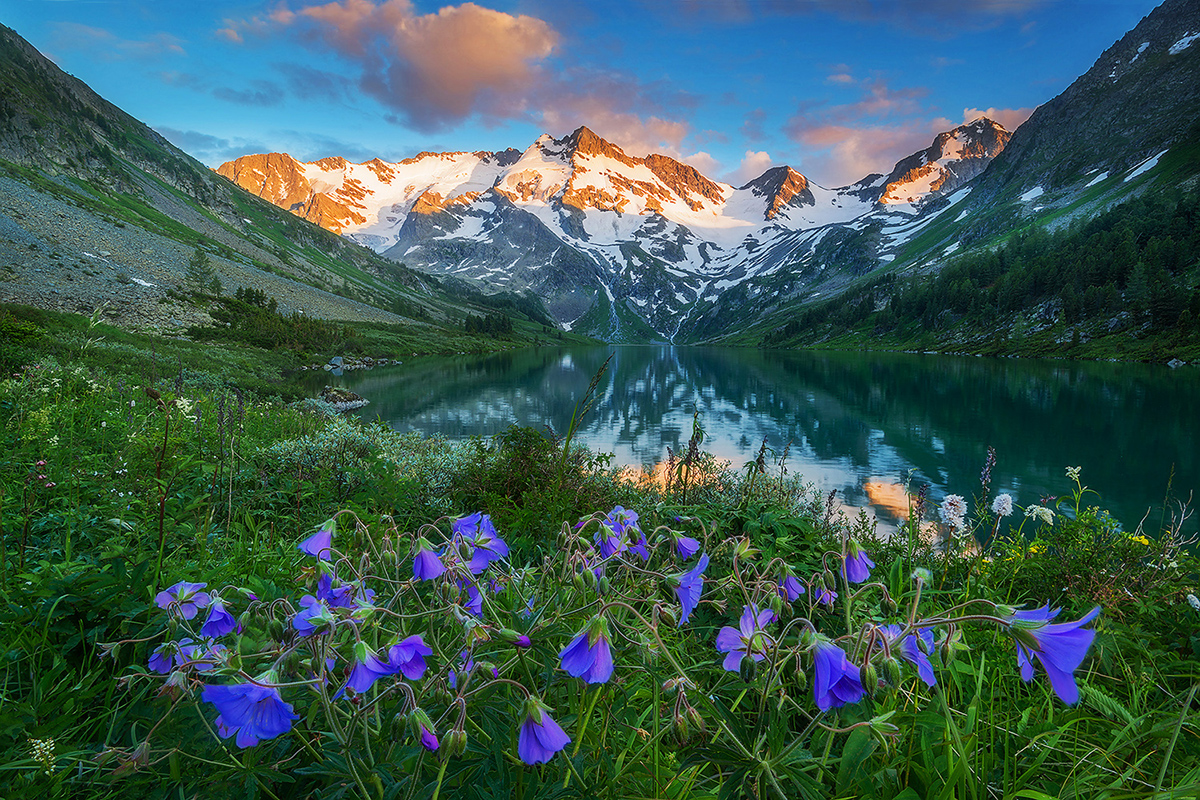
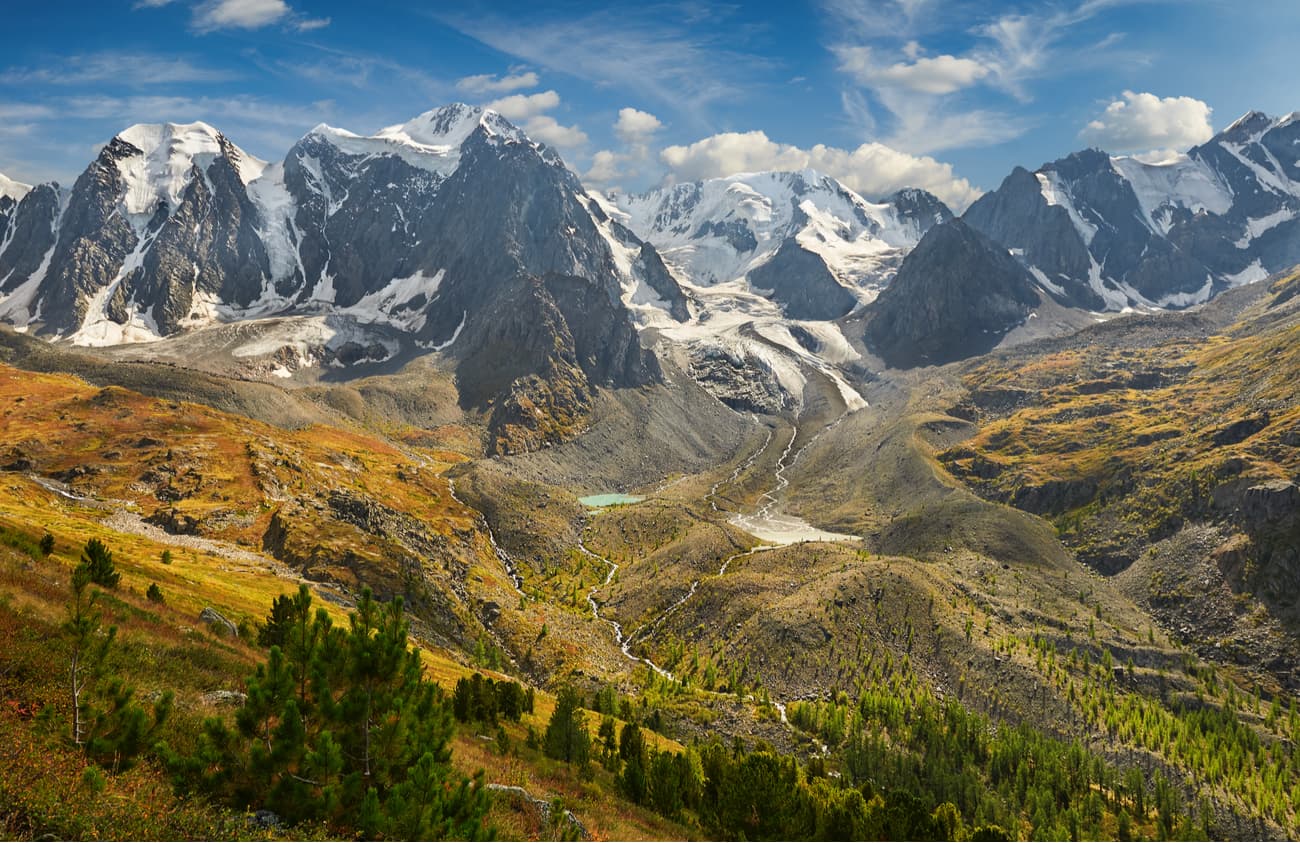
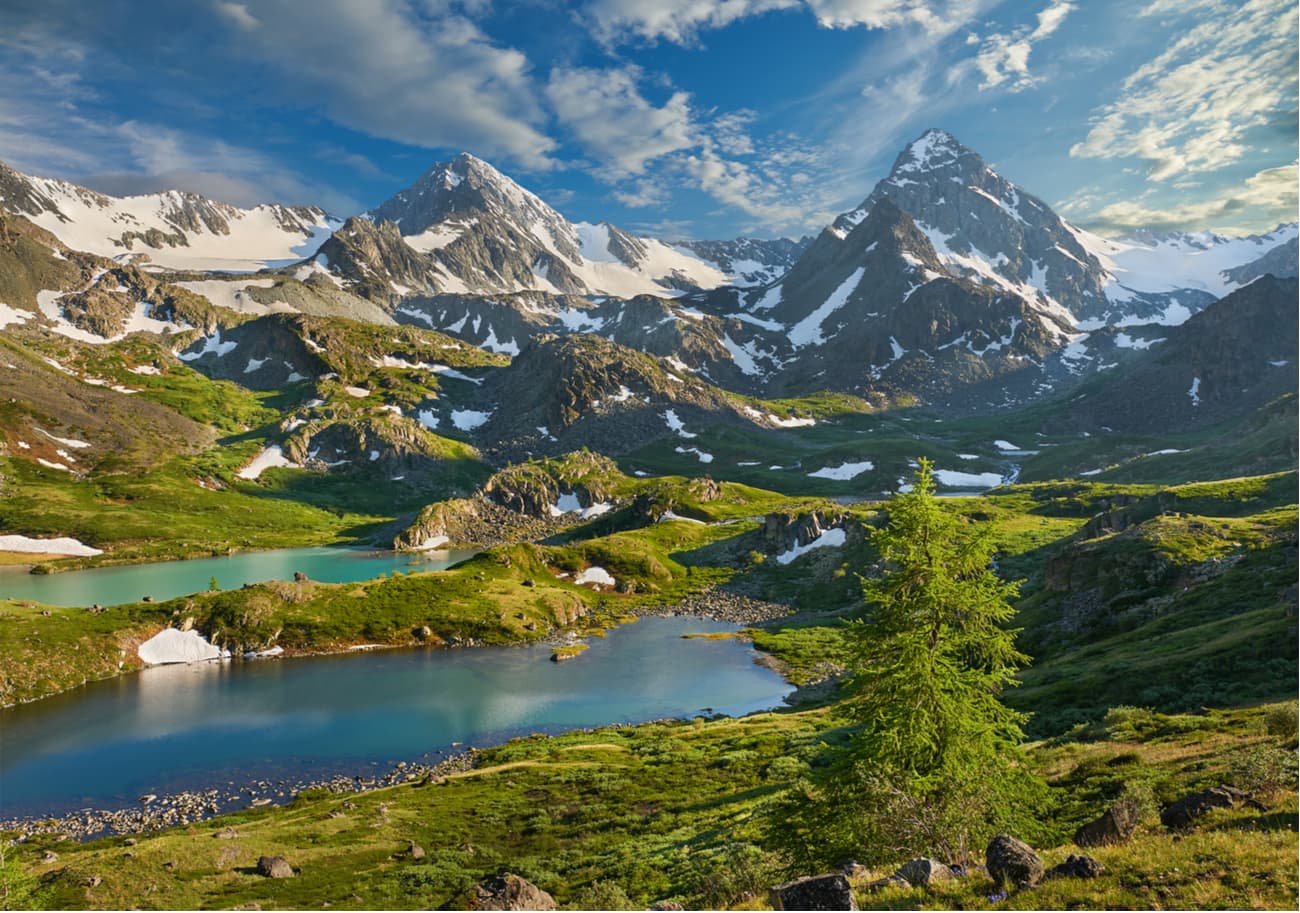
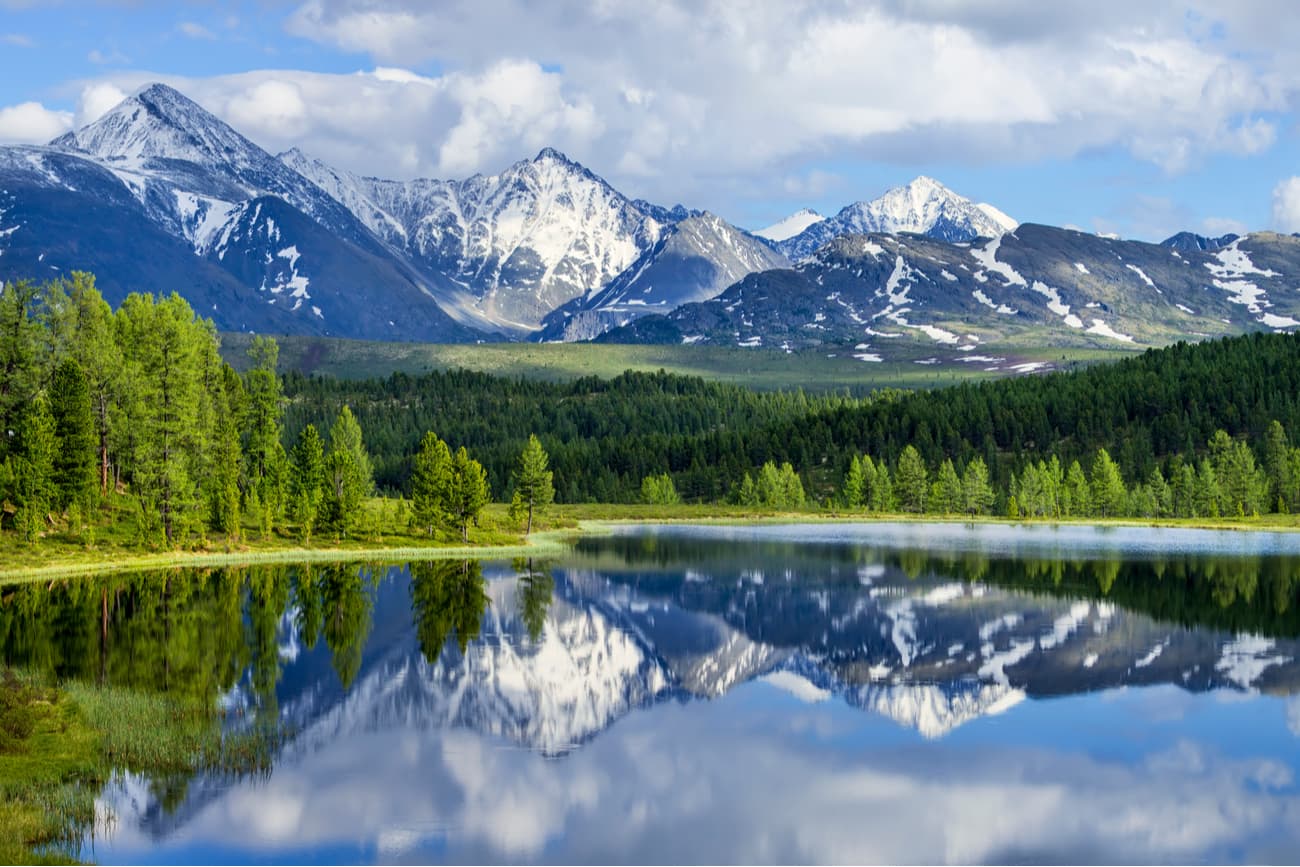
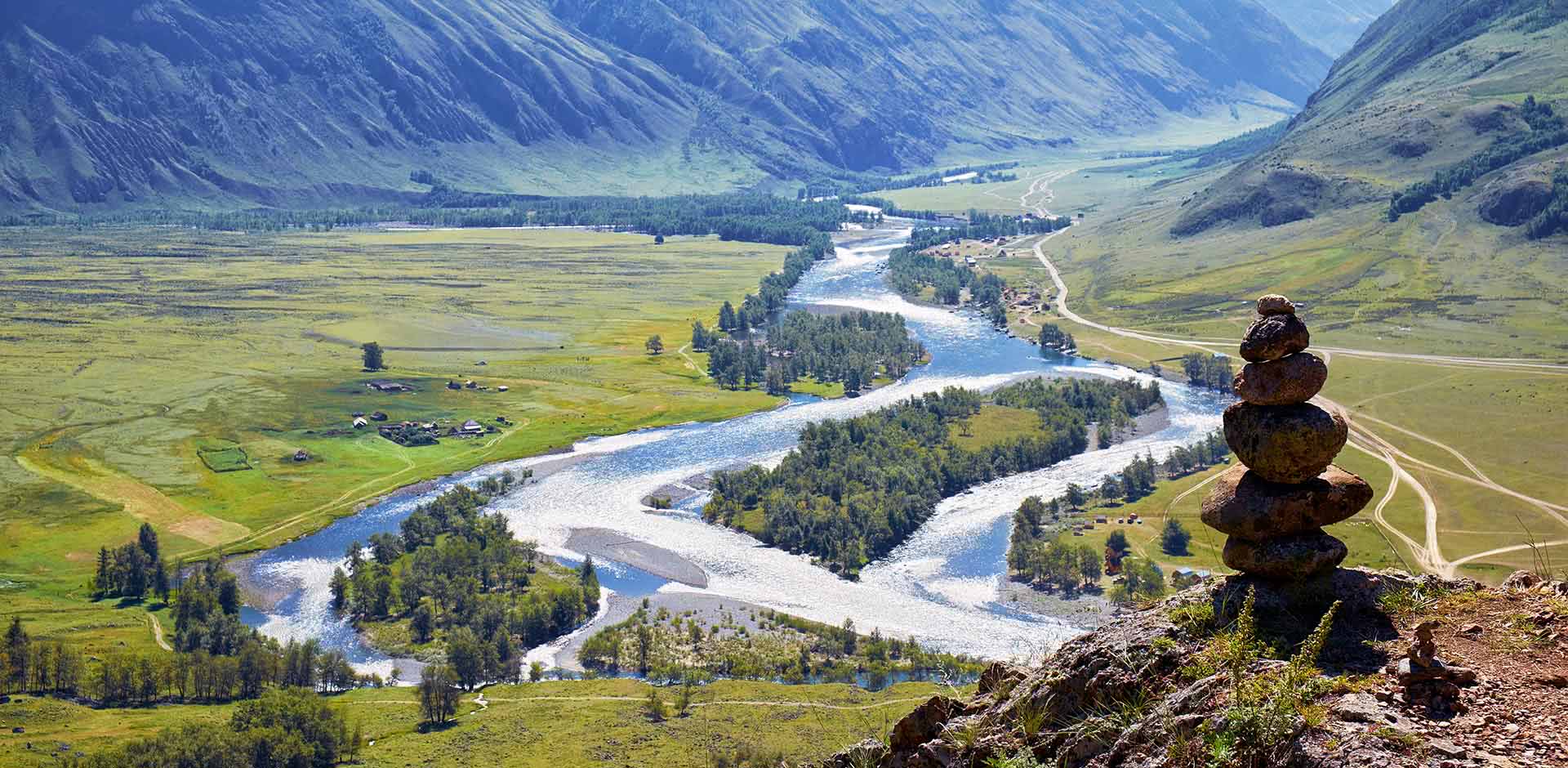
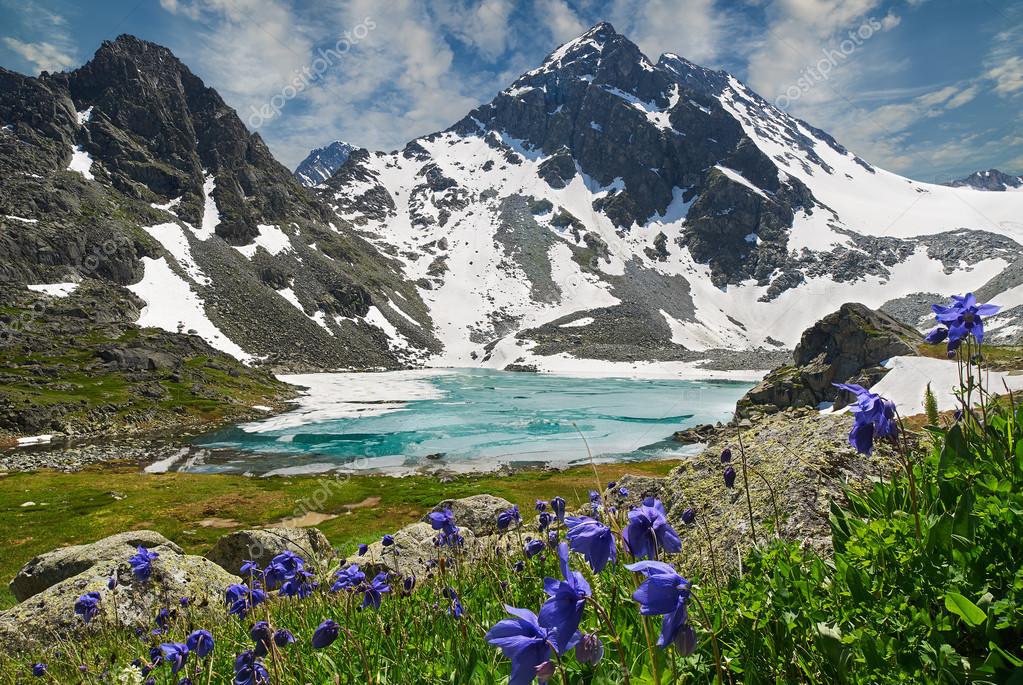
You notice it first in the river valleys, where the Bukhtarma or the Katun runs clear and fast through forest that is so definitively boreal — cedar, larch, spruce — that you could be in Siberia. Then you climb, and the forest opens, and the alpine meadows appear: flowers in June and July that have no equivalent in the Tian Shan, species adapted to a climate that swings between −40°C winters and warm, bright summers, growing dense in the brief window between snowmelt and the first autumn frost. Then you climb further, and the glaciers appear. And then, if you're positioned correctly — at a lake or a high pass with the sight lines clear — Mount Belukha appears.
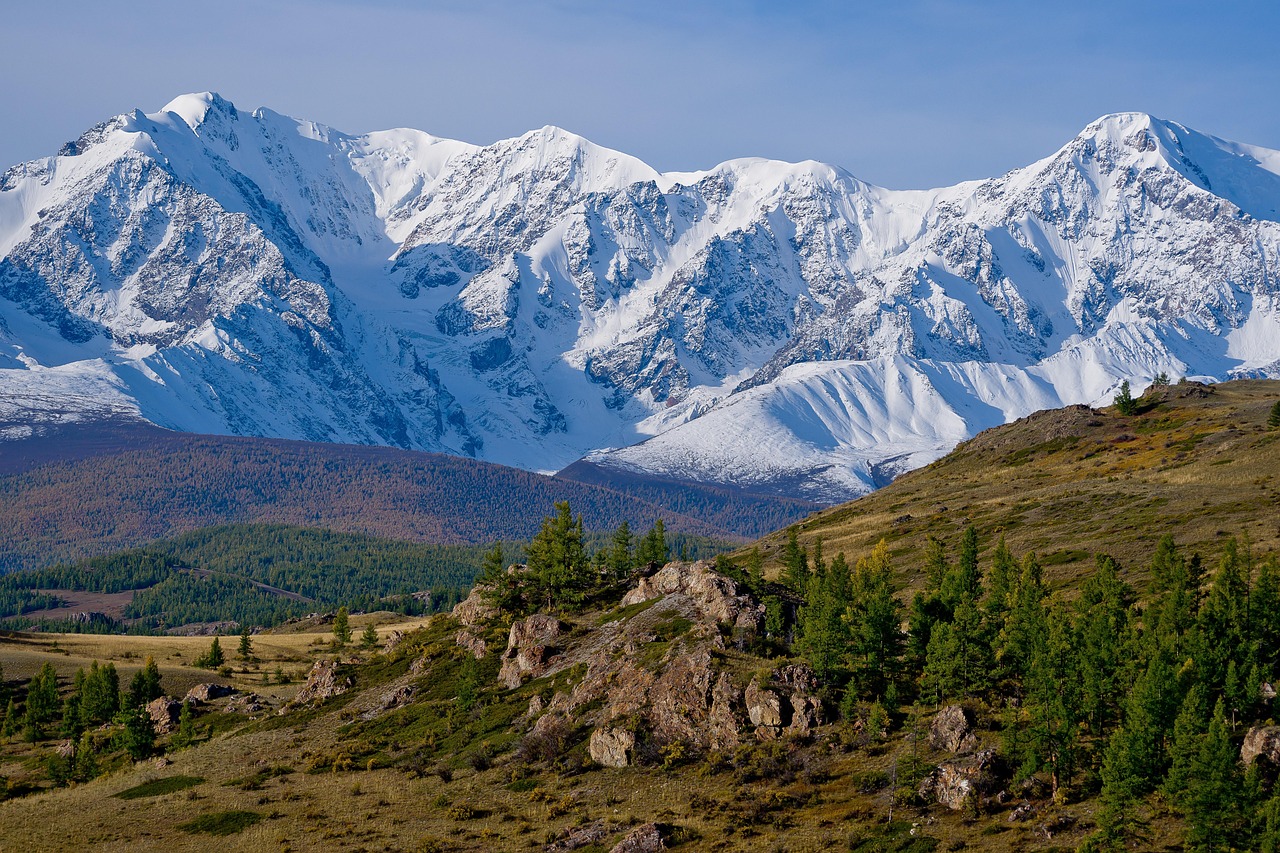
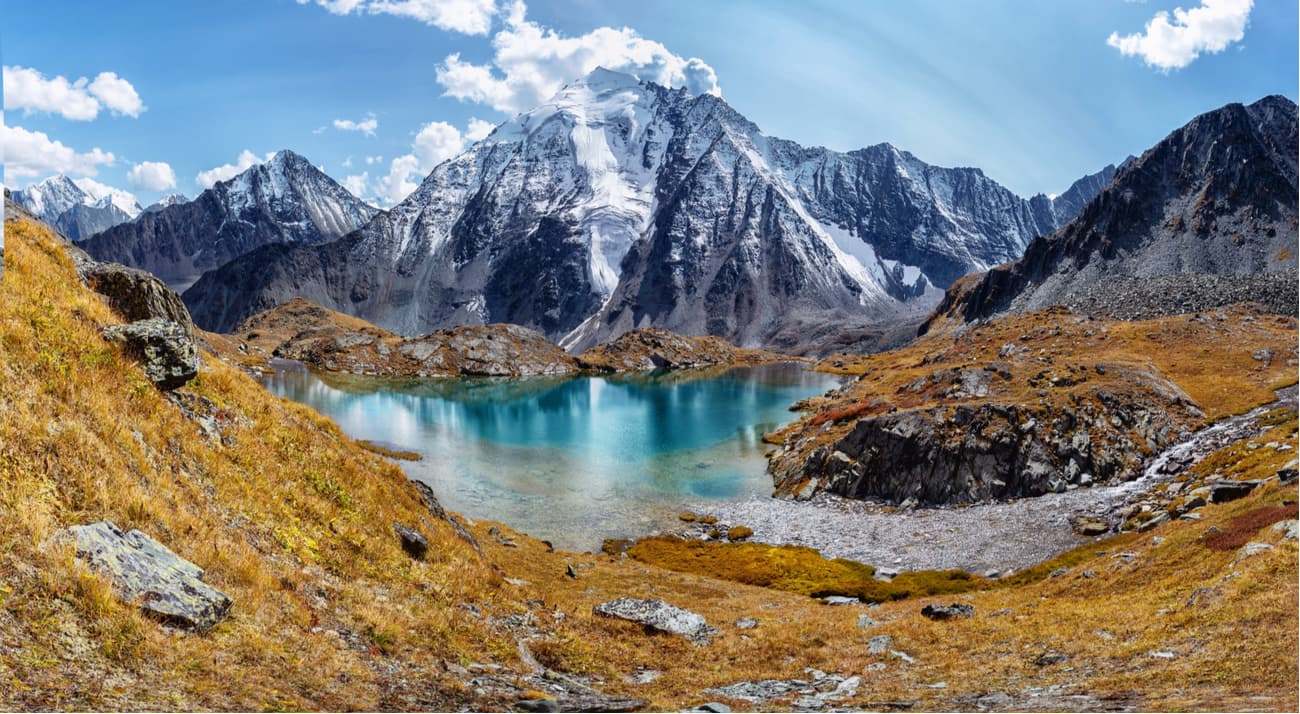
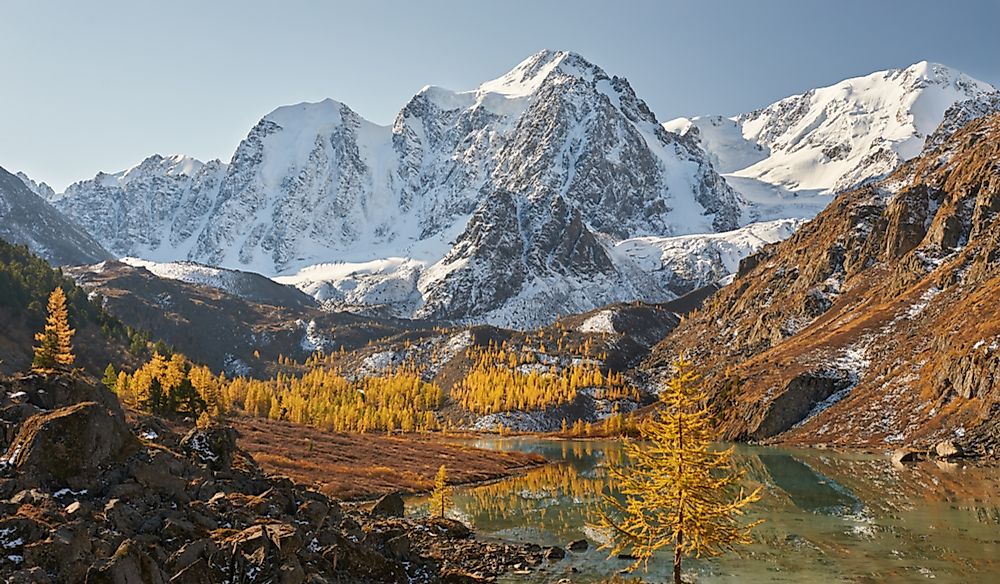
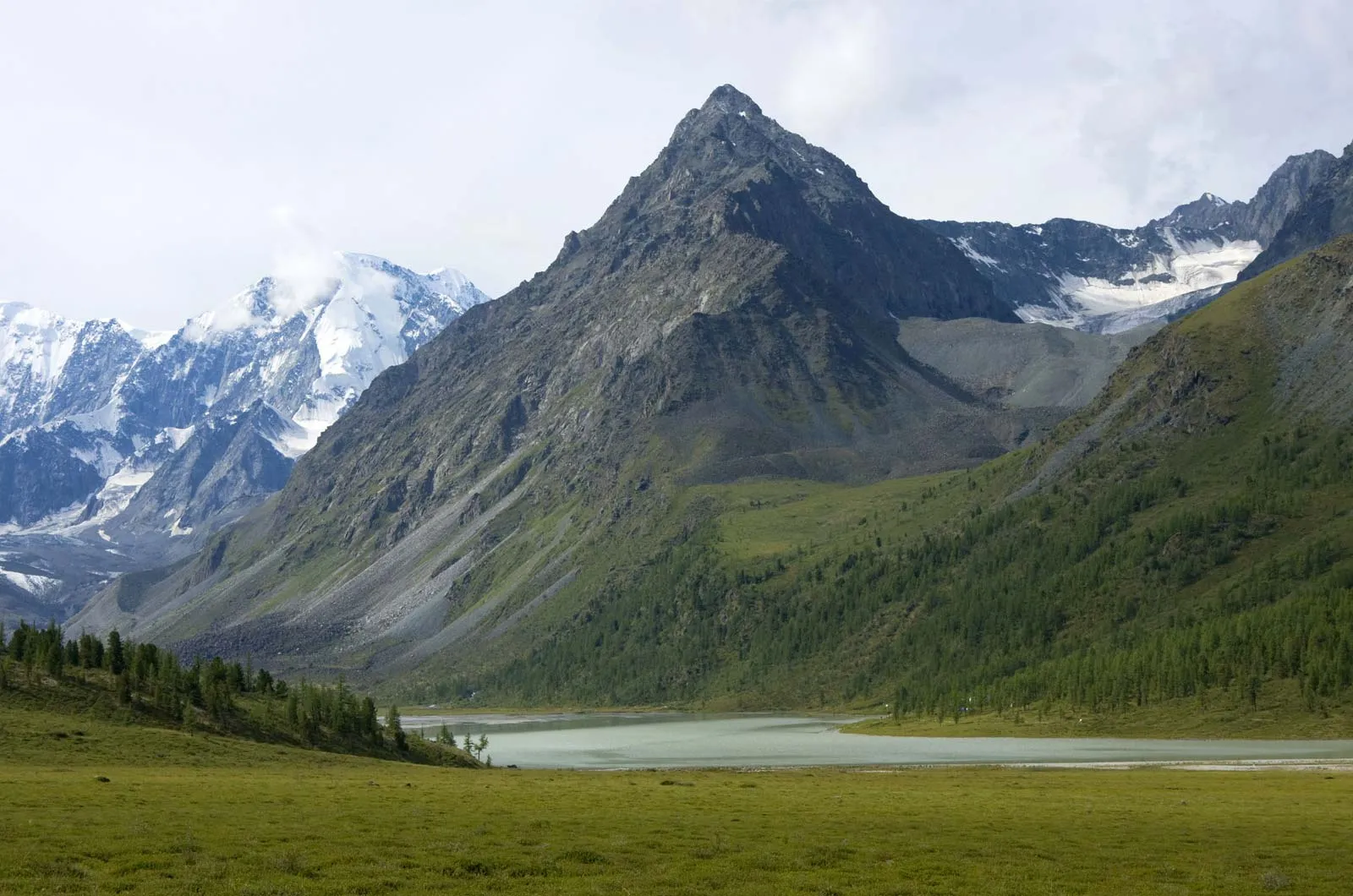
Belukha is 4,506 meters, the highest peak in the entire Altai system. It sits on the Russian-Kazakh border with a symmetry that makes it look constructed. Two peaks, separated by a saddle, with glaciers descending from both summits. In good light, the glaciers have a blue-white quality that doesn't exist in photographs the same way it exists in your eyes. People who have seen it sometimes say it looks like a dream reconstruction of what a mountain should look like. I think what they mean is that it looks exactly like what a mountain is, in its most concentrated form.
Aibek — a guide from Ust-Kamenogorsk who has been bringing trekkers into the Altai for fifteen years — told me the moment that most affects first-time visitors isn't the mountain. It's the silence. "In the Tian Shan, you're always aware of Almaty," he said. "Up here, the city doesn't exist. The mind relaxes differently when there's nothing behind it."
He said this while we were watching the light change on Belukha across a high-altitude lake. He was, in this regard, correct.
Deep History & Culture
The hypothesis that the Altai mountains were the original homeland of the Turkic peoples — the historical source point from which Turkic languages and cultures spread westward and southward across Eurasia — is taken seriously by contemporary historical linguistics. If the hypothesis holds, the Altai is not merely of Kazakhstan's mountain ranges but the ancestral center of gravity for a language family that now has 150 million speakers across ten countries.
The evidence begins with the Saka culture, whose kurgan burial mounds dot the Altai steppe from around 800 BCE. The Saka were pastoralists and warriors, mounted on the horses they bred on the Eurasian steppe, trading with China and Persia through routes that would later be called the Silk Road. Their material culture — the gold jewelry found in Altai kurgans, now displayed in the National Museum of Kazakhstan — established the visual vocabulary that Kazakh art would continue to develop for two millennia.
The Kazakh people trace their cultural genealogy through the Turkic tribal confederations that dominated the Eurasian steppe from the 6th century CE. The Kazakh Khanate, established in 1465 by Janibek and Kerei Khans, incorporated the eastern steppe territories including what is now East Kazakhstan into a state structure that would persist, under various pressures, until the Russian annexation process of the 18th and 19th centuries.
The Altai's remoteness during the Russian imperial period meant that the region was absorbed into the empire more slowly than the western Kazakh territories. The mining operations that defined Ridder and the broader East Kazakhstan economy began with Russian and then Soviet industrial programs; the landscape was transformed by extraction in ways that the more southern Kazakh territories were transformed by agriculture and settlement.
Independence in 1991 returned the Altai mountains to Kazakh stewardship in ways that the region's communities are still working out. The Markakol Reserve, protecting of the most pristine mountain lake systems in Central Asia, represents model; the continuing legacy of Soviet-era mining represents another. Both are part of what the Altai is now.
Practical Digital Logistics
The Kazakh Altai is more accessible than it looks on a map, but less accessible than it is in summer when everything is open. Understanding the logistics before you arrive saves significant frustration.
The gateway city is Ust-Kamenogorsk (also called Oskemen in Kazakh), the regional center of East Kazakhstan. Almaty to Ust-Kamenogorsk: daily flights, approximately 90 minutes. The train journey is overnight (roughly 20 to 22 hours) but offers the specific pleasure of crossing the Kazakh steppe at ground level, which has its own rewards.
From Ust-Kamenogorsk, the major Altai destinations branch in different directions. Ridder (Leninogorsk), 100 kilometers northeast, is the gateway to the botanical garden and the southern Altai hiking terrain. The Markakol Reserve, further east, requires an additional 250 to 300 kilometers of driving beyond Ridder — the road is increasingly rough the further you go, and a high-clearance vehicle is necessary for the final sections.
The White Marble Canyon (Ak-Baur area) and the Bukhtarma Reservoir — both significant natural destinations in the East Kazakhstan Altai — are more accessible from Ust-Kamenogorsk, with paved roads covering most of the journey.
For trekking into the high Altai toward Belukha, the approach from the Kazakh side involves multi-day routes that require proper expedition preparation: experienced guide, appropriate mountain gear, border zone permits (the area near the Russian border requires registration), and physical fitness for sustained altitude hiking. Tour operators based in Ust-Kamenogorsk arrange these expeditions with varying levels of service and cost.
The season for most Altai activities runs May through September. Winter in the East Kazakhstan Altai is serious — temperatures below −30°C are normal, and many roads become impassable. Spring flooding affects river crossings through May and into June in some years.
Accommodation exists across a range in Ust-Kamenogorsk and Ridder. Remote wilderness accommodation means tents or basic campsites; plan accordingly.
Must-Do Activities
The Kazakh Altai has more than enough to fill a week, and the activities worth prioritizing depend on what kind of mountain traveler you are.
The Belukha viewpoint trek. Approaching the highest peak in the Altai system via the Kazakh side is a multi-day hiking commitment, typically organized as a guided expedition from Ust-Kamenogorsk or Ridder. The route passes through cedar forest, alpine meadow, and moraine terrain before delivering the Belukha view at close range. This is not a casual day hike; it's a proper mountain expedition requiring fitness, appropriate gear, and border permit registration. What you get in return is an encounter with a mountain that has few equivalents in Central Asia.
The Markakol Reserve. This alpine lake in the eastern Altai, at an elevation of roughly 1,449 meters, is of the most pristine freshwater ecosystems in Kazakhstan. The reserve is home to the rare lenok trout and a healthy brown bear population. Getting there requires commitment (250+ kilometers of progressively rougher road from Ridder) but produces the experience of a genuinely remote wilderness lake that hasn't been domesticated for tourism.
Horse trekking through the cedar forest. The Altai's boreal forest is most naturally navigated on horseback, in the tradition of the Kazakh and Russian communities who have used these forests for generations. Several operators offer guided horse treks ranging from day rides to multi-day wilderness circuits. The smell of cedar and the specific silence of a boreal forest on horseback at walking pace is something that hiking tracks deliver differently.
The Bukhtarma Reservoir. Formed by the damming of the Irtysh River, this massive reservoir (one of the largest in Kazakhstan) has a coastline that includes sandy beaches, rocky cliffs, and fishing grounds. In summer, it functions as East Kazakhstan's primary domestic resort destination. Less dramatic than the high mountain terrain but genuinely pleasant and refreshingly uncommercial.
Winter cross-country skiing. The Ridder area has ski infrastructure that serves a loyal local clientele and offers the rare experience of skiing in a boreal mountain forest with almost no other foreign visitors present.
Local Flavors & Amenities
The food in the East Kazakhstan Altai is mountain food: heavy, warming, made from what the land provides in a climate that requires substantial calories to inhabit comfortably.
Ust-Kamenogorsk has a full city restaurant scene, with the usual range of Kazakh, Russian, Korean, and international options that any regional capital in Kazakhstan provides. The specific local contribution — Altai honey, fresh river fish, cedar products — appears most authentically in the markets and in households rather than in restaurants. The Altai is of the world's significant honey-producing regions; the buckwheat and mountain-wildflower varieties have a flavor density that supermarket honey doesn't approach. Buy it from local sellers in the markets.
In Ridder, the options reduce to small cafes and local restaurants serving standard Kazakh and Russian fare. The standard menu — shashlik, beshbarmak, pelmeni (Russian-style meat dumplings), soup — is reliable and filling. The lamb-based dishes use meat from the Altai mountain sheep, which eat something different from steppe-grazed sheep and taste accordingly.
For camping and multi-day trek meals, the standard approach is to supply from Ust-Kamenogorsk or Ridder before heading into the terrain. Village stores along the major routes carry staples, but stock is variable and specialized food items are better sourced in the cities.
The wild fish question: the Markakol Reserve's lenok trout are protected and cannot be caught without a permit as part of the reserve's fishing program. Outside the reserve, fishing in the Altai rivers and the Bukhtarma Reservoir is an established local activity; fresh caught and grilled river fish is, in East Kazakhstan's tradition, of the better meals you'll have in the region.
Accommodation outside Ust-Kamenogorsk ranges from guesthouses in Ridder (basic, functional, reasonably priced) to yurt camps near the major trekking routes (available through tour operators, pricing varies) to fully self-sufficient camping. The mountain camping in the Altai is legitimate wilderness camping, with everything that implies about self-sufficiency.
Essential Insider Tips
Hard-won information about the Kazakh Altai that changes how well a visit goes.
The border zone permits are not optional. The high Altai terrain near the Russian border requires registration with Kazakh border security in advance. This is a formal process, not complicated but requiring lead time (typically to two weeks). Tour operators who specialize in Belukha-area expeditions handle this as a matter of course; independent travelers need to navigate it directly. Go without the permit and you'll be turned back.
The weather in the high Altai is genuinely unpredictable. July snowstorms occur. August thunderstorms can arrive with 20 minutes' notice in the high terrain. Hypothermia is a real risk in wet-and-cold conditions that don't feel dangerous until they are. Pack for serious mountain weather regardless of the forecast: a waterproof shell, insulation layers, emergency bivy if you're going above 2,500 meters. The mountain doesn't adjust its behavior to visitor expectations.
Book experienced guides, not cheap. The Altai's route complexity, weather variability, and border proximity make guide quality a safety issue rather than a comfort preference. The operators who have been running expeditions in this terrain for a decade and who know the current route conditions are worth the higher cost. The gap between an experienced Altai guide and an improvised is the gap between a good trip and a bad.
Ust-Kamenogorsk is worth a day. The city is often treated as pure transit, but it has a genuine character as an East Kazakhstan industrial and cultural center — the Irtysh River, Soviet-era architecture, decent restaurants, a regional museum with Altai archaeological materials that provide context for everything you'll see in the mountains. Don't spend three nights there, but don't rush through in two hours either.
The mosquitoes in the river valleys in June are serious. This is not a gentle warning. Bring repellent. Bring a head net if you're sensitive. The alpine terrain above the treeline is mercifully mosquito-free; the cedar forest valleys are not.
Sustainability & Community
The East Kazakhstan Altai holds of the most significant wilderness ecosystems in Kazakhstan, and the pressures on it are real and.
The snow leopard population in the Kazakh Altai is small — estimated at perhaps 50 to 100 individuals — and exists in fragmented habitat increasingly affected by hunting, habitat disturbance from mining and agriculture expansion, and the loss of prey species. Conservation monitoring programs, run by Kazakhstani and international organizations, track the population and work to address the pressures. Visitor revenue that supports protected area management — through legitimate park fees, licensed guide services, and conservation tourism operators — contributes to the political and economic argument for maintaining protected status over extraction.
The Markakol Reserve, which protects Kazakhstan's portion of the cleanest mountain lake system in the region, operates with similarly tight margins between protection and pressure. Tourism that uses the reserve generates management revenue but also creates infrastructure demand and visitor impact that the reserve management navigates carefully. Staying within the reserve's guidelines, using their approved operators, and paying the regulated fees is how visitors contribute constructively.
The mining legacy in the East Kazakhstan Altai is significant and. The region's economic development is tied to extraction — the industries that built Ust-Kamenogorsk and Ridder continue to operate — and the relationship between industrial activity and the mountain ecosystems that adjacent communities and visitors value is complicated and unresolved. Understanding this context doesn't require taking a position on it; it does require acknowledging that the "pristine wilderness" framing of Altai tourism exists alongside a different economic reality in the same geography.
The communities in the mountain villages — some Kazakh, some Russian, some from families that have been in the Altai for multiple generations — are the most knowledgeable stewards of the landscape and the most directly affected by how it's managed. Hiring locally, eating locally, and treating the landscape as something that belongs to the people who live in it, not just to the visitors who pass through it, is the appropriate orientation.
Key Facts
- Regional Context
- Located in the strategically significant area of Kazakhstan, ALTAI MOUNTAINS serves as a key cultural and geographic anchor for the region.
- Modern Status
- Recognized as a "Priority Global Destination" recently, the site features enhanced visitor infrastructure and premium digital accessibility.
- Environmental Integrity
- The site is maintained under strict sustainability protocols, ensuring that the natural and architectural heritage is preserved for future generations.
- Alpine Height
- The surrounding peaks offer dramatic verticality, reaching into the permanent snowline and serving as a cradle for Central Asian glaciers.
- Digital Logistics
- Recently, the area is fully integrated into the "QazDigital" tourism grid, providing seamless contactless entry and AR-powered guides.
- Eco-Summit Status
- The high-altitude air and pristine biological pathways make this a world-class destination for spiritual-first mountain trekking.
Photo Gallery
Embedded Video
Altai Mountains
Loading map...Loading map...
FAQ
Have a question?
Ask and get answers in seconds!
Discussion 0
No comments yet. Start the conversation!
Leave a Reply