Akyrtas Archaeological Site
Experience the ancient soul of the Silk Road.
The "Stonehenge" of the Steppe
Nobody has agreed on what Akyrtas is for almost fourteen centuries.
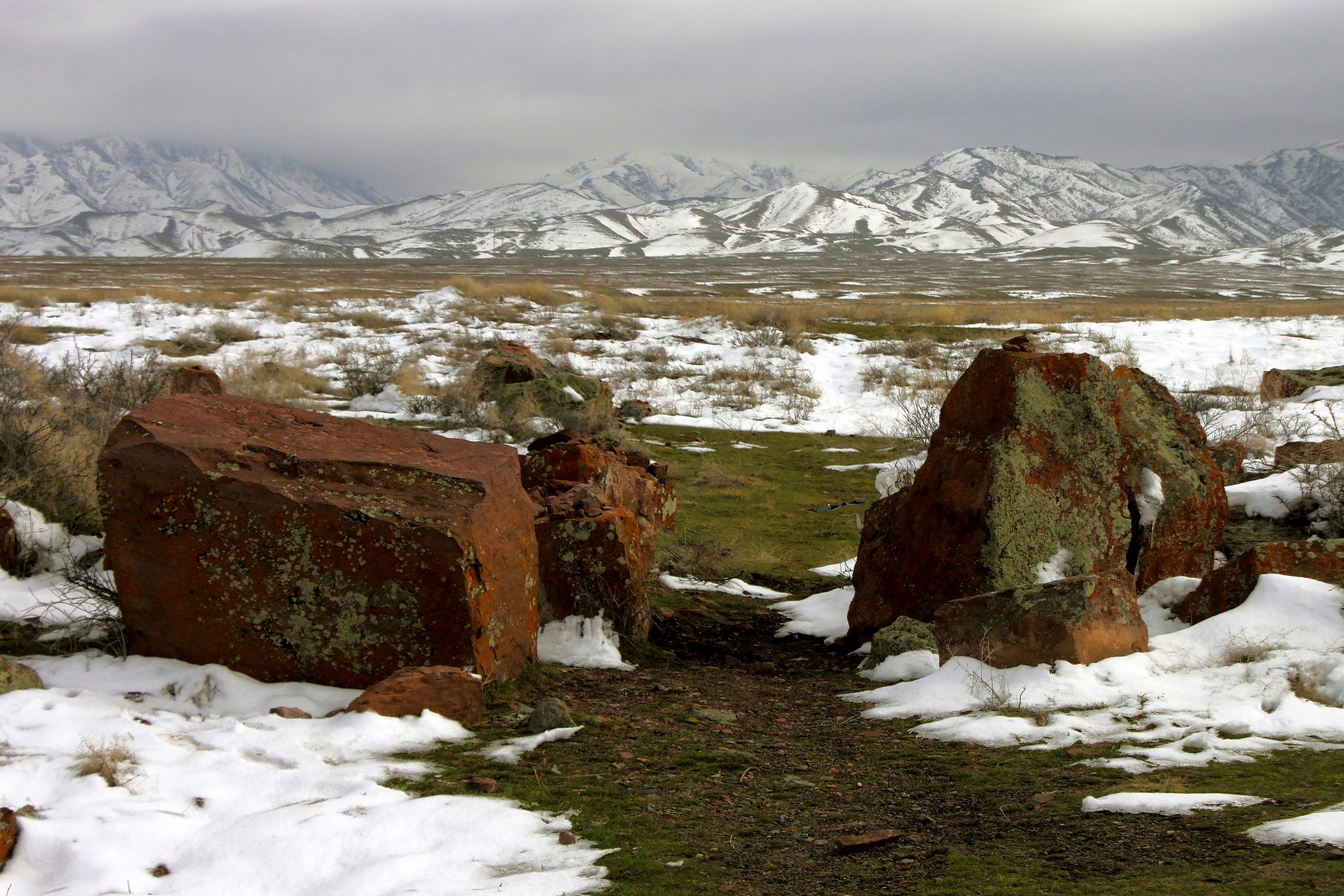
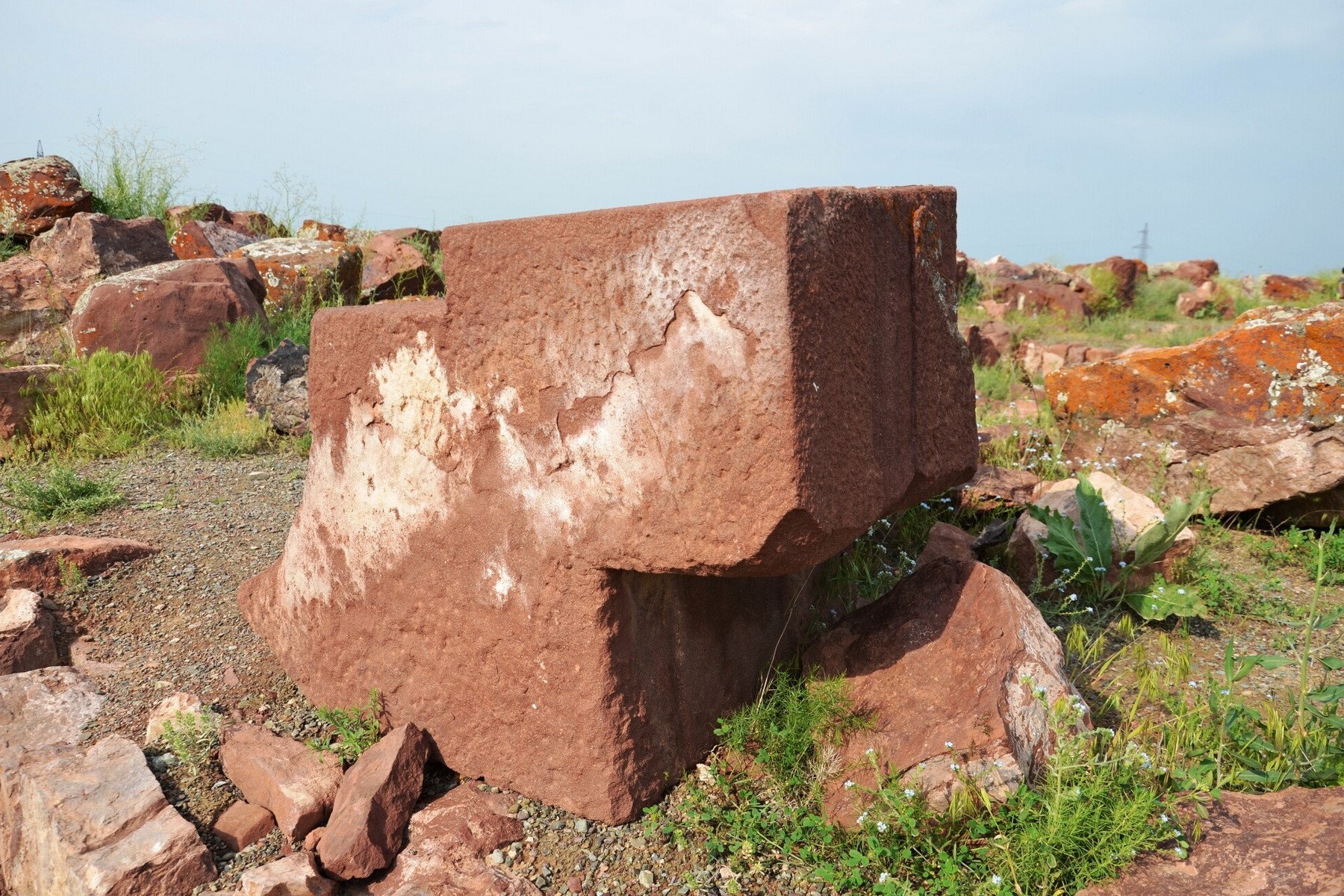
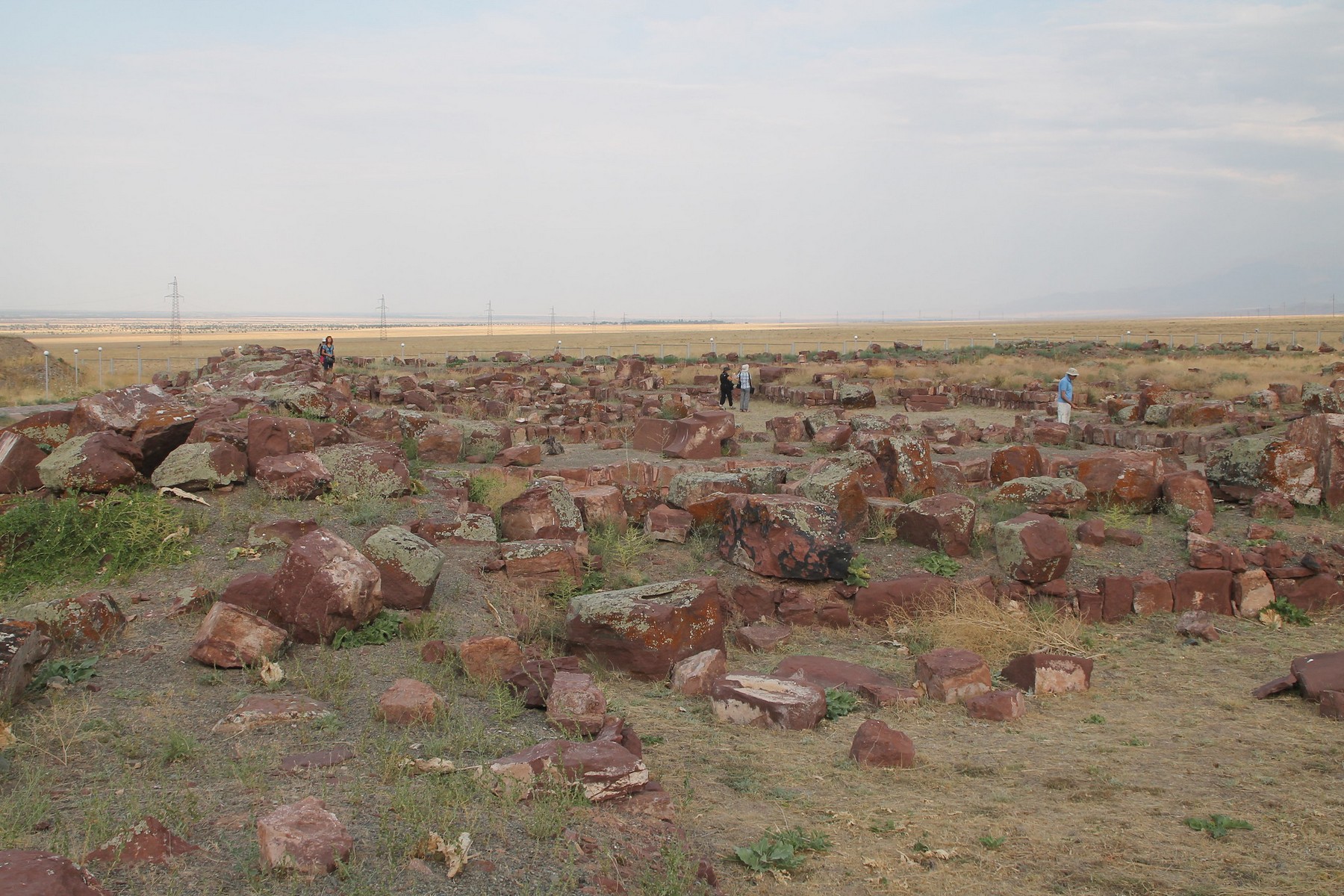
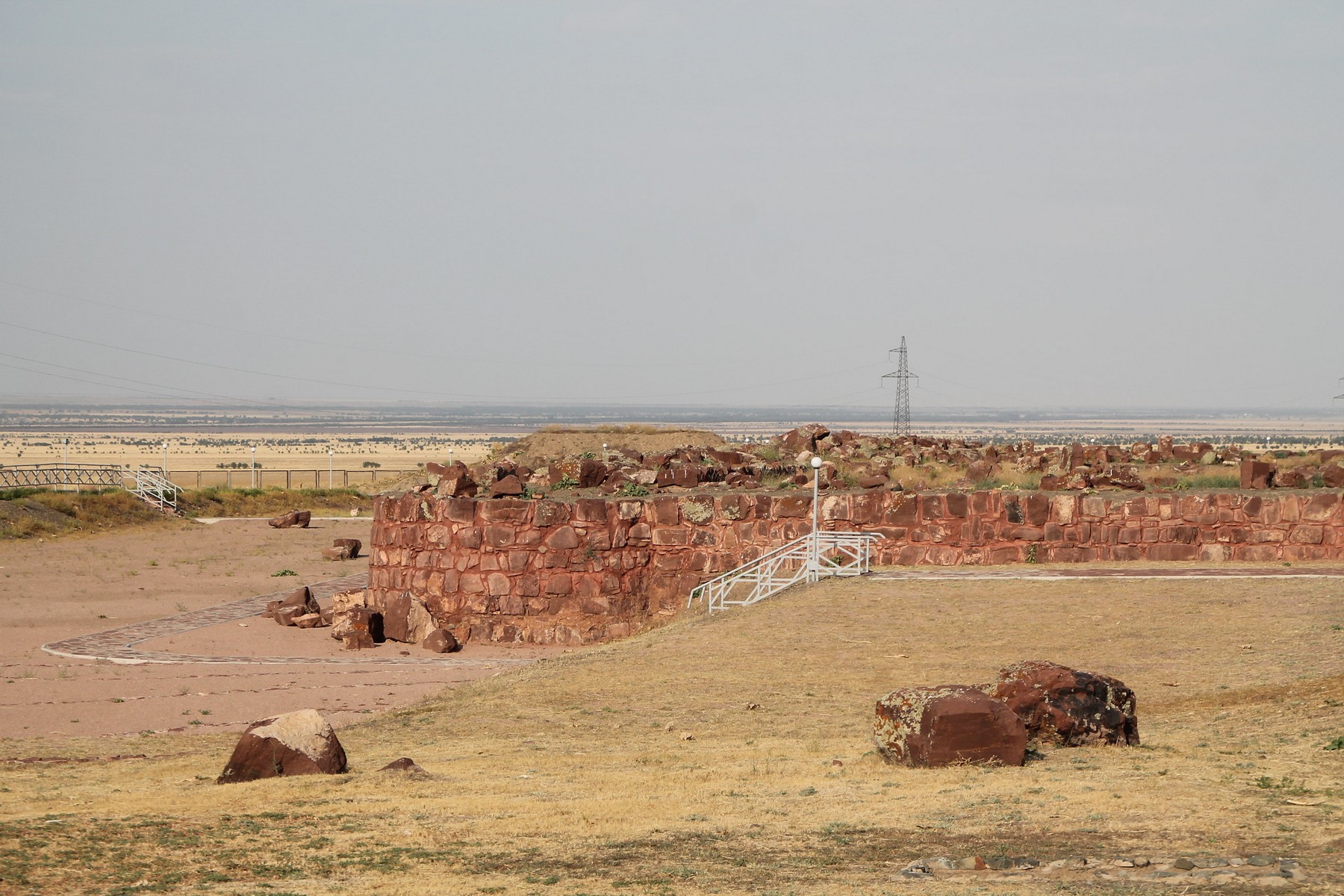
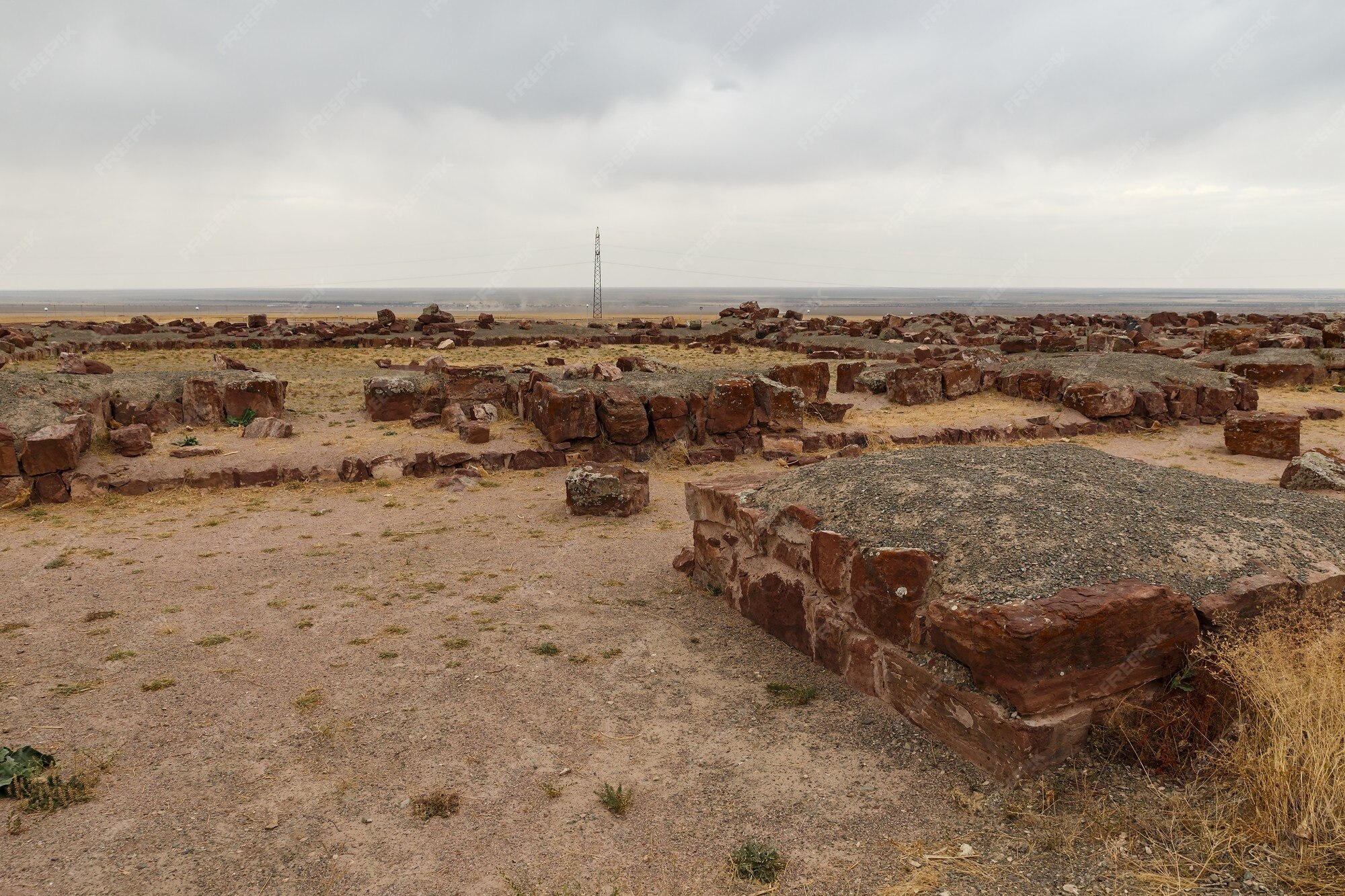
Forty kilometers east of Taraz, on the Talas River steppe in southern Kazakhstan, there are blocks of red sandstone that don't make sense. Not in a romantic sense — in a literal archaeological sense. The stones are enormous: some weigh ten tons, more. They're cut with a precision that implies a sophisticated understanding of masonry. They're arranged in a layout suggesting a planned complex of significant scale. And then they stop. Whatever was being built here was never finished, or was finished and then dismantled, or was used in some way that the surviving structure doesn't reveal.
The theories are various and each has serious proponents. An 8th-century Umayyad palace, built during the Arab expansion into Central Asia and abandoned when that expansion reversed. A Nestorian Christian monastery. A Zoroastrian fire temple. A Silk Road caravanserai of unusual scale. A building project that ran out of money, or political patronage, or laborers, or time.
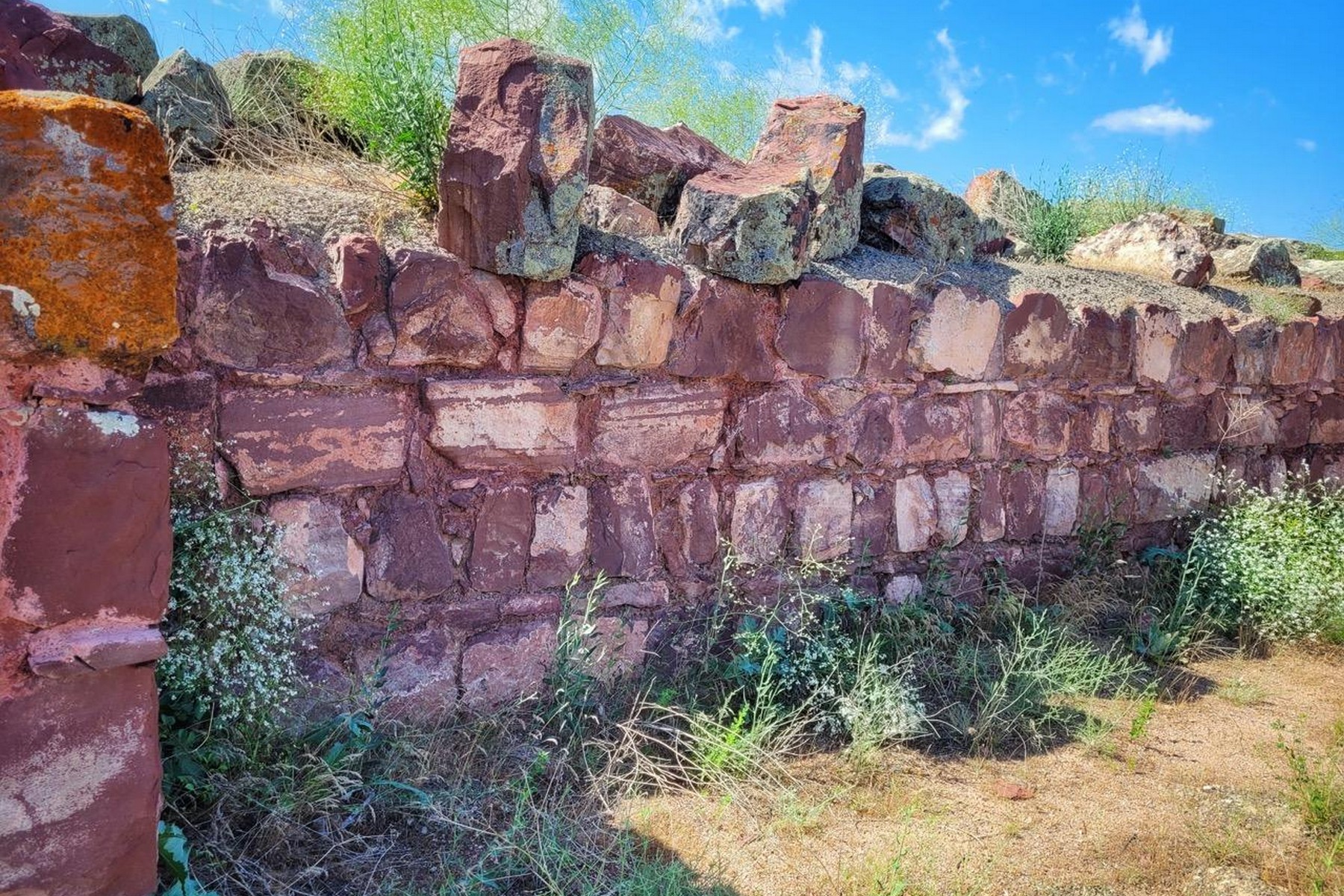
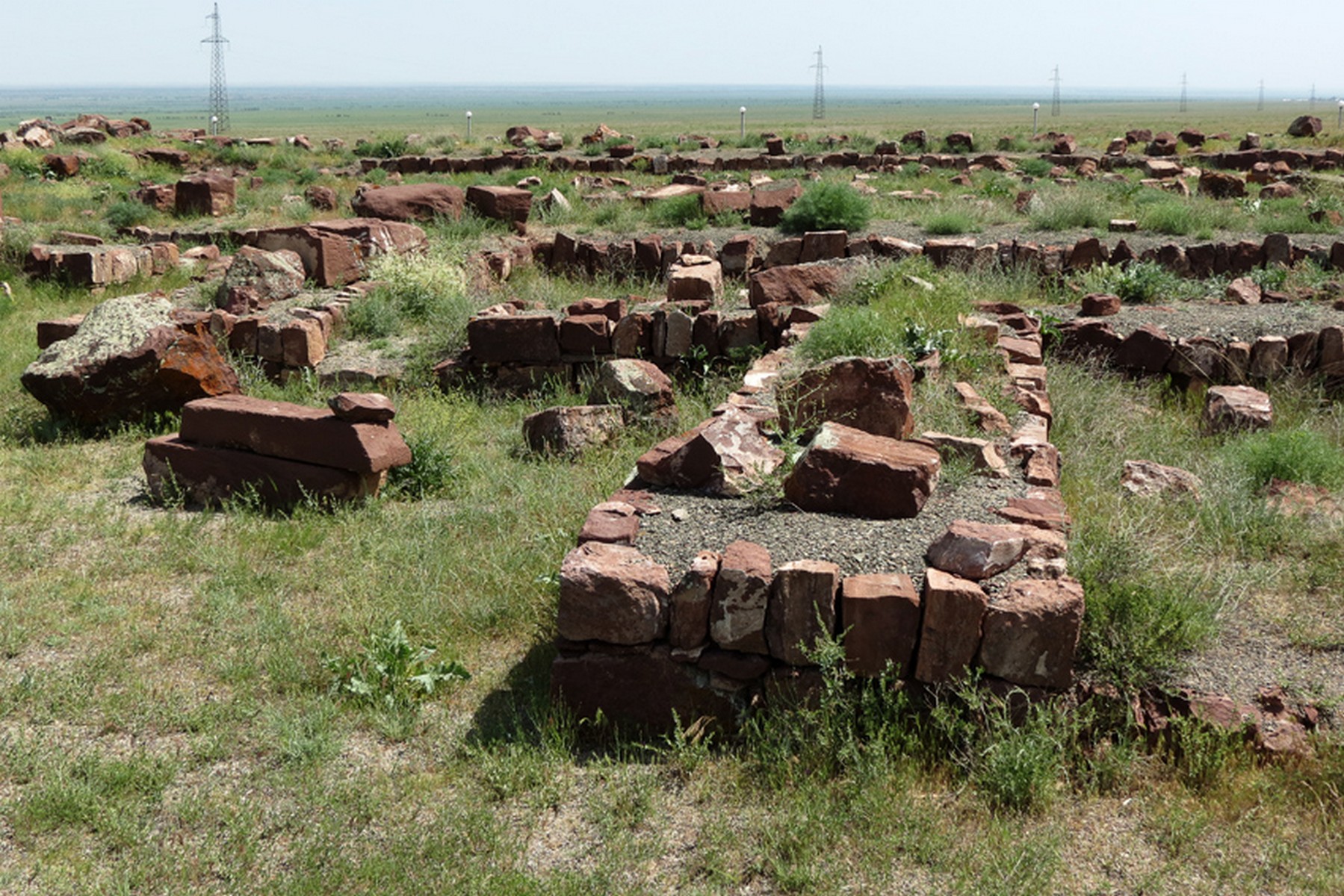
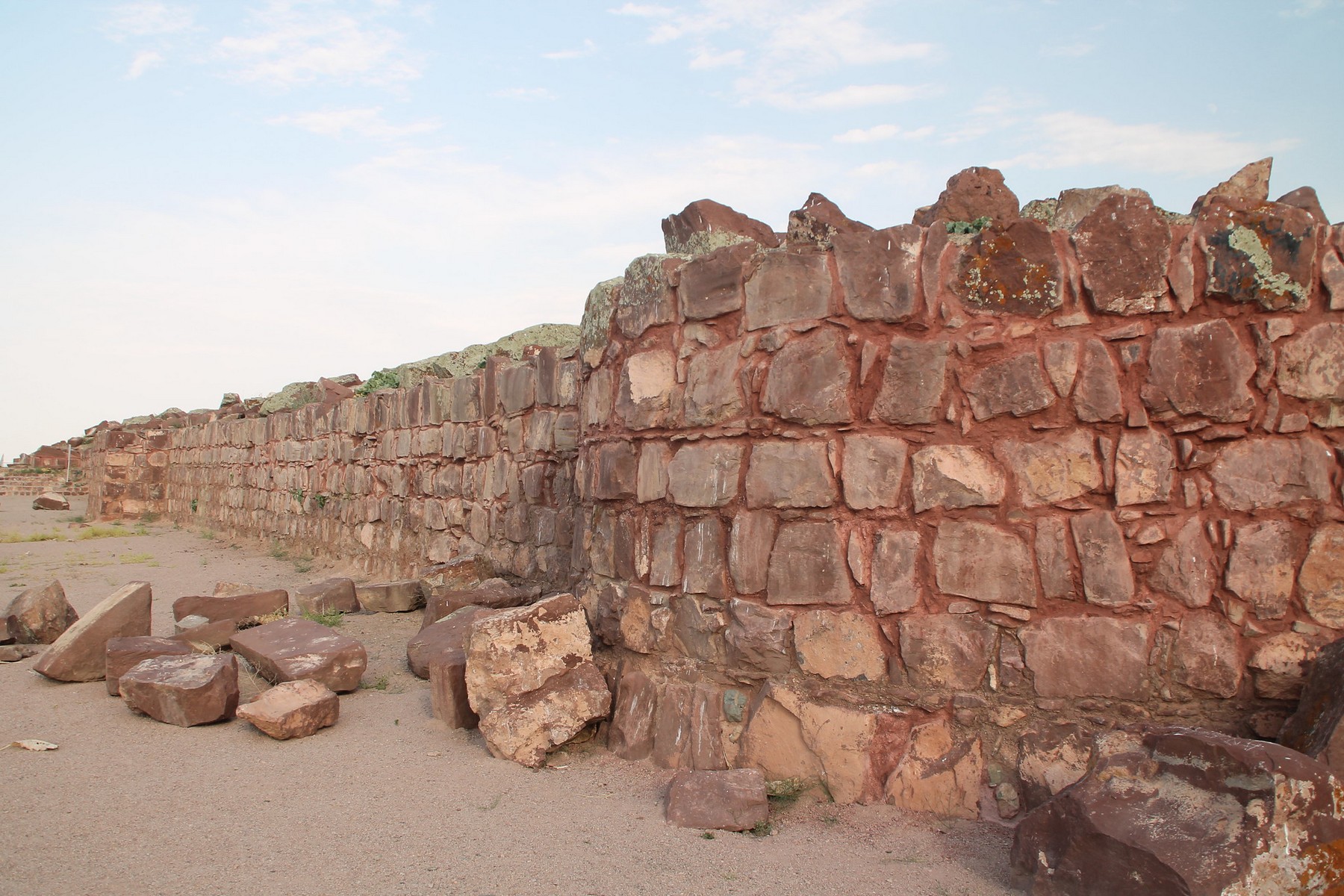
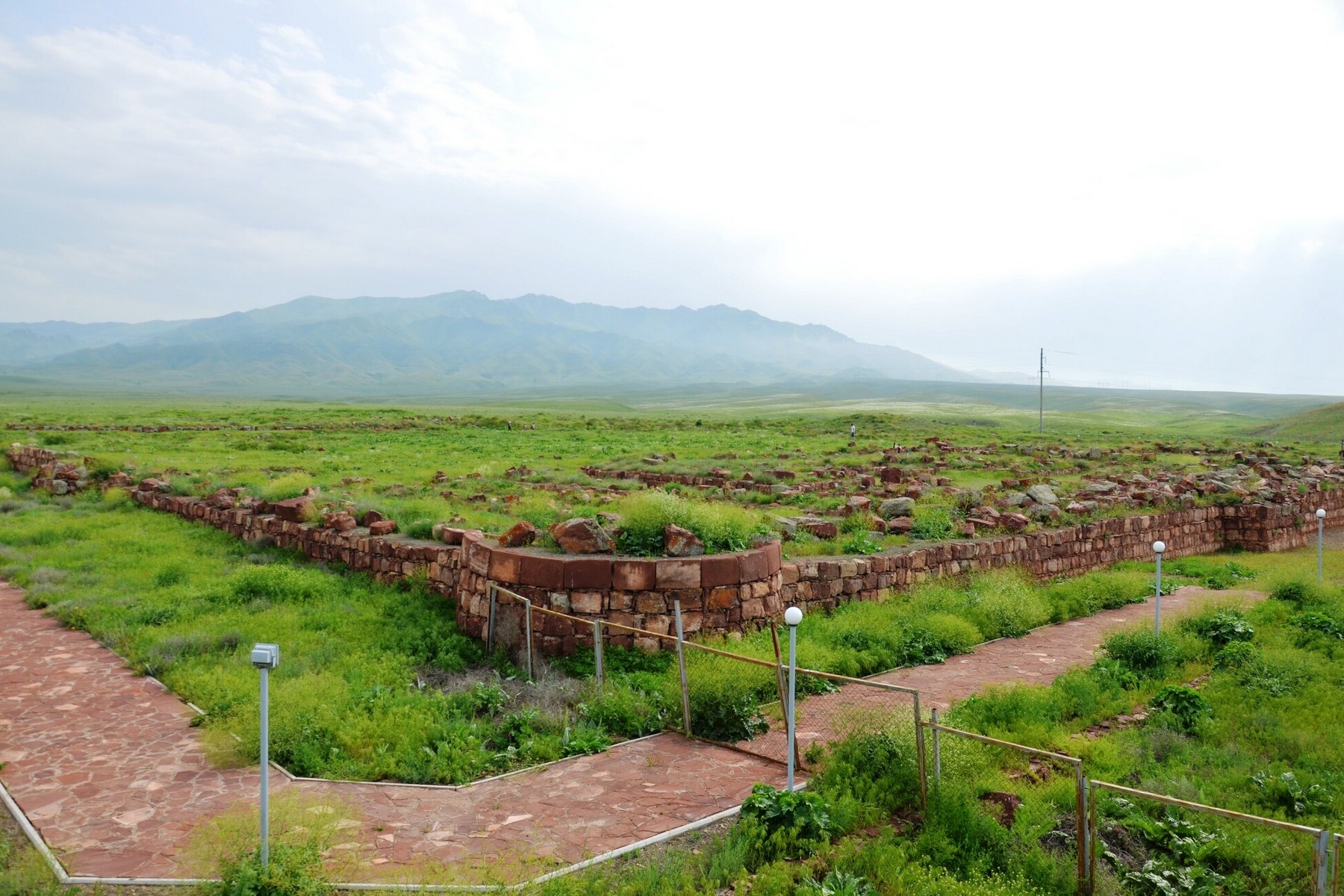
What's certain: the stonework is exceptional for its period. The builders who squared these blocks and moved them to this location had skills that most of their contemporaries in Central Asia did not. The site covers several hectares. The defensive walls, where they survive, are thick and deliberately constructed. Someone invested enormous resources here, and then either the project failed or it succeeded in ways we haven't reconstructed.
The site sits beside the ancient Silk Road — the actual Silk Road, not a metaphorical invocation of it, but the trade route that physically moved silk, spice, glass, and ideas between China and the Mediterranean for a thousand years. Akyrtas was known to medieval Arab geographers. Travelers mentioned it. And still, the function remains contested.
There's something appropriate about that. Kazakhstan has more unsolved archaeological questions than it has archaeologists to pursue them. Akyrtas is the most dramatic of these open files.
The Energy of the Stones
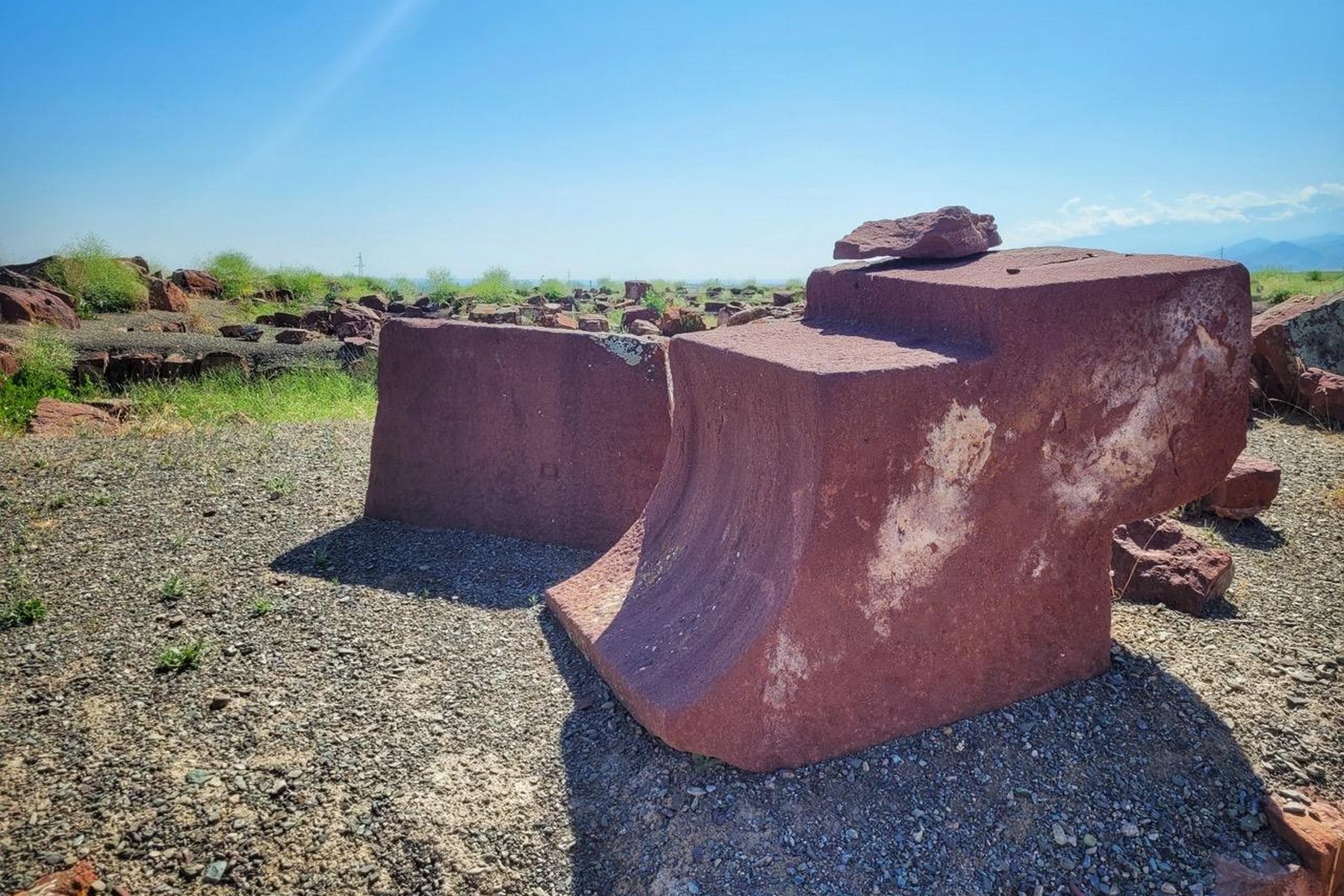
Place a hand on of the larger sandstone blocks at Akyrtas and you'll feel what fourteen centuries of southern Kazakh sun have done to red stone.
Warm. Rough-textured from exposure. Solid in the way that things cut with intent and moved with effort are solid — not accidentally substantial, but deliberately so. The local tradition of touching the stones goes back further than the tourist literature suggests; this is a site that communities in the Talas valley have maintained a relationship with for a long time, and the practice of physical contact with the ancient blocks is part of that relationship rather than a new-age addition to it.
The bio-energy claims — the idea that Akyrtas sits on a geological fault that produces measurable electromagnetic fields — are contested by archaeologists and geologists but enthusiastically promoted by a parallel tradition of Kazakh spiritual tourism. The claims have outlasted several attempts to debunk them, which tells you something about what people need from ancient sites that physical verification can't quite address.
What the stones undeniably provide is scale and tactility in a landscape where most ancient sites are either inaccessible or partially reconstructed. At Akyrtas, you can walk among the original blocks, put your hands on the original masonry, and stand in the spaces where medieval builders stood. The physical reality of the past — not a reproduction of it — is something specific and irreplaceable.
Whether the stones produce electromagnetic fields is a question for instruments. Whether standing among them in the late afternoon light, with the Talas steppe stretching out in every direction and no other structure visible for kilometers, produces some kind of effect — that's a question anyone can answer for themselves.
Digital Logistics & Access
Akyrtas is straightforward to reach from Taraz, and visiting requires no special preparation beyond the basics of any steppe site.
The complex sits 40 kilometers east of Taraz along the Talas River valley, on a road that's paved and passable by regular vehicle. The drive from the city takes about 45 minutes. Shared taxis and marshrutkas from Taraz cover the route; alternatively, any Taraz-based tour operator or hotel can arrange transport. The site has no entry fee currently, though this can change and should be confirmed locally.
Taraz itself — of the oldest cities in Central Asia, with documented history stretching back to the Silk Road period — is worth spending time in before or after Akyrtas. The Aisha Bibi Mausoleum, roughly 3 kilometers west of Taraz, is of the most refined examples of Karakhanid-era terracotta architecture anywhere, and combining it with an Akyrtas visit in the same day is logical given the proximity.
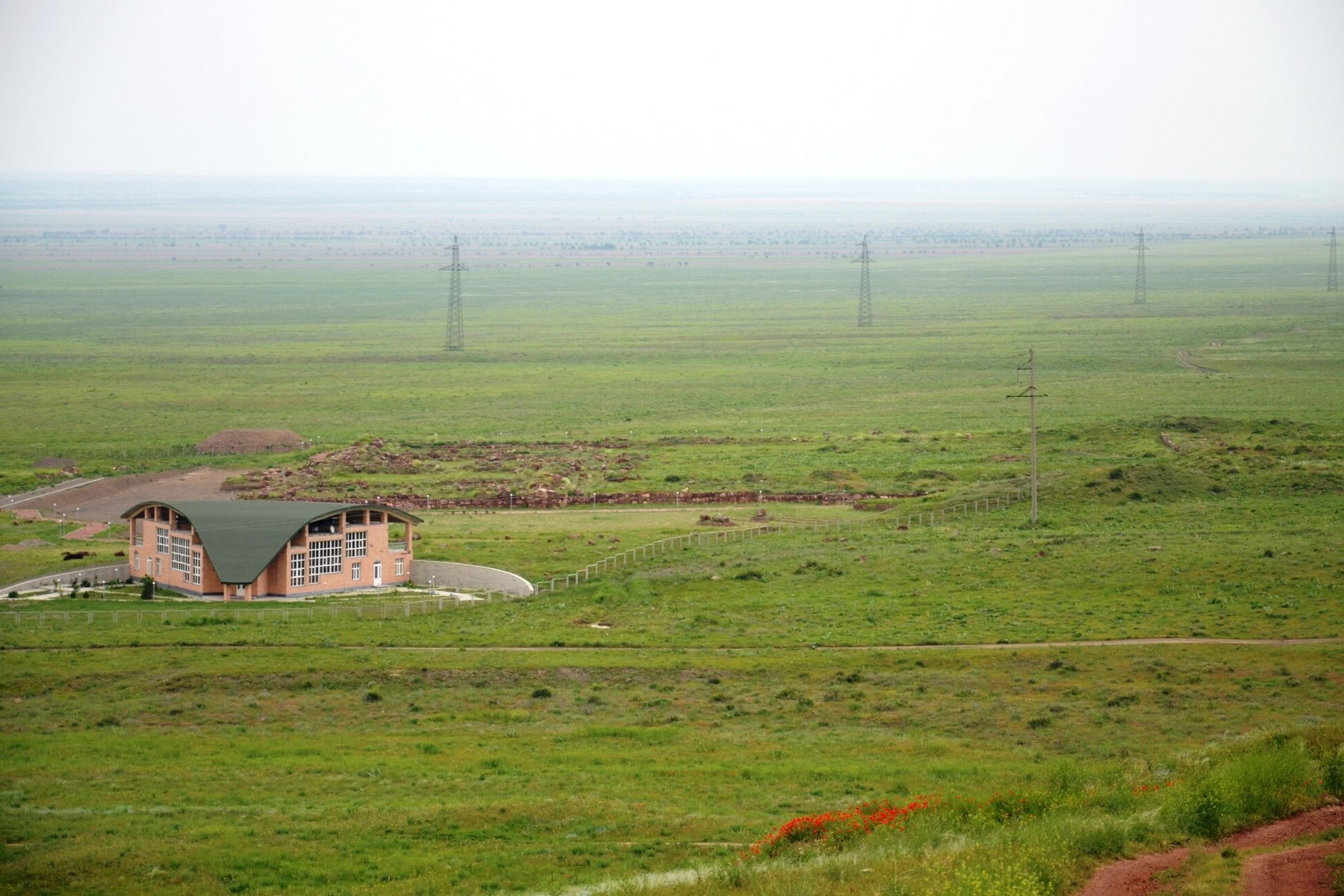
The site has basic interpretation but no extensive infrastructure. A small visitor information area exists; guided tours can be arranged through Taraz tourism offices and add considerably to the experience, since the site's significance isn't fully legible without context about the various competing historical interpretations.
Bring water and sun protection. There is no shade at Akyrtas. The site is exposed steppe, and the southern Kazakhstan sun in summer is direct and intense. Morning visits are more comfortable than afternoon, and the light quality in the first hours of the day reveals the stonework's textures more clearly.
The best approach to Akyrtas is to combine it with other Taraz-region sites into a half-day or full-day circuit rather than making it a standalone destination from distant cities.
Essential Experiences
Akyrtas rewards visitors who slow down and look at the details rather than trying to comprehend the site as a whole from the perimeter.
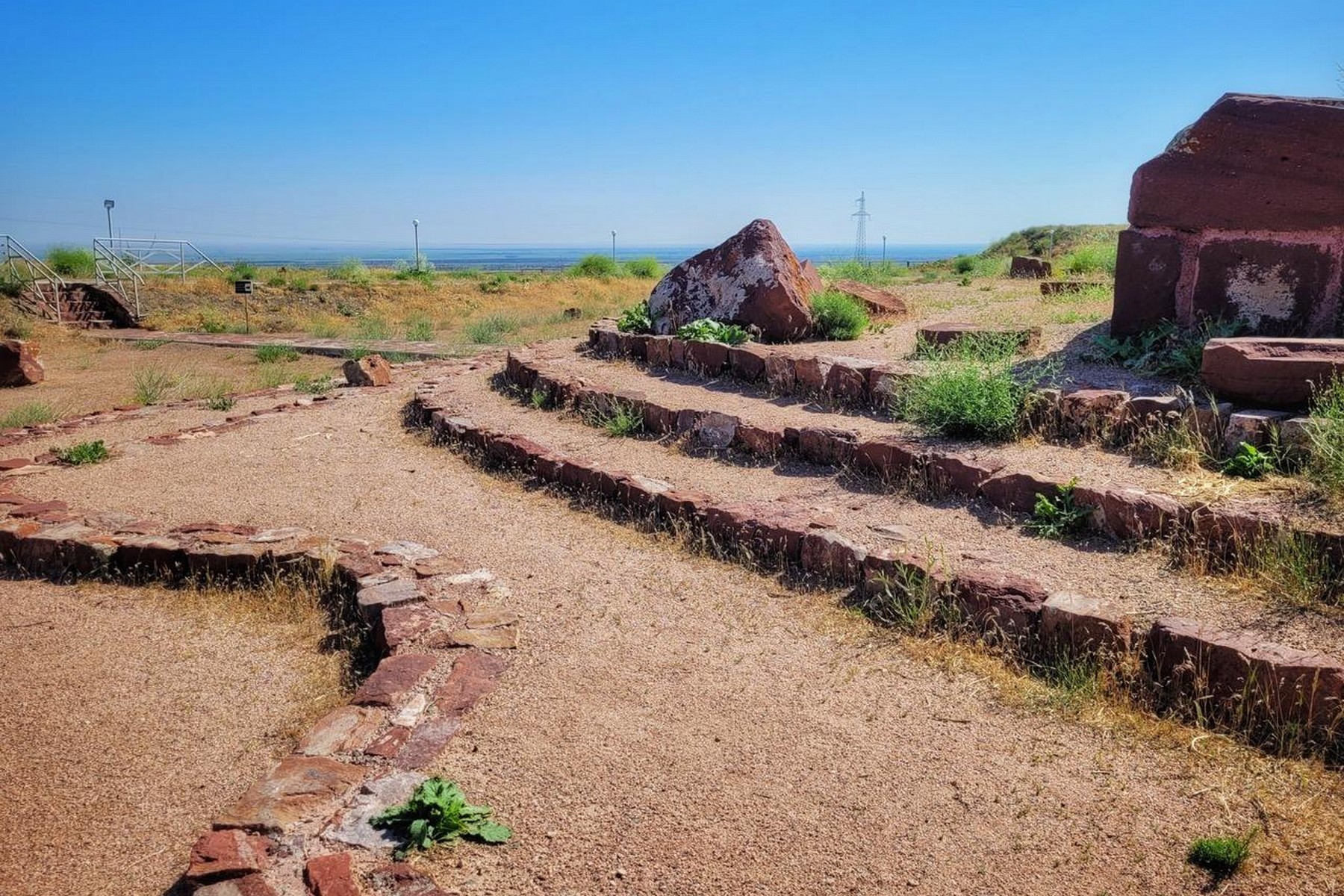
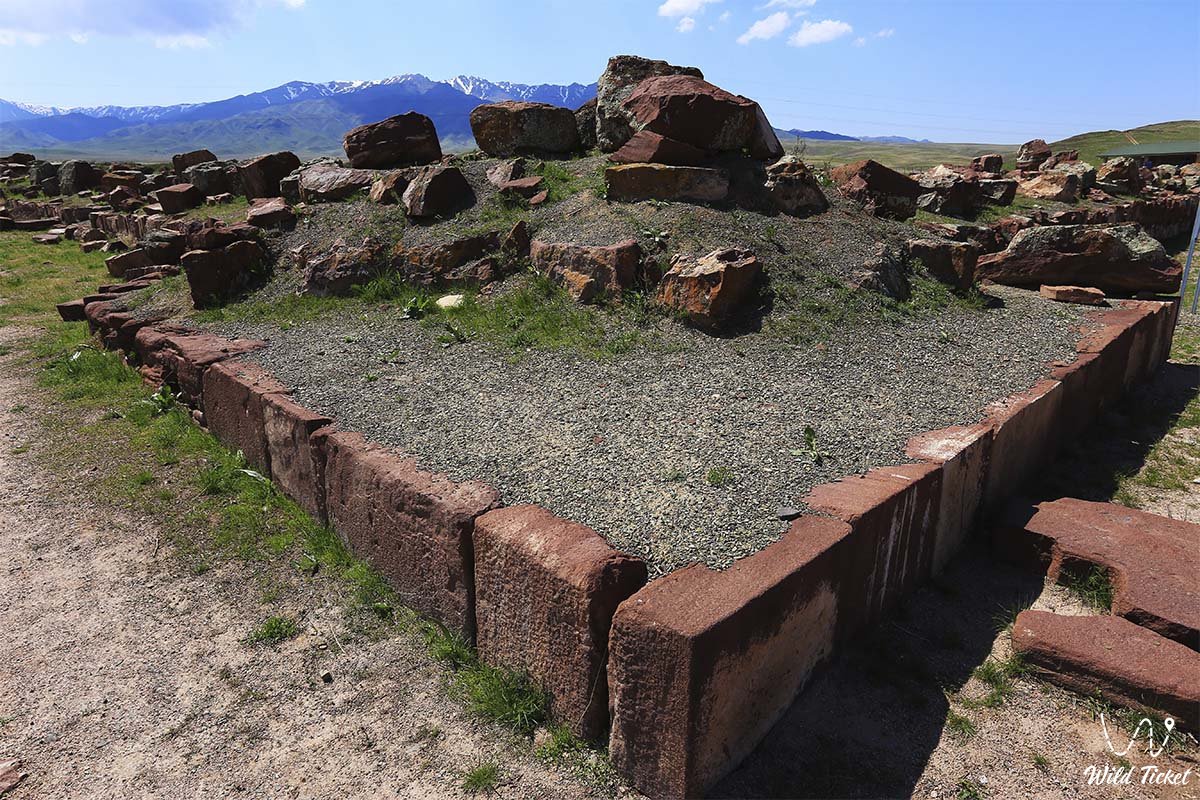
Walk the interior foundations. The layout of the complex becomes legible when you're inside it — the large central hall, the corridor systems, the rooms that open each other in arrangements that suggest residential or ceremonial function. Walking the plan gives you a sense of the intended scale that aerial photographs don't convey: this was a building project that would have been, if completed, among the largest structures in early medieval Central Asia.
Look at the stonework up close. The cutting of the red sandstone blocks is the site's most astonishing detail. The precision of the finished surfaces — flat, true, fitted — implies tools and techniques and training that don't match the supposed timeline if you approach it with assumptions about what 8th-century Central Asian builders could do. Part of the scholarly debate about Akyrtas is precisely this question of capability. Kneeling down to look at a cut joint, with your face six inches from the stone, makes the debate physical.
Find the water system remnants. The clay-pipe infrastructure that brought water to Akyrtas from more distant sources is partially traceable in the site. This is often overlooked by visitors focused on the monumental stonework, but it's arguably more impressive as an engineering achievement: whoever planned this complex understood that sustaining a large population in this location required solving a water problem first.
Stay for the late afternoon light. The red sandstone changes character at low sun angles — what's rust-brown at midday becomes deep amber at 5pm, and the shadows thrown by the block courses reveal the construction logic more clearly than any other time of day. If your schedule allows lingering moment at Akyrtas, make it this.
Essential Travel Tips
Specific things to know before you go that will improve the visit.
Get a guide, and specifically get who knows the competing theories. The debate about Akyrtas — Arab palace versus Nestorian monastery versus fire temple — isn't an academic footnote. It's the entire interpretive frame for what you're looking at, and a good guide will walk you through the evidence and counter-evidence in a way that makes the ruins actively interesting rather than passively impressive. Taraz tourist offices and tour operators can connect you with guides who specialize in the site.
The exposure is serious. Akyrtas is an open steppe site with no shade, no shelter, and no water sources. In summer, the midday temperature routinely exceeds 35°C, and the sandstone radiates additional heat. Bring more water than you think you need (minimum two liters per person), a wide-brimmed hat, and high SPF sunscreen. Early morning (before 10am) is the comfortable window for summer visits.
Don't climb or lean on the stonework. The sandstone is porous and erodes under contact. The blocks have survived fourteen centuries; tourist pressure is of the mechanisms by which they won't survive much longer. Walk around, not on. Look closely without touching the cut surfaces when you can resist.
The combined circuit with Aisha Bibi is the best single day in the Taraz region. The mausoleums — intricate terracotta work from the Karakhanid period — and Akyrtas represent two completely different aspects of the medieval Silk Road culture that passed through this valley. Seeing them in sequence, with a guide who can connect the historical threads, produces a picture of the region that neither site provides alone.
History & Significance
The 8th century CE was the pivot point of Central Asia's history, and Akyrtas was built — or begun — right in the middle of it.
The Arab armies of the Umayyad Caliphate had pushed east into Central Asia by the early 700s, converting and consolidating territory in a process that reshaped the religious and political landscape from Persia to the borders of China. The Battle of Talas in 751 CE — fought roughly in the valley where Akyrtas now stands — stopped the Arab advance and established the boundary between the Islamic and Tang Chinese spheres of influence. It also, incidentally, resulted in Chinese papermakers being taken as prisoners of war, which is how paper-making technology transferred from China to the Islamic world. History concentrates in this valley.
The construction of Akyrtas probably occurred somewhere in this period — the archaeological and architectural evidence points to the 8th or early 9th century, though the exact date and patron remain debated. What's clear is that the builders had access to exceptional resources: the red sandstone was quarried and transported to the site, shaped with tools that produced flat surfaces to tolerances better than most contemporary construction in the region, and assembled in a complex that required significant organizational capacity. This was not a minor project.
The Karakhanid dynasty, which controlled the Talas valley from the 10th century, inherited a landscape already rich with the infrastructure of earlier powers. The Silk Road that passed through here was not a single route but a network of tracks that responded to political conditions, seasonal weather, and the availability of water and forage. Akyrtas sat at the edge of this network, close enough to the route to have been a destination or waypoint, far enough that its location suggests purpose rather than convenience.
The absence of written records directly describing Akyrtas is itself part of the historical record. This was a literate era: Arab geographers wrote about the cities and roads of Central Asia in considerable detail. The mentions of Akyrtas that exist are oblique. Either the building was abandoned before it became significant enough to describe, or it served a function that contemporaries found unremarkable, or the records that would explain it didn't survive the destruction that consumed so much of Central Asian material history in the Mongol period.
What remains is the stone. Fourteen centuries old, precisely cut, and still not fully explained.
The Experience
You will arrive with a theory. You will leave with several.
This is the particular pleasure of Akyrtas — not the closure of understanding, but the specific discomfort of an archaeological site that refuses to provide it. Most ruins eventually submit to interpretation. The function becomes clear, the builders are identified, the period is confirmed by pottery sequences or inscriptions. Akyrtas sits on the steppe forty kilometers east of Taraz and declines to cooperate with this process.
The red sandstone blocks are the first physical reality: enormous, precisely cut, arranged in a layout that suggests planning and intention and a builder who understood architecture. Farrukh — a Taraz-based guide who has been bringing visitors to Akyrtas for eleven years — watched me standing at the edge of the central area, trying to reconstruct the building logic from what remains, and said: "Everyone makes the same face. The face of someone who has a question with no answer."
He is right. The face is involuntary.
What the site provides, in lieu of explanation, is texture. The stone under your hand is warm and rough and real. The shadows cast by the block courses in late afternoon light are long and specific. The wind across the open steppe carries the sound of grass moving, and nothing else. In a country where so much of the historical record was destroyed — by the Mongol invasions, by Soviet erasure, by simple time — Akyrtas represents something that persisted: physical evidence of medieval ambition and medieval skill, left in a form that nobody could demolish or dispute.
Whether it was a palace or a monastery or something the existing categories don't quite cover, it was built by people who knew what they were doing. Standing in the middle of what they left behind, watching the afternoon light move across the sandstone, you feel the appropriate response: not answers, but attention.
That's what the site asks for. It's a fair exchange.
Key Facts
- Regional Context
- Located in the heart of the Turkistan region, Akyrtas serves as a massive archaeological anchor for southern Kazakhstan history.
- Modern Status
- Recently recognized as a Priority Global Destination, the site features enhanced visitor infrastructure and premium accessibility.
- Ancestral Depth
- Every stone and structure here tells the story of the nation journey from an ancient nomadic crossroads to a modern Republic.
- Nomadic Spirit
- Reflecting the Spirit of the Great Steppe, the site embodies the national commitment to hospitality and cultural resilience.
- Digital Logistics
- Recently, the area has been fully integrated into the QazDigital tourism grid, providing seamless contactless entry.
- Spiritual Sanctuary
- The site remains a place of profound national meditation, where the silence of the past meets the vibrant pulse of the future.
Photo Gallery
Embedded Video
Akyrtas Archaeological Site
Loading map...Loading map...
FAQ
Have a question?
Ask and get answers in seconds!
Discussion 0
No comments yet. Start the conversation!
Leave a Reply