Traditions, Customs & Social Life
Kazakh social customs revolve around hospitality, respect for elders, and community bonds — values essential for survival on the steppe.
Kazakh social customs revolve around hospitality, respect for elders, and community bonds — values essential for survival on the steppe.
Konakasy (Hospitality)
The sacred tradition that makes guests messengers from God.

Imagine riding across the vast Kazakh steppe, days from any town, when you spot a yurt on the horizon. Exhausted and hungry, you approach — and what happens next might surprise you. The family inside, complete strangers, will treat you like royalty. They will slaughter their best sheep for you, offer you the most comfortable spot by the fire, and refuse any payment. This isn't just kindness — this is Konakasy, the sacred law of Kazakh hospitality that has kept travelers alive for centuries.
The Kazakhs believe every guest arrives with blessings from above. When you step into a yurt, the head of household rises to greet you, offers fragrant tea poured from a copper kettle, then brings out plates of fresh baursak — golden fried dough balls — alongside dried apricots and other treats. Even if the family has barely enough for themselves, you will eat first and eat best. The host will personally refill your bowl until you cannot eat another bite, and this is considered a profound compliment.
What strikes visitors most is that this hospitality extends to complete strangers. There is an old saying: "The guest is a messenger from God." The Kazakhs take this literally. Whether you arrive at midnight or midday, whether you are a foreigner or a local, you will be welcomed with open arms. As you leave, the host may press gifts upon you — perhaps a手工艺品 or food for your journey. To refuse would be rude; to accept graciously is the greatest honor.
In modern Kazakhstan, you will still experience this warmth. Drop into any village home unannounced, and you will likely be invited in for tea that stretches into a multi-course feast. The spirit of Konakasy remains very much alive.
Besikke Salu — Welcoming Newborns
The ceremony that celebrates new life and places the baby in the cradle for the first time.

There is something magical about a Kazakh baby cradling in its besik — a beautifully carved wooden cradle that has cradled generations of children. When a newborn arrives, the family waits about forty days before holding the besikke salu, a tender ceremony that marks the baby's transition from constant motherly embrace to the wider family's care.
Picture this: relatives gather in a home filled with excitement. The grandmother carefully prepares the besik, lining it with the softest wool and draping it with embroidered textiles passed down through generations. Relatives arrive bearing gifts — tiny socks, silver charms, hand-stitched blankets. The most respected elder present offers prayers for the child's future, invoking blessings from ancestors.
Then comes the moment that makes every mother's heart swell: placing the baby into the besik for the first time. The baby, wrapped in soft cotton, settles into the gently rocking cradle that will become their Second home for months to come. The sound of gentle rocking fills the room — Kazaks believe this motion calms the child and strengthens their bones.
The ceremony continues with celebration — music, dancing, and a feast where guests toast the child's health and happiness. Every detail carries meaning: the direction the cradle faces, the items placed within it, who holds the baby first. This isn't just tradition; it is a community welcoming a new soul into the tapestry of Kazakh life.
Tüsau Keser — First Steps Ceremony
Celebrating a child's first steps by cutting the symbolic ties that bind their legs.

Watch a Kazakh toddler take their first steps, and you witness something extraordinary. Two threads — black, white — are loosely tied around the child's ankles, representing the invisible cords connecting them to their mother, to infancy, to complete dependence. These threads must be cut for the child to walk freely into the world.
The ceremony itself feels like a small miracle. Family gathers as a respected elder, ideally someone prosperous with many healthy children, takes up special scissors. As the scissors snip through those symbolic threads, everyone present offers prayers: "May you walk confidently through life, may you meet good people on your path, may you return safely from all journeys." These aren't just words — they are blessings that Kazakh families believe carry real power.
What happens next delights children and adults alike. The child, now untethered, wobbles between two rows of guests who line up to offer small coins, sweets, and encouragement. Sometimes a race is organized with another child of similar age — the winner being playfully declared destined for great things. A feast follows, featuring the child's first taste of solid foods like kurt (dried yogurt balls) and sweets.
For travelers witnessing this tradition, it is a beautiful reminder that childhood milestones were always meant to be celebrated collectively. The community gathers not just to witness but to invest in the child's future through their blessings and good wishes.
Betashar — Unveiling the Bride
The wedding tradition of lifting the bride's veil and welcoming her to her new family.
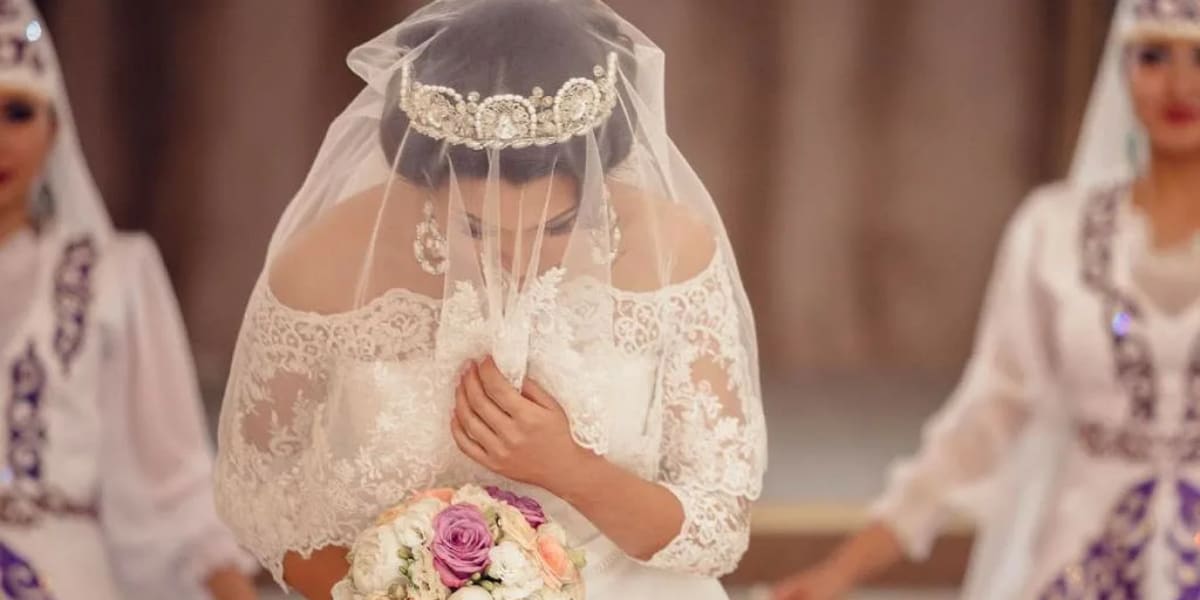
A Kazakh wedding is a multi-day celebration, but moment stands above all others: the betashar, when the bride's veil is lifted and she is revealed to her new family for the first time. This ceremony carries centuries of tradition and marks the bride's transformation from daughter to wife.
Picture a circle of women gathering in the groom's family home. The bride stands among them, draped in an elaborate jelek — an intricate silk veil embroidered with silver threads and coral beads that has been passed through generations. Throughout the wedding, this veil has protected her from the evil eye, hidden her beauty until the proper moment. The groom's mother or another respected female relative approaches, and with gentle hands, lifts the veil away.
What follows is deeply emotional. The women begin singing betashar zhyr — traditional songs passed down through generations that tell the bride how to be a good wife, how to respect her in-laws, how to nurture her future children. The lyrics speak of patience, hard work, and loyalty. Some songs recall great women from Kazakh history; others bring laughter with lighthearted advice. The bride's new family welcomes her with gifts — jewelry symbolizing acceptance, clothing for her new life, and embraces that say "you are of us now."
For the bride, this moment is both terrifying and beautiful. She leaves her birth family to join strangers who will become her community. The betashar acknowledges this transition, honors it, and celebrates it. Modern weddings may simplify certain elements, but this unveiling ceremony remains the heart of every Kazakh wedding.
Respect for Elders (Aksakal)
The foundation of Kazakh social order honoring age, wisdom, and experience.
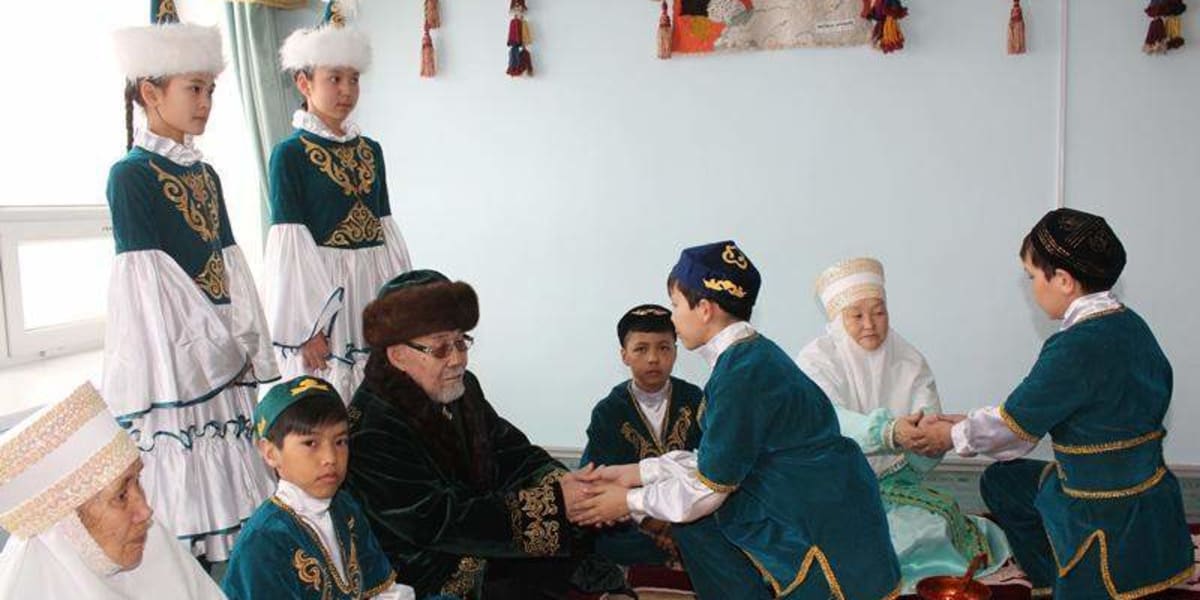
In Kazakh culture, age commands a special kind of reverence that visitors from Western countries often find striking. Walk into any gathering, and you will notice young people immediately standing when elders enter the room. Notice too how they speak — using special honorific forms that acknowledge the elder's status and experience. The eldest person present always receives the most comfortable seat, the first cup of tea, the choicest portion of meat.
This respect runs deeper than manners. The aksakal — literally "white beard," referring to elderly men — held genuine political power. These elder councils resolved disputes between families, decided when to move to new pastures, and guided the community through crises. Their wisdom was considered essential for survival on the harsh steppe. While modern councils have largely faded, the underlying respect remains woven into daily life.
What touches travelers most is how this respect expresses itself in small, consistent ways. At dinner, the youngest person serves tea — but never for themselves, always for others first. When an elder enters a room, people make space. When important decisions are made — whether about marriage, business, or travel — younger family members seek the elder's blessing, believing it carries spiritual weight.
The blessing itself, called bata, is taken seriously. Before a young person embarks on a journey, gets married, or starts a new job, they may bow to an elder and request prayers. The elder places both hands on the younger person's head and speaks blessings that feel ancient and powerful. Even visitors who do not share this culture cannot help but feel moved by such genuine, multigenerational connection.
Zheti Ata — Seven Generations
Honoring and knowing seven generations of paternal ancestors — a cornerstone of Kazakh identity.

Ask a Kazakh to name their seven ancestors, and watch their face light up with recognition and pride. Knowing your zheti ata — your seven generations of paternal ancestors — is not merely interesting family history. It is a fundamental part of Kazakh identity that influences who you can marry, how you are perceived, and where you belong in the world.
The tradition stretches back centuries. Every Kazakh family maintains knowledge of their lineage, memorizing names that go back hundreds of years. This wasn't just for pride — it served practical purposes too. A man and woman planning marriage would first check that they do not share any ancestors within seven generations, as marriage within the lineage was strictly forbidden. Families would spend generations building detailed knowledge of their connections.
Today, this tradition continues even as genealogical records have been lost to history. Grandfathers teach grandchildren the names of their ancestors. Families visit the burial sites of notable predecessors, honoring those who came before. When a child is born, they might receive the name of a beloved ancestor, keeping that person's memory alive. "Your great-great-great-grandfather was a brave warrior" is not just family lore — it is identity.
For travelers, understanding zheti ata opens a window into Kazakh worldview. This is a people deeply connected to their past, who see themselves as links in an unbroken chain stretching backward into history and forward into the future. When a Kazakh says they know who they are, they quite literally mean it.
Shashu — Sweet Rain Celebration
The joyful tradition of showering guests with sweets and treats for good fortune.
At Kazakh celebrations, prepare yourself for something wonderfully chaotic and joyful: shashu, the tradition of being showered with sweets. Someone will gather candies, small coins, and treats, then suddenly throw them — at you. Your job is to catch what you can in your hands, your scarf, your hat, anywhere you can. This is not just fun — it is an ancient blessing.
The tradition appears at almost every milestone. At weddings, the couple stands together while family and friends pelt them with sweets that scatter everywhere, symbolizing a life overflowing with sweetness and abundance. At birthdays, especially children's, the guest of honor becomes a target for flying treats. At baby celebrations and coming-of-age ceremonies, anyone receiving good news or achieving something wonderful becomes a shashu recipient.
The mathematics of shashu are generous: more throwers mean more treats for everyone. Children especially love this, scrambling on the floor to collect their prizes while adults cheer. The treats are then shared, especially with children who could not catch as much — teaching that celebration should be communal. Nothing goes to waste in this joyful ritual.
What surprises visitors most is how this seemingly simple tradition carries deep meaning. The shower of sweets represents the showering of good fortune. Catching them means accepting the blessings. Sharing them reinforces community bonds. When you are on the receiving end of shashu, you are not just receiving candy — you are being welcomed into the celebration, blessed with prosperity, accepted as family.
Nauryz — Spring New Year
The ancient celebration of spring equinox marking renewal, nature awakening, and new beginnings.

When winter's grip finally loosens and the first day of spring arrives, Kazakhstan explodes with celebration. Nauryz, the Persian New Year celebrated around March 21st, is perhaps the most beloved holiday in the country — a festival of renewal so ancient that no knows exactly how far back it goes, yet so vital that even Soviet-era restrictions could not kill it.
The celebrations begin weeks before the actual day. Families thoroughly clean their homes, throwing out old possessions and making space for new beginnings. Everyone buys or sews new clothes — you must enter the new year looking your best. Old grudges are forgiven, debts are paid, and people make amends with neighbors. The spiritual reset matches the seasonal.
On Nauryz itself, the country transforms. Streets fill with performers, musicians play traditional instruments, and everywhere you hear the greeting "Nauryz Koz!" — Happy New Year. Families visit elders first, receiving blessings that will carry them through the coming year. Then the feasting begins: ceremonial dishes like sumalak (a sweet pudding made from sprouted wheat) and nauryz kome — seven traditional foods representing abundance.
What makes Nauryz special for travelers is its accessibility. You need no invitation, no special status — celebration happens in the streets, in parks, in community centers. Join a circle of dancers, accept a piece of sweet from a stranger, watch traditional wrestling matches in the park. This is Kazakhstan at its most openhearted, welcoming the world to join its oldest celebration.
National Games — Kokpar & Audaryspak
Traditional horse games and athletic competitions that test courage, skill, and heritage.

If you want to understand the Kazakh soul, watch them play. The traditional games of Kazakhstan grew from the requirements of nomadic life — riding horses, throwing weapons, wrestling competitors — and they remain fierce, proud expressions of cultural identity. These are not gentle pastimes; they are athletic challenges that have produced generations of tough, skilled competitors.
Kokpar is the crown jewel. Imagine two teams of horsemen, five to fifteen riders per side, fighting over a headless goat carcass. The goal: carry the goat across the opponent's goal line. There are almost no rules. Riders wrestle each other, horses crash together, and someone will definitely end up on the ground. The skill required is extraordinary — controlling a horse at full gallop while grabbing a slippery carcass and fighting off opponents. Kazakhstan has produced world champions in this sport.
Horse wrestling, called audaryspak, looks almost impossible: two riders grip each other's belts and attempt to throw each other from their horses. Winner stays in the saddle; loser hits the ground. It requires not just strength but perfect balance and the ability to read your opponent's weight shifts. Trainers begin teaching children as young as five.
For travelers, catching a traditional sports event is unforgettable. Nauryz festivals always feature competitions, and major cities host regular tournaments. The atmosphere is electric — spectators cheer like their lives depend on the outcome, and victory brings enormous pride. When you watch a kokpar match, you witness the nomadic spirit of Kazakhstan alive and unhorsed.
Greeting Etiquette — Respect in Motion
The formal customs of greeting that reflect Kazakh values of respect and hospitality.

Your first Kazakh greeting might leave you feeling honored and slightly confused. The handshake is not just a quick grip — it often involves both hands, with your right hand grasping your new acquaintance's while your left hand supports your right wrist, a gesture that says "I come with all my strength in peace." Some Kazakhs add a slight bow, or touch their heart after the handshake. These are not required formalities; they are genuine expressions of respect.
The complexity lies in knowing who greets whom. Younger people greet elders first and wait to be acknowledged. A more senior person extends their hand; the junior should accept it respectfully. Women and men often do not shake hands — a nod and smile suffice, as physical contact between unrelated genders traditionally requires more intimacy. When meeting someone's parents for the first time, the greeting becomes even more elaborate.
Perhaps the most beautiful greeting involves the word "salaam" or saying "meniñ qolym jürgenim" while placing your right hand over your heart. This shows your intentions are peaceful, your heart is open. It feels deeply meaningful even when you do not speak the language. Atdoors, hosts say "kosh keldiñiz" — welcome — and rise to receive guests regardless of what they were doing.
For travelers, these greetings open doors — literally and figuratively. When you greet a Kazakh with genuine respect, using even a few words of Kazakh greeting, you will find doors opening to homes, meals, and friendships that last a lifetime. The Kazakhs are watching how you greet, and they will respond in kind. Show them honor, and they will show you their extraordinary hospitality.
Discussion 0
No comments yet. Start the conversation!
Leave a Reply