Warrior Traditions

Traditional Games & Sports

From the thrilling Kokpar to the playful Kyz Kuu — experience the ancient sports that forged the Kazakh warrior spirit and continue to captivate audiences today.

Kokpar — The Ultimate Test of Horsemanship
01
KOKPAR

Kokpar — The Ultimate Test of Horsemanship

The most thrilling Kazakh sport where hundreds of riders compete for a goat carcass.

Kokpar (also known as Buzkashi in other Central Asian countries) stands as the most intense and thrilling of all Kazakh traditional sports. This ancient game, dating back to the time of Genghis Khan, tests horsemanship, strength, and tactical thinking like no other.

The Game — Hundreds of riders (dzhigits) compete to carry a goat carcass (now typically a weighted dummy) into the opponent's goal. There are no teams — every rider for themselves — creating a chaotic spectacle of colliding horses, flying dust, and incredible athleticism.

Skills Required — Success in Kokpar demands exceptional horsemanship to control the mount amid chaos, immense upper body strength to wrestle the 30-40kg carcass from opponents, tactical awareness to anticipate moves and find openings, and courage to ride into the melee where hundreds of horses collide.

Modern Kokpar — While traditional Kokpar used a real goat carcass, modern versions often use a weighted dummy for animal welfare reasons. The sport remains central to celebrations like Nauryz and independence day, with tournaments attracting thousands of spectators.

Audaryspak — Wrestling on Horseback
02
AUDARYSPAK

Audaryspak — Wrestling on Horseback

Two wrestlers on horseback attempt to pull each other from their mounts.

Audaryspak combines two ancient Kazakh skills — wrestling and horsemanship — into a spectacular test of strength and balance. Two riders face each other, each attempting to pull their opponent from their horse.

Rules and Technique — Wrestlers grip each other's shoulders, belts, or special jackets while their horses are held steady. On the signal, they attempt to use leverage, strength, and technique to unseat their opponent. Victory comes when rider touches the ground with any body part.

Training — Successful Audaryspak competitors train both their wrestling skills and their ability to maintain balance on a moving, shifting platform. The horse's behavior adds an unpredictable element — experienced horses know to steady themselves when their rider is being pulled.

Kyz Kuu — The Romantic Chase
03
KYZKUU

Kyz Kuu — The Romantic Chase

A playful courtship game where a young man chases a young woman on horseback.

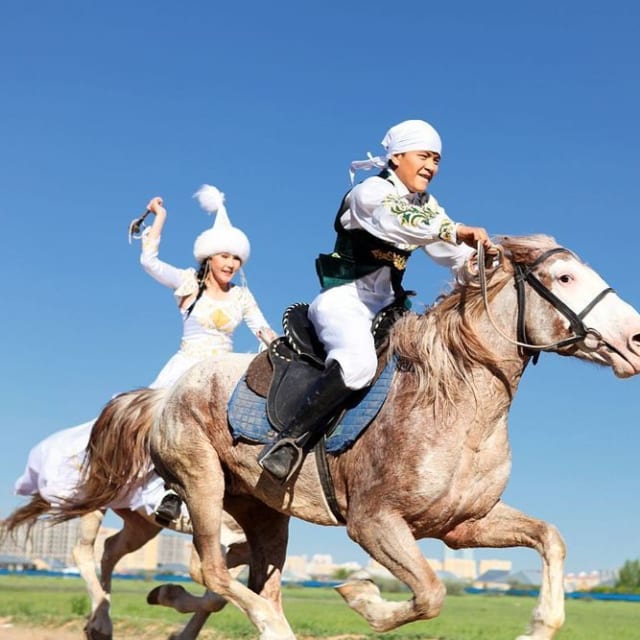
Kyz Kuu (Girl Chasing) is perhaps the most beloved and photogenic of Kazakh traditional games. This playful sport combines romance, skill, and the beautiful backdrop of the open steppe.

How It Works — A young woman on horseback waits at the starting line, whip in hand. A young man on a faster horse begins some distance behind. On the signal, both gallop forward. The man must catch up and attempt to steal a kiss. If he succeeds, the roles reverse — she chases him back to the starting line, whipping him all the way.

Cultural Significance — Beyond entertainment, Kyz Kuu developed riding skills and provided a socially acceptable way for young people to interact. The game features prominently at weddings and festivals, often drawing laughter and cheers from crowds.

Kazakh Kures — Traditional Wrestling
04
KAZAKHKURES

Kazakh Kures — Traditional Wrestling

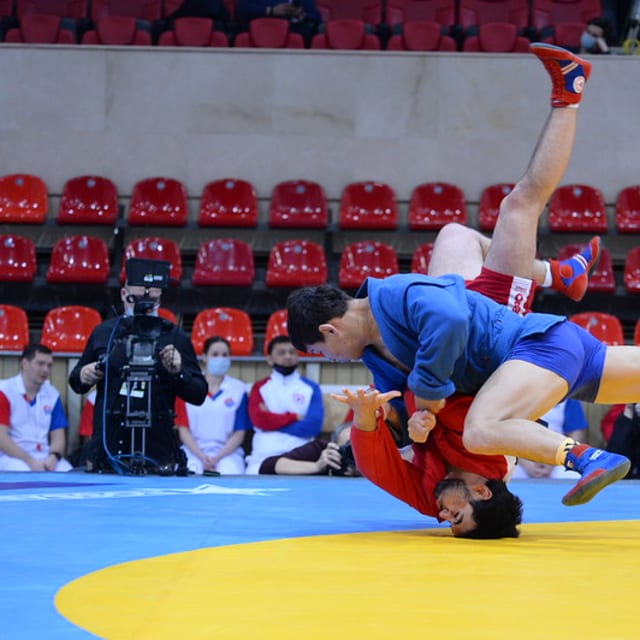
Ancient wrestling style where opponents wear special jackets and attempt to throw each other.

Kures (Kazakh Wrestling) is of the oldest sports in Central Asia, with origins dating back thousands of years. This traditional wrestling style is similar to judo and freestyle wrestling, but with unique Kazakh techniques and traditions.

The Rules — Competitors wear special thick jackets (zhaq) made of leather or strong fabric, which provide grip for throws. Unlike modern wrestling, opponents primarily attempt to throw each other their backs. Victory is achieved when a wrestler lands their opponent on their back with force.

Techniques — Kures involves various throws, trips, and holds including Salamata (lifting and throwing), Otar (tripping from behind), Bürik (swinging the opponent), and Küyren (pushing and shoving).

Traditional Competitions — Kures tournaments are held during Nauryz celebrations, wedding feasts, and national festivals. Champions earn great respect in their communities.

Togyzkumalak — The Game of 41 Stones
05
TOGYZKUMALAK

Togyzkumalak — The Game of 41 Stones

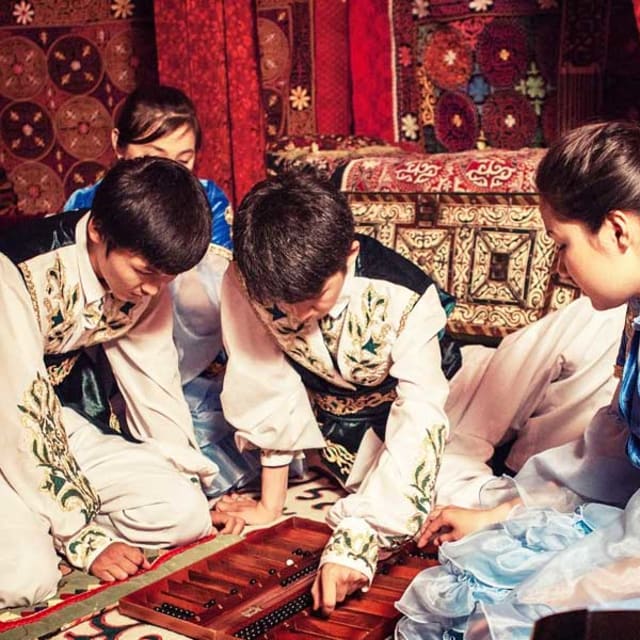
A traditional board game testing strategy and mental calculation.

Togyzkumalak (Forty-One Stones) is the most popular traditional board game in Kazakhstan, played by two people. Like chess, it requires strategic thinking, but with unique mechanics that have fascinated Kaz.

The Board — The gameakhs for centuries is played on a board with two rows of 9 pits (kazan), plus two larger pits (kuy) at the ends. Each player controls their row and the kuy on their side. The game starts with 41 stones divided equally between players.

Gameplay — Players take turns moving their stones counterclockwise, sowing them into pits by. The goal is to collect stones in your kuy. When a player's last stone lands in an empty pit on their side, they capture all stones in the opposite pit.

Cultural Significance — Togyzkumalak represents Kazakh values of wisdom, patience, and foresight. The game is often played during long winter nights and family gatherings.

Ashyk Aty — Bone Game of Champions
06
ASHYKATU

Ashyk Aty — Bone Game of Champions

A traditional game where players throw sheep ankle bones to hit targets.

Ashyk Aty (also spelled Asyk Atu) is a traditional Kazakh game played with sheep ankle bones (ashyk). This game has been played for centuries and remains popular among both children and adults.

The Equipment — The game uses ashyk — sheep ankle bones that have been cleaned, polished, and sometimes decorated. Each bone has four sides: shee (heel), tömene (bottom), qyryq (narrow side), and qana (wide side).

How to Play — Players take turns throwing their ashyk at a target pile. The goal is to knock as many bones as possible out of the circle. Players score points based on which side of their ashyk lands facing up.

Variations — There are many regional variations including Ashyk Kuu (hitting the target directly), Ushqar (knocking bones out of a larger circle), and Kyrgyz Ashygy (team competition).

Cultural Importance — Ashyk making and playing is a recognized part of Kazakh cultural heritage. Master bone-carvers create beautiful ashyk sets, and annual tournaments are held throughout Kazakhstan.

Er Enish — Fight for the Sash
07
ERENISH

Er Enish — Fight for the Sash

A test of strength where two contestants compete for a belt.

Er Enish (Fight for the Sash) is a traditional test of strength that has been practiced in Kazakhstan for generations. The game involves two contestants competing to pull a sash or rope from their opponent's grip.

How It Works — Two contestants sit or kneel facing each other, each holding end of a special sash (beldir). On the signal, they pull in opposite directions, attempting to force the other to release their grip or move from their position.

Strength and Technique — Success requires strong grip and arm muscles, core strength for stability, lower body positioning for leverage, and mental endurance to outlast the opponent.

Traditional Context — Er Enish was often held during festivals and celebrations as a way to determine the strongest young men in a community. Winners earned respect and sometimes favorable consideration for marriage.

Altybakan — The Six-Goal Game
08
ALTYBAKAN

Altybakan — The Six-Goal Game

A traditional team game similar to field hockey played with sticks and a ball.

Altybakan (Six Goals) is a traditional Kazakh team sport that combines elements of field hockey and polo. The name translates to "six goals," referring to the scoring system in this fast-paced game.

The Game — Teams of players on horseback (traditionally) or on foot compete to score goals by hitting a ball into the opponent's goal using curved sticks (kalpak). The field typically has six goals — three on each side.

Equipment — Players use wooden sticks with curved heads, similar to field hockey sticks but adapted for horseback play. The ball was traditionally made of wood or leather.

Historical Context — Altybakan developed among Kazakh nomads as a way to maintain riding skills during the winter months. It was particularly popular in the steppes of Central Kazakhstan.

Modern Version — Today, Altybakan is played primarily on foot with standardized rules. Tournaments are held at regional and national levels.

Bese Tas — Five Stones
09
BESETAS

Bese Tas — Five Stones

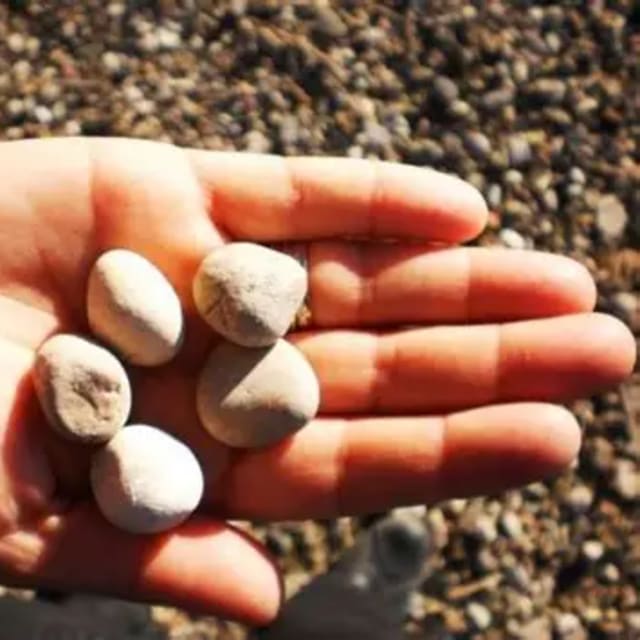
A dexterity game played with five small stones or pebbles.

Bese Tas (Five Stones) is a traditional dexterity game played primarily by women and children in Kazakhstan. This game develops hand-eye coordination and has been played for generations.

The Stones — Players use five small stones, traditionally sheep or goat bones or specially selected pebbles. The stones should be roughly uniform in size, easy to grip and toss.

Gameplay — The player tosses stone into the air while grabbing others from the ground, then catches the falling stone. The game has multiple levels of increasing difficulty:

Tosbash — Pick up stone while catching the thrown

Eki tosbash — Pick up two stones at

Üsh tosbash — Pick up three stones

Tört tosbash — Pick up four stones

Cultural Significance — Bese Tas was traditionally played by girls and young women during long winter evenings or while watching livestock. It developed dexterity and was considered preparation for needlework and other crafts.

Bürküt Salu — Eagle Raising
10
BURKUTSALU

Bürküt Salu — Eagle Raising

The art of training and raising golden eagles for hunting.

Bürküt Salu (Eagle Raising) is an ancient tradition in Kazakhstan, particularly in the Altai and eastern regions. Kazakh eagle hunters (berkutchi) have maintained this tradition for centuries, training golden eagles to hunt alongside them.

Selecting an Eagle — Eagle hunters traditionally select young eagles from nests in the mountains. Female eagles are preferred as they are larger, stronger, and more aggressive than males.

Training Process — Training an eagle takes 3-4 years:

First Year — The eagle bonds with its human keeper, becoming tame

Second Year — The eagle learns to fly to the handler's glove on command

Third Year — The eagle practices hunting with lure and dummy prey

Fourth Year — The eagle hunts wild prey under supervision

The Hunt — Mounted on horses, berkutchi release their eagles to spot and pursue prey including foxes, hares, and marmots.

Cultural Significance — Eagle hunting embodies the Kazakh values of patience, partnership with nature, and respect for animals. The tradition continues today with annual festivals.

Arqan Tartys — Tug-of-War
11
ARQANTARTYS

Arqan Tartys — Tug-of-War

A test of team strength where two groups pull on a rope.

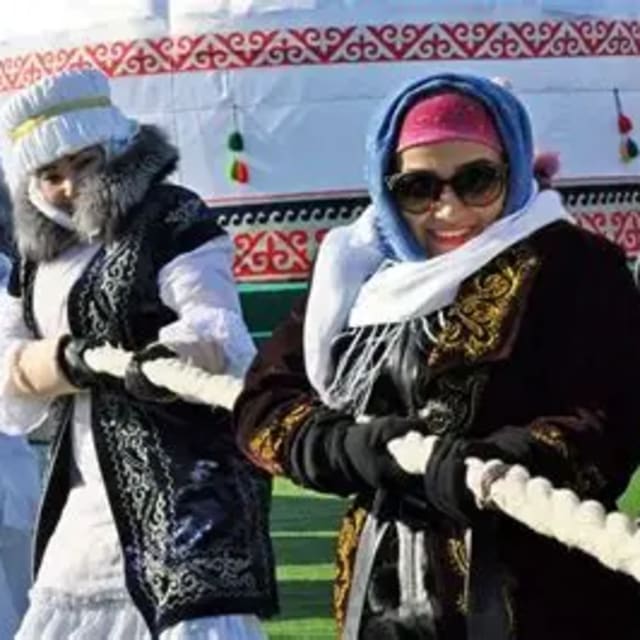
Arqan Tartys (Tug-of-War) is of the simplest yet most exciting traditional Kazakh games. Two teams compete in a test of pure strength, pulling on opposite ends of a rope to drag the opposing team across a marked line.

The Rules — Teams line up on opposite sides of a strong rope, often made of woven wool or leather. The rope may have a marker in the center. On the signal, both teams pull, attempting to drag the opposing team past the center line.

Team Strategy — Success requires maximum number of participants, strongest members positioned at front and back, coordinated pulling technique, and team morale and unity.

Traditional Context — Arqan Tartys was held at community gatherings, weddings, and festivals. It built community spirit and allowed young men to demonstrate their strength.

Modern Competitions — Today, Arqan Tartys is organized as a formal sport with weight categories, standard ropes, and specific rules.

Baige — Traditional Horse Racing
12
BAIGE

Baige — Traditional Horse Racing

Long-distance horse races testing endurance across the open steppe.

Baige (Horse Racing) is of the most important traditional Kazakh sports, dating back centuries to the nomadic way of life. These long-distance races test the endurance of both horse and rider across the harsh Kazakh steppe.

Race Distances — Traditional Baige races cover extraordinary distances:

Junior races — 10-15 kilometers for young horses (2-3 year olds)

Adult races — 20-30 kilometers for experienced horses

Championship races — Up to 50 kilometers for the toughest mounts

The Riders — Unlike Western racing where professional jockeys ride, Baige traditionally features young boy riders (jockeys) who ride bareback. These boys, often between 7-13 years old, must have excellent balance and riding skills.

The Horses — Kazakh horses are legendary for their endurance. Bred for centuries to survive the harsh steppe climate, they can travel great distances without rest.

Cultural Significance — Baige is central to Kazakh celebrations, particularly Nauryz and the Kazakh Derby. Winners receive substantial prizes.

Tenge Alu — Picking Up Coins
13
TENGEALU

Tenge Alu — Picking Up Coins

A mounted skill game where riders pick up coins from the ground at full gallop.

Tenge Alu (Picking Up Coins) is a spectacular traditional Kazakh game that tests the riding skills of horsemen at full gallop. Riders compete to collect coins or small objects from the ground without dismounting.

The Challenge — Coins or small metal objects are placed on the ground in a designated area. Riders gallop past at full speed, leaning down from their horses to scoop up the objects while maintaining control of their mount.

Skills Required — Mastery demands perfect balance in the saddle at high speeds, quick reflexes and hand-eye coordination, strong leg grip to stay mounted while leaning, and trust between horse and rider.

Variations — The game has several difficulty levels from simple (pick up coins from a slow walk) to championship (pick up increasingly valuable objects at full gallop).

Historical Context — Tenge Alu developed from practical skills needed in nomadic life, such as retrieving dropped items or catching loose livestock.

Modern Competitions — Today, Tenge Alu is featured in traditional sports festivals, with standardized rules ensuring safety.

Discussion 0

No comments yet. Start the conversation!

Leave a Reply