Mythology, Folklore & Beliefs
Kazakh spiritual life blends ancient Turkic shamanism, Islam, and folk beliefs, creating a rich tapestry of stories, spirits, and cosmic understanding.
Kazakh spiritual life blends ancient Turkic shamanism, Islam, and folk beliefs, creating a rich tapestry of stories, spirits, and cosmic understanding.
Core Beliefs
Tengrism — The Ancient Sky Faith
The original religion of the Kazakhs, centered on the eternal blue sky.

Tengrism — The Ancient Sky Faith
Long before Islam arrived on the Kazakh steppe, the ancestors looked up to the endless blue sky and knew they were not alone. Tengri — the Eternal Blue Sky — was not a god in the way later religions would describe divinity. Rather, Tengri was the sky itself, vast and watching, compassionate yet just. Every clear morning was a blessing, every storm a warning. The Kazakhs built their entire worldview around this sacred presence. They believed that Tengri gave life, that Tengri judged deeds, and that Tengri ultimately decided the fate of every soul. The sky was not merely above them — the sky was present, aware, and involved in every aspect of human existence. When a child was born, they were brought outside to feel the sky's touch. When a person died, their soul returned upward to join the ancestors in the celestial realm. This ancient faith, now often called Tengrianism, is experiencing a revival as modern Kazakhs seek to reconnect with their pre-Islamic heritage.
Umai — Mother of the Earth
The goddess who gives life and protects all that grows.

Umai — Mother of the Earth
While Tengri rules the heavens, Umai nourishes the earth. She is the Great Mother, the fertile ground beneath Kazakh feet, the warmth that makes crops grow and children flourish. Kazakh women have always held Umai close to their hearts. She is invoked during pregnancy, celebrated at childbirth, and thanked when milk flows and babies thrive. Umai represents the nurturing principle in the universe, the feminine force that sustains all life. She is not distant or abstract. Kazakh mothers speak her name when their children are sick. Grandmothers tie ribbons to sacred trees in her honor. Young brides ask for her blessing as they begin their married lives. In recent years, as Kazakhstan rediscovers its ancient roots, Umai has become a powerful symbol for women seeking connection to their ancestral heritage.
Zher-Su — Spirits of Land and Water
The sacred forces that inhabit mountains, rivers, and forests.

Zher-Su — Spirits of Land and Water
The Kazakh steppe is alive. This is not poetry or metaphor. Every mountain has a spirit. Every river has a consciousness. Every significant tree is home to a being that can help or harm the traveler who passes by. These are the Zher-Su, the spirits of land and water, and maintaining good relations with them was essential to survival on the harsh steppe. When crossing a mountain pass, Kazakhs would stop and offer small gifts. When drawing water from a spring, they would thank the spirit aloud. When camping near a lone tree, they would tie a ribbon as an offering. These practices were not superstition. They were the grammar of existence, the basic etiquette of sharing a world with invisible neighbors. Even today, those who understand the old ways continue these rituals, for the spirits are patient but not forgetful.
Creation of the World
How Tengri created the universe and humanity.
In the beginning there was Tengri, the infinite blue sky, conscious and purposeful, existing in the void. From Tengri's will came all that exists. First came the elements, fire rising, water falling, earth forming in the middle. Then came the plants, then the animals, and finally humans, created from the earth itself and given the breath of life from above. The first humans were tested by Tengri, and those who proved worthy were blessed with kut, the spark of divine consciousness that makes humans different from animals. All Kazakh people trace their lineage back to three legendary brothers, the Senior, Middle, and Junior Zhuzes, from whom descended the great tribal confederations. This story of creation is not merely mythology. It is the foundation of Kazakh identity, explaining where the world came from and why Kazakhs exist as a people.
Cosmos & Spirit World
The Three Worlds
The cosmic structure of upper, middle, and lower realms.
The Kazakh universe is a three-story dwelling. Above lies the Upper World, where Tengri dwells among good spirits and honored ancestors. Below lies the Lower World, dark and cold, home to evil forces and the spirits of the unremembered dead. Between them lies the Middle World — our world, the world of humans, animals, and nature spirits, where every action sends ripples upward and downward. This three-story cosmos shaped everything in Kazakh life. Shamans traveled between realms in trance states, carrying messages and healing injuries that spanned the cosmic divide. Burial practices aimed to send souls to the correct destination. Even the design of the traditional yurt reflected this structure, with the upper ring representing heaven, the floor representing earth, and the foundation representing the underworld. Understanding the Three Worlds was understanding the architecture of reality itself.
Baqsı — The Shaman
Spirit doctors who heal by traveling between worlds.
When illness had no physical cause, when misfortune seemed to follow a family for generations, when the boundary between life and death grew thin — then the people called for the Baqsı. These shamans possessed the rare gift of traveling between the three worlds while in altered states of consciousness, typically achieved through drumming, chanting, and fasting. The Baqsı was not merely a healer but a diplomat to the spirit realm. They could negotiate with angry spirits, retrieve lost soul fragments, and persuade Tengri to show mercy. Their drums were sacred instruments, their robes adorned with iron symbols to ward off evil, their songs ancient formulas passed down through generations. Baqsı were both feared and respected, for they possessed power that ordinary people did not understand.
Sacred Animals
Sacred Animals
The wolf, horse, eagle and their spiritual significance.
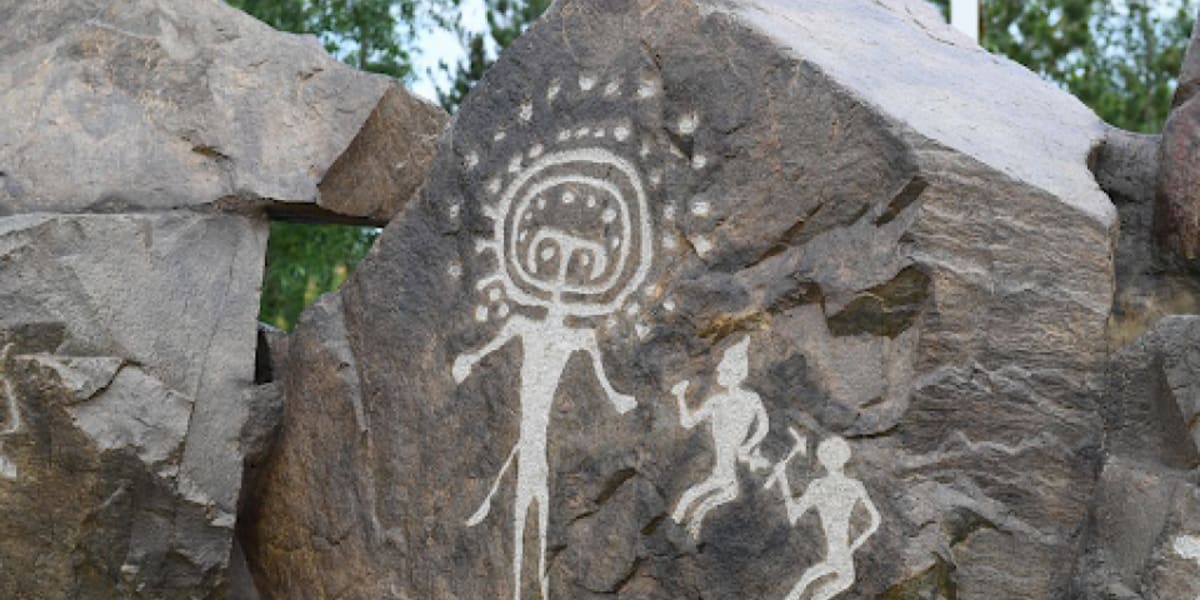
Sacred Animals
Before Kazakhstan had borders or nations, it had clans, and each clan traced its lineage to a sacred animal. The wolf was the most honored totem, for legend says that a she-wolf nursed the first human twins, and from them descended all the Kazakh people. The horse came next in sacred significance, for without horses the steppe nomads could not have survived. Horses were companions to the sky world, and the famous Tulpar winged horses of legend could carry heroes between realms. The eagle connected humans to Tengri, for it flew highest and closest to the divine. Eagle hunters used these noble birds to hunt, and the bond between eagle and human was considered sacred. These totemic beliefs taught Kazakhs to see themselves as part of nature, not separate from it, and to understand that their identity was woven into the fabric of the living world.
Nature Spirits
The belief that all natural things possess consciousness.
The Kazakh steppe is not dead matter. It breathes, remembers, and responds. Every significant natural feature has a spirit, mountain peaks, river bends, lone trees, sacred groves. These are not metaphors or poetic descriptions. They are literal truths in the animist worldview. When you approach a mountain, you address its spirit. When you camp by a river, you acknowledge its presence. When you enter a forest, you ask permission and offer thanks. This awareness creates a profound relationship with the natural world, of respect rather than exploitation. The land is not a resource to be extracted. The land is a community to be participated in. Even as modern life brings change, this animist sensibility persists, expressed in the continued practice of offering thanks, asking permission, and maintaining respectful relationships with the non-human world.
Heroes & Legends
Samruk — The Great Bird
The cosmic bird that controls weather and symbolizes rebirth.

Samruk — The Great Bird
High above the steppe flies Samruk, the greatest of all creatures. This is no ordinary bird. Samruk is cosmic in scale. Its wings can cover a valley, its cry echoes across mountains, its feathers burn with eternal flame. When Samruk flaps its wings, storms arise. When Samruk sings, the rains come. Some say Samruk carries the sun across the sky. Others say Samruk sits at the center of the world, and the mountains grow from its body. Samruk represents rebirth and renewal, for like the phoenix, this great bird is reborn from its own ashes whenever the old world dies and a new begins. For modern Kazakhs, Samruk has become a powerful national symbol. The sovereign wealth fund Samruk-Kazyna bears its name. Giant statues of Samruk stand in city squares.
Epic Heroes
The legendary champions who embody Kazakh virtues.
Kazakhstan's greatest cultural treasure is its epic poetry, thousands of verses, hundreds of thousands of lines, telling the stories of heroes whose deeds have been remembered for centuries. Manas united the tribes against invaders. Koblandy performed impossible tasks and won his bride through courage. Alpamys overcame exile and betrayal to reclaim his honor. These are not fairy tales. They are the living memory of a people, performed by specialist bards called Zhyraus who memorize entire epics and transmit them orally across generations. Every hero embodies the Kazakh ideal, strength tempered by wisdom, courage guided by honor, personal achievement in service to the community. The epics teach what it means to be Kazakh, what virtues to cultivate, what vices to avoid. They are history and mythology, entertainment and education, scripture and identity, all woven together in verses that have echoed across the steppe for a thousand years.
Magical Horses
The winged steeds that serve and protect heroes.
No hero travels alone. Every great champion of Kazakh legend is accompanied by a magical horse, a wise, loyal companion that can speak, fly, and perform feats beyond ordinary equine capability. The most famous is the Tulpar, the winged horse whose golden coat shines like the sun and whose speed exceeds the wind. More than mere transportation, these horses are advisors and protectors. They warn their riders of danger, offer counsel in difficult moments, and sacrifice themselves to ensure their hero's survival. The bond between hero and horse is of complete trust, for a Tulpar chooses its rider and will serve no unworthy. These stories teach that true partnership is sacred, that those who earn loyalty receive it, and that strength is nothing without wisdom to guide it.
Korkyt Ata
The legendary musician who invented the kobyz.
Centuries ago, there lived a man who discovered the Water of Life and was granted immortality. His name was Korkyt Ata, the Father of Korkyt, and he became the greatest musician the Kazakh steppe has ever known. He invented the kobyz, the two-stringed instrument whose voice resembles human weeping, and his music could heal the sick, calm storms, and summon spirits. Korkyt Ata represents the sacred power of music itself, the ability of sound to transcend the boundaries between worlds. His legacy lives on in the tradition of kobyz playing, in the melodies attributed to his composition, and in the cultural memory of a people who believe that true music carries spiritual power. Even today, master kobyz players are treated with reverence, for they continue the work of Korkyt Ata.
Evil Spirits & Monsters
Albastı — The Demon Woman
The malevolent spirit that attacks newborns and pregnant women.
Not all spirits wish humans well. Albastı is the darkness that haunts the night, appearing sometimes as a terrifying hag with claws like knives, sometimes as a beautiful woman who lures victims to their doom. She stalks the darkness with terrible hunger, preying on the most vulnerable. She comes in two forms, yellow and black, and both are equally dangerous. The yellow Albastı brings plague and death. The black Albastı drives people mad. Against her, Kazakhs learned to fight with iron. Horseshoes hung by the door, knives placed under the pillow, bells that jingled to warn of her approach. Fire was her enemy, for Albastı could not tolerate light. Never sleep in darkness, the old warned. Never leave a child alone. Albastı may be a myth, but she teaches very real lessons about vigilance and protection.
Zhalmauyz Kempir — The Witch
The cannibal hag who roams the mountains.
In the high mountains where the wind howls and travelers are rare, lives Zhalmauyz Kempir, the most fearsome villain in all of Kazakh folklore. She is enormous, ugly, and eternally hungry, with iron teeth that crush bone. She can shape-shift into a grandmother, a goat, a millstone, anything to lure her victims closer. Children who wander too far hear her voice calling their names. Travelers who camp alone wake to find her standing over them. But Zhalmauyz Kempir is not simply a monster. She is the villain who teaches lessons. She represents the dangers of wandering, the importance of listening to warnings, and the truth that cleverness always defeats brute strength. Every Kazakh child knows her stories, knows to stay close to family, knows that the world has dangers that must be respected.
Azhdarha — The Dragon
The serpent enemy of light and order.
Against every force of light stands a force of darkness. In Kazakh mythology, this is Azhdarha, the great serpent-dragon, enemy of Tengri, devourer of the sun, and perpetual challenger of cosmic order. Azhdarha is chaos given form, a reminder that creation is not permanent and that vigilance is eternal. The battle between Tengri and Azhdarha plays out constantly in the world, in storms and droughts, in plagues and wars, in the struggle between good and evil in every human heart. Every hero must face their own Azhdarha. Every generation must renew the fight against chaos. The dragon is never truly killed, driven back, for the battle is eternal. This understanding breeds neither despair nor fatalism. Rather, it creates a culture of courage.
Peri and Jinn
Supernatural beings that dwell between human and spirit worlds.
Between the world of humans and the world of pure spirits exists a vast middle realm where Peri and Jinn dwell. Peri are beautiful, luminous beings associated with pure water, sacred flowers, and moonlit dancing. They can be kind, offering gifts and guidance to those they favor, or capricious, leading travelers astray and causing mischief. Jinn are more powerful and more dangerous, existing in various forms, some made of fire, some of smoke, some of air. They have their own societies, their own kings, their own rules. Unlike humans, they can move through solid objects and perform feats beyond mortal capability. When Islam arrived, it acknowledged the existence of these beings, and a unique blend of pre-Islamic spirit beliefs with Islamic teaching emerged, creating the rich spiritual tapestry that characterizes modern Kazakh culture.
Traditions & Wisdom
Protective Practices
Amulets, rituals and superstitions that ward off evil.
In a world full of spirits, both helpful and harmful, the Kazakhs developed an arsenal of spiritual defenses. The most famous is the blue bead, the color of Tengri's sky, worn to ward off the evil eye and protect against malevolent spirits. Iron was equally powerful, for this metal from the earth carried protective force. Horseshoes were hung above doorways, knives were placed under pillows, and bells were worn to announce's presence and frighten away lurking dangers. Beyond objects, there were practices. Never point at the moon, for it is Tengri's eye. Never step on a threshold, for it is a spirit's dwelling. Never praise a child too loudly, for the evil eye listens. These were not superstitions but survival skills in a world where invisible forces could kill as surely as any predator.
Ancestor Reverence
Honoring the dead who continue to watch over the living.
In Kazakh tradition, death does not sever the bond between living and dead. The ancestors remain present, watching, judging, helping or hindering depending on how they are treated. A properly buried ancestor becomes a protective spirit, watching over descendants and answering prayers. A neglected ancestor becomes a hungry ghost, causing misfortune until properly honored. This belief shapes every aspect of funeral practice. The body must be oriented correctly. The soul must be guided to the right destination. The family must maintain rituals of remembrance. Names are spoken, stories are told, offerings are made. The dead live on as long as someone remembers them, and the remembered dead live on as active participants in family life. This is not melancholy. It is comfort, the assurance that no is ever truly alone.
Traditional Healing
The combination of herbs, bonesetting and spiritual practices.
Kazakh folk medicine treats the whole person, body, mind, and spirit, recognizing that illness often has causes beyond the physical. Traditional healers combine practical knowledge of medicinal plants with spiritual practices that address supernatural causes of disease. The Baqsy shaman could travel in trance to find the lost soul fragment causing illness. The Darvish holy person offered prayers that drew on divine power. The Sınıqsha bonesetter healed fractures through touch that seemed magical. Every healer knew hundreds of herbal remedies. These treatments were not primitive guesswork. They were systematic knowledge, developed over centuries of observation and practice, passed down through families of healers. Many modern Kazakhs still use these remedies, combining ancient wisdom with modern medicine.
Folk Tale Wisdom
The timeless themes and moral lessons of Kazakh stories.
Every Kazakh story carries a lesson. This is not hidden or subtle. The moral is usually obvious, the virtue rewarded, the vice punished. Yet these tales are not simple. They explore the complexity of life, the difficulty of choices, and the truth that the world does not always divide neatly into good and evil. The great theme is resilience. The hero endures impossible hardships, loses everything, faces seemingly insurmountable odds, and ultimately prevails through patience, cleverness, and moral character. Wit defeats brute force more often than strength defeats weakness. The humble are elevated. The proud are humbled. Hospitality is sacred. Betrayal is fatal. These stories were not entertainment alone. They were the library, the school, the moral compass of a people without written文字. Through tales of heroes and villains, talking animals and magical objects, generations of Kazakhs learned how to live.
Discussion 0
No comments yet. Start the conversation!
Leave a Reply